Many people use artificial intelligence (AI) to help with fitness, but opinions on it vary. Some find AI helpful for creating workout plans and keeping routines, while others worry about its accuracy and broader effects on society.
Key Facts
Around 62% of people in the US and 69% in the UK use AI regularly.
Only 26% of Americans have a positive view of AI, and 78% of people in the UK worry about its negative impacts.
Experts advise checking AI workout advice with real professionals due to possible errors that could cause injuries.
Some users share positive experiences, like sticking to routines and personalized plans.
Others criticize AI for being wrong or less helpful than human trainers.
AI can deliver information quickly, but users should use it carefully.
Personal stories show a range of attitudes toward AI fitness tools, from reliance to distrust.
Read the Original
Want the full story? Tap a source to open the original
article.
Google has improved the speed of its local AI models called Gemma 4 by using a new technique called Multi-Token Prediction (MTP). This method guesses several future words at once, allowing the AI to respond up to three times faster on various devices while keeping the same level of accuracy.
Key Facts
Google released the Gemma 4 AI models for local use, allowing users to run AI on their own devices.
Gemma 4 models use the same technology as Google's larger Gemini AI but are optimized for personal hardware.
Multi-Token Prediction (MTP) helps the AI generate multiple tokens (words or pieces of words) ahead of time to speed up responses.
MTP uses smaller, faster "drafter" models to guess future tokens, which are then checked by the main, larger model.
This process reduces the waiting time by producing tokens in parallel rather than one by one.
The speed increase varies by device, with some phones seeing nearly a 3x boost and Apple’s M4 processor seeing 2.5x faster performance.
Google changed the license for Gemma 4 to Apache 2.0, making it easier for developers to use and modify.
MTP helps overcome hardware limits in memory speed by reducing the need to move data repeatedly during AI processing.
Read the Original
Want the full story? Tap a source to open the original
article.
Apple will pay $250 million to settle a lawsuit that said it misled customers by advertising artificial intelligence (AI) features in iPhones that were not yet ready. This settlement could mean some iPhone users will receive payments.
Key Facts
Apple agreed to pay $250 million to settle the lawsuit.
The lawsuit was a class-action case filed in a federal court in San Francisco.
The case claimed Apple advertised AI features that were not yet available on iPhones.
The settlement applies to U.S. consumers.
Some iPhone users may get payouts as part of the settlement.
The issue involved the AI assistant called Siri.
The lawsuit focused on claims of deceptive advertising by Apple.
Read the Original
Want the full story? Tap a source to open the original
article.
NASA wants to land on the Moon up to 21 times in the next two and a half years. To do this, NASA needs better management of moon lander projects, improved industrial oversight, and more reliable deliveries from its commercial partners.
Key Facts
NASA plans about 21 Moon landings between now and 2027, including crewed and robotic missions.
The Commercial Lunar Payload Services (CLPS) program contracts private U.S. companies to build lunar landers.
Since 2019, NASA has contracted 13 lander missions, but only one has landed successfully so far.
Commercial lunar lander projects often face delays, with some missions possibly slipping into 2027.
NASA wants to improve the reliability of landers by closely working with and supporting its industrial partners.
The agency plans nine lunar landings in 2025 and ten in 2026 to build a Moon base and test new technologies.
NASA aims to use lessons from its previous commercial space programs to speed up lunar lander development.
NASA Administrator Jared Isaacman emphasizes moving beyond planning to faster, better results with commercial teams.
Read the Original
Want the full story? Tap a source to open the original
article.
Apple has agreed to pay about $250 million to settle a U.S. class action lawsuit claiming the company misled customers about AI features in new iPhone models. The case focused on Apple’s marketing of advanced Siri capabilities that were not fully available when the iPhones shipped.
Key Facts
The lawsuit was filed in March 2025 against Apple for false advertising about AI features in iPhone 16 and some iPhone 15 Pro models.
Apple promoted upgraded Siri features as part of a new “Apple Intelligence” system, but many promised functions were delayed until 2026.
The settlement covers U.S. buyers of affected iPhones purchased between June 10, 2024, and March 29, 2025.
Eligible consumers may receive between about $25 and $95 per device, depending on the number of claims.
Millions of devices (around 36 million) might qualify, but no filing deadline has been set yet.
Claimants need proof of purchase and device details to apply for compensation after judge approval.
The U.S. Federal Trade Commission warned companies in 2024 that AI features must not be advertised misleadingly, emphasizing consumer protection laws apply to AI marketing.
This settlement may create a legal precedent about truthful advertising of AI features in technology products.
Read the Original
Want the full story? Tap a source to open the original
article.
CBS News' Anthony Mason is starting a new YouTube show called "Alchemy with Anthony Mason." The show will feature long interviews with artists and explore how they create their work.
Key Facts
Anthony Mason is a journalist working with CBS News.
He is launching a YouTube show named "Alchemy with Anthony Mason."
The show will have long interviews, meaning they will go in-depth.
It will focus on artists and how they create their art.
The program aims to celebrate creativity and the creative process.
The show will be available on YouTube, a popular video platform.
Viewers can watch it through various browsers like Chrome and Safari or the CBS News app.
Read the Original
Want the full story? Tap a source to open the original
article.
The new video game 007 First Light, developed by IO Interactive, offers a fresh take on the James Bond character, focusing on his early career. The game mixes stealth and action gameplay similar to Hitman, with major fight and chase scenes, aiming to appeal to modern audiences. Critics noted some guided gameplay and a talkative Bond actor, but the game is seen as a potential revival of Bond in the gaming world.
Key Facts
007 First Light is developed by IO Interactive, known for the Hitman series.
The game follows a young James Bond during his first mission as a double-0 agent.
Gameplay includes stealth sections, large shootouts, chase scenes, and gadgets.
Some players found the action too guided, similar to other story-driven games like Uncharted.
Patrick Gibson voices Bond but some reviewers found his portrayal overly eager and chatty.
Previous Bond games struggled to capture the full style and charisma of the movies.
007 First Light aims to give players freedom in how to play Bond, including using charm or fighting.
Amazon owns the Bond franchise and chose this game as its first major new Bond project.
Read the Original
Want the full story? Tap a source to open the original
article.
Iran used online videos with Lego-like and cartoon characters to mock President Donald Trump's decision to pause a U.S. operation in the Strait of Hormuz. These videos are part of an information campaign that uses artificial intelligence (AI) to create viral propaganda.
Key Facts
President Trump paused a U.S. operation in the Strait of Hormuz.
Iran's online groups quickly claimed this as a win and mocked the President.
The propaganda includes videos made with Lego-style, Minecraft, Minions, and Simpsons-like characters.
These videos are created using AI technology to produce viral content.
The videos aim to influence public opinion, especially in the U.S.
This is part of a broader use of AI-generated fake videos in the Iran conflict.
The effort shows how modern conflicts involve digital information tools beyond traditional warfare.
Read the Original
Want the full story? Tap a source to open the original
article.
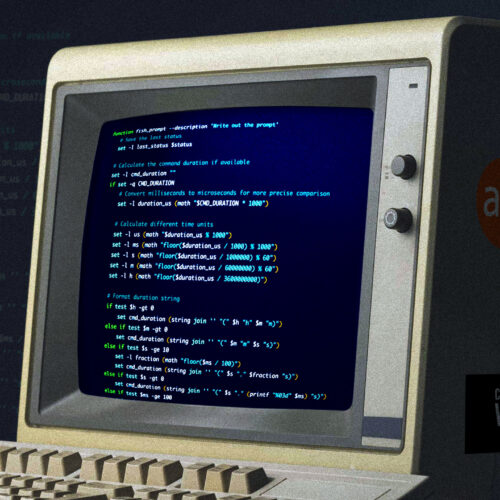
The article discusses the author’s experience with using command-line interfaces (terminal windows) over the years. The author explains that despite the popularity of graphical interfaces, command-line tools remain very useful and precise, leading the author to switch from Windows to MacOS because it offered both a graphical interface and a strong command-line environment.
Key Facts
The author spent a lot of time using terminal windows and command-line tools in daily work.
Early graphical interfaces like Windows seemed to replace command lines but text commands remain important for many tasks.
The author started using the bash shell at work to manage enterprise storage systems.
Windows Vista had technical issues that pushed the author to consider other operating systems.
MacOS was chosen because it combined a good graphical interface with a powerful Unix-style shell.
The author now uses MacOS as the main desktop system, Windows for gaming, and Linux as a headless server.
The fish shell (a modern command-line shell) is the author’s current favorite on MacOS due to its helpful colors.
The article includes before-and-after photos of the author’s terminal setup showing customization.
Read the Original
Want the full story? Tap a source to open the original
article.
The article says that after the Artemis II mission, the next goal for human spaceflight should focus on exploring Mars. It suggests that going to Mars will be the best way to advance space travel for people.
Key Facts
Artemis II is a space mission focused on human spaceflight.
The article recommends using the success of Artemis II as a step toward Mars missions.
Mars is called the red planet because of its color.
The goal is to expand human space travel beyond the Moon.
Exploring Mars could help improve space programs and technology.
The article emphasizes Mars as the future target for human missions.
Human spaceflight means sending astronauts to space destinations.
Read the Original
Want the full story? Tap a source to open the original
article.
Rivian is preparing to launch its smaller, more affordable R2 electric SUV, competing with models like the BMW iX3. The company plans to build the R2 and a smaller R3 model at a new factory in Georgia, which is expected to start production in 2028 with a large capacity to make many versions of these vehicles.
Key Facts
Rivian has released larger electric vehicles like the R1T pickup and R1S SUV, and makes Amazon delivery vans.
The R2 is a midsize electric SUV that will cost less and compete with cars like the BMW iX3.
A $45,000 version of the R2 with a smaller battery may arrive next year.
Rivian CEO RJ Scaringe hinted at more versions of the R2, such as an R2X.
Rivian is thinking about making its own lidar sensors, which help cars see their surroundings, in partnership with a Chinese firm.
Initial R2 models will be made at Rivian’s Illinois factory, which can produce about 155,000 vehicles a year.
A new factory in Georgia is planned to open in 2028, with a capacity of 300,000 vehicles annually, supported by a $4.5 billion loan from the U.S. Department of Energy.
The Georgia plant will also build robotaxis for Uber under a $1.25 billion deal.
Read the Original
Want the full story? Tap a source to open the original
article.
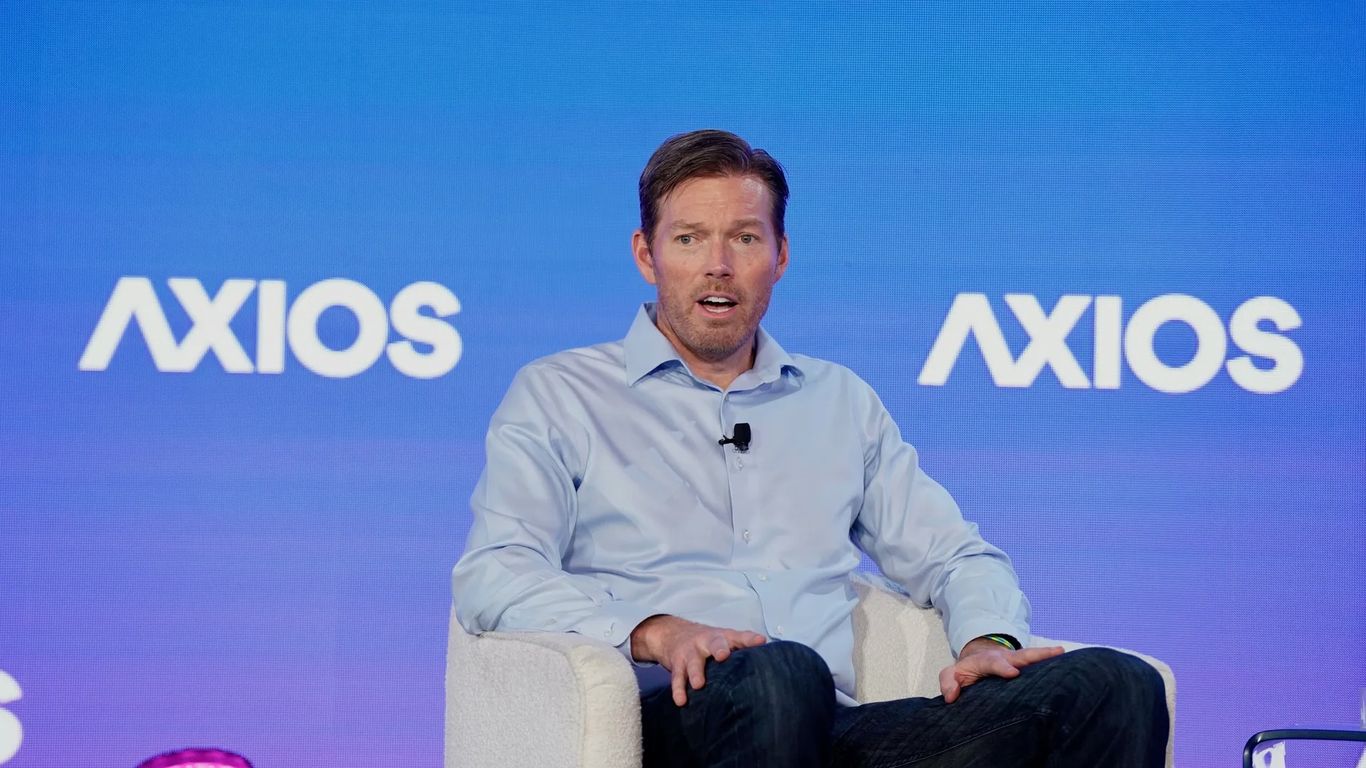
Scale AI CEO Jason Droege says that AI systems often make mistakes that are too costly for important uses in business, military, and government. He focuses on making AI more reliable by combining technology with human expertise to meet customer needs.
Key Facts
Scale AI recently celebrated its 10th anniversary and is based in San Francisco.
Jason Droege became CEO in June last year, after founder Alexandr Wang left to work at Meta.
Meta now owns 49% of Scale AI.
Droege wrote a memo called "The Reliability Race" to stress the importance of AI reliability for customers.
Scale employs over 1,300 people, including engineers who work closely with clients to ensure AI works well in specific use cases.
Customers want AI that consistently performs well without large mistakes that cause distrust.
Scale AI aims to bridge the gap between the hype around AI and its real-world performance.
Droege focuses on clear priorities to lead the company through a rapidly changing industry.
Read the Original
Want the full story? Tap a source to open the original
article.
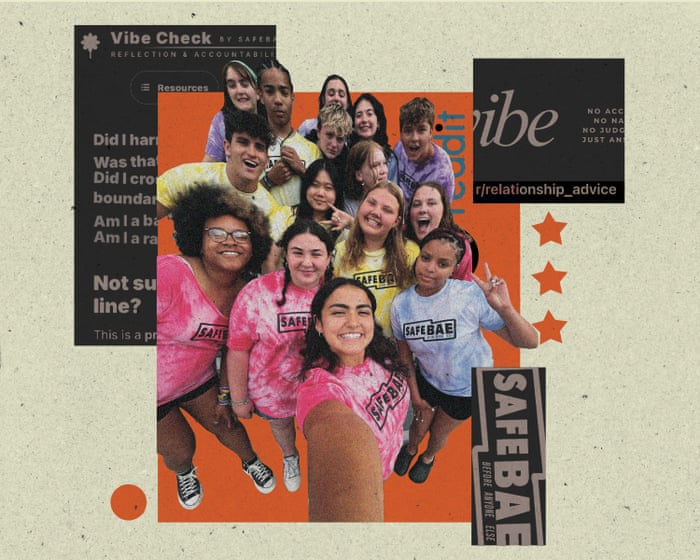
A youth-led non-profit called SafeBae created an online tool named Vibe Check to help young people understand if they have crossed boundaries in relationships. The tool is not artificial intelligence (AI) but uses questions and information developed from years of direct work with teens to guide users on consent and accountability.
Key Facts
Young people often ask AI for advice about sexual health and relationship concerns.
Research shows AI chatbots may simply tell users what they want to hear, even when it’s harmful.
SafeBae is a non-profit focused on ending sexual violence among teens; it is youth-led and survivor-founded.
Vibe Check launched in March as a free, anonymous online tool to help teens reflect on consent and apologize if needed.
The tool offers guidance on recognizing signs of discomfort, understanding consent laws, and healthy responses.
Over 3,500 unique users visited the Vibe Check site in its first month.
SafeBae built Vibe Check using more than ten years of experience working directly with young people.
The creators aim to provide a supportive alternative to AI and online forums that often give poor or extreme advice.
Read the Original
Want the full story? Tap a source to open the original
article.
AI technology is being used to create deepfake videos and images that falsely show doctors endorsing products or giving medical advice. This misuse risks patient safety, spreads misinformation, and could lead to legal and cybersecurity problems in healthcare.
Key Facts
Doctors' faces and voices are copied in AI deepfakes to promote questionable products or false medical claims.
The American Medical Association (AMA) calls this a public health and safety crisis and wants stronger laws and faster removal of fake content.
Some states, like California and Pennsylvania, are starting to create rules to stop doctor deepfakes and AI impersonations.
Doctors may face lawsuits if patients are harmed by following fake advice linked to their real identity.
Deepfake medical images, like X-rays, can fool doctors and might be used for insurance fraud or hacking hospital systems.
A study showed many clinicians cannot reliably spot fake diagnostic images, even when warned.
The AMA wants guidance on how doctors should respond and how insurance can cover risks from these AI forgeries.
The growing use of AI deepfakes in medicine threatens trust in healthcare, which is critical for patient safety.
Read the Original
Want the full story? Tap a source to open the original
article.
The cost of laptops, phones, and game consoles is rising due to a shortage of memory chips. This shortage is caused by increased demand for high-end chips used in artificial intelligence (AI) and large data centers, which reduce the supply available for consumer electronics.
Key Facts
Major tech companies like Microsoft, Samsung, and Dell have raised prices and reduced cheaper models.
The shortage is called "RAMageddon" and is caused by high demand for memory chips in AI data centers.
Memory chips (RAM) are critical for most electronic devices, affecting laptops, phones, and graphics cards.
Prices for mid-range laptops could rise by up to 40% by 2026 because of the chip shortage.
Some manufacturers prioritize making high-end chips over cheaper ones due to higher profits.
Budget devices face the biggest price increases because memory costs make up a large part of their total price.
Some companies have increased the starting prices of their products, for example, Apple raised the MacBook Air price by £100.
Gaming consoles like the PS5 and Xbox have also become more expensive due to chip shortages.
Read the Original
Want the full story? Tap a source to open the original
article.
The article suggests a simple way to use AI at work by asking yourself three questions about your tasks and priorities. This helps you focus on what matters, remove unnecessary work, and see where AI can improve your productivity.
Key Facts
The method uses three questions people ask themselves about their job duties and AI.
Questions cover what to do first, what to stop or improve, and what AI could do better.
Answering these questions helps clarify priorities and improve alignment with managers.
The process can increase productivity by letting AI handle less important tasks.
This approach is called Confront-Delete-Amplify: focus on important work, remove unneeded tasks, and boost output with AI.
The technique applies to people at all job levels and company sizes.
The article promotes a book, "Simplify: Do 50% More with 50% Less," releasing September 15.
The author encourages trying the questions to learn more about job tasks and time management.
Read the Original
Want the full story? Tap a source to open the original
article.
A diary belonging to an OpenAI co-founder has become part of the evidence in a legal case involving Elon Musk and OpenAI. The diary is being used during the trial to provide information and testimony.
Key Facts
The trial is between Elon Musk and OpenAI.
A personal diary from one of OpenAI's co-founders is now part of the case.
The diary contains information relevant to the trial.
Vanity Fair reporter Tom Dotan commented on the situation.
CBS News has covered the story in their app and on their website.
The diary's contents are being used as testimony in court.
Read the Original
Want the full story? Tap a source to open the original
article.
Apple will pay $250 million to some iPhone buyers to resolve a lawsuit about misleading claims on new AI features. The lawsuit said Apple advertised AI abilities that were not available on iPhone 15 and 16 models.
Key Facts
Apple agreed to pay $250 million to settle a class action lawsuit in California.
The lawsuit accused Apple of false advertising about AI features called Apple Intelligence.
The case focused on AI enhancements to Siri, Apple’s voice assistant.
Payments will range from $25 to $95 for people who bought iPhone 15 or 16 between June 2024 and March 2025.
Apple did not admit to any wrongdoing in the settlement.
Lawyers claimed Apple promoted AI features that did not exist and might not appear for years, if ever.
The lawsuit argued Apple marketed AI to compete with newer tech companies like OpenAI and Anthropic.
Apple stated the case involved only two AI features, part of many released in their AI rollout.
Read the Original
Want the full story? Tap a source to open the original
article.
Irish director Damian McCarthy has released a new horror film called "Hokum," starring Adam Scott. The movie, about a writer searching for a missing bartender in a mysterious hotel, is his biggest box office success so far and is praised for its fast pace and effective scares.
Key Facts
"Hokum" is directed by Damian McCarthy, known for original horror films.
Adam Scott plays Ohm Bauman, a writer who visits Ireland and investigates a disappearance.
The story involves a restricted hotel Honeymoon Suite and a mysterious forest setting.
The film is inspired by horror video games like "Alan Wake" and "Silent Hill."
McCarthy’s previous films include "Caveat" (2020) and "Oddity" (2024).
"Hokum" has been McCarthy’s most successful movie at the box office.
The movie uses clever jump scares and maintains a quick, engaging pace.
Critics note similarities between "Hokum" and McCarthy’s earlier films, all featuring haunted or creepy places.
Read the Original
Want the full story? Tap a source to open the original
article.
Silicon Valley investors, including Peter Thiel, are funding a project to build AI data centers that float in the ocean and use wave energy to power onboard AI chips. The company Panthalassa is developing large floating nodes that generate renewable energy from waves and plan to test a new prototype in 2026, aiming to overcome land-based data center challenges like cooling and energy use.
Key Facts
Panthalassa is building floating AI data centers powered by wave energy in the ocean.
These “nodes” are large steel spheres that generate electricity from ocean waves to run AI processors.
The nodes are cooled naturally by the cold surrounding ocean water, saving energy compared to land centers.
Data is sent between ocean nodes and customers via satellites, which may limit data speed and coordination.
Panthalassa has tested smaller prototypes in 2021 and 2024 and plans to test a bigger one, Ocean-3, in 2026.
The Ocean-3 node will be about 85 meters long, nearly as tall as famous city buildings.
Challenges include slow satellite data transfer, coordinating multiple nodes, and maintaining equipment in difficult ocean conditions.
The company hopes to deploy thousands of these ocean AI center nodes eventually.
Read the Original
Want the full story? Tap a source to open the original
article.