Vast, a company planning to launch a commercial space station called Haven-1, has created a special flight suit for its astronauts. This two-piece suit is designed to be worn both in space and on Earth, marking a custom approach compared to the more casual clothing worn by astronauts on the International Space Station.
Key Facts
Vast is developing the Haven-1, the world’s first commercial space station.
The company designed a new two-piece astronaut flight suit meant for use on and off the planet.
The suit includes pockets and Velcro attachments for holding tools.
Drew Feustel, a former NASA astronaut who spent 225 days in space, helped design the suit.
NASA astronauts traditionally wore blue flight suits on the ground but often wore pressure suits in space.
Early space missions did not allow astronauts to change clothes, so they remained in pressure suits.
The space shuttle era introduced more casual clothes like polo shirts and shorts for astronauts, but this was scaled back after the Challenger disaster.
Vast also certified a custom Swiss wristwatch for use on Haven-1.
Read the Original
Want the full story? Tap a source to open the original
article.
Meta is cutting about 8,000 jobs, or 10% of its workers, to become more efficient and invest in artificial intelligence (AI). Meanwhile, Microsoft is offering voluntary buyouts to around 8,750 U.S. employees as part of changes linked to AI spending and company restructuring.
Key Facts
Meta will lay off 8,000 employees and leave about 6,000 job openings unfilled.
The layoffs aim to improve efficiency and fund new investments, especially in AI.
Meta plans to spend up to $169 billion by 2026 on infrastructure and employee pay, mostly for AI experts.
Meta is building a new $1 billion AI-focused data center in Tulsa, Oklahoma.
Microsoft is offering voluntary buyouts to 8,750 U.S. workers, about 7% of its U.S. staff.
Both companies are adjusting workforce size amid big investments in AI technology.
Meta’s stock fell 2.3%, and Microsoft’s stock dropped 3.97% after the announcements.
Microsoft has a large network of data centers that support its cloud and AI services, including the AI assistant Copilot.
Read the Original
Want the full story? Tap a source to open the original
article.
The US government says China is stealing American artificial intelligence (AI) technology on a large scale using a method called distillation. The US plans to take action against these attacks, which it says help China catch up in AI development, while China denies the accusations and calls them false.
Key Facts
The US claims China is conducting “industrial-scale” theft of AI technology from American labs.
The theft involves a method called distillation, where Chinese firms use many fake accounts to copy AI models.
Companies like OpenAI, Google, and Anthropic have reported attempts to steal their AI models, mostly tracing back to China.
The White House Office of Science and Technology Policy says China uses jailbreaking and proxy accounts to access proprietary AI information.
The US government plans to share information with companies and explore legal actions against foreign actors involved in these attacks.
The House Select Committee on China suggests treating AI model theft as industrial espionage and imposing severe penalties.
China rejects the accusations, calling them “pure slander” and emphasizes cooperation and fair competition in technology.
These developments come before a planned meeting between President Trump and China’s leader Xi Jinping, amid tense trade relations.
Read the Original
Want the full story? Tap a source to open the original
article.
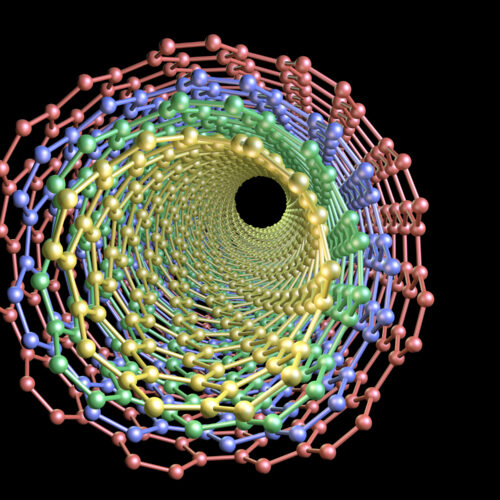
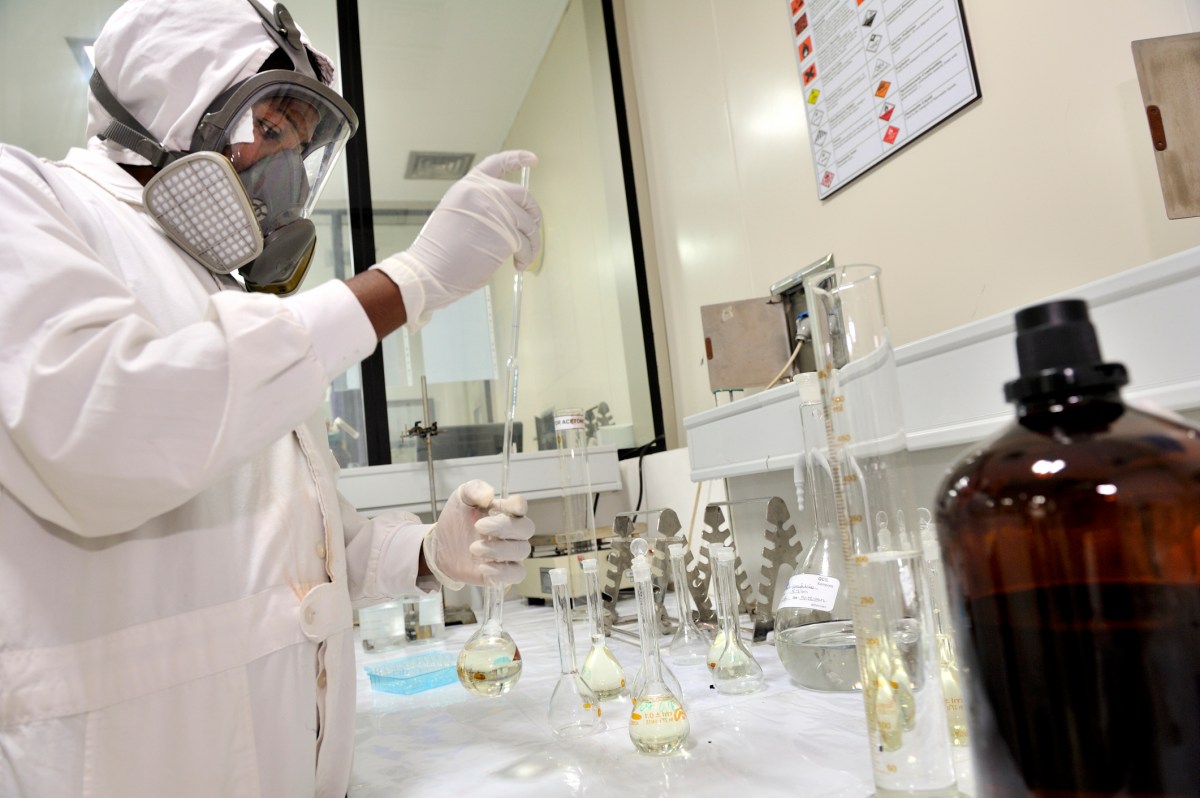
Scientists in Spain have added a chemical called tetrachloroaluminate to bundles of carbon nanotubes to help them carry electricity better, closer to how well copper wires do. This approach involves placing the chemical inside the spaces between many nanotubes packed together in a fiber.
Key Facts
Carbon nanotubes are tiny, tube-shaped materials with special electrical properties.
They can be metallic (conduct electricity) or semiconducting (control electricity).
Challenges include making long, pure metallic nanotubes and getting enough electrons to flow through them.
Researchers used bundles of double-walled nanotubes combined into fibers.
The chemical tetrachloroaluminate (AlCl4–) donates electrons, boosting electrical current in the fibers.
They introduced the chemical by exposing the fibers to a vapor made of aluminum trichloride and chlorine.
Tests confirmed that the chemical was inside the fibers and added electrons without changing the fiber size.
The enhanced nanotube fibers showed improved electrical conductivity, closer to copper’s performance.
Read the Original
Want the full story? Tap a source to open the original
article.
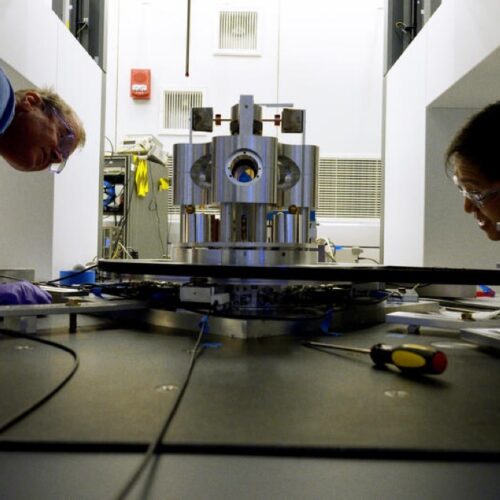
Scientists have been trying for over 200 years to measure the gravitational constant, called "Big G," more precisely. Recent work by the National Institute of Standards and Technology (NIST) repeated an earlier experiment but still found differences in measurements, showing the challenge of accurately determining this weak force.
Key Facts
"Big G" measures how strong gravity is between two masses.
Its value is less precisely known compared to other fundamental constants.
Gravity is the weakest of the four fundamental forces, making measurements difficult.
The Earth’s own gravity creates background noise that interferes with experiments.
Henry Cavendish made the first laboratory measurement of gravity in 1798 using a torsion balance.
NIST spent ten years replicating a 2007 French experiment to check its results.
Their new data adds information but does not resolve the discrepancies.
Scientists continue to develop better experiments to precisely measure Big G.
Read the Original
Want the full story? Tap a source to open the original
article.
A ransomware group called Kyber is the first known to use "post-quantum cryptography" to protect its encryption keys. This method is designed to resist attacks from future quantum computers, though experts believe Kyber mainly uses it as a marketing tactic to scare victims into paying ransoms.
Key Facts
Kyber ransomware uses ML-KEM (Module Lattice-based Key Encapsulation Mechanism), which is designed to be secure against quantum computers.
The ML-KEM method is part of a post-quantum cryptography standard developed by the National Institute of Standards and Technology (NIST).
Kyber encrypts files quickly with AES-256 and protects the AES key using ML-KEM.
Quantum computers powerful enough to break current encryption methods like RSA and elliptic curve are still at least three years away.
A variant of Kyber targeting VMware systems actually uses strong RSA encryption, not ML-KEM.
Experts say Kyber’s use of ML-KEM is mostly a psychological trick to pressure victims by implying very strong security.
Implementing ML-KEM is relatively simple for developers, as libraries exist to support it.
This is the first confirmed case of ransomware using post-quantum cryptography.
Read the Original
Want the full story? Tap a source to open the original
article.
Meta plans to lay off about 8,000 employees, or 10% of its workforce, to help manage rising costs related to artificial intelligence (AI). Other large tech companies are also reducing staff as they invest more in AI development.
Key Facts
Meta will cut around 8,000 jobs, which is about 10% of its total employees.
The layoffs aim to balance the increasing expenses of AI infrastructure.
Meta's capital spending is expected to rise by at least 60% this year compared to 2025.
Free cash flow at Meta is forecasted to drop by 83% from last year.
Meta previously laid off over 20,000 workers in 2022 and 2023 to improve efficiency.
Other big tech firms like Amazon, Block, Salesforce, Snap Inc., and Microsoft are also reducing staff due to AI investments.
Meta reportedly plans to track employees' keystrokes to collect data for improving AI models.
Read the Original
Want the full story? Tap a source to open the original
article.
The White House said that foreign groups, mainly from China, are stealing advanced artificial intelligence (AI) technology developed by U.S. companies on a very large scale. Michael Kratsios, a senior U.S. science official, said China uses many fake accounts to take AI information from the United States.
Key Facts
The White House accused foreign groups, mainly China, of stealing U.S. AI technology.
The theft is described as happening on an "industrial scale," meaning very large amounts.
China is using thousands of fake or proxy accounts to access AI models.
The stolen AI technology comes from U.S. companies working on the latest AI research.
Michael Kratsios is the director of the White House Office of Science and Technology.
The accusation was made public in a memo released on Thursday.
The U.S. government is monitoring these activities and considers them a serious threat.
Read the Original
Want the full story? Tap a source to open the original
article.
Meta announced it will cut about 8,000 jobs, which is about 10% of its workforce, while increasing spending on artificial intelligence (AI). The company plans to spend $135 billion on AI in 2024, roughly the same as its total AI spending over the past three years.
Key Facts
Meta will lay off around 8,000 employees next month.
The layoffs represent about 10% of Meta’s total workforce.
Meta will also stop hiring for thousands of open positions.
Meta plans to spend $135 billion on AI projects this year, a large increase from previous years.
CEO Mark Zuckerberg said AI tools are making workers much more productive, allowing smaller teams to do more work.
Meta has already cut around 2,000 workers earlier this year in smaller layoffs.
The company will start tracking employee computer use to help improve its AI models.
These upcoming layoffs will be Meta’s largest since 2023.
Read the Original
Want the full story? Tap a source to open the original
article.
Meta will lay off about 8,000 workers, which is 10% of its staff, starting May 20. The company says it is cutting jobs to save money and focus more on artificial intelligence.
Key Facts
Meta plans to cut around 8,000 jobs.
This number equals about 10% of Meta’s total employees.
The layoffs start on May 20.
The goal is to reduce costs and make the company more efficient.
Meta is investing more in artificial intelligence (AI).
The company shared this plan in a memo to its workers.
The job cuts aim to balance other company investments.
Read the Original
Want the full story? Tap a source to open the original
article.
The article describes life inside a San Francisco hacker house in 2015, where mostly young men deeply involved in technology and crypto projects lived together with a strong belief that they were shaping the future. It explains how these early, intense tech communities influence the products and systems that later affect everyone, and highlights the experience of being the only woman in such a male-dominated spaces.
Key Facts
Hacker houses are shared living spaces where tech enthusiasts work on new ideas together.
In 2015, the author was the only woman living in a hacker house focused on cryptocurrency.
These houses were crowded, messy, and full of people convinced their work would change the world.
Such early tech communities often include mostly men who share language, beliefs, and ambitions.
The culture in these houses shapes the technology that later becomes widely important.
Exclusion of women in these early tech spaces affects who shapes future technology and society.
The author used her experiences to create a comedy series called The Crypto Castle.
Similar patterns of exclusive, intense groups appear in different tech waves like crypto, AI, and social platforms.
Read the Original
Want the full story? Tap a source to open the original
article.
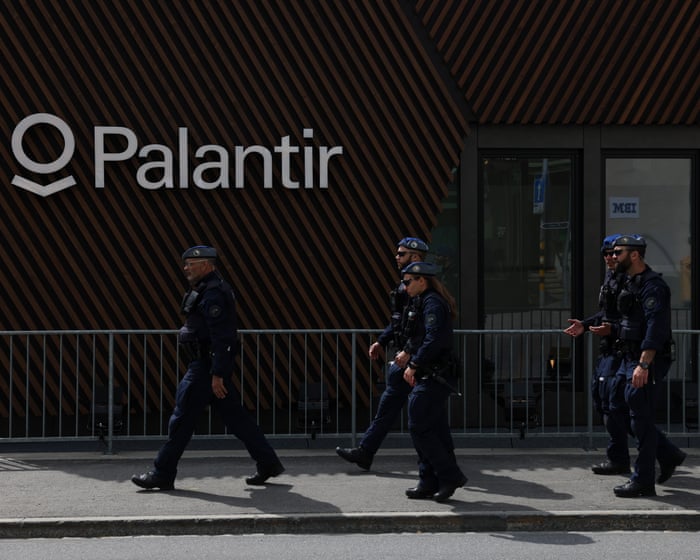
Palantir CEO Alex Karp’s manifesto calls for Silicon Valley to fully support the US military and suggests mandatory national service. The company warns about a new era of AI-powered weapons and proposes that technology firms take a bigger role in national defense and crime fighting.
Key Facts
Palantir posted a 22-point summary of CEO Alex Karp's book advocating closer ties between Silicon Valley and the Pentagon.
The manifesto urges tech engineers to actively participate in national defense.
It warns that AI weapons will be developed regardless and stresses the importance of who builds them.
The document suggests mandatory US national service and stronger military roles for countries like Japan and Germany.
Palantir calls for tech companies to help combat violent crime.
It criticizes “hollow pluralism” and questions tolerance for some cultures.
Palantir provides data-processing software mainly used by US military, intelligence, and police agencies.
The company has faced criticism for its growing influence and close government ties, including during President Trump’s administration.
Read the Original
Want the full story? Tap a source to open the original
article.
OpenAI released its new GPT-5.5 model, called "Spud," which is faster and better at handling complex tasks with less help from users. It is available now for paid ChatGPT and Codex users, and businesses may benefit from lower costs thanks to Nvidia's new chips.
Key Facts
GPT-5.5 is faster and more capable than the previous GPT-5.4 model.
The model can handle multi-step tasks more independently, needing less detailed instructions.
It is available now to paid users of ChatGPT and Codex, with API access coming soon.
OpenAI tested the model with Nvidia employees before release.
The model works well for coding, office work, and early scientific research that need long-term reasoning.
Nvidia’s new computer chips reduce the cost of running AI models like GPT-5.5 by up to 35 times per token (a token is a piece of text).
OpenAI aims to increase use of GPT-5.5 by businesses and has made a plan with Nvidia to simplify company adoption.
OpenAI views computing power as central to the future economy, with AI playing a key role.
Read the Original
Want the full story? Tap a source to open the original
article.
Over 200,000 people have signed petitions asking the UK government to stop contracts with Palantir, a US tech company involved in NHS, police, and military work. Palantir’s software is used in several public services, but critics worry about privacy and ethical issues linked to its work with US immigration enforcement and the Israeli military.
Key Facts
Two petitions gathered 229,000 signatures calling for the UK government to end all public contracts with Palantir.
One petition specifically asks the health secretary to cancel a £330 million contract between Palantir and the NHS.
Palantir is in talks with the Metropolitan police to use its AI software to analyze intelligence for criminal investigations.
The company has about £600 million in contracts with UK public bodies, including a £240 million deal with the Ministry of Defence.
Palantir’s UK CEO, Louis Mosley, publicly responded to criticisms and challenged some inaccurate claims on social media.
Critics say Palantir’s technology is used by controversial groups like US immigration enforcement ICE and the Israeli military.
Campaigners want the government to use contract break clauses to stop deals with Palantir quickly.
Palantir states its software helps improve NHS operations, cancer diagnosis speed, and supports Royal Navy missions.
Read the Original
Want the full story? Tap a source to open the original
article.
Anthropic announced a new AI model called Claude Mythos, which can find and exploit hidden security flaws in computer systems. The company has not released it publicly but is working with select partners to fix these problems before hackers can use them.
Key Facts
Claude Mythos can discover unknown security weaknesses and exploit them autonomously.
Anthropic is sharing the AI only with a few American organizations and the UK’s AI Security Institute for testing.
British officials warned AI will make cyber-attacks faster and easier, and many businesses are not prepared.
Mythos has helped Mozilla find and fix many flaws in the Firefox browser.
The US government previously labeled Anthropic a security risk but is now working with the company again.
AI tools like Mythos may turn hidden cyber risks into bigger, systemic threats that are easier to find and exploit.
There is concern about relying on private companies for control of critical cybersecurity infrastructure.
Without global rules, the internet may split into separate secure zones rather than remain a single global system.
Read the Original
Want the full story? Tap a source to open the original
article.
A Utah startup named Paterna Biosciences says it has created fully developed human sperm from stem cells taken from testicular tissue. They used these lab-grown sperm to fertilize eggs and produced embryos that looked healthy, though the results still need independent confirmation and further testing.
Key Facts
Paterna Biosciences developed human sperm from sperm-forming stem cells outside the body.
The process used a small sample of testicular tissue and simulated natural sperm development in a lab dish.
They applied computer models to identify the molecular signals needed at each stage of sperm growth.
The lab-grown sperm successfully fertilized eggs, creating embryos that appear healthy so far.
This advancement could help 10-15% of infertile men who produce no sperm but have stem cells that could mature under the right conditions.
The method is not yet ready for medical use and requires more studies on fertilization rates, embryo quality, and genetic safety.
Clinical trials to attempt pregnancies with lab-grown sperm could start as early as next year if further tests are positive.
Experts warn that fertility treatment costs and limited insurance coverage might restrict who benefits from this technology.
Read the Original
Want the full story? Tap a source to open the original
article.
Apple's M4 Mac mini and Mac Studio desktop computers are becoming harder to buy, with many models showing long wait times or being marked as unavailable. This likely signals that updated versions will come out later this year, as Apple reduces current inventory before launching new products.
Key Facts
The base M4 Mac mini model costing $599 is now listed as "currently unavailable" on Apple’s website.
Many M4 Mac mini models have delivery times of 5 to 12 weeks, depending on their memory and storage options.
Mac Studio models with 128GB or 256GB of RAM are also currently unavailable.
These stock shortages are not seen in the M4 iMac or certain MacBook Pro models, which ship in a few weeks.
The delays differ from the shorter, stable wait times seen for the popular MacBook Neo.
Apple usually reduces stock before releasing new versions of its products to avoid having outdated items.
Demand may also be higher because these desktops are well-suited for running local AI programs, which require strong memory and processing power.
Apple Silicon’s design allows both the processor and graphics chip to share large amounts of fast memory, making these machines attractive for AI tasks.
Read the Original
Want the full story? Tap a source to open the original
article.
The UK Biobank project collects health and genetic information from 500,000 British volunteers to help research diseases. Recently, some of this data was found for sale online on a Chinese website, raising concerns about privacy and data security.
Key Facts
The UK Biobank started in 2003 and collected data from 500,000 volunteers aged 40 to 69 between 2006 and 2010.
Participants provide genetic data, health info, biological samples, and lifestyle details, with ongoing follow-ups.
Researchers use anonymized UK Biobank data to study causes and treatment of many diseases.
The project includes scans of brains, hearts, and other organs from 100,000 people to help detect diseases early.
Data from the project led to discoveries about alcohol’s effect on the brain, diabetes and heart structure, and COVID-19 brain damage.
Recently, anonymized UK Biobank data was listed for sale on the Chinese website Alibaba.
UK Biobank says personal identifying details were not included and no sales are believed to have happened.
The project plans to increase security by limiting how much data researchers can export and will conduct a full investigation.
Read the Original
Want the full story? Tap a source to open the original
article.
Apple fixed a security bug that allowed deleted Signal messages to be stored in a way law enforcement could access them on iPhones. The bug affected push notifications, which sometimes kept message content even after the app was deleted. Users can now update their devices to remove these stored notifications and improve privacy.
Key Facts
Apple had a bug that saved parts of Signal messages in push notifications for up to a month.
This happened even after users deleted the messages and the Signal app from their iPhones.
The FBI said they could extract these messages from the iPhone’s notification database.
The bug was discovered after a case involving people charged with “Antifa” activities, which President Trump had labeled as terrorism.
Apple fixed the issue by updating iOS to stop retaining deleted notification content.
Signal praised Apple for quickly fixing the bug and said users only need to update their devices to be protected.
Users on social media advised turning off message previews in notifications for extra privacy.
The problem was due to Apple accidentally saving notifications in logs when the app was no longer on the device.
Read the Original
Want the full story? Tap a source to open the original
article.