NASA has finished building the Nancy Grace Roman Space Telescope, and it will launch in September, eight months early and under budget. The telescope has a wide view and powerful imaging tools that will send back large amounts of data to help study space, especially in infrared light.
Key Facts
The Nancy Grace Roman Space Telescope (NGRST) is ready for launch in September.
It was completed eight months earlier than planned and stayed under budget.
The telescope has a wide-field view about 100 times bigger than Hubble’s.
It will send back about 1.4 terabytes of data to Earth every day.
NGRST uses hardware from two surplus spy satellites offered by the National Reconnaissance Office.
The telescope will study the universe in infrared light, which is hard to observe from Earth.
It has 18 detectors, each capturing very high-resolution images.
A filter system allows it to study different wavelengths of light and perform spectroscopy to analyze light from celestial objects.
Read the Original
Want the full story? Tap a source to open the original
article.
IT service companies are changing how they charge for work because artificial intelligence (AI) enables smaller teams to do more work faster than before. Traditional pricing based on the number of people and hours spent no longer matches the results delivered, so companies are exploring new ways to price based on the actual outcomes or results.
Key Facts
IT firms used to charge based on the number of staff and hours worked.
AI allows smaller teams to produce much more work, speeding up projects.
This breaks the old link between effort (people and time) and results.
Clients now expect prices to reflect the actual value and results delivered.
Shifting to outcome-based pricing means providers are paid for success, not time spent.
Moving to new pricing models requires clear agreement on what success means for each project.
Providers and clients both need to change how they measure and share value.
The IT industry has wanted to move away from time-based pricing for years, but AI is speeding up this change.
Read the Original
Want the full story? Tap a source to open the original
article.
A new Hulu docuseries called "The Cult of NatureBoy" follows a social media influencer named NatureBoy and his followers as they look for a perfect, ideal place to live. ABC’s "Good Morning America" shared a first look at this series.
Key Facts
The show is a docuseries on the streaming service Hulu.
It focuses on a person known as NatureBoy, who is popular on social media.
The series follows NatureBoy and his followers on a journey to find a utopia, which means a perfect place.
ABC’s program "Good Morning America" presented a preview of the series.
The docuseries explores themes of community and ideal living.
It was first shown on April 23, 2026.
The article provides a look, not a full review or opinion, just a preview of the show.
NatureBoy’s influence and his followers’ quest are the central topics of this series.
Read the Original
Want the full story? Tap a source to open the original
article.
BMW is updating its 7 Series sedan for the 2027 model year with major changes inside and out. The new version borrows design and technology from BMW's electric vehicle family, adding a new battery, improved screens, and advanced driver assistance features.
Key Facts
The 2027 BMW 7 Series refreshes the current seventh-generation G70 model introduced in 2023.
It incorporates styling and technology from BMW’s Neue Klasse electric vehicles like the iX3 and i3.
The front and rear bumpers have a cleaner design, and the hood features new ridges.
The car keeps BMW’s large twin-kidney grille design, which also houses sensors for Level 2 driver assistance.
Inside, it has a new Panoramic iDrive Display that stretches across the dashboard with multiple touchscreens.
The doors have automatic open/close functions with sensors to ensure safety and flush handles.
The BMW Operating System X supports wireless Apple CarPlay and Android Auto and offers over-the-air software updates.
BMW’s new electrical system reduces wiring by about 2,000 feet, improving efficiency and allowing future software improvements.
Read the Original
Want the full story? Tap a source to open the original
article.
New natural gas projects are being built to provide power for data centers supporting big AI companies like OpenAI, Meta, Microsoft, and xAI. These projects could produce more greenhouse gas emissions than some countries, raising concerns about the environmental impact of the growing AI industry.
Key Facts
Eleven data center campuses in the U.S. have new gas projects that could emit over 129 million tons of greenhouse gases annually.
These gas projects mainly supply power directly to data centers, a trend called "behind-the-meter" power.
Behind-the-meter power lets data centers avoid using the regular power grid, often due to delays or cost concerns.
xAI’s data centers in Memphis and Southaven could each emit over 6.4 million tons of carbon dioxide equivalent per year.
xAI’s turbines have faced protests from local communities worried about air pollution, and the NAACP recently sued the company.
Microsoft is considering buying power from a Chevron-backed gas project in West Texas that could emit more gases annually than Jamaica.
Officials warn that these emissions increases may reverse progress made in reducing pollution from energy sources.
Companies say they are also investing in cleaner energy but see behind-the-meter power as needed where the grid cannot keep up.
Read the Original
Want the full story? Tap a source to open the original
article.
Researchers at the University of Bristol are using special equipment to measure viewers’ brain activity, heart rate, and eye movements while they watch films. This helps them find which parts of a movie make audiences most focused and engaged, and the data is used to help filmmakers improve their work.
Key Facts
The University of Bristol has a unique cinema set up with sensors to track brain and heart activity, eye movement, and small physical reactions.
The goal is to find moments in films when audience members are highly engaged and immersed in the story.
Researchers collect both biometric data and verbal feedback from viewers to understand their emotional responses.
The experiment was tested using the short sci-fi film "Reno," shown in different versions to see how changes affect audience engagement.
Director Rob Hifle uses this data to refine the film’s final cut and better connect with viewers.
The technology could be useful not only during editing but also earlier in the filmmaking process.
Some experts note that audience preferences vary widely and success may depend more on reaching the right viewers than on universal appeal.
Read the Original
Want the full story? Tap a source to open the original
article.
The article explains that people find it difficult to understand very large numbers because our brains did not evolve to handle such amounts easily. This creates challenges when dealing with data and information involving big numbers.
Key Facts
Humans find it hard to grasp very large numbers.
Our natural intuition is not designed for large numerical values.
This difficulty can affect how we process and understand data.
The article highlights a gap between human thinking and numerical information.
Understanding big numbers is important in many modern contexts like data analysis.
Read the Original
Want the full story? Tap a source to open the original
article.
Personal data of over 300,000 European travellers who bought Interrail passes from Eurail was hacked and posted for sale on the dark web. Some affected travellers have been told to cancel their passports to prevent fraud, causing concern and extra costs. Eurail is advising customers to be cautious and update their passwords while investigating the incident.
Key Facts
Eurail, a Dutch company selling Interrail passes, was hacked in December.
More than 300,000 travellers' personal data was accessed, including passport numbers and contact details.
A sample of the stolen data was published on the messaging app Telegram, and the data is being sold on the dark web.
The UK Passport Office and other agencies have told some travellers to cancel their passports to avoid fraud.
Replacing passports can cost over £100 and cause delays for upcoming travel plans.
Eurail advised customers to watch for suspicious communications and to change passwords for email, social media, and banking.
Some affected customers are asking Eurail for compensation to cover the costs of new passports.
Eurail apologized for the incident and said protecting customer data remains their top priority.
Read the Original
Want the full story? Tap a source to open the original
article.
British and international cybersecurity agencies warn that hackers supported by China are using everyday internet-connected devices like wifi routers to secretly attack companies. These hackers take control of vulnerable devices to spy on targets and steal data, using methods that make it hard to trace where attacks come from.
Key Facts
China-linked hackers are targeting devices such as wifi routers, printers, and webcams for cyber-attacks.
These devices are often older or have not been updated with the latest software, making them easier to hack.
The hacked devices form "covert networks" or "botnets," which act like hidden bases for spying and theft.
The UK’s National Cyber Security Centre (NCSC) and agencies in nine other countries issued a warning about this threat.
China’s intelligence and military agencies are highly advanced in cyber operations.
The hackers use compromised devices to hide their location, similar to how a virtual private network (VPN) works.
Companies are advised to map their IT systems, use multifactor authentication, and limit network connections to protect against these attacks.
Some covert networks are run by private Chinese companies and have infected hundreds of thousands of devices worldwide.
Read the Original
Want the full story? Tap a source to open the original
article.
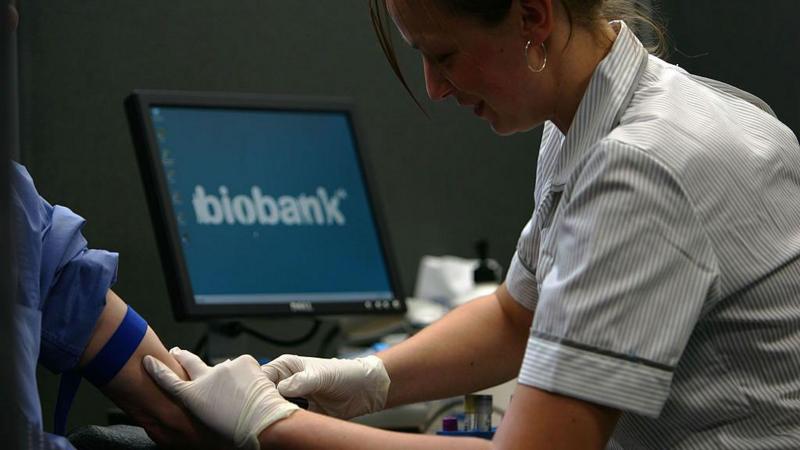
The UK Biobank’s health data of 500,000 members was found for sale on a Chinese website called Alibaba. The data did not include personal details like names or addresses, and the listings were removed after being discovered. The UK and Chinese governments, along with Alibaba, are working together to investigate the issue.
Key Facts
Health data of 500,000 UK Biobank members was listed for sale online in China.
The data did not have personally identifying information such as names, addresses, or phone numbers.
The UK Biobank is a project used to improve research on diseases like dementia and cancer.
The data breach was reported to the UK government on Monday by the UK Biobank charity.
The listings appeared on Alibaba, a major Chinese e-commerce platform.
The UK government says no sales were made from the data listings.
The listings were removed, and the Chinese government cooperated in the investigation.
The UK’s Information Commissioner’s Office said medical data is very sensitive and must be handled carefully according to law.
Read the Original
Want the full story? Tap a source to open the original
article.
Sony’s AI robot named Ace has defeated top table tennis players in a new experiment. This event marks a significant achievement in the development of robots that can compete with humans in fast, skill-based sports.
Key Facts
Sony created an AI robot called Ace.
Ace played table tennis against elite human players.
Ace won these matches, demonstrating advanced skills.
The experiment is viewed as a major step forward in robotics.
Table tennis requires quick reflexes and precise movements, which the robot managed successfully.
This breakthrough shows how AI and robotics can improve in handling complex physical tasks.
The event was reported on April 23, 2026, by France 24.
Read the Original
Want the full story? Tap a source to open the original
article.
Spotify started in 2008 and changed how people listen to music by offering legal streaming online. It now has over 750 million users and offers music, podcasts, and audiobooks worldwide, except in a few restricted countries. Big artists like Taylor Swift and Drake have gained huge audiences through Spotify, which also helps artists from different languages and cultures reach fans globally.
Key Facts
Spotify was founded in 2006 and launched in 2008, expanding to the U.S. in 2011.
It offers more than 100 million songs, 7 million podcasts, and 500,000 audiobooks.
The platform has 751 million users, growing 11% each year.
Taylor Swift is Spotify’s most-streamed artist, with 26.6 billion streams in 2024.
Spotify supports artists worldwide, with 16 languages reaching its Global Top 50 in 2025.
The U.S. and Europe make up over half of Spotify’s users and two-thirds of its revenue.
Popular music genres on Spotify that earn over $100 million in royalties include Brazilian funk, K-pop, urban Latino, and reggaeton.
Spotify introduced an AI-generated DJ feature in 2025 to create personalized music experiences.
Read the Original
Want the full story? Tap a source to open the original
article.
States and local areas are beginning to pass laws that limit or stop the building of large data centers. This change comes as many people grow concerned about the rapid growth of data centers needed for artificial intelligence (AI) technology.
Key Facts
Maine became the first state to ban the building of large data centers.
The move reflects a growing concern about the effects of data centers on communities.
Data centers are buildings that store and process large amounts of information.
These centers are important for running AI tools and services.
The expansion of data centers has raised issues like energy use, noise, and local disruption.
Other states and cities are considering similar measures to control data center growth.
This trend shows increased public attention to the impact of AI infrastructure.
Read the Original
Want the full story? Tap a source to open the original
article.
Anthropic, an artificial intelligence company, has introduced its new Mythos model. Despite being banned earlier this year by the Trump administration from military and government projects, the company has gained renewed interest from different federal government agencies because of this model.
Key Facts
Anthropic is an artificial intelligence company.
The new AI model from Anthropic is called Mythos.
Mythos is Anthropic’s most advanced model so far.
Earlier in the year, the Trump administration banned Anthropic’s products from use in military and government jobs.
Despite the ban, parts of the federal government are now interested in Anthropic’s Mythos model.
This interest gives Anthropic a way to remain connected to the White House and federal government.
The renewed attention suggests a possible change in how the government views Anthropic’s technology.
Read the Original
Want the full story? Tap a source to open the original
article.
Experts report that websites sharing child sexual abuse material have doubled in number. These sites are often run by criminal gangs who make money from illegal content.
Key Facts
The number of websites with child sexual abuse content has increased two times.
Criminal gangs control many of these websites.
These gangs profit financially from sharing illegal material.
The growth in such websites raises concerns about online safety.
Experts call for stronger measures to stop these criminal activities.
Website access issues in the article suggest technical barriers to viewing the content.
Read the Original
Want the full story? Tap a source to open the original
article.
Anthropic, a company that makes AI tools, is facing many problems just before a possible stock market launch valuing it near $800 billion. Meanwhile, its rival OpenAI is trying to attract customers by pointing out Anthropic’s recent difficulties and promoting itself as more reliable.
Key Facts
Anthropic’s revenue has tripled to $30 billion this year due to its popular coding AI tools.
The company’s latest AI model, Opus 4.7, showed improved test results but users reported higher costs and bugs.
Growing customer demand has caused capacity problems and occasional outages for Anthropic’s services.
The article highlights how deep reading helps teens develop important brain skills like empathy, critical thinking, and creativity, especially in the age of artificial intelligence (AI). It encourages families to build strong reading habits to support cognitive growth and lifelong learning.
Key Facts
Reading deeply helps build brain functions like understanding others' feelings and thinking critically.
Teen reading for fun has dropped from 27% to 14% among 13-year-olds since 2012.
Most eighth graders (70%) are not reading at a proficient level according to national tests.
Many teens involved in a literary magazine community gain skills that help them succeed in college and careers.
Neuroscience shows that reading physically changes the brain, improving reasoning and empathy.
Families that value reading tend to have children with better literacy skills.
Making time for reading, even with busy schedules, strengthens the brain like exercise strengthens the body.
Schools should provide clear, research-based reading instruction to help struggling readers.
Read the Original
Want the full story? Tap a source to open the original
article.
The article discusses how AI technology focuses on removing friction—delays and difficulties—in human life, pushing for constant speed and efficiency. It argues that this loss of friction may undermine important human experiences like reflection and meaning, which take time and involve complexity beyond pattern recognition by AI.
Key Facts
The author began by researching how fast a match must be struck to ignite, illustrating a human curiosity and patience often replaced by quick digital searches.
Silicon Valley and AI developers promote frictionless experiences that speed up decisions and interactions.
Some experts believe AI must operate without human oversight in split-second situations like defense, emphasizing speed over reflection.
The author notes a growing tension between viewing AI as simple pattern-matching machines versus seeing them as early forms of consciousness.
Tech leaders like Marc Andreessen value rapid action and little self-reflection, which fuels AI development focused on efficiency.
The article warns that AI’s imitation of human behavior lacks true meaning or consciousness, reducing rich human experiences to shallow mimicry.
Friction, or moments of pause and complexity, is important for reflection, creativity, and deeper understanding, which AI cannot replicate.
The piece suggests that losing friction could lead to a societal emptiness as people rely more on AI and less on human insight and feelings.
Read the Original
Want the full story? Tap a source to open the original
article.
The article is a letter from Jim VandeHei to young people, offering advice on how to handle rapid changes, especially related to artificial intelligence (AI). He encourages using AI as a helpful tool, staying hopeful, working hard, and focusing on personal control in an uncertain world.
Key Facts
Many parents and kids feel unsure about how to deal with fast changes, especially AI.
AI is changing jobs and life in big ways, similar to the invention of electricity.
Success will come to those who use AI smartly to improve their work, not just the smartest or fastest learners.
It's normal to be worried about AI, but ignoring it is not a good choice.
Young people should practice using AI daily to get better at tasks and stand out in the job market.
Hard work, clear communication, and learning new skills are important regardless of your major or job field.
Social media can give a negative view of the world, but many positive things are happening, like lower crime and better health.
Individuals should focus on what they can control, like their habits, actions, and attitude.
Read the Original
Want the full story? Tap a source to open the original
article.