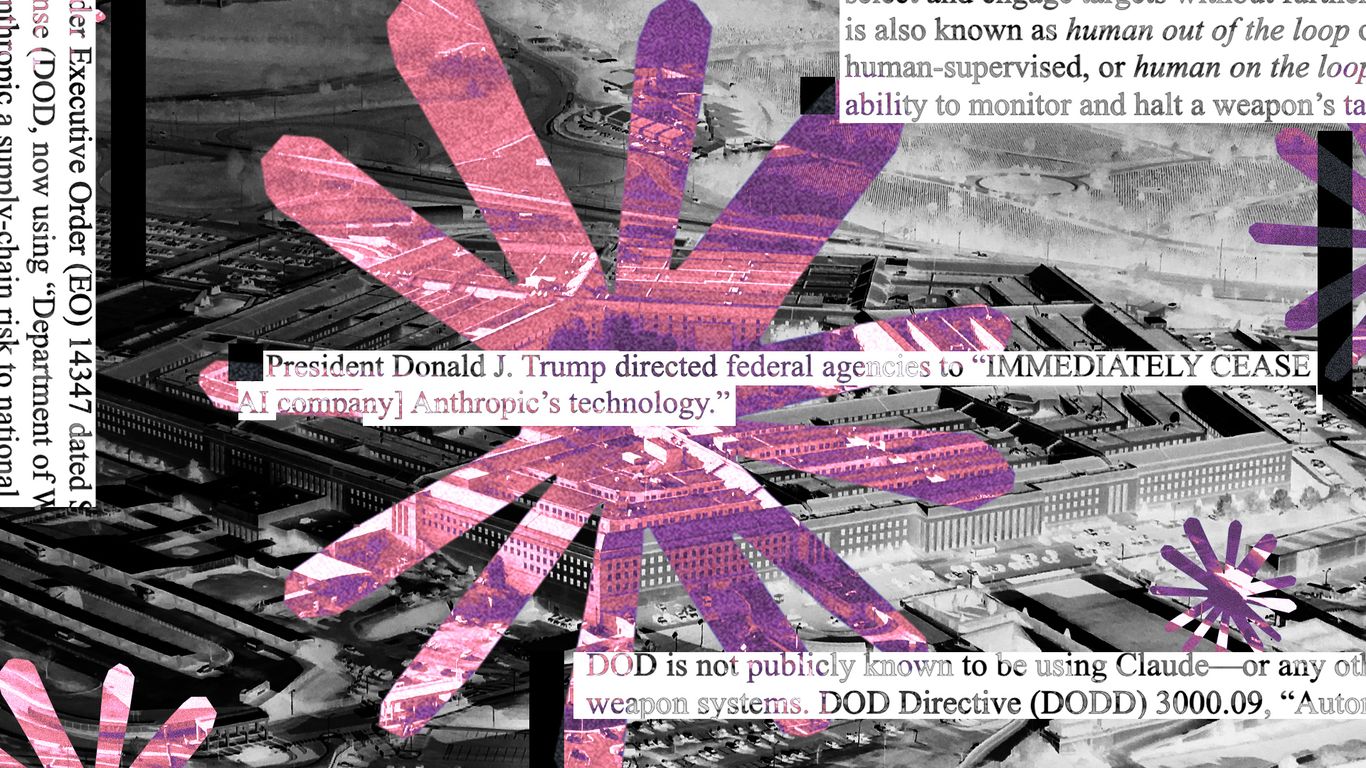
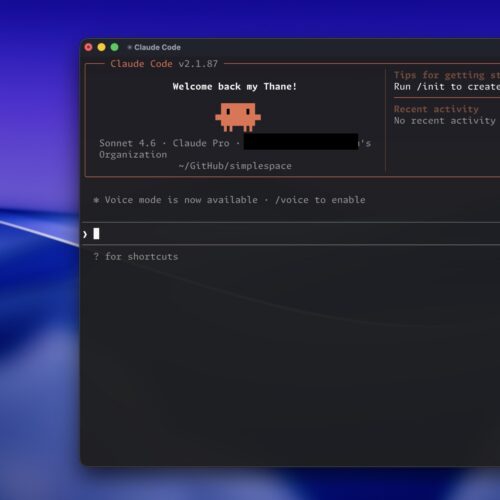
Anthropic says it cannot control or turn off its AI models once the Pentagon starts using them. The Pentagon has labeled Anthropic a supply chain risk because it disagrees with how the company wants its AI to be used in military operations.
Key Facts
Anthropic filed a document in federal court saying it has no way to see, control, or shut down its AI after deployment by the Pentagon.
The Pentagon called Anthropic a supply chain risk, concerned about the company's involvement in sensitive military uses.
Anthropic’s policies forbid using its AI, called Claude, for autonomous weapons or mass surveillance.
The Pentagon rejected these restrictions, leading to a legal dispute.
A D.C. appeals court denied Anthropic’s request to pause the supply chain risk label, while a California judge allowed a related request.
Because of the court decisions, Anthropic cannot get new Pentagon contracts but can work with other government agencies.
The Trump administration is trying to use Anthropic’s new AI model, Mythos, across federal agencies, raising cybersecurity concerns.
A court hearing on this issue is set for May 19.
Read the Original
Want the full story? Tap a source to open the original
article.
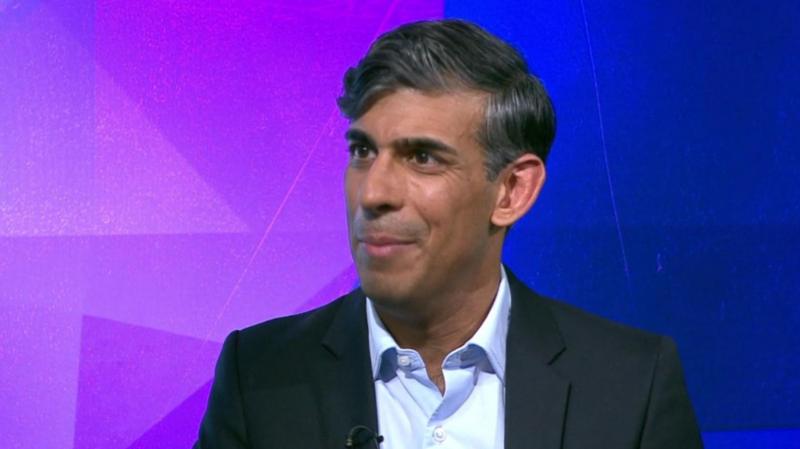
Rishi Sunak, former UK Prime Minister and advisor to AI companies Anthropic and Microsoft, said governments should remove National Insurance (a tax on jobs) to encourage hiring as AI changes the job market. He suggests replacing this tax with taxes on company profits, which could increase due to AI’s productivity gains.
Key Facts
Sunak wants to remove National Insurance tax on workers over time to make hiring easier.
He proposes shifting tax focus from jobs to corporate profits boosted by AI technology.
AI is making it harder for young people to find entry-level jobs in fields like law and creative industries.
Sunak believes governments must rethink tax systems because AI may reduce income from job taxes.
He advises Microsoft and Anthropic, and helped set up the UK’s AI Safety Institute.
Anthropic’s new AI model, Claude Mythos, can outperform humans in cybersecurity tasks, raising safety concerns.
Sunak worked with politicians from different parties to encourage UK tech investment.
He described the UK as an “AI superpower” thanks to major companies like DeepMind, Anthropic, and OpenAI operating there.
Read the Original
Want the full story? Tap a source to open the original
article.
On Earth Day, people are encouraged to recycle unused electronic devices in environmentally friendly ways. Some recycling programs may also offer money in exchange for old electronics.
Key Facts
Earth Day is observed on April 22 each year.
Electronic waste, or e-waste, includes devices like old phones, computers, and tablets.
Proper disposal of e-waste helps reduce environmental harm.
Some companies and programs pay people for turning in old electronics.
Recycling e-waste allows valuable materials to be reused.
Experts recommend using certified recycling centers to handle e-waste safely.
Technology reporter Abrar Al-Heeti discussed these options on CBS News.
Read the Original
Want the full story? Tap a source to open the original
article.
Ars Technica has published a clear policy on how it uses generative AI in its editorial work. The company states that all reporting, analysis, and commentary are written by humans, and AI tools are only used to assist with tasks like editing and research under strict human control.
Key Facts
Ars Technica’s editorial content is created by human writers and editors.
AI does not write stories, create images, or produce videos for Ars Technica.
AI tools may be used to help with grammar checks, style suggestions, and research assistance.
Any AI-generated material shown is clearly marked and used only as examples or for analysis.
AI-generated content is not considered an authoritative source and must be verified by humans.
When quoting or referencing named sources, the information must come from direct human work, not AI summaries.
The policy is publicly shared to explain how Ars Technica uses AI and will be updated if practices change.
Read the Original
Want the full story? Tap a source to open the original
article.
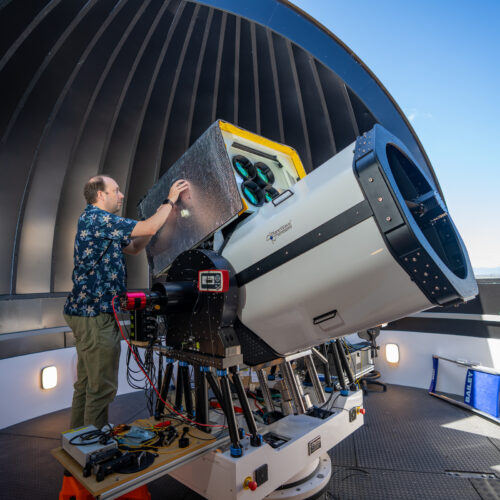
NASA’s Artemis II mission used new laser communication technology to send much higher-quality video and images from the Moon to Earth. This system can transmit data much faster than older radio methods but requires clear skies and special ground stations to work well.
Key Facts
Artemis II astronauts sent low-definition video most of the time using radio waves.
They also sent some high-resolution photos using laser communication, which transmits data with light instead of radio waves.
Laser communication can send data about 50 times faster than traditional radio systems.
The high-speed laser signals need clear skies and special ground stations to be received.
NASA has only three ground stations able to receive laser signals so far (two in the U.S. and one in Australia).
Laser systems use less power and smaller transmitters compared to radio ones.
To ensure constant laser communication, NASA may need around 40 ground stations worldwide.
Artemis II tested a lower-cost ground terminal for laser communication to help expand the system in the future.
Read the Original
Want the full story? Tap a source to open the original
article.
Microsoft released an emergency update to fix a serious security problem in its ASP.NET Core software used on macOS and Linux. The flaw allowed hackers to gain full control of affected devices by exploiting a weakness in how the software checks digital signatures. Users must update and take extra steps to protect their systems fully.
Key Facts
The vulnerability affects Microsoft.AspNetCore.DataProtection versions 10.0.0 to 10.0.6 on macOS and Linux.
Hackers could exploit this flaw to gain SYSTEM-level access, meaning full control of the device.
The problem is due to incorrect checking of cryptographic signatures during data validation.
Even after updating to version 10.0.7, previously stolen authentication tokens may still allow unauthorized access.
Microsoft advises users to rotate their DataProtection keys to invalidate any forged tokens created during the vulnerable period.
The issue does not affect Windows users because different encryptors are used there.
The flaw was found while fixing another bug related to decryption failures in the software.
Users whose applications run internet-facing endpoints are at higher risk and should audit tokens and reset credentials where needed.
Read the Original
Want the full story? Tap a source to open the original
article.
Anthropic tested removing Claude Code, a popular tool, from its $20-per-month Pro subscription plan for about 2% of new users, causing concern among developers. The company explained the test was to manage higher usage and maintain service quality, and it later updated its pricing page to show Claude Code remains available in the Pro plan.
Key Facts
Anthropic considered removing Claude Code from the Pro plan, which costs $20 per month.
Claude Code stayed included in the $100-per-month Max plan.
The removal was a small test affecting roughly 2% of new Pro sign-ups.
Usage of Claude Code and related workflows has increased a lot recently.
Anthropic has introduced limits during peak hours to handle high demand.
The company updated its pricing page to say Claude Code is still in the Pro plan after user confusion.
Anthropic promised to notify users well in advance before making changes that affect existing subscribers.
Heavy use of Claude Code is causing occasional service problems for Anthropic.
Read the Original
Want the full story? Tap a source to open the original
article.
Transportation Secretary Sean Duffy said that artificial intelligence (AI) will not replace human air traffic controllers. He believes AI can help make flying safer, but human controllers will always have the final say in important decisions.
Key Facts
Sean Duffy is the Transportation Secretary.
He addressed worries about AI replacing air traffic controllers.
Duffy said AI could improve safety in air traffic control.
Human controllers will keep control over key decisions.
This statement was made during an interview with CBS News.
The U.S. is working on modernizing its air traffic control system.
The goal is to use AI as a tool, not a replacement for humans.
Read the Original
Want the full story? Tap a source to open the original
article.
Google has introduced its eighth-generation custom chips called TPUs (Tensor Processing Units) designed for faster and more efficient AI work. There are two new types: TPU 8t for training AI models much quicker, and TPU 8i for running AI models more efficiently during use.
Key Facts
Google uses its own TPUs instead of Nvidia AI chips for its cloud AI services.
TPU 8t is built to speed up AI training, reducing the time from months to weeks.
TPU 8t clusters, called pods, contain 9,600 chips and 2 petabytes of shared memory.
TPU 8t can scale up to one million chips working together in a single system.
TPU 8i is designed for running AI models (inference) more efficiently, with larger pods of 1,152 chips.
TPU 8i chips have three times more on-chip SRAM memory (384 MB) for faster processing of longer tasks.
Both new TPUs use Google's custom ARM-based CPUs instead of older x86 CPUs, improving energy efficiency.
Google aims to make AI training and use more efficient to reduce costs and power consumption.
Read the Original
Want the full story? Tap a source to open the original
article.
A new poll from Quinnipiac University shows that 74 percent of Americans believe college students should be taught how to use artificial intelligence (AI). Only 14 percent said learning AI is not important for college students.
Key Facts
The poll was released on Wednesday by Quinnipiac University.
74 percent of Americans think it is very or somewhat important for college students to learn AI skills.
14 percent of people say it is not important at all for students to learn AI.
The poll highlights growing public support for AI education in colleges.
AI refers to technology that allows machines to perform tasks that normally need human intelligence, like recognizing speech or making decisions.
The results come during a time when AI technology is rapidly expanding and becoming more common.
Read the Original
Want the full story? Tap a source to open the original
article.
Anthropic is investigating a possible unauthorized access to its new AI model called Mythos, which helps find software weaknesses. The company says the possible breach was limited to a third-party vendor and they have not found any issues in their own systems.
Key Facts
Mythos is an AI model released by Anthropic in April to help detect software security problems.
It was shared only with a few big companies like Amazon, Apple, Cisco, JPMorgan Chase, and Nvidia.
Anthropic uses third-party vendors to help develop its AI models.
There is a report that unauthorized users accessed Mythos through a vendor’s system.
So far, no breach has been found inside Anthropic’s main systems.
Federal officials and global leaders worry Mythos could be misused by hackers to attack important systems like banks and hospitals.
The goal of Mythos is to improve security by helping companies find and fix vulnerabilities faster.
Experts warn AI tools like Mythos might help hackers move faster than humans in breaking into networks.
Read the Original
Want the full story? Tap a source to open the original
article.
Physicists have found that a previously observed difference between the muon's magnetic behavior and theoretical predictions is actually due to an error in calculations. This means the Standard Model of particle physics still correctly explains the muon's properties, and no new force or particle is needed.
Key Facts
The muon is a heavier relative of the electron, used to test particle physics theories.
Scientists measured the muon's magnetic moment to see if it matched predictions by the Standard Model.
Earlier experiments showed a small but unexpected difference (discrepancy) that hinted at new physics.
New calculations using a different method eliminated that discrepancy, showing it was a mistake.
The Standard Model remains accurate in describing the muon's magnetic properties.
The Muon g-2 experiment and other studies aimed to find signs of unknown forces or particles.
Statistical signals called "sigma" indicate the strength of these results; 5 sigma is needed for discovery.
The recent findings reduce the chance that unknown physics affects the muon's magnetism.
Read the Original
Want the full story? Tap a source to open the original
article.
Sony built a robot called Ace that can play table tennis at a level similar to expert human players. Using artificial intelligence, Ace learns from experience and can react quickly, sometimes beating professional athletes in matches on a specially built Olympic-sized table.
Key Facts
Sony created a robot arm named Ace to play table tennis.
Ace uses reinforcement learning, a type of AI where it learns by practicing instead of being explicitly programmed.
The robot has nine cameras around the court to track the ball’s movement and spin.
Ace has eight joints allowing it to move its paddle quickly and accurately.
Sony built a full-size Olympic table tennis court for fair matches with human players.
Some professional players were surprised by how well Ace performed.
Sony says this is the first time a robot has matched expert human play in a common physical sport.
The technology could be useful in factories and other industries requiring fast, adaptive robots.
Read the Original
Want the full story? Tap a source to open the original
article.
Anthropic, a US tech startup, created an advanced AI model called Mythos that can find unknown security weaknesses in computer systems. Because Mythos could help hackers exploit these hidden flaws, Anthropic has not released it to the public, but some companies like Apple and Goldman Sachs are testing it. Recently, some people gained unauthorized access to Mythos, raising concerns about keeping risky AI tools safe.
Key Facts
Mythos is an AI model designed to find unknown security flaws in software and systems.
These flaws, called “zero-day” vulnerabilities, are unknown to developers and can be exploited before being fixed.
Anthropic announced Mythos on April 7 but decided not to release it publicly to avoid cybersecurity risks.
Selected companies, including Apple and Goldman Sachs, have access to Mythos for testing.
A small group of people reportedly gained unauthorized access to Mythos in a private online forum.
The UK’s AI Security Institute says Mythos is more advanced than earlier AI models in terms of cybersecurity threats.
Mythos successfully completed a complex 32-step simulated cyber-attack during testing.
Experts say Mythos highlights the rapid growth in AI capabilities and the need for improved cybersecurity.
Read the Original
Want the full story? Tap a source to open the original
article.
Sony AI developed a robot named Ace that successfully beat some top table tennis players in official matches. Ace uses multiple cameras and an eight-jointed arm to track and respond to fast, spinning balls, showing advanced skills in playing the game.
Key Facts
Ace won three out of five matches against elite table tennis players but lost to professionals.
The robot uses images from several cameras to track the ball’s position and spin from different angles.
Ace has an eight-jointed arm on a movable base, allowing it to move and hit shots quickly.
It learned to handle spins and shots through 3,000 hours of simulated games.
Ace can perform tricky shots, like rapid backspin, that surprised even professional players.
The robot does not have eyes like humans and shows no emotions or intentions during matches.
The project was led by Peter Dürr at Sony AI in Zurich, and results were published in the journal Nature.
Experts say this achievement is important for robotics but noted that more engineering is needed for practical everyday robots.
Read the Original
Want the full story? Tap a source to open the original
article.
John Ternus will become Apple’s new CEO in September. He has worked at Apple for more than 20 years, mainly focusing on designing the company’s hardware products like the iPhone, iPad, and Mac.
Key Facts
John Ternus is 50 years old.
He has worked at Apple for over two decades.
Ternus’s main expertise is hardware engineering.
Apple is known for products like the iPhone, iPad, and Mac computers.
He will take over as CEO starting in September.
Before becoming CEO, he held a senior role at the company.
Read the Original
Want the full story? Tap a source to open the original
article.
A medical student from India named Sam created an AI-generated Instagram character called Emily Hart, designed to appeal to a conservative, pro-Trump audience. Using AI tools, he posted themed images and political messages, which gained millions of views and thousands of followers, generating income through subscriptions and merchandise.
Key Facts
Sam is a 22-year-old medical student from northern India who needed extra money.
He used Google’s AI tool Gemini to help create an AI-generated character named Emily Hart.
Emily Hart’s profile targeted conservative, pro-MAGA (Make America Great Again) viewers, especially older men in the U.S.
The Instagram account featured AI-generated images of Emily doing activities and posting political commentary supporting conservative views.
The account quickly gained millions of views and over 10,000 followers within a month.
Sam earned a few thousand dollars a month from paid subscriptions on Fanvue and selling MAGA-themed merchandise.
The trend of AI-generated conservative influencers is growing on social media, typically featuring white, blonde characters with emergency responder jobs.
The AI chatbot Gemini claims it provides neutral advice and does not favor any political viewpoint unless asked.
Read the Original
Want the full story? Tap a source to open the original
article.
The 22nd BAFTA Game Awards honored Clair Obscur: Expedition 33 as the top game, making it one of only two games to win major awards at all five main gaming events. The ceremony highlighted a wide range of games, celebrating creativity and artistic achievement over commercial success.
Key Facts
Clair Obscur: Expedition 33 won the main prize at the 22nd BAFTA Game Awards.
It is only the second game, after Baldur’s Gate 3, to win at all five major game award shows.
Blue Prince won the game design award and was praised for its unique, artistic gameplay.
Other games honored include Dispatch, Kingdom Come: Deliverance II, and Ghost of Yōtei.
The BAFTA awards focus on creative and artistic achievements rather than financial success or popularity.
Game developers often express gratitude for players connecting emotionally with their games.
The event showcases diverse types of games, including those addressing serious themes like dementia.
The awards contrast with commercial gaming events, emphasizing games as a form of art and culture.
Read the Original
Want the full story? Tap a source to open the original
article.
The article explains that current cybersecurity systems are not prepared to handle threats from artificial intelligence (AI). It argues that regulating AI may not stop these dangers, so we need to get ready for a riskier cybersecurity future.
Key Facts
Current cybersecurity defenses struggle to protect against AI-related threats.
Attempts to regulate AI may not be effective in preventing security risks.
AI can create new and more complex security challenges.
Preparing now is essential to handle future AI-driven cyberattacks.
The article uses the example of Claude Mythos to show these risks.
The cybersecurity landscape will become more dangerous as AI advances.
Immediate action and new strategies are needed for cybersecurity.
Read the Original
Want the full story? Tap a source to open the original
article.
In a small German care home, a social robot named Emma interacts with elderly residents by telling jokes and having conversations. The robot is designed to help with staff shortages and provide companionship, although residents still prefer human contact.
Key Facts
Emma is a small social robot used in a care home in Albershausen, Germany.
The robot can remember past talks, recognize faces, and has knowledge from artificial intelligence.
Emma’s role is to encourage residents to talk and reduce loneliness caused by staff shortages.
Residents like Waltraud find Emma entertaining but still prefer human interaction.
The robot’s design and use reflect a growing trend of using technology to support care workers.
The photographer has documented various human-robot interactions in different settings.
Experts believe robots should assist, not replace, human workers in care.
The rise of social robots raises questions about the future of human-technology relationships.
Read the Original
Want the full story? Tap a source to open the original
article.