Millions of physical books are being scanned and then destroyed to create digital data that helps train artificial intelligence (AI) models. This process raises concerns because many rare second-hand books might be lost forever.
Key Facts
Physical books are being digitized to provide information for AI training.
After scanning, some of these books are destroyed.
The practice is controversial due to the potential loss of rare and valuable books.
The investigation was reported by France 2 and covered by France 24.
AI models use huge amounts of digital data to learn and improve.
The destruction mainly affects second-hand books that are harder to replace.
This method helps AI understand language by learning from real human writing.
Authors and experts have expressed concerns about the impact on literature and culture.
Read the Original
Want the full story? Tap a source to open the original
article.
Penguin Colony is a video game where you play as penguins exploring Antarctica. The game mixes real history about Nazi explorers with strange, Lovecraftian horror elements and unique gameplay that involves collecting words instead of typical items.
Key Facts
Penguin Colony is made by Origame Digital and based on H.P. Lovecraft’s story At the Mountains of Madness.
Players control different kinds of penguins, each with unique abilities like high jumps or fitting through small spaces.
The game features a semi-open world with icy landscapes, human ruins, giant stone structures, and alien-looking objects.
A narrator tells the story of a racist scientist, linked to Nazi explorers also shown in the game.
The art style uses low-poly graphics reminiscent of older PlayStation 2 games.
Gameplay includes exploring, platforming, and switching between penguin characters.
The game’s story challenges Lovecraft’s racism and criticizes Nazi beliefs.
Some technical issues like audio glitches and control bugs are reported but do not ruin the experience.
Read the Original
Want the full story? Tap a source to open the original
article.
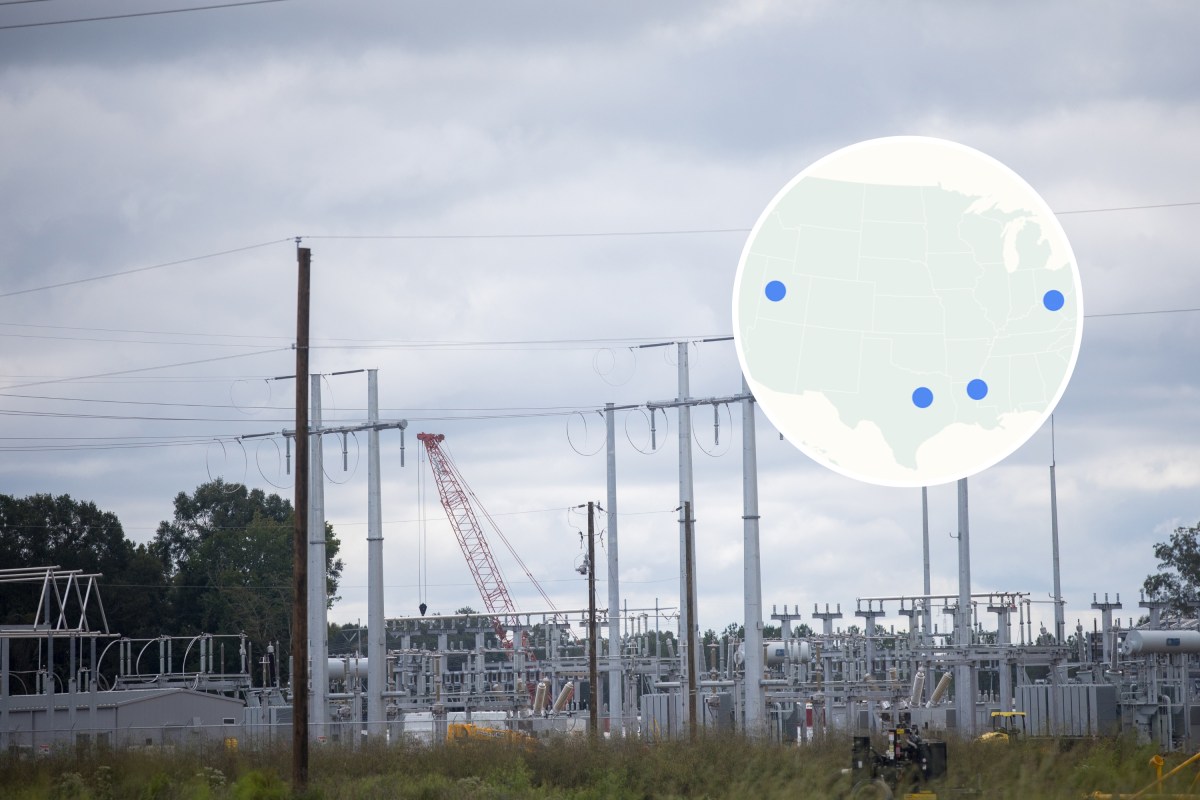
A map shows that very large data centers are being built in Ohio, Texas, Louisiana, and Utah, with capacities much bigger than those from a few years ago. These projects, some powered by natural gas and focused on AI development, are expected to be completed by 2027 or 2028, raising public concerns about environmental impacts.
Key Facts
The biggest data center under construction is SoftBank’s 8-gigawatt PORTS-Pike Technology Campus in Ohio, expected to finish in 2028.
Nexus Data Centers is building a 7.7-gigawatt facility in Texas, due by October 2027.
Meta is developing a $50 billion, 5-gigawatt AI-focused data center in Louisiana called the Hyperion project, set for 2028.
Creekstone Energy’s Delta Gigasite in Utah has about 3 gigawatts now and plans to grow to 10 gigawatts by 2027.
These data centers use much more electricity than past large centers, which were around 0.1 gigawatts.
Creekstone Energy says it has technology to capture water from gas power generation and create usable water, potentially making the site a net water producer.
Public concerns include the centers’ heavy use of electricity and water, and their effects on the environment.
President Donald Trump supports these data center projects, seeing them as important for economic growth and competing with China.
Read the Original
Want the full story? Tap a source to open the original
article.
Tesla revealed a new electric sports car that can drive upside down and jump using rocket-like thrusters. The car can speed up to 97 km/h in less than a second and is expected to be available by 2028.
Key Facts
Tesla developed the car with Elon Musk’s SpaceX.
The car can drive upside down.
It uses thrusters to jump and turn in the air.
It can accelerate to 97 km/h in under one second.
Tesla first promised this car in 2017.
The car is planned to be released in 2028.
Read the Original
Want the full story? Tap a source to open the original
article.
Vibe coding is a way to create software using AI without writing code manually. Free AI-made versions of popular programs like Premiere Pro and Excel are appearing, raising worries about security and hidden expenses.
Key Facts
Vibe coding uses artificial intelligence to create software without traditional coding.
Free AI-generated alternatives to well-known software programs are now available.
Examples include replacements for Adobe Premiere Pro (video editing) and Microsoft Excel (spreadsheets).
These free versions may have hidden costs that users do not see upfront.
Security risks come with using AI-created software, which may not be fully tested or safe.
The rise of these tools changes how software can be made and used by people with no programming skills.
Experts warn users to be cautious about privacy and data safety when using these AI tools.
Read the Original
Want the full story? Tap a source to open the original
article.
Smart glasses with cameras help people with sight loss to navigate and live independently. However, some people wrongly call these glasses "pervert glasses" because they worry about secret filming, causing difficulties for users who rely on them.
Key Facts
Fraser Fleming, who is blind, uses AI-powered Meta smart glasses to help him get around and read signs.
Some people have used similar glasses to secretly film others, leading to negative nicknames like "pervert glasses."
This reputation makes users like Fraser remove their glasses in public to avoid confrontations.
Tracey Rogerson, another user, says the glasses are important for her independence.
Meta has sold about two million pairs of these glasses since 2022 and includes a light to show when the camera is recording.
Some events, like ComicCon Scotland, have banned Meta glasses to prevent secret filming.
Gordon Brown, who is severely sight-impaired, will not attend ComicCon this year due to the ban on smart glasses.
Event organizers have banned wearable recording devices to protect privacy but have been criticized for not considering disabled users’ needs.
Read the Original
Want the full story? Tap a source to open the original
article.
Elon Musk showed a new Tesla Roadster that can hover above the ground using thrusters developed with SpaceX. The demonstration took place in Texas, and Musk said production of this advanced car will start in 2028.
Key Facts
The Tesla Roadster can lift off and hover using cold-gas thrusters inspired by rocket technology.
The demonstration occurred at a SpaceX test facility in McGregor, Texas.
Musk said the Roadster can accelerate from zero to 60 mph in less than one second.
Production of the next-generation Roadster is expected to begin in 2028.
Tesla originally priced the Roadster starting at $200,000, with a more expensive "Founders Series" at $250,000.
Experts say flying cars like this may face strict rules from the Federal Aviation Administration (FAA).
FAA rules often treat vehicles that fly as aircraft, requiring special regulations.
Musk has talked about a hovering Roadster with SpaceX thruster technology since 2017.
Read the Original
Want the full story? Tap a source to open the original
article.
Instagram and its parent company Meta restricted ads and content related to women's health topics, including posts mentioning "pregnancy" and other medical terms. These restrictions affected businesses and health organizations, leading to financial losses and reduced reach for important health information. Meta said it limits certain content to prevent negative user experiences, but many creators report unfair treatment and difficulty appealing decisions.
Key Facts
In January 2025, Instagram removed ads for pregnancy pillows because of the word "pregnancy."
Business owner Irene Breen had to remove the word "pregnancy" from her website and product names for 10 months.
Many women’s health creators and charities report content being removed, blurred with sensitivity filters, or shadowbanned.
The campaign group CensHERship found 96% of nearly 200 women’s health content creators experienced some restrictions.
Sensitivity filters blur images and require extra clicks to view, usually for nudity or violence, but are also used on health posts.
Automated systems and AI often mistakenly flag health content, causing delays and blocking appeals.
Some important health hashtags like #vaginalcancer do not appear properly on Instagram.
Meta is consulting with women’s health groups to improve how it handles health-related content but declined to comment on specific cases.
Read the Original
Want the full story? Tap a source to open the original
article.
A new same-day test called metagenomic testing can detect hidden and drug-resistant infections in very sick children. This test looks at all the genetic material in a sample to find bacteria, viruses, and fungi, helping doctors choose the right treatment faster and more accurately.
Key Facts
Metagenomic testing was used on over 100 critically ill children at Great Ormond Street Hospital (GOSH) in London.
The test finds all types of germs in one sample, unlike older methods that look for specific infections.
It helped doctors identify unseen drug-resistant infections, leading to better treatment decisions.
In one case, the test saved 10-year-old Willow Crowther’s life by detecting a resistant infection early.
Around 90% of bacteria and viruses and 100% of fungi in samples were identified by metagenomics.
The test influenced doctors’ decisions in 25% of cases, including antibiotic choices.
It found 50 germs not found by standard tests, which may help track new or pandemic threats.
Metagenomic testing is being expanded to about 30 intensive care units across the UK.
Read the Original
Want the full story? Tap a source to open the original
article.
Meta launched a new open-weight AI model called Muse Spark Open, which it says matches or beats similar AI models from Chinese developers. This open model can be downloaded and modified by developers, and it is designed for complex tasks like coding and multi-step problem solving.
Key Facts
Muse Spark Open is an open-weight AI model, meaning developers can access and change the model’s core settings.
Meta claims it is the most capable open-weight AI model made in the US so far.
Chinese companies like Alibaba and Moonshot AI have led the open-weight AI model market before this.
The model is good at tasks like software engineering and long, multi-step reasoning.
Meta built in strong safety measures to control how the AI is used.
Muse Spark Open is optimized to run on Apple’s M5 Ultra computer chips.
Users can run the model on two Mac Studio computers with M5 Ultra chips to create a powerful computing setup.
Meta recently also released a new closed AI model that competes with OpenAI’s ChatGPT and Anthropic’s Claude.
Read the Original
Want the full story? Tap a source to open the original
article.
Starting from November 6, it will be illegal in England and Wales to possess or share online pornography showing strangulation, incest, or adults pretending to be children under 16. The government introduced these rules after finding such content was common and could encourage harmful behavior, especially among young people.
Key Facts
The ban applies to porn showing choking or suffocation, sexual acts between relatives, and adults role-playing as under-16s.
The new rules come after a government review found choking was widespread on popular porn sites.
Possessing illegal pornographic content can lead to prison terms: up to five years for publishing and up to three years for possession in some cases.
The changes reflect concerns that violent or extreme porn can influence what young people see as normal in relationships.
Non-consensual strangulation is already illegal, but its depiction online was not previously banned.
The law aims to stop websites and users from sharing harmful material and protect society from content encouraging real-life violence.
The government encourages people to delete or stop sharing such content before the law starts.
Experts say the law is a step toward reducing acceptance of sexual violence in pornography but highlight the need for tech platforms to enforce it.
Read the Original
Want the full story? Tap a source to open the original
article.
Residents near a large landfill in Milpitas, California, have experienced bad smells for years. Local authorities have ordered the landfill operators to use drones and sensors to monitor the chemicals causing the odours and to automate gas collection to reduce smells.
Key Facts
Milpitas is a city in Silicon Valley that has had a landfill causing bad smells for decades.
Residents report experiencing bad odours for two to three hours daily.
Newby Island landfill operators must use drones and air monitors to track odours.
They are also required to automate the collection of landfill gases that cause the smells.
The landfill’s operators say they aim to protect air quality and operate safely.
Many countries lack clear rules for controlling environmental odours.
In the US, the Environmental Protection Agency (EPA) does not regulate odours as pollution, so local governments handle it.
Technologies to reduce industrial smells include absorbing odours, changing them chemically, or burning them off, but they can be costly.
Read the Original
Want the full story? Tap a source to open the original
article.
Anthropic, a technology company, used its political action committee (PAC) to donate over $250,000 in the third quarter of the year. The PAC gave $161,000 of that money to political campaigns from both major U.S. parties.
Key Facts
Anthropic has a political action committee funded by its employees.
The PAC spent more than $250,000 on political campaigns in the third quarter.
Of that amount, $161,000 went to candidates from both major political parties.
The donations were split roughly evenly between parties.
Spending records about these donations were reported by The Hill.
Read the Original
Want the full story? Tap a source to open the original
article.
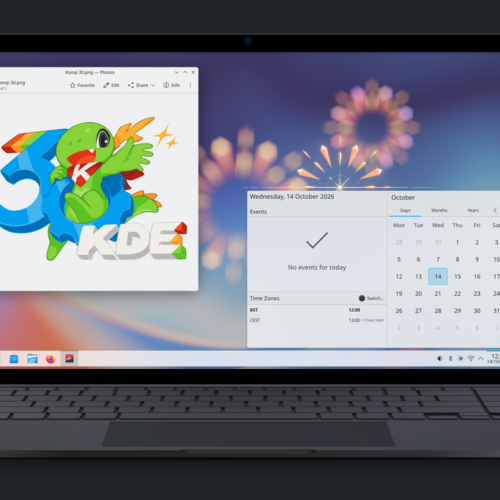
KDE, a software developer, celebrates its 30th anniversary with the release of Plasma 6.8. This update ends support for the old X11 system and moves fully to the newer Wayland system while adding new features like better window decorations, improved backups, and enhanced remote desktop access.
Key Facts
KDE released Plasma 6.8 called the “30th Anniversary Edition” on October 14.
Plasma 6.8 stops supporting new X11 sessions but still runs old X11 apps via a compatibility layer called XWayland.
Wayland will be the main display system instead of X11, which has been used for 42 years.
New features include improved window decorations like shadows and rounded corners for third-party apps.
Nvidia triple buffering is now enabled by default, helping graphics performance.
Kup backup software is integrated into Plasma for easier backups.
A command-line tool named kscreenctl lets users change display settings quickly.
The System Monitor now lets users pin computer processes to specific CPU cores using a simple interface.
Remote desktop improvements include shared clipboard, locking the physical display, and better streaming on slow networks.
KDE also released a documentary film about its history and community.
Read the Original
Want the full story? Tap a source to open the original
article.
Plex has partnered with Fandango to allow users to buy movie theater tickets directly from Plex’s app when searching for movies currently playing in theaters. This partnership aims to use Plex’s data on what users watch and search for to help studios and advertisers better understand ticket sales and improve movie recommendations.
Key Facts
Plex lets users discover movies and now shows a Fandango ticket option for movies in theaters.
Users in the US can click through Plex to see showtimes and buy tickets from Fandango.
Fandango sells tickets for 31,000 movie screens across the US.
The integration tracks how movie interest on Plex leads to ticket purchases using a tool called Kochava.
Plex collects large amounts of data from users’ streaming choices and searches to help recommend movies.
This new service adds to Plex’s existing offerings like renting movies and free ad-supported TV streaming.
Users who only want to use Plex as a media server can still do so without using the ticket-buying or streaming features.
Plex hopes these new services will bring in money to support and improve its original media server software.
Read the Original
Want the full story? Tap a source to open the original
article.
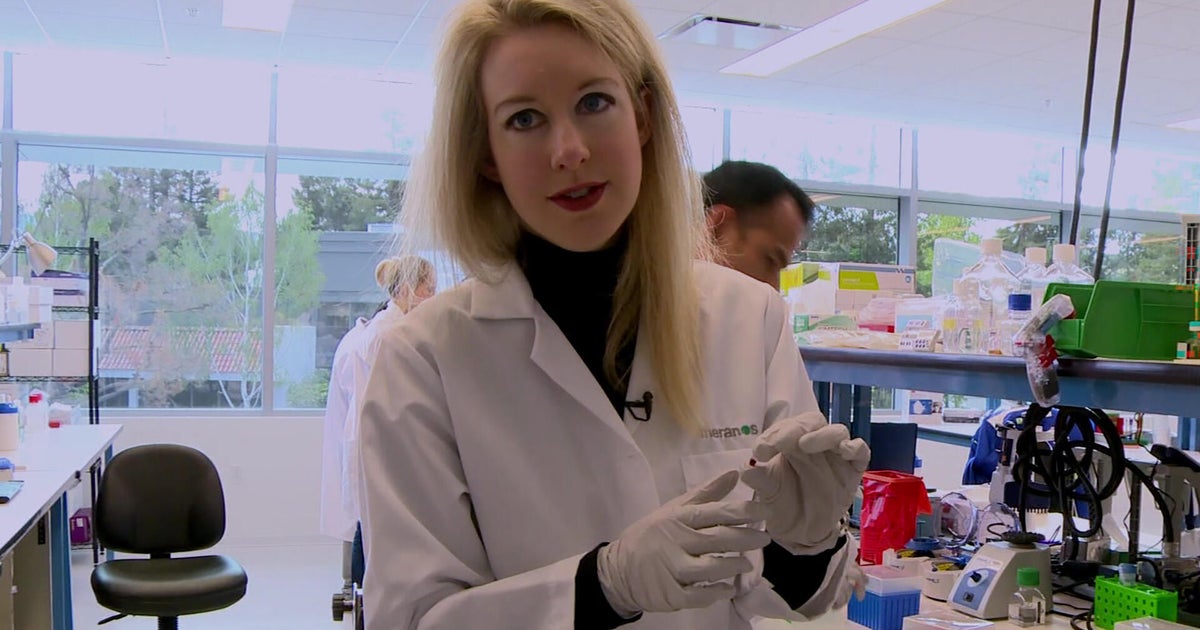
Elizabeth Holmes founded the company Theranos, which claimed it could run many blood tests using just a small drop of blood. However, the technology did not work as promised, and Holmes is now serving an 11-year prison sentence for misleading investors.
Key Facts
Elizabeth Holmes started Theranos, a blood-testing company.
Theranos said it could do many tests from a tiny blood sample.
The technology never met its promises.
In 2018, CBS News reported on the failure of Theranos’ machine.
Holmes was convicted of fraud for lying to investors.
She is currently serving an 11-year prison term.
The story was featured in a "60 Minutes" news segment.
Read the Original
Want the full story? Tap a source to open the original
article.
Humanoid robots danced the “Macarena” and skateboarded at the CEATEC technology exhibition in Chiba, Japan. The event featured new technology developments from companies and innovators worldwide.
Key Facts
The event is called CEATEC and is held annually in Chiba, Japan.
Humanoid robots performed popular dance moves like the “Macarena.”
Robots also demonstrated abilities like skateboarding.
CEATEC showcases the latest technology from global innovators.
The exhibition highlights advances in robotics and other tech fields.
Read the Original
Want the full story? Tap a source to open the original
article.
Researchers from the University of Toronto’s Citizen Lab discovered that hackers used targeted online ads to silently install malware on mobile devices without the users clicking anything. This "zero-click" spyware campaign, called AdFection, infected devices including those at Al Jazeera, affecting both iOS and Android phones through ads served by an Israeli company named Discover-Tech.
Key Facts
Hackers used ads to deliver spyware that works without any user interaction (“zero-click exploits”).
The University of Toronto’s Citizen Lab confirmed the attack infected 45 devices at Al Jazeera in 2024 and 2025.
The spyware targeted both iOS and Android devices and is hard to detect without special tools.
Discover-Tech, an Israeli ad company, acted as a broker between advertisers and app or website publishers.
Discover-Tech helped deliver spyware ads through major ad networks like Google, Yandex, and Beeswax.
Over 4 billion ad bidding records from Discover-Tech were studied, showing ads appeared on 120,000 websites and 70,000 apps by mid-2026.
Major platforms like Google and IAB Europe removed Discover-Tech after the report and blocked its ads.
The spyware reached sensitive networks, including NATO and United Nations systems, showing risks to governments and large organizations.
Read the Original
Want the full story? Tap a source to open the original
article.
Scientists at Penn State have studied what the Liberty Bell might have sounded like before it cracked by analyzing one of its full-size replicas. They used a method called modal analysis to understand the bell’s vibration and sound, helping to recreate the specific notes and ringing characteristics.
Key Facts
The Liberty Bell has not been rung for 180 years because it developed a large crack.
The crack grew in 1846 after an attempted repair and ringing the bell, making it unable to ring again.
The bell first cracked in 1752 during testing and was recast twice to improve its sound.
The metal alloy used for the Liberty Bell is very brittle, making it prone to cracking and chipping.
Bell sound depends on its shape and the materials, which affect vibrations and pitch.
Scientists used modal analysis, a technique to study vibration patterns and notes of bells, to model the sound.
Western church bells are tuned to several specific frequencies, creating a minor triad sound, often perceived as somber.
The Penn State team presented their research at an acoustics meeting and published a detailed article in Physics Today.
Read the Original
Want the full story? Tap a source to open the original
article.
A study by Columbia University shows that microplastics in water can produce harmful molecules called reactive oxygen species (ROS). These molecules can damage important parts of cells like DNA and proteins, which may explain some health risks linked to microplastics.
Key Facts
Plastics are usually thought to be chemically stable, but tiny plastic particles (microplastics) in water can create reactive oxygen species (ROS).
ROS are harmful molecules that can damage DNA, proteins, and fats inside living cells.
The research team tested six common plastics and found all produced ROS, with water-repellent plastics like polyethylene generating the most.
The interaction between plastics and water changes the structure of water molecules near the plastic surface, making it easier to form ROS.
The study used methods such as electron spin resonance and fluorescent sensors to detect these reactive molecules directly.
The research helps explain why microplastics found in human blood and organs might cause harm through oxidative stress.
Previous doubts about contamination or errors in detecting ROS were addressed by careful testing in this study.
Read the Original
Want the full story? Tap a source to open the original
article.