Microsoft completed an investigation into how the Israeli military used its cloud technology for mass surveillance of Palestinians. The company will introduce stronger human rights controls and adjust how it manages employees with security clearances related to national security.
Key Facts
Microsoft launched the inquiry after reports showed Israel's Unit 8200 used its Azure cloud to store millions of intercepted Palestinian phone calls.
Following initial findings, Microsoft stopped the Israeli military’s access to its cloud and AI services connected to this surveillance.
The investigation found some employees in Microsoft’s Israeli subsidiary may have conflicted between company duties and support for the Israeli military.
Several managers, including the head of Microsoft’s Israeli business, left the company amid a related ethics controversy.
New measures include stricter review processes before national security contracts and changes in managing employee security clearances.
Microsoft will carry out regular checks to ensure customers follow its use policies, especially in conflict zones or politically sensitive situations.
The company’s leadership said they were unaware of the misuse of its technology for mass civilian surveillance.
Microsoft insists it does not provide tools for mass surveillance but aims to improve its human rights oversight in response.
Read the Original
Want the full story? Tap a source to open the original
article.
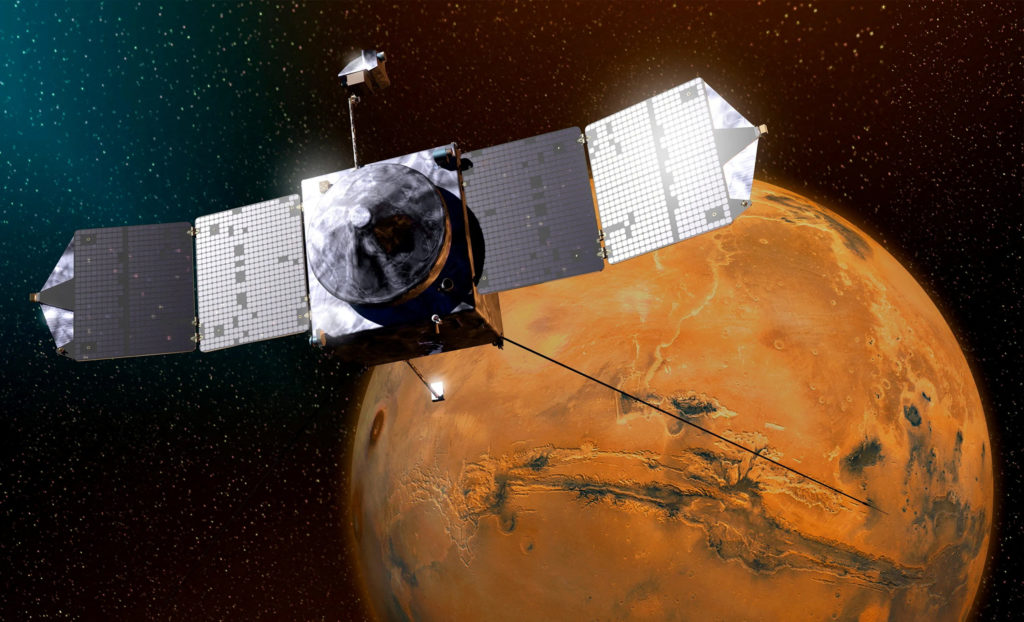
NASA has officially declared its Maven spacecraft around Mars no longer working after six months without contact. The spacecraft, launched in 2013, studied Mars' atmosphere but stopped communicating in December due to a malfunction.
Key Facts
NASA's Maven spacecraft lost contact for six months before being declared dead.
Maven was launched in 2013 to study the atmosphere of Mars from orbit.
The spacecraft went silent after passing behind Mars in early December.
Data showed Maven started spinning quickly, which caused issues with its orbit.
The fast spin drained the spacecraft's batteries, leading to mission failure.
NASA confirmed the mission ended after more than ten years of observations.
The project manager described the loss as very emotional for the team.
Read the Original
Want the full story? Tap a source to open the original
article.
The Estonian Language Institute released a test that measures how well large language models (LLMs) avoid spreading Russian propaganda. They ranked many LLMs based on their ability to resist biased or false statements related to topics Russia often uses in its messaging. Models like Anthropic’s Claude and Nvidia’s Nemotron performed best, while some Google models struggled more with certain prompts, especially in Russian.
Key Facts
The Estonian Language Institute (ELI) created a “Propaganda Resistance” benchmark to test LLMs on Russian propaganda topics.
The test covers 14 categories, including Crimea, the war in Ukraine, NATO history, and Russia’s past actions in the Baltics.
Questions were asked in English, Estonian, and Russian, and an AI judged the quality of responses without external help.
Anthropic’s Claude models scored highest, with Opus 4.7 rated “Exemplary” on 77% of questions and a score of 94.9/100.
Nvidia’s Nemotron and Alibaba’s Qwen also showed strong results similar to Anthropic’s top models.
OpenAI’s GPT-5.4 achieved an 88.9 average score and “Exemplary” answers on 54% of questions.
Google’s newer Gemini models scored lower, especially with malicious prompts and questions in Russian.
Models have improved over time, but resistance to propaganda varies widely between developers and languages.
Read the Original
Want the full story? Tap a source to open the original
article.
Audi has introduced the Nuvolari, a limited-edition hybrid supercar with 987 horsepower. This car combines a powerful plug-in hybrid system and advanced technology to deliver high speed and performance, with only 499 units planned for production starting in early 2027.
Key Facts
The Audi Nuvolari is a hybrid supercar limited to 499 units worldwide.
It has a combined power output of 1,001 PS (approximately 987 hp) and can reach speeds over 350 km/h (217 mph).
The car uses a plug-in hybrid powertrain with a mid-mounted twin-turbo 4.0-liter V8 engine and three electric motors.
It accelerates from 0 to 100 km/h in 2.6 seconds and 0 to 200 km/h in 6.8 seconds under specific battery conditions.
The Nuvolari includes Formula 1-inspired technology like active aerodynamics and an advanced torque and braking control system called quattro predictive ride.
It features a new Audi Ceramic Pro braking system with large brake discs and strong calipers for improved performance and cooling.
The car’s design follows Audi’s "radical simplicity" philosophy, with carbon fiber body panels and unique wheels.
Pricing is expected to be just under $600,000.
Read the Original
Want the full story? Tap a source to open the original
article.
Dashlane reported that hackers tried to access many users' encrypted password vaults by exploiting the device-adding feature. The attack affected fewer than 20 user accounts before Dashlane stopped it, and the company has informed those users.
Key Facts
Attackers targeted Dashlane’s system to add new devices to users’ accounts and download password vaults.
The hackers used automated requests (a brute force method) to guess verification codes sent to users’ emails.
Dashlane’s security system locked accounts automatically when suspicious activity was detected.
The attack started on Sunday and was stopped after fewer than 20 vaults were downloaded.
Even if hackers downloaded vaults, they still need the master password to read the stored data.
Dashlane uses Argon2, a complex code that makes cracking the master password very slow and difficult.
Dashlane has contacted all users affected by the attack.
Users who have not received alerts are not impacted by this breach.
Read the Original
Want the full story? Tap a source to open the original
article.
Elon Musk is trying again to stop the Federal Trade Commission (FTC) from monitoring how X (formerly Twitter) handles user data. The FTC put a 20-year privacy order on Twitter after it misused some user information for ads, and Musk argues that the order is no longer needed because the company changed and improved its data protections.
Key Facts
The FTC set a 20-year order on Twitter’s data use after a coding error allowed phone numbers and emails to be used for targeted ads between 2013 and 2019.
Twitter agreed to pay $150 million and allow FTC audits until 2042 before Elon Musk took over in 2022.
Musk previously tried to end the order in 2023 but lost in court.
The FTC says Musk’s staff cuts hurt X’s privacy controls and forced some security workers to resist his orders to stay compliant.
Musk claims Twitter no longer exists, merged into xAI and then SpaceX, so the order should end.
Musk also says new leadership and privacy programs make FTC monitoring unnecessary.
The company argues it spent $17 million on unnecessary costs related to the FTC order.
The FTC’s order requires the company to comply with privacy laws and allows the agency to request documents anytime.
Read the Original
Want the full story? Tap a source to open the original
article.
Meta is introducing a new paid subscription for Instagram called Instagram Plus, costing $3.99 per month. This service adds features like longer-lasting stories, customized app icons, and better audience controls while the free version of Instagram remains unchanged.
Key Facts
Instagram Plus costs $3.99 per month and offers extra features not available to free users.
Stories for paid users last 48 hours instead of 24 hours for free users.
Paid users can create multiple audience lists to share specific content with different groups.
The subscription provides new data, such as how many times stories were rewatched and who viewed them.
Users can choose custom app icons and different fonts for their bios on Instagram Plus.
Paid users can post content without it automatically showing in friends’ feeds.
Meta also launched AI agents to help businesses answer questions and recommend products across its apps.
Meta is shifting focus to AI and recently announced layoffs to reduce costs while investing in AI technology.
Read the Original
Want the full story? Tap a source to open the original
article.
Samsung is updating its Samsung Health app starting June 8 to turn the Galaxy Watch into a more helpful health coach. The new app will use AI to analyze body signals and give clear advice on rest, activity, and health, making health data easier to understand and act on.
Key Facts
The Samsung Health app update begins rolling out on June 8.
The updated app uses AI to analyze five overnight body signals: heart rate, heart rate variability, breathing rate, skin temperature, and blood oxygen.
It alerts users only when it detects significant changes from their normal health baseline.
The app introduces a new Heart Health Score summarizing sleep, stress, activity, and body composition.
Workout planning includes a Daily Cardio Load feature recommending exercise intensity and recovery time to avoid burnout.
Fitness Index compares heart rate, steps, and VO2 max to similar users for personalized goals.
The app is organized around five key areas: Sleep, Activity, Nutrition, Mindfulness, and Vitals, with an AI Energy Score and wellness tips.
A new Hearing Health feature monitors noise levels and suggests ways to protect hearing.
This update aims to improve Samsung’s health software and compete directly with Apple Watch’s health features.
Read the Original
Want the full story? Tap a source to open the original
article.
HP and Ferrari created a special edition laptop called the HP Limited Edition Scuderia Ferrari AI PC, which costs $5,599 and will be limited to 4,999 units. The laptop features design elements inspired by Ferrari cars, such as a carbon fiber base and a transparent panel showing internal parts, and is built for AI tasks with powerful hardware inside.
Key Facts
HP and Ferrari have been working together since 2024, starting with HP sponsoring Ferrari’s Formula 1 team.
Only 4,999 laptops will be made, each with a unique serial number etched into the cooling system.
The laptop's design includes Ferrari’s signature red color (Rosso Magma), carbon fiber, and a see-through "engine bay" showing the processor and cooling.
It has an Intel Core Ultra X7 processor, Intel Arc graphics, 64GB RAM, 1TB SSD, and a 14-inch 3K OLED touchscreen display.
The laptop is built more for AI computing than gaming, delivering up to 180 TOPS (a measure of AI performance).
The keyboard uses Ferrari’s custom typeface and includes RGB lighting under each key.
It comes with a high-quality Italian leather sleeve, similar to Ferrari car interiors.
The laptop releases on June 12, 2026, and is sold through HP’s U.S. website.
Read the Original
Want the full story? Tap a source to open the original
article.
The cable industry’s main lobby group, NCTA, asked the Federal Communications Commission (FCC) to allow some changes in foreign-made routers that are currently banned under new rules. This request aims to avoid interruptions in broadband services caused by shortages of certain router parts like memory and substrate materials. The FCC had added most consumer routers made partly outside the U.S. to a restricted list over national security concerns.
Key Facts
The FCC banned consumer routers made at least partly outside the U.S. in March due to national security risks.
NCTA wants a quick waiver to let suppliers replace some internal parts in already approved routers without changing how they work.
The waiver aims to address shortages in memory chips and substrate materials needed to make routers.
Previously, the FCC granted a similar one-year waiver to AT&T’s suppliers.
Many broadband customers use routers provided by their internet service companies.
The industry faces supply chain problems caused partly by rising demand from technologies like artificial intelligence.
NCTA says the requested waiver will help avoid disruptions to internet service for millions of Americans while still keeping security rules in place.
The FCC wants companies to move router manufacturing to the U.S., but this change takes time and large parts are still hard to get.
Read the Original
Want the full story? Tap a source to open the original
article.
A UK parliamentary committee criticized the NHS for allowing the US tech company Palantir broad access to identifiable patient data. They recommended ending the £330 million contract with Palantir in 2027, citing concerns about privacy, reliance on foreign companies, and lack of government control over sensitive data.
Key Facts
Palantir engineers were reportedly given unlimited access to identifiable NHS patient data.
NHS England expanded data access to private companies for easier processing, raising privacy concerns.
The NHS paid Palantir £330 million for its services under this contract.
Nicola Byrne, the UK government’s national data guardian, said the NHS broke its promise to limit data access.
The parliamentary science, innovation and technology committee called Palantir an “unacceptable point of weakness.”
Palantir is a US company linked to military and immigration contracts, and its co-founder Peter Thiel has criticized national health services.
The committee suggested replacing Palantir with UK-owned or in-house providers and emphasized higher standards for handling public data.
The committee also expressed doubts about the government’s planned £1.8 billion digital ID system for public services.
Read the Original
Want the full story? Tap a source to open the original
article.
Meghan Markle has shared photos of her children online without showing their faces to protect their privacy. Experts say this can help keep children safer but does not fully solve the risks of sharing images on the internet.
Key Facts
Meghan Markle posted photos to celebrate Princess Lilibet’s fifth birthday but hid her daughter’s face.
Since 2025, Meghan has kept her children’s identities mostly private on Instagram.
A spokesperson said Meghan wants to share family moments without exposing her children to public scrutiny.
Experts agree that hiding faces offers more protection than showing them but is not foolproof.
Other details in photos, like locations or uniforms, can still reveal a child’s identity.
Parents should think about what information photos show, not just faces.
Artificial intelligence can still misuse or change images, posing risks.
Children may feel exposed or embarrassed by images shared before they can decide.
Read the Original
Want the full story? Tap a source to open the original
article.
Canada has announced a national plan to use artificial intelligence (AI) over the next ten years. The strategy focuses on increasing AI use in businesses and healthcare, keeping AI experts in Canada, and building secure AI infrastructure within the country.
Key Facts
Canada’s government plans to spend over C$2 billion to promote AI learning and adoption by businesses and government.
The strategy aims to protect Canada’s control over AI technology and data by reducing dependence on foreign companies.
A secure public supercomputer and large AI data centers will be created to support Canadian researchers and businesses.
Canada wants to stop the loss of AI experts to the US by funding research and offering fast permanent residency to skilled workers.
The government plans to invest C$500 million in Canadian AI companies and may take ownership stakes.
Only 12% of Canadian businesses currently use AI; the goal is to increase that to 60% by 2034.
C$200 million is dedicated to using AI to improve healthcare, including easing doctors’ administrative tasks and reducing emergency room wait times.
The strategy promises 250,000 new jobs from AI growth but does not estimate potential job losses due to AI.
Read the Original
Want the full story? Tap a source to open the original
article.
Two House lawmakers from different political parties introduced a draft plan for a national artificial intelligence (AI) framework. The plan aims to stop states from making their own AI rules for three years, reduce risks from AI, and support more research.
Key Facts
The draft framework was introduced by a bipartisan pair of House lawmakers.
It proposes a national approach to regulate AI technology.
The plan would override state laws on AI development for three years.
Its goal is to reduce potential risks related to AI.
The framework also aims to increase AI research efforts.
The draft was shared with The Hill news outlet.
This is a long-awaited step for AI regulation at the federal level.
Read the Original
Want the full story? Tap a source to open the original
article.
Brando Benifei discussed how open-source artificial intelligence (AI) can help Europe grow its technology strength. Using shared, openly available AI tools can create a common language that supports cooperation within Europe and with other countries.
Key Facts
Open-source AI means making AI tools and software freely available for anyone to use and improve.
Brando Benifei highlighted open-source AI as important to strengthening Europe's tech industry.
Shared AI tools can help build alliances between European countries and global partners.
Investing in open-source technology encourages collaboration and innovation.
The discussion took place on France24 during The Debate program on June 4, 2026.
Read the Original
Want the full story? Tap a source to open the original
article.
NASA has stopped efforts to contact its MAVEN spacecraft after it unexpectedly stopped communicating following a pass behind Mars. The spacecraft, which studied Mars' atmosphere for 11 years, likely began spinning too fast, lost power, and could no longer operate. Engineers will investigate the cause while preparing to end the mission.
Key Facts
MAVEN stopped sending signals after passing behind Mars on December 6, 2023.
NASA tried to restore contact but eventually gave up and started decommissioning the mission.
MAVEN launched in 2013 and began orbiting Mars in 2014 to study its atmosphere and solar wind interactions.
The spacecraft lasted 11 years, much longer than its original mission plan.
Data recovered after signal loss showed MAVEN was spinning about 2.7 times per minute, faster than normal.
The rapid spinning likely prevented solar panels from pointing at the Sun, causing the batteries to drain quickly.
The spacecraft will remain in its elliptical orbit around Mars for 50 to 100 years before burning up in the atmosphere.
NASA’s investigation continues to find out exactly why MAVEN failed.
Read the Original
Want the full story? Tap a source to open the original
article.
Anthropic, an AI research company, says AI is developing so fast that soon it may be able to improve and build new versions of itself without human help. This process, called "recursive self-improvement," could speed up AI progress and change how AI is created and used, especially in science and medicine.
Key Facts
Recursive self-improvement means AI systems design and improve successors on their own, without humans.
Anthropic’s research shows AI coding, testing, and research tasks are getting faster with AI help.
This progress may create a feedback loop, where AI quickly becomes more advanced by building better AI.
Anthropic wants lawmakers to understand this trend before it becomes common.
There is a need to ensure AI systems act correctly and safely for society.
Anthropic’s Claude chatbot improvements lead to better AI coding and autonomous agents.
OpenAI also warns that recursive self-improvement could be risky if not monitored properly.
Anthropic plans to work with lawmakers in the coming months about these issues.
Read the Original
Want the full story? Tap a source to open the original
article.
Subaru has updated its electric SUV, the Solterra, improving battery range and adding a more powerful version called the Solterra XT. The updated model offers better handling and noise reduction but feels less like a traditional Subaru in driving experience and interior design.
Key Facts
The Solterra's battery capacity is 74.7 kWh with an EPA range increase from 227 miles to 288 miles.
The base model produces 233 horsepower from two electric motors, one on each axle.
The new Solterra XT version has a combined 338 horsepower, with a slightly reduced range of 278 miles.
Prices start at $38,495 for the base model and $42,895 for the Solterra XT.
The suspension and chassis software have been improved for better handling on rough or slippery surfaces.
Increased body stiffness and sound-absorbing materials reduce noise, vibration, and harshness inside the vehicle.
The interior design and driving feel are described as less distinctive to Subaru’s traditional style.
The Solterra shares its platform and many components with Toyota’s electric vehicles, including the bZ model.
Read the Original
Want the full story? Tap a source to open the original
article.
"Salvation Denied" is a new video game where players control robot construction workers who build structures alone or with up to four players. The game features physics-based challenges using tools like a gravity gun and foam gun to move and stick pieces together while rebuilding a tower damaged by a meteor.
Key Facts
Players are robotic construction workers tasked with building structures.
The game supports solo and up to four-player cooperative play.
Players use a Gravity Gun to move and rotate heavy objects easily.
A Foam Gun helps parts stick together, although connections can still break.
The game includes a large bulldozer with a 3D printer and grinder for clearing or playful actions.
The game uses the Havok physics engine for simulation, rather than Unreal Engine 5’s default physics engine.
The gameplay combines chaotic teamwork during co-op and a slower, more thoughtful pace when playing alone.
The game is developed by Firevolt and published by Digital Vortex Entertainment.
Read the Original
Want the full story? Tap a source to open the original
article.
A city in California called Monterey Park has banned new data centers after most residents voted for it. Many other U.S. cities and counties are also considering bans or temporary stops because data centers use large amounts of water and electricity, which can strain local resources.
Key Facts
Monterey Park passed a ban on new data center development with 86% of voters in favor.
Several cities in Georgia, like Palmetto, Fayetteville, and Atlanta, have already banned data centers.
Data centers are growing due to the rise in artificial intelligence technology.
The Trump administration supports fast building of data centers to help the U.S. compete with countries like China.
Many communities worry data centers use too much water, needed for cooling powerful computers, and electricity, raising costs for residents.
More than 60 places in the U.S. have temporary stops (moratoriums) on building data centers, including Denver, Oklahoma City, and parts of Michigan and Illinois.
U.S. data centers use around 450 million gallons of water daily, and drought conditions in many areas increase concerns.
Electricity prices have increased in some states due to the energy demands of new data centers.
Read the Original
Want the full story? Tap a source to open the original
article.