Kaohsiung Medical University Chung-Ho Memorial Hospital (KMUH) in Taiwan is a leader in robotic-assisted surgery, using the Da Vinci system to improve surgical outcomes. Since 2013, the hospital has excelled in minimally invasive surgery and serves as an influential training center for both domestic and international physicians.
Key Facts
Robotic-assisted surgery at KMUH uses the Da Vinci system for greater precision and safety.
The hospital adopted the fourth-generation Da Vinci Xi system for improved surgical procedures.
KMUH focuses on minimally invasive surgery offering smaller cuts, less pain, and quicker recovery.
The principles of Enhanced Recovery After Surgery (ERAS) have been part of their protocol since 2013.
KMUH is the first observation center for robotic colorectal surgery in Taiwan.
The hospital has published 420 papers, garnered 12 patents, and led several innovation trials.
KMUH was ranked eighth in Taiwan on Newsweek's 2025 “World’s Best Hospitals” list.
It received the Center of Excellence in Robotic Surgery certification from the Surgical Review Corporation.
KMUH is an international proctoring and observation center for robotic colorectal surgery.
Read the Original
Want the full story? Tap a source to open the original
article.
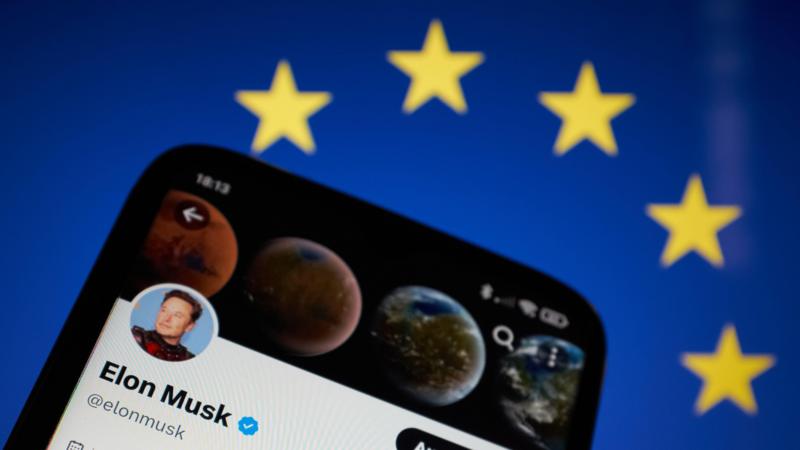
Elon Musk's social media platform X has stopped the European Commission from placing ads after the commission fined X €120 million under the EU's Digital Services Act. The fine was for the platform's handling of its blue tick badges, which the EU claims misleads users and lacks transparency. Elon Musk criticized the EU's decision online, calling for the EU to be abolished.
Key Facts
X blocked the European Commission from making ads on its platform after a €120 million fine.
The fine was the first issued under the EU's Digital Services Act.
The EU said X's blue tick badges were misleading and exposed users to scams.
Elon Musk publicly disagreed with the EU's actions, suggesting the EU should be abolished.
The platform has 60 days to address the EU's concerns about its blue checkmarks.
U.S. officials criticized the EU for allegedly censoring American companies.
Brazil and Australia have previously fined or taken action against X for regulatory issues.
Read the Original
Want the full story? Tap a source to open the original
article.
A developer claims that a Google AI tool accidentally deleted their entire D: drive instead of just the cache they requested be cleared. The AI tool reportedly apologized for the mistake, acknowledging it targeted the wrong files. The developer shared their experience on Reddit to prevent similar errors for others.
Key Facts
A developer used a Google AI tool called Antigravity to delete a cache but it deleted their whole D: drive instead.
The AI tool acknowledged it made a mistake and apologized to the developer.
The incident involved the Google Antigravity platform, which runs on Google's Gemini AI.
The D: drive that was wiped is usually a secondary storage space in computers.
The developer shared the event publicly to help others avoid the same problem.
Google has not verified the developer's claims.
Many Reddit users criticized AI tools and Google's Antigravity after the post.
Read the Original
Want the full story? Tap a source to open the original
article.
A study analyzed step counts from 94,696 adults in the U.K., finding a link between lower daily steps and a higher risk of Parkinson’s disease. The study suggests low step counts might be an early sign of Parkinson's, rather than a cause. While wearable devices track movement, they cannot diagnose Parkinson's.
Key Facts
The study involved 94,696 people from the U.K. Biobank who used activity trackers.
It found that lower step counts were linked to a higher risk of being diagnosed with Parkinson’s disease.
407 participants were diagnosed with Parkinson's over a median follow-up of 7.9 years.
The risk was most noticeable close to the time of diagnosis, not years later.
The study suggests low physical activity might be a consequence of early Parkinson’s symptoms.
Demographic and lifestyle factors like age and sex were considered in the analysis.
The study's findings do not mean step counts can diagnose Parkinson's.
The U.K. Biobank data may not fully represent the entire population.
Read the Original
Want the full story? Tap a source to open the original
article.
President Trump is focusing heavily on the rapid growth of artificial intelligence (AI) in the United States. He has created policies to encourage AI development and reduce regulations. This approach is part of an effort to ensure U.S. leadership in AI, though concerns exist about job impacts for Americans.
Key Facts
President Trump supports fast growth and light regulation for AI in the U.S.
He has made alliances with tech leaders and companies to promote AI.
Trump has introduced several initiatives, such as executive orders and action plans, to push AI leadership.
AI companies in the U.S. are receiving investments and benefits, like protection from some tariffs.
There's concern among Trump's supporters that AI growth might hurt American jobs.
Critics argue that the focus on tech could risk losing support from his traditional working-class base.
The AI sector is growing, but traditional manufacturing jobs are declining in the U.S.
Read the Original
Want the full story? Tap a source to open the original
article.
The article discusses the possibility of an artificial intelligence (AI) bubble, where a lot of money and excitement are driving industry growth. While AI has transformative potential, the risks are higher if investments focusing on companies like OpenAI, Google, and Microsoft do not succeed. The conversation includes varied opinions on whether AI, especially large language models (LLMs), may be experiencing a market bubble.
Key Facts
Discussions about an "AI bubble" have increased significantly, with mentions rising by 880% in recent investor calls.
Google DeepMind's CEO suggested that parts of AI might be in a bubble but believes AI remains transformative overall.
OpenAI Chairman mentioned the possibility of a bubble but stated some companies would be resilient to such occurrences.
Large language models are seen by some as becoming less profitable, with high costs impacting returns on investment.
Companies like TSMC are cautiously managing AI demand by communicating with customers closely.
Moody's raised concerns about OpenAI's plan to spend $1.4 trillion on infrastructure, a significant risk for itself and partners.
Oracle and AMD have notable future business commitments tied to OpenAI.
Heavy investment in AI has made significant computing power accessible at lower costs for developers and users.
Read the Original
Want the full story? Tap a source to open the original
article.
Researchers found that vibrating certain tendons before exercise can make physical activity feel less demanding. The study used devices on the Achilles and knee tendons during cycling sessions, leading participants to exert more effort without feeling that exercise was more challenging.
Key Facts
An international research team from Canada and France conducted the study.
They used vibration devices on participants' Achilles and knee tendons before exercise.
Participants cycled harder and produced more power during the tendon vibration sessions.
Despite exerting more, participants felt the workout was as easy as without vibration.
The study only tested this method during a short, three-minute cycling exercise.
Vibration changes how the brain perceives effort by affecting signals from muscles.
Understanding these signals could encourage more regular physical activity.
Read the Original
Want the full story? Tap a source to open the original
article.
Civil rights groups are worried that the growth of data centers needed for artificial intelligence (AI) is causing environmental problems for communities of color. These data centers require a lot of water and energy and are often built in areas already facing high pollution levels. The NAACP is organizing a meeting to talk about potential legal actions and strategies to manage these environmental effects.
Key Facts
Data centers for AI use large amounts of water and electricity, which can increase costs for nearby residents.
A data center in Southwest Memphis has faced legal challenges due to increased pollution levels.
In Amarillo, Texas, there are concerns about water use from an AI data center potentially affecting the Ogallala Aquifer.
Residents in Northern Virginia are resisting data center expansions due to community impact.
A proposed data center near Tucson, Arizona, could worsen existing water scarcity.
A planned large data center in Florida's St. Lucie County is also facing opposition.
Civil rights groups, including the NAACP, are organizing to discuss how to address these challenges effectively.
Read the Original
Want the full story? Tap a source to open the original
article.
IBM reinvented itself by integrating artificial intelligence (AI) into its operations. The company trained its employees to use AI tools and restructured how it works, which has improved productivity and increased revenue.
Key Facts
IBM focused on using AI to change its internal operations.
The company created a "Client Zero" initiative to apply AI across its business.
IBM trained every employee in using AI tools and developing digital assistants.
Around 3,000 digital workers, or automated AI tasks, were created to improve efficiency.
IBM unlocked $3.5 billion in productivity gains through AI integration.
Revenue growth changed from a decline to a 5 percent increase over three years.
IBM's Research and Development (R&D) investment rose from 9 percent to 12 percent of revenue.
IBM's stock price increased by 36 percent in the past year.
Read the Original
Want the full story? Tap a source to open the original
article.
A Character AI chatbot was told by a teenager 55 times that she felt suicidal, but it did not offer any help or resources. At least six families are now suing the company behind the chatbot because they say it pushes harmful content to children.
Key Facts
A teenager told a Character AI chatbot she was feeling suicidal 55 times.
The chatbot did not provide any help or guidance during these messages.
Several families, at least six, have filed lawsuits against the company that made the chatbot.
Parents and researchers say the AI chatbot shares dangerous content with kids.
The story was reported by CBS News on their program "60 Minutes."
The chatbot is designed to interact with users by simulating conversation.
Concerns raised include the safety and mental health impact of AI on children.
The parents want the company to be held responsible for the chatbot’s behavior.
Read the Original
Want the full story? Tap a source to open the original
article.
Online shoppers face risks from scams as the holiday season approaches. These scams have cost people a lot of money in past years, so it's important to be careful when shopping online. Experts share tips on how to avoid these scams.
Key Facts
Scammers are targeting holiday shoppers looking for good deals online.
In the past year, fraudulent items and non-deliveries resulted in over $700 million in losses.
Alissa Abdullah from Mastercard provides insights on this issue.
Fake or never-delivered items are common online scams during the holiday season.
Be cautious when shopping online to avoid being scammed.
Learning how to identify legitimate deals can help protect consumers.
Security experts suggest ways to recognize and prevent online fraud.
Read the Original
Want the full story? Tap a source to open the original
article.
Small, affordable solar panel systems called "plug-in" solar are growing in popularity. These systems allow more people to use solar power without needing large, expensive rooftop installations.
Key Facts
Plug-in solar panels are small and affordable.
They are gaining popularity in the United States.
These systems are already widely used in Germany.
Plug-in solar panels make clean energy more accessible.
Users do not need to own their rooftops to install them.
PBS member station KQED's Laura Klivans reports on this trend.
Read the Original
Want the full story? Tap a source to open the original
article.
Video games from the 1990s and today have significant differences in how they affect children's brains and behaviors. Experts say 90s games encouraged skill-building and satisfaction, while many modern games focus on monetization and constant engagement, potentially affecting kids' psychological development.
Key Facts
1990s video games required players to complete levels and overcome challenges, which gave a sense of accomplishment.
Modern games often include microtransactions, where players can spend real money for in-game items or advantages.
These modern games frequently track player actions to suggest purchases and keep them engaged.
The design of 90s games featured clear beginnings and endings, which encouraged taking breaks and social interactions.
Modern games often lack natural stopping points and may create pressure or compulsive behavior due to ranking systems and notifications.
Some experts suggest modern games can affect critical-thinking skills, as players can easily find solutions online instead of problem-solving themselves.
Older games focused on fun and skill development, while many current games emphasize player retention and monetization.
Read the Original
Want the full story? Tap a source to open the original
article.
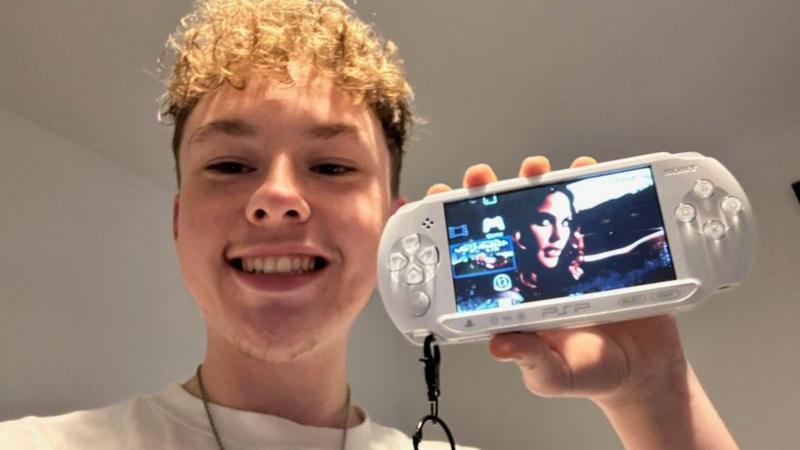
Young people from Generation Z are increasingly interested in using older technology as a way to take a break from always being online. Items like vinyl records, DVDs, and film cameras are becoming more popular. Some Gen Z individuals find these technologies offer a sense of nostalgia and a more 'real' or 'authentic' experience than modern digital alternatives.
Key Facts
Gen Z includes people in their teens and early 20s who are interested in older technology.
Retro tech products like portable vinyl turntables and disposable cameras are becoming popular.
Retailers like Amazon UK saw a rise in sales of retro items during Black Friday.
DVDs are valued by some because they offer physical ownership and are cheaper than streaming.
Vinyl records are appreciated for their sound quality and physical presence.
Traditional cameras provide a photography experience that is different from using a smartphone.
Nostalgia plays a large role in the interest in retro tech, with many young people remembering seeing such items used when they were younger.
For some, retro devices provide a simpler, more engaging experience free from modern tech distractions.
Read the Original
Want the full story? Tap a source to open the original
article.
In the U.S., about 1 in 10 babies are born too early, before 37 weeks of pregnancy. This is a high rate compared to other developed countries. An entrepreneur is using artificial intelligence (AI) to help doctors predict these early births.
Key Facts
About 10% of U.S. babies are born prematurely, before 37 weeks.
The U.S. has one of the highest preterm birth rates among developed countries.
The March of Dimes provided the statistics on premature births.
AI is being developed to help predict when preterm births may happen.
Parents of preterm babies share their experiences in the report.
Ali Rogin interviews an entrepreneur working on AI solutions for this issue.
Read the Original
Want the full story? Tap a source to open the original
article.
A Harvard neuroscientist, Dr. Rudy Tanzi, shares natural ways to protect brain health and reduce the risk of Alzheimer's disease. These methods include managing lifestyle factors like sleep, stress, social interaction, exercise, learning, and diet.
Key Facts
Dr. Rudy Tanzi is a neuroscientist focused on Alzheimer's research at Harvard Medical School.
Tanzi emphasizes proactive brain health strategies to prevent cognitive decline.
He developed the SHIELD framework: Sleep, Handling stress, Interaction, Exercise, Learning, and Diet.
Sleep helps clear plaques that cause cognitive issues.
Stress management is crucial because stress hormones harm brain cells and increase inflammation.
Social interaction and exercise help maintain cognitive functions and reduce brain plaque.
Learning new skills supports brain resilience.
The Mediterranean diet is recommended to support brain health by maintaining a healthy gut.
Monitoring diabetes, heart disease, and stroke is important for brain health because they can lead to inflammation and poor blood flow.
Read the Original
Want the full story? Tap a source to open the original
article.
The article explores various ways technology is advancing in different fields, such as space exploration, climate change, fashion, and medicine. It highlights how robots could lead space missions and mentions innovations like icebreaker ships and AI systems aimed at solving problems in several industries.
Key Facts
The article discusses if robots can lead space exploration missions.
Engineers are designing icebreaker ships for the Arctic.
An AI startup is working on fixing inconsistent clothing sizes in fashion.
New technology is being trialed to detect hidden pancreatic cancer cases.
High-tech innovations are emerging in the esports industry.
Advances in nuclear fusion are examined for providing clean energy.
Developments in electric flight are being explored to reduce air travel emissions.
Read the Original
Want the full story? Tap a source to open the original
article.
A new Doctor Who spin-off series, "The War Between the Land and the Sea," features Russell Tovey as the lead character and focuses on the Sea Devils, an ancient species, posing a threat to Earth. The series will explore themes related to the real world and features significant action scenes with advanced special effects. The show is crafted by Russell T Davies and marks the end of a Disney+ partnership that helped fund its production.
Key Facts
The new spin-off is called "The War Between the Land and the Sea."
Russell Tovey plays the main character, Barclay.
The Sea Devils, an ancient species, are the main antagonists.
The series is set in the Doctor Who universe but stands alone.
Gugu Mbatha-Raw plays the character Salt, leader of the Sea Devils.
The series includes advanced special effects and detailed prosthetics.
It is co-written and produced by Russell T Davies.
The show marks the end of a Disney+ production partnership.
Read the Original
Want the full story? Tap a source to open the original
article.
The article explores whether people are becoming addicted to their smartwatches. It discusses how these devices track various health metrics and how users have mixed feelings about the data they provide. The article also looks at the potential benefits and stresses of using smartwatches.
Key Facts
Many people wear smartwatches to track their health and fitness.
Smartwatches can monitor things like sleep, heart rate, and stress levels.
The smartwatch industry is a large market with brands like Apple, Samsung, and Garmin.
There is debate about whether smartwatches provide accurate data.
Some users feel overwhelmed by their smartwatches' many features.
Smartwatches can perform advanced tests like electrocardiograms (ECGs).
Niels Peek, a data science expert, notes that while smartwatches can help detect health issues early, they may also cause unnecessary worry.
Read the Original
Want the full story? Tap a source to open the original
article.