More people want plastic surgeons to create faces that look like those made by artificial intelligence (AI). Surgeons say the perfect images from AI are not possible to achieve through surgery because real faces have natural limits. They also warn that AI sets unrealistic beauty standards and some social media posts showing incredible results may be edited by AI.
Key Facts
Clients bring AI-made images of their perfect face to surgeons, expecting surgery to copy them exactly.
Surgeons say surgery cannot match the pixel-level detail and flawless symmetry AI can create.
AI images influence people's ideas of beauty strongly and quickly.
Human healing and aging vary, so surgery results can never be guaranteed.
AI can easily change features like eye height or jawline in pictures, but real surgery cannot change certain bone structures safely.
Typical AI beauty ideals include V-shaped jaws and heart-shaped faces for women, and broad jaws with fuller eyelids for men.
Some surgeons worry that flashy social media surgery results might be digitally enhanced using AI.
Surgeons report more patients are bringing AI-generated images as AI becomes more common in everyday life.
Read the Original
Want the full story? Tap a source to open the original
article.
Traditional neighborhood watch programs, where neighbors personally watch out for each other, are declining. They are being replaced by digital tools like Amazon's Ring and the Nextdoor app that use video and online alerts to monitor neighborhoods.
Key Facts
Neighborhood watch programs have been fading as people use apps and devices to watch their communities digitally.
Ring doorbells send video footage to an app where users can share alerts about strangers or wildlife.
Nextdoor posts alerts about suspicious people and also lets users complain about minor issues like dog waste.
Thousands of neighborhoods now use license plate readers, raising privacy concerns.
Some places, like Ann Arbor, Michigan, removed neighborhood watch signs due to worries about racial profiling.
Law enforcement sees a drop in volunteer watch programs as younger people are less involved.
Experts say digital tools help catch crime faster but reduce personal communication and trust among neighbors.
Apps can spread biased or misleading reports, sometimes increasing suspicion toward people of color.
Neighborhood watch programs started in the late 1960s to encourage community crime prevention working with police.
Read the Original
Want the full story? Tap a source to open the original
article.
A UK startup named BioOrbit sent a small machine called Box-E to the International Space Station to grow very pure protein crystals in space. These crystals can help make cancer drugs that patients can inject themselves at home, reducing hospital visits and improving drug stability.
Key Facts
BioOrbit is a British startup launched in 2023 by Dr. Katie King and Dr. Leonor Teles.
Box-E, about the size of a microwave, was sent to space on 15 May aboard a SpaceX rocket from Florida.
Microgravity in space allows drug compounds to form purer and more stable crystals than on Earth.
These crystals can make cancer drugs easier to inject, with a longer shelf life and less need for hospital infusions.
BioOrbit aims to produce drugs at a large scale by stacking many Box-E units in orbit.
The company raised £9.8 million from investors to develop and mass-produce this technology.
BioOrbit won a £250,000 contract from the UK Space Agency to help manufacture drugs in microgravity.
SpaceX supports space manufacturing as a growth market and sees pharmaceuticals as a key area.
Read the Original
Want the full story? Tap a source to open the original
article.
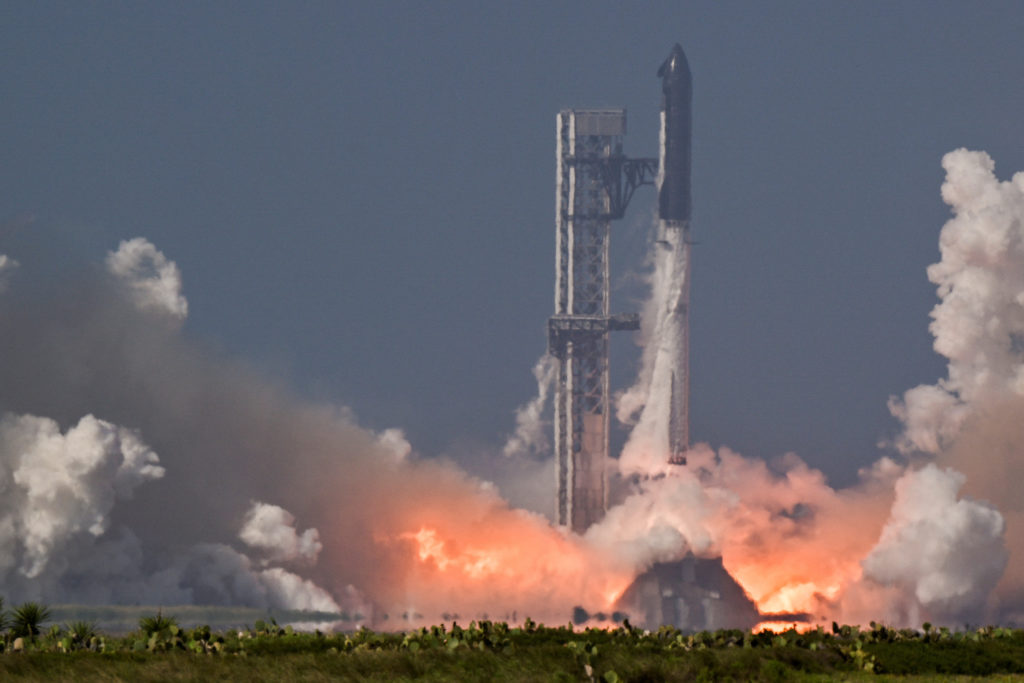
SpaceX launched its biggest and most powerful Starship rocket on a test flight from Texas. The rocket carried 20 dummy satellites, reached the Indian Ocean despite some engine trouble, and caught fire on landing, which SpaceX expected.
Key Facts
The test flight used the newest version of Starship called V3, which is bigger and stronger.
The rocket carried 20 mock Starlink satellites released during the flight.
The flight lasted about an hour and traveled halfway around the world.
The rocket reached 120 miles (194 kilometers) high before descending.
It landed upright in the Indian Ocean but then fell over and caught fire.
Engine problems reduced the number of engines firing during flight.
This is SpaceX’s 12th Starship test flight aimed at future moon and Mars missions.
NASA’s Artemis program plans to use Starship to land astronauts on the moon.
Read the Original
Want the full story? Tap a source to open the original
article.
SpaceX successfully launched its Starship V3 rocket, the largest and most powerful ever built. The rocket's test flight lasted about an hour and ended when it splashed into the Indian Ocean, where it exploded as planned.
Key Facts
The Starship V3 is the largest and most powerful rocket in history.
The test flight took place on a Friday and lasted about 60 minutes.
The rocket splashed down in the Indian Ocean at the end of the flight.
The explosion in the ocean was expected and part of the test plan.
The launch was delayed by one day due to a problem with a hydraulic pin in the launch tower.
During the flight, both stages of the rocket experienced engine failures.
Despite engine issues, the test met most of its main goals.
SpaceX is led by Elon Musk, who is known for advancing space technology.
Read the Original
Want the full story? Tap a source to open the original
article.
Trump Mobile, a phone company linked to President Donald Trump’s family business, is investigating a possible security flaw on its website. This flaw may have exposed personal information of about 27,000 people who tried to preorder a gold-colored smartphone, though sensitive financial data appears safe.
Key Facts
Trump Mobile found a possible security issue exposing names, addresses, emails, and phone numbers of preorder customers.
The company said no payment card, banking, Social Security numbers, or other sensitive financial data were exposed.
An independent cybersecurity team is helping investigate the problem.
About 27,000 potential customers may have had their information exposed, but many did not complete purchases.
Customers are advised to watch for suspicious emails, calls, or texts and not to share sensitive information through unsolicited contacts.
Trump Mobile recently started shipping its T1 smartphone after a delay and shifted from US-only manufacturing to using mainly US components.
A programmer found the flaw accidentally and reported it to Trump Mobile.
Trump Mobile’s website uses a common online ordering system that recorded all attempted orders, even incomplete ones.
Read the Original
Want the full story? Tap a source to open the original
article.
SpaceX launched its largest Starship V3 rocket on a test flight from Texas, which lasted about an hour and ended with the rocket splashing down into the Indian Ocean. The mission had some engine problems but still achieved most goals, including releasing test satellites and collecting data.
Key Facts
Starship V3 is the tallest and most powerful rocket built by SpaceX, standing 124 meters (407 feet) high.
The rocket launched successfully after a delay caused by a problem with the launch tower.
One engine failed during flight, requiring the other five engines to burn longer to keep the rocket on course.
The rocket released 20 test satellites and two satellites that scanned its heat shield during descent.
The flight ended as planned with the rocket hitting the ocean and exploding safely.
This was SpaceX’s 12th rocket flight and the first using the new Starship V3 design.
The launch happened just before SpaceX plans to go public with a stock market debut, potentially making Elon Musk a trillionaire.
SpaceX also runs the Starlink satellite internet service and owns the AI company xAI.
Read the Original
Want the full story? Tap a source to open the original
article.
The article presents an overview of the "Tech Now" series, which explores various ways technology is being used across different fields. Topics include medical advancements, artificial intelligence, space exploration, environmental science, and innovations in agriculture and fashion.
Key Facts
The series covers medical tech such as advanced prosthetics and 3D imaging for heart surgery.
It features AI applications, including solving art mysteries and improving clothing sizes.
Environmental technology topics include electric boats, icebreaker ships, wildfire detection, and climate research used in court.
Space technology is explored through visits to spaceports and discussions on robotic exploration.
Innovations in food production, like insect farms and future farming methods, are highlighted.
The series also looks at tech events showcasing new gadgets and trends, such as MWC Barcelona and CES 2026.
Other subjects include brain-cell biocomputing, cancer detection technology, cloud seeding science, and esports innovations.
Read the Original
Want the full story? Tap a source to open the original
article.
Scientists and space agencies are developing new exercise machines for astronauts to stay strong during long space missions. These devices are tested in weightless conditions created by special flights to prepare for future missions on the Moon and space stations.
Key Facts
Astronauts need to exercise daily to keep their muscles and bones healthy in space.
Current machines require astronauts to spend about two hours exercising each day.
New exercise equipment is being developed and tested by agencies like ESA, NASA, and the UK Space Agency.
Testing includes parabolic flights that create short periods of weightlessness for realistic conditions.
British inventors created a device called HIFIm designed for use on future space missions.
Other devices include the European Enhanced Exploration Exercise Device (E4D), which offers multiple exercise modes and performance tracking.
These machines aim to support astronauts on long missions, including those planned for lunar bases and the Artemis missions to the Moon.
The Artemis II mission used a special flywheel exercise device to help keep astronauts fit in space.
Read the Original
Want the full story? Tap a source to open the original
article.
SpaceX successfully launched a test flight of its newest and improved Starship rocket. This version has upgrades that aim to make it more powerful and reliable for future space missions.
Key Facts
The test launch happened on a Friday.
The rocket tested is an upgraded version of the Starship.
Starship is designed to be a large and powerful rocket.
SpaceX hopes to use Starship for future space travel.
The launch was covered by CBS News and their space consultant Bill Harwood.
The test was part of ongoing efforts to develop better space vehicles.
Starship is central to SpaceX's plans for missions beyond Earth.
Read the Original
Want the full story? Tap a source to open the original
article.
SpaceX launched its most powerful Starship rocket in a test flight from Texas. This new rocket version is part of NASA’s plan to land astronauts on the moon through the Artemis program.
Key Facts
The Starship V3 is SpaceX’s biggest and most powerful rocket, standing 407 feet tall.
It carried 20 mock Starlink satellites during the test flight.
The launch took place at Starbase, near the Texas-Mexico border.
The rocket’s first stage ended its flight in the Gulf of Mexico, while the spacecraft and satellites reached the Indian Ocean.
NASA is paying SpaceX and Blue Origin to develop lunar landers for moon missions.
Blue Origin’s lunar lander, called Blue Moon, is not yet launched but is planned for later this year.
NASA plans to test docking in orbit by astronauts next year using Starship, Blue Moon, or both.
A crewed moon landing could happen as soon as 2028, aiming for a base near the lunar south pole.
Read the Original
Want the full story? Tap a source to open the original
article.
SpaceX launched its largest and most powerful Starship rocket, called V3, on a test flight from Texas. The rocket carried 20 fake Starlink satellites and is planned to help NASA land astronauts on the moon.
Key Facts
The rocket launched on a Friday from SpaceX’s Starbase near the Texas-Mexico border.
Starship V3 is the third-generation model and is more powerful than previous versions.
It carried 20 mock (fake) Starlink satellites to be released in orbit.
NASA plans to use this rocket for its Artemis program to send astronauts to the moon.
This was the 12th test flight of the Starship rocket series.
A launch attempt the night before was canceled due to last-minute issues on the launch pad.
SpaceX CEO Elon Musk announced plans to take the company public just two days before this launch.
The Starship is intended for future missions to Mars, but the moon mission comes first.
Read the Original
Want the full story? Tap a source to open the original
article.
SpaceX launched an improved version of its Super Heavy-Starship rocket from Texas to test stronger engines and new features. The rocket carried test satellites and performed several maneuvers, though the first stage did not land exactly as planned.
Key Facts
The rocket is called Super Heavy-Starship and uses 36 methane-burning Raptor engines.
It generated up to 18 million pounds of thrust, twice as much as NASA’s moon rocket.
The launch took place at SpaceX’s new, stronger launch pad at Starbase, Texas.
The first stage was supposed to return and land safely in the Gulf but had engine trouble.
The upper stage carried 22 Starlink satellite simulators for release during flight.
Cameras on board sent back images to help study the rocket’s heat shield and flight.
Tests included engine restarts in space and maneuvers to check the rocket’s control systems.
This flight marks a key step toward future missions to the moon and Mars.
Read the Original
Want the full story? Tap a source to open the original
article.
Google’s first-generation Chromecast, a popular streaming device from 2014, experienced a temporary problem this week where it suddenly stopped working with apps like YouTube and Chrome. Google said it was a technical issue that has now been fixed, and all affected devices should be working again.
Key Facts
The first-generation Chromecast sold 10 million units in 2014.
It allowed users to stream video from apps to their TV by pressing a "Cast" button.
Google stopped supporting the first-generation Chromecast in 2023.
Many users reported their first-gen Chromecasts stopped working suddenly this week.
Some users suspected Google deliberately disabled the devices to encourage upgrades.
Google denied this and said a technical issue caused the problem.
Google’s team quickly fixed the issue, and devices are working again.
Google ended support for all Chromecasts except for the 2022 Chromecast with Google TV (HD).
Read the Original
Want the full story? Tap a source to open the original
article.
Scientists at the UK Dementia Research Institute are using artificial intelligence (AI) to find existing drugs that could treat brain diseases like motor neurone disease (MND) faster. By analyzing patient data and lab-grown brain cells, they aim to reduce the time to discover effective treatments from decades to years.
Key Facts
Researchers study patient data such as voice recordings, eye scans, and lab-grown brain cells to identify possible drug treatments.
The AI uses patterns of disease to predict which already-approved drugs might work for neurological conditions like MND, Parkinson’s, and dementia.
The approach could shorten drug discovery from more than 10 years down to just a few years.
One trial, called MND-SMART, tests multiple drugs at the same time instead of just one drug versus a placebo.
Patients like Steven Barrett, diagnosed with MND, participate in these trials hoping to find better treatments.
Stem cells from patients are turned into brain cells (neurones) to test how drugs affect them in the lab.
AI algorithms have been trained to change disease signatures in brain cells to a healthy state using existing medicines.
Using already-approved drugs for new uses can be faster and less complicated than creating new drugs from scratch.
Read the Original
Want the full story? Tap a source to open the original
article.
Director Lee Cronin, known for horror films like "The Hole in the Ground" and "Evil Dead Rise," wants to try making movies outside the horror genre. He is currently working on a script for an R-rated romantic comedy that includes a small supernatural element.
Key Facts
Lee Cronin is best known for directing horror movies.
His recent film "The Mummy" got mixed reviews but did well at the box office.
Cronin wants to branch out from horror and explore other film genres.
He is writing a romantic comedy with a minor supernatural twist.
Romantic comedies have recently become popular again.
Cronin is also interested in directing Westerns, war movies, and science fiction.
He has experience in writing comedy but is cautious about directing a pure comedy.
The romantic comedy he is working on is intended to be R-rated and somewhat risqué.
Read the Original
Want the full story? Tap a source to open the original
article.
GoPro has introduced the MISSION 1 Series, a new line of compact cinema cameras designed for professional filmmakers and creators. The cameras feature a larger 1-inch sensor, support 8K video recording, and offer improved low-light performance. Pre-orders are open now, and shipping starts May 28.
Key Facts
The MISSION 1 Series includes three models: base MISSION 1, MISSION 1 PRO, and MISSION 1 PRO Grip Edition.
All models use a new 50MP 1-inch sensor with GoPro's GP3 processor for better image quality and performance.
The MISSION 1 PRO can record 8K video at 60 frames per second and 4K at up to 240 frames per second.
The base MISSION 1 supports 8K at 30fps and 4K at 120fps with advanced color and audio features.
Prices start at $599 for the base model, with discounts for current GoPro subscribers.
The Grip Edition includes an ergonomic metal cage for easier handling and mounting.
Cameras are waterproof up to 66 feet without housing; an optional housing increases this to 196 feet for diving.
Accessories like long-lasting batteries, ND filters, and dual battery chargers will be available starting May 28.
Read the Original
Want the full story? Tap a source to open the original
article.
European police and law enforcement agencies hacked into and shut down a VPN service called First VPN, which was used by cybercriminals to hide illegal activities like ransomware attacks and data theft. Investigators accessed the service’s user data, identified thousands of users, and arrested the VPN’s operator as part of an international operation.
Key Facts
First VPN was a virtual private network service used by cybercriminals to hide their online activities.
The service was active since 2014 and had servers in 27 countries.
Authorities began investigating in December 2021 and eventually gained access to user data.
The VPN promised no logs (no records of user activity) and said it would not cooperate with law enforcement.
Law enforcement included agencies from France, the Netherlands, Europol, Eurojust, and the FBI.
The FBI reported that 25 ransomware groups used First VPN to hide their attacks.
The website of First VPN displayed a message after the shutdown indicating domain seizure by the police.
Users believed their activities were safe and anonymous, but the police had access to their traffic before the shutdown.
Read the Original
Want the full story? Tap a source to open the original
article.
The Texas Attorney General has sued Meta, claiming that WhatsApp does not provide the end-to-end encryption it promises. Meta denies the allegations, stating that WhatsApp messages remain private and the company will fight the lawsuit.
Key Facts
WhatsApp, owned by Meta, claims to use end-to-end encryption (E2EE), meaning only the sender and receiver can read messages.
Meta’s CEO Mark Zuckerberg said in 2018 that WhatsApp message content is fully encrypted and not visible to Meta.
The Texas AG’s complaint alleges Meta can access unencrypted WhatsApp messages, accusing the company of misleading users about privacy.
The lawsuit cites a Bloomberg report about a government investigation that was reportedly closed after findings suggested Meta had access to WhatsApp messages.
Meta says the allegations are baseless and will oppose the lawsuit in court.
Experts who tested WhatsApp in 2023 say the app’s encryption generally works as claimed, with only a minor security issue found related to group chat management.
WhatsApp messages reported by users to Meta are decrypted only on the reporter’s device before being shared with Meta.
No direct evidence from investigators is reported in the lawsuit, only the Bloomberg article is cited for support.
Read the Original
Want the full story? Tap a source to open the original
article.
NASA and its partners are preparing to end the International Space Station (ISS) program around 2030. Experts and museum curators are discussing how to preserve parts of the ISS since the whole structure is too large to save.
Key Facts
The ISS has allowed humans to live continuously in space for over 25 years.
NASA plans to end the ISS program and bring it down by 2030.
The Smithsonian National Air and Space Museum held discussions on how to save the heritage of the ISS.
Panelists included astronauts, museum curators, an archaeologist, and space officials.
They emphasized preserving the experiences of crews from over 74 missions on the ISS.
Some iconic parts of the ISS, like the cupola with windows, are popular for preservation.
It is not possible to bring back the entire space station due to its size and complexity.
Continued international space missions are seen as part of preserving the legacy of the ISS.
Read the Original
Want the full story? Tap a source to open the original
article.