Meta is facing lawsuits over child safety concerns on its platforms, local disputes about water use by its data centers, and plans to cut about 10 percent of its workforce while increasing spending on artificial intelligence (AI). The company reported strong financial results in the first quarter but is under scrutiny from lawmakers and courts.
Key Facts
Meta reported $56.3 billion in revenue and $26.8 billion in net income for the first quarter of the year.
Representative Alexandria Ocasio-Cortez raised concerns about a Meta data center in Georgia using a large share of local water, potentially affecting drinking water quality.
Meta said an independent study found no impact on groundwater from the data center and that it uses water from local utilities.
Meta plans to cut about 8,000 jobs, around 10 percent of its workforce, and will halt hiring for about 6,000 open positions.
CEO Mark Zuckerberg said AI helps improve efficiency but is not the cause of layoffs.
Meta raised its expected capital spending for 2026 to $125-145 billion due to increased costs and AI infrastructure needs.
A New Mexico jury fined Meta $375 million for misleading users about child safety on social media platforms like Facebook and Instagram.
The lawsuits focus on Meta’s failure to warn about risks such as sexual exploitation and mental health harms for children on its platforms.
Read the Original
Want the full story? Tap a source to open the original
article.
A recent CBS News poll shows that most Americans believe artificial intelligence (AI) will reduce jobs in the U.S. Many are also doubtful that the government will create policies to make sure AI is used in the right way. People view AI companies as trying to gain more power and replace human workers.
Key Facts
Two-thirds of Americans doubt the government will regulate AI properly.
Most Americans think AI will lead to fewer jobs in the U.S.
Democrats and independents mostly agree on the government’s inability to control AI; Republicans are split.
Many believe AI companies want to replace human workers and increase their own power.
Some people see AI as useful for simplifying tasks and advancing science and medicine.
Younger Americans are slightly less worried about job loss from AI, possibly because they understand and use AI more.
The poll surveyed 2,064 U.S. adults between May 13-15, 2026, with a margin of error of ±2.7 points.
The sample was designed to represent the U.S. adult population by age, gender, race, education, and 2024 presidential vote.
Read the Original
Want the full story? Tap a source to open the original
article.
A user reported that the magnetic charging puck of the Steam Controller caused a short circuit and almost started a fire when it touched a metal watch strap. Valve warns users in the manual to keep the charger and controller away from metal objects to avoid sparks, damage, or injury.
Key Facts
The Steam Controller uses a magnetic charging puck with exposed metal contacts.
A Reddit user experienced a short circuit when the puck touched a metal watch band, causing sizzling and nearly a fire.
Valve’s manual warns that magnets in the charger and controller can attract metal objects and cause sparks or damage.
The manual also says the magnets may disrupt medical devices, credit cards, and data storage nearby.
Similar charging devices from Xbox and Sony have metal pins but use protective features to limit exposure.
The Steam Controller includes the magnetic charger as a standard part, unlike Xbox and Sony accessories that are optional.
Valve is aware of the problem and is working with the user to replace the puck and study the issue.
Users should keep the charging puck away from metal or magnetic items for safety.
Read the Original
Want the full story? Tap a source to open the original
article.
Waymo has stopped its self-driving taxi service in five US cities after some of its cars drove into flooded roads and got stuck. The company recalled nearly 3,800 vehicles to fix a software problem that let cars enter standing water, and it has paused service on freeways while working on improvements.
Key Facts
Waymo paused robotaxi service in five US cities: four in Texas and Atlanta, Georgia.
The problem started when cars drove into flooded roads, including an incident where a vehicle was swept into a creek in San Antonio.
About 3,800 robotaxis using Waymo’s fifth and sixth-generation driving systems were recalled voluntarily.
The software glitch could cause cars to slow and then drive into standing water on highways.
Waymo also stopped its driverless cars on freeways in San Francisco, Los Angeles, Phoenix, and Miami.
The company is working on adding software safeguards and improving performance in construction zones.
Waymo is owned by Alphabet, Google’s parent company, and offers over 500,000 trips weekly in several US cities.
Previous incidents with self-driving cars have raised safety concerns, including outages and cars stopping mid-traffic.
Read the Original
Want the full story? Tap a source to open the original
article.
NASA is reorganizing its structure to become more efficient and focus on key missions like returning humans to the Moon and building a Moon base. The agency will combine some departments, reduce management layers, and give more decision power to field centers without cutting jobs or closing centers.
Key Facts
NASA Administrator Jared Isaacman announced a major internal reorganization via a long email.
The goal is to cut bureaucracy and speed up progress on NASA's top priorities.
No employees will lose jobs, and no centers will be closed.
NASA will focus on missions such as the Artemis Program to return humans to the Moon and build a permanent Moon base.
The agency will create a Space Reactor Office to advance nuclear power in space.
Six main Mission Directorates will be reduced to four to simplify leadership and decision-making.
Mission Directorates will report directly to Isaacman instead of the Associate Administrator.
The changes aim to give more power to field centers and reduce top-heavy management.
Read the Original
Want the full story? Tap a source to open the original
article.
NASA is tracking several asteroids passing near Earth on Friday. The closest one, called 2026 KC1, is about the size of a bus and will come within 304,000 miles of Earth.
Key Facts
Asteroid 2026 KC1 is about 27 feet wide and will pass Earth at a speed of 45,522 mph.
It will come as close as 304,000 miles from Earth.
Other asteroids passing Friday include 2026 KF (plane-sized) at 408,000 miles and 2026 JE1 (bus-sized) at 694,000 miles.
A plane-sized asteroid called 2026 JC4 will pass much farther, about 3,560,000 miles away.
Another plane-sized asteroid, KE1, will pass on Saturday at 1,620,000 miles from Earth.
Small asteroids like these hit Earth roughly every 10 years but usually cause no serious harm.
Larger asteroids over 160 feet can cause local damage but impact Earth only every 1,000 years.
Very large asteroids over 3,000 feet can cause global damage but hit about every 700,000 years.
Read the Original
Want the full story? Tap a source to open the original
article.
Author Steven Rosenbaum used AI tools to help research his new book but found some quotes AI created were not accurate or real. He is now fixing these mistakes with his editors but says he will keep using AI because it helps him find ideas and information.
Key Facts
Steven Rosenbaum is a journalist and author of the book The Future of Truth: How AI Reshapes Reality.
The book discusses how AI changes the nature of truth by mixing and altering information.
A New York Times investigation found some quotes in the book were “synthetic,” meaning AI made them up or attributed them incorrectly.
Examples include a tech reporter and a professor who said the quotes were never said or did not appear in their work.
Rosenbaum is doing a full review with editors to correct the errors in future editions.
He used AI tools like ChatGPT and Claude mainly for research tasks like finding articles and summarizing ideas.
He says the main writing, interviews, and arguments in the book are his own, not written by AI.
Rosenbaum believes AI is useful and will continue to use it, but he plans to check its results more carefully.
Read the Original
Want the full story? Tap a source to open the original
article.
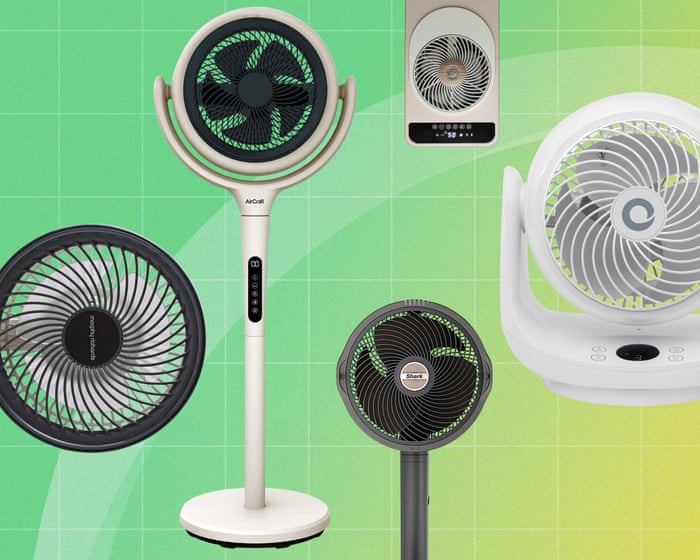
The article reviews 15 different fans that help keep people cool during hot weather while using much less electricity than air conditioners. It explains how the fans were tested for power use, noise, and cooling ability, and recommends the best options for different needs and budgets.
Key Facts
Fans use far less electricity than portable air conditioners; typical fans use between 8W and 60W, while air conditioners use about 1,000W.
The AirCraft Lume was rated the best overall fan, using only 18W on its highest setting.
Other recommended fans include a budget desk fan by Devola and the Shark FlexBreeze Pro Mist, a misting fan.
Testing included measuring air speed, noise levels, electricity use, and cooling effect with tools like anemometers, sound meters, and thermometers.
Some fans tested were evaporative coolers, which cool air by blowing it over water, using less energy than traditional air conditioners.
Fans were also evaluated on size, looks, how easy they are to control, and price.
After testing, most fans were donated to a charity that furnishes homes for women and children escaping domestic abuse.
The article encourages using fans as an energy-efficient alternative to air conditioning to save money and reduce carbon emissions.
Read the Original
Want the full story? Tap a source to open the original
article.
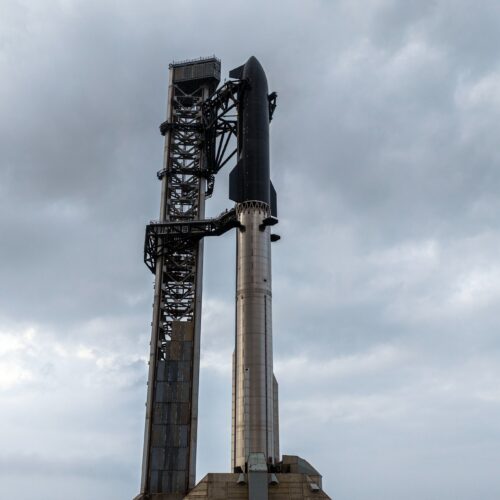
SpaceX, owned by Elon Musk, canceled a planned test launch of its large Starship rocket due to technical problems just before the scheduled time. The launch was stopped to address these issues and ensure safety.
Key Facts
SpaceX canceled the test launch of its Starship rocket.
The launch was planned for Thursday but stopped shortly before takeoff.
Technical problems caused the cancellation.
Starship is SpaceX’s biggest rocket.
Elon Musk owns SpaceX.
The company prioritized safety by scrubbing the launch.
Read the Original
Want the full story? Tap a source to open the original
article.
Waymo has stopped all of its self-driving car rides on freeways for a short time. The company is working to make its cars better at handling freeway construction areas.
Key Facts
Waymo is a company that develops autonomous (self-driving) vehicles.
The company has paused its freeway rides temporarily.
The pause is to improve how the vehicles drive through freeway construction zones.
Construction zones on freeways can be challenging for self-driving technology.
Waymo aims to make its autonomous vehicles safer and more reliable in these areas.
Read the Original
Want the full story? Tap a source to open the original
article.
Bungie, the company behind the online shooter game Destiny 2, announced it will stop releasing new updates for the game after June 9, 2024. The game will still be playable, but this marks the end of one of the longest-running live-service games, where developers regularly add new content over time.
Key Facts
Bungie will release the final update for Destiny 2 on June 9, 2024.
Destiny 2 will remain playable after the final update but will get no further content.
Bungie has not confirmed if it will create a sequel to Destiny 2.
The studio plans to start working on new games and continue supporting its other shooter, Marathon.
Bungie was bought by Sony in 2022 for $3.6 billion.
Destiny 2 launched in 2017 and was one of the longest-running live-service games with regular updates.
Bungie cut 8% of its staff in 2023 and 17% more in 2024 due to industry and company challenges.
Live-service games remain the main model in gaming, but they are very competitive and hard to maintain.
Read the Original
Want the full story? Tap a source to open the original
article.
Major U.S. social media companies like Meta (Facebook and Instagram), Snapchat, and X (owned by Elon Musk) have blocked or limited accounts of Saudi Arabian dissidents inside Saudi Arabia, following requests from Saudi authorities. These actions have affected activists who criticize Saudi Arabia’s human rights record, with some companies notifying users and others not.
Key Facts
Meta blocked at least seven accounts, including those of American and European dissidents, inside Saudi Arabia in April.
Meta said it restricts content in countries where it breaks local laws but keeps their own community standards intact.
Saudi authorities requested Meta to restrict 144 Instagram and Facebook accounts or pages in April.
Snapchat slowed or removed some Saudi dissidents’ accounts without informing users.
Some X users received letters about Saudi complaints that their accounts broke Saudi laws, but X has not yet removed the content.
Activists targeted include Abdullah Alaoudh (US-based) and Omar Abdulaziz (Canada/UK-based), who criticize Saudi human rights abuses.
Saudi requests cited concerns about content violating “public order, religious values, public morals, or the sanctity of private life.”
Human rights groups say these actions show how censorship can be disguised as legal procedure.
Read the Original
Want the full story? Tap a source to open the original
article.
Elon Musk criticized the casting of Lupita Nyong’o as Helen of Troy in Christopher Nolan’s film The Odyssey, arguing it is historically inaccurate and part of a political agenda. Musk expressed these views mainly on his social media platform X, joining others who oppose the casting based on race and appearance.
Key Facts
Lupita Nyong’o was cast as Helen of Troy in Christopher Nolan’s adaptation of The Odyssey.
Elon Musk publicly criticized this casting on X, saying it is inaccurate and politically motivated.
Musk agreed with posts claiming the casting undermines western civilization and prefers a white actress for the role.
The Odyssey is a story based on ancient Greek mythology, which has fictional characters like Helen of Troy.
Musk frequently posts about race and has expressed concerns over the status of white people.
Experts have noted that Musk’s posts sometimes echo views associated with white supremacist ideas.
Despite many professional responsibilities, Musk spends significant time discussing these topics on social media.
The casting debate reflects broader discussions about diversity and representation in movies.
Read the Original
Want the full story? Tap a source to open the original
article.
SpaceX delayed the launch of its Starship rocket due to a problem with ground equipment but aims to try again soon. Firefly Aerospace has expanded its facilities in Texas to boost spacecraft production, while a German launch company may help Canada develop its own space launch capabilities. Additionally, a Chinese space company secured funding for its first rocket launch planned for June.
Key Facts
SpaceX’s Starship launch was postponed because of an issue with ground systems.
Firefly Aerospace opened a larger headquarters in Cedar Park, Texas, to increase spacecraft assembly and testing.
Firefly’s new campus is 144,000 square feet and located near its Rocket Ranch test site.
A German submarine maker TKMS partnered with Isar Aerospace to support Canada’s space launch goals.
Canada plans to invest $105 million over three years to build small rocket launch abilities by 2028.
Canada awarded $8.3 million to three local space companies to help this goal.
Chinese company Zenk Space raised $26 million to prepare for launching its Zhihang-1 rocket in June.
Zhihang-1 is a kerosene-oxygen fueled rocket that can carry 4,000 kilograms to low Earth orbit.
Read the Original
Want the full story? Tap a source to open the original
article.
The article discusses concerns about children using screens, like tablets and phones. It suggests that people often worry about these devices more than the evidence shows they are harmful.
Key Facts
Many people worry that screens might be bad for kids.
These worries are often based on morals rather than strong scientific proof.
Sometimes, fears about new technology grow bigger than the actual risks.
Experts say it is important to look at real research when judging screen use.
Not all screen time is harmful; some can be educational or helpful.
Parents and caregivers should balance screen use with other activities.
Read the Original
Want the full story? Tap a source to open the original
article.
A hacker group called TeamPCP has been carrying out frequent attacks by secretly adding harmful code to open source software used by many developers. Recently, they broke into GitHub, a major platform for software, and accessed thousands of code projects, aiming to sell the stolen internal code. This is part of an ongoing pattern where the hackers infect software tools, spreading malware and stealing data from many companies.
Key Facts
TeamPCP is a hacker group focused on software supply chain attacks, where they add malicious code to trusted software.
They recently hacked GitHub by installing a harmful extension in a popular coding tool called VSCode.
The hackers accessed about 4,000 GitHub code repositories, mostly containing GitHub’s own internal code.
TeamPCP has attacked over 500 different software projects in recent months.
Their attacks have affected many companies, including GitHub, OpenAI, and Mercor.
The group uses a cycle where they infect software developers’ tools, which then spread the malware to more developers and companies.
TeamPCP has automated some attacks using a worm (a self-spreading program) named Mini Shai-Hulud.
Their goal includes stealing credentials and selling stolen code on hacking forums.
Read the Original
Want the full story? Tap a source to open the original
article.
AI companies invest a lot of money in developing new technology but spend very little on explaining it to the public. This has caused people and politicians to worry about AI, turning the technology into a political problem.
Key Facts
AI companies have spent billions building technology but almost nothing on public education or communication.
Public opinion about AI is becoming more negative, influencing political decisions.
President Donald Trump’s administration worked closely with tech leaders from companies like OpenAI, Google, Nvidia, and others.
Many AI company leaders admit they lack dedicated teams to explain their products to the public.
The lack of communication has contributed to growing fears and political backlash against AI.
Some AI companies moved their operations to states more welcoming to business due to rising opposition elsewhere.
Politicians in both red and blue states are promising to regulate AI to address concerns like job loss.
Politicians who support AI technology are currently avoiding the topic to prevent losing support in polls.
Read the Original
Want the full story? Tap a source to open the original
article.
The U.S. Nuclear Regulatory Commission (NRC) is about to introduce new rules to make it easier to approve fusion energy projects. Fusion energy, which joins light atoms to create power like the sun, produces less dangerous waste and is seen as safer than traditional nuclear fission energy.
Key Facts
Fusion energy releases power by combining light atoms, unlike fission which splits heavy atoms.
Fusion does not produce long-lived radioactive waste or risk serious meltdowns.
The NRC is finalizing a simpler permitting process for fusion energy, expected this fall.
Fusion regulation will be separated from traditional nuclear fission rules.
This new approach could speed up fusion development and make power plants easier to build near users.
Similar fusion-friendly regulations are being developed in the UK, Canada, and other countries.
Environmental groups are cautiously supporting fusion energy due to its safety advantages.
Fusion electricity is not yet commercially available but the industry aims to develop it in the next decade.
Read the Original
Want the full story? Tap a source to open the original
article.
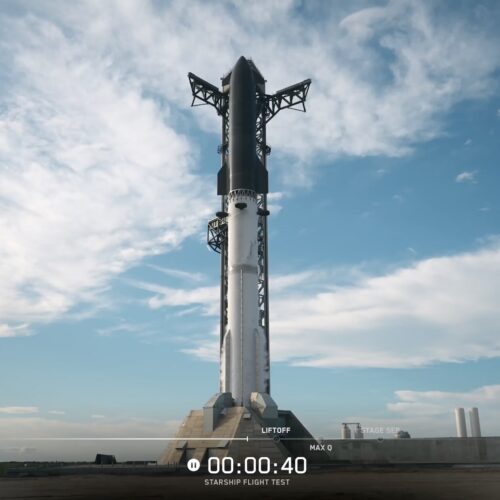
SpaceX delayed the first launch attempt of its new Starship Version 3 rocket due to a problem with a hydraulic pin on the launch tower. The launch was stopped 40 seconds before liftoff, and the next attempt is scheduled for the following day.
Key Facts
SpaceX’s Starship V3 launch was paused 40 seconds before liftoff because a hydraulic pin failed to retract on the launch tower’s umbilical arm.
The launch took place at SpaceX’s South Texas Starbase near the US-Mexico border.
The team attempted to restart the countdown five times before calling off the launch.
Starship V3 has 39 new, more efficient Raptor engines and design changes like larger grid fins and a reusable hot staging ring.
The new rocket will not have either stage recovered on this test flight.
Engineers loaded over 11 million pounds of methane and liquid oxygen into the rocket in under 40 minutes.
SpaceX plans to try again the next day with a 90-minute launch window starting at 5:30 pm CDT.
Starship V3’s flight path will go farther south than previous launches, over the Gulf of Mexico near Cuba.
Read the Original
Want the full story? Tap a source to open the original
article.
A self-driving car operated by Waymo in Atlanta stalled after it drove into floodwaters during heavy rain. There were no passengers in the vehicle when this happened.
Key Facts
The incident involved a Waymo autonomous (self-driving) car.
The car entered floodwaters caused by heavy rain in Atlanta.
The vehicle stalled, meaning it stopped working properly.
No passengers were inside the car at the time of the incident.
The event occurred on May 21, 2026.
Waymo is a company developing self-driving car technology.
Floodwaters can create unsafe conditions for all vehicles, including self-driving ones.
Read the Original
Want the full story? Tap a source to open the original
article.