The article discusses cases where women who experienced miscarriages were still targeted with pregnancy-related advertisements on social media platforms like Facebook. These women, including Sammi Claxon and Tanya O'Carroll, found the ads distressing and have taken action against Meta, the company that operates Facebook and Instagram, leading to legal decisions about targeted advertising practices.
Key Facts
Women who searched for pregnancy information online were targeted with related advertisements.
Sammi Claxon experienced multiple miscarriages and continued to receive pregnancy ads, which she found distressing.
Tanya O'Carroll sued Facebook, leading to a change where Facebook agreed to stop targeting ads to individuals using personal data.
The UK's Information Commissioner's Office disagreed with Meta's defense that their ads do not count as direct marketing.
Meta claimed that ads were only directed at group sizes of at least 100 people.
Over 10,000 people in the UK have objected to Meta's use of their data for direct marketing.
Despite some legal changes for Tanya, many women continue to receive unwanted pregnancy-related ads.
The broader issue highlights ongoing concerns about privacy and data use in targeted advertising.
Read the Original
Want the full story? Tap a source to open the original
article.
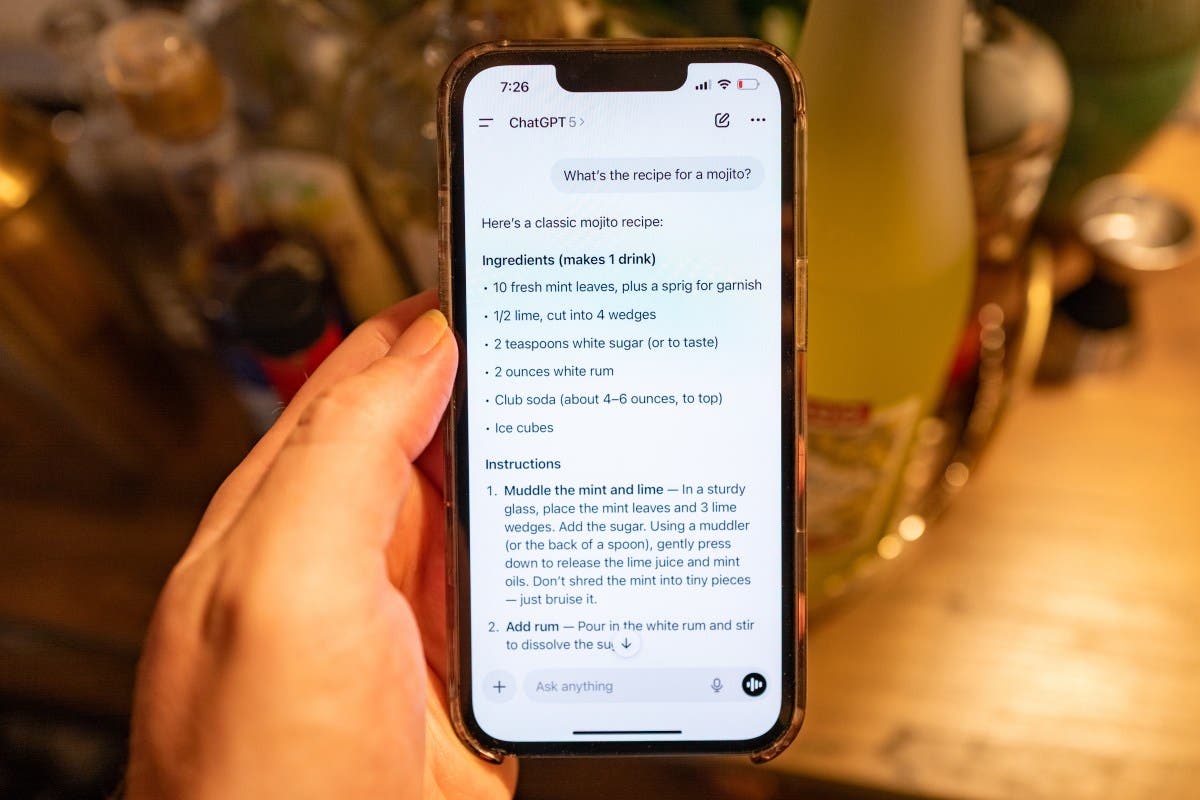
An increasing number of people are using AI tools like ChatGPT to plan vacations. These tools suggest destinations and itineraries, but users still need to verify the information themselves. Some users have found AI recommendations helpful, while others have discovered inaccuracies.
Key Facts
Alan Smith used ChatGPT to plan a holiday in northern Spain, discovering the town of Castro Urdiales.
The AI tool suggested places to visit, but Alan double-checked the suggestions online.
A report from the travel association ABTA shows that 8% of the population uses AI for travel planning, with the highest use (18%) among 25-34 year-olds.
Alan Smith made the final bookings himself, concerned about AI's ability to handle financial transactions.
Hannah Read tried using AI to plan a trip to Norway, but found the suggested ferry route didn't exist.
David Harris used AI to suggest itinerary ideas for a family trip to New York, finding it helpful to plan activities.
Users are advised not to rely solely on AI and to conduct their own research when planning trips.
Read the Original
Want the full story? Tap a source to open the original
article.
Microsoft will stop supporting Windows 10 on 14 October, meaning PCs with that system will no longer receive security updates, which could make them vulnerable to attacks. Microsoft is encouraging users to upgrade to Windows 11 for free, but not all computers can run the new system. Users can also opt for Extended Security Updates for a limited time to keep receiving essential updates.
Key Facts
Microsoft will stop providing support for Windows 10 on 14 October.
Computers with Windows 10 will no longer receive security updates, increasing the risk of cyber threats.
Users are encouraged to upgrade to Windows 11 for free, though not all devices can support it.
There are over 1.4 billion devices using Windows worldwide; 43% used Windows 10 as of July 2025.
Users without compatible devices have the option to sign up for Extended Security Updates until October 2026.
Extended Security Updates will provide essential updates but not technical support or software enhancements.
The free upgrade to Windows 11 requires a Microsoft account and updated system settings.
For those who cannot upgrade, the Extended Security Updates service is available for a fee of $30 or through Microsoft Rewards points.
Read the Original
Want the full story? Tap a source to open the original
article.
The article discusses the latest advances in breast cancer prevention and treatment. It covers new methods and technologies being developed to improve early detection and patient care.
Key Facts
Scientists are working on new ways to detect breast cancer earlier.
There are new technologies aimed at improving patient care during treatment.
Research is focused on finding more personalized treatment plans for breast cancer patients.
Some advancements involve using artificial intelligence (AI) to analyze medical images.
New medications are in development aimed at preventing breast cancer.
Clinical trials are ongoing to test the safety and effectiveness of these new treatments.
These advances aim to increase survival rates and improve quality of life for breast cancer patients.
Read the Original
Want the full story? Tap a source to open the original
article.
Police departments across the United States are increasingly using drones powered by artificial intelligence (AI) to help with their work, from investigating crimes to delivering emergency medical supplies. The number of police and sheriff departments using these drones has increased significantly in recent years. While the technology provides new capabilities, it also raises concerns about privacy and data use.
Key Facts
Over 1,500 police and sheriff's departments were using drones by the end of 2024, a significant increase from 2018.
Cities like Miami, Cleveland, Columbus, and Charlotte have introduced new drone programs in 2023.
Drones are cheaper than helicopters, and federal and state funding often supports their cost.
After the George Floyd incident, many departments sought tech that collects data without direct officer involvement.
In Minnesota, police agencies spent over $1 million on drones in 2023, reflecting a 44% spending increase from 2022.
Drones equipped with AI can perform various tasks such as search and rescue, surveillance, and crime scene analysis.
Albuquerque police use drones to combat car theft and were among the first to receive FAA approval to operate without line-of-sight.
The effectiveness of drones relies on integrated systems for data analysis, but concerns exist about how collected data is used and shared.
Read the Original
Want the full story? Tap a source to open the original
article.
A song by Olivia Dean called "Baby Steps" is trending on TikTok, capturing the feelings of solitude and independence. TikTok users have used the song in thousands of videos to express emotions related to loneliness and empowerment, especially reflecting a cultural shift among women toward embracing independence.
Key Facts
Olivia Dean's song "Baby Steps" is part of her album "The Art Of Loving," released in September.
The song has been used in over 7,000 TikTok videos, many of which have gone viral.
A specific lyric about being alone while traveling has resonated with users.
The U.S. surgeon general identified loneliness as a public health issue in 2023.
More U.S. women were unmarried or separated in 2021 than a decade ago.
TikTokers are using the song to express feelings of empowerment and resilience.
Many women are celebrating single life and personal milestones, like career achievements instead of traditional relationship milestones.
Videos featuring the song have received hundreds of thousands of views on TikTok.
Read the Original
Want the full story? Tap a source to open the original
article.
The news article talks about a program called "Tech Now" that looks into how technology is changing different fields. It covers topics like using tech in making movie car stunts, discovering minerals, brain cell computers, and more. Various episodes explore how tech can help in areas like health, safety, and entertainment.
Key Facts
"Tech Now" explores how tech is used behind the scenes of movie car stunts.
One segment covers exploring a rare earth deposit in Greenland for important minerals.
Another part discusses computers made with brain cells.
The program includes a look at cloud seeding technology.
It examines tech solutions for early cancer detection and wildfire prevention.
The show covers topics like artificial intelligence, lithium mining, and smart tech from IFA Berlin.
It investigates new innovations in sports, including esports and Formula One.
Other topics include nuclear fusion, electric flights, and supercomputers in climate research.
Read the Original
Want the full story? Tap a source to open the original
article.
Concerns are growing in Silicon Valley about a possible "AI bubble," where the values of AI companies may be higher than justified. OpenAI's CEO, Sam Altman, acknowledges some AI companies are possibly overvalued, but insists OpenAI has genuine growth. High-profile figures and institutions are warning that an AI market crash could negatively affect the broader economy.
Key Facts
OpenAI's CEO, Sam Altman, spoke about the potential overvaluation of AI companies.
Concerns of an AI bubble have been expressed by the Bank of England, the IMF, and JP Morgan's CEO, Jamie Dimon.
AI-related companies have accounted for 80% of this year's gains in the U.S. stock market.
Global spending on AI is projected to reach $1.5 trillion by 2025.
OpenAI recently engaged in a $100 billion deal with Nvidia and plans significant purchases from AMD.
OpenAI has a large valuation of half a trillion dollars and is involved in intricate financial deals.
Major tech companies like Microsoft and Oracle have substantial investments in OpenAI.
Read the Original
Want the full story? Tap a source to open the original
article.
California has become the first U.S. state to pass a law regulating advanced AI technologies. The law requires developers of the largest AI models to report on safety issues and best practices. It aims to improve transparency but does not impose strict regulations.
Key Facts
California's law is called the Transparency in Frontier Artificial Intelligence Act.
It requires developers of large AI models to report how they use safety standards and best practices.
The law mandates reporting of significant incidents caused by AI, like cyber-attacks or major losses.
Whistleblower protections are included in the law.
The law was passed after modifications due to concerns over stifling innovation.
It mainly affects the largest AI companies and does not cover smaller, high-risk models.
The law's requirements are similar to voluntary agreements made at the Seoul AI summit.
California's legislation could influence global AI governance, given its prominence in the tech industry.
Read the Original
Want the full story? Tap a source to open the original
article.
A utility company and climate activists worked together to set up a geothermal heating and cooling system for a community in Massachusetts. This project is part of a series focusing on energy and climate issues.
Key Facts
A utility company and climate activists partnered to build the project.
The project focuses on geothermal energy, which uses heat from the Earth.
The system provides heating and cooling for a Massachusetts community.
Geothermal energy is considered a clean energy source.
The project is part of an energy and climate series called "Tipping Point."
Science correspondent Miles O'Brien reported on the project.
Read the Original
Want the full story? Tap a source to open the original
article.
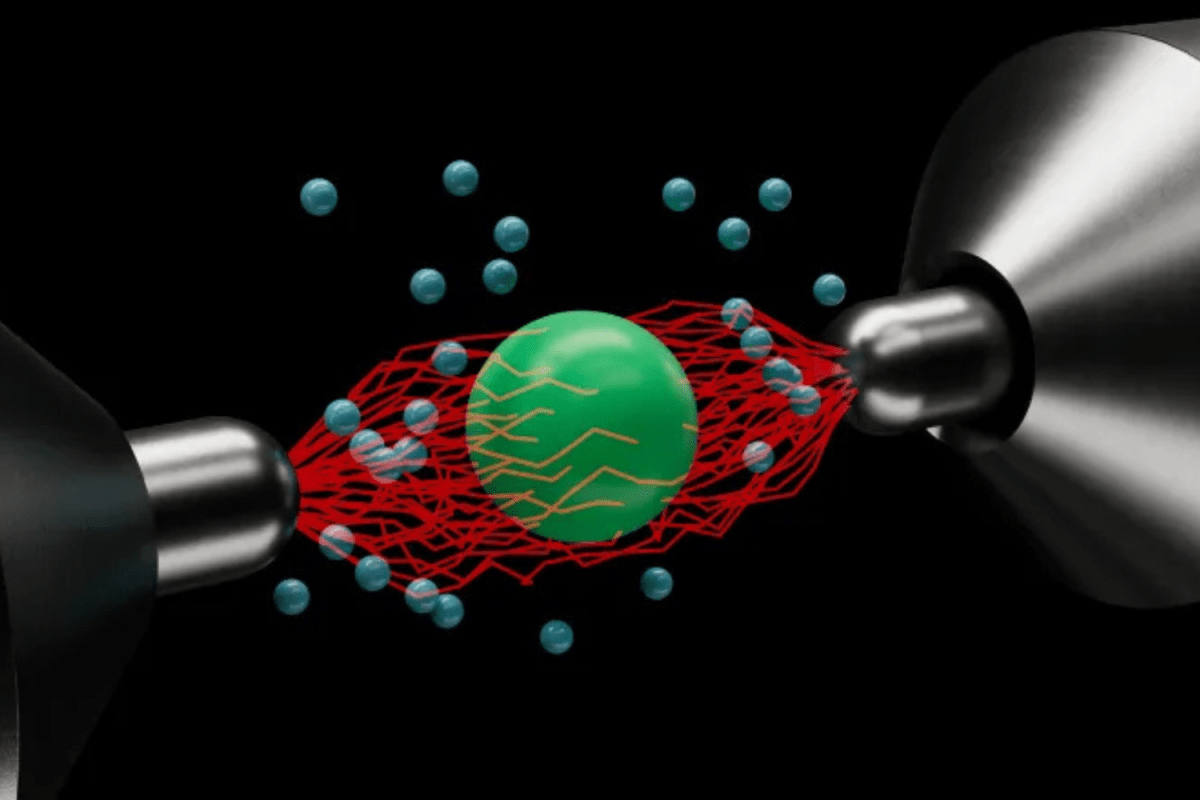
Scientists at King’s College London created a microscopic engine that gets hotter than the sun's core. This engine, a single microscopic particle held in an electric field, acts in ways that sometimes break traditional physics rules. The engine could improve understanding of proteins, which might help with disease treatment.
Key Facts
Scientists from King’s College London built the world's hottest engine.
The engine is a microscopic particle, not a traditional motor.
It's trapped using an electric field and reaches extremely high temperatures.
The particle sometimes behaves unexpectedly, cooling down when more heat is applied.
These unusual behaviors are due to tiny, random changes in the environment.
The engine could help scientists learn more about how proteins fold in the body.
Understanding protein folding is important for addressing diseases caused by misfolded proteins.
Read the Original
Want the full story? Tap a source to open the original
article.
The article describes a situation where Elon Musk retweeted a 2019 article highlighting discussions about race, leading to a surge in online attention. The retweet drew various reactions, including misunderstandings about the original article's message. The author also had a conversation with Musk's AI, Grok, about these topics.
Key Facts
Elon Musk retweeted a 2019 article, causing it to gain significant online attention.
The tweet by Musk led to nearly 20 million views of the old article.
The retweet sparked controversy and misunderstanding about the article's content.
The focus of the article was on race and ideology, not targeting any particular group.
The author could not respond directly on Twitter/X due to not having an account.
Musk's AI system, Grok, was mentioned as being adjusted to reflect Musk's personal views less traditionally.
The author had a conversation with Grok about race and technology.
Read the Original
Want the full story? Tap a source to open the original
article.
A report from Indeed shows that many tech workers, especially those who are part of Generation Z, feel worried that artificial intelligence (AI) might take their jobs. The survey highlights that AI is changing many jobs, causing some roles to be restructured or eliminated. There is concern about the lack of training in AI and how it could increase workplace stress.
Key Facts
Indeed's survey involved over 1,000 tech workers.
35% of tech workers fear AI might take their jobs; this number rises to 38% for Gen Z workers.
37% of tech workers reported job roles have changed because of generative AI.
52% said tech talents were reassigned due to AI, with 26% reporting layoffs.
28% of workers think AI will raise workplace stress.
33% feel they do not get enough training in AI.
Many believe AI is removing entry-level job opportunities.
AI's influence is compared to past changes in industries due to automation and outsourcing.
Read the Original
Want the full story? Tap a source to open the original
article.
A new cancer vaccine using tiny particles helped stop tumors in mice. The vaccine prevented the spread of melanoma, pancreatic, and triple-negative breast cancers, keeping many mice tumor-free. The study was done by scientists from the University of Massachusetts Amherst.
Key Facts
The vaccine targets melanoma, pancreatic, and triple-negative breast cancers in mice.
88% of vaccinated mice stayed tumor-free, depending on the cancer type.
The vaccine works by activating the immune system to fight cancer.
The nanoparticles help the immune system recognize and attack cancer cells.
In tests, "super adjuvant" vaccinated mice survived 250 days, while others did not survive past 35 days.
The vaccine also stopped cancer from spreading to the lungs in mice.
Researchers plan to develop this technology into a therapeutic vaccine for humans.
Further studies are needed to see if the results work for people.
Read the Original
Want the full story? Tap a source to open the original
article.
A study suggests that practicing a certain type of meditation may make the brain appear nearly six years younger, possibly lowering the risk of Alzheimer's and dementia. Researchers found that those practicing yoga-based meditation had better sleep, which may contribute to healthier brain aging. However, experts caution that while there's a significant link, more research is needed to confirm that meditation directly reduces brain aging.
Key Facts
The study was conducted by researchers at Massachusetts General Hospital and Beth Israel Deaconess Medical Center.
It appeared in the journal Mindfulness and focused on "advanced meditators" practicing 2 hours a day.
Those who meditated showed brain ages nearly 6 years younger than their actual age.
Higher quality sleep observed in meditators was rejuvenating and helped reduce inflammation.
EEG headbands were used to measure participants' sleep quality and brain activity.
Participants reported better memory, clearer thinking, and less stress or loneliness.
The study involved 35 people around 38 years old, attending a yoga retreat.
Experts note that the study shows association, not direct causation, between meditation and reduced brain aging.
Read the Original
Want the full story? Tap a source to open the original
article.
Crunchyroll, a popular anime streaming service, has launched Crunchyroll Manga, a new app that lets users read manga from various major publishers in one place. This initiative aims to make manga more accessible to fans by offering an easy-to-use platform with a wide range of titles.
Key Facts
Crunchyroll, known for streaming anime, launched Crunchyroll Manga to offer easy access to manga.
The app was developed with Link-U, a company in the Japanese digital manga space.
Crunchyroll Manga includes titles from major publishers like VIZ, Square Enix, and more.
The app provides features like offline reading, an intuitive interface, and personalized lists.
Crunchyroll Manga is a premium add-on for subscribers, with Ultimate Fan subscribers getting it at no extra cost.
The app aims to consolidate access to manga, reducing the need for multiple apps.
Crunchyroll Manga targets both eager readers of popular series and those interested in discovering new genres like shojo and josei.
The app offers value with features like ad-free reading and two-page spreads, appealing to regular manga readers.
Read the Original
Want the full story? Tap a source to open the original
article.
OpenAI's new video app, Sora, was downloaded over one million times in less than five days, achieving this milestone faster than ChatGPT at its launch. The app is popular for creating short, realistic videos from text prompts, but it has faced criticism over its use of copyright material and the depiction of deceased public figures. OpenAI is addressing these issues and is working on giving rights holders more control and possibly sharing revenue with them.
Key Facts
The Sora app reached over one million downloads in less than five days.
It generates ten-second videos from simple text prompts.
The app is only available to invited users in North America.
Some videos feature depictions of deceased celebrities, leading to criticism.
OpenAI's Sora app is among the top in the Apple App Store charts in the US.
Concerns have arisen over the use of copyright material, including characters from popular media.
OpenAI plans to give more control to rights holders and discuss revenue sharing.
A legal case settled by AI firm Anthropic highlights possible legal costs in this area.
Read the Original
Want the full story? Tap a source to open the original
article.
Eastern Radiologist will pay $3.25 million to settle a lawsuit after a cyberattack affected the personal and medical information of nearly 890,000 people. The settlement allows affected individuals to claim up to $5,000 for expenses related to identity theft and other damages. Eastern Radiologist denies wrongdoing but agreed to settle to avoid long court proceedings.
Key Facts
A cyberattack exposed personal and medical information of about 884,935 people associated with Eastern Radiologist.
The Superior Court in Pitt County, North Carolina, ordered a $3.25 million settlement.
The data breach reportedly happened between November 20 and November 24, 2023.
Personal information accessed included Social Security numbers, addresses, and medical records.
Eastern Radiologist, a 70-year-old practice, discovered the breach on November 24, 2023, and notified affected parties on March 4, 2024.
Individuals affected can submit claims with documentation to receive up to $5,000 for costs like identity theft protection and credit monitoring.
The settlement includes up to $1.5 million for attorney's fees and up to $50,000 for expenses.
The deadline to file a claim is December 1, 2025, with a hearing to finalize the settlement on December 18, 2025.
Read the Original
Want the full story? Tap a source to open the original
article.
A new study highlights that the United States lags behind Russia and China in developing hypersonic weapons, which poses a significant threat to U.S. military advantage. The Trump administration is pushing to create a missile defense system, called the “Golden Dome for America,” to counter this threat. Experts urge the U.S. to accelerate its hypersonic weapons development and collaborate with allies.
Key Facts
Hypersonic weapons travel over five times the speed of sound and are hard to detect and intercept.
The Atlantic Council report notes a growing gap in U.S. hypersonic weapon capabilities compared to China and Russia.
Current U.S. missile defense systems may be unable to stop coordinated hypersonic attacks.
The report suggests the U.S. needs more efficient, cost-effective missile systems and reusable aircraft.
Developing hypersonic weapon systems with allies and exploring new nuclear delivery methods is recommended.
Russia and China have already fielded several advanced hypersonic systems.
The U.S. has various hypersonic projects in testing or limited use, like the Long Range Hypersonic Weapon.
The government is considering more investments in defense technology and strengthening international cooperation.
Read the Original
Want the full story? Tap a source to open the original
article.
Bitcoin has become more mainstream, appearing on the balance sheets of companies and even in government reserves. As institutions hold significant amounts of bitcoin, they are under pressure to find ways to make it generate income. Bitcoin's unique features make it suitable to become a foundation for global financial systems and potential future use in blockchain-based financial products like bitcoin-backed stablecoins.
Key Facts
Bitcoin is now included in the finances of public companies and governments.
Institutions are looking to use bitcoin holdings productively, similar to how cash and bonds are used.
Bitcoin is positioned as a trustworthy, borderless asset that can be tracked on a public ledger.
Institutions are beginning to employ bitcoin as collateral in credit markets.
Bitcoin's supply is fixed, unlike traditional assets that can be inflated.
Bitcoin-backed stablecoins could be a way to make bitcoin more productive by using it to issue digital dollars.
The concept of stablecoins involves creating digital tokens that maintain a stable value, usually linked to the U.S. dollar.
Read the Original
Want the full story? Tap a source to open the original
article.