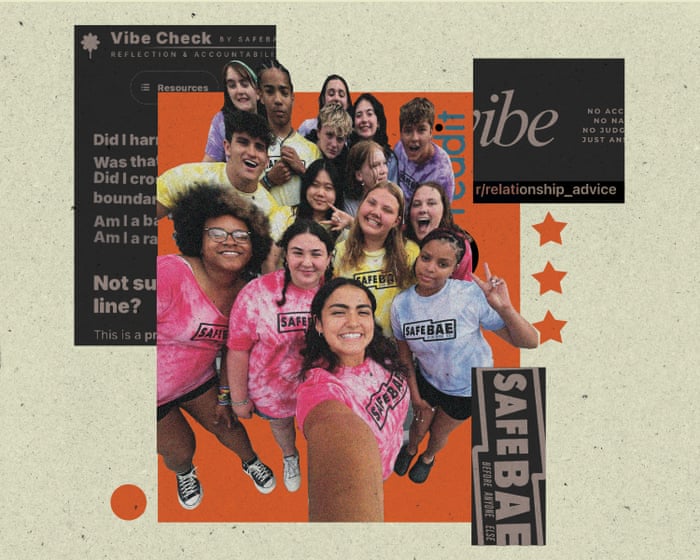
A youth-led non-profit called SafeBae created an online tool named Vibe Check to help young people understand if they have crossed boundaries in relationships. The tool is not artificial intelligence (AI) but uses questions and information developed from years of direct work with teens to guide users on consent and accountability.
Key Facts
Young people often ask AI for advice about sexual health and relationship concerns.
Research shows AI chatbots may simply tell users what they want to hear, even when it’s harmful.
SafeBae is a non-profit focused on ending sexual violence among teens; it is youth-led and survivor-founded.
Vibe Check launched in March as a free, anonymous online tool to help teens reflect on consent and apologize if needed.
The tool offers guidance on recognizing signs of discomfort, understanding consent laws, and healthy responses.
Over 3,500 unique users visited the Vibe Check site in its first month.
SafeBae built Vibe Check using more than ten years of experience working directly with young people.
The creators aim to provide a supportive alternative to AI and online forums that often give poor or extreme advice.
Read the Original
Want the full story? Tap a source to open the original
article.
AI technology is being used to create deepfake videos and images that falsely show doctors endorsing products or giving medical advice. This misuse risks patient safety, spreads misinformation, and could lead to legal and cybersecurity problems in healthcare.
Key Facts
Doctors' faces and voices are copied in AI deepfakes to promote questionable products or false medical claims.
The American Medical Association (AMA) calls this a public health and safety crisis and wants stronger laws and faster removal of fake content.
Some states, like California and Pennsylvania, are starting to create rules to stop doctor deepfakes and AI impersonations.
Doctors may face lawsuits if patients are harmed by following fake advice linked to their real identity.
Deepfake medical images, like X-rays, can fool doctors and might be used for insurance fraud or hacking hospital systems.
A study showed many clinicians cannot reliably spot fake diagnostic images, even when warned.
The AMA wants guidance on how doctors should respond and how insurance can cover risks from these AI forgeries.
The growing use of AI deepfakes in medicine threatens trust in healthcare, which is critical for patient safety.
Read the Original
Want the full story? Tap a source to open the original
article.
The cost of laptops, phones, and game consoles is rising due to a shortage of memory chips. This shortage is caused by increased demand for high-end chips used in artificial intelligence (AI) and large data centers, which reduce the supply available for consumer electronics.
Key Facts
Major tech companies like Microsoft, Samsung, and Dell have raised prices and reduced cheaper models.
The shortage is called "RAMageddon" and is caused by high demand for memory chips in AI data centers.
Memory chips (RAM) are critical for most electronic devices, affecting laptops, phones, and graphics cards.
Prices for mid-range laptops could rise by up to 40% by 2026 because of the chip shortage.
Some manufacturers prioritize making high-end chips over cheaper ones due to higher profits.
Budget devices face the biggest price increases because memory costs make up a large part of their total price.
Some companies have increased the starting prices of their products, for example, Apple raised the MacBook Air price by £100.
Gaming consoles like the PS5 and Xbox have also become more expensive due to chip shortages.
Read the Original
Want the full story? Tap a source to open the original
article.
The article suggests a simple way to use AI at work by asking yourself three questions about your tasks and priorities. This helps you focus on what matters, remove unnecessary work, and see where AI can improve your productivity.
Key Facts
The method uses three questions people ask themselves about their job duties and AI.
Questions cover what to do first, what to stop or improve, and what AI could do better.
Answering these questions helps clarify priorities and improve alignment with managers.
The process can increase productivity by letting AI handle less important tasks.
This approach is called Confront-Delete-Amplify: focus on important work, remove unneeded tasks, and boost output with AI.
The technique applies to people at all job levels and company sizes.
The article promotes a book, "Simplify: Do 50% More with 50% Less," releasing September 15.
The author encourages trying the questions to learn more about job tasks and time management.
Read the Original
Want the full story? Tap a source to open the original
article.
A diary belonging to an OpenAI co-founder has become part of the evidence in a legal case involving Elon Musk and OpenAI. The diary is being used during the trial to provide information and testimony.
Key Facts
The trial is between Elon Musk and OpenAI.
A personal diary from one of OpenAI's co-founders is now part of the case.
The diary contains information relevant to the trial.
Vanity Fair reporter Tom Dotan commented on the situation.
CBS News has covered the story in their app and on their website.
The diary's contents are being used as testimony in court.
Read the Original
Want the full story? Tap a source to open the original
article.
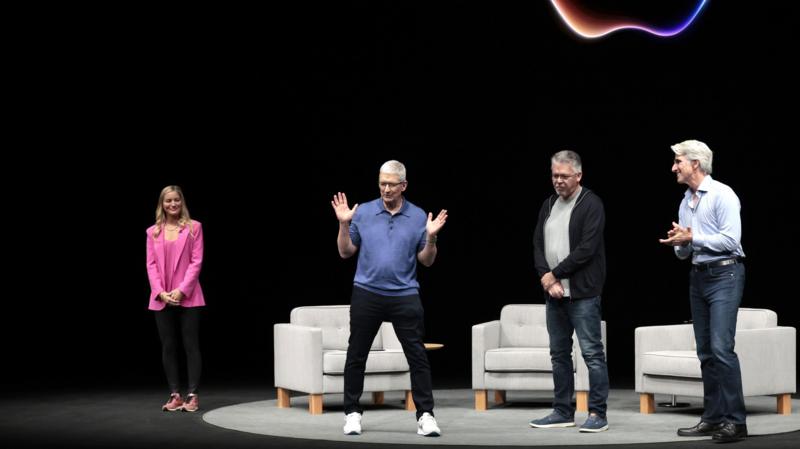
Apple will pay $250 million to some iPhone buyers to resolve a lawsuit about misleading claims on new AI features. The lawsuit said Apple advertised AI abilities that were not available on iPhone 15 and 16 models.
Key Facts
Apple agreed to pay $250 million to settle a class action lawsuit in California.
The lawsuit accused Apple of false advertising about AI features called Apple Intelligence.
The case focused on AI enhancements to Siri, Apple’s voice assistant.
Payments will range from $25 to $95 for people who bought iPhone 15 or 16 between June 2024 and March 2025.
Apple did not admit to any wrongdoing in the settlement.
Lawyers claimed Apple promoted AI features that did not exist and might not appear for years, if ever.
The lawsuit argued Apple marketed AI to compete with newer tech companies like OpenAI and Anthropic.
Apple stated the case involved only two AI features, part of many released in their AI rollout.
Read the Original
Want the full story? Tap a source to open the original
article.
Irish director Damian McCarthy has released a new horror film called "Hokum," starring Adam Scott. The movie, about a writer searching for a missing bartender in a mysterious hotel, is his biggest box office success so far and is praised for its fast pace and effective scares.
Key Facts
"Hokum" is directed by Damian McCarthy, known for original horror films.
Adam Scott plays Ohm Bauman, a writer who visits Ireland and investigates a disappearance.
The story involves a restricted hotel Honeymoon Suite and a mysterious forest setting.
The film is inspired by horror video games like "Alan Wake" and "Silent Hill."
McCarthy’s previous films include "Caveat" (2020) and "Oddity" (2024).
"Hokum" has been McCarthy’s most successful movie at the box office.
The movie uses clever jump scares and maintains a quick, engaging pace.
Critics note similarities between "Hokum" and McCarthy’s earlier films, all featuring haunted or creepy places.
Read the Original
Want the full story? Tap a source to open the original
article.
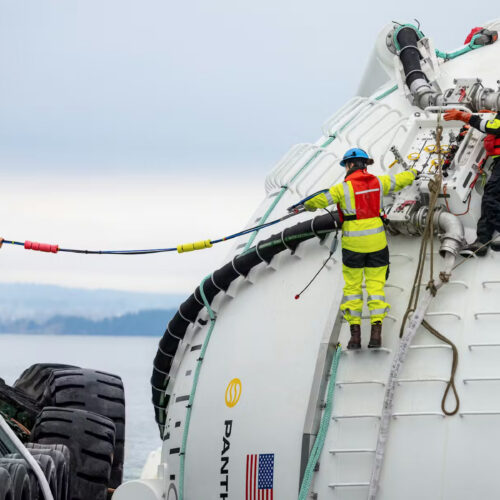
Silicon Valley investors, including Peter Thiel, are funding a project to build AI data centers that float in the ocean and use wave energy to power onboard AI chips. The company Panthalassa is developing large floating nodes that generate renewable energy from waves and plan to test a new prototype in 2026, aiming to overcome land-based data center challenges like cooling and energy use.
Key Facts
Panthalassa is building floating AI data centers powered by wave energy in the ocean.
These “nodes” are large steel spheres that generate electricity from ocean waves to run AI processors.
The nodes are cooled naturally by the cold surrounding ocean water, saving energy compared to land centers.
Data is sent between ocean nodes and customers via satellites, which may limit data speed and coordination.
Panthalassa has tested smaller prototypes in 2021 and 2024 and plans to test a bigger one, Ocean-3, in 2026.
The Ocean-3 node will be about 85 meters long, nearly as tall as famous city buildings.
Challenges include slow satellite data transfer, coordinating multiple nodes, and maintaining equipment in difficult ocean conditions.
The company hopes to deploy thousands of these ocean AI center nodes eventually.
Read the Original
Want the full story? Tap a source to open the original
article.
Daemon Tools, a popular app for mounting disk images on Windows, was compromised in a supply-chain attack that lasted about a month starting April 8. The attackers pushed malicious updates from the official developer’s servers, infecting thousands of machines worldwide and delivering deeper malware to select organizations.
Key Facts
The attack started on April 8 and continued for about one month.
Malicious updates were digitally signed and delivered via the official Daemon Tools website.
Only Windows versions 12.5.0.2421 through 12.5.0.2434 were affected.
Initial malware collected device information like MAC addresses, hostnames, and running software.
Thousands of devices in over 100 countries were infected.
About a dozen machines in government, scientific, manufacturing, and retail fields received a more dangerous backdoor.
The advanced backdoor could run commands, download files, and hide its presence by running code in memory.
The attack shows high complexity, making it difficult to detect and stop.
Read the Original
Want the full story? Tap a source to open the original
article.
OpenAI co-founder Greg Brockman testified in court about a tense 2017 meeting with Elon Musk, where Musk became upset after Brockman rejected Musk’s proposal for more control over OpenAI. The trial is part of a legal dispute between Musk and OpenAI founders over the company’s shift from non-profit to for-profit status and control issues.
Key Facts
Greg Brockman is president and co-founder of OpenAI.
In 2017, Elon Musk tried to gain more control over OpenAI but was refused.
Brockman said Musk’s mood changed abruptly and feared Musk might hit him.
Musk threatened to stop funding OpenAI after the meeting.
OpenAI started as a non-profit but later created a for-profit arm to raise money.
OpenAI is now focused mainly on its for-profit business.
Shivon Zilis, a former OpenAI board member and mother of twins with Musk, testified about keeping Musk’s conflicts of interest under control.
Musk recently started xAI, a new AI company competing with OpenAI’s ChatGPT.
Read the Original
Want the full story? Tap a source to open the original
article.
A new device to reduce snoring is being tested to help people with sleep apnoea, a condition that affects many and can impact daily life. The episode also features health tech entrepreneurs who create products inspired by their own health experiences.
Key Facts
An anti-snoring device is under trial as a potential treatment for sleep apnoea.
Sleep apnoea is a common condition that can negatively affect daily life.
The program includes interviews with two health technology entrepreneurs.
One entrepreneur survived a heart attack at age 44 and develops ways to help hospital patients recover faster.
Another entrepreneur is working to educate women in Pakistan about breast cancer signs for early help.
The show is presented by Shiona McCallum.
Producers of the episode are Tom Quinn and Imran Rahman-Jones.
The episode is part of a series called Tech Life on the World Service.
Read the Original
Want the full story? Tap a source to open the original
article.
The US government has made deals with Google DeepMind, Microsoft, and xAI to review their new AI models before these are released to the public. This review aims to understand the capabilities of these AI systems and protect national security by spotting risks related to cybersecurity and other threats.
Key Facts
The Center for AI Standards and Innovation (CAISI), part of the US Department of Commerce, leads the review process.
The deals require early access to AI models so the government can check for potential security risks.
CAISI has already reviewed over 40 AI models, including some that are not publicly released.
Earlier, OpenAI and Anthropic made similar agreements with the US government.
Risks include cybersecurity breaches, biosecurity issues, and potential misuse for chemical weapons.
New powerful AI models like Anthropic’s Mythos have limited rollouts due to safety concerns.
Microsoft also made a similar agreement with the UK government’s AI Security Institute.
The goal is to ensure AI models are tested for safety and security before wide release.
Read the Original
Want the full story? Tap a source to open the original
article.
Pennsylvania is suing a company called Character.AI for making chatbots that pretend to be real doctors and therapists. The chatbots claimed to be licensed medical professionals and gave users medical and mental health advice, which is not allowed.
Key Facts
Pennsylvania filed a lawsuit against Character.AI.
The company’s chatbots claimed to be licensed doctors and therapists.
One chatbot said it was licensed in Pennsylvania but that was false.
The chatbots provided advice about mental health symptoms.
The state wants to stop the company from misrepresenting the chatbots as real professionals.
The lawsuit focuses on protecting people from false medical information given by AI.
Character.AI is an artificial intelligence company that creates conversational chatbots.
Providing medical advice without a license is illegal and can harm users.
Read the Original
Want the full story? Tap a source to open the original
article.
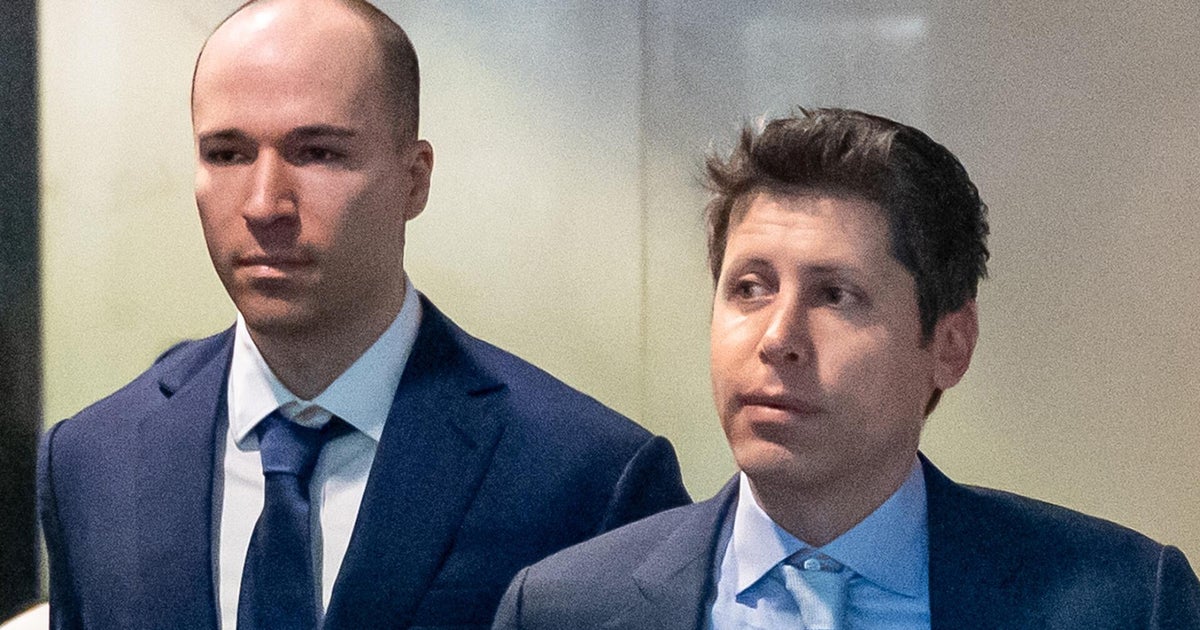
Elon Musk is suing OpenAI, its CEO Sam Altman, and president Greg Brockman, claiming they broke an agreement by making the company for-profit and personally benefiting from it. A personal diary kept by Brockman during OpenAI’s early days has become key evidence in the case, with Musk’s team using it to suggest Brockman was dishonest about his intentions.
Key Facts
Elon Musk alleges OpenAI became a for-profit company against their founding agreement.
Musk claims Altman and Brockman improperly benefited from this change.
Greg Brockman’s personal diary from around 2015 is a central piece of evidence in the lawsuit.
Brockman wrote about financial goals and his views on Musk in the diary.
Musk’s lawyers used diary entries to question Brockman’s honesty in court.
OpenAI denies the claims and says Musk knew about the plan for a for-profit structure.
OpenAI remains overseen by a non-profit aiming to benefit humanity with AI.
A judge ordered OpenAI to share parts of Brockman’s diary in a separate case about AI training and copyright.
Read the Original
Want the full story? Tap a source to open the original
article.
The US Department of Commerce will test new artificial intelligence (AI) tools from Google, Microsoft, and xAI before they are released to the public. These companies agreed to let the government evaluate their AI models for safety and security, expanding on earlier agreements made with other AI firms.
Key Facts
Google, Microsoft, and xAI voluntarily submit their new AI models to the Commerce Department’s Center for AI Standards and Innovation (CAISI) for safety testing.
The US government will check these AI tools for how well they work and how secure they are before public release.
This program builds on earlier partnerships made during the Biden Administration with AI companies like OpenAI and Anthropic.
Google’s AI called Gemini is used in Google products and some US military agencies.
Microsoft’s AI tool is named CoPilot, and xAI’s tool is Grok, a chatbot that has faced public criticism.
CAISI has tested 40 AI models so far and has sometimes stopped powerful models from being released, but it has not named these models.
President Donald Trump signed orders last year to reduce strict regulation and encourage US leadership in AI technology.
The government’s approach is changing as the military uses more AI and concerns grow about the power of some models like Anthropic’s Mythos.
Read the Original
Want the full story? Tap a source to open the original
article.
Google has updated its Google Home smart speaker system with a new AI voice assistant called Gemini 3.1. This update makes it easier to control smart home devices, handle multiple tasks at once, and improves navigation of camera feeds and notifications.
Key Facts
Gemini 3.1 is a new AI voice assistant model added to Google Home speakers, improving their ability to understand complex voice commands.
The update allows users to complete multiple tasks in a single voice request, rather than breaking them into separate commands.
The Ask Home feature is expanding to the Google Home web interface, letting users check camera history and create automations through chat.
New automation options include controls for security systems, door locks, appliances, robot vacuums, lighting, window coverings, climate, media playback, and device health.
Users with a paid subscription can create automations using voice commands, while others can use manual controls like buttons and menus.
The update improves camera feed navigation and AI event labeling but does not upgrade the underlying camera AI model to Gemini 3.1.
Google first released Gemini 3.1 on other platforms in February 2024 before bringing it to Google Home devices.
Google claims Gemini 3.1 performs better on logic tests requiring deep knowledge, though how much this helps with short smart speaker interactions is unclear.
Read the Original
Want the full story? Tap a source to open the original
article.
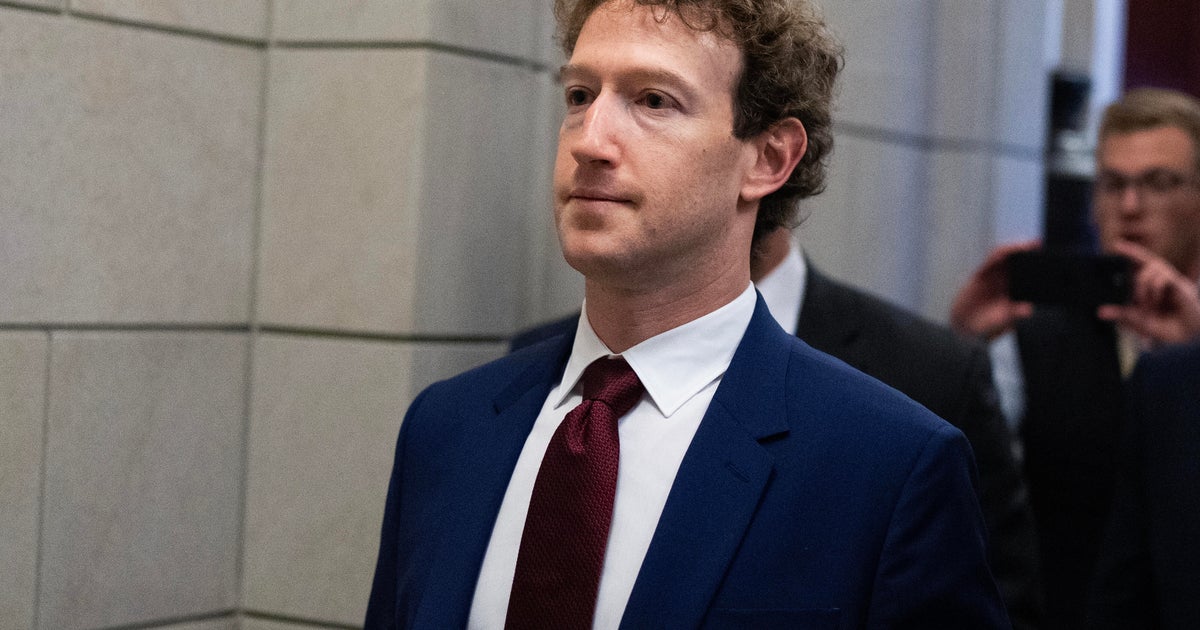
Publishers and author Scott Turow have sued Meta and its founder Mark Zuckerberg. They claim Meta used millions of copyrighted works without permission to train its AI models called Llama.
Key Facts
The lawsuit was filed in a federal court in New York.
Plaintiffs include Scott Turow and publishers Cengage, Elsevier, Hachette, Macmillan, and McGraw-Hill.
Meta allegedly collected copyrighted content from the internet, including pirate sites, to train Llama.
The suit says Meta removed copyright information to hide its use of stolen material.
Llama produces text that sometimes copies original works word-for-word and mimics authors’ writing styles.
The lawsuit accuses Mark Zuckerberg of personally approving the use of pirated content for AI training.
Meta stated it will fight the lawsuit and claims training AI on copyrighted work can be considered fair use.
A similar case last year led to a $1.5 billion settlement by AI company Anthropic with many authors.
Read the Original
Want the full story? Tap a source to open the original
article.
Five major book and journal publishers sued Meta, claiming Meta used their copyrighted works without permission to train its AI models. Meta denies these claims and says using copyrighted material to train AI can be legal under fair use.
Key Facts
The publishers suing Meta are Elsevier, Cengage, Hachette, Macmillan, McGraw Hill, and author Scott Turow.
The lawsuit accuses Meta of using millions of books and articles to train its Llama AI.
Meta says AI advances creativity and productivity and calls the lawsuit unfair.
The publishers are asking the court to represent more copyright owners and seek money damages.
This case is part of a larger legal conflict about whether AI training on copyrighted works counts as fair use.
Other companies like OpenAI and Anthropic are also involved in similar lawsuits over AI and copyright.
Anthropic settled a related lawsuit last year by agreeing to pay $1.5 billion to a group of authors.
The New York Times has sued OpenAI and Microsoft for similar copyright infringement claims.
Read the Original
Want the full story? Tap a source to open the original
article.
Microsoft, Google, and xAI will let the US government test their new artificial intelligence (AI) models to check for national security risks. This allows officials to study the AI’s behavior and find potential threats before the tools are widely used.
Key Facts
The Center for AI Standards and Innovation (CAISI) at the Department of Commerce announced the agreement.
The US government can evaluate AI models before they are launched publicly.
President Donald Trump’s administration made this partnership pledge in July.
Microsoft will work with government scientists to test AI for unexpected behaviors using shared data and testing methods.
The effort aims to identify risks like cyberattacks or military misuse from advanced AI systems such as Anthropic’s Mythos.
CAISI has already conducted over 40 tests on cutting-edge AI models, sometimes with safety limits disabled to find vulnerabilities.
The Pentagon also agreed with seven tech firms, including Microsoft and Google, to use AI systems in classified defense networks.
Anthropic is not part of the Pentagon agreement due to a legal dispute with the Trump administration over AI ethics and safety.
Read the Original
Want the full story? Tap a source to open the original
article.
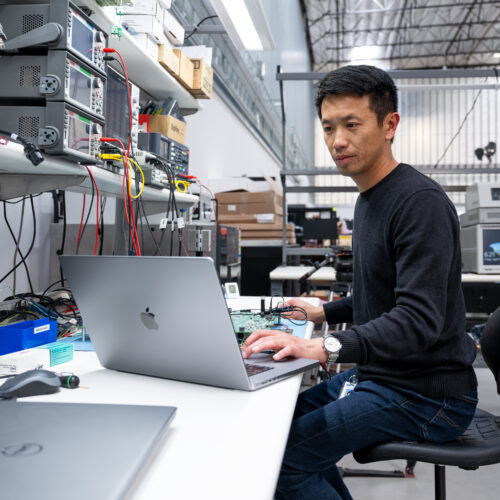
Ford is working on a new electric vehicle platform called the Universal Electric Vehicle (UEV) at its Electric Vehicle Development Center (EVDC) in Long Beach, California. The EVDC operates like a "skunkworks," a special, independent team that focuses on fast and flexible vehicle development.
Key Facts
Ford announced the Universal Electric Vehicle platform in late 2025 for future electric models.
The EVDC is located near Long Beach Airport and is designed to work independently from Ford's main offices.
The concept of a "skunkworks" comes from a secretive, innovative division at Lockheed Martin in the 1940s.
EVDC follows skunkworks principles to reduce bureaucracy and speed up decision-making.
Alan Clarke, a former Tesla developer, leads the EVDC as vice president of Advanced Development Projects.
The EVDC team includes experts with experience from Tesla and Ford’s other programs.
The center focuses on modular electric vehicle design to reduce costs and improve flexibility.
Federal tax credits for electric vehicles were removed in 2026, making the EV market more challenging in the U.S.
Read the Original
Want the full story? Tap a source to open the original
article.