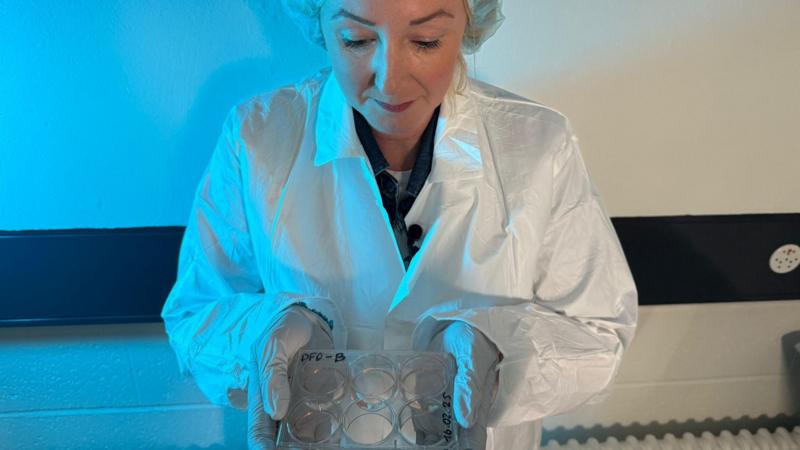
Scientists in Switzerland are working on creating biocomputers using living cells. These biocomputers involve growing small clusters of neurons, called organoids, from human stem cells. The goal is to develop computers that use less energy and can learn in ways similar to artificial intelligence (AI).
Key Facts
Scientists are experimenting with creating computers from living cells, a field known as biocomputing.
A group of researchers in Switzerland is leading efforts to develop these "living" computers.
The process uses stem cells, transformed into neurons and then grown into clusters called organoids.
These organoids can be attached to electrodes to function like basic computers.
FinalSpark lab in Switzerland buys human stem cells from a clinic in Japan for this research.
The organoids are simple versions of human brains, capable of responding to electrical signals.
Scientists aim to evolve these biocomputers to learn and perform tasks using low energy.
A significant challenge remains in maintaining the organoids without blood vessels.
Read the Original
Want the full story? Tap a source to open the original
article.
Apple and Google removed an app that alerted users about nearby Immigration and Customs Enforcement (ICE) agents after a request from the U.S. Attorney General. The app, called ICEBlock, allowed users to share sightings of ICE activity to warn others and was removed due to safety concerns. The decision has sparked discussions about the influence of the government on technology companies.
Key Facts
Apple and Google removed an app called ICEBlock that alerted people to nearby ICE agents.
The request to remove the app came from Attorney General Pam Bondi.
Apple cited safety risks as the reason for the app's removal.
ICEBlock described itself as a warning system similar to a navigation app for tracking ICE agents.
The app started in April and was downloaded hundreds of thousands of times.
The Justice Department did not comment on its request to pull the app.
ICEBlock's developer, Joshua Aaron, plans to challenge the app's removal.
The situation has raised concerns about government influence over tech companies, known as jawboning.
Read the Original
Want the full story? Tap a source to open the original
article.
Apple removed the ICEBlock app from its App Store due to pressure from the U.S. government. ICEBlock allowed users to anonymously report U.S. immigration officer activity and faced removal over concerns about safety risks and objectionable content.
Key Facts
Apple removed ICEBlock, an app tracking U.S. immigration officers, from its App Store.
The removal followed pressure from the U.S. administration under President Trump.
ICEBlock allowed users to report and track Immigration and Customs Enforcement (ICE) activities.
Apple cited safety risks as a reason for removing the app.
U.S. Attorney General Pam Bondi stated that the Department of Justice contacted Apple about the app.
The app's creator, Joshua Aaron, criticized Apple's decision and called it disappointing.
The Electronic Frontier Foundation highlighted concerns about government overreach on free speech rights.
Read the Original
Want the full story? Tap a source to open the original
article.
A father's online post highlighted that many teenagers, despite being familiar with technology like Chromebooks, lack basic computer skills. This has sparked a discussion about whether schools should focus more on teaching digital literacy. Some people argue that today's teens can focus more on creativity due to technology advancements.
Key Facts
A father's post about his daughter's limited computer skills gained significant attention online.
His daughter knows how to use Chromebooks but lacks knowledge in traditional computing tasks like managing local files or installing apps.
Some schools reduced or removed computer classes, assuming teens are already tech-savvy.
Experts warn that lacking basic tech skills could be a problem for teens in future workplaces and higher education.
Teens are often skilled in using social media and AI tools but struggle with basic tasks like attaching files or fixing Wi-Fi issues.
There is a debate on whether focusing on creativity instead of technical skills is beneficial for today's youth.
Many parents agree that traditional computing skills are no longer emphasized in schools.
Read the Original
Want the full story? Tap a source to open the original
article.
Apple removed apps from its App Store that let users track U.S. Immigration and Customs Enforcement (ICE) officers. Apple stated it did this because law enforcement alerted them to safety risks. The app creator, Joshua Aaron, disagrees, saying the app was meant to protect people from immigration raids.
Key Facts
Apple removed ICEBlock and similar apps because of reported safety risks.
The U.S. Attorney General demanded the removal, claiming the apps endangered ICE officers.
The app’s creator disagrees, saying the app didn't pose a threat.
ICEBlock showed the movements of immigration officers and was downloaded over a million times in the U.S.
An app user earlier used similar tracking apps in a Dallas incident, according to law enforcement.
ICEBlock was developed in response to increased immigration raids.
Joshua Aaron, the app creator, claims the app falls under free speech protections.
Read the Original
Want the full story? Tap a source to open the original
article.
A fake ad made with OpenAI's Sora 2 video tool is spreading online. The video is styled like a 1990s toy commercial set on "Epstein Island" and has sparked a lot of discussions about the dangers of AI-generated content. The ad raises questions about Sora 2’s ability to filter out inappropriate materials.
Key Facts
The ad is a fake children's toy commercial set on "Epstein Island," using OpenAI's Sora 2 tool.
Sora 2 is a new video and audio creation platform by OpenAI.
The video features topics and imagery related to controversies around Jeffrey Epstein.
OpenAI's current filters for Sora 2 aim to block unsafe content but may not be fully effective.
The clip includes a character resembling former President Donald Trump, which may violate Sora 2's rules against depicting real-world public figures.
The ad has gained significant attention and backlash for trivializing serious issues like child exploitation.
The video was created by Mathieu Samson, who acknowledges the tool's risks and expects OpenAI to improve its content filters.
AI-generated videos are becoming more common, with platforms like TikTok and YouTube seeing increased usage.
Read the Original
Want the full story? Tap a source to open the original
article.
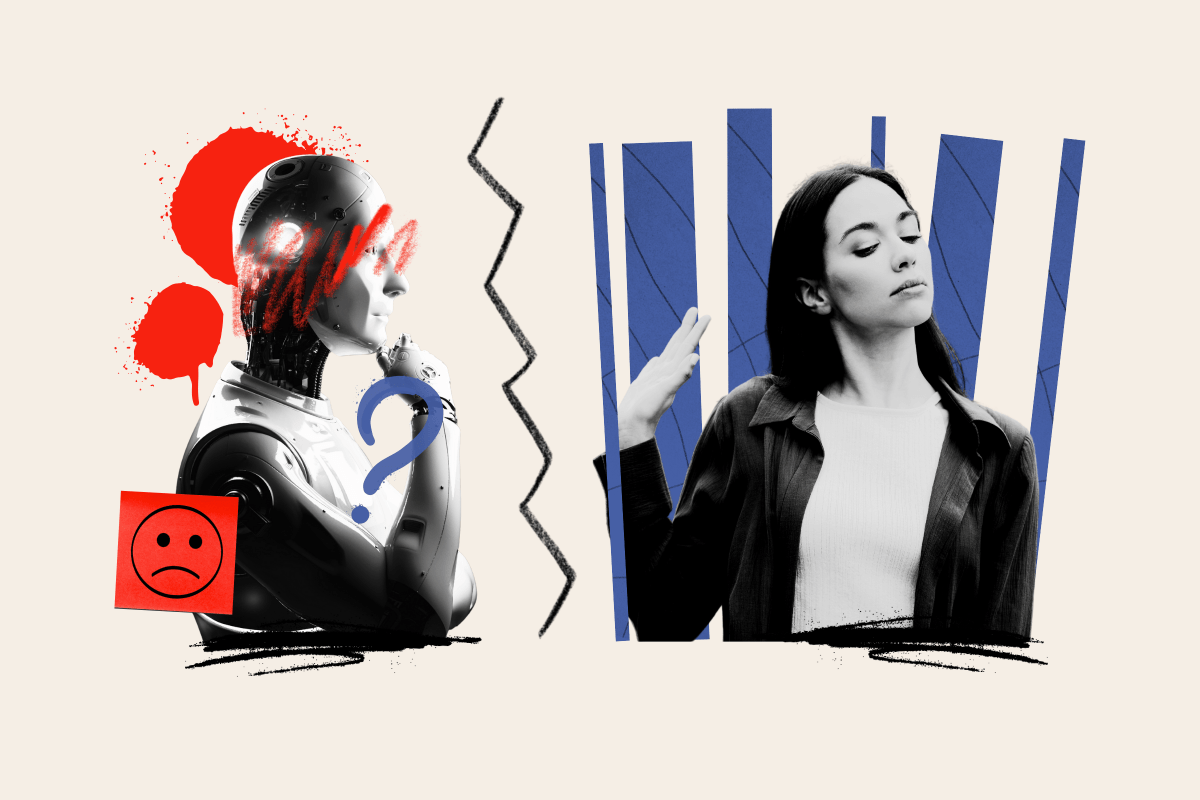
The public's view of artificial intelligence (AI) is changing from positive to negative. There is growing skepticism and criticism of AI-generated media in various public spaces, including online and on the street. People are questioning the actual usefulness of AI, fearing it benefits only the wealthiest in the tech industry.
Key Facts
A video parody on OpenAI's app shows public concern over AI's role in society.
Public criticism of AI is growing, with graffiti on ads and negative online comments.
In 2025, 43% of U.S. adults believed AI might harm them more than help.
Companies like the startup Friend face backlash for AI-generated ads in public spaces.
Some AI-generated campaigns are criticized as unprofessional and heavily vandalized.
AI's impact on social media and digital spaces is seen as increasingly negative.
There is bipartisan skepticism about the role of AI technology today.
Read the Original
Want the full story? Tap a source to open the original
article.
A new slang term, "67," is gaining popularity on social media, particularly TikTok. The term originated from a song and is linked to NBA player LaMelo Ball. It is used humorously among creators and has become a trend in schools.
Key Facts
The slang "67" is pronounced "six seven" and is popular on TikTok.
The trend started from a song "Doot Doot" by rapper Skrilla in December 2024.
The term became popular related to basketball player LaMelo Ball's playing style.
Many TikTok users and Reddit members use the term, often with a hand gesture.
It's common among school children who use it in class and among teachers.
It's described as a "brainrot word," meaning it's a silly, widely shared term on the internet.
The term is spreading and appears to have staying power.
Read the Original
Want the full story? Tap a source to open the original
article.
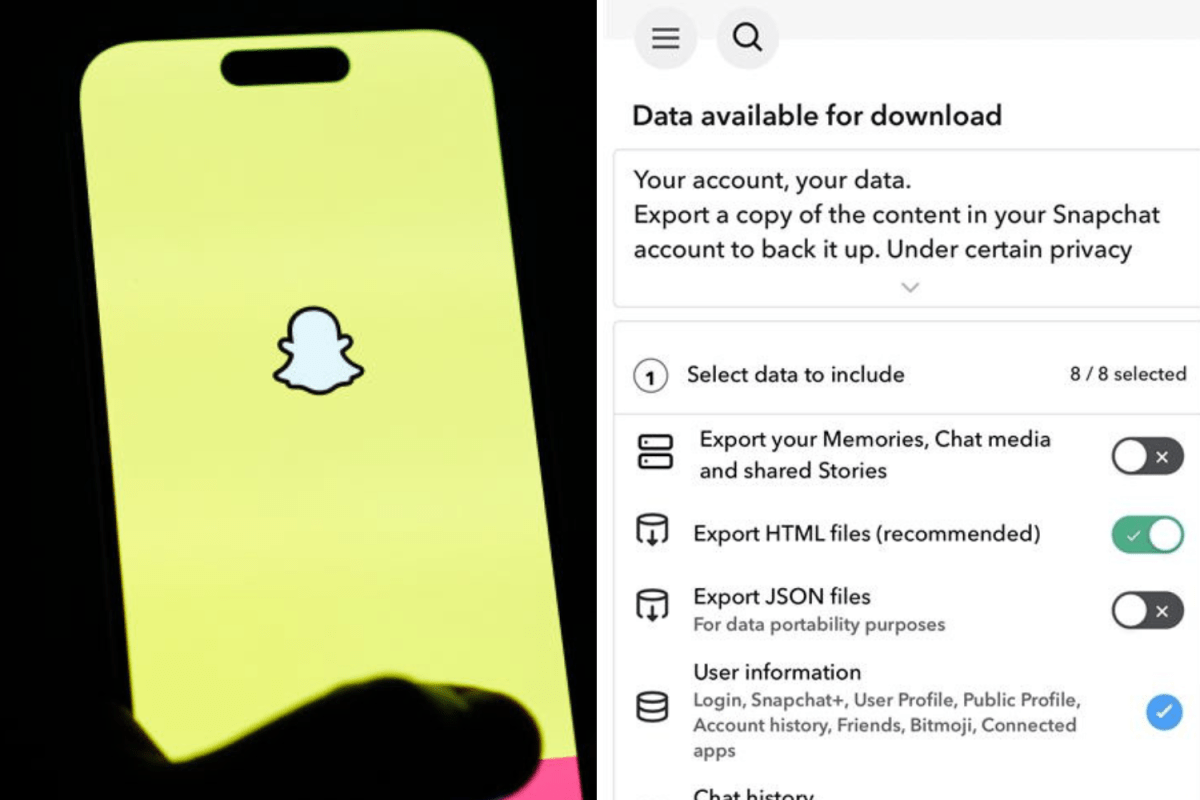
Snapchat users who have stored more than 5GB of Memories, such as photos and videos, will soon have to pay for extra storage. Snapchat introduced this change to maintain long-term storage capabilities for users. Users have options to either purchase additional storage or download their data to keep it elsewhere.
Key Facts
Snapchat will start charging users who store more than 5GB of Memories.
Memories are photos and videos saved in Snapchat's cloud since the feature launched in 2016.
Users worldwide have saved over 1 trillion Memories since 2016.
Users exceeding the 5GB limit will have temporary storage for 12 months.
New storage plans offer 100GB, 250GB with Snapchat+, or 5TB with Snapchat Platinum.
Users can download their data by requesting a .zip file from Snapchat to store on personal devices.
Read the Original
Want the full story? Tap a source to open the original
article.
Recent advancements in AI technology allow for more realistic creation of crowd images in videos. These AI-generated crowds can blur the lines between what's real and fake, raising concerns about misinformation and deception in media.
Key Facts
AI tools like OpenAI's Sora 2 are improving in creating realistic crowd scenes.
A recent video from a Will Smith concert showed AI-created crowd features, like odd fingers and faces.
AI-generated crowds in videos pose technical challenges due to the need for unique details in each person.
Almost 75% of images on social media in 2023 were created using AI.
AI makes it easier to manipulate crowd sizes in images, which can mislead public perception.
Misleading AI-generated images can lead to skepticism about real images as well.
In August 2024, false claims emerged about the use of AI to create crowd images in a political context.
People often trust what they see on small screens, making it easier to believe AI-created images are real.
Read the Original
Want the full story? Tap a source to open the original
article.
Independent hospitality businesses like boutique hotels and bed-and-breakfasts are using artificial intelligence (AI) to improve their operations and remain competitive. AI helps these properties streamline tasks, improve guest experience, and manage pricing more efficiently.
Key Facts
Independent hospitality includes places like boutique hotels, bed-and-breakfasts, and vacation rentals.
Many of these businesses are now using AI for tasks like guest communication, pricing, and marketing.
About 70% of independent hospitality operators see AI as important for staying competitive.
Chatbots are widely used in these businesses to enhance guest communications.
AI tools today are more affordable and easier to use, making them accessible to smaller businesses.
Independent operators benefit from being flexible and quick to adapt compared to larger hotel chains.
Saratoga Arms, a boutique hotel, improved its pricing strategy with AI, saving time and improving efficiency.
Read the Original
Want the full story? Tap a source to open the original
article.
OpenAI has launched a new app called Sora, which creates short videos using artificial intelligence. The app can generate realistic-looking videos, some include famous people or fictional characters. Users can control how their images are used and the app includes markings to show content is AI-made.
Key Facts
OpenAI released an AI video app named Sora.
The app can create short, realistic videos with AI.
Users input text prompts to generate videos.
Sora allows users to control how their face is used in videos.
Videos from Sora have watermarks and metadata to show they're AI-made.
The app has guidelines to prevent misuse, but some prohibited content can still be created.
Sora has features to report and moderate content violations.
Users can make videos with fictional and real people, including copyrighted characters.
Read the Original
Want the full story? Tap a source to open the original
article.
Apple removed the ICEBlock app from its App Store after the Department of Justice expressed worries that the app could endanger law enforcement officers. The app allowed users to report and share information about Immigration and Customs Enforcement (ICE) activities anonymously. The Department of Justice and Apple both stated the app posed safety risks to ICE agents.
Key Facts
Apple pulled the ICEBlock app from the App Store after concerns from the Department of Justice.
ICEBlock let users drop a location pin and report ICE activities anonymously.
Concerns were raised that the app could harm law enforcement officers.
The Department of Justice, led by Attorney General Pam Bondi, requested the app's removal.
Apple stated their App Store is meant to be a safe place for apps and removed ICEBlock based on received information.
There have been incidents of violence and protests targeting ICE facilities and personnel.
The Homeland Security Secretary linked the app to potential obstruction of justice issues.
Read the Original
Want the full story? Tap a source to open the original
article.
Western countries are facing an ongoing competition to strengthen their cybersecurity against cyber threats from malicious groups and individuals. These threats target essential systems like energy networks and healthcare, using tactics like hacking and spreading misinformation. Efforts are being made to improve defenses and resilience against such attacks.
Key Facts
Western nations, including the U.S., are in a cyber "arms race" against threats to critical infrastructure.
Cyber threats can target systems like energy, healthcare, and communication networks.
Attacks can involve hacking, spreading misinformation, and disrupting economic networks.
Ransomware is a type of software used in attacks that demand payment to restore access.
Recent attacks have targeted European airports, affecting major services.
In the last five years, over 80% of attacks have come through supply chains.
The European Union introduced a Cyber Resilience Act to improve product security.
The U.K. announced a bill aiming to secure critical infrastructure and digital services.
Read the Original
Want the full story? Tap a source to open the original
article.
Apple has removed apps from its App Store that warned users about nearby Immigration and Customs Enforcement (ICE) activities. This decision followed a request from the U.S. Department of Justice and concerns about safety risks, according to Apple.
Key Facts
Apple removed apps that provided alerts on ICE activities from its App Store.
This action was influenced by pressure from the Trump administration.
Attorney General Pam Bondi contacted Apple demanding the removal of the ICEBlock app.
Apple stated it wants the App Store to be a safe place for users.
The ICEBlock app had over one million downloads and its developer said it aimed to keep users safe.
Pam Bondi argued that the app endangered ICE agents while performing their duties.
Read the Original
Want the full story? Tap a source to open the original
article.
A report by Global Witness found that TikTok's algorithm was suggesting pornographic and sexualized content to fake child accounts, even when safety settings were activated. Despite TikTok's efforts to provide age-appropriate experiences, the report highlighted continued issues with inappropriate content being recommended to young users.
Key Facts
Researchers from Global Witness created four fake TikTok accounts pretending to be 13-year-olds.
The accounts still received pornographic content recommendations despite using TikTok's "restricted mode" meant to block such material.
Suggested search terms led to explicit videos, including sexual acts and provocative images.
Videos appeared under "you may like" recommendations, evading TikTok's content moderation.
Global Witness informed TikTok, which claimed to take immediate action to address the problem.
TikTok states it has over 50 features to ensure teen safety and removes most violative content before it's seen.
The Online Safety Act's Children's Codes came into force on July 25, requiring platforms to protect children from harmful content.
Global Witness found pornographic content suggested again in late July and August, after the Children's Codes were enacted.
Read the Original
Want the full story? Tap a source to open the original
article.
Many people are now using AI tools like ChatGPT to get advice on dating and relationships. This trend is particularly popular among Generation Z, with some people turning to AI to help navigate communication challenges or draft sensitive messages. Experts warn that while AI can be helpful, it might also encourage avoidance of difficult emotions or result in less personal communication.
Key Facts
People are using AI for advice on dating, breaking up, and handling relationship issues.
Rachel, a pseudonymous user, found AI advice useful but noted its "therapy-like" language.
A study shows that about half of Generation Z in the U.S. use AI for dating advice.
AI can help people compose texts or interpret complex messages.
Psychologists caution that AI might validate unhealthy patterns or avoid uncomfortable feelings.
There is concern AI could replace personal reflection, affecting emotional growth.
New AI services, like Mei, offer anonymous relationship advice to those avoiding judgment from friends or family.
More than half of the queries on some AI platforms are about sex, a topic people may avoid discussing with others.
Read the Original
Want the full story? Tap a source to open the original
article.
AI is improving at creating fake crowd scenes in videos. This raises concerns about how these fake crowds could be used by entertainers, politicians, and others.
Key Facts
AI technology is getting better at creating fake crowd scenes in videos.
A recent incident involved a fake crowd in a Will Smith concert video.
There are concerns about the implications of fake crowds.
Entertainers and politicians might use fake crowds to appear more popular.
The ability to fake crowds easily could change how people perceive popularity.
Read the Original
Want the full story? Tap a source to open the original
article.
A study shows that artificial intelligence can design DNA for dangerous proteins in ways that biosecurity checks might miss. Researchers used AI to generate DNA codes for harmful proteins that evaded the detection systems of DNA manufacturers. The study raises concerns about the potential misuse of AI in biotechnology.
Key Facts
The study was published in the journal Science.
AI was able to design DNA codes for more than 75,000 hazardous protein variants.
The biosecurity screening systems failed to detect some of these AI-generated sequences.
DNA manufacturers have added fixes to their screening software, but some variants still go undetected.
The study highlights ongoing worries about AI being used to create biological threats.
Researchers and the journal limited the distribution of certain details from the study to prevent misuse.
They enlisted a third-party nonprofit to control access to sensitive information.
This approach is a first in managing the risk of sharing hazardous data in scientific publications.
Read the Original
Want the full story? Tap a source to open the original
article.
Researchers found that changes in the shape of the brain as it ages can be linked to declines in memory and cognitive functions, which might help predict dementia before symptoms appear. They studied over 2,600 brain scans and noticed certain parts of the brain expand or contract with age, especially in regions associated with Alzheimer's disease. This research suggests that brain shape could be used to identify early signs of dementia.
Key Facts
Researchers from the University of California, Irvine and University of La Laguna studied brain scans to understand changes with aging.
More than 2,600 MRI scans of adults aged 30 to 97 were analyzed.
Certain brain regions, crucial for memory and cognitive functions, expand or contract with age.
Dementia may cause these expansion and compression effects to worsen.
The entorhinal cortex, crucial for memory, is one of the first areas affected in Alzheimer's disease.
The study suggests brain shape could be an early marker for dementia risk.
Current methods focus on small changes in the brain, but this study looks at overall brain shape changes.
This research points to the need for a combined approach to study Alzheimer's, considering both molecular and global changes.
Read the Original
Want the full story? Tap a source to open the original
article.