This article explores how artificial intelligence (AI) chatbots are being used in classrooms. It looks at the experiences of a teacher using AI tools to support learning and the challenges involved.
Key Facts
AI chatbots are computer programs that can talk and answer questions like a human.
Teachers are starting to use AI chatbots in their classrooms to help students learn.
The article shares one teacher’s personal experience with using AI in teaching.
It discusses both the benefits and difficulties of using AI tools in education.
The use of AI in schools is growing as technology improves.
There are questions about how AI affects teaching methods and student learning.
Some people worry about relying too much on AI for education.
Read the Original
Want the full story? Tap a source to open the original
article.
Stewart Copeland, the drummer from the band The Police, has created a unique music studio in Los Angeles filled with unusual instruments and sounds from nature. He is working with naturalist Martyn Stewart on an album called "Wild Concerto" that combines animal sounds with musical instruments.
Key Facts
Stewart Copeland is an English drummer, famous for his work with The Police.
He turned his studio into a special place with many unusual instruments like custom percussion, tuned bells, waterphones, gongs, and a vintage trumpet.
Copeland is collaborating with British naturalist Martyn Stewart.
Their album "Wild Concerto" features sounds from animals such as hyenas, owls, and howler monkeys.
The project mixes natural animal sounds with traditional orchestral percussion.
Copeland received a guitar from Sting, his former bandmate in The Police.
The album celebrates the sounds of nature, calling it Mother Nature’s orchestra.
The story was featured on the show 60 Minutes with a studio tour and music demonstration.
Read the Original
Want the full story? Tap a source to open the original
article.
Musician Stewart Copeland and naturalist Martyn Stewart worked together on the album "Wild Concerto," which combines animal sounds with musical instruments. The album aims to raise awareness about endangered species and nature by turning animal noises into a musical experience.
Key Facts
Martyn Stewart recorded nearly 100,000 sounds of animals worldwide over decades.
Stewart Copeland is a drummer known for his work with the band The Police.
The album features natural animal sounds like owls hooting, frogs croaking, and hyenas laughing.
Martyn Stewart uses his recordings to show changes in animal populations and environmental health.
Stewart has rare recordings of endangered animals, such as the Panamanian golden frog and the northern white rhinoceros.
Copeland arranged animal sounds with music rhythms to create songs on the album.
The album was produced at Abbey Road Studios, a famous music recording studio.
The project’s goal is to increase appreciation of wildlife as many species face extinction.
Read the Original
Want the full story? Tap a source to open the original
article.
Stewart Copeland, the drummer from the band The Police, has created a new album called "Wild Concerto" that blends animal sounds with music. The album uses recordings of wild animals made by naturalist Martyn Stewart and turns them into orchestral pieces.
Key Facts
Stewart Copeland was the drummer for the rock band The Police.
"Wild Concerto" is an album combining animal sounds with musical instruments.
The animal sounds were recorded by naturalist Martyn Stewart over many years.
The album was recorded at the famous Abbey Road studio.
Copeland chose instruments that matched the sounds made by animals like wolves and birds.
The album features sounds from hundreds of animals, some endangered or extinct.
Copeland has a background in both rock music and composing music for films.
The project uses 30,000 hours of audio recordings to create new music.
Read the Original
Want the full story? Tap a source to open the original
article.
Blue Origin launched its third New Glenn rocket and reused a first-stage booster that landed successfully. However, the satellite it carried, a cell phone communications satellite built by AST SpaceMobile, was placed into the wrong orbit, and the company is still assessing the situation.
Key Facts
Blue Origin's New Glenn rocket launched from Cape Canaveral on Sunday.
This was the third New Glenn flight and the first to reuse a first-stage booster.
The first stage booster landed safely on a ship in the Atlantic Ocean.
The payload was the AST SpaceMobile Bluebird 7 satellite designed to provide 4G and 5G broadband directly to cellphones.
The satellite’s orbit was not correct, and it was unclear if it can operate properly in that orbit.
AST SpaceMobile plans to launch up to 60 satellites of this type for global cellular coverage.
Blue Origin did not provide details on how far off the orbit was or potential next steps.
The second stage of the rocket shut down as planned, but a planned second burn did not occur on schedule.
Read the Original
Want the full story? Tap a source to open the original
article.
Blue Origin successfully flew and landed its large New Glenn rocket booster for the second time, marking a milestone in rocket reuse. However, the mission’s upper stage failed to place a satellite into the correct orbit, causing the satellite to be lost and planned for de-orbiting.
Key Facts
Blue Origin’s New Glenn rocket flew for the third time on Sunday, using a previously flown booster called Never Tell Me The Odds.
The 321-foot-tall rocket launched from Cape Canaveral, Florida, with seven methane-powered engines on the main booster stage.
The booster separated about three minutes after launch and successfully landed on a ship in the Atlantic Ocean after slowing down with engine burns.
The reusable booster is larger and more powerful than Blue Origin’s smaller New Shepard rocket.
The upper stage, powered by two hydrogen-oxygen engines, failed to reach the correct orbit for a communications satellite from AST SpaceMobile.
The satellite entered an orbit too low to operate and will be intentionally brought back into Earth’s atmosphere.
AST SpaceMobile expects to recover the satellite cost through insurance.
Blue Origin plans to reuse engines from the November launch for future New Glenn flights and aims to increase its launch rate.
Read the Original
Want the full story? Tap a source to open the original
article.
The U.S. National Security Agency (NSA) is using Anthropic's advanced AI model called Mythos Preview, even though the Department of Defense (DoD) has warned that Anthropic poses a risk to the supply chain. The DoD has tried to cut off Anthropic, but the NSA and other agencies still rely on its tools to help with cybersecurity.
Key Facts
The NSA uses Anthropic's Mythos Preview AI model despite DoD concerns about security risks.
The Department of Defense considers Anthropic a "supply chain risk" and has tried to restrict its use.
Anthropic's Mythos access is limited to about 40 organizations due to its powerful cyber capabilities.
The NSA is believed to be one of the organizations with access, though it was not officially named.
The AI model is mainly used to scan for security weaknesses in systems.
The UK’s intelligence agencies also have access to Mythos through their AI Security Institute.
Anthropic’s CEO recently met with top White House officials to discuss government use and security of Mythos.
The Department of Defense and Anthropic have disagreed over contract terms and ethical limits on using AI.
Read the Original
Want the full story? Tap a source to open the original
article.
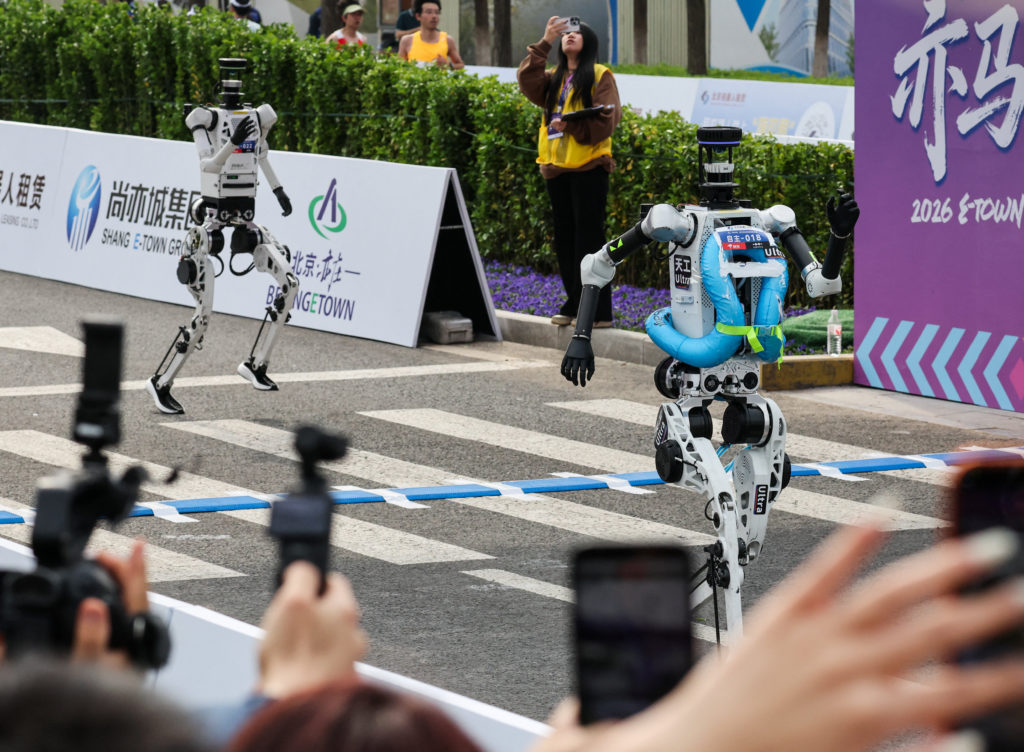
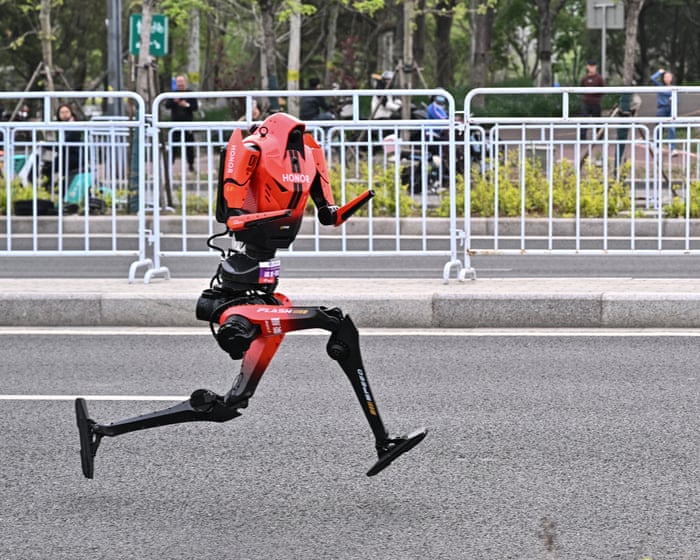
A humanoid robot created by Chinese company Honor won a half-marathon race in Beijing, finishing faster than the human world record for the same distance. The robot completed the 21-kilometer race in 50 minutes and 26 seconds, showing major progress in China's robot technology.
Key Facts
The robot ran the half-marathon in 50 minutes and 26 seconds, beating Uganda's human world record of about 57 minutes.
The robot race was part of the Beijing E-Town Half Marathon and Humanoid Robot Half Marathon event.
Last year's winning robot took more than 2 hours and 40 minutes to finish the same race distance.
The robot has long legs around 95 cm (37 inches) and uses a liquid-cooling system developed by Honor.
About 40% of the robots ran the course on their own (autonomously), while others were controlled remotely.
A remotely controlled robot from Honor finished first with a time of 48 minutes and 19 seconds but the autonomous robot was declared the winner under race rules.
China plans to focus more on developing technology like humanoid robots as part of its national five-year plan for 2026-2030.
Other Chinese companies like AGIBOT, Unitree Robotics, and UBTech Robotics lead in shipping intelligent robots globally.
Read the Original
Want the full story? Tap a source to open the original
article.
Biomason, a company based in North Carolina and Denmark, is creating a new type of building material called biocement. This material uses natural microbes and produces much less carbon dioxide than traditional concrete while being just as strong.
Key Facts
Making 30 billion tons of regular concrete every year releases more carbon pollution than all the world’s ships and planes combined.
Biomason uses biotechnology, including natural microbes, to make biocement.
Biocement is as strong as regular concrete.
Producing biocement emits much less CO2 (carbon dioxide).
The company is based in North Carolina, USA, and Denmark.
The goal is to offer a more environmentally friendly alternative to standard concrete.
This new material could help reduce the environmental impact of construction worldwide.
Read the Original
Want the full story? Tap a source to open the original
article.
The European Commission has introduced a new app to verify users’ ages and block children from harmful social media content while protecting their privacy. However, security experts quickly found weaknesses in the app. At the same time, European leaders are discussing a unified approach to keep children safe online amid rising concerns about social media risks and artificial intelligence.
Key Facts
The European Commission created an open-source app to verify users’ ages without sharing personal data.
The app aims to limit children's access to social media and sensitive websites.
European Commission President Ursula von der Leyen announced the app is ready for release soon.
Security experts found design flaws, with a demonstration showing the app’s verification can be bypassed in minutes.
A video call with EU leaders was held to coordinate efforts to protect children online across Europe.
Different EU countries have varied rules about social media age limits and enforcement methods.
Virtual private networks (VPNs) and shared accounts remain ways to bypass age checks.
Advocacy groups warn that AI is increasing risks like misinformation, affecting children who use social media for news.
Read the Original
Want the full story? Tap a source to open the original
article.
New technology combining artificial intelligence (AI) and robotics will help people do more tasks in space. This technology is expected to support, not replace, human space explorers.
Key Facts
AI means computer systems that can learn and make decisions.
Robotics involves machines that can perform tasks automatically.
Together, AI and robots can assist humans during space missions.
This technology aims to improve human abilities in space.
The goal is to make space exploration more effective and safer.
AI and robots will work alongside astronauts, not take their place.
Read the Original
Want the full story? Tap a source to open the original
article.
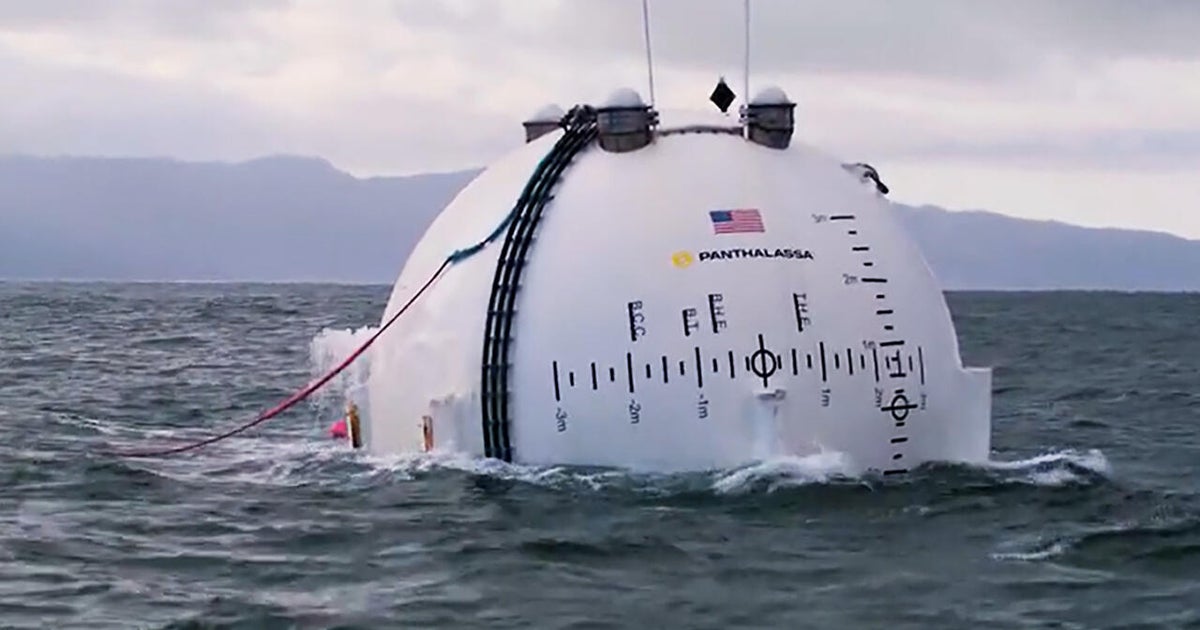
A company called Panthalassa is developing floating wave energy devices called Ocean-3 to power data centers at sea. These devices use the movement of ocean waves to generate electricity and run AI computing tasks without needing cables or anchors, offering a cleaner alternative to land-based data centers.
Key Facts
Burning fossil fuels warms the planet; data centers use a lot of electricity, increasing carbon pollution.
Panthalassa's wave energy device, Ocean-2, works like a floating hydroelectric dam, using wave motion to push water through turbines to make electricity.
Ocean-3 is a new design that floats freely without anchors or cables to shore.
The floating systems generate power, process AI tasks, and send results by satellite.
Multiple Ocean-3 units can work together as a large data center at sea.
The company has private funding and expects Ocean-3 units to operate offshore by August 2024.
Benefits include clean energy, no fuel, no land use, and fast scaling.
Panthalassa plans to deploy thousands of these floating data centers to meet growing AI computing demand.
Read the Original
Want the full story? Tap a source to open the original
article.
A humanoid robot ran a half marathon in Beijing and set a new world record, finishing ahead of human runners. This event shows how quickly robot technology has improved in China.
Key Facts
The marathon took place in Beijing.
A humanoid robot competed alongside human runners.
The robot broke the world record for the half marathon.
This achievement highlights advances in Chinese robot technology.
Humanoid robots have become common in China’s public places and media.
The event happened on Sunday, April 19, 2026.
The news was reported by France 24.
Read the Original
Want the full story? Tap a source to open the original
article.
A humanoid robot made by the Chinese company Honor ran a half-marathon in Beijing faster than the human world record. The robot completed the 21-kilometer race in 50 minutes and 26 seconds, showing big progress compared to last year’s robot race time of 2 hours and 40 minutes.
Key Facts
The half-marathon distance was 21 kilometers (about 13 miles).
The robot’s time was 50 minutes and 26 seconds.
The human world record holder, Uganda’s Jacob Kiplimo, finished a half-marathon in about 57 minutes in March 2026.
Last year, the winning robot finished in 2 hours, 40 minutes, and 42 seconds.
The robot was designed with long legs about 95 cm (37 inches) and a liquid-cooling system to help it run faster.
About 40% of the robots ran by themselves, while the others were remotely controlled.
One remotely controlled Honor robot finished the race even faster, in 48 minutes.
The event was held alongside a human race, and some robots had minor accidents during the race.
Read the Original
Want the full story? Tap a source to open the original
article.
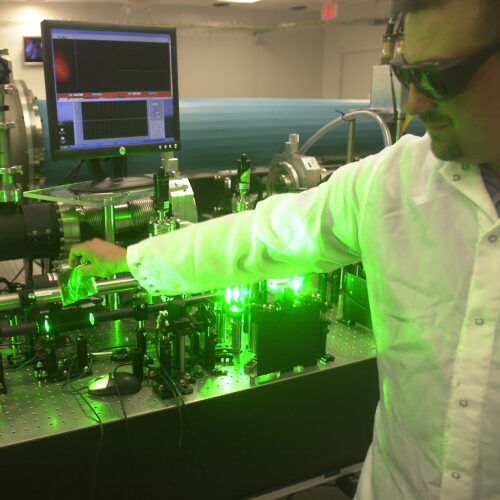
The Texas Petawatt (TPW) is one of the most powerful lasers in the United States, located underground at the University of Texas at Austin. It was used by scientists from around the country to conduct research in physics, fusion energy, and medical treatments before closing due to funding cuts.
Key Facts
TPW is housed two floors below ground in a building at the University of Texas at Austin.
The laser produces extremely powerful light pulses that last only a trillionth of a second.
These pulses can have more power than the entire U.S. electrical grid during that brief moment.
Scientists use TPW to study topics like star interiors, fusion energy, and cancer treatment methods.
A typical “shot day” involves careful preparation, alignment, and testing before firing the laser briefly.
The laser amplifies a tiny initial light pulse through several stages using glass rods and disks plus flash lamps.
Maintaining perfect alignment during the process is critical to avoid damaging the expensive optics.
TPW was part of LaserNetUS, a Department of Energy network of high-power laser labs, but is now closed due to funding cuts.
Read the Original
Want the full story? Tap a source to open the original
article.
A humanoid robot set a new world record by completing a half-marathon in Beijing faster than human runners, finishing the 21-kilometer race in 50 minutes and 26 seconds. This shows fast progress in robot technology, with over 100 robots competing this year compared to about 20 last year.
Key Facts
The robot ran the half-marathon in 50 minutes and 26 seconds, beating the current men’s human record of 57 minutes and 20 seconds.
The race took place in Yizhuang, a southern district of Beijing, with robots and humans running in separate lanes.
The robot was made by Chinese smartphone maker Honor and used an autonomous navigation system, allowing it to run without human control.
Last year’s best robot time was more than two hours and 40 minutes, showing large improvements in one year.
More than 100 humanoid robots competed this year, up from about 20 last year, indicating growing interest in robot racing.
Spectators noted the technology is advancing quickly, with potential future uses in jobs like caregiving, housework, and firefighting.
China invested 73.5 billion yuan ($10.8 billion) in robotics and embodied artificial intelligence in 2025.
The event aims to encourage innovation and make robot technology more popular.
Read the Original
Want the full story? Tap a source to open the original
article.
Humanoid robots took part in a half-marathon in Beijing, running alongside human runners. A Chinese robot completed the race in 50 minutes, breaking the previous record set last year.
Key Facts
The half-marathon race took place in Beijing.
Humanoid robots competed side by side with humans.
A Chinese-developed robot finished the race in 50 minutes.
This time broke the record from the previous year.
The event shows China’s efforts to become a leader in robotics.
Humanoid robots are robots designed to look and move like humans.
Read the Original
Want the full story? Tap a source to open the original
article.
A humanoid robot in Beijing finished a half-marathon faster than the human world record, completing the 21-kilometer race in 50 minutes and 26 seconds. This event showed progress in China’s robot technology, with the winner designed to run fast and cool itself during the race.
Key Facts
The robot race took place in Beijing on April 19, 2026.
The winning robot, made by Chinese company Honor, ran the half-marathon in 50 minutes 26 seconds.
This time is faster than the human world record of about 57 minutes set by Ugandan runner Jacob Kiplimo.
Last year’s winning robot took over 2 hours and 40 minutes to finish the same race.
The robot has long legs and a special liquid-cooling system to help it perform well.
About 40% of robots ran the course by themselves; the rest were controlled remotely.
A remotely controlled robot finished even faster (48 minutes 19 seconds) but didn’t win due to race rules favoring autonomous robots.
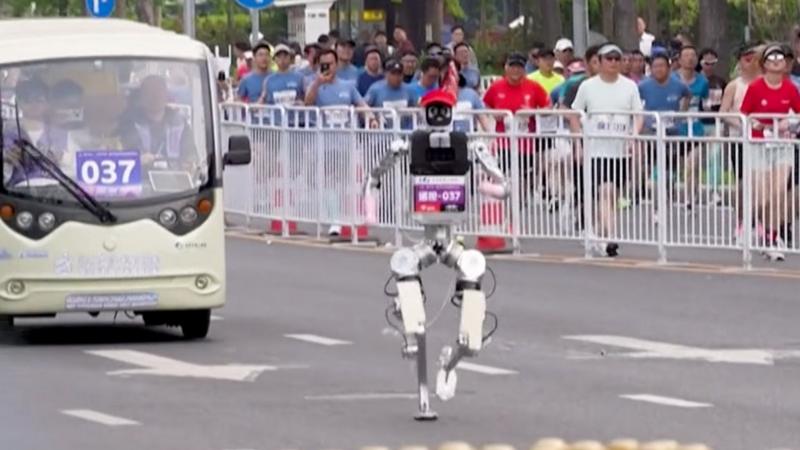
A robot also acted as a traffic officer during the event, guiding participants.
Read the Original
Want the full story? Tap a source to open the original
article.
Robots took part in a half marathon race in Beijing, China. The fastest robot, named Lightning and made by the smartphone company Honor, finished the race in 50 minutes and 26 seconds, which is quicker than the human world record.
Key Facts
The race was a half marathon held in Beijing, China.
Robots competed both autonomously and via remote control.
About 40% of the robots raced by themselves without human control.
The winning robot, Lightning, was created by the Chinese smartphone maker Honor.
Lightning completed the race in 50 minutes and 26 seconds.
The human men’s half marathon world record is 57 minutes and 20 seconds, set by Jacob Kiplimo in 2024.
The event showed robots running faster than top human athletes in this race.
The competition highlights advances in robotics technology.
Read the Original
Want the full story? Tap a source to open the original
article.
Humanoid robots in Beijing showed big improvement by running a half-marathon much faster than last year. The fastest robot finished the race in 50 minutes, beating the world record time set by a human runner, though it needed help near the end.
Key Facts
Last year, many robots struggled to start or finish the marathon; this year, more than 100 participated.
The winning robot was made by Honor, a Chinese smartphone company.
The winning robot’s time was 50 minutes and 26 seconds, faster than the human world record of 57 minutes.
Robots ran on separate tracks alongside humans to avoid crashes.
Robots showed physical skills that could help in dangerous jobs and even military uses.
China is investing a lot to become a leader in humanoid robots with government support and policies.
In February, China showed off robots doing martial arts on national TV alongside human kids.
The marathon highlights how robot technology is improving quickly in China.
Read the Original
Want the full story? Tap a source to open the original
article.