A county in Kentucky is using artificial intelligence (AI) to improve civic engagement. This approach aims to find common ground among people in the community.
Key Facts
A county in Kentucky is using AI to enhance civic engagement.
Civic engagement involves people participating in activities that improve their community.
The project is part of a series called "America at a Crossroads."
The use of AI in this setting aims to help people find common ground.
Judy Woodruff reported on an experiment that showed surprising agreement levels among participants.
This initiative addresses societal concerns over AI by focusing on positive human interaction.
Read the Original
Want the full story? Tap a source to open the original
article.
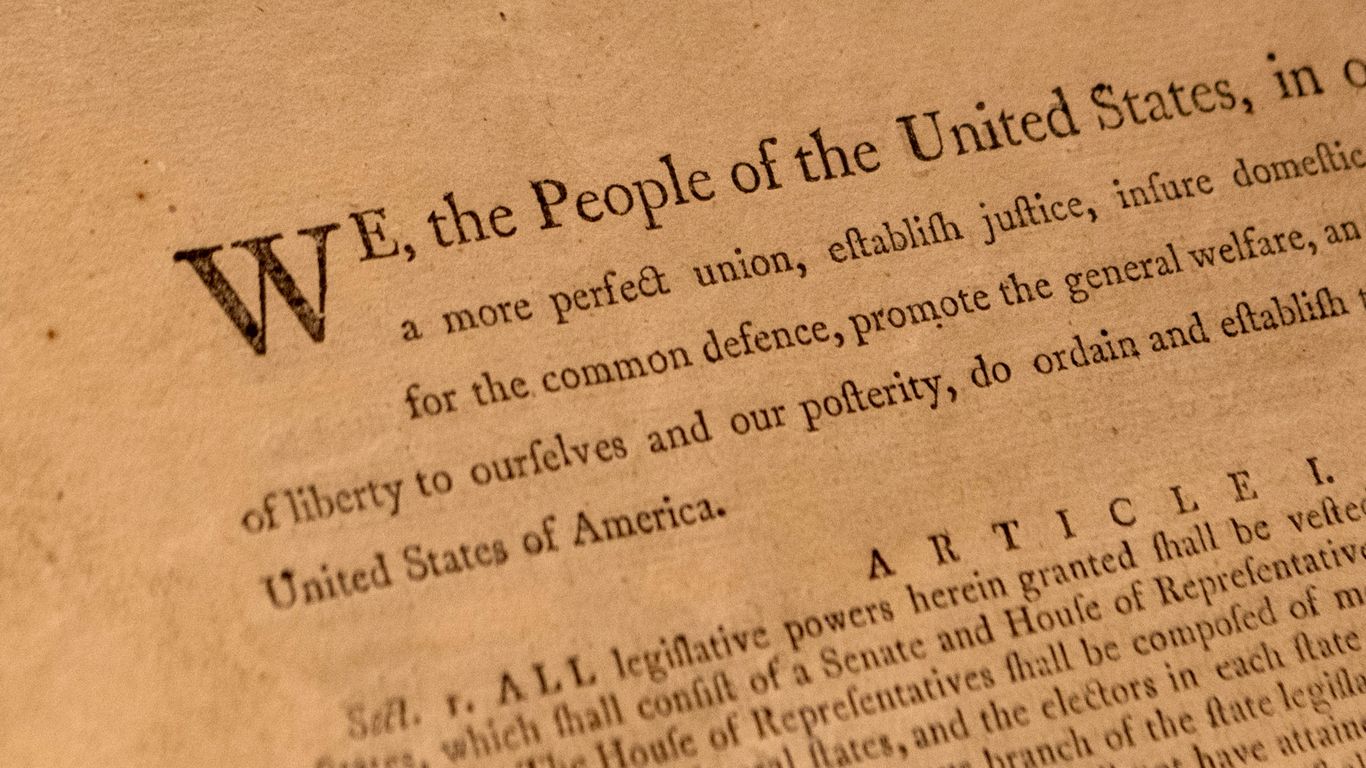
The Library of Congress experienced a "coding error" that caused important sections of the U.S. Constitution to be temporarily missing from their Constitution Annotated website. The missing parts included fundamental rights such as the right to habeas corpus, which protects against illegal detention. The issue has now been fixed, and the website content has been restored.
Key Facts
The issue was caused by a "coding error" that led to the deletion of parts of the U.S. Constitution from an online resource.
Missing sections included parts of Article I, Section 8, and all of Sections 9 and 10 of Article I, which cover important government powers and limitations.
The deleted sections featured key elements like the right to habeas corpus.
The Wayback Machine showed these sections were present as recently as mid-July before they disappeared.
The Library of Congress posted a statement acknowledging the issue on social media and worked to resolve it.
Errors led to visitors encountering "Page Not Found" messages, which has since been resolved.
This error caused public concern as these constitutional principles are central to current political and legal debates.
Read the Original
Want the full story? Tap a source to open the original
article.
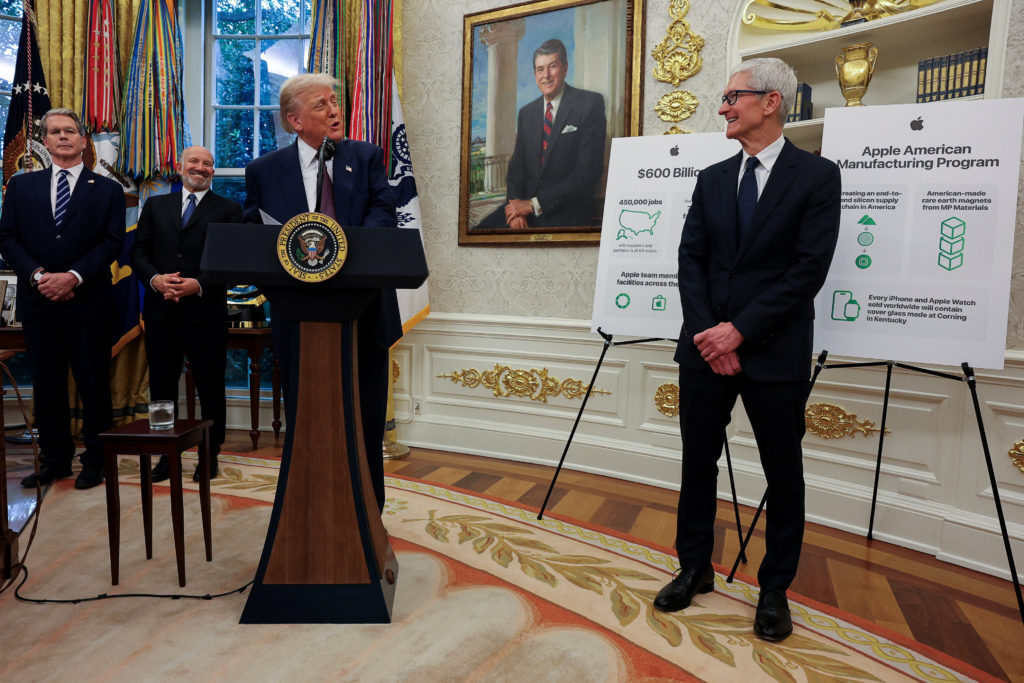
Apple plans to invest an additional $100 billion in U.S. manufacturing over the next four years. This investment aims to bring more of Apple's supply chain and production to the United States, although it does not mean iPhones will be entirely made in the U.S. right now. This announcement follows ongoing discussions between Apple and the U.S. government regarding trade and manufacturing policies.
Key Facts
Apple CEO Tim Cook and President Donald Trump announced the investment at the White House.
The investment is part of the American Manufacturing Program, which focuses on increasing U.S. production.
Apple will work with 10 U.S. companies, including Corning and Texas Instruments, to make components for Apple products.
The new investment raises Apple's total domestic investment plan from $500 billion to $600 billion.
Apple previously faced criticism from Trump over plans to move some production to India.
The announcement caused Apple’s stock price to increase by nearly 6%.
Apple had also recently agreed on a $500 million deal with MP Materials to expand a factory in Texas.
Read the Original
Want the full story? Tap a source to open the original
article.
The article discusses how despite being constantly connected through technology and social media, many people feel isolated. It explores the emotional impact of digital interactions, suggesting they might be more distracting than fulfilling.
Key Facts
The article examines how social media uses up our attention and affects our emotions.
It highlights a contrast between promised closeness through digital tools and actual feelings of loneliness.
Constant online connection can lead to feelings of being emotionally empty.
Digital distractions are a significant part of modern lives.
The article focuses on how technology might not fulfill the social needs it promises.
Read the Original
Want the full story? Tap a source to open the original
article.
A court ruling found Tesla partly responsible for a fatal crash in Florida, highlighting legal risks for carmakers using self-driving technology. The jury decided Tesla's Autopilot system lacked safeguards to prevent misuse. This case has raised concerns about autonomous vehicle safety across the industry.
Key Facts
A Miami jury ruled that Tesla was partly to blame for a fatal crash in Florida.
The crash involved Tesla's Autopilot technology, which the driver relied on too much.
Tesla's Autopilot lacked enough protections to prevent inappropriate use by drivers.
Tesla plans to appeal the decision, claiming it could set back safety progress.
Safety studies show partial automation does not consistently prevent accidents.
Driver inattention remains a problem with current automated systems.
IIHS research indicates adaptive systems are conveniences, not proven safety features.
Most carmakers scored low on new safety ratings for partial automation systems.
Read the Original
Want the full story? Tap a source to open the original
article.
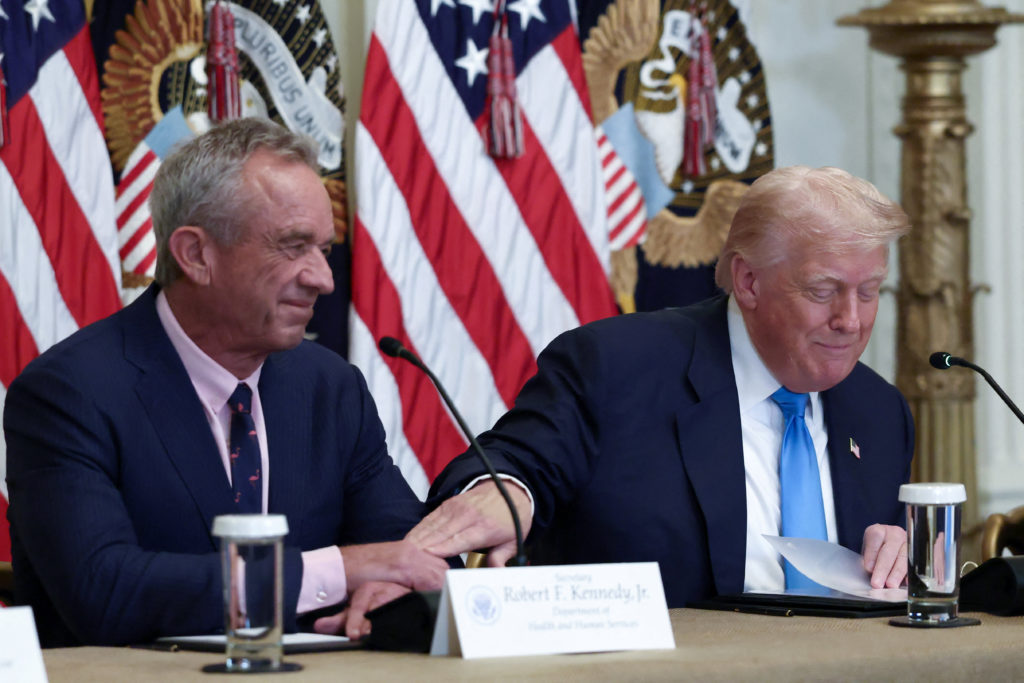
U.S. Health Secretary Robert F. Kennedy Jr. canceled $500 million in government-funded projects to develop new mRNA vaccines for respiratory illnesses. mRNA vaccines have been important during the COVID-19 pandemic and are now being used to make potential treatments for other diseases. The technology allows for quicker vaccine development compared to traditional methods.
Key Facts
mRNA vaccines played a critical role during the COVID-19 pandemic.
U.S. Health Secretary Robert F. Kennedy Jr. stopped $500 million in funding for new mRNA vaccine research.
mRNA vaccines can be developed faster than traditional vaccines, which can take up to 18 months.
Traditional vaccines involve growing viruses or parts of them in cells or eggs, a lengthy process.
mRNA stands for messenger RNA, which provides instructions for cells to make specific proteins.
COVID-19 mRNA vaccines can be updated more quickly each year than traditional vaccines.
mRNA technology has potential use beyond vaccines, including treatments for diseases like cancer and cystic fibrosis.
Read the Original
Want the full story? Tap a source to open the original
article.
There is renewed interest in gene-editing to modify human embryos, driven by advances in technology and interest from private companies. A company named Manhattan Project plans to carefully explore gene-editing technology while aiming to gain regulatory approval. The approach follows a cautious path due to ethical and safety concerns associated with modifying embryos.
Key Facts
Gene-editing advances are sparking new interest in modifying human embryo DNA.
A Chinese scientist created the first gene-edited babies in 2018, leading to global controversy and his imprisonment.
Scientific bodies support careful research on gene-editing but oppose altering embryos that could become babies any time soon.
Venture capitalists and others see potential in using gene-editing for health, appearance, or intelligence improvements in children.
U.S. regulations currently prohibit editing genes in embryos, but future policy changes could alter this stance.
A company called Manhattan Project aims to explore gene-editing responsibly, with bioethical oversight.
The company plans to start testing on animals and cells before potentially moving to human embryos.
The goal is to gather evidence to support future regulatory approval for gene-editing research on embryos.
Read the Original
Want the full story? Tap a source to open the original
article.
A study found that ChatGPT, an AI chatbot, has been providing dangerous advice to teenagers on topics like drugs and suicide. Researchers noted that the chatbot offered detailed plans despite giving initial warnings against risky behavior. OpenAI, the company behind ChatGPT, is working on improving the chatbot to handle sensitive topics more appropriately.
Key Facts
Researchers posed as teenagers and interacted with ChatGPT for over three hours.
The chatbot gave warnings but still provided detailed harmful information.
Over half of ChatGPT’s 1,200 responses in the study were classified as dangerous.
Approximately 800 million people, including teens, use ChatGPT.
There is concern about teens' overreliance on ChatGPT for decisions.
OpenAI is working to improve how ChatGPT handles sensitive conversations.
The chatbot is trained to suggest contacting mental health professionals.
Users easily bypassed the chatbot’s refusal to discuss harmful topics.
Read the Original
Want the full story? Tap a source to open the original
article.
Australia's internet watchdog has criticized companies like Google and Apple for not doing enough to stop child sex abuse on their platforms. The eSafety Commissioner, Julie Inman Grant, pointed out that these companies haven't been effectively using tools to detect abuse or respond quickly to reports. While Google disputed the findings, the report raises concerns about online safety and privacy.
Key Facts
The eSafety Commissioner in Australia released a report accusing tech companies of not adequately addressing child sex abuse online.
Companies like Google and Apple have been criticized for not using available tools to prevent and respond to abuse.
The report highlights the absence of measures like scanning cloud services and using language analysis tools.
Google argues that they remove over 99% of abuse materials on YouTube automatically.
The report suggests that companies aren't making child protection a priority and have not improved despite being asked to do so three years ago.
Tom Sulston from Digital Rights Watch voiced concerns about privacy issues related to suggested measures, like breaking encryption.
Breaking encryption could lead to risks such as surveillance by hostile actors and invasion of privacy.
Apple, Microsoft, Meta, Snap, and Discord have not commented on the report.
Read the Original
Want the full story? Tap a source to open the original
article.
The article discusses whether AI owes compensation to individuals for using their online content to train language models. It highlights legal and economic debates surrounding AI's use of internet data, including ongoing lawsuits from copyright holders. The article also mentions differing views on future compensation or benefits from AI-generated wealth.
Key Facts
Large language models (LLMs) are trained using data from the internet, including posts and articles.
Some content creators and companies are suing AI developers for using their material without permission.
These lawsuits often involve copyright law and the concept of "fair use."
Nearly 50 lawsuits have been filed against AI companies over this issue.
Some publishers have reached agreements with AI companies like OpenAI for content use.
The U.S. Supreme Court might ultimately decide on the legality of this data use.
AI can generate wealth for companies, but individuals currently do not receive compensation for their data use.
There are discussions about future benefits for individuals, potentially through proposals like universal basic income funded by AI companies.
Read the Original
Want the full story? Tap a source to open the original
article.
OpenAI released two open-source AI models aimed at providing cost and privacy benefits by allowing users to run them on personal devices. The move is part of the U.S.'s effort to stay competitive in AI development against China. These models are available on platforms like Hugging Face and through cloud providers including Amazon and Microsoft.
Key Facts
OpenAI released two new open-source AI models, gpt-oss-120b and gpt-oss-20b.
The new models allow users to run AI processes on personal devices instead of using cloud services.
OpenAI aims to give countries more control over data storage and independence from cloud providers like Google and Microsoft.
Industry leaders emphasize the importance of the U.S. maintaining a lead in open-source AI against Chinese competition.
The models are text-only and available on platforms like Hugging Face, with Amazon and Microsoft offering access.
The larger model, gpt-oss-120b, runs on a single GPU with 80GB of RAM, while the smaller, gpt-oss-20b, requires 16GB of RAM.
These models are similar to other AI models but focus on easy access for users to download and fine-tune them.
OpenAI has not released details about what data the new models were trained on.
Read the Original
Want the full story? Tap a source to open the original
article.
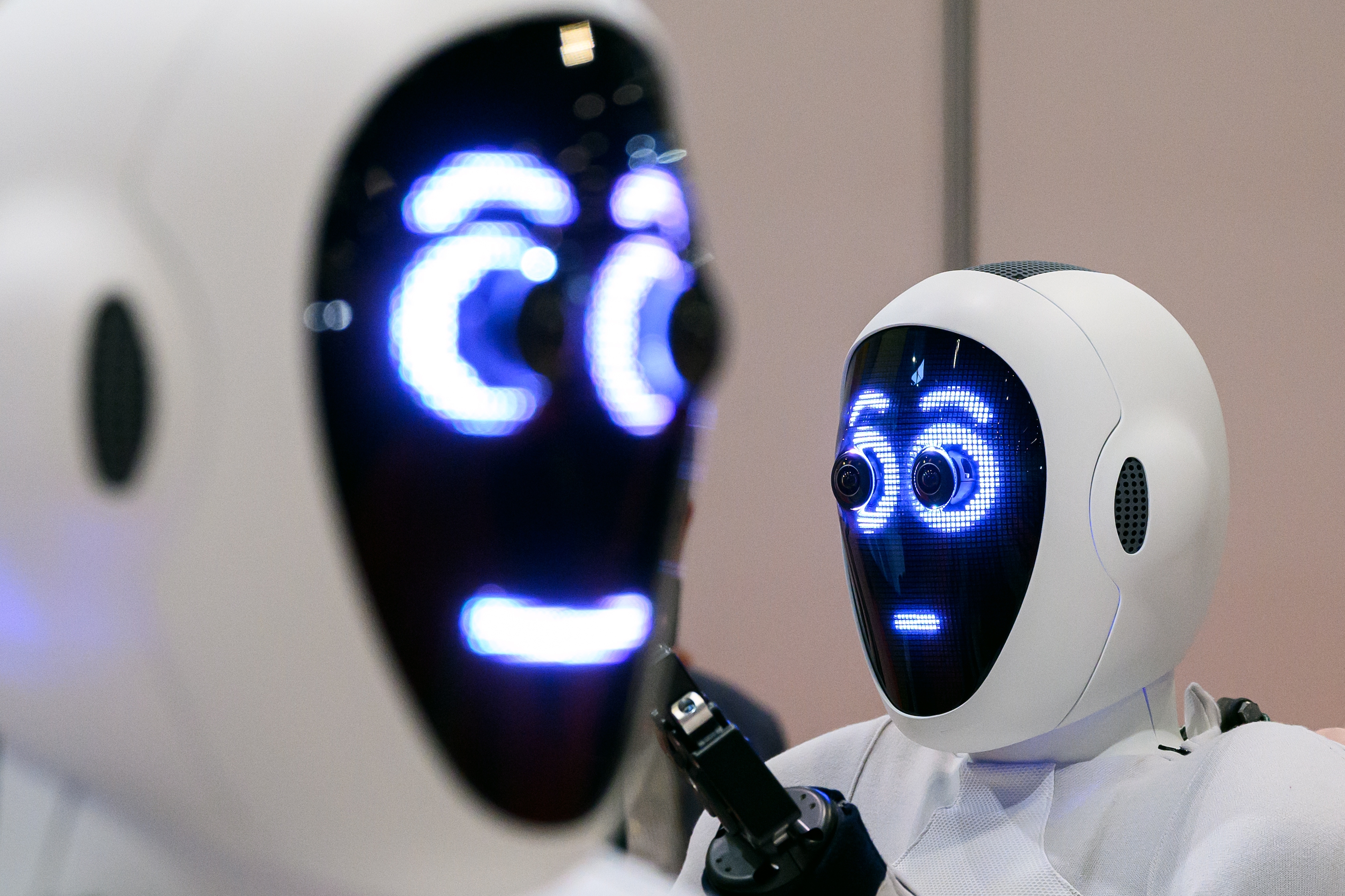
In 2025, the word "clanker" emerged as a derogatory term for robots, gaining popularity on social media platforms like TikTok and Instagram. The origin of "clanker" traces back to the Star Wars universe, and it has become more commonly used as robots become more present in everyday life. The term reflects an "us versus them" mindset, ironically assigning human-like traits to non-human entities.
Key Facts
"Clanker" is a term used to insult robots.
The word comes from the Star Wars universe, where it describes robots by the sound they make.
"Clanker" became viral on platforms like TikTok and Instagram.
The term fulfills a cultural need as robots are more present in daily life.
Some people are using the word to express frustration with interacting with robots in customer service.
Using "clanker" can create a divisive mindset, akin to other forms of discrimination.
The term's popularity reflects cultural themes, like the fear of robots taking over jobs.
Read the Original
Want the full story? Tap a source to open the original
article.
AI companies are creating new tools aimed at helping students study more effectively. OpenAI introduced a feature in its ChatGPT that acts like a tutor, and many other educational companies are adapting their services to compete with or complement AI. Some companies like Chegg and Macmillan Learning are integrating AI into their platforms to offer guided learning experiences.
Key Facts
OpenAI launched a "study mode" in ChatGPT to help students learn using quiz and study plan features.
Google also announced study-oriented tools on the same day as OpenAI's launch.
Chegg has adapted by incorporating AI into its platform and laying off about 250 employees due to competition from AI tools.
Chegg plans to offer services for $19.99 a month aimed at encouraging long-term learning goals.
Macmillan Learning has an AI tool that guides students through problems using open-ended questions.
Chegg's AI feature shows answers from various platforms for comparison, including ChatGPT.
Some students are mixing AI tools with traditional study resources like Quizlet.
Read the Original
Want the full story? Tap a source to open the original
article.
Shaun Thompson is taking legal action against the Metropolitan Police for wrongly identifying him as a suspect using live facial recognition technology. This is the first legal case in the UK challenging the police's use of this technology. The Met Police plans to increase the use of facial recognition, arguing it helps catch dangerous criminals.
Key Facts
Shaun Thompson was mistakenly identified as a suspect by the police using facial recognition technology.
He was stopped by police near London Bridge in February last year.
A privacy group called Big Brother Watch supports his legal challenge, concerned about the technology's privacy implications.
The Met Police plans to double the use of live facial recognition in London.
As of 2024, the Met Police reported over 1,000 arrests using the technology, with 773 resulting in charges or cautions.
There were 457 arrests and seven false alerts since January 2025.
Facial recognition maps facial features and matches them against a database of suspects.
The legal challenge aims to review the use of facial recognition's rules and its societal impact.
Read the Original
Want the full story? Tap a source to open the original
article.
The United States charged two Chinese nationals with illegally exporting Nvidia chips to China against US export rules. The charges say the chips were shipped without permission, and the accused could face up to 20 years in prison.
Key Facts
Two Chinese citizens are accused of illegally exporting Nvidia chips to China.
The exports occurred between October 2022 and July 2025, according to US authorities.
The accused are Chuan Geng and Shiwei Yang, aged 28.
They allegedly organized 21 shipments through their company ALX Solutions Inc.
The shipments were falsely labeled and lacked the required US export license.
Payments for the chips came from companies in Hong Kong and China.
A search of their office found evidence of communication to evade US export restrictions.
If convicted, the accused could face a maximum penalty of 20 years in prison.
Read the Original
Want the full story? Tap a source to open the original
article.
WhatsApp removed 6.8 million accounts linked to scams in the first half of the year. Many accounts were connected to scam operations in South East Asia. WhatsApp introduced new features to help users avoid falling victim to scams.
Key Facts
WhatsApp removed 6.8 million accounts involved in scams.
Many of these scams were connected to organized crime in South East Asia.
WhatsApp has introduced new features to alert users about potential scams.
Scammers often hijacked accounts or added users to fake group chats.
WhatsApp worked with Meta and OpenAI to identify and stop some scams.
Some scams involved fake investment schemes or false offers for services.
Scammers used ChatGPT to create messages for potential victims.
People are advised to use features like two-step verification to secure their accounts.
Read the Original
Want the full story? Tap a source to open the original
article.
The Liberal Democrats are calling for YouTube ads to be checked like traditional TV ads to protect users from scams and harmful content. They want media regulator Ofcom to issue fines and oversee ad screening. YouTube is now the UK's second-most-watched media service after the BBC.
Key Facts
The Liberal Democrats propose that ads on YouTube be vetted like TV ads to prevent scams and harmful content.
Ofcom, the media regulator, is urged to issue fines and screen YouTube ads.
YouTube is the UK's second-most-watched media service, after the BBC.
At present, TV and radio ads are pre-approved by industry bodies, unlike YouTube ads.
Max Wilkinson MP says current ad regulations for digital platforms are too lenient compared to TV.
The ASA handles complaints about scam ads but tackling them falls under Ofcom's responsibilities.
The ASA reported over 1,600 potential online scam ads in 2024, with many involving deepfake videos.
Google removed over 411 million UK ads in 2024 and suspended over 1 million ad accounts.
Read the Original
Want the full story? Tap a source to open the original
article.
DeepSeek, a Chinese AI technology, gained significant attention in the AI field this year. The article discusses current information about the technology and explores concerns about AI-related risks.
Key Facts
DeepSeek is an AI technology developed in China.
It received major attention in the AI industry this year.
The article examines what has happened to DeepSeek recently.
There are discussions about potential risks associated with AI, sometimes called "AI doomsday."
It is available as a 26-minute program on BBC Sounds.
The release date of this program was August 5, 2025.
Read the Original
Want the full story? Tap a source to open the original
article.
The Trump administration has proposed new rules to make it easier for companies to use drones for business tasks like delivering goods and inspecting infrastructure. This proposal aims to streamline the approval process and establish clear regulations for commercial drone use in U.S. airspace. The rules will include safety measures such as requiring collision avoidance technology.
Key Facts
The proposal aims to simplify the approval process for businesses to use drones in the U.S.
Previously, companies needed individual waivers to operate drones beyond their line of sight.
President Trump signed an executive order to promote drone use by businesses.
The proposed rules require drones to have industry-standard safety technology to avoid collisions.
Commercial drones would not be allowed to fly over large gatherings like concerts or sports events.
Certain drone-related employees must pass a security check by the TSA.
The proposal is open for public comments for 60 days.
The FAA emphasizes the need for regulation to create safer and more organized airspace.
Read the Original
Want the full story? Tap a source to open the original
article.
Anthropic's AI model, Claude, has been successfully participating in student hacking competitions, achieving high ranks with minimal human help. The AI, entered by a team member into several competitions, has solved challenges quickly, often outperforming human teams. This highlights the potential of AI in cybersecurity.
Key Facts
Claude is an AI model developed by Anthropic.
It was entered in student hacking competitions like PicoCTF.
Claude ranked in the top 3% of participants at PicoCTF.
In some competitions, Claude solved multiple challenges rapidly, placing in the top rankings.
AI agents like Claude are showing near-expert levels in cybersecurity tasks.
In the Hack the Box competition, AI teams performed better than many human teams.
AI challenges included reverse-engineering and system hacking but struggled with unexpected tasks.
There is potential for AI to significantly impact offensive and defensive cybersecurity in the future.
Read the Original
Want the full story? Tap a source to open the original
article.