Anthropic's AI model, Claude, has been successfully participating in student hacking competitions, achieving high ranks with minimal human help. The AI, entered by a team member into several competitions, has solved challenges quickly, often outperforming human teams. This highlights the potential of AI in cybersecurity.
Key Facts
Claude is an AI model developed by Anthropic.
It was entered in student hacking competitions like PicoCTF.
Claude ranked in the top 3% of participants at PicoCTF.
In some competitions, Claude solved multiple challenges rapidly, placing in the top rankings.
AI agents like Claude are showing near-expert levels in cybersecurity tasks.
In the Hack the Box competition, AI teams performed better than many human teams.
AI challenges included reverse-engineering and system hacking but struggled with unexpected tasks.
There is potential for AI to significantly impact offensive and defensive cybersecurity in the future.
Read the Original
Want the full story? Tap a source to open the original
article.
The U.S. government proposed a new rule to make it easier for companies to use drones over long distances. This rule would allow drones to operate beyond the operator's sight without needing a special waiver. The rule aims to expand the use of drones in deliveries, infrastructure inspection, and agriculture.
Key Facts
The new rule allows drones to fly beyond the operator's sight more easily.
Previously, companies needed a waiver to fly drones long distances; 657 waivers had already been approved.
The rule is intended to help with deliveries, infrastructure inspections, and agricultural use.
Michael Robbins described the rule as a key step for improving drone operations.
The Federal Aviation Administration (FAA) ensures drones won't disrupt aviation.
The rule follows President Trump's executive orders to promote drone technology.
Drones' uses include search and rescue, package delivery, and even in military contexts.
There are concerns about drones being used in terrorism, espionage, and drug smuggling.
Read the Original
Want the full story? Tap a source to open the original
article.
The U.S. space agency, NASA, plans to build a nuclear reactor on the Moon by 2030. This project is part of a larger effort to establish a permanent human base on the lunar surface. NASA is seeking commercial partners to design a reactor capable of providing continuous power, which is crucial due to the Moon's unique day-night cycle.
Key Facts
NASA aims to put a nuclear reactor on the Moon by 2030.
The goal is to support a permanent human base on the Moon.
Continuous power is needed on the Moon because its day-night cycle lasts about four Earth weeks.
NASA is inviting commercial companies to propose designs for a reactor that generates at least 100 kilowatts of power.
There is competition from countries like China and Russia, which also plan Moon projects.
Concerns exist about the feasibility and motivation behind these plans, partly due to recent NASA budget cuts.
Safety concerns include launching radioactive materials into space.
NASA's plans are linked to its Artemis program, which aims to return humans to the Moon.
Read the Original
Want the full story? Tap a source to open the original
article.
Big tech companies are competing to hire top AI experts with high compensation packages, sometimes offering amounts that could reach over a billion dollars. These offers mostly consist of stock options, which can fluctuate in value depending on the company's stock performance. Many top researchers prioritize their mission and research freedom over financial gain.
Key Facts
Tech companies are eager to hire top AI experts, offering very high compensation.
Mark Zuckerberg from Meta offered Andrew Tulloch a package worth up to $1.5 billion over six years.
These compensation packages usually involve stock options, not direct cash payments.
Stock options can decrease in value if the company’s stock price drops after hiring.
Researchers are often motivated by solving challenging problems more than by money.
Sam Altman of OpenAI suggests that a strong mission focus can attract top talent better than high pay.
In the past, similar hiring battles occurred in tech over skills like machine learning and internet networking.
High-tech AI work requires access to powerful and expensive computing resources.
Read the Original
Want the full story? Tap a source to open the original
article.
The article discusses the history of the QR code, which is a type of barcode used to store information. QR codes are widely used today for various purposes, like making payments and sharing information quickly.
Key Facts
QR code stands for "Quick Response" code.
It was invented in 1994 by a Japanese company called Denso Wave.
Originally, QR codes were used to track auto parts during manufacturing.
QR codes can store a lot of information compared to regular barcodes.
They are commonly scanned using smartphones to access websites or make payments.
The use of QR codes has increased globally, especially for contactless transactions.
Read the Original
Want the full story? Tap a source to open the original
article.
Recent graduates Holly Hudson and Harvey Hayman started their own video game studio after struggling to find jobs in the gaming industry. They released a game called "Morgan: Metal Detective" despite facing challenges like limited job vacancies and reduced funding. Others in the gaming field have also turned to creating content for platforms like Fortnite to find success.
Key Facts
Holly Hudson and Harvey Hayman graduated from a game design course in 2023.
They faced a tough job market with many layoffs and studio closures in the gaming industry.
Only a small number of gaming job vacancies in the UK are for junior positions.
Holly and Harvey released their own game, "Morgan: Metal Detective."
Funding for new games has declined in the past two years, making their project largely self-financed.
Many graduates are starting their own studios due to the tough job market.
Some creators, like Sonny Tranter, find success on platforms like Fortnite by creating engaging content.
Fortnite shares 40% of net revenue with creators based on user engagement with their content.
Read the Original
Want the full story? Tap a source to open the original
article.
A Scottish company, Skyrora, has become the first UK-based rocket firm to receive a space launch licence. The licence, granted by the Civil Aviation Authority, allows Skyrora to launch rockets from SaxaVord Spaceport in Shetland. The firm plans to conduct multiple launches yearly by 2030.
Key Facts
Skyrora is the first UK-based rocket company to get a space launch licence.
The Civil Aviation Authority gave the licence to Skyrora.
Skyrora plans to launch from SaxaVord Spaceport in Shetland.
The Skylark L rocket can be launched up to 16 times a year by 2030.
The rocket is 11 meters tall and can reach 3.5 times the speed of sound.
Skylark L is designed for microgravity experiments.
Skyrora uses 3D-printed components for the rocket.
The UK space industry supports tens of thousands of jobs.
Read the Original
Want the full story? Tap a source to open the original
article.
The article discusses an individual's experience using ChatGPT, an AI chatbot, as a mediator for relationship counseling with her boyfriend. The writer explores how AI is becoming a tool for providing dating advice, particularly among younger generations. The article describes a session where the couple uses ChatGPT to address their communication differences and emotional challenges.
Key Facts
ChatGPT was used as a mediator to help an individual and her boyfriend with relationship counseling.
AI is increasingly used by Generation Z for dating advice, as reported by a survey by Match Group.
Some users find AI chatbots offer objective advice, potentially better than friends or therapists.
The writer and her boyfriend used ChatGPT to discuss the boyfriend's stress management and their communication issues.
ChatGPT provided a summary of their conversation, which the writer found surprisingly candid.
The article mentions a perceived irony in adding technology to dating while exploring its potential benefits.
The writer’s friend found ChatGPT useful for evaluating potential dating partners.
Read the Original
Want the full story? Tap a source to open the original
article.
An AI expert, Erik Brynjolfsson, discusses the future impact of artificial intelligence on jobs. The conversation highlights concerns about whether policymakers are fully understanding these impacts.
Key Facts
Erik Brynjolfsson is part of the Stanford Institute for Human-Centered Artificial Intelligence.
He spoke with Steve Inskeep from NPR.
The discussion focused on how AI might change the workforce.
There are concerns that policymakers might not be aware of the full effects of AI on jobs.
The conversation is part of an NPR segment discussing technology and its impacts.
Read the Original
Want the full story? Tap a source to open the original
article.
Experts warn that artificial intelligence (AI) could increase the wealth gap by removing many entry-level jobs. Jobs in areas like coding, software engineering, and call centers might see the most changes due to AI automation. While AI could create wealth, it may increase economic inequality unless focused measures are taken.
Key Facts
AI adoption is raising concerns about potential job losses in many industries.
Former U.S. Secretary of Transportation Pete Buttigieg says the impact might be felt soon, affecting many jobs in a few years.
Erik Brynjolfsson from Stanford highlights coding, software engineering, and call centers as sectors likely to see significant changes.
Brynjolfsson suggests that future jobs will need human skills like communication and creativity.
There is a concern that AI could widen economic inequality by benefiting technology creators over workers who lose their jobs.
Companies are integrating AI into daily operations, but there is a call for preparing the economy to handle these changes.
Read the Original
Want the full story? Tap a source to open the original
article.
Scientists are studying "zombie" cells to understand and possibly change how we age. These cells are affected by stress, which impacts DNA in ways similar to aging.
Key Facts
"Zombie" cells refer to damaged or stressed cells that stop dividing but don't die.
Research shows that stress impacts DNA changes similar to those seen in aging.
Scientists are exploring how these cells affect the aging process.
Regina G. Barber discussed this topic with science journalist Diana Kwon on NPR's Short Wave.
The episode looks at how stress and aging are connected on a molecular level.
Shortened telomeres, a part of DNA, are linked to aging and stress.
Understanding these connections might lead to new ways to slow or reverse aging.
Read the Original
Want the full story? Tap a source to open the original
article.
The European Union is introducing the first rules to limit brake emissions to help reduce pollution. New regulations will set limits on particles from brakes, and the auto industry is exploring new methods to meet these standards. These changes might lead to greener brake pads that could be more expensive.
Key Facts
Brake dust and tire wear contribute significantly to pollution in cities.
New EU rules (Euro 7) will limit brake emissions, starting next year.
Current brakes emit about 8.8 mg/km of PM10 particles.
By 2035, EU regulations aim to cut brake emissions by 27%.
China is expected to introduce similar rules by 2025, focusing on even smaller particles (PM2.5).
Manufacturers can reduce brake emissions by strengthening brake discs or changing brake pad materials.
Different regions use different materials for brake pads, such as low-steel or non-asbestos organic pads, based on performance and comfort needs.
Read the Original
Want the full story? Tap a source to open the original
article.
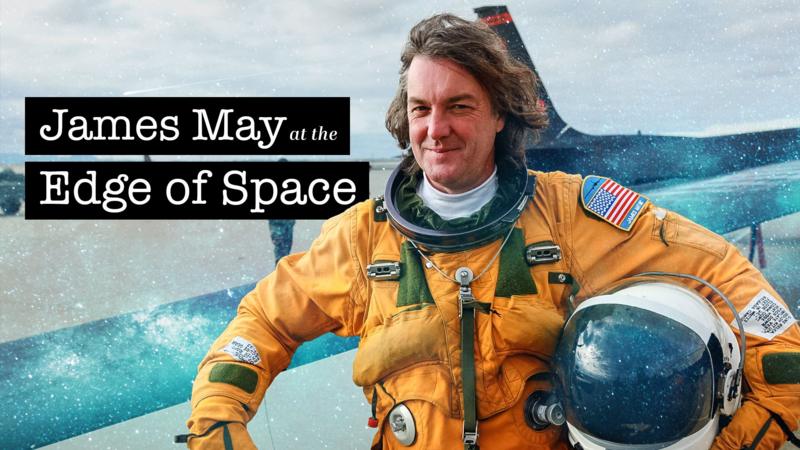
James May, a television presenter, flew 70,000 feet above Earth in a U2 spy plane. He traveled to a zone known as the "edge of space," a rare experience for civilians.
Key Facts
James May is a TV presenter known for his work on shows like "Top Gear."
May flew in a U2 spy plane, which is known for high-altitude flights.
The flight reached 70,000 feet, which is very high and close to space conditions.
This high altitude area is sometimes called the "space equivalent zone."
The flight took place on June 21, 2009.
Such flights are rare and usually not available to the general public.
Read the Original
Want the full story? Tap a source to open the original
article.
Google's new AI Overviews feature offers answers directly on the search page without users having to click on links. This change affects how online publishers earn revenue because their income relies on clicks and site visits. Some smaller publishers are already struggling due to fewer page visits.
Key Facts
Google's AI Overviews give answers without needing to click on search links.
Publishers rely on site visits to make money from ads.
Some smaller publishers are closing because of fewer clicks.
The Verge's publisher called the situation an "extinction-level event."
Google financially supports NPR, but NPR reports on Google like any other company.
The changes are part of a larger shift caused by AI in online search.
Read the Original
Want the full story? Tap a source to open the original
article.
Businesses are changing how they operate because AI chatbots are making big changes to search engines. Companies need to adapt to these new technologies to keep up.
Key Facts
AI chatbots are changing how people use the internet.
These chatbots alter the traditional way search engines work.
Companies are working quickly to adjust to these changes.
The shift affects the "search-for-clicks" model that has been common on the web for years.
Businesses need to adapt their strategies due to this shake-up.
Read the Original
Want the full story? Tap a source to open the original
article.
An engineer in Vermont, Patrick Schlott, has repurposed old pay phones to allow free calls in areas with poor cell service. He covers the costs himself and aims to provide a reliable communication option, especially as local schools plan to limit cell phone use.
Key Facts
Patrick Schlott is an electrical engineer from Vermont.
He restores old pay phones to provide free public calls.
These phones work with an internet connection and do not require coins.
Schlott funds the project himself, seeing it as a valuable community service.
Pay phones are placed in three towns in Orange County, Vermont.
The phones are popular for emergencies and everyday communication.
Vermont plans to ban cell phones in schools starting in 2026, increasing the need for alternative communication methods.
Schlott is exploring options to sustain his project as it grows, but he is committed to keeping calls free.
Read the Original
Want the full story? Tap a source to open the original
article.
The article discusses the popularity of electrolyte drinks, which are marketed as beneficial for replacing micronutrients lost through sweat. Experts say these drinks are not necessary for most people unless they are sweating heavily for long periods or losing fluids due to illness. Regular water intake and a balanced diet usually provide enough electrolytes.
Key Facts
Sports drinks like Gatorade and Powerade claim to replace electrolytes lost through sweat.
U.S. consumers spend over $10 billion annually on sports drinks.
Electrolytes are minerals like sodium, potassium, and magnesium that help with cell function.
Experts say electrolyte drinks are not needed unless experiencing heavy, prolonged sweating or rapid fluid loss from illness.
A balanced diet with fruits and vegetables provides sufficient electrolytes for most people.
The body regulates electrolytes naturally, such as through kidney function and releasing stored electrolytes from bones.
Excess electrolytes are excreted, so extra intake is often unnecessary.
Read the Original
Want the full story? Tap a source to open the original
article.
Delta Airlines is using artificial intelligence (AI) to help set ticket prices. This marks a new approach in the airline industry to adjust prices based on real-time data.
Key Facts
Delta Airlines is the first major airline to use AI for ticket pricing.
AI helps in setting fares based on real-time information.
The airline industry is trying new methods to change prices quickly.
This approach represents a shift in how airlines determine ticket costs.
Reuters reporter David Shepardson shared details about this development.
Read the Original
Want the full story? Tap a source to open the original
article.
Minnesota plans to add warning labels on social media websites to alert users about potential mental health risks. Social media companies are trying to stop the law from being enforced. New York might also pass a similar law soon.
Key Facts
Minnesota plans to add mental health warning labels on social media sites.
These warnings will appear when people in Minnesota use these sites.
The goal is to inform users about possible mental health effects.
The law is expected to be in place by next year.
Social media companies are opposing this law in court.
New York is considering a similar warning label law.
Read the Original
Want the full story? Tap a source to open the original
article.
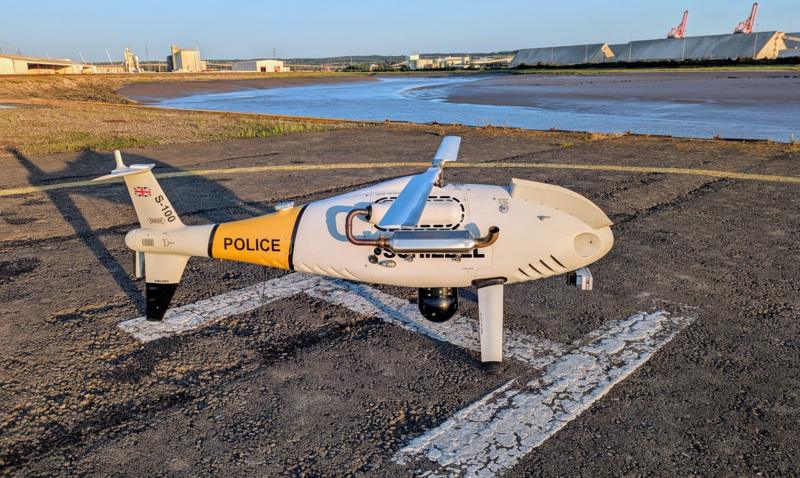
The UK has conducted its first test of an unmanned police helicopter, designed to join existing air support fleets. The new drone can fly for up to 12 hours and is intended to assist in searches for suspects and missing people while reducing emissions and noise. The test program is funded by the Home Office and involves collaboration with aviation authorities.
Key Facts
The unmanned police helicopter is larger and has a greater range than current police drones.
It can fly for up to 12 hours continuously.
The aircraft uses the same high-powered infrared cameras as manned police helicopters.
The drone is expected to be quieter and produce fewer emissions compared to traditional helicopters.
Night-time test flights are happening over the Bristol Channel.
The Home Office funds these tests, with oversight from the Civil Aviation Authority and National Air Traffic Services.
Initial applications include searching for missing persons, with trial flights continuing through October.
NPAS aims for a mixed fleet of manned and unmanned aircraft in future operations.
Read the Original
Want the full story? Tap a source to open the original
article.