Ole Bielfeldt, a 25-year-old photographer from Germany, won the 2026 Nikon Small World photomicrography contest with a close-up photo showing ink droplets from an inkjet printer on paper. He used a microscope and creative techniques to capture the fast-moving ink drops without expensive equipment or AI.
Key Facts
Ole Bielfeldt won the 2026 Nikon Small World contest among 1,802 entries from 69 countries.
He became interested in photomicrography during the COVID-19 lockdown after finding an old microscope.
Bielfeldt built a homemade adaptor to connect the microscope to a camera and taught himself the craft.
To photograph the ink drops, he modified the printer so the paper moved while the printhead stayed still.
He took the photo in a dark room with a flash to freeze the fast-moving ink droplets in mid-air.
Bielfeldt does not use artificial intelligence in his images, relying instead on traditional photography methods.
Nikon Small World is a long-running contest (since 1974) that celebrates the beauty seen through microscopes.
The contest also includes a “Small World in Motion” category for videos made with microscopes.
Read the Original
Want the full story? Tap a source to open the original
article.
BMW has announced the 2027 model of its X5 SUV in both electric and gasoline versions. The electric iX5 features a large new battery and powerful motors, while traditional gasoline and hybrid options will also be available.
Key Facts
BMW introduced the 2027 X5 SUV in multiple versions: all-electric iX5, gasoline, mild hybrid, and plug-in hybrid.
The gasoline X5 40 xDrive has a 3.0-liter turbocharged six-cylinder engine producing 394 horsepower.
The mild hybrid system adds extra torque and improves efficiency using a 48-volt battery.
The plug-in hybrid X5 50e xDrive will come with a 26.5 kWh battery and can drive about 44 miles on electric power alone.
The electric iX5 has a large 144 kWh battery made with new, taller cylindrical cells to increase energy density.
The iX5’s electric motors produce a combined 570 horsepower and 593 lb-ft of torque.
BMW plans to add hydrogen fuel cell technology to the X5 lineup in the future.
BMW uses a powertrain platform called CLAR that supports multiple types of engines, allowing customers to choose between electric and gas options.
Read the Original
Want the full story? Tap a source to open the original
article.
A group responsible for keeping global time has decided to stop adding extra seconds, called leap seconds, to clocks around the world. Instead, a new clock will be created specifically to measure time on the moon.
Key Facts
For over 50 years, timekeepers have added leap seconds to global clocks to keep them accurate.
Leap seconds are extra seconds inserted occasionally to adjust for the Earth's slowing rotation.
The decision was made to stop adding leap seconds in the future.
A new clock will be designed to work on the moon, where timekeeping needs are different.
This change aims to create a more stable and consistent time system for everyday life on Earth.
The moon’s clock will help with future lunar missions and research.
The adjustments addressed the difference between atomic time (very precise) and Earth's rotation time.
Read the Original
Want the full story? Tap a source to open the original
article.
Samsung said its new Galaxy Z Fold 8 foldable phones are selling 45% more in Europe than last year’s Galaxy Z Fold 7 models. This increase happened after Apple announced its own foldable phone, the iPhone Duo, which seems to have raised interest in foldable phones overall.
Key Facts
Samsung’s combined European sales for Galaxy Z Fold 8 and Z Fold 8 Ultra are up 45% compared to the Galaxy Z Fold 7.
Search interest for the Galaxy Z8 series in Europe spiked 460% during the week of September 6-12, when Apple announced the iPhone Duo.
Samsung’s larger foldable phones make up about 80% of its foldable sales.
Samsung noted that U.S. preorders for the Galaxy Z8 series are trending 30% higher than the previous year.
Samsung’s foldable phones have improved over time from bulky early models to more practical designs.
The iPhone Duo uses similar components as Samsung foldables, including Samsung-made displays.
The wider screen design of the Galaxy Z Fold 8 solves some usability issues, like better video watching and easier reading in portrait mode.
Foldable phones remain expensive, costing around $1,900 to $2,000, but prices are closer to traditional high-end smartphones than before.
Read the Original
Want the full story? Tap a source to open the original
article.
New security flaws were found in PHP, a programming language used by many websites, by AI technology from OpenAI. These flaws could let hackers steal data or control servers, leading to a major cybersecurity alert and temporary website shutdowns worldwide.
Key Facts
PHP is a programming language used by about 70% of websites to generate web content behind the scenes.
Two serious security bugs in PHP, called "php2shell," were found by OpenAI's AI before hackers could exploit them.
These vulnerabilities could allow attackers to take over servers or steal sensitive information like passwords.
The bugs had existed for over ten years but had not been discovered until recently, thanks to AI.
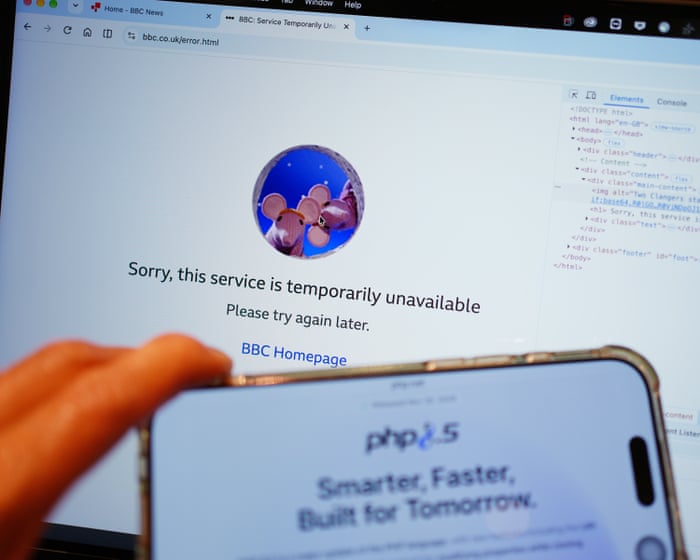
After the flaws were found, many websites in the U.S., U.K., and other countries went offline to apply security fixes.
The U.S. National Security Agency and European cybersecurity agencies issued warnings about the risks.
Security patches to fix the vulnerabilities were released on October 21, 2026, and users were urged to update immediately.
The ongoing series of cyberattacks, called "Black October," includes other serious security incidents affecting companies, schools, and banks.
Read the Original
Want the full story? Tap a source to open the original
article.
A major cyber-security flaw was found in PHP, a widely-used programming language for websites. Governments and businesses worldwide are urgently updating their systems to fix the problem and prevent possible hacks.
Key Facts
PHP is a programming language used to create dynamic web pages and runs behind many websites.
Critical security vulnerabilities were discovered in PHP, leading to precautionary system shutdowns.
Some UK government services were temporarily offline to apply security updates, but no major public services were affected.
No successful hacker attacks have been reported yet, but risks remain for months if not fixed.
The UK’s National Cyber Security Centre described the event as large and unusual but confirmed no breaches so far.
The government is working with international partners and tech companies like OpenAI to deal with the issue.
Businesses, like a car garage in Wales, experienced service disruptions because of the PHP flaws.
PHP has been in use since the early 1990s and supports many popular platforms including Wikipedia and WordPress.
Read the Original
Want the full story? Tap a source to open the original
article.
A security flaw was found in the PHP programming language, which many websites use to run their servers. Hackers tried to use this flaw to attack internet systems just before the problem was made public. Experts warned that this bug could affect up to 70% of the internet if exploited.
Key Facts
PHP is a common language used to build websites and run internet servers.
A bug (security flaw) was recently discovered in PHP.
Hackers attempted to exploit this bug before it was publicly announced.
The flaw could potentially impact about 70% of the internet.
Amazon reported the attempts to use this vulnerability.
Researchers, like John Clark Levin from Kurzweil Technologies, explained the bug’s risks.
Fixes and security updates are important to protect websites from this kind of attack.
The bug highlights the need for ongoing internet security monitoring.
Read the Original
Want the full story? Tap a source to open the original
article.
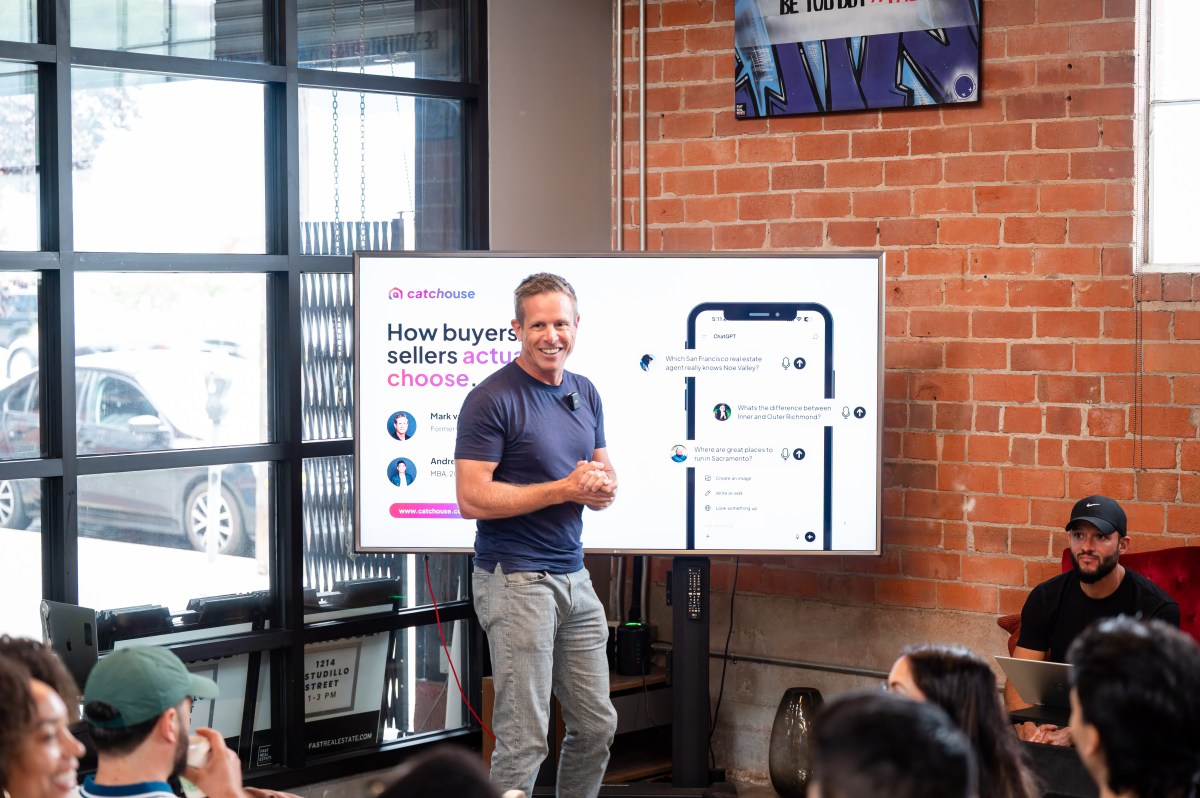
A San Francisco startup called Catchouse is creating a new platform for real estate professionals that works mainly with AI agents instead of just human clients. This platform helps realtors share data that AI can use to recommend homes, reflecting a growing trend where people use AI tools to find real estate and other local services.
Key Facts
Catchouse is a startup based in San Francisco focused on real estate technology for the AI age.
The platform is designed to be used by AI agents, which will help match clients with realtors and services.
Catchouse raised $3.5 million in a pre-seed funding round from investors like New Enterprise Associates.
Around 1,000 users are currently on Catchouse, mostly in the Bay Area, with plans to expand nationwide soon.
Over 80% of Americans are now using AI to gather information about real estate, according to Realtor.com data.
The platform aims to include other real estate-related professionals such as interior designers and mortgage brokers.
Younger homebuyers are increasingly relying on AI for home searches, changing traditional referral networks.
The National Association of Realtors sees digital tools and AI as key to the future of the real estate market.
Read the Original
Want the full story? Tap a source to open the original
article.
California has passed three new laws to regulate how companies use artificial intelligence (AI) at work. These laws limit AI-based firings, restrict AI surveillance of employees’ emotions or brain activity, and require companies to give detailed notices when AI causes job losses.
Key Facts
California Governor Gavin Newsom signed three workplace laws about AI.
SB 947 bans employers from firing or disciplining workers based only on AI decisions; a human must review these cases.
Workers must be told in writing if AI played a main role in their firing and can ask for details about the AI data.
AB 1883 blocks employers from using AI to read workers’ emotions or brain signals and imposes fines for violations.
SB 951 requires companies to disclose when layoffs happen mainly due to AI replacing jobs, starting in 2028.
Companies must provide details about the number of jobs affected, types of jobs, and technology used in layoffs.
These laws put California in line with other states like Colorado, Illinois, Maine, and New York City, which also regulate AI at work.
California’s rules aim to protect employees but do not stop companies from using AI to automate jobs.
Read the Original
Want the full story? Tap a source to open the original
article.
VBoy Color is a new emulator that adds many colors to Nintendo’s Virtual Boy games, which originally only used red shades. This emulator assigns different four-color palettes to small parts of the game screen, making the graphics clearer and more colorful.
Key Facts
Virtual Boy was a Nintendo device from the 1990s with only red and black colors.
VBoy Color adds color by using a special system that changes colors in small 8x8 tile sections.
This allows different game objects, like green pipes and gray platforms, to have distinct colors instead of all being red.
The emulator includes color packs for 15 games from the Virtual Boy library.
Users can manually edit color packs to change colors on different game screens.
VBoy Color sometimes has visual glitches like flickering or missing colors in the current beta version.
For games using 3D wireframe graphics, the emulator can add colors based on depth to improve visibility.
The emulator supports full 3D effects on VR headsets and 3D monitors.
Read the Original
Want the full story? Tap a source to open the original
article.
Amazon and other security groups have found serious security problems in PHP, a programming language used by most websites worldwide. These problems, discovered with the help of AI tools, are being quickly used by hackers, so experts are urging everyone to update their systems right away or shut them down until fixes are in place.
Key Facts
Hackers tried to exploit the PHP vulnerability four days before it was made public.
PHP is used by about 70% of all websites, including sites built on WordPress.
The problem was discovered by US cybersecurity groups Calif and Wiz, with help from AI models from OpenAI and Google.
The US National Security Agency (NSA) and UK cyber authorities warned that websites are at high risk because of this flaw.
The PHP developers released software updates to fix the vulnerability, and organizations are urged to update immediately.
If updating is not possible quickly, sites should be taken offline to prevent hacking.
The vulnerability can let hackers control a website’s server without needing a password.
The White House is reviewing how this issue might affect government and critical systems.
Read the Original
Want the full story? Tap a source to open the original
article.
Researchers used advanced artificial intelligence (AI) to find an old security weakness in PHP, a programming language used by about 70% of websites worldwide. The PHP Foundation has released fixes, and the FBI warns that unpatched sites could be hacked to steal information or spread malware.
Key Facts
PHP powers about 70% of all websites, including popular social media and government sites.
The security bug, called PHP2Shell, existed for at least 10 years but was hard to detect without AI help.
Ethical hackers in California used AI to find the bug before criminals could exploit it.
The bug could let hackers take control of website servers, steal data, or change website content.
The PHP Foundation released updates and instructions to fix the vulnerabilities.
The FBI warned that these flaws expose many websites to serious cyberattacks.
Organizations unable to patch their sites quickly are advised to temporarily take them offline.
AI speeds up both finding security problems and how fast hackers can use them, making timely patches crucial.
Read the Original
Want the full story? Tap a source to open the original
article.
This article discusses the importance of building better data centers to support the growing demand for electricity driven by artificial intelligence (AI) and other digital services. It highlights the need for thoughtful development that balances economic benefits with concerns about water use, electricity demand, and community impact.
Key Facts
Electricity consumption in the U.S. is expected to increase from 4,195 terawatt-hours in 2025 to 4,356 terawatt-hours in 2027.
Globally, energy use by data centers is projected to nearly double from 485 terawatt-hours in 2025 to 950 terawatt-hours by 2030.
Data centers support key functions like banking, logistics, communications, and public services.
Some data centers use evaporative cooling, which saves electricity but uses a lot of water.
New cooling methods like direct-to-chip liquid cooling can reduce water use and improve energy efficiency.
Recovering heat from data centers can help heat nearby buildings or support farming like greenhouses or aquaculture.
The biggest challenge for data center growth is providing enough electricity, as the power grid is not expanding fast enough.
Responsible data center projects can bring local benefits, such as new roads, schools, and job opportunities.
Read the Original
Want the full story? Tap a source to open the original
article.
The third season of the TV series "The Rings of Power" will premiere on Prime Video on November 11, 2026. The story focuses on the rise of Sauron and the struggle of elves, dwarves, men, and wizards to stop him from conquering Middle-earth by creating the One Ring.
Key Facts
"The Rings of Power" season 3 is set seven years after season 2.
Sauron's armies have conquered much of Middle-earth, with only a few areas still standing against him.
The new season shows the war at its peak, especially focused on the tower of Barad-dûr where Sauron works to create the One Ring.
New characters include Celeborn (Galadriel’s husband), Khamul the Easterling, Thrain (brother to King Durin IV), Anarion (youngest son of Elendil), and an Orc named Marnukh.
Simon Pegg will voice the character called Balrog, a fiery ancient creature.
The first four episodes will release on November 11, with more episodes releasing November 18 and 25.
Prime Video had invested heavily in the series, securing rights from the Tolkien estate and planning multiple seasons upfront.
Read the Original
Want the full story? Tap a source to open the original
article.
Many Europeans fall victim to online scams that use fake identities and tricks. New technology like artificial intelligence (AI) helps scammers copy voices and images, but it also helps create better ways to detect and stop these scams.
Key Facts
One in four Europeans has experienced an online scam.
Scams include identity fraud and fake romance attacks.
AI makes it easier for scammers to copy voices and images to impersonate people.
The EU is introducing a digital wallet to help protect personal data online.
AI is also used to develop better tools for spotting patterns in fraud and organized crime.
People should be cautious about clicking links that lead away from trusted platforms.
Companies and governments can work together to protect users from online scams.
Checking suspicious activity with platform support can prevent scams.
Read the Original
Want the full story? Tap a source to open the original
article.
General Motors (GM) is continuing to focus on electric vehicles (EVs), self-driving technology, and improving car quality. At their recent GM Forward event, they announced expanded availability of their Super Cruise hands-free driving system and introduced OnStar AI, a digital assistant designed to make driving easier and more convenient.
Key Facts
GM is expanding its Super Cruise technology to nearly all vehicle models, including trucks and crossovers.
Super Cruise allows hands-off, eyes-off driving on certain roads, with testing covering 1 million miles each month.
OnStar AI is a new smart assistant that learns drivers’ habits and helps with tasks like ordering food or understanding car alerts.
The AI assistant works closely with the car and can process information locally, reducing reliance on internet connections.
GM’s vehicles can share crowd-sourced data to warn drivers of road conditions like icy patches or traffic problems.
OnStar AI can coordinate tasks between multiple GM vehicles in one household, such as deciding who is closer to pick up something.
GM aims to keep customers within its technology ecosystem, offering integrated and convenient vehicle features.
The company rejects the idea that the U.S. is falling behind in EV adoption, emphasizing ongoing investments in electric and autonomous vehicle tech.
Read the Original
Want the full story? Tap a source to open the original
article.
An AI system found security weaknesses in PHP, a widely used programming language that supports around 70% of websites worldwide. Governments and companies have been rushing to fix these problems to prevent hackers from exploiting them and causing website outages or data theft.
Key Facts
The vulnerabilities affect PHP, which is used by about 70% of websites globally.
The FBI’s cyber division warned that hackers could use these weaknesses to run harmful code remotely.
Such attacks could expose private data and harm computer networks.
Many government websites showed limited service or outages as fixes were applied.
Operators were advised to take websites offline if they could not immediately update the software.
Governments and companies worked overnight to patch the vulnerabilities.
The discovery was aided by artificial intelligence technology.
Read the Original
Want the full story? Tap a source to open the original
article.
A serious flaw was found in PHP, a computer language used by about 70% of websites globally. This weakness led to millions of attempts by hackers to attack websites, causing many governments and companies to temporarily take their sites offline to fix the problem.
Key Facts
The PHP flaw was discovered recently and affects many websites worldwide.
The US National Security Agency warned the flaw could let attackers control web servers and steal data.
Around 32 UK government services were taken offline as a safety measure.
No major public services have been hacked, but some were temporarily offline while being fixed.
Millions of attack attempts were detected shortly after the flaw became public.
The vulnerability has been called the most serious internet software flaw in five years.
Cybersecurity companies noticed attackers trying to exploit the flaw even before the patch was released.
The flaw can allow hackers to use websites’ resources for attacks or unauthorized activities like crypto mining.
Read the Original
Want the full story? Tap a source to open the original
article.
A serious security problem was found in PHP, a programming language used to build many websites. The issue lets hackers run harmful code on websites, potentially stealing personal information. Fixes were released quickly after details leaked online, but experts warn many sites could still be at risk.
Key Facts
PHP is a programming language used by over 70% of websites, including government and online shops.
Two critical security flaws, nicknamed PHP2Shell, were found using artificial intelligence by two cybersecurity companies.
The flaws allow hackers to run code on websites and access sensitive data like passwords from server memory.
These vulnerabilities have been in PHP code for more than 10 years before being discovered.
Fixes were released urgently and users are strongly advised to update PHP immediately.
Attempted hacking was detected before the security problems were publicly announced.
The affected PHP versions include all releases from 5.4 onward, covering over a decade of PHP software.
The flaws scored 9.2 out of 10 on the severity scale, meaning they are very dangerous.
Read the Original
Want the full story? Tap a source to open the original
article.
The TV show *The Audacity* is a dark comedy that looks at the world of powerful tech CEOs, especially those involved with artificial intelligence (AI). It follows Duncan Park, a wealthy but morally flawed tech founder, and criticizes the tech industry’s culture, lack of diversity, and environmental impact.
Key Facts
*The Audacity* is created by Jonathan Glatzer, a writer who previously worked on the show *Succession*.
The show’s tagline is “Move fast and break people,” a take on Facebook’s old motto “Move fast and break things.”
Duncan Park, the main character, is a half-billionaire tech CEO who wants to become a billionaire and be seen as god-like.
The show uses strong language and satire to highlight the tech world’s arrogance and problems.
It emphasizes the mostly male, white or South Asian makeup of Silicon Valley and how hiring is often based on biased algorithms favoring people from certain universities.
The environmental damage caused by AI data centers is a theme, showing how tech ambitions can harm the planet.
Zach Galifianakis plays Carl Bardolph, a wealthy tech genius who disrupts the industry out of boredom and represents the lack of empathy among tech leaders.
The show critiques real tech figures’ personalities and the industry’s cultural and emotional issues.
Read the Original
Want the full story? Tap a source to open the original
article.