Fact-first summaries of the news — stay informed, stay grounded.
Your favorite news sources, one calm feed — fact-first summaries that always link to the
original story. No outrage bait, and we tell you when you're caught up. How it works
Technology News
Breaking news and analysis from the world of technology
NASA’s Perseverance rover on Mars has driven over 45 kilometers, breaking the previous record held by the Opportunity rover. This success is mainly due to Perseverance’s advanced self-driving system that uses cameras and onboard computers to choose safe paths without needing constant help from Earth.
Key Facts
Perseverance landed on Mars in February 2021.
It has driven more than 45.16 km (28.06 miles) on the Martian surface.
This breaks the previous record held by the Opportunity rover, which stopped working in 2018.
About 90% of Perseverance’s driving is autonomous, meaning it drives itself using onboard technology.
The rover uses cameras and a modern onboard computer to scan the terrain and safely navigate around obstacles.
Its top speed is about 150 meters per hour.
Perseverance landed in Jezero Crater to study ancient rocks up to 4 billion years old.
The rover’s self-driving ability helps scientists explore more locations faster and gather more scientific data.
Read the Original
Want the full story? Tap a source to open the original
article.
Google’s DeepMind created an AI model called WeatherNext that predicts hurricanes more accurately and earlier than current systems. The model gave forecasters about one extra day of warning time, which helped prepare for Hurricane Melissa’s impact on Jamaica.
Key Facts
WeatherNext predicted Hurricane Melissa would hit Jamaica as a strong Category 5 hurricane five days before it made landfall.
The AI model provides hurricane forecasts with one more day of lead time than existing weather models.
This extra day of warning helps improve emergency responses like evacuations and supply preparations.
Accurate forecasting of storm intensity and path is difficult because it needs both global weather data and detailed local atmospheric conditions.
WeatherNext uses machine learning trained on a lot of general weather data to improve predictions of rare cyclone events.
The model showed very strong results in tests with past data before being used in real time.
Forecasters and researchers were surprised by how well the AI predicted storms using lower-resolution data than usual.
This AI advance could improve how quickly and accurately communities prepare for dangerous hurricanes.
Read the Original
Want the full story? Tap a source to open the original
article.
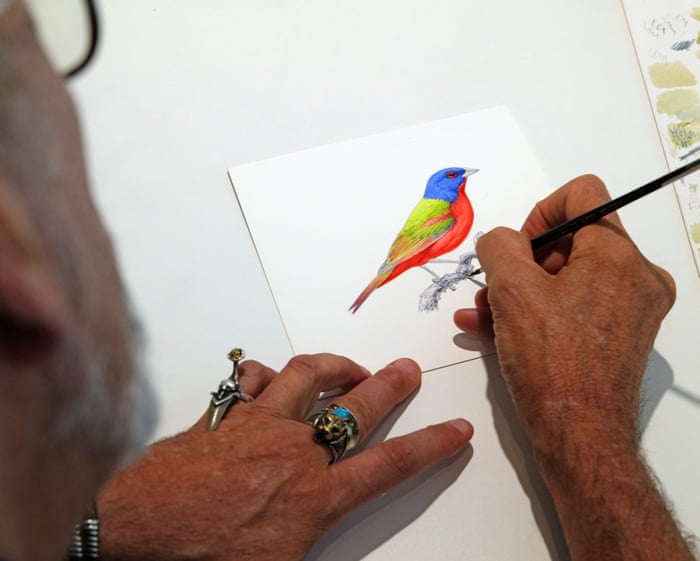
Keith Hansen is creating hand-painted illustrations of about 1,000 bird species found in the US and Canada for an app called Flock. The app encourages people to engage with birdwatching and nature, using game-like features and social networking to promote conservation.
Key Facts
Keith Hansen is an artist known for detailed bird paintings.
He is working on a collection with nearly 1,000 bird species from the US and Canada.
The artwork will be used in the app named Flock.
Flock is designed to get people outside to enjoy birdwatching rather than staying glued to their phones.
The app combines elements of gaming and social networking.
The creators of Flock, Adam Donkin and Bob Stevenson, have backgrounds in tech and gaming design.
Donkin worked on the design of Kindle e-readers at Amazon.
Stevenson has extensive experience in video game production and design.
All three share a strong passion for birds and birdwatching.
Flock aims to build a community interested in bird conservation through engaging technology.
Read the Original
Want the full story? Tap a source to open the original
article.
The article discusses new artificial intelligence (AI) products aimed at helping parents by making childcare easier. These include AI-generated podcasts about children’s activities and devices that monitor babies’ sleep and health, but they come with high costs and uncertain benefits.
Key Facts
Parenting costs a lot of money for things like food, clothes, and school supplies.
Some tech companies offer AI tools to assist parents, such as podcasts summarizing kids’ daily activities.
Nanit sells a baby monitor that tracks sleep, breathing, and eye movement for $474 plus a subscription fee.
Owlet sells a sock with a pulse oximeter to monitor a baby’s oxygen levels for $300.
Huckleberry offers an app with nap time predictions and a chatbot, with some paid features.
These products claim to improve child safety and sleep patterns, offering peace of mind.
The author questions whether expensive AI tools are genuinely necessary for parenting or worth the cost.
The devices are mainly marketed to parents who want to optimize every aspect of their lives.
Read the Original
Want the full story? Tap a source to open the original
article.
Vladimir Duthiers interviews Sean Evans, the host of the online show "Hot Ones." On the show, celebrities answer questions while eating chicken wings that become spicier with each one.
Key Facts
"Hot Ones" is an online show hosted by Sean Evans.
Celebrities are guests on the show.
Guests answer questions during the show.
They eat chicken wings with increasing levels of spiciness.
The interview was featured on CBS News.
The show combines entertainment with a spicy food challenge.
The event was covered in a short video segment.
Read the Original
Want the full story? Tap a source to open the original
article.
Scientists at the University of Delaware are attaching small electronic sensors to sharks off the US East Coast. These sensors collect data on ocean temperature, salt levels, and depth, which could help improve hurricane forecasts before storms reach land.
Key Facts
Researchers use CTD tags that measure water conductivity (related to salt levels), temperature, and depth.
Sharks swim and dive while carrying these tags, sending data to satellites when they surface.
The data focuses on the ocean’s upper mixed layer, which affects hurricane strength.
Species tagged include shortfin mako sharks, blue sharks, smooth hammerheads, and juvenile great white sharks.
Tagging happens offshore between 50 to 65 kilometers from the coast using baited lines.
The tagging process takes under five minutes and follows animal care guidelines to reduce stress on sharks.
Unlike past shark tracking that only monitored movement, this study collects ocean condition data for climate research.
Scientists hope this method provides real-time ocean data to improve hurricane prediction models.
Read the Original
Want the full story? Tap a source to open the original
article.
The article describes how Instagram’s algorithm shows users unusual videos, such as women caring for lifelike baby dolls called reborn babies. These videos serve as a source of comfort for some viewers, while also raising questions about how social media makes people feel involved just by watching content.
Key Facts
Instagram’s algorithm suggests videos that can be strange or unexpected, like adults caring for very realistic baby dolls.
These reborn baby videos show women feeding, dressing, and nurturing the dolls, often in detailed, cozy home settings.
People watching the videos often respond with affection and appreciation for the care shown.
Some research indicates that reborn dolls help collectors find comfort and community.
Doll therapy using similar dolls has helped some people with dementia, but this is different from the Instagram culture.
The author notices how social media makes watching feel like doing something helpful, even when it is only passive viewing.
This feeling can become unsettling when the videos show real suffering or people asking for urgent help.
The article explores how social media confuses viewers by mixing entertainment with real-world issues.
Read the Original
Want the full story? Tap a source to open the original
article.
Children in the UK have reported a rise in fake explicit images of themselves created using artificial intelligence (AI). Groups that help remove these images warn that AI tools make it easier to create harmful content, and they urge tech companies to add better safety protections.
Key Facts
In the first six months of 2026, 420 reports were made by children about fake explicit images of themselves, surpassing the total for 2025.
The Report Remove service helps block and take down manipulated intimate images from the internet.
Many of the reported images met the legal threshold for child sexual abuse material (CSAM) in the UK.
The Internet Watch Foundation (IWF) and NSPCC run Report Remove and warn the rise is linked to AI making deepfake creation easier.
AI-generated CSAM is illegal in the UK, including creating or sharing AI models designed for abuse material.
Victims of deepfake images have sometimes been targeted for sextortion, where the abuser demands money or more explicit images.
Experts advise parents to keep children's photos private online to reduce the risk of misuse.
Tech companies are called on to add strong protections in AI tools to prevent the creation of harmful fake images.
Read the Original
Want the full story? Tap a source to open the original
article.
A New Mexico judge ordered Meta to pay $567 million and to add new safety measures on Facebook and Instagram to protect children’s mental health. The ruling includes limits on how long under-18 users can spend on the platforms and requires warnings and AI chatbot controls. Meta plans to appeal the decision.
Key Facts
The judge compared Meta’s social media platforms to factories that produce harmful effects on children’s mental health.
Meta was fined $567 million in addition to a previous $375 million penalty for harming children and hiding sexual exploitation risks.
New safety steps include a 90-hour monthly limit for users under 18, AI chatbot restrictions, and mandatory warnings on Meta’s platforms.
The new rules currently apply only to users in New Mexico, and Meta has no set deadline to implement them.
The court ordered Meta to improve age verification methods but federal law limits how much personal data can be collected from children under 13.
Meta said it works to keep users safe and disagrees with claims that it failed to protect teens.
Identifying users in New Mexico could be done through users’ internet addresses, but this method is not perfect.
Advocates hope this ruling will influence courts and regulators in other places to enforce stronger protections for kids online.
Read the Original
Want the full story? Tap a source to open the original
article.
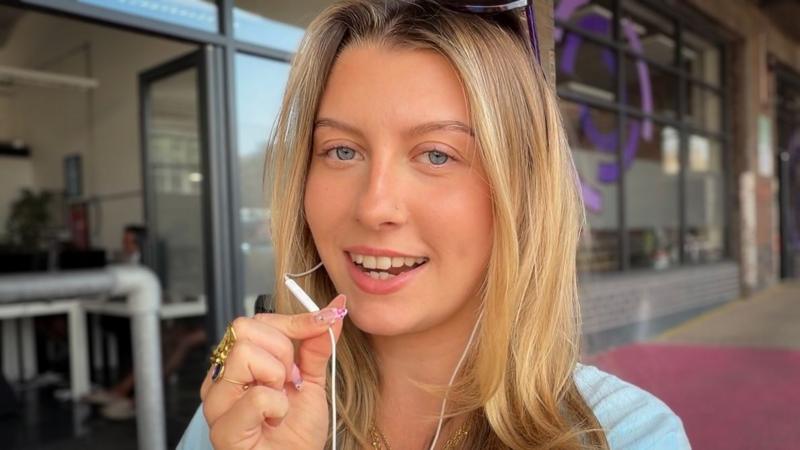
Old technology like digital cameras and wired earphones is becoming popular again. Many people prefer them because they feel more real or nostalgic compared to modern smartphones and wireless devices.
Key Facts
Digital cameras were very popular in the late 1990s and early 2000s before smartphones became common.
There are currently 42 million active film camera users worldwide, with many aged 18–30.
People say digital cameras produce photos with a different quality that phones cannot match.
On eBay UK, sales of iPods and Walkman music players increased by nearly 50% in 2025.
Searches for iPod minis on eBay grew by 48% over the last year.
Some users enjoy older MP3 players because they provide music without phone distractions like notifications.
Nostalgia and a desire for simpler technology drive the renewed interest in these older devices.
Social media trends have helped popularize digital cameras and early MP3 players among younger users.
Read the Original
Want the full story? Tap a source to open the original
article.
A judge imposed a large fine on Meta for harm caused to children’s mental health by its social media apps. Dr. Megan Moreno from the University of Wisconsin discussed how platforms like Instagram and Facebook might improve support for young users’ mental well-being.
Key Facts
Meta faces a nearly billion-dollar penalty related to the impact of its apps on children’s mental health.
The penalty was decided by a judge who ruled that Meta’s social media platforms harm kids’ mental health.
The discussion involves changes to Instagram and Facebook to better protect young users.
Dr. Megan Moreno, a professor at the University of Wisconsin, spoke about this issue with ABC News.
The focus is on how social media companies can take steps to support children’s mental health.
Mental health concerns highlight risks from social media use by children and teens.
Meta, the company behind Facebook and Instagram, is reviewing how to adjust these apps after the ruling.
Read the Original
Want the full story? Tap a source to open the original
article.
Europe’s free Copernicus Browser now includes a new wildfire visualization layer for satellite images from the Sentinel-2 mission. This layer shows active fires, burning vegetation, and burned areas clearly, making it easier for anyone to track wildfires using detailed satellite data.
Key Facts
The Copernicus Browser gives free access to satellite images from the European Space Agency’s Sentinel satellites.
Sentinel-2 satellites provide high-resolution images up to 10 meters in size, useful for monitoring wildfires.
A new wildfire layer was added to the Copernicus Browser on August 4, showing fires in white or yellow, burning vegetation in red, and burned land in brown or black.
This visualization is based on a JavaScript script created by remote sensing expert Pierre Markuse.
The script combines different parts of the light spectrum to highlight fires and changes in vegetation.
The integration of this script as a default option in the browser was promoted by Simon Proud, a Sentinel-2 mission scientist.
NASA also offers wildfire monitoring tools, but Sentinel-2 provides higher image detail, updated every few days.
Wildfires continue to be a serious issue worldwide, made worse by climate change, affecting places like the US, Canada, France, and Spain.
Read the Original
Want the full story? Tap a source to open the original
article.
A New Mexico court ruled that Meta, the company that owns Facebook and Instagram, must pay $567 million and make changes to protect users under 18. The court found that Meta harmed children’s mental health and did not properly address child sexual exploitation on its platforms.
Key Facts
Meta faces a total judgment of $942 million after two phases of trial.
The judge ordered Meta to reduce addictive features, improve age verification, and prevent child sexual abuse online.
Meta must add informational banners to explain protection tools and display them regularly.
The ruling includes limiting how chatbots interact with children and capping hours spent on Meta platforms for users under 17.
$420 million of the money will go to treatment for young people, with the rest for prevention and awareness efforts in New Mexico.
Meta plans to appeal the ruling and may delay payments during this process.
The case highlights concerns about Big Tech’s responsibility for protecting children online.
New Mexico’s attorney general, Raúl Torrez, hopes this ruling starts a national conversation about child safety in digital spaces.
Read the Original
Want the full story? Tap a source to open the original
article.
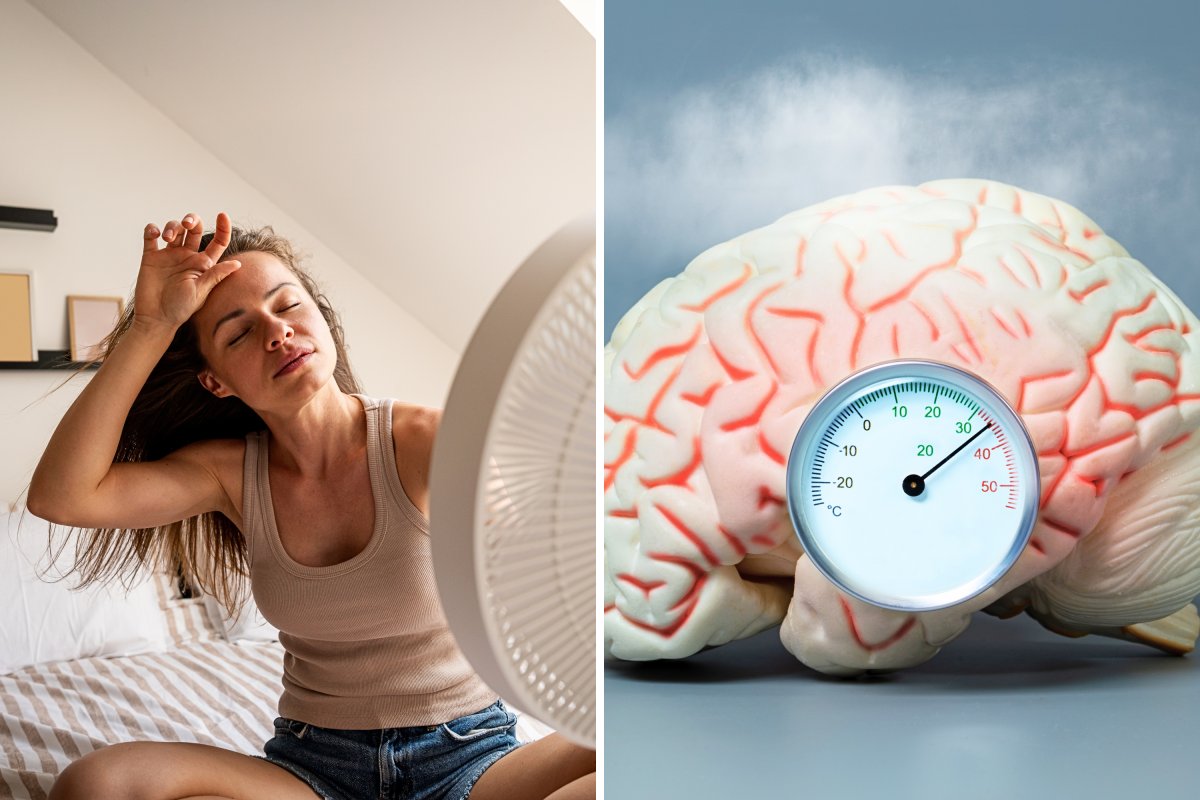
Scientists studied air quality in bedrooms and found that most have unsafe carbon dioxide (CO2) levels overnight, even though people think the air is fine. Warmer temperatures and poor ventilation trap heat and moisture, which can harm sleep quality and health over time.
Key Facts
In a 2015 study in Scotland, over 80% of bedrooms had CO2 levels above safe limits during winter nights.
More than 90% of occupants believed their bedroom air was fine despite high CO2.
Rising global temperatures and heatwaves worsen trapped heat and poor air quality, especially where air conditioning is rare.
Bedrooms with curtains, carpets, and poor airflow hold more heat and moisture overnight.
High CO2 levels signal stale air and reduced air exchange, which can lower sleep quality and mental performance.
A 2022 study showed cognitive problems at 1,800 ppm CO2, but sleep quality declines at lower levels.
Experts suggest airing rooms regularly, using vents properly, and considering dehumidifiers to improve bedroom air.
Ideal bedroom temperature is about 65–67°F, but most people’s bedrooms are warmer, causing disrupted sleep.
Read the Original
Want the full story? Tap a source to open the original
article.
Scientists have found ways to make the instruments on the Voyager 2 spacecraft last longer. Voyager 2, launched in 1977, is now traveling beyond our solar system into interstellar space.
Key Facts
Voyager 2 was launched in 1977.
It has passed the edge of our solar system into interstellar space.
The spacecraft still has working scientific instruments.
Researchers have taken steps to extend the working life of these instruments.
Extending instrument life helps gather more data from deep space over time.
Voyager 2 is one of the longest-running space missions.
Read the Original
Want the full story? Tap a source to open the original
article.
Bethesda has released a new campaign chapter called “Dawn of the Machine” for the 30th anniversary of the original Quake game. This free update adds 19 new levels with new gameplay features and is available on multiple platforms for players who own Quake.
Key Facts
The update celebrates 30 years since the launch of the original Quake by id Software.
The new campaign is titled “Dawn of the Machine.”
It was developed by MachineGames in collaboration with id Software.
The update adds 19 new levels with new mechanics like time loops and teleportation effects.
New music, enemy types, and weapon variants are included in the update.
The levels were built using Trenchbloom, a modern map editor that helps create more complex maps.
The update is free for anyone who owns Quake on Steam, PlayStation, Xbox, and Nintendo consoles.
MachineGames is mainly responsible for new Quake content and has been less affected by recent layoffs at id Software and Xbox.
Read the Original
Want the full story? Tap a source to open the original
article.
OpenAI plans to release a new smart speaker that could cost between $300 and $400. The speaker will use AI technology similar to ChatGPT, have moving parts and lights to appear more lifelike, and act like a smartphone replacement by helping with various tasks and controlling smart home devices.
Key Facts
OpenAI’s smart speaker may cost around $300 to $400.
The device will be shaped like a doughnut, about the size of a hockey puck.
It will include moving parts and lights to make it seem more alive when responding.
The speaker will use advanced AI models similar to ChatGPT’s voice mode.
It will be battery-powered and capable of controlling smart home devices.
OpenAI designed the speaker with LoveFrom, a design studio by Jony Ive.
Apple is suing OpenAI, but OpenAI says the speaker does not use Apple’s trade secrets.
The speaker is expected to launch in 2027, with a reveal planned for this year.
OpenAI currently makes one other gadget, the Codex Micro keyboard.
This will be a high-end smart speaker, more expensive than most current models on the market.
Read the Original
Want the full story? Tap a source to open the original
article.
Scientists studied how snails make different types of slime with unique properties. They found that collagen protein and calcium work together to change the slime’s strength and stickiness for different uses.
Key Facts
Snail slime is mostly water, but proteins called mucins and carbohydrates make it slimy.
Snails produce different mucus types for protecting skin, sticking to surfaces, moving easily, and defending against predators.
The grove snail (Cepaea nemoralis) makes five kinds of mucus with distinct roles, including a winter seal and defense slime.
Researchers used various tools like X-rays and protein analysis to study the mucus.
Collagen IV is the main protein in all mucus types, with the amount changing its properties.
Calcium is added to the slime to help strengthen it by creating links between proteins.
The defensive mucus types had the most proteins to make them tougher.
Understanding snail slime could lead to new uses in medicine and skin care.
Read the Original
Want the full story? Tap a source to open the original
article.
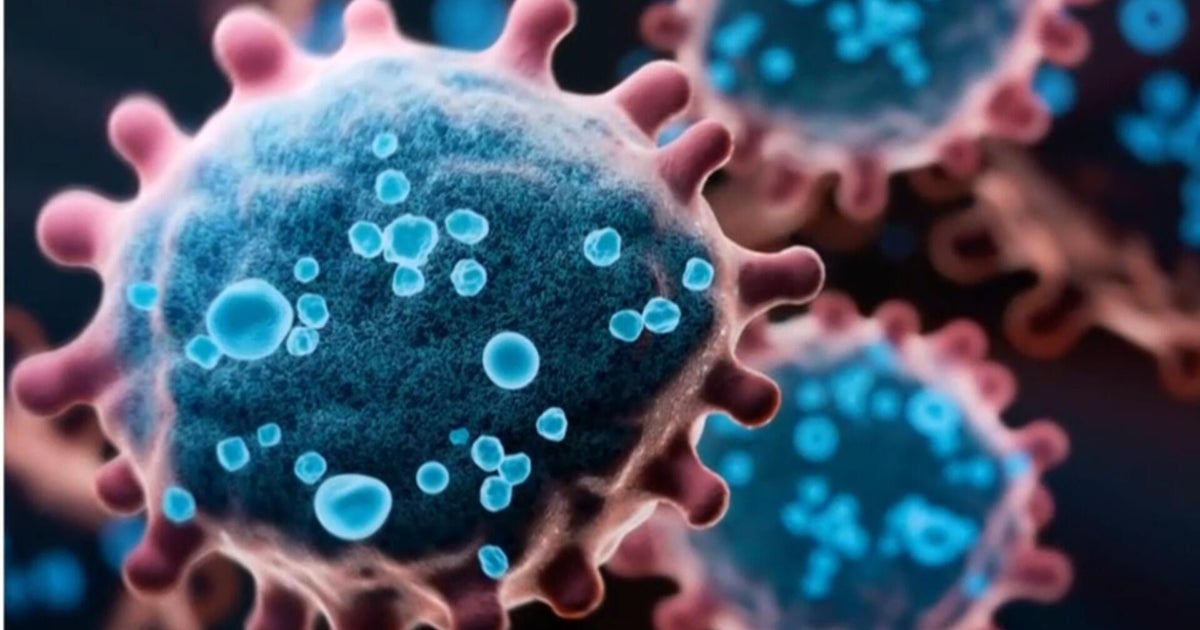
Scientists at Stanford University used artificial intelligence (AI) to create new viruses in a laboratory setting. This development has raised concerns about how AI might affect safety and security in biology.
Key Facts
Researchers at Stanford University used AI to design new viruses.
The viruses were created in a controlled lab environment.
This breakthrough shows AI can assist in biological research.
There are worries that this technology could be misused.
Experts are discussing how to manage future risks to biosecurity.
Biosecurity means protecting people from harmful biological threats.
The study highlights the growing role of AI in science and health.
Read the Original
Want the full story? Tap a source to open the original
article.
The Federal Aviation Administration (FAA) has ordered inspections of 471 Boeing 737 Max airplanes after reports of cracks in older Boeing 737 models. These inspections will begin on September 10 to ensure the planes are safe to fly.
Key Facts
The FAA’s rule applies to Boeing 737 Max models 737-8, 737-9, and 737-8200.
The order follows reports of cracks in metal bear straps on older Boeing 737 planes.
Bear straps are metal reinforcements near doors and emergency exits on airplanes.
No cracks have been found yet on the 737 Max planes but they have a similar design to older models.
Boeing has been aware of the issue and has been working with operators for six years.
Inspection instructions for older models were sent by Boeing in 2019 and made mandatory by the FAA in 2021.
The FAA’s recent directive now also requires inspections on the 737 Max planes starting September 10.
Boeing faced major safety and production problems after two deadly crashes involving 737 Max 8 planes in 2018 and 2019.
Read the Original
Want the full story? Tap a source to open the original
article.