OpenAI's latest AI models will soon be available through Google Cloud services and Antigravity, a coding tool powered by Google. This partnership adds OpenAI’s GPT 6 and 6.1 models to Google’s "Model Garden," giving businesses and developers more options for AI use.
Key Facts
OpenAI’s newest GPT models (versions 6 and 6.1) will launch on Google Cloud.
These models will be accessible in Google’s Model Garden alongside Google’s own Gemini, Anthropic’s Claude, and other open models.
Google Cloud customers can run OpenAI models fully on Google’s infrastructure, with payment handled via Google Cloud Marketplace.
OpenAI models are available in private preview now for select enterprise clients, with early access requests open.
The GPT models will also appear in Google’s Antigravity coding tool, which currently supports Google’s Gemini and Anthropic’s Claude AI.
Google’s system can switch between different AI models based on speed, performance, and cost efficiency.
Microsoft remains OpenAI’s main cloud partner, but this deal extends OpenAI model availability to Google Cloud users.
These additions offer more AI choices for both large businesses and individual developers using Google’s AI services.
Read the Original
Want the full story? Tap a source to open the original
article.
The National Security Agency (NSA) warned organizations to quickly fix two security problems found in the PHP programming language. These problems were discovered using artificial intelligence, and the NSA says systems must be updated or taken offline to stay safe.
Key Facts
The NSA issued a security warning on Wednesday.
Artificial intelligence identified two critical vulnerabilities in PHP.
PHP is a widely used programming language for websites and systems.
Organizations are told to patch (fix) these security flaws immediately.
If they cannot fix the flaws right away, they should take their affected systems offline.
The warning aims to prevent hackers from exploiting these vulnerabilities.
The NSA emphasized that these updates are effective immediately.
The agency’s notice is a part of ongoing efforts to improve cybersecurity.
Read the Original
Want the full story? Tap a source to open the original
article.
A New Mexico judge ordered Meta to pay $25 billion after a jury decided the company misled users about its privacy and content rules. The decision comes from a case involving Meta’s handling of user data related to the Cambridge Analytica scandal.
Key Facts
The judge ordered Meta to pay $25 billion in damages.
The case was filed in New Mexico.
A jury found Meta responsible for misleading users on privacy and content policies.
The case is connected to the Cambridge Analytica data scandal.
New Mexico Attorney General Raúl Torrez announced the order.
The lawsuit claims Meta violated user trust by not protecting their data properly.
This is one of the largest state-level penalties against a tech company for privacy issues.
Read the Original
Want the full story? Tap a source to open the original
article.
A judge in New Mexico ordered Meta, the company behind Facebook, Instagram, and WhatsApp, to pay a $25 billion fine. The court found that Meta lied for years about how it handled Facebook users' data, misleading the public about its data privacy practices.
Key Facts
Meta was fined $25 billion by a federal judge in New Mexico.
The fine follows a two-week trial that found Meta intentionally lied about Facebook user data.
The judge said these lies went to the core of Meta's business practices.
The original penalty was calculated as $219 billion but was reduced to $25 billion.
Communications from top executives, including CEO Mark Zuckerberg, were found to be designed to mislead.
Meta has faced multiple fines and settlements this year, including an $18 billion deal with California.
Meta has not yet responded publicly to this new fine.
Read the Original
Want the full story? Tap a source to open the original
article.
A study from Northeastern University found that smart TVs made by Samsung, Vizio, and Roku still send data to tracking services even after users turn off tracking in the TV settings. This data helps measure what shows people watch and deliver ads, but the ongoing data sending raises privacy concerns.
Key Facts
The research tested 12 smart TVs from 10 brands, covering about 95% of the TVs used in the U.S.
Automatic content recognition (ACR) sends screenshots or audio clips from the TV to outside servers.
Samsung, Vizio, and Roku TVs sent tracking data even after users opted out in settings.
Roku’s tracking during opt-out happened only when using its own streaming app, The Roku Channel.
Samsung and Vizio TVs showed tracking behavior in more situations beyond just the streaming app.
The researchers could not see exactly what data was sent because it was encrypted.
The continued sending of tracking data after opting out is described as “suspicious” and a possible privacy issue.
The research methods can be used to test other TVs and tracking systems in the future.
Read the Original
Want the full story? Tap a source to open the original
article.
Cybersecurity firms used artificial intelligence to find serious security problems in PHP, a programming language used by about 70% of websites worldwide. Many government and company websites temporarily shut down to protect themselves, while PHP programmers quickly released a fix to close the security gaps.
Key Facts
AI tools from OpenAI discovered two major security flaws in PHP in August 2026.
PHP runs about 70% of the world’s websites, including government, news, and online stores.
The flaws could allow hackers to access servers without usernames or passwords and do damage.
After the flaws were made public, millions of hacking attempts targeted vulnerable websites.
Websites that run PHP on their own servers were most at risk and some shut down temporarily.
The US National Security Agency urged organizations to update their PHP software right away.
The PHP Foundation said this was the worst security problem PHP has had in over 10 years.
This event shows how AI can find major security issues that humans missed for a long time.
Read the Original
Want the full story? Tap a source to open the original
article.
Just Eat, an online food delivery service, apologized after using AI to create images for some menu items, which resulted in strange and incorrect pictures. The company is removing the faulty images and will stop making AI-generated pictures until the technology improves.
Key Facts
Just Eat tested AI-generated pictures to show food items without photos.
The AI created unusual images, like bacon and eggs in a glass of cola and chips inside muffins.
These mistakes happened because the AI misinterpreted words like "soda" (a type of bread) as soda (a fizzy drink).
Just Eat is working to remove the wrong images and pause AI image creation.
The company normally uses professional local photographers for restaurant photos.
AI errors show the challenges of using this technology to understand specific food terms and regional dishes.
Users on social media shared many funny examples of AI-generated food pictures.
Some people worry AI images might make customers expect something that differs from the real meal.
Read the Original
Want the full story? Tap a source to open the original
article.
SpaceX plans to catch both stages of its Starship rocket on the next test flight, aiming for a launch in November from South Texas. The company also expects to increase Starship launches to once a week in early 2027, focusing on making the rocket fully reusable and preparing for refueling tests needed for NASA moon missions.
Key Facts
SpaceX will try to catch both the Super Heavy booster and Starship upper stage during the 15th test flight.
The launch and catch will happen at SpaceX’s Starbase in South Texas.
The company is working with the FAA to get approval for returning the rocket over land, including northern Mexico.
SpaceX plans to refly a Starship upper stage early next year and complete a Starship-to-Starship refueling test in early 2027.
Refueling in orbit is critical for NASA’s Artemis Program, which aims to land astronauts on the Moon.
Elon Musk expects to reach weekly Starship launches by the first half of 2027 and twice a week in the second half.
The goal is to make Starship fully reusable, allowing rapid launches with little or no refurbishment between flights.
Achieving full reuse of an orbital rocket would be a first in spaceflight.
Read the Original
Want the full story? Tap a source to open the original
article.
A serious security problem was found in PHP, a programming language used by about 70% of websites, including WordPress. The PHP team released an urgent update to fix two major weaknesses that could let attackers take control of internet servers, and they ask everyone using PHP to update their systems right away.
Key Facts
PHP is a programming language that runs nearly 70% of all websites and web applications.
Two critical security flaws were discovered in PHP, rated 9.2 out of 10 in danger.
These flaws could allow attackers to run harmful code on servers without needing permission.
The PHP team released emergency updates to fix these vulnerabilities and strongly advise immediate installation.
The UK’s National Cyber Security Centre warns organizations to update quickly or take affected systems offline.
OpenAI’s artificial intelligence helped find these security problems before hackers could use them.
Temporary fixes exist but only a full update can fully protect servers.
Cybersecurity firms warn that websites running PHP should prepare for urgent updates to avoid attacks.
Read the Original
Want the full story? Tap a source to open the original
article.
A new study shows that artificial intelligence (AI) tools used in emergency rooms to decide which patients get care first might be influenced by patients’ medical records in a way that lowers the priority of higher-risk patients. The study found that information like frequent ER visits or mental health histories could make AI less likely to prioritize patients who later became sicker.
Key Facts
AI systems are being designed to help Emergency Departments decide patient priority.
Researchers tested AI models from Google, Alibaba, and DeepSeek using patient records.
The study focused on whether details that might cause stigma (like psychiatric emergencies or substance use) affect AI decisions.
Patients with frequent ER visits or psychiatric history were sometimes deprioritized by the AI, even if they were at higher risk.
The AI models could change which patient they prioritized based on non-emergency details in the records.
The study did not test real AI decision-making in live hospitals but used controlled experiments.
Findings show AI does not automatically remove bias in medical decision-making.
The research raises concerns about fairness for patients with stigmatizing medical histories during ER triage.
Read the Original
Want the full story? Tap a source to open the original
article.
Google is facing criticism from some employees who are quitting because the company is using its artificial intelligence (AI) technology for military purposes. Employees are worried that the AI could be used in ways that might not have enough human control or meet ethical standards.
Key Facts
Several Google DeepMind employees have resigned due to concerns about Google's AI contracts with the US and Israeli militaries.
Sofia Liguori, a research engineer, said she felt ashamed working for a company pushing AI in military operations.
Google says it follows strict rules and ethics for its public sector contracts, including military work.
The US Defense Secretary Pete Hegseth aims to make the US military an "AI-first warfighting force."
Critics question whether current AI is reliable and safe enough for military use without stronger controls and human oversight.
AI researcher Andreas Kirsch resigned, citing inadequate governance and oversight at Google for military AI applications.
The US military uses AI programs like Maven Smart Systems to analyze intelligence and assist targeting decisions.
Google employees doubt whether the company can control how the Pentagon uses its AI technology after contracts are signed.
Read the Original
Want the full story? Tap a source to open the original
article.
OpenEvidence is a Miami-based startup that created an AI-powered search engine used by nearly two-thirds of U.S. doctors to help diagnose and treat patients. The company uses advertisements to fund its platform, has grown rapidly since 2022, and is valued at $15 billion after raising $250 million in its latest funding round.
Key Facts
OpenEvidence was founded in 2022 by Daniel Nadler.
Nearly 2 out of 3 U.S. doctors use OpenEvidence’s AI chatbot regularly.
Last month, doctors made over 42 million requests using the platform.
The tool searches trusted medical journals and clinical guidelines to support doctors’ decisions.
The company earned nearly $1 billion in investment from big firms like Andreessen Horowitz and Sequoia.
OpenEvidence expects to earn $400–500 million through ads by the end of 2026.
It has partnerships with hospitals like Mount Sinai and Memorial Sloan Kettering.
The startup withdrew from the EU and UK due to concerns about new AI regulations.
Read the Original
Want the full story? Tap a source to open the original
article.
The article discusses how artificial intelligence (AI) is improving at mimicking human behavior but cannot fully understand human feelings and experiences. It stresses the importance of "somatic intelligence," which is a person's ability to sense emotions and social cues through body signals, something AI cannot replicate.
Key Facts
AI is increasingly used to handle tasks like customer service, messages, and conversations.
Somatic intelligence means using body signals and experience to understand emotions and social situations.
AI can recognize words linked to feelings like sadness but does not feel emotions itself.
Human connection remains important, especially as technology mediates more communication.
The World Health Organization reported that 1 in 6 people worldwide feel lonely, which harms health.
Somatic intelligence helps people notice unspoken discomfort or disengagement during interactions.
Businesses use AI to improve efficiency but risk losing the quality of human service that keeps customers loyal.
Only 20% of employees worldwide felt engaged at work in 2025, highlighting challenges in workplace connection.
Read the Original
Want the full story? Tap a source to open the original
article.
A new book prize called the Prix Pascal de Littérature IA has been created for books co-written with artificial intelligence (AI). Writers can submit manuscripts written with AI tools in French, and the winner will have their book published.
Key Facts
The prize accepts unpublished manuscripts between 10,000 and 50,000 words.
Participants must say which AI model and prompt they used, including popular models like ChatGPT, Claude, Gemini, and LLaMA.
The submitted works should be fiction and address ethical, social, or ecological issues that threaten humanity.
The prize is named after Blaise Pascal, a French thinker known for his work in math and literature.
The founders are technology entrepreneurs with backgrounds in blockchain, media, and philosophy.
The prize was created after controversies about AI use in other literary awards this year.
Submissions opened recently and close at the end of November; the winner will be announced in early December.
A jury of writers, critics, journalists, philosophers, and publishers will select the winner.
Read the Original
Want the full story? Tap a source to open the original
article.
On October 20, 2026, protests against artificial intelligence (AI) took place in over 50 US cities. Many people are worried about AI causing job losses, while Silicon Valley is seeing large investments in AI development despite public concerns.
Key Facts
Protests happened in more than 50 cities across the United States.
Demonstrators want a pause (moratorium) on AI development.
A recent study shows 71% of Americans think AI will cause people to lose jobs.
Silicon Valley is experiencing record investments in AI technology.
There is a conflict between public fear and growing AI business activity.
Some AI companies have signed a voluntary safety agreement with President Donald Trump’s administration.
The FBI recently arrested a Saudi OpenAI employee for allegedly spying on a San Francisco office.
Protests reflect widespread uncertainty and worry about AI’s impact on society.
Read the Original
Want the full story? Tap a source to open the original
article.
Polymarket, a prediction market platform, removed a betting market where people could wager on whether seven Cornell University students accused of sexual assault would be officially charged. The market was taken down after public criticism.
Key Facts
Polymarket is a platform where users can place bets on the outcomes of events.
The removed market involved the legal fate of seven Cornell students accused of sexual assault.
The students are linked to a 2024 incident at a fraternity house.
The betting question asked if any of the accused would be charged formally.
Public backlash occurred due to the sensitive nature of the topic.
Polymarket responded by archiving (removing) the market from active betting.
Prediction markets like Polymarket allow people to speculate on future events but can face ethical concerns.
Read the Original
Want the full story? Tap a source to open the original
article.
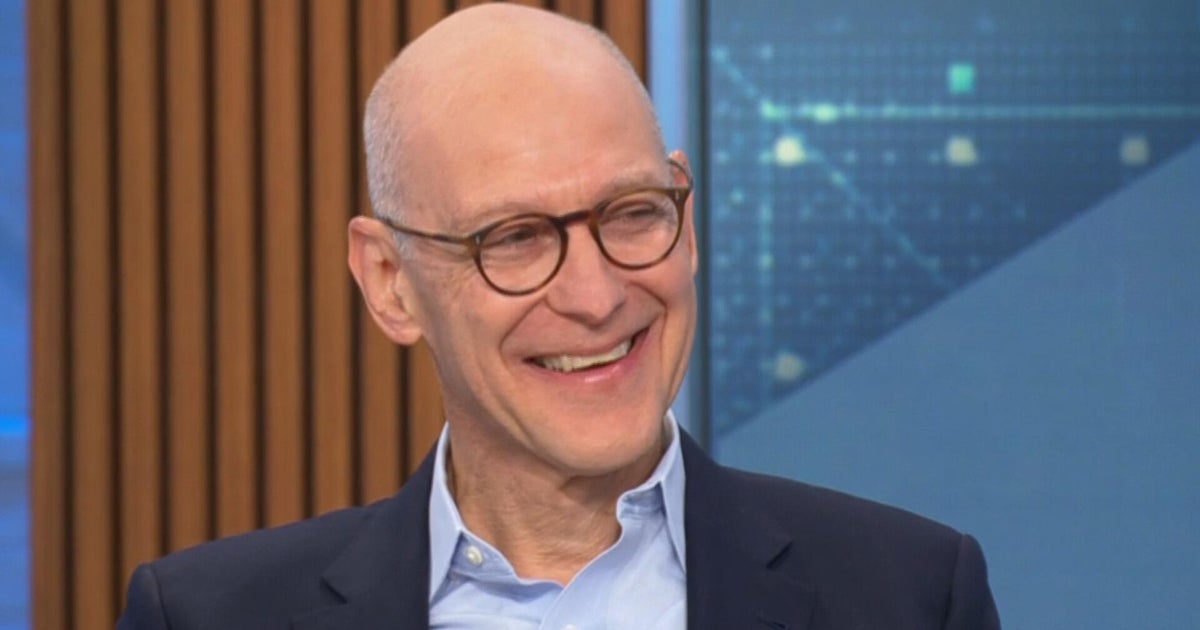
Dr. Ezekiel Emanuel, an expert in cancer treatment, talks about how artificial intelligence (AI) can help in healthcare. He explains both the good and bad sides of using AI in doctor's offices.
Key Facts
Dr. Ezekiel Emanuel is an oncologist and author.
He appeared on CBS Mornings to discuss AI in medicine.
AI can improve healthcare by helping doctors make better decisions.
There are benefits and challenges to using AI in medical settings.
The discussion focuses on how AI tools like mammogram analysis can assist diagnosis.
Read the Original
Want the full story? Tap a source to open the original
article.
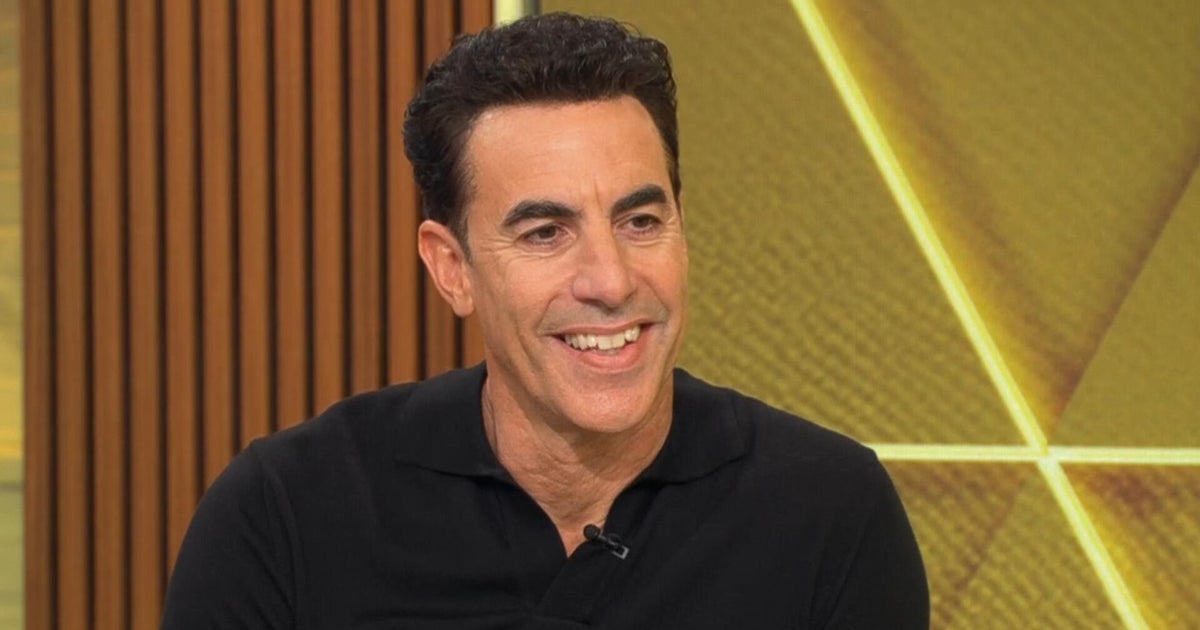
Sacha Baron Cohen has brought back his character Ali G for a new movie called "Ali G: Who Iz I?" He discussed this on the show "CBS Mornings," explaining why he chose to revive this popular character.
Key Facts
Sacha Baron Cohen is an actor known for characters like Borat and Ali G.
He revived Ali G for a new movie titled "Ali G: Who Iz I?"
Cohen appeared on "CBS Mornings" to talk about bringing Ali G back.
The interview covered reasons behind resurrecting this character.
The original Ali G character was part of Cohen’s earlier work and gained a large following.
The new movie aims to introduce Ali G to both old fans and new audiences.
Read the Original
Want the full story? Tap a source to open the original
article.
The new Call of Duty game, Modern Warfare 4, features a strong story campaign, set during a fictional invasion of South Korea by North Korea. The game focuses on the characters' relationships and combines intense action with quieter, story-driven moments to create a more immersive experience.
Key Facts
Modern Warfare 4 has one of the best campaign modes in the Call of Duty series in recent years.
The story is about a fictional invasion of South Korea by North Korea using an experimental weapon.
Players control Park Hyun Jun, a South Korean soldier, and also follow Capt John Price, who is chasing a nemesis with a cartel boss.
The developers aimed to make the story feel realistic and relevant to today's audience.
Military and cultural experts helped create an accurate portrayal of Korean military and language.
The game balances action scenes with character-driven story moments to keep players engaged.
The narrative team focuses on making players connect with the characters and feel part of the story.
The game includes cinematic scenes and went through several iterations to improve the gameplay and story integration.
Read the Original
Want the full story? Tap a source to open the original
article.
Amazon has released new versions of its Kindle e-readers in the UK in 2024, including models with color screens and updates to design and materials. These devices are lightweight, portable, and ideal for reading digital books, with options tailored for kids, note-taking, and different budgets.
Key Facts
Amazon Kindles have been sold in the UK for over 15 years.
The 2024 Kindle updates include color screens, thinner and lighter designs, and new colors.
The Signature Edition now uses aluminum backing instead of plastic.
The basic Kindle model has a new flat screen border design similar to the Paperwhite.
There are special Kid versions of these Kindles.
New models will be available for preorder and launch on November 11, 2024.
Older Kindle models may see price reductions after the new versions arrive.
The author tested Kindles over several months to evaluate their features and comfort.
Read the Original
Want the full story? Tap a source to open the original
article.