Fact-first summaries of the news — stay informed, stay grounded.
Your favorite news sources, one calm feed — fact-first summaries that always link to the
original story. No outrage bait, and we tell you when you're caught up. How it works
Technology News
Breaking news and analysis from the world of technology
Millions of Americans’ Social Security numbers and other personal data have been sold on the dark web due to repeated data breaches. California’s new Delete Act lets residents request data brokers to erase their sensitive information and stop selling it, using a central platform called DROP.
Key Facts
Social Security numbers are being sold online, allowing criminals to commit fraud like opening credit cards or stealing tax refunds.
California’s Delete Act (SB 362) gives people the right to ask data brokers to delete their personal and sensitive data.
The DELETE Act covers data such as Social Security numbers, precise location, browsing history, email addresses, phone numbers, health info, and shopping habits.
Data brokers must delete the requested info and stop selling it in the future, or face fines of $200 per day per person.
As of July 1, over 330,000 Californians have signed up to erase their data through DROP.
Nearly 600 data brokers are registered in California; many sell precise location, identity data, gender identity, reproductive health info, and info about minors.
Some brokers sell data to governments, police, foreign entities, and artificial intelligence developers.
Data brokers collect info from public records, apps, and online tracking, then sell it to advertisers, political campaigns, landlords, and others.
Read the Original
Want the full story? Tap a source to open the original
article.
Scientists at Yale School of Medicine discovered two proteins on nerve cells that help the toxic protein linked to Parkinson’s disease enter healthy brain cells. By blocking these proteins, they were able to reduce damage in laboratory and animal tests, suggesting a new way to slow or stop the disease.
Key Facts
Parkinson’s disease causes problems with movement, balance, and coordination and affects over 1 million Americans.
A harmful protein called alpha-synuclein builds up in the brain and spreads between nerve cells as the disease progresses.
Researchers found that two proteins, mGluR4 and NPDC1, work together to let alpha-synuclein enter healthy brain cells.
Blocking these proteins in mice protected dopamine-producing neurons from damage normally caused by alpha-synuclein.
Drugs targeting the mGluR4 protein already exist and may be developed to treat Parkinson’s by stopping the disease’s spread.
The goal is to find treatments that change the disease’s course, not just treat symptoms.
This discovery could lead to therapies that slow, stop, or reverse Parkinson’s disease and similar brain disorders.
The research was published in the journal Nature Communications in 2025.
Read the Original
Want the full story? Tap a source to open the original
article.
Australia’s online safety regulator, eSafety, reported that young men aged 18 to 24 make the most complaints about online sexual blackmail, known as sextortion. The report highlights that major tech platforms struggle to effectively detect and prevent child sexual exploitation and abuse, with social media apps like Instagram, WhatsApp, iMessage, and Snapchat frequently involved.
Key Facts
More than 2,000 complaints of sexual extortion were made to eSafety between July and December 2025.
Men aged 18 to 24 made about 800 of these complaints, the highest number among all age groups.
Sextortion means threatening to share nude or sexual images or videos unless demands are met.
Instagram and WhatsApp appeared in more than 1,300 complaints combined; for users under 18, iMessage and Snapchat were most common.
eSafety found serious gaps in the use of available technology to detect and stop sexual exploitation online.
Most platforms lack tools to detect abuse during live video streaming or calls; Microsoft is an exception.
Experts say platforms respond after abuse is reported but do not do enough to prevent it from happening.
The eSafety Commissioner said platforms should take simple steps now to better protect users.
Read the Original
Want the full story? Tap a source to open the original
article.
Modern satellite technology is rapidly changing how military intelligence is gathered and used, making speed more important than the amount of data collected. New commercial satellites deliver real-time images quickly, helping forces like Ukraine strike faster and more accurately.
Key Facts
Commercial satellites now provide real-time imagery directly to military forces, speeding up decision-making.
Older intelligence methods focused on careful verification and control, which took days.
Today, collecting data is easy; the challenge is quickly turning raw data into useful information.
New communication methods, like optical communications, transfer data faster and are less vulnerable to interference.
Satellite data’s value depends on how fast it can be used; delayed information can become useless.
The role of human analysis versus fast automated decisions is debated in military circles.
Governments must adapt to a world where commercial sources provide much intelligence, not just state agencies.
Space is becoming more crowded and dangerous, increasing the need for advanced data transmission technologies.
Read the Original
Want the full story? Tap a source to open the original
article.
World models are a new type of artificial intelligence that aims to simulate the physical world, unlike large language models (LLMs) that focus mostly on text and language. Experts and companies are investing in world models for uses like robotics, virtual environments, and scientific research, expecting these models to expand AI’s abilities beyond just language.
Key Facts
Large language models (LLMs) have been the main AI focus recently, but world models are gaining attention as a new direction.
World models try to create useful versions of the physical world inside computers to help AI understand and interact with it.
Experts believe LLMs alone won’t reach human-level intelligence, and world models could address some limits of LLMs.
Leading AI researchers and companies, including Google DeepMind and World Labs, are developing and funding world models.
World models are already being used for robotics, immersive environment creation, video generation, and scientific discovery.
Some experts think the current excitement around LLMs might slow down as world models and other AI areas grow.
The development of world models is expected to improve AI creativity, storytelling, and interaction with real and virtual worlds.
Read the Original
Want the full story? Tap a source to open the original
article.
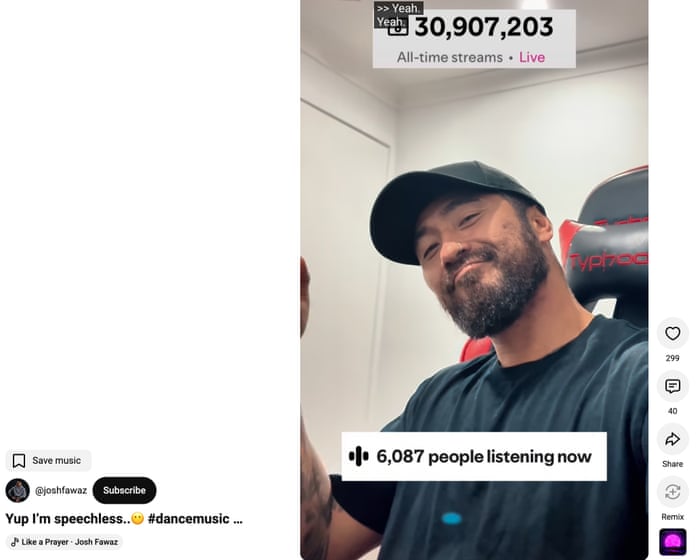
An Australian music producer, Josh Fawaz, became popular with a cover of Madonna’s "Like a Prayer" reaching number one on national radio charts. Some experts and musicians suspect that the song was created using artificial intelligence (AI), which raises questions about the role of human creativity in music.
Key Facts
Josh Fawaz’s cover of "Like a Prayer" topped the National Radio Airplay chart in Australia.
Music experts suggest the song might have been made with generative AI, which can create music from text prompts without human input.
Fawaz credits himself as the vocalist and his uncle, Fadi Fawaz, as producer and synth player on the track.
AI music usually has recognizable features, like heavy compression and certain sound artifacts, noticed by experts.
Fawaz says he uses AI as a tool but focuses on providing good music to listeners.
His cover has 35 million streams on Spotify and led to success with his debut album.
New Australian radio rules require shows to say if AI voices are used, but the rules do not apply to music.
Musicians worry about AI’s impact on music, including royalty payments and copyright issues involving AI training on existing songs.
Read the Original
Want the full story? Tap a source to open the original
article.
Director Christopher Nolan says many people dislike artificial intelligence (AI) and worry it will replace human creativity, but he thinks this is not true. Nolan believes AI can be a useful tool for making images but will not replace people in creative jobs like filmmaking.
Key Facts
Christopher Nolan makes big-budget action films, mostly filmed on real locations.
Nolan’s new movie, The Odyssey, is based on an ancient Greek epic and will be in cinemas this week.
He says AI has been widely accepted by investors and tech companies but is mostly rejected by the public, especially young people.
"AI slop" is a term used for the flood of AI-generated content like text and videos that appear on social media.
Nolan thinks AI can help with some creative tools but will not fully replace human creativity.
The movie industry has worried about AI replacing actors, writers, and crew, leading to a big Hollywood strike in 2023.
The Odyssey has a $250 million budget and stars Matt Damon as Odysseus, with actors like Zendaya and Tom Holland also featured.
Nolan faced criticism for casting a Black actress, Lupita Nyong’o, as Helen of Troy, a role traditionally seen as the world’s most beautiful woman.
Read the Original
Want the full story? Tap a source to open the original
article.
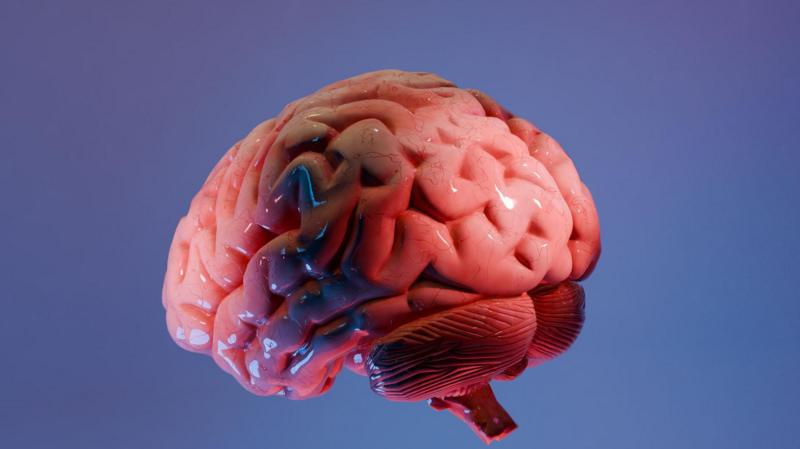
Scientists at the Indian Institute of Technology Madras have created the world’s most detailed 3D map of the human brainstem at the level of individual cells. This digital atlas links brain scans with microscopic cell biology, helping researchers understand this vital part of the brain better.
Key Facts
The brainstem is a small but important part of the brain that controls basic functions like breathing, heartbeat, and movement.
Indian scientists made a 3D atlas called Anchor that uses over 500 tissue sections from brains at different ages.
The atlas shows more than 200 clusters of brain cells and nerve pathways in the brainstem.
It uses chemical markers to identify different cell types, making the map very detailed.
This work connects large-scale brain imaging (MRI scans) with microscopic cell studies, which were previously separate fields.
The atlas will help doctors and researchers better study diseases like Alzheimer’s, Parkinson’s, and stroke.
The project combines engineering, neuroscience, and medicine to create a new tool for brain research.
Experts say it is a significant achievement that puts India on the global map for neuroscience research.
Read the Original
Want the full story? Tap a source to open the original
article.
Pokémon Go, a mobile game released in 2016, uses GPS and augmented reality to let players catch virtual creatures in real locations. Celebrating its 10th anniversary, the game has been downloaded over a billion times and continues to attract millions of daily users worldwide.
Key Facts
Pokémon Go started in 2016 and uses a phone’s camera and GPS to mix digital creatures with the real world.
The game has been downloaded more than 1 billion times on iOS and Android devices.
Millions of people still play Pokémon Go every day.
The game encourages community events, with over 400,000 players attending live events annually since 2017.
Scopely, the game's publisher, says Pokémon Go helps bring people together and has even connected couples who met through the game.
Players have collectively explored over 100 billion kilometers, equal to traveling between Earth and the Sun about 334 times.
Community events feel like music festivals, offering social and energetic experiences beyond just playing the game.
Some players report positive effects on their mental health and motivation after playing the game.
Read the Original
Want the full story? Tap a source to open the original
article.
Christopher Nolan, a well-known movie director, shared his thoughts in a 60 Minutes interview. He said he treats every film like it could be his last and is planning a new ambitious movie called "The Odyssey."
Key Facts
Christopher Nolan directs popular films like "Oppenheimer," "Inception," "Interstellar," and "The Dark Knight."
Nolan was interviewed on the CBS News program 60 Minutes.
He approaches each movie as if it might be the final one he makes.
Nolan has plans for a new, ambitious film named "The Odyssey."
The interview is available to watch on the CBS News app and online.
Read the Original
Want the full story? Tap a source to open the original
article.
This article explains that AI chatbots can give confident financial advice that may be wrong because they do not fully understand a person’s unique situation. Many people use AI for money questions, but wrong advice can lead to financial losses. The problem is that people often trust AI’s clear answers without realizing they could be inaccurate.
Key Facts
AI chatbots are widely used for financial advice, with 34% of U.S. adults having tried ChatGPT in 2025.
About 19% of people who used AI for money advice said they lost more than $100 because of it.
Young investors (Gen Z) reported an even higher rate of losing money at 27%.
AI answers sound confident and well-written but may miss important personal details, causing errors.
Financial decisions are often complex and unique, making it hard for AI to give accurate advice in tricky situations.
People tend to trust AI’s polished answers, confusing how fluent it sounds with how correct it is.
When AI is obviously wrong, people notice and seek expert help, but subtle mistakes can go unchecked and cause harm.
AI is good at basic financial topics but struggles with complicated or rare financial decisions.
Read the Original
Want the full story? Tap a source to open the original
article.
China has introduced the world's fastest supercomputer named LineShine. This computer uses a network of common microprocessors (CPUs) instead of graphics processors (GPUs) to avoid U.S. export controls.
Key Facts
China launched the supercomputer called LineShine.
LineShine is the fastest supercomputer in the world.
It uses many standard CPUs working together.
It does not rely on GPUs, which are usually faster for supercomputing tasks.
This design helped China bypass U.S. export restrictions on advanced computing technology.
Read the Original
Want the full story? Tap a source to open the original
article.
The HBO Max drama "The Pitt" shows the busy and difficult work of emergency room staff at a fictional hospital in Pittsburgh. CBS News visited the show's realistic set and talked with Noah Wylie, who acts in, writes, directs, and produces the series.
Key Facts
"The Pitt" is a medical drama on HBO Max.
It focuses on the emergency room staff at a made-up Pittsburgh Trauma Medical Center.
The show aims for a very realistic portrayal of hospital work.
Cast members attend a two-week medical boot camp to prepare for their roles.
Noah Wylie stars in, writes, directs, and executive produces the series.
The show received 25 Emmy nominations, including for Outstanding Drama Series.
CBS News visited the set at Warner Brothers Studios in Burbank, California.
The series was originally broadcast on January 4, 2026.
Read the Original
Want the full story? Tap a source to open the original
article.
Tech journalists are spending more time visiting and investigating large physical structures like AI datacenters. These investigations focus on whether the claims about energy use, environmental impact, and job creation are true, showing how tech reporting now includes checking real-world effects beyond digital stories.
Key Facts
Journalists are physically visiting AI datacenter sites to verify information.
A recent investigation found a large AI complex in Scotland misrepresented its use of renewable energy.
Reporting now covers issues like energy supply, water use, and environmental impact of datacenters.
Tech reporting involves talking to locals and examining official and internal documents.
The size and complexity of AI datacenters are among the largest human-made structures.
Datacenters can cause local temperature increases, sometimes by several degrees Celsius.
Projects for building datacenters worldwide are often delayed, challenged, or cancelled due to physical and logistical difficulties.
Tech journalists use "shoe-leather reporting," meaning they spend time on location, walking and observing for accurate stories.
Read the Original
Want the full story? Tap a source to open the original
article.
NASA is considering sending a Mars rover powered by nuclear energy to the moon. This idea shows new and creative approaches under the leadership of Isaacman.
Key Facts
NASA is thinking about a nuclear-powered rover designed for Mars to be sent to the moon.
Nuclear power means using energy from atomic reactions to run machines longer without needing solar energy.
The idea is a change in NASA’s usual plans.
This approach reflects the new leadership style of someone named Isaacman.
The plan involves testing technology in a different environment (the moon) before using it on Mars.
Read the Original
Want the full story? Tap a source to open the original
article.
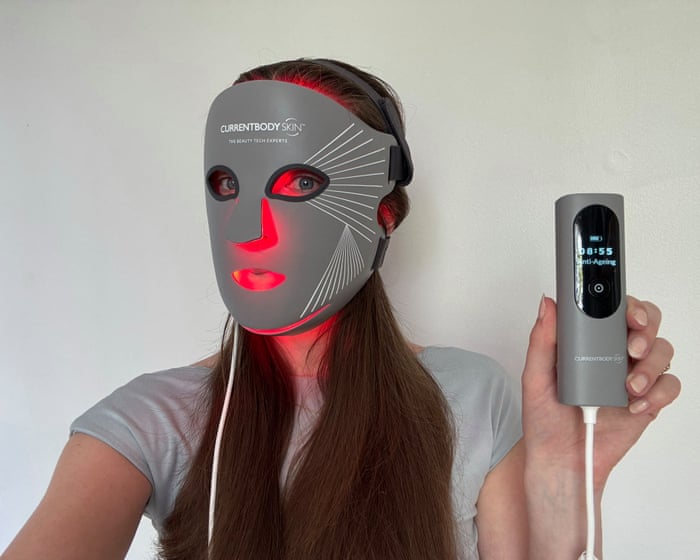
The CurrentBody Multi Light Therapy LED mask uses five different light settings to treat various skin issues like ageing, acne, and pigmentation. It has 566 LED bulbs in total, including rare deep near-infrared lights, and costs nearly £500.
Key Facts
The mask offers five light modes: anti-ageing, clearing (for acne), restoring (calming), brightening (pigmentation), and complete.
It has 566 LEDs positioned at 110 points to cover the face, including red, blue, yellow, green, near-infrared (NIR), and deep NIR lights.
Deep near-infrared bulbs are fewer and target areas around the mouth and under the eyes.
Blue light may cause hyperpigmentation on darker skin tones, so use caution.
Experts say consistent use and good skincare routines improve LED therapy results.
The mask is designed to be comfortable to wear with secure eye guards.
It costs nearly £500, which some people might compare to a luxury spa trip.
The user tested each mode for four nights before selecting a favorite for ongoing use.
Read the Original
Want the full story? Tap a source to open the original
article.
A trial took place accusing Meta (Instagram) and Google (YouTube) of designing their platforms to be addictive to children, causing mental health problems. The case was led by lawyer Mark Lanier and plaintiff Kaley, who claims social media use caused her anxiety and depression.
Key Facts
Mark Zuckerberg testified in court defending Meta amid a lawsuit about addiction caused by social media platforms.
The lawsuit argued Instagram and YouTube were made to be addictive on purpose, impacting young users' mental health.
The case is called KGM v Meta et al; Kaley, the plaintiff, started YouTube at age six and Instagram at nine.
Snapchat and TikTok settled out of court before the trial started.
Prosecutors wanted the jury to remain anonymous, but Zuckerberg’s team’s use of Meta glasses raised privacy concerns.
Lawyer Mark Lanier used advanced artificial intelligence tools to help build the case against Meta and Google.
The case is seen as a possible precedent to hold tech companies accountable for platform design, not just content.
This trial highlights the issue of social media’s impact on child and teen mental well-being.
Read the Original
Want the full story? Tap a source to open the original
article.
Software engineers are experiencing big changes because artificial intelligence (AI) now writes much of the computer code they used to produce themselves. Many are working to keep their core skills sharp, learning new abilities, and figuring out how to work with AI tools as their job shifts from writing code to reviewing and directing AI-generated code.
Key Facts
Matt, a software engineer, now spends his work time reviewing AI-generated code instead of writing code himself.
He codes his own video game during his daily train commute to keep his skills strong.
About 75% of Google's code is created by AI.
Since 2022, over 600,000 tech workers in the US have lost jobs due to AI-related changes.
Unemployment among new computer science graduates in the US rose to 7% in 2024.
AI is changing software engineering from writing code to defining problems and using AI effectively.
Companies once paid high salaries and bonuses to programmers, but job postings in tech have fallen 36% from 2020 to 2025.
Experts say the future of software engineering depends on how well engineers can work with AI, not just on coding skills.
Read the Original
Want the full story? Tap a source to open the original
article.
Countries and companies are working to create shared rules and partnerships for artificial intelligence (AI) technology. They want AI systems to be safe, fair, and trustworthy, so no one group controls all the power or isolates itself with poor technology.
Key Facts
Microsoft CEO Satya Nadella warned about the danger of a few AI models dominating all areas.
Under Secretary of State Jacob Helberg said that countries who isolate their AI efforts risk falling behind.
At the Pax Silica Summit, 35 nations agreed on a Joint Statement promoting trusted AI alliances and supply chains.
Trusted technology means AI that respects democratic values and allows partners to depend on each other without losing control.
Sovereignty in AI is about trusting partners more than owning all technology outright.
Democracies have risks from authoritarian powers shaping AI or infrastructure in ways that limit freedom.
The Clean Network initiative aligned many countries and companies to use trusted 5G suppliers, improving security and cooperation.
Experts say trust in AI must be measured and standardized to ensure safe collaboration worldwide.
Read the Original
Want the full story? Tap a source to open the original
article.
Scammers are creating fake news websites that look like trusted news sites such as The Guardian and BBC News. These sites publish fake stories that include links to fake investment platforms, aiming to trick people into giving their personal information and money. These fraudsters also use AI technology to make images and articles that look real.
Key Facts
Scammers clone trusted news websites to create fake articles featuring well-known people like Jim Ratcliffe and David Attenborough.
The fake articles contain links to bogus investment platforms that ask for personal details and persuade victims to invest money.
The investment sites shown are fake and do not offer real investments; their only goal is to steal money.
AI tools are used to create images, including fake photos with watermarks like SynthID from Google AI.
The Guardian and other news organizations are actively working with the UK Home Office and others to fight these scams.
The fake sites often have longer-than-normal headlines and mirror the real site design closely.
Readers are advised to check website URLs carefully and be skeptical of investment links in news articles.
Social media platforms are urged to help more by detecting and blocking scam ads before they reach users.
Read the Original
Want the full story? Tap a source to open the original
article.