The town of Hartman in southeastern Colorado has been declared abandoned by the state because it no longer has local leaders or the ability to manage its water system. This means that Prowers County will now take control of the town's streets and water infrastructure.
Key Facts
Hartman is a small town in southeastern Colorado with about 30 residents.
The town had no Board of Trustees or town clerk since January, after its leaders resigned.
Without leaders, Hartman could not hold elections or manage its water system.
The Colorado Department of State officially declared Hartman abandoned on July 28.
Control of the town’s streets and water infrastructure has been given to Prowers County.
The declaration aims to resolve a long-standing political deadlock and water crisis in Hartman.
The town no longer exists as a legal entity under Colorado state law.
Read the Original
Want the full story? Tap a source to open the original
article.
Extreme heat has caused a risk of rolling blackouts in 17 central U.S. states, affecting about 20 million people. The Department of Energy issued an emergency order to allow extra power resources to prevent outages as electricity demand rises.
Key Facts
The Southwest Power Pool (SPP) warned of possible blackouts due to high energy use during heatwaves.
The emergency order, active until August 3, covers 17 states including Texas, Arizona, and Colorado.
Over 35 gigawatts of backup power are available to help meet demand.
Power outages cost the U.S. economy about $62 billion a year, rising to $121 billion during major events.
Large blackouts, like the 2021 Texas outage, caused economic damage estimated between $80 billion and $130 billion.
Critical sectors at risk include data centers supporting artificial intelligence, which need steady power.
Food and agriculture systems rely on electricity for irrigation, storage, processing, and refrigeration.
The emergency order aims to reduce blackout risks and keep power reliable during the heatwave.
Read the Original
Want the full story? Tap a source to open the original
article.
Thierry Rignol, a Yale Executive MBA student, was suspended and failed a course after his final exam was flagged for possible use of AI writing tools. He filed a federal lawsuit against Yale, claiming the AI detection was biased, the disciplinary process was unfair, and his rights were violated.
Key Facts
Thierry Rignol paid $208,500 for Yale’s Executive MBA program.
He was suspended for one year and received an F in a course after being accused of using AI to complete his exam.
The exam was checked with an AI detection tool called GPTZero, which flagged parts of his exam as AI-generated.
Yale’s rules prohibited AI use during the exam, which was open book but no internet access was allowed.
Rignol argues the AI detection tool is unreliable and biased against non-native English speakers like himself.
He claims the punishment was politically motivated due to his conservative views expressed in class.
Rignol’s lawsuit includes 13 claims such as breach of contract, civil rights violations, and defamation.
Yale states Rignol has returned after suspension and graduated, and questions the delay in his providing key evidence.
Read the Original
Want the full story? Tap a source to open the original
article.
Top Democratic lawmakers are asking the Department of Homeland Security for detailed information about the training and background checks of an ICE officer who fatally shot a Colombian immigrant in Maine in July. They want records to understand whether the officer received shortened training during President Trump's push to increase ICE agents and to assess ICE's overall training practices.
Key Facts
The shooting happened on July 13 in Biddeford, Maine, involving 25-year-old Colombian immigrant Johan Sebastián Durán Guerrero.
Two top Democrats, Rep. Robert Garcia and Sen. Richard Blumenthal, sent a letter demanding training and vetting records of the ICE officer involved.
The ICE officer was identified as David Brouillette, who reportedly has a history of mental health struggles and violent behavior.
Congress wants to know if Brouillette completed a shortened ICE training program created under President Trump’s administration.
ICE canceled the shortened training program in June after criticism and required additional training for those who participated.
The Democratic lawmakers are concerned about ICE training quality following whistleblower reports calling it "deficient, defective, and broken."
The shooting followed a pattern: another immigrant was fatally shot days before in Texas by an ICE officer during a traffic stop.
Department of Homeland Security has stated the officer shot because the vehicle was allegedly trying to flee and for public safety, but full details on the officer are not publicly released.
Read the Original
Want the full story? Tap a source to open the original
article.
The trial of Lindsay Clancy, accused of killing her three young children in January 2023, is underway in Plymouth, Massachusetts. The prosecution says the killings were planned, while the defense argues Clancy had severe mental illness and heard voices telling her to kill her children and herself.
Key Facts
Lindsay Clancy has pleaded not guilty to three counts of first-degree murder for the deaths of her children: Cora (5), Dawson (3), and Callan (8 months).
The children died by strangulation on January 24, 2023.
Prosecutors claim Clancy planned the murders to be alone in the house while her husband ran errands.
Defense says Clancy suffered from bipolar disorder and postpartum psychosis, causing hallucinations and severe mental health issues.
Clancy had been discharged from a psychiatric hospital 19 days before the killings after treatment for harmful thoughts.
A 7-minute 911 call made by Patrick Clancy, the father, was played in court, capturing the emergency as it unfolded.
First responders testified about the scene, describing Patrick Clancy’s shock and the discovery of the children in the basement.
The trial is taking place in Plymouth Superior Court, Massachusetts.
Read the Original
Want the full story? Tap a source to open the original
article.
Senator Mitch McConnell has been absent from Congress for weeks after a fall, raising questions about his health and who would replace him if he leaves the Senate early. Kentucky law requires a special election to fill a Senate vacancy, and an important deadline on August 3 could affect when such an election would happen.
Key Facts
Senator Mitch McConnell has been out of public view for weeks due to a fall at his home.
McConnell’s office says he is working remotely, but details about his health remain unclear.
McConnell plans to retire at the end of his term in December 2024 after 40 years in the Senate.
Kentucky law passed in 2024 stops the governor from appointing an interim senator and requires a special election instead.
Kentucky Governor Andy Beshear is a Democrat, but the state generally votes Republican in federal races.
The special election would likely favor Republicans, as President Trump won Kentucky by a large margin in 2024.
August 3 is a key deadline for calling a special election based on Kentucky’s election laws.
Legal questions remain about how Kentucky’s vacancy laws will be applied to the Senate seat if McConnell leaves early.
Read the Original
Want the full story? Tap a source to open the original
article.
A Texas woman who voted for President Donald Trump said her nanny was detained by immigration agents during a routine check and later faced more than $1.8 million in fines for staying in the U.S. illegally. The nanny had no criminal record, followed immigration rules for years, but was ordered removed in 2011 and remains in ICE custody despite a stay of deportation.
Key Facts
The nanny, Joyce Basele, is a Kenyan national who entered the U.S. legally in 1995 and returned on a dependent visa in 2005.
She has complied with immigration check-ins for over 14 years.
Basele was ordered deported in 2011 after her immigration status lapsed following a divorce.
Despite a stay of deportation granted in July 2026, Basele remains detained by ICE.
The Department of Homeland Security fined her $1.8 million for not leaving the country after the removal order.
Her attorney disputes the fine, noting Basele was supervised by immigration authorities for many years.
DHS said it issued over 103,000 fines totaling about $84 billion for immigrants who failed to leave after removal orders.
This case highlights enforcement efforts targeting immigrants with long-standing final removal orders under President Trump's administration.
Read the Original
Want the full story? Tap a source to open the original
article.
The Supreme Court recently allowed the Trump administration to end Temporary Protected Status (TPS) for many Haitians living in the U.S. This decision risks removing Haitian home health workers who care for elderly and disabled people, causing concern for those who depend on them and for health care providers facing staff shortages.
Key Facts
Many Haitians currently have TPS, a program that lets people stay in the U.S. temporarily due to dangerous conditions in their home country.
The Supreme Court ruled in July 2026 that the government can end TPS protections for Haitians and Syrians.
About 350,000 Haitians and 6,000 Syrians are immediately affected, but up to 1.3 million people from 17 countries could be impacted in the future.
Haitian caregivers provide vital home health services to seniors and disabled people across the U.S.
Losing these caregivers would disrupt the daily lives of vulnerable clients who rely on them for help with meals, hygiene, transportation, and household chores.
Some care providers have already had to let go of workers as their TPS expired.
The home health care industry is already short-staffed and may face bigger challenges with these losses.
Advocates warn that the change could have severe effects on both immigrant workers and the people they care for.
Read the Original
Want the full story? Tap a source to open the original
article.
Axel Rudakubana, who killed three children and injured others in 2024, has been charged with attacking prison staff and having a weapon while in prison. He was sentenced to 52 years and recently moved to a high-security psychiatric hospital.
Key Facts
Axel Rudakubana killed three children and injured ten others in a 2024 attack at a dance class.
He received a 52-year prison sentence in January 2025.
From May to October 2025, he committed three attacks on prison staff and possessed a weapon inside HMP Belmarsh.
He faces four charges: two assaults on emergency workers, attempted serious injury, and illegal possession of a weapon.
Rudakubana was moved in July 2026 from HMP Belmarsh to Broadmoor psychiatric hospital on doctors' advice.
The Ministry of Justice likely had to follow medical recommendations for his transfer.
A lawyer for the victims' families criticized the decision to move him.
Rudakubana was under 18 when he committed the original crime, so a life without parole sentence could not be given.
Read the Original
Want the full story? Tap a source to open the original
article.
A leading election forecaster, the University of Virginia's Crystal Ball, has moved 14 congressional races toward Democrats ahead of the 2026 midterm elections, signaling increased competition for Republicans. This shift reflects weak approval ratings for President Donald Trump and a national environment that currently favors Democrats.
Key Facts
Crystal Ball shifted 13 House races and 1 Senate race toward Democrats on July 30, 2024.
The changes show growing difficulties for Republicans as President Trump's approval rating remains low.
Democrats now have a slight edge in national House polling going into the midterm elections.
The number of Tossup House seats increased from 15 to 20, making more districts highly competitive.
Three previously Republican-leaning House districts are now Tossups: Pennsylvania's 8th, New York's 17th, and North Carolina's 11th Districts.
Two Democratic districts shifted from Lean Republican to Tossup after redistricting in Florida's 14th and North Carolina's 1st Districts.
Republican incumbents Max Miller (Ohio's 7th) and others face challenges including allegations and fundraising issues.
Despite these changes, Crystal Ball says Republicans still have a possible path to keep control of the House.
Read the Original
Want the full story? Tap a source to open the original
article.
The article compares President Donald Trump’s political actions to the McCarthy era from the 1940s and 1950s, highlighting similar tactics like targeting federal workers and using fear of internal enemies. It describes current government efforts to label certain groups as threats and implies that these actions could have serious consequences for democracy and civil rights.
Key Facts
The McCarthy era (1946–1956) involved investigations and loyalty tests targeting alleged communists in the U.S. government and other sectors.
President Trump has taken similar steps by scrutinizing federal workers and asking loyalty-related questions during hiring.
Trump’s administration investigated progressive nonprofits such as ActBlue and the Southern Poverty Law Center.
The article mentions a 2025 executive order by Trump declaring “antifa” a domestic terrorist organization.
The government issued National Security Presidential Memo-7 to address domestic terrorism and political violence.
These actions are compared to past government repression during the Cold War, but with more advanced tools and broader ambitions today.
The article argues that these measures could extend U.S. political repression internationally by involving foreign governments.
Stephen Miller, an adviser to Trump, was quoted supporting tough actions against political opponents labeled as threats.
Read the Original
Want the full story? Tap a source to open the original
article.
Jay Clayton has been confirmed by the Senate as the new director of national intelligence, replacing Bill Pulte. Although President Trump said Pulte would only serve temporarily, Pulte has stayed in the position longer than expected, and the White House has delayed Clayton’s official start.
Key Facts
Jay Clayton is now confirmed as the new director of national intelligence (DNI).
Bill Pulte was serving as acting DNI but President Trump said his role was meant to be temporary.
The Senate confirmed Clayton on a Tuesday vote.
Despite the confirmation, the White House has delayed swearing in Clayton to start officially.
Bill Pulte has remained in the DNI position longer than originally planned.
Senators have expressed that it’s time for the temporary leader to step down.
The director of national intelligence leads the agencies that gather and analyze information to keep the country safe.
Read the Original
Want the full story? Tap a source to open the original
article.
Senate Republicans and Democrats are nearing an agreement to prevent a government shutdown. The deal includes limiting a new rule from the White House budget office that would increase the power of appointees from President Trump to block congressional spending decisions.
Key Facts
Senate Republicans and Democrats are negotiating to avoid a government shutdown.
The proposed rule from the White House budget office would give Trump appointees more power over congressional appropriations.
Appropriations are the government’s decisions about how to spend money.
GOP lawmakers want to stop the shutdown to avoid disruptions in government services.
The negotiations involve members of both political parties working toward a compromise.
Read the Original
Want the full story? Tap a source to open the original
article.
The article argues that many working-class Americans and union members feel that the Democratic Party no longer supports their interests. It highlights recent actions by some Democratic governors who vetoed bills favoring workers' rights and praises the 2023 UAW strike as a fight for better conditions despite opposition from political leaders.
Key Facts
After the 2024 election, data and union leaders say Democrats lost support from the working class.
Union jobs that once supported families have declined in states like Michigan, Ohio, Wisconsin, and Pennsylvania.
The article criticizes trade deals like NAFTA for harming blue-collar communities.
Some Democratic governors vetoed laws that would have helped workers with pensions, healthcare, and bargaining rights.
The 2023 United Auto Workers (UAW) strike aimed to improve pay, retirement, and eliminate unfair worker classifications.
Governor Gretchen Whitmer of Michigan vetoed bills supporting workers shortly after a legal battle to pass them.
The article claims some Democrats side with corporations instead of workers.
The writer calls for Democrats to choose between supporting billionaires or the working class.
Read the Original
Want the full story? Tap a source to open the original
article.
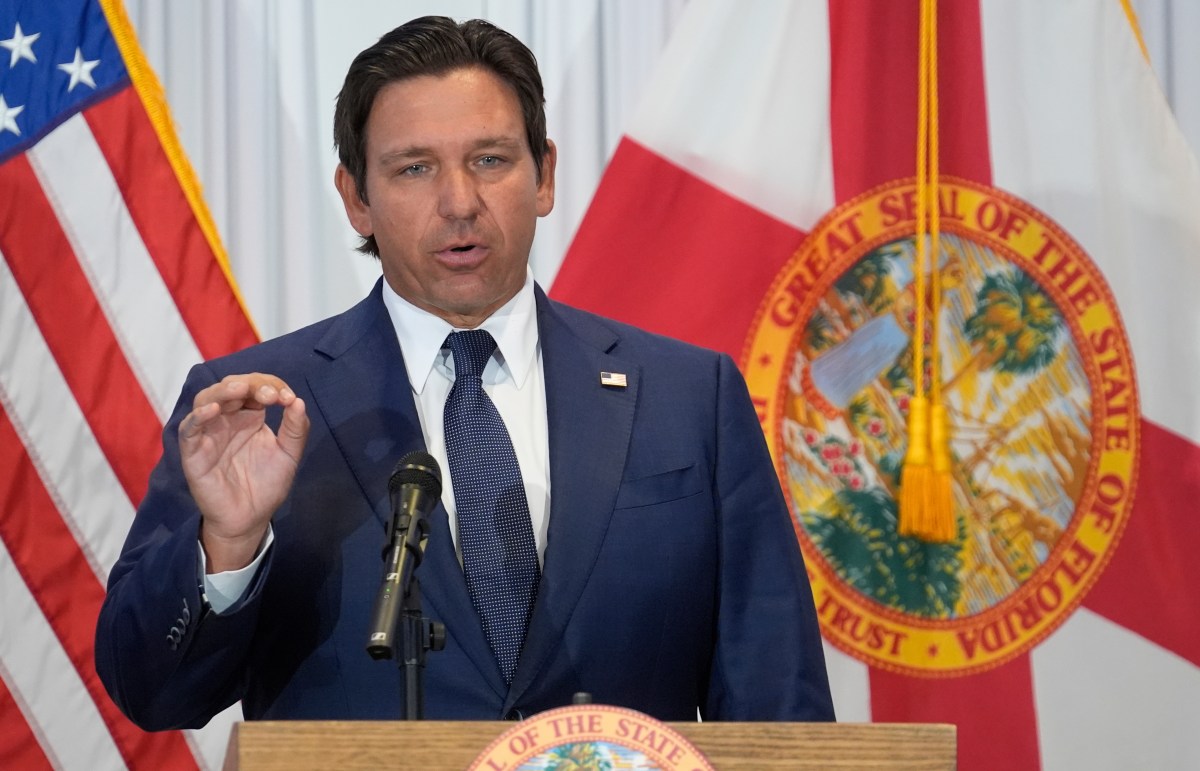
Anthony Fauci, the top U.S. infectious disease official during COVID-19, refused to answer congressional questions by invoking the Fifth Amendment over 100 times. Meanwhile, Florida under Governor Ron DeSantis resisted federal COVID rules, keeping businesses and schools open and banning vaccine mandates, with mixed COVID death rates compared to other states.
Key Facts
Anthony Fauci testified before Congress but repeatedly used the Fifth Amendment to avoid answering questions.
Fauci received a presidential pardon and has been criticized for his handling of the COVID-19 pandemic.
Senator Rand Paul released parts of Fauci’s diary showing Fauci’s doubts about the virus’s origins and focus on his image.
Florida Governor Ron DeSantis chose to keep the state more open, reopening businesses and schools earlier than federal guidelines recommended.
Florida banned vaccine mandates for schools, local governments, and businesses.
Florida’s COVID death rate was 31st in the U.S., better than some states with stricter lockdowns like New York and New Jersey.
Florida had the highest number of people moving into the state between July 2020 and July 2021.
DeSantis won reelection by a large margin, and Republicans hold a strong majority in Florida’s legislature.
Read the Original
Want the full story? Tap a source to open the original
article.
The House of Representatives passed the Sunshine Protection Act to make daylight saving time (DST) permanent in most of the U.S., ending the twice-yearly clock changes. The bill is supported by President Donald Trump and aims to boost the economy and reduce health problems linked to changing clocks, but it still needs Senate approval.
Key Facts
The Sunshine Protection Act passed the House on July 14 to keep daylight saving time year-round.
President Donald Trump supports the bill and has called the twice-yearly clock changes costly and unnecessary.
A study found DST causes a $672 million loss to the U.S. economy, including $375 million in heart attack costs and $252 million in stroke-related expenses.
The American Heart Association reported increases in heart attacks and strokes following the spring time change.
Half of U.S. states have passed laws or resolutions supporting permanent daylight saving time if federal rules change.
Some experts warn about possible health and safety issues from darker winter mornings under permanent DST.
The bill now faces an uncertain review in the Senate, where agreement is not guaranteed.
Eliminating the time changes may save money mostly by avoiding the disruptions they cause rather than large monthly bill reductions.
Read the Original
Want the full story? Tap a source to open the original
article.
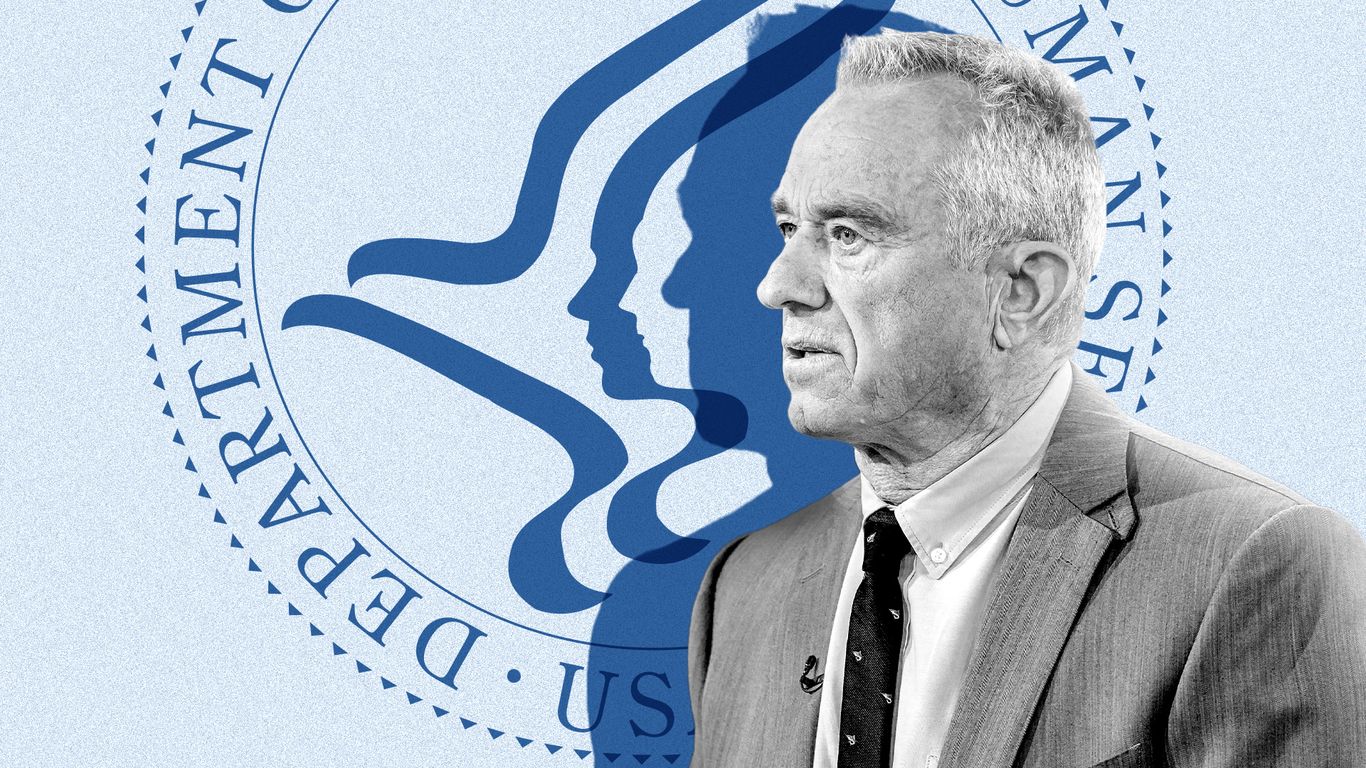
The Department of Health and Human Services (HHS) under President Donald Trump is trying to change its health policies, especially around vaccines, but faces challenges and mixed results. There are ongoing debates and controversies about vaccine policies, leadership changes, and public trust as the administration moves toward the midterm elections.
Key Facts
HHS aimed to soften its vaccine approach earlier this year due to political concerns around the midterm elections.
Key health leaders, like former FDA Commissioner Marty Makary and regulator Vinay Prasad, left their roles, signaling a leadership reset.
Chris Klomp was promoted to an important HHS role, gaining a reputation as a steady leader.
There are reports President Trump is pushing for more vaccine investigations, including exploring links to autism, despite scientific consensus showing no connection.
The Senate health committee approved the nominee for CDC head, Erica Schwartz, with some bipartisan support.
Controversies persist about the confirmation of Sean Kaufman, nominee to lead the Administration for Strategic Preparedness and Response, due to his past anti-vaccine comments.
The FDA currently lacks permanent leadership but acting leaders have received positive feedback compared to previous leadership.
HHS states it is committed to fighting chronic diseases, restoring public health trust, and focusing on prevention under President Trump's health vision.
Read the Original
Want the full story? Tap a source to open the original
article.
The FBI has started a new method to investigate voter fraud by obtaining the IP addresses of people who registered to vote online. This step is part of a larger federal effort influenced by President Trump's concerns about election security, involving several agencies and actions across different states.
Key Facts
The FBI requested and received the IP address of a person who registered to vote online in South Carolina.
An IP address can show where someone accessed the internet but does not reveal their exact identity.
This investigation is part of broader federal probes into voter rolls and registration during President Trump's administration.
43 states allow online voter registration, so this method could be used widely.
Other agencies, such as ICE and the Justice Department, are also seeking voter data in various states.
The Justice Department has sued 30 states and Washington D.C. to access voter registration information.
Election officials say it is unusual for the FBI to request such data and see it as an uncommon step.
Officials are preparing for the upcoming elections by warning about non-citizen voting and sending poll watchers to some states.
Read the Original
Want the full story? Tap a source to open the original
article.
The U.S. State Department will start issuing a special "Patriot Passport" featuring President Donald Trump’s portrait next month at 27 passport offices nationwide. This passport commemorates the nation’s 250th anniversary and is the first to show a living president’s image.
Key Facts
The "Patriot Passport" includes Trump’s portrait over a gold signature inside the passport.
The passport cover has different gold lettering arrangement and features a gold American flag with the number 250.
Originally available only in Washington, D.C., the special passport will be issued at passport agencies across the U.S. starting next month.
The State Department plans to make 250,000 of these special passports available due to high demand.
Only presidents on Mount Rushmore have previously appeared in U.S. passports.
Some Democratic senators and public figures oppose putting a sitting president’s image on a passport.
Public opinion polls show most Americans disapprove of the Trump commemorative passport.
To get the passport, applicants must visit a passport agency in person on designated dates listed on the State Department website.
Read the Original
Want the full story? Tap a source to open the original
article.
The U.S. Department of Justice (DOJ) recently said federal laws do not require states to provide services that keep people with disabilities living at home instead of in institutions. This changes a previous legal understanding based on a 1999 Supreme Court ruling that protected the rights of disabled people to live in the community instead of being forced into institutions.
Key Facts
Amanda DeSimone-Shabrack depends on Medicaid-funded home healthcare for her autistic son.
The DOJ issued an opinion in June saying states are not legally required to help disabled people stay in their homes.
This reverses a 1999 Supreme Court decision that protected disabled people from unnecessary institutionalization.
Advocacy groups are concerned this change could undermine legal protections for about 45 million disabled Americans.
Some states are using the DOJ’s opinion to argue against laws that require community-based services for disabled people.
Medicaid service reductions, combined with new federal policies, may limit care options for people with disabilities.
The Department of Health and Human Services says it still supports equal rights and access to community services for disabled individuals.
Democrats criticize the DOJ opinion as harmful and have introduced a resolution urging its reversal.
Read the Original
Want the full story? Tap a source to open the original
article.