The U.S. State Department announced new rules to deny visas to people involved in cybercrime and sextortion, including possible restrictions on their immediate family members. This effort targets those linked to scams and crimes often connected to foreign criminal groups to better protect American citizens.
Key Facts
The new visa restrictions focus on people involved in cybercrime and sextortion.
Visa access may also be denied to the immediate family members of these individuals.
These rules are part of a broader effort to prevent harmful individuals from entering the U.S.
The policy specifically mentions a link to Chinese transnational criminal groups in investment scams.
The Trump administration has been tightening visa rules and increasing applicant screening for the last 18 months.
Visa restrictions have also been used recently against people linked to political violence and criminal cartels.
The State Department treats every visa decision as a national security matter.
Thousands try to get U.S. visas illegally each year to commit crimes or avoid arrest, but detailed data on cybercrime is not publicly available.
Read the Original
Want the full story? Tap a source to open the original
article.
Crime in many major U.S. cities has continued to go down in early 2026 compared to the same time last year, following a rise in violence during the COVID-19 pandemic. Most violent crimes, including homicides and assaults, fell, but some crimes like drug offenses, domestic violence, and sexual assault saw increases.
Key Facts
Nine out of 13 types of crimes tracked decreased in the first half of 2026 compared to 2025.
Carjackings dropped by 47%, while drug-related crimes rose by 12%.
Homicide rates fell by 18% on average across 30 cities and are 31% below 2019 levels.
Cities like Lincoln (Nebraska) and Rochester (New York) saw large drops in homicide rates.
Some cities, including Norfolk and San Francisco, experienced increases in homicides.
Violent crime lethality, or crime resulting in death, declined by 23% in 17 cities.
Aggravated assaults and gun assaults both decreased compared to last year.
Sexual assaults rose slightly by 3%, while domestic violence increased by 8%.
Read the Original
Want the full story? Tap a source to open the original
article.
The U.S. House of Representatives passed the Stop Insider Trading Act to stop lawmakers from trading stocks based on secret information they get from their jobs. However, the bill does not apply to President Donald Trump or the vice president. It stops members of Congress and their families from buying new stocks but lets them keep stocks they already own.
Key Facts
The Stop Insider Trading Act passed the House 232-198 with some Democrats supporting it.
The law targets members of Congress, their spouses, and dependent children, but excludes the president and vice president.
President Trump and the vice president are subject to different ethics and disclosure rules than lawmakers.
Lawmakers would be banned from buying new individual stocks but can keep or sell stocks they already own after a public notice period.
President Trump reported thousands of stock transactions worth hundreds of millions of dollars in early 2026.
Critics say the bill does not fully ban insider trading and exempts too many officials, including the president.
Richard Painter, a former White House ethics lawyer, supports the bill but says it should also apply to the president and vice president.
The Trump administration supports the bill as a step beyond current rules by stopping lawmakers from buying stocks while in office.
Read the Original
Want the full story? Tap a source to open the original
article.
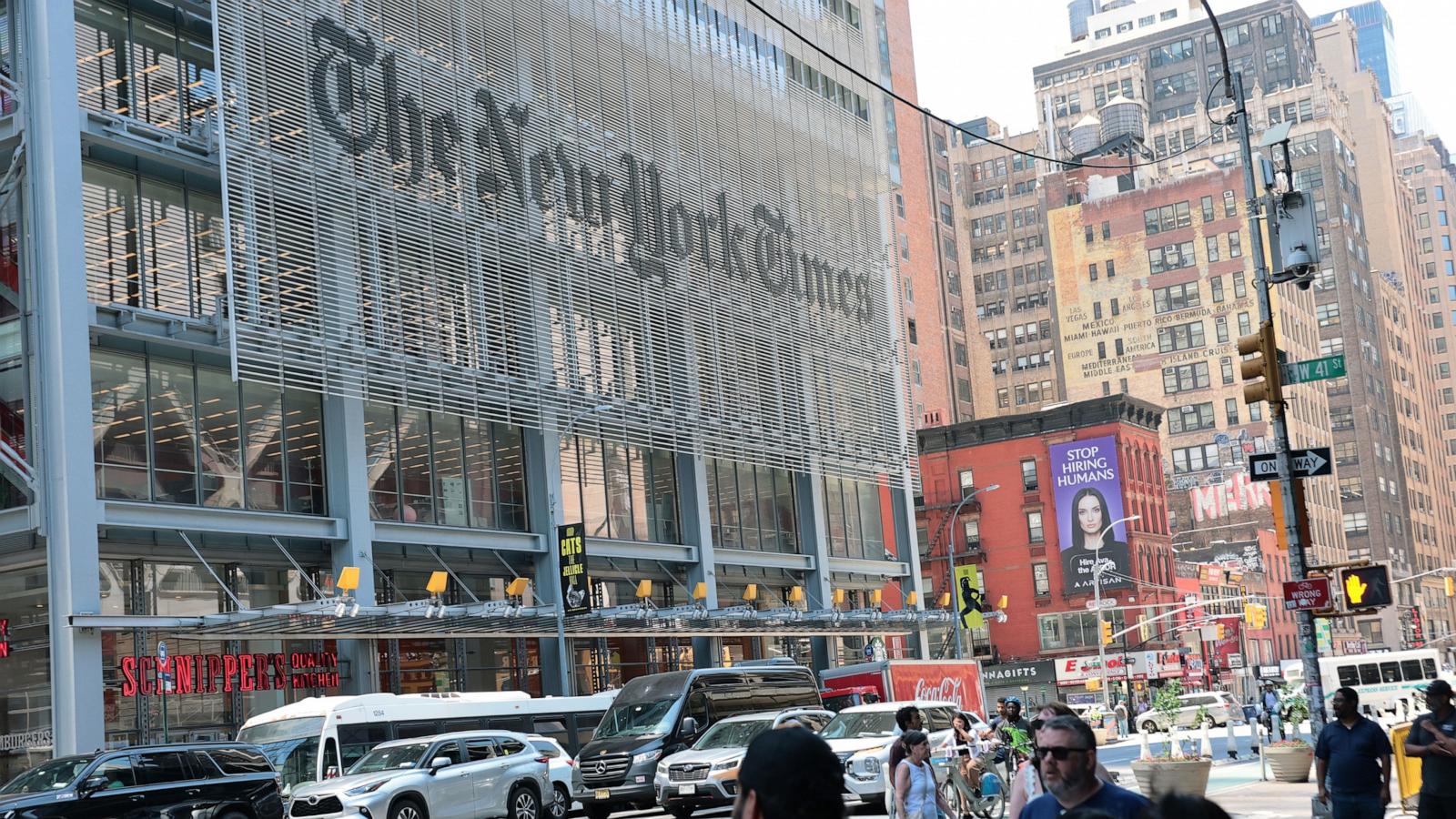
The New York Times is challenging subpoenas from the Trump administration in court. These subpoenas seek reporters’ testimony and phone records after the Times reported on security issues with the new Air Force One plane.
Key Facts
The New York Times received subpoenas related to a story about the new Air Force One lacking advanced defensive features.
The subpoenas ask reporters to testify before a grand jury and provide phone records of reporters and some family members.
The Times’ lawyers say the subpoenas aim to intimidate and punish the newspaper for reporting that upset President Trump.
The Department of Justice says the subpoenas are to find if classified information was leaked that could affect national security.
The plane was donated by Qatar and costs about $400 million, with additional retrofit expenses planned.
The Times argues the subpoenas violate the First Amendment right to gather news without government interference.
The legal battle focuses on balancing national security concerns with press freedom.
The case highlights tensions between the Trump administration and the press.
Read the Original
Want the full story? Tap a source to open the original
article.
Hunter Biden said in an interview that President Donald Trump would have targeted his family if President Joe Biden had not given him a pardon. Hunter Biden believes the pardon protected his family from political attacks while Trump was in power.
Key Facts
Hunter Biden discussed the impact of a pardon he received from President Joe Biden.
He stated that without this pardon, President Trump would have focused on his family.
Hunter Biden implied the pardon prevented political pressure or investigation from Trump.
The interview highlights ongoing tensions between the Biden family and President Trump.
Hunter Biden's pardon was granted by his father, President Joe Biden.
The context involves U.S. political rivalries and family issues connected to public scrutiny.
Hunter Biden's comments suggest concerns about how political power can affect families.
Read the Original
Want the full story? Tap a source to open the original
article.
During the World Cup matches in the New York City area, police rescued 43 people, including seven children, from human traffickers. The NYPD Special Victims Unit arrested 89 suspects and continues to investigate as part of a wider effort coordinated across multiple states and agencies.
Key Facts
Forty-three victims, including seven minors, were rescued in New York City during the World Cup.
The NYPD Special Victims Unit made 89 arrests linked to human trafficking rings.
Rescue operations took place from June 11 to July 19, covering eight matches at New Jersey's MetLife Stadium.
Victims received support such as food, housing, and counseling from the NYPD’s Gender-Based Violence Police and Planning Unit.
The NYPD prepared months in advance by monitoring known human traffickers on parole or probation.
Local, state, and federal agencies worked together nationwide, with more than 673 arrests and 74 rescues during the World Cup across the U.S.
Other states, including Georgia, New England, and Missouri, also made arrests and rescues linked to World Cup events.
The World Cup was held in multiple cities across the U.S., Mexico, and Canada, requiring broad law enforcement coordination.
Read the Original
Want the full story? Tap a source to open the original
article.
Last week, only 187,000 Americans filed for unemployment benefits, the lowest number since 1969. This shows that job losses remain very low, despite concerns that new technologies like AI might cause many layoffs.
Key Facts
Only 187,000 new unemployment claims were filed last week in the U.S.
This is the lowest number of jobless claims since September 1969.
The labor force is much larger now than in 1969, making this an unprecedented low rate of layoffs.
Many experts worry AI will cause job cuts, but current data does not show this happening.
Entry-level job postings have dropped 7.5% since last year.
Senior-level job postings have increased by nearly 15% over the same period.
The low number of layoffs mainly reflects firings, not hiring trends.
Economists may need to update their views on how AI impacts jobs if this trend continues.
Read the Original
Want the full story? Tap a source to open the original
article.
President Donald Trump is expanding a voluntary pledge involving governors and electric companies to protect U.S. consumers from rising utility bills caused by data centers used for artificial intelligence (AI). The pledge aims to cover 80% of power delivered to American homes and businesses, addressing concerns about increasing electricity demand and its impact on costs.
Key Facts
President Trump first announced the pledge with AI and tech companies in March 2026.
The pledge is voluntary and now includes nearly 200 additional stakeholders like utilities, data center developers, and governors.
The pledge aims to prevent consumers from paying higher electricity bills due to the increased power use of AI data centers.
Electricity demand is growing, and studies suggest utility bills could rise 15% to 40% by 2030 because of data centers.
AI is rapidly advancing, raising government and public concerns about electricity, water, and land use.
Opposition to data centers comes from both political parties, focusing on environmental impacts and local cost increases.
Data centers claim to help by generating tax revenues and reducing other property tax burdens for communities.
President Trump plans to discuss the pledge expansion at the Environmental Protection Agency.
Read the Original
Want the full story? Tap a source to open the original
article.
Four Republican members of the U.S. House of Representatives voted to approve a war powers resolution aimed at urging the Trump administration to reduce military actions against Iran. The vote was symbolic and does not create a new law, showing some disagreement within the Republican Party about President Trump's approach to Iran.
Key Facts
Four Republicans in the U.S. House voted for the war powers resolution on Thursday.
The resolution seeks to pressure the Trump administration to decrease military operations against Iran.
This vote was symbolic, meaning it does not have legal force.
The vote reflects some growing disagreement within the Republican Party.
The resolution addresses concerns about the handling of U.S. actions toward Iran.
The military operations referenced involve U.S. activities in the Middle East.
The Trump administration is currently in office with President Donald Trump serving his second term.
The resolution is part of a broader debate over presidential war powers and congressional oversight.
Read the Original
Want the full story? Tap a source to open the original
article.
Recent polls from Emerson College and Fox News show Democrats leading Republicans by 8 to 11 points on the generic ballot ahead of the 2026 midterm elections. President Donald Trump's approval rating is low, with many voters concerned about the cost of living, which may be influencing the polling results.
Key Facts
Democrats lead Republicans by 11 points in the Emerson College poll and 8 points in the Fox News poll.
The Emerson poll surveyed 1,100 likely voters with a margin of error of ±2.9%; the Fox News poll surveyed 1,003 registered voters with a margin of error of ±3%.
Democrats currently want to gain control of both the House and Senate, which Republicans now hold.
President Trump's approval rating is at 39%, with 57% disapproving, according to the Emerson poll.
The declining approval rating is partly linked to voter concerns about the cost of living and economic issues.
Republicans emphasize President Trump's achievements and describe the upcoming midterms as a clear choice between their policies and those of the left.
Despite Democratic leads, the midterm elections are expected to remain competitive and close.
Poll aggregators show Democrats’ overall lead increasing slightly in recent days compared to earlier in the year.
Read the Original
Want the full story? Tap a source to open the original
article.
A former Army officer who helped at Ground Zero after the 9/11 attacks now has lung cancer linked to his time there. He struggles to get recognition and assistance from official 9/11 health programs because he was not part of a formal response unit and lacks official proof of his presence.
Key Facts
On 9/11, many official teams responded and left detailed records proving their presence.
Some civilians, like the author, also showed up to help but without formal documentation.
The author worked in an improvised decontamination team and at an aid station near Ground Zero.
He developed lung cancer 25 years later, likely linked to toxic exposure that day.
Government programs require strict proof of being at the scene to qualify for health benefits.
Independent civilians have difficulty providing the required witness statements or records.
The author has gathered support from military friends to reconstruct his 9/11 experience.
The system’s rules unintentionally exclude some genuine responders who did not have formal units.
Read the Original
Want the full story? Tap a source to open the original
article.
The article discusses whether the U.S. Congress can use its power to punish people who do not cooperate in investigations without a full legal process. It considers the original intentions of the Constitution's authors about this power.
Key Facts
Congress has a power called "inherent contempt" to punish people who disobey its orders.
This power allows Congress to act quickly without going through courts.
The article questions if the Constitution's writers intended for Congress to have this quick punishment power over third parties.
"Original intent" means looking at what the Constitution's authors originally meant.
The article suggests that the authors may have wanted to limit Congress's power to punish without full court processes.
This topic is important for how Congress enforces its investigations today.
Read the Original
Want the full story? Tap a source to open the original
article.
Senate Democrats have asked for an investigation into whether officials in President Donald Trump's administration improperly influenced IRS tax audits. They are concerned that a top IRS legal official was forced to leave his job after raising worries about political interference in tax investigations.
Key Facts
Senate Democrats sent a letter to the Treasury Inspector General for Tax Administration (TIGTA) requesting an investigation.
The letter focuses on reports that White House officials may have tried to affect IRS tax audits.
Kenneth Kies, a senior Treasury and IRS legal official, reportedly was forced out after raising concerns about political influence.
Federal law prohibits senior government officials from directing IRS audits or investigations.
The investigation aims to determine if any laws protecting the IRS from political pressure were broken.
The lawmakers emphasize the importance of the IRS working fairly and independently.
The allegations raise questions about whether the IRS tax system is being administered without bias.
Senate Democratic Leader Chuck Schumer helped lead the letter to TIGTA.
Read the Original
Want the full story? Tap a source to open the original
article.
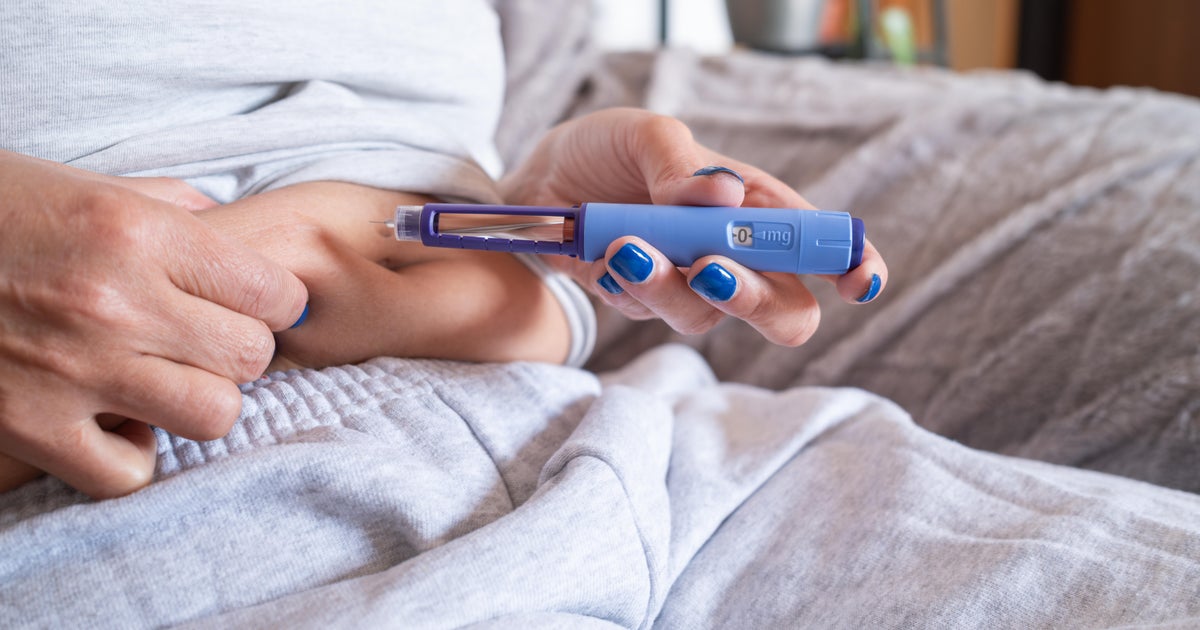
A Food and Drug Administration (FDA) advisory panel is meeting to discuss whether compounding pharmacies should be allowed to make some unapproved peptides. These peptides are short protein pieces that some people want for uses like healing injuries, but they have not been fully tested or approved by the FDA.
Key Facts
Peptides are small chains of amino acids, naturally made by the body, and some approved peptides are used in medicines like insulin.
There is growing interest in unapproved peptides sold online, often labeled for "research use only" without scientific proof of safety or benefits.
The FDA panel will review seven unapproved peptides to decide if compounding pharmacies can make them with a doctor's prescription.
Compounding pharmacies prepare medicines not widely made by drug companies, but production must be safe and controlled.
Some popular peptides discussed include BPC-157, claimed to help with healing, though it has been tested on very few people.
Experts warn that buying peptides online can be risky due to possible contamination or harmful substances.
During the Biden administration, the FDA blocked many peptides from being compounded, citing safety concerns.
Some officials believe there may be pressure on the FDA panel because a government official supports the use of these unapproved peptides.
Read the Original
Want the full story? Tap a source to open the original
article.
The Senate Banking Committee postponed a hearing to review three of President Trump’s nominees because Senator Elizabeth Warren raised concerns about their FBI background checks. The committee delayed the process to address questions about the nominees’ suitability for their roles.
Key Facts
The Senate Banking Committee was scheduled to hold a hearing for three of President Trump’s nominees.
Senator Elizabeth Warren expressed concerns about the FBI background checks for these nominees.
Due to these concerns, the committee delayed the public hearing.
The nominees include Christopher Phelan, who was nominated to chair a federal agency.
The background checks are intended to ensure the nominees do not have issues that could affect their jobs.
The delay is an unusual step for the Senate Banking Committee.
Senator Warren is from Massachusetts and is a Democrat.
The hearing was originally planned for 10 a.m. on the day of the delay.
Read the Original
Want the full story? Tap a source to open the original
article.
A federal judge will consider arguments about the Justice Department's subpoenas to journalists at The New York Times. The subpoenas concern reports on President Donald Trump's use of an Air Force One aircraft donated by Qatar.
Key Facts
The Justice Department issued subpoenas to reporters at The New York Times.
The subpoenas relate to news reports about an Air Force One plane donated by Qatar.
This Air Force One is connected to President Donald Trump.
A federal judge will hear legal arguments about these subpoenas.
The case involves questions of government access to journalists’ information.
The news was reported by CBS News correspondent Katrina Kaufman.
Read the Original
Want the full story? Tap a source to open the original
article.
The U.S. House of Representatives approved a resolution to restrict President Trump's ability to conduct military actions in Iran. This resolution instructs the president to end current military operations there, with four Republicans joining Democrats to pass the measure.
Key Facts
The House passed a resolution aimed at limiting President Trump's war powers.
The resolution focuses on ending military operations in Iran.
Four Republican members of the House voted alongside Democrats to support the resolution.
The vote reflects bipartisan concern about the president's military authority.
The resolution instructs President Trump to stop ongoing military actions in Iran.
The action took place at the U.S. House of Representatives.
The vote indicates a check on executive power regarding foreign military engagement.
Read the Original
Want the full story? Tap a source to open the original
article.
Senate Majority Leader John Thune said there are not enough Republican votes in the Senate to pass a budget plan that would allow a $95 billion bill to support the war in Iran, farm aid, and changes to election laws. The plan needs at least 50 votes to move forward, but Thune does not believe that support exists among his party members.
Key Facts
The budget plan comes from the House of Representatives.
It includes $95 billion for funding related to the war in Iran.
The bill also provides support for farm aid and election reforms.
To pass the bill in the Senate, it needs 50 votes.
Senate Majority Leader John Thune is a Republican from South Dakota.
Thune says he does not expect to get 50 Republican votes for this plan.
Without enough votes, the bill cannot move forward in the Senate.
Read the Original
Want the full story? Tap a source to open the original
article.
Cellphone videos show a police officer fatally shooting a man named Corey Ruiz during a struggle in Madison, Wisconsin. The shooting happened after Ruiz injured the officer with a knife, according to police, and has led to protests demanding accountability.
Key Facts
The shooting occurred at an intersection in Madison, Wisconsin.
Corey Ruiz, a man in his 30s, was shot and killed by a police officer.
Police say Ruiz injured the officer with a knife while resisting arrest.
Two cellphone videos show different views of the incident and are circulating on social media.
Madison Police Chief stated the videos only show part of the story.
Madison police do not use body cameras, so there is no official video from the officers.
Wisconsin Representative Shelia Stubbs called for body cameras to avoid relying on civilian videos.
The shooting sparked protests near the state Capitol demanding police accountability.
Read the Original
Want the full story? Tap a source to open the original
article.
The United States is expected to have its lowest yearly homicide rate in over 100 years by 2026. In the first half of 2026, reported homicides dropped by 18% compared to the same time in 2025 in 30 cities.
Key Facts
A new report shows the U.S. homicide rate is falling to historic lows.
The annual homicide rate in 2026 is projected to be the lowest in more than a century.
In the first six months of 2026, homicides were down 18% compared to the first half of 2025.
Data was collected from 30 U.S. cities.
The decline in homicides has been noted across multiple urban areas.
This trend indicates a significant reduction in violent crimes involving murder.
The report was released on a Thursday (specific date not provided).
Read the Original
Want the full story? Tap a source to open the original
article.