Neutral summaries of your favorite news sources — just the facts.
Your favorite news sources, one neutral feed — we distill their reporting into fact-first
summaries and always link to the original story. How it works
US News
Latest developments and key stories from across the United States
Dan Rather, a longtime CBS News journalist, spoke in an extended interview about how CBS Radio News influenced him. He shared memories from his childhood in Texas and how listening to famous journalists helped him learn. He also talked about how CBS Radio News played a part in shaping modern broadcast journalism.
Key Facts
Dan Rather is a veteran journalist with CBS News.
He grew up in Texas and listened to CBS Radio News as a child.
CBS Radio News was important in teaching him about journalism.
He learned from examples like "Murrow’s Boys," a group of respected journalists.
CBS Radio News influenced the development of broadcast journalism over time.
The interview was conducted by Mo Rocca.
The interview is available as a web exclusive on CBS News.
Read the Original
Want the full story? Tap a source to open the original
article.
Ted Turner, the founder of CNN and a well-known American entrepreneur, died on May 6 at the age of 87. He was famous for changing cable TV, supporting environmental causes, and promoting conservation efforts.
Key Facts
Ted Turner founded CNN, the first 24-hour cable news channel.
He was a prominent and bold business leader in the media industry.
Turner participated in yacht racing, including the America’s Cup.
He worked to protect and restore the American bison population.
Turner donated much of his wealth to conservation and global charity efforts.
He was known for his vision and impact on both media and environmental causes.
Turner passed away at the age of 87 on May 6.
Read the Original
Want the full story? Tap a source to open the original
article.
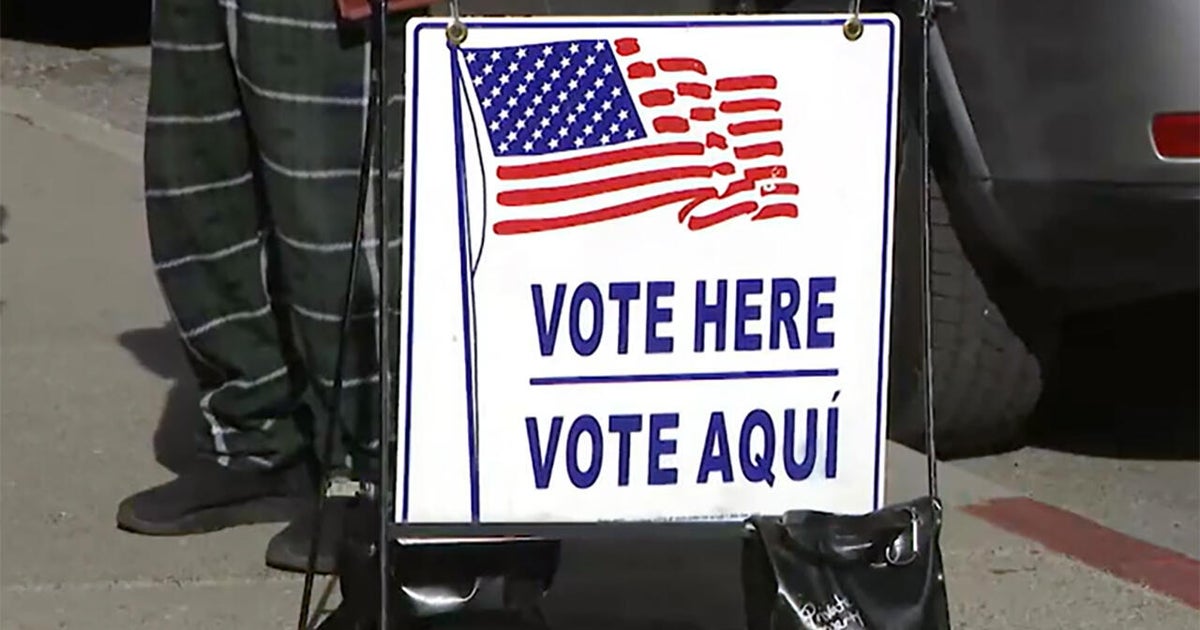
The Supreme Court recently ruled that creating majority-Black voting districts in Louisiana is illegal, making it harder to draw election maps based on race. This decision reflects the Court's view that using race in drawing districts is unconstitutional, but political considerations are allowed.
Key Facts
The Voting Rights Act was signed by President Lyndon Johnson 61 years ago to stop barriers preventing Black Americans from voting.
The Act followed long struggles and violence against Black voters, including events like "Bloody Sunday" in 1965.
The Supreme Court ruled 6-3 that Louisiana lawmakers cannot draw a Congressional district based mainly on race.
This ruling limits the ability to create districts designed to ensure racial representation.
The Court’s conservative majority, led by Chief Justice John Roberts, has increasingly ruled against race-based policies.
Justice Samuel Alito wrote that using race in districting is unconstitutional, but political reasons for map drawing are allowed.
Congressman Cleo Fields said the ruling affects the chance for people of color to serve in Congress.
Conservative lawyer Hans von Spakovsky supports these rulings, saying racial discrimination should be stopped and that political competition is a normal part of elections.
Read the Original
Want the full story? Tap a source to open the original
article.
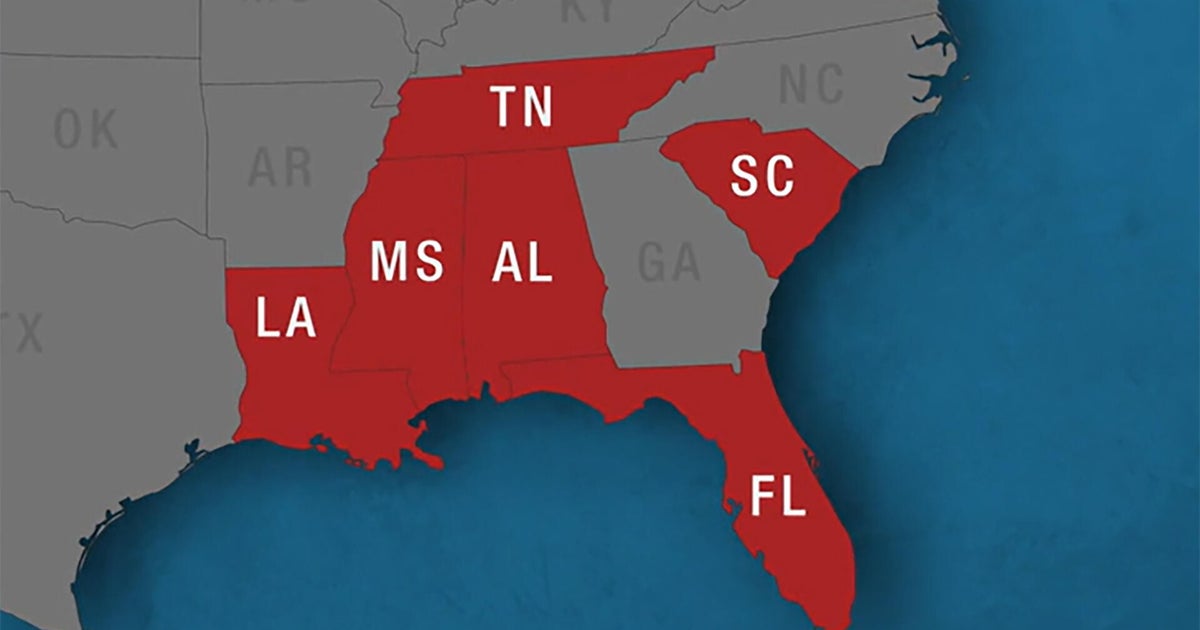
The U.S. Supreme Court recently ruled that voting districts cannot be drawn based on race but can be drawn based on political party preferences. This decision has led several states to quickly redraw their voting maps. The ruling changes how election boundaries are drawn and could impact voting and democracy in the U.S.
Key Facts
The Voting Rights Act was signed by President Lyndon B. Johnson in 1965 to protect Black voters.
The Supreme Court’s recent ruling forbids using race as a factor to draw voting districts.
Political party preferences can still be used to shape voting districts, a practice called partisan gerrymandering.
Several states are now rushing to redraw their voting maps based on this new ruling.
Experts say this ruling may affect how fairly votes are represented in elections.
The story was covered by CBS News and includes interviews with national correspondents and other sources.
The Supreme Court is the highest court in the United States and its decisions have widespread effects.
Read the Original
Want the full story? Tap a source to open the original
article.
Just before a new law banned "no fault" evictions in England on May 1, many tenants received eviction notices, leaving them suddenly without homes. People affected say the timing felt harsh and they worry about finding affordable new places to live.
Key Facts
The ban on "no fault" evictions, called section 21, officially started on May 1 under the Renters’ Right Act.
Hundreds of tenants got eviction notices hours or days before the ban took effect.
Some eviction notices were delivered by email, text, and mail to ensure tenants received them before the deadline.
Carl Kansinde Middleton lost his job months earlier and became homeless after his eviction notice arrived late on April 30.
In Birmingham, 12 tenants were told to leave after their building was sold to a new landlord planning renovations.
Tenants affected had long tenancies, paid rent on time, and felt shocked by the sudden evictions.
New laws may have caused some landlords to sell properties, fearing future restrictions.
Tenants are trying to delay evictions through court to get more time to find new homes, but this causes stress.
Read the Original
Want the full story? Tap a source to open the original
article.
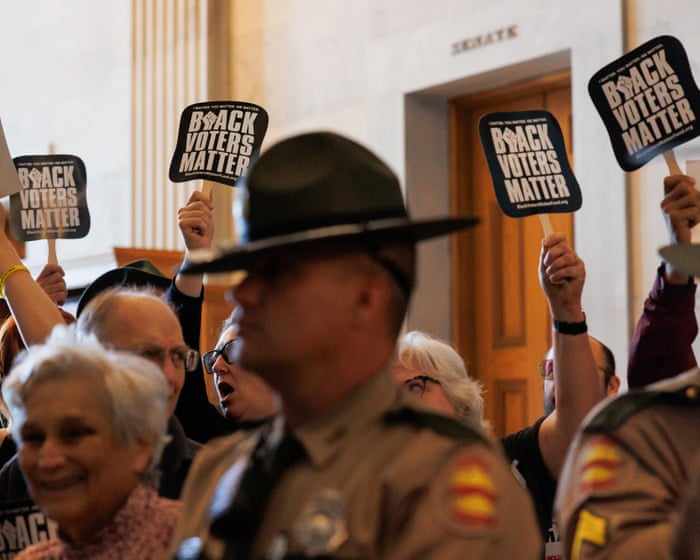
The article discusses how new voting district maps in Memphis have divided the majority-Black area into parts that favor Republicans, weakening Black political power. It explains that a key part of the Voting Rights Act was weakened by the Supreme Court, making it harder to stop unfair map drawing called gerrymandering. The article calls for Congress to pass a new law banning all kinds of gerrymandering to protect fair voting.
Key Facts
Memphis, Tennessee’s largest majority-Black city, had its congressional district divided into three districts favoring Republicans.
This division reduces the political power of Black voters despite their high turnout and engagement.
The original Voting Rights Act of 1965 helped prevent racial vote dilution but has been weakened by recent Supreme Court decisions.
The Supreme Court ruling in Louisiana v. Callais reduced protections against maps that dilute Black political power.
The 2019 Supreme Court decision in Rucho v. Common Cause said federal courts cannot stop partisan gerrymandering.
Justice Samuel Alito’s opinion in the recent case used selective data that misrepresented Black voter turnout.
The article urges Democrats to create a new Voting Rights Act that bans both racial and partisan gerrymandering nationwide.
A new federal ban would apply equally to maps drawn by any political party in any state.
Read the Original
Want the full story? Tap a source to open the original
article.
The FDA tested 300 baby formula samples for toxic chemicals like PFAS and phthalates and announced most meet a high safety standard. However, health experts warn many samples still had dangerous chemicals that could harm newborns, and the FDA’s data does not fully show which products are safest.
Key Facts
The FDA tested 300 baby formula samples for harmful chemicals including PFAS, phthalates, lead, pesticides, and mercury.
About half the samples contained PFOS, a dangerous type of PFAS, and many had phthalates, which can disrupt hormones.
Small amounts of these chemicals can be risky for newborns because their bodies and immune systems are still developing.
The FDA reported most PFOS levels were below 2.9 parts per trillion, slightly under drinking water limits, but these may not protect infants drinking formula.
Some samples had chlorpyrifos, a pesticide the EPA tried to ban but was blocked by a court ruling.
Public health advocates say no level of endocrine-disrupting chemicals is truly safe for babies.
The FDA did not release product names or show if samples had multiple chemicals, which could increase health risks.
The Department of Health and Human Services promises to hold manufacturers accountable and provide transparent information to parents.
Read the Original
Want the full story? Tap a source to open the original
article.
Jack Schlossberg, a Democratic candidate for a New York House seat, proposes changing the Child Tax Credit to pay families monthly instead of once a year. His plan also aims to increase the credit to levels seen during the COVID-19 American Rescue Plan, providing monthly payments based on children's ages.
Key Facts
Jack Schlossberg is running for Congress in New York's 12th District.
He wants the Child Tax Credit to be paid monthly, not annually.
The proposal is called the "Monthly Moms Bonus."
Monthly payments would be $300 for children under six and $250 for those six and older.
The plan would use some funding from a Senate Republican proposal for White House security upgrades, as well as tax reforms.
The current Child Tax Credit can be up to $2,200 per child annually.
Schlossberg is the grandson of former President John F. Kennedy and will discuss the plan on Mother's Day with his mother, Caroline Kennedy.
The seat is open because Rep. Jerry Nadler is retiring, and several candidates are competing for the position.
Read the Original
Want the full story? Tap a source to open the original
article.
Anas Sarwar said he will remain leader of Scottish Labour after the party’s poor showing in the recent Scottish Parliament elections. Labour lost four seats and now holds 17 out of 129 seats, while the SNP won 58 seats but did not get an overall majority.
Key Facts
Scottish Labour lost four seats in the recent elections, winning only 17 seats total.
The Scottish National Party (SNP) won 58 seats but did not secure a majority (65 seats needed).
Sarwar said he wants to keep his party united and hold the SNP accountable.
He did not say how long he plans to stay as leader or if he will lead Labour in the next election.
Sarwar confirmed he still wants Prime Minister Sir Keir Starmer to resign, a position he stated earlier in February.
Labour performed poorly across the UK, losing many seats in Wales and councillor positions in England.
Former Scottish Labour leader Jack McConnell blamed UK government disappointment and weak strategy for Labour’s losses.
A Labour MP called for cabinet ministers to challenge Starmer’s leadership after the election results.
Read the Original
Want the full story? Tap a source to open the original
article.
Nigel Farage received a £5 million personal gift from a crypto billionaire shortly before announcing his run in the 2024 UK general election, raising questions about disclosure and political influence. Labour accuses him of avoiding scrutiny, while Reform UK says all rules were followed and the money was for Farage's safety.
Key Facts
Nigel Farage got a £5 million gift from Christopher Harborne, a crypto billionaire, just before the last UK general election.
Farage did not disclose this gift initially, which led to public and political questions about transparency.
Reform UK’s deputy leader, Richard Tice, said the gift was personal and legal, meant to protect Farage's safety.
Labour claims Farage failed to follow rules and that the gift influences policy, mentioning a crypto tax cut policy linked to the donor.
Reform UK had strong election results recently, gaining many council seats and placing well in devolved parliaments.
The UK Electoral Commission may investigate if Farage’s gift broke election laws, potentially leading to fines.
Parliamentary rules require politicians to report benefits for political purposes in the year before taking office.
Prime Minister Keir Starmer said Farage should face more public and parliamentary scrutiny over the gift.
Read the Original
Want the full story? Tap a source to open the original
article.
New rules in England will require doctors and hospitals to share patient records to create one combined health record for each person. This will help healthcare staff see a patient's full medical history in one place, improving care and reducing repeated questions.
Key Facts
New laws will make doctors’ practices (GPs) and hospitals share patient data to form a single patient record (SPR).
The SPR will be used across all NHS healthcare providers in England.
This is part of a £10 billion digital upgrade of the health service.
The records will help healthcare workers access important information quickly, like medical history, medicines, and allergies.
The SPRs will start being available in some NHS areas, like maternity care, as early as next year.
Patients will have more control over who sees their data, with safety measures to prevent data leaks.
Currently, GPs and hospitals keep their own patient data separately, causing delays and missing information.
Some doctors and medical groups worry about who will be responsible if there are errors in shared records.
Read the Original
Want the full story? Tap a source to open the original
article.
The FIFA World Cup matches held across the United States are facing increased risks of terrorism. Experts warn that threats come mainly from homegrown extremists, and securing the many match locations will require strong coordination among federal, state, and local law enforcement.
Key Facts
The FIFA World Cup will have 104 matches in the US, Canada, and Mexico, with the US hosting 78 matches in 11 cities.
The biggest terrorism threat is from homegrown violent extremists, often acting alone and influenced online by extremist groups.
The Department of Homeland Security has designated only the final match as a national special security event, which triggers extra federal security measures.
Other matches are rated as high risk and will also get federal law enforcement support.
The FBI held a large training exercise for domestic terrorism threats before the event.
FEMA has provided $625 million to support security and emergency plans for the World Cup.
Experts say “soft targets” like hotels and fan gatherings are a larger concern than the stadiums themselves.
Law enforcement agencies are working together nationwide to ensure the safety of stadiums and surrounding communities.
Read the Original
Want the full story? Tap a source to open the original
article.
The Trump administration has put forward different and conflicting policies on overdose prevention, including cutting funding for tools that help prevent overdoses and proposing a new drug control strategy. These contradictions could harm efforts to reduce overdoses and make it harder to carry out the planned strategy if budget cuts happen.
Key Facts
The administration banned funding for fentanyl test strips, which help people check drugs for dangerous chemicals and avoid overdosing.
Experts say cutting funding for test strips benefits drug cartels and removes a way for users to stay safer.
Harm reduction programs, like test strips and nasal naloxone (a spray that reverses opioid overdoses), are being reduced.
The CDC stopped supporting “never use alone” messages that help reduce overdose risk.
The White House proposed cutting $10 billion from addiction and overdose prevention and research funding.
Despite cuts, the administration announced a new National Drug Control Strategy to expand treatments and naloxone access.
Experts note a conflict between the strategy and budget cuts, caused by poor coordination between government offices.
Congress must reject the proposed budget cuts for the drug control strategy to be fully effective.
Read the Original
Want the full story? Tap a source to open the original
article.
President Donald Trump has repeatedly claimed election fraud when Republicans lose. These claims are part of a wider plan to influence future elections in his favor.
Key Facts
President Trump often says there is fraud during elections that Republicans do not win.
These fraud claims have no solid evidence to support them.
The claims are part of a larger strategy to change how elections are run.
The goal of this strategy is to give President Trump and his party an advantage in future votes.
This approach is ongoing and shows no signs of stopping.
Read the Original
Want the full story? Tap a source to open the original
article.
Two Supreme Court justices recently said the court is not political and does not take sides in politics. However, the article argues that the court’s decisions often follow political party lines, especially on major issues like abortion and gun control, showing the court is involved in politics.
Key Facts
Justice Amy Coney Barrett and Chief Justice John Roberts said the Supreme Court is not political.
The 2016 presidential election focused heavily on Supreme Court appointments.
President Trump promised to appoint justices who might overturn Roe v. Wade, which gained support from white evangelicals.
Senator Mitch McConnell delayed Merrick Garland’s nomination for 293 days but quickly confirmed Justice Barrett right before an election.
Most Supreme Court cases are decided almost unanimously, but this does not prove the court is non-political.
The court often splits 6-3 on major issues along party lines.
Historically, Congress has changed the size of the Supreme Court to influence its political balance.
Denying the court’s political nature affects how people react to proposals like court expansion or term limits.
Read the Original
Want the full story? Tap a source to open the original
article.
Having a baby in the United States is very expensive for many families, with costs for pregnancy, delivery, and childcare much higher than in other wealthy countries. The US also has a high rate of mothers dying from childbirth, especially among Black women, who face much greater risks than white or Hispanic women.
Key Facts
The cost of childbirth in the US can be very high, ranging from about $15,000 for vaginal births to over $19,000 for C-sections, even with insurance.
Health insurance in the US may cover some costs, but many women still pay thousands of dollars out of pocket, especially if their doctors or hospitals are not covered by their insurance.
Around 8% of Americans do not have health insurance, increasing financial risks for mothers.
Some states like Alaska, New York, and New Jersey have higher childbirth costs, with hospital stays costing thousands of dollars per night.
The US has a maternal death rate of 18.6 per 100,000 live births, which is much higher than in countries like Norway or Italy.
Black women in the US die from childbirth complications about three times more often than white women, with a rate of 50.3 deaths per 100,000 live births in 2023.
Childcare and medical care costs continue to be a heavy burden for many families after birth.
Maternity leave policies in the US provide less support compared to other wealthy countries, adding to the financial and personal challenges of motherhood.
Read the Original
Want the full story? Tap a source to open the original
article.
Fewer Americans want to become pastors, causing a shortage of religious leaders in many communities, especially in rural areas and Black neighborhoods. This decline is linked to lower pay, higher stress, and less trust in pastors, along with church closures and shrinking congregations.
Key Facts
Enrollment in U.S. Master of Divinity programs dropped 14% from 2020 to 2024.
Black Protestant divinity program enrollment fell 31% between 2000 and 2020.
Over 40% of clergy surveyed said they considered leaving their jobs since 2020.
Around 15,000 U.S. churches closed last year, while 29% of Americans now say they have no religious affiliation.
Rural churches are especially affected, losing pastors and sometimes closing, which impacts local support services like food aid and elder care.
The Diocese of Oakland plans to close 13 churches due to financial issues and a priest shortage.
Women make up nearly 24% of U.S. clergy, a historic high compared to 2.3% in 1960.
The Catholic Church is bringing more priests from Asia and Africa to serve in U.S. parishes facing shortages.
Read the Original
Want the full story? Tap a source to open the original
article.
Violent crime dropped significantly in many large U.S. cities in early 2026 compared to the same time in 2025. This decrease happened widely across different types of crime and regions, showing a national trend toward lower violence.
Key Facts
Homicides fell by 17.7%, robberies by 20.4%, rapes by 7.2%, and aggravated assaults by 4.8% in major cities.
Some cities saw big drops in homicides: Washington, D.C. (64.7%), Philadelphia (54%), San Diego (50%), Memphis (34.4%), New York City (31.7%), Los Angeles (23%), and Houston (36.4%).
Aurora, Colorado, challenged President Trump's claims of high crime there, with a 66.7% decline in homicides.
Crime declines started during President Biden's time and continued under President Trump.
Despite overall drops, some cities like Minneapolis, Atlanta, and Virginia Beach saw increases in violent crime.
Officials warn that crime rates can change quickly in summer, historically a season with more violence.
The Trump administration has begun highlighting the crime declines, crediting its policies.
Data comes from 67 major U.S. law enforcement agencies and is tracked by the Major Cities Chiefs Association, which matches FBI annual reports.
Read the Original
Want the full story? Tap a source to open the original
article.
The Gullah Geechee people in South Carolina are at risk of losing land passed down through families because of unclear ownership documents and rising property taxes. Some families have kept their land with help from local groups, but many others face challenges from legal and financial issues as well as development and climate problems.
Key Facts
Arthur Champen’s family has owned land in Hilton Head Island since 1892 when his ancestors bought 60 acres for $600.
The land passed down through generations without formal wills is called heirs’ property, which can cause legal confusion over ownership.
After some family members moved or died, Champen’s family almost lost marshland to tax sale due to unpaid property taxes.
A nonprofit group helped the family pay taxes so they could keep the land.
Many Gullah Geechee people in Beaufort County face losing land due to unclear property titles, unpaid taxes, family disputes, development pressure, and climate impacts.
The Gullah Geechee population on Hilton Head has decreased, with Black residents dropping from 8% in 2000 to 6% in 2020.
There are over 41,000 heirs’ properties in South Carolina totaling more than 414,000 acres, valued over $3.4 billion in 2019.
Researching exact land loss among Gullah families is difficult and costly because of complex legal issues.
Read the Original
Want the full story? Tap a source to open the original
article.
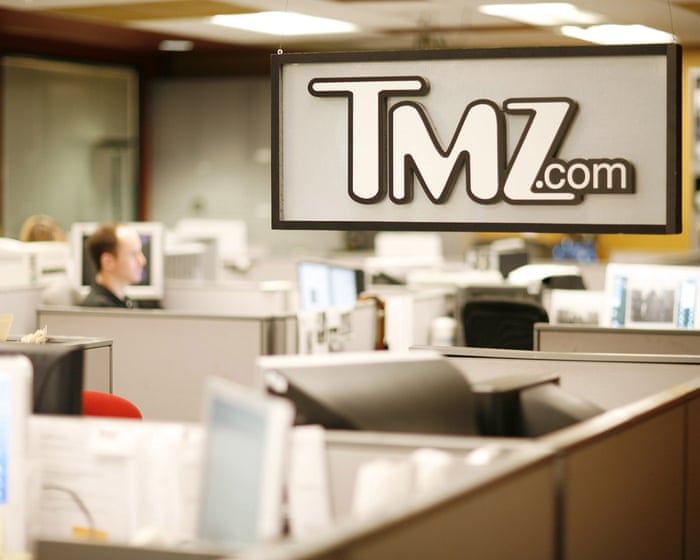
TMZ recently started reporting on U.S. politicians in Washington, focusing mainly on members of Congress during their recess period. The website highlighted how some politicians took time off while important issues like a Homeland Security funding bill remained unresolved, but some of their coverage included mistakes and missing context.
Key Facts
TMZ moved into political reporting just weeks ago, focusing on members of Congress during their recess.
They described the recess as a "two-week vacation," although this was not entirely accurate.
TMZ published photos of Senator Lindsey Graham at Disney World during the recess.
The outlet’s coverage drew attention from other media, including CNN and The Hill.
TMZ reporter Charlie Cotton confronted Representative Dan Meuser about inaction on a DHS funding bill.
Meuser’s comments were partly misrepresented, missing details that the Senate had already passed the bill.
TMZ’s political reporting showed a more aggressive style compared to usual coverage but sometimes lacked full context.
Some reports mixed entertainment-style journalism with political news, leading to criticism of accuracy.
Read the Original
Want the full story? Tap a source to open the original
article.