Hospitals are changing how they care for patients by using more home-based services and technology like remote monitoring. At the same time, the U.S. government is increasing efforts to prevent fraud in Medicare and Medicaid payments, which creates new challenges for hospitals and health systems.
Key Facts
Hospitals are moving patient care from hospitals to homes using programs with remote monitoring and in-home services.
By mid-2025, 400 hospitals in 39 states took part in a CMS program to provide hospital care at home.
One Texas hospital saved over $17 million and freed more than 17,500 hospital beds through its home care program.
The government is tightening rules to prevent fraud in Medicare and Medicaid, including pausing new enrollments for some home health agencies.
Fraud risk is higher in home health and hospice care because care is decentralized and paperwork is complex.
Officials, including Vice President JD Vance, have threatened to cut federal funding to states that do not comply with anti-fraud measures.
CMS launched an initiative to speed up electronic prior authorization to reduce barriers in care approval, with major health providers and software companies participating.
Health care leaders worry that stricter funding rules may add difficulties just as care models are changing rapidly.
Read the Original
Want the full story? Tap a source to open the original
article.
The FBI plans to buy access to a nationwide network of license plate reader cameras that can provide near real-time data across the United States and its territories. The agency aims to use this system to track vehicles for safety and law enforcement purposes and may award contracts to one or more companies for up to five years.
Key Facts
The FBI issued a request for proposals to get access to License Plate Reader (LPR) data across 75% of US locations.
The system must allow searches by plate numbers, vehicle details, times, and locations, and provide alerts.
Contracts may be awarded regionally and could total up to $36 million over five years.
Flock and Motorola Solutions are likely bidders for the contract, both already sell LPR technology to law enforcement.
The system must show camera coverage maps and identify the source of the data, like red-light or speed cameras.
The FBI wants a web-based platform accessible by FBI users nationwide.
There are privacy and data security concerns related to license plate reader technology and its use.
The FBI already runs an LPR information sharing program and maintains a “hot list” to compare vehicle data for law enforcement.
Read the Original
Want the full story? Tap a source to open the original
article.
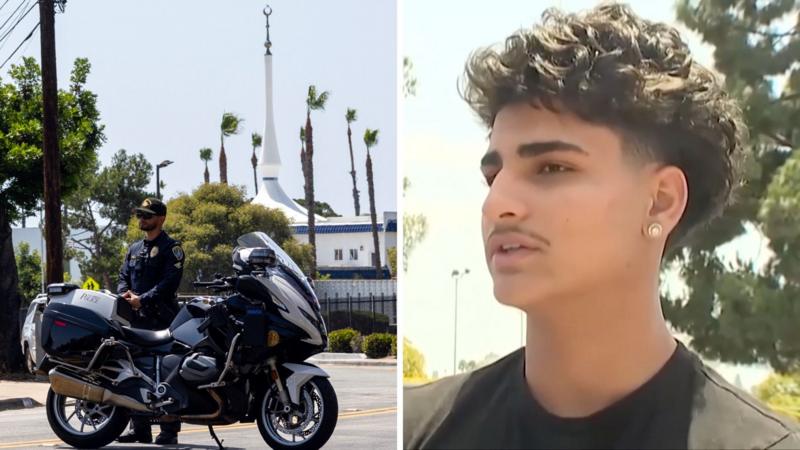
Two teenage boys fatally shot three men at a mosque in San Diego before killing themselves. Police were searching for the boys after a family call reported one was missing and possibly suicidal.
Key Facts
The shooting happened Monday morning at the Islamic Center of San Diego.
Three men were killed outside the mosque.
Two teenage attackers died by suicide after the shooting.
Police were already looking for the suspects before the attack.
The search began after one boy’s mother called to report he had run away and might be suicidal.
The community created a memorial at the mosque after the shooting.
Police suspect the attack was a hate crime.
The incident caused panic and concern in the local community.
Read the Original
Want the full story? Tap a source to open the original
article.
Vice President Vance held a White House briefing where he acted calmly and tried to manage reporters’ questions carefully. His style was much quieter compared to Secretary of State Marco Rubio’s lively and noisy briefing earlier.
Key Facts
Vice President Vance spoke at the White House briefing room on Tuesday.
His approach was calm and controlled.
He pointed randomly to reporters to select who could ask questions.
Sometimes he looked at a chart to decide which reporter to call on.
Secretary of State Rubio gave a loud and energetic briefing before Vance.
Vance’s briefing was noticeably more subdued than Rubio’s.
Reporters had many questions during Vance’s briefing.
The event showed a contrast in communication styles between the two officials.
Read the Original
Want the full story? Tap a source to open the original
article.
Many Americans will travel by car during the Memorial Day weekend. Traffic is expected to be very heavy on certain highways and at certain times, so travelers should plan their trips to avoid long delays.
Key Facts
Memorial Day weekend is a popular travel time in the United States.
Millions of Americans will drive on highways during this holiday.
Traffic congestion, or gridlock, is expected on some roads.
Certain highways will be busier than usual.
Traveling at specific times may help avoid heavy traffic.
Planning trips ahead can reduce time spent in traffic jams.
Read the Original
Want the full story? Tap a source to open the original
article.
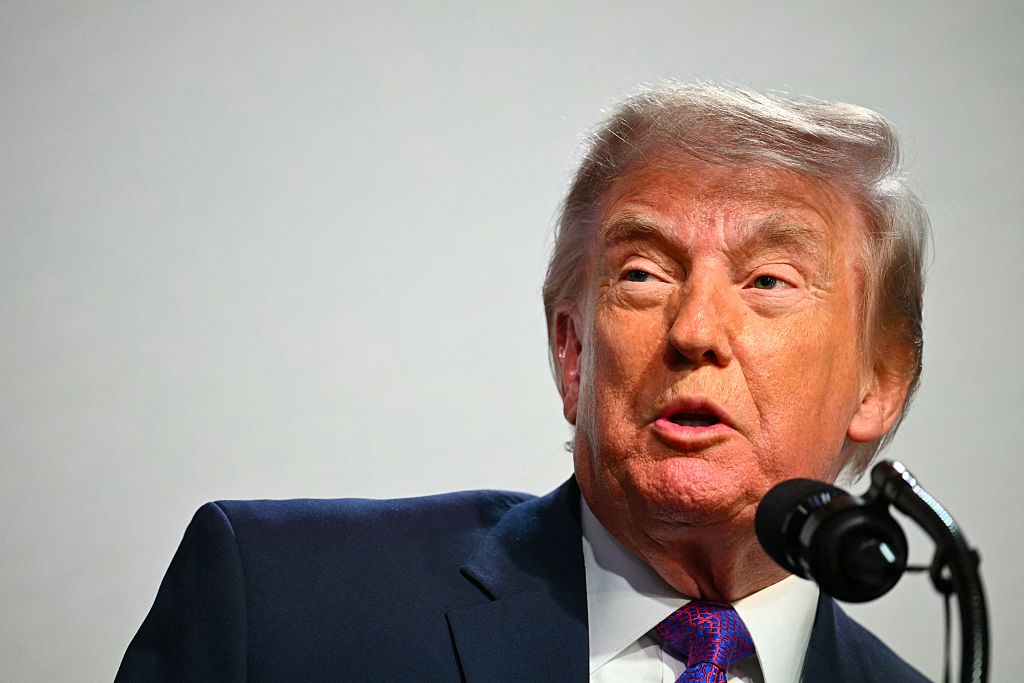
The U.S. Department of Justice (DOJ) has expanded a settlement with President Donald Trump related to the leak of his tax returns. The new order prevents government agencies from auditing Trump, his family, or his companies on past or current IRS reviews, while also establishing a $1.776 billion fund to compensate those who say they were wrongly targeted by the government.
Key Facts
The DOJ’s expanded settlement bars any IRS audits tied to Trump and his related parties for tax returns filed before the settlement.
This order was signed by Acting Attorney General Todd Blanche and published on the DOJ website.
It goes beyond the earlier nine-page settlement that created the Anti-Weaponization Fund but didn’t mention IRS disputes.
Trump sued the IRS and Treasury for $10 billion after a former IRS contractor leaked his tax returns and others’.
The contractor, Charles Littlejohn, pleaded guilty and was sentenced to five years in prison.
In the settlement, Trump and his family receive a government apology but no direct money payment.
Trump agreed to drop other lawsuits related to the FBI search of Mar-a-Lago and investigations into his 2016 campaign.
A five-member commission will oversee the $1.776 billion Anti-Weaponization Fund, with claims accepted until December 15, 2028.
Read the Original
Want the full story? Tap a source to open the original
article.
Senate Majority Leader John Thune said the Republican Party will keep its Senate majority in the November elections. This came after President Donald Trump endorsed Texas Attorney General Ken Paxton instead of the current Senator John Cornyn in the GOP primary.
Key Facts
John Thune is the Senate Majority Leader and a Republican from South Dakota.
Thune believes the GOP will keep control of the Senate in the upcoming elections.
President Donald Trump publicly supported Ken Paxton for the Texas Senate seat.
Trump made his endorsement on his social media platform, Truth Social.
Ken Paxton is the Texas Attorney General running against Senator John Cornyn in the primary.
John Cornyn is the current Republican Senator from Texas seeking re-election.
Read the Original
Want the full story? Tap a source to open the original
article.
The imam of the Islamic Center of San Diego spoke about a recent shooting at the mosque. He said that the security guard and other victims lost their lives to protect the community.
Key Facts
The shooting happened on a Monday at the Islamic Center of San Diego.
Several people, including a security guard, died in the attack.
The security guard and other victims are honored for protecting the mosque and its members.
The imam described their deaths as a sacrifice for the whole community.
The incident was reported by CBS News, including comments from Imam Taha Hassan.
The community is mourning the loss of these individuals.
Read the Original
Want the full story? Tap a source to open the original
article.
The NAACP has asked Black athletes, their families, alumni, and fans to boycott public universities in Southern U.S. states that have changed voting district lines to reduce Black voting power. This campaign aims to withhold support from college sports programs in states where redistricting is seen to weaken Black political influence.
Key Facts
The NAACP launched the “Out of Bounds” campaign to oppose redistricting that reduces Black voting representation.
The boycott targets major public universities in Southern states like Alabama, Florida, Georgia, Louisiana, Mississippi, Texas, and South Carolina.
These states have changed voting district maps after a recent Supreme Court ruling that limited a key part of the Voting Rights Act.
The Voting Rights Act was created in 1965 to stop racist laws that kept Black voters from voting.
Black voters mainly support the Democratic Party, while Republican-led state legislatures have pushed the new maps.
College football and basketball teams in these states rely heavily on Black athletes who generate large revenues.
NAACP President Derrick Johnson said Black athletes should not support institutions that reduce the political power of Black communities.
Some states have delayed primary elections to redraw voting maps, and more changes may come after November’s midterm elections.
Read the Original
Want the full story? Tap a source to open the original
article.
President Donald Trump endorsed Texas Attorney General Ken Paxton for the Senate over Senator John Cornyn, causing controversy in the state's heated primary race. This endorsement is significant because Cornyn was considered a stronger candidate for the general election.
Key Facts
President Trump chose to support Ken Paxton in the Texas Senate primary run-off.
John Cornyn is the current U.S. Senator seeking re-election.
Cornyn was seen as having a better chance to win the general election.
The endorsement has upset many in the Republican Senate establishment.
The primary run-off election is happening in about one week.
The battle between Paxton and Cornyn is very competitive and tense.
Trump’s choice shows a split within the Texas Republican Party.
The decision could affect the outcome of the Senate race and party unity.
Read the Original
Want the full story? Tap a source to open the original
article.
Black Democratic lawmakers, including members of the Congressional Black Caucus, are urging Black athletes to stop playing for Southern state universities. They say these schools have not opposed Republican redistricting plans that remove voting districts for minorities.
Key Facts
The Congressional Black Caucus is leading calls for Black athletes to boycott Southern state universities.
The boycott relates to accusations that these schools have not fought against Republican-led redistricting.
The redistricting, known as gerrymandering, has removed minority voting districts in Southern states.
The NAACP and other minority advocacy groups support the boycott effort.
The focus is on state universities in the Southern United States.
Lawmakers and activists want to use the athletes’ influence to protest political actions harming minority representation.
The issue centers on political maps drawn by Republicans that affect minority voters’ power.
The effort aims to push universities and politicians to oppose these redistricting plans.
Read the Original
Want the full story? Tap a source to open the original
article.
The FBI reported that the shooters involved in the deadly attack at a mosque in San Diego were influenced by extremist content found online. The attackers did not target people based on a specific characteristic but showed hatred toward many groups.
Key Facts
The shooting happened at a mosque in San Diego on Monday.
The FBI said the shooters were radicalized through online content.
The attackers did not discriminate; their hatred was broad and not limited to one group.
The FBI provided an update about the investigation on Tuesday.
Authorities are continuing to investigate the motives behind the attack.
The incident resulted in deaths and injuries at the mosque.
The Islamic Center community is affected by the event and the investigation.
Read the Original
Want the full story? Tap a source to open the original
article.
Staying informed here is free for everyone. If it's worth something to you, pay what you want. Supporters also get the daily digest by email every morning.
Oregon Governor Tina Kotek is seeking a second term and is competing against nine other Democrats in the primary election. On the Republican side, several candidates are also competing for their party’s nomination ahead of the November general election.
Key Facts
Tina Kotek is the current governor of Oregon.
She is running for re-election in the primary election held on Tuesday.
Nine other Democratic candidates are competing against Kotek.
The Republican party has a crowded field of candidates challenging for the nomination.
The primary elections decide which candidates will represent their parties in the November general election.
The outcome will determine the candidates for governor from both parties.
Primary elections are held to choose party nominees before the general election.
This election is for the governor’s office in the state of Oregon.
Read the Original
Want the full story? Tap a source to open the original
article.
Georgia is holding primary elections to choose the Republican candidate who will run against Senator Jon Ossoff, a Democrat. Representatives Buddy Carter and Mike Collins are competing for the Republican nomination in this important Senate race.
Key Facts
The primary election is happening in Georgia.
The race is to challenge Senator Jon Ossoff, a Democrat in his first term.
Republican candidates include Representatives Buddy Carter and Mike Collins.
The Republican nominee will face Senator Ossoff in the general election.
This Senate race is considered one of the most closely watched this election cycle.
Buddy Carter and Mike Collins are competing for the same party’s nomination.
The outcome will decide who challenges Senator Ossoff in November.
Read the Original
Want the full story? Tap a source to open the original
article.
Alabama voters are choosing their party nominees in the primary elections to decide who will run for governor in November. Former Senator Doug Jones is the expected Democratic candidate, while several Republicans, including Senator Tommy Tuberville, are competing for their party’s nomination.
Key Facts
Alabama is holding primary elections to select candidates for governor.
Current Governor Kay Ivey, a Republican, will not be running for re-election.
Doug Jones, a former U.S. Senator and Democrat, is the likely Democratic nominee.
Jones is competing against five other Democratic candidates.
Senator Tommy Tuberville is one of the Republican candidates seeking the nomination.
Alabama is known as a strongly Republican state.
The winner of the November election will become Alabama's next governor.
Read the Original
Want the full story? Tap a source to open the original
article.
Kentucky voters are choosing who will replace Senator Mitch McConnell in primary elections. On the Republican side, Representative Andy Barr and former Attorney General Daniel Cameron are the main contenders, while Charles Booker and Amy McGrath are leading among Democrats.
Key Facts
Senator Mitch McConnell is not running for re-election.
Kentucky is holding primary elections to pick candidates for his Senate seat.
Andy Barr and Daniel Cameron are the top Republican candidates.
Charles Booker and Amy McGrath are leading the Democratic race.
Polls close at 6 p.m. Eastern Daylight Time on election day.
Read the Original
Want the full story? Tap a source to open the original
article.
The Georgia Supreme Court elections are taking place, with Democrats actively supporting two candidates to change the court’s political balance. Although the races are officially non-partisan, candidates Miracle Rankin and Jen Jordan have received endorsements from well-known Democratic leaders.
Key Facts
The elections are for seats on the Georgia Supreme Court.
The races are officially non-partisan, meaning no party labels appear on the ballot.
Democrats want to shift the court’s ideological makeup.
Miracle Rankin and Jen Jordan are the candidates backed by Democrats.
They have endorsements from former Vice President Kamala Harris, former President Barack Obama, and Senator John Ossoff from Georgia.
The support signals the importance Democrats place on these judicial elections.
These endorsements may influence voters in the state.
Read the Original
Want the full story? Tap a source to open the original
article.
Kentucky voters are voting in primary elections to choose House candidates for the November general election. The main focus is on the Republican primary in the 4th Congressional District, where Representative Thomas Massie is competing against Ed Gallrein, who has President Donald Trump's support.
Key Facts
Kentucky held primary elections for House candidates on Tuesday.
The winner of these primaries will run in the November general election.
The GOP primary in the 4th Congressional District is highly watched.
Incumbent Representative Thomas Massie is running for re-election.
Ed Gallrein, Massie's opponent, has backing from President Donald Trump.
Other incumbent Republican representatives like James Comer are also mentioned in connection with the primaries.
The primary results will decide the final candidates on the November ballot.
Read the Original
Want the full story? Tap a source to open the original
article.
On the biggest stories we show what the outlets agree on and where they differ. Readers keep that going, and get the daily digest by email every morning. Most choose $3.99/month.
Senator Jim Risch is running in a primary election on Tuesday to try to keep the Republican nomination for the Idaho Senate race. Several candidates are competing for the Republican and Democratic spots. Voting polls will close at 8 p.m. Pacific Daylight Time.
Key Facts
Senator Jim Risch is a candidate in the Idaho Senate primary election.
The primary will decide who represents the Republican and Democratic parties in the Senate race.
Multiple candidates are competing for each party’s nomination.
The polls close at 8 p.m. PDT on Tuesday.
The event is being covered live by Decision Desk HQ.
Read the Original
Want the full story? Tap a source to open the original
article.
Voters in Georgia are voting in a primary election to choose candidates for the governor race this fall. The Republican primary is competitive, with Lt. Gov. Burt Jones, supported by President Donald Trump, running closely against a wealthy rival.
Key Facts
Georgia voters are choosing who will run for governor in the fall election.
The current governor, Brian Kemp, will not be in this race.
The Republican primary race has seen a lot of spending by candidates.
Lt. Gov. Burt Jones is running as a Republican candidate.
President Donald Trump has endorsed Lt. Gov. Burt Jones.
Burt Jones is competing closely against a billionaire candidate.
The primary election is taking place on a Tuesday.
Read the Original
Want the full story? Tap a source to open the original
article.