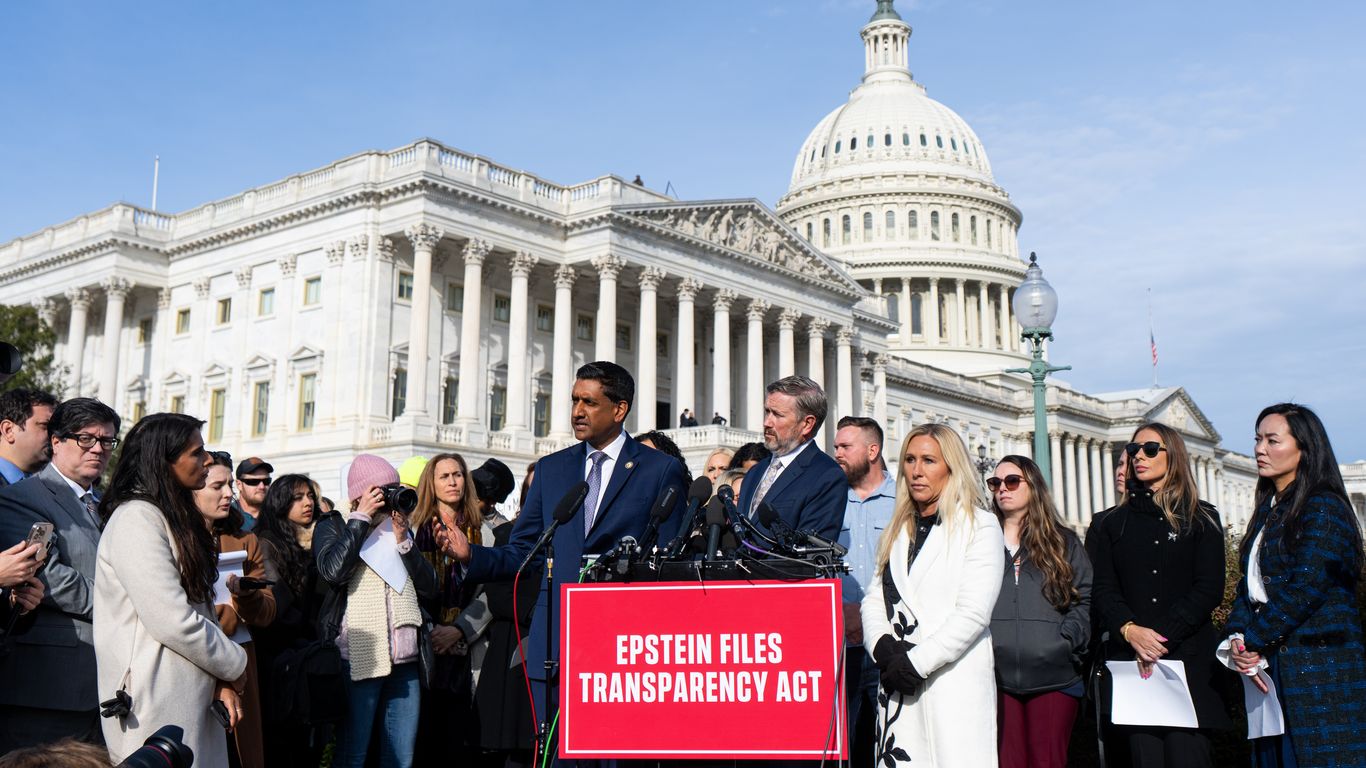
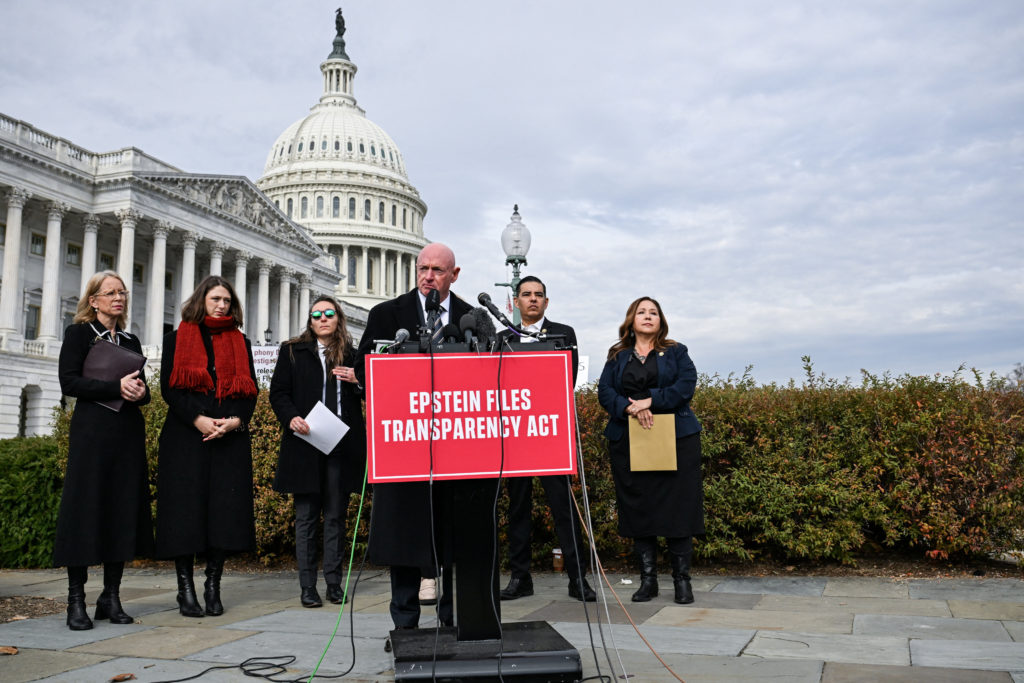
House Minority Leader Hakeem Jeffries is under scrutiny after Republicans released documents showing that a political firm linked to his early career invited Jeffrey Epstein to a Democratic event. The House and Senate voted to require the Justice Department to release its files on Epstein, showing strong bipartisan support despite initial resistance.
Key Facts
A political firm connected to Hakeem Jeffries once invited Jeffrey Epstein to a fundraising event.
Documents released by House Oversight Committee Chairman James Comer highlight this connection.
The documents include a 2013 email that promoted Jeffries as "Brooklyn's Barack."
Republicans argue this email attempted to involve Epstein in Democratic fundraising.
The Senate and House agreed to compel the release of Epstein-related files from the Justice Department.
This vote showed bipartisan support, overcoming delays from President Trump and some Republican leaders.
Read the Original
Want the full story? Tap a source to open the original
article.
A loose wire on a cargo ship led to the Francis Scott Key Bridge collapse in Baltimore in 2024, resulting in six workers' deaths. Investigators say the incident was preventable if warnings had been communicated sooner. The bridge repairs are now estimated to cost $5 billion and are expected to be completed by 2030.
Key Facts
A loose wire on the Dali cargo ship caused a power outage and led to the 2024 collapse of Baltimore's Francis Scott Key Bridge.
The bridge collapse resulted in the death of six workers.
Investigators from the National Transportation Safety Board (NTSB) said the incident was preventable.
Police knew the ship was off course but did not warn the construction team in time.
Workers had about one minute and 29 seconds to evacuate if notified earlier.
The incident disrupted the Port of Baltimore and major roadway routes.
Bridge repair costs are now estimated at $5 billion, with completion expected by 2030.
Maryland Governor Wes Moore stated that the costs have increased due to trade policies.
Read the Original
Want the full story? Tap a source to open the original
article.
Nearly 24 House Democrats joined Republicans in passing a measure to reprimand Representative Chuy García from Illinois. The measure criticized García for announcing his retirement after the filing deadline, which allowed only his chief of staff to appear on the Democratic primary ballot. This decision created tension within the Democratic Party.
Key Facts
23 House Democrats voted with Republicans to reprimand Rep. Chuy García.
The measure passed with a vote of 236 to 183.
García announced retirement plans after the Illinois filing deadline, affecting the primary ballot.
His chief of staff, Patty Garcia, became the sole Democratic candidate on the ballot.
The district is predominantly Democratic, meaning the primary often decides the overall election.
Democratic leaders opposed the measure and praised García in a separate statement.
Some progressive members have discussed possible retaliation against those who supported the measure.
García cited health and family reasons for his decision to not seek reelection, despite initial plans to do so.
Read the Original
Want the full story? Tap a source to open the original
article.
The US House of Representatives passed a bill called the Epstein Files Transparency Act. This bill aims to make documents related to Jeffrey Epstein public. It needs Senate approval and President Trump's signature to become law.
Key Facts
The House of Representatives voted 427 to 1 in favor of the bill.
The bill is called the Epstein Files Transparency Act.
It requires the Department of Justice to release documents about Jeffrey Epstein.
Jeffrey Epstein was a convicted sexual offender.
The bill must still be approved by the Senate.
President Donald Trump needs to sign the bill for it to become law.
Read the Original
Want the full story? Tap a source to open the original
article.
The House of Representatives voted almost unanimously to require the Justice Department to release its files on Jeffrey Epstein. The bill passed 427-1, driven by pressure from both President Trump and Speaker Mike Johnson. The Senate has yet to decide if they will vote on the bill.
Key Facts
The House voted 427-1 to force the Justice Department to release Jeffrey Epstein files.
Speaker Mike Johnson and President Trump supported the release after initial opposition.
Senate Majority Leader John Thune has not committed to a Senate vote on the bill.
President Trump stated he would sign the bill if it passes the Senate.
The effort began with a discharge petition led by Reps. Thomas Massie and Ro Khanna.
Only a few Republicans initially signed the petition, but support increased after Trump's backing.
Some Democrats believe Trump supported the bill to avoid being on the losing side of the issue.
Speaker Johnson initially opposed the effort, arguing the release might not protect victims and whistleblowers adequately.
Read the Original
Want the full story? Tap a source to open the original
article.
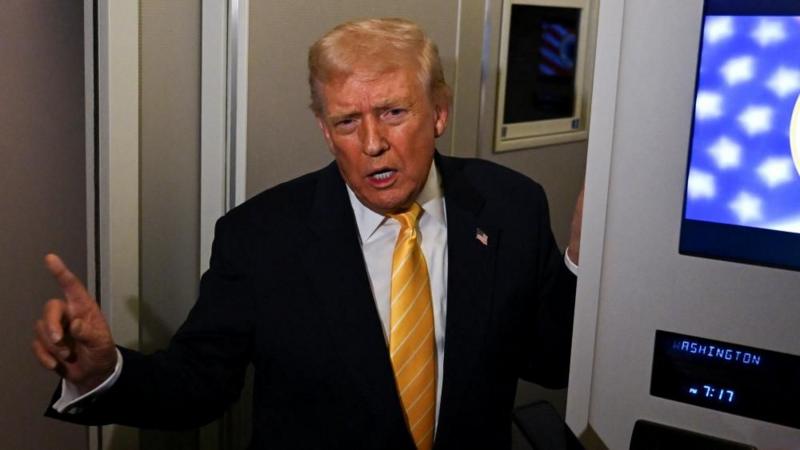
President Donald Trump was asked about emails related to Jeffrey Epstein while speaking to reporters on Air Force One. He dismissed the questions about Epstein, mentioning former President Bill Clinton as someone also named in the emails. Later, Trump called for the release of files related to the Epstein investigation.
Key Facts
President Trump spoke to reporters on Air Force One on 14 November.
He was asked about emails mentioning Jeffrey Epstein, a convicted sex offender.
President Trump said he knew nothing about the emails.
He mentioned that other people, like former President Bill Clinton, were also named.
When a reporter asked a follow-up question, Trump told her to be quiet.
There is a push for the US Department of Justice to release its Epstein investigation files.
President Trump later supported a bill to release all files related to Epstein.
Read the Original
Want the full story? Tap a source to open the original
article.
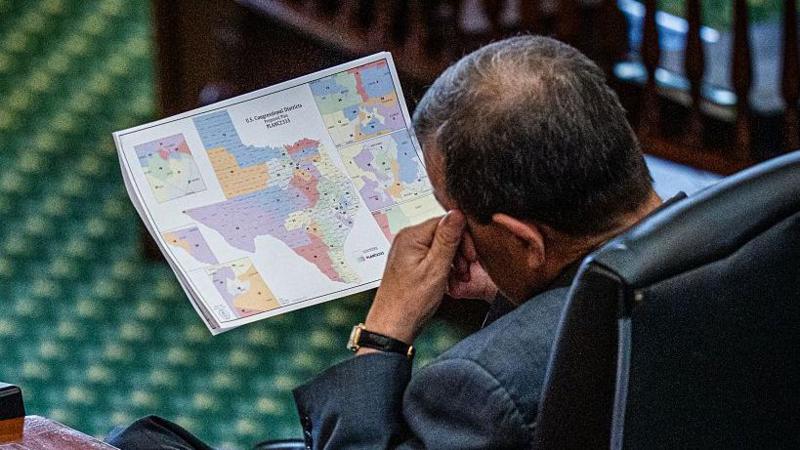
A U.S. federal court stopped Texas from using its newly drawn voting maps in the 2026 midterm elections. The court said these maps were racially gerrymandered, meaning they were drawn in a way that unfairly affects voters based on race.
Key Facts
A U.S. federal court blocked Texas from using new voting maps in 2026.
The court stated that the maps were racially gerrymandered.
Texas had redrawn the maps to improve Republican chances in elections.
The decision may be appealed to the Supreme Court.
The ruling requires Texas to use maps made in 2021 instead.
Both Democrat and Republican states have been redrawing maps to gain advantages in future elections.
The ruling was decided with a 2-1 vote by the judges.
The maps approved by Texas added five new Republican-leaning districts.
Read the Original
Want the full story? Tap a source to open the original
article.
President Trump hosted Saudi Arabia's Crown Prince Mohammad bin Salman at the White House. He dismissed the U.S. intelligence community's conclusion that the Crown Prince approved the plan to kill journalist Jamal Khashoggi in 2018.
Key Facts
President Trump met with Crown Prince Mohammad bin Salman at the White House.
The visit involved discussions with the leader of Saudi Arabia.
The U.S. intelligence community concluded the Crown Prince approved a plan to kill journalist Jamal Khashoggi in 2018.
President Trump dismissed this conclusion during the visit.
Jamal Khashoggi was a columnist for The Washington Post.
This event was reported by White House correspondent Liz Landers.
Read the Original
Want the full story? Tap a source to open the original
article.
Community colleges in the United States are facing challenges due to policies from President Trump's administration. These policies, while mostly targeting elite and public universities, are also affecting community colleges' efforts to create jobs and economic opportunities.
Key Facts
President Trump's administration has policies impacting higher education.
The focus has mainly been on elite and some public universities.
Community colleges are also experiencing challenges due to these policies.
These challenges could affect community colleges' plans to create more jobs.
Economic opportunities at these colleges could be undermined.
This issue is part of a series called "Rethinking College."
Read the Original
Want the full story? Tap a source to open the original
article.
Catholic bishops in the United States are asking President Trump's administration to stop large-scale deportations and improve how immigrants are treated in detention. They released a message calling for an end to harmful language and actions against immigrants.
Key Facts
Catholic bishops in the U.S. are concerned about mass deportation efforts.
The bishops are part of the U.S. Conference of Catholic Bishops.
They released a special message asking for better treatment of immigrants.
The message calls for an end to negative and violent behavior toward immigrants.
Bishop Mark Seitz from El Paso, Texas is involved in spreading this message.
The message specifically addresses actions taken by President Trump's administration.
Read the Original
Want the full story? Tap a source to open the original
article.
A new bill in Michigan aims to let around 350,000 people keep unemployment overpayments they received by mistake during the COVID-19 pandemic. The bill would prevent the state from collecting these overpayments unless it involved fraud. The Michigan Senate will soon vote on this bill.
Key Facts
The bill is called Senate Bill 700.
It would stop Michigan from collecting unemployment overpayments from February 2020 to September 2021.
About 350,000 people received these payments and later learned they might have to pay them back.
The bill was introduced by Democratic State Senator Darrin Camilleri.
Overpayments caused by fraud are not covered by this bill; those involved would still have to repay the state.
A previous lawsuit delayed the collection of these overpayments, but the process later restarted.
The Michigan Committee on Labor has already approved the bill, sending it back to the Senate for a vote.
Read the Original
Want the full story? Tap a source to open the original
article.
The U.S. House of Representatives voted to formally reprimand Illinois Representative Chuy García over a last-minute decision that left his chief of staff as the only candidate for his seat. The resolution passed with all Republicans and over two dozen Democrats supporting it. This move has highlighted divisions within the Democratic Party.
Key Facts
The House voted 236-186 to reprimand Representative Chuy García.
García’s late retirement announcement left his chief of staff as the sole candidate for his seat.
Over two dozen Democrats joined all Republicans in voting for the reprimand.
Democratic leaders called the reprimand unnecessary and politically dangerous.
Some Democrats felt the issue should be handled by the House Ethics Committee instead.
Rep. Marie Gluesenkamp Perez introduced the resolution.
The resolution accused García of manipulating the election process.
Democratic leaders defended García's long service and contributions.
Read the Original
Want the full story? Tap a source to open the original
article.
Representative Thomas Massie is urging the Senate to pass a bill that would require the Justice Department to release files related to the Jeffrey Epstein investigation. President Trump, after initially opposing the release, is now supporting the bill. The House is expected to vote in favor of the bill, but uncertainty remains about the Senate's response and the Justice Department's actions.
Key Facts
Thomas Massie is asking the Senate to approve a bill related to Jeffrey Epstein investigation files.
The House plans to vote on the bill, which is likely to pass.
President Trump changed his stance and now supports releasing the files.
House Speaker Mike Johnson had previously delayed the progress of the bill.
The real challenge is convincing the Senate and getting the Justice Department to act.
Survivor Jena-Lisa Jones criticized President Trump for politicizing the issue.
The push for the bill gained momentum when Congresswoman Adelita Grijalva provided a crucial signature.
Read the Original
Want the full story? Tap a source to open the original
article.
The House of Representatives passed the Epstein Files Transparency Act, which requires the release of documents related to Jeffrey Epstein and Ghislaine Maxwell. President Trump has agreed to sign the bill, which gives the Department of Justice (DOJ) 30 days to release the files, with certain material being exempt from release. The Senate is expected to vote on the bill soon.
Key Facts
The House of Representatives passed the Epstein Files Transparency Act with nearly unanimous support.
The bill directs the Attorney General to release all documents related to Jeffrey Epstein and his associate, Ghislaine Maxwell.
President Trump initially opposed the bill but has now stated he will sign it into law.
The Senate aims to vote on the bill soon, with expectations of it passing there as well.
The bill gives a 30-day deadline for releasing the files, with exceptions for certain sensitive information.
The Department of Justice must report on the files released and withheld within 15 days of their release.
President Trump has requested a new DOJ investigation related to Epstein, which could affect document release.
The method of how the documents will be publicly shared is still undetermined.
Read the Original
Want the full story? Tap a source to open the original
article.
The House of Representatives voted strongly to make the Justice Department release files related to Jeffrey Epstein, a convicted sex offender. The bill faced initial opposition from President Trump and Republican leadership but gained enough support to move forward. President Trump announced he would sign the bill if the Senate approves it as well.
Key Facts
The House voted in favor of releasing files on Jeffrey Epstein.
The bill initially faced opposition from President Trump and Republican leaders.
A bipartisan group in the House pushed the bill forward.
President Trump has agreed to sign the bill if the Senate approves it.
The vote demonstrated significant support despite early resistance.
The Senate is now considering the bill.
Read the Original
Want the full story? Tap a source to open the original
article.
President Donald Trump initially tried to stop a House vote on releasing files related to Jeffrey Epstein. He later changed his stance, and the measure is now likely to pass. Survivors and a U.S. Congresswoman criticized Trump for his initial opposition.
Key Facts
President Trump tried to block a House vote on releasing Epstein-related files.
He dropped his opposition on Sunday.
The measure related to the files is expected to pass with strong support.
Survivors of Epstein's abuse criticized President Trump for initially opposing the release.
U.S. Congresswoman Marjorie Taylor Greene also criticized Trump’s initial actions.
Read the Original
Want the full story? Tap a source to open the original
article.
President Donald Trump's approval rating has dropped to 38% in a recent poll. The survey shows low support for his handling of issues related to Jeffrey Epstein and the cost of living. This poll included responses from more than 1,000 adults in the U.S.
Key Facts
President Trump's approval rating is now at 38%, a decrease from 40% earlier this month.
The poll was conducted by Reuters/Ipsos from November 14 to 17, including 1,017 U.S. adults.
The margin of error for the poll is plus or minus 3 percentage points.
Only 20% of respondents approve of Trump's handling of files related to Jeffrey Epstein.
59% disapprove of Trump's handling of the Epstein files, while 21% are unsure.
Less than half of Republicans (44%) approve of how Trump is handling the Epstein issue.
Only 26% of respondents believe Trump is managing the cost of living well.
Nearly two-thirds, or 65%, disapprove of Trump's performance in handling the cost of living.
Read the Original
Want the full story? Tap a source to open the original
article.
House Speaker Mike Johnson has decided to support a petition requiring the Justice Department to release files about Jeffrey Epstein. This decision follows President Trump's public support for the release, reversing Johnson's previous stance against it. The vote to release these files is expected to have full Republican support.
Key Facts
House Speaker Mike Johnson originally opposed releasing the Jeffrey Epstein files but now supports it.
President Trump's endorsement influenced Johnson's change of course.
The Republican Party is expected to unanimously back the vote for releasing the files.
Initially, Johnson used tactics to delay and avoid the vote on the files.
Johnson argued the petition was unnecessary because of an ongoing House investigation.
Johnson mentioned concerns about protecting Epstein's victims with the release.
The bill allows the DOJ to remove sensitive details and materials that could harm victims.
Read the Original
Want the full story? Tap a source to open the original
article.
The U.S. House of Representatives nearly unanimously approved a bill to release the Epstein files, with only one Republican, Clay Higgins, voting against it. The documents are linked to the late Jeffrey Epstein, who faced sex trafficking charges. The bill now moves to the Senate, where it may be amended to address privacy concerns.
Key Facts
The House of Representatives voted 427-1 to release the Epstein files.
Jeffrey Epstein died in jail in 2019 while facing sex trafficking charges.
There have been persistent rumors about an unreleased Epstein "client list."
President Trump expressed support for releasing the documents.
Representative Clay Higgins voted against the bill due to concerns about privacy for innocent people.
The bill's release is part of an ongoing investigation by the Oversight Committee.
The bill now goes to the Senate, where possible amendments may address privacy issues.
House Speaker Mike Johnson believes the Senate will amend the bill to protect victims and whistleblowers.
Read the Original
Want the full story? Tap a source to open the original
article.