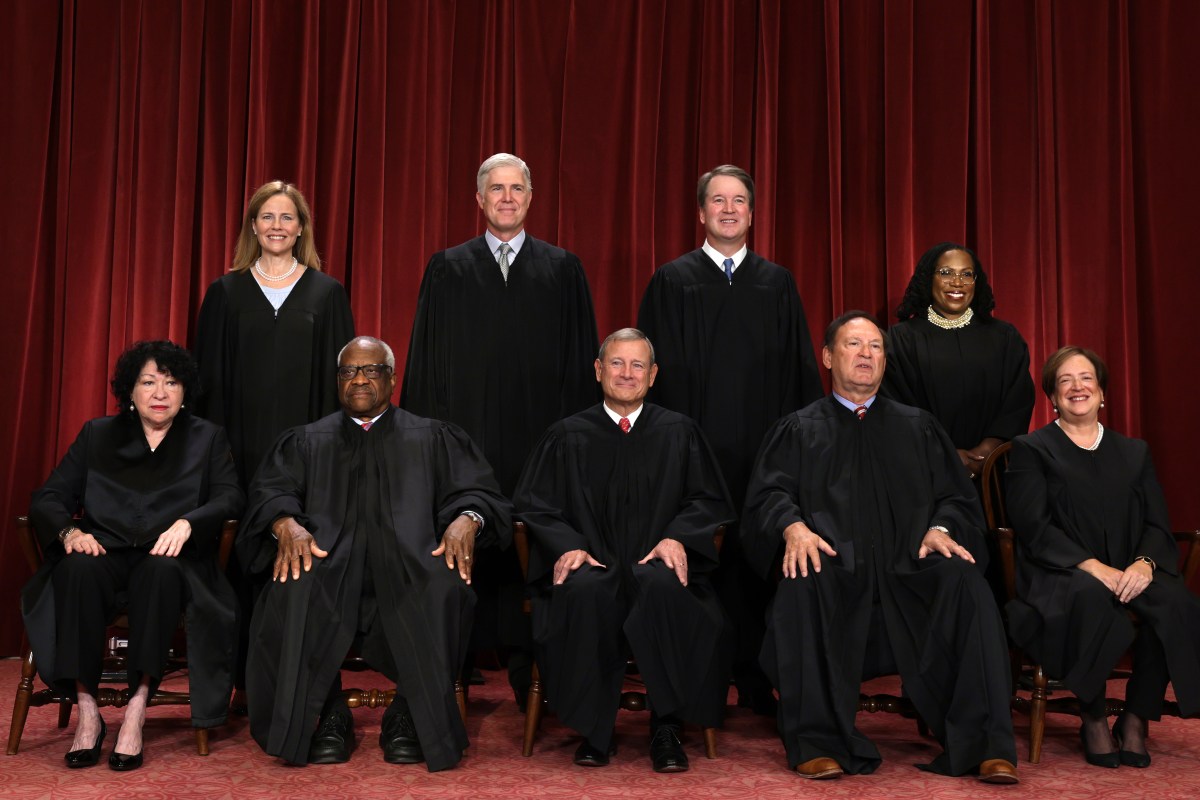
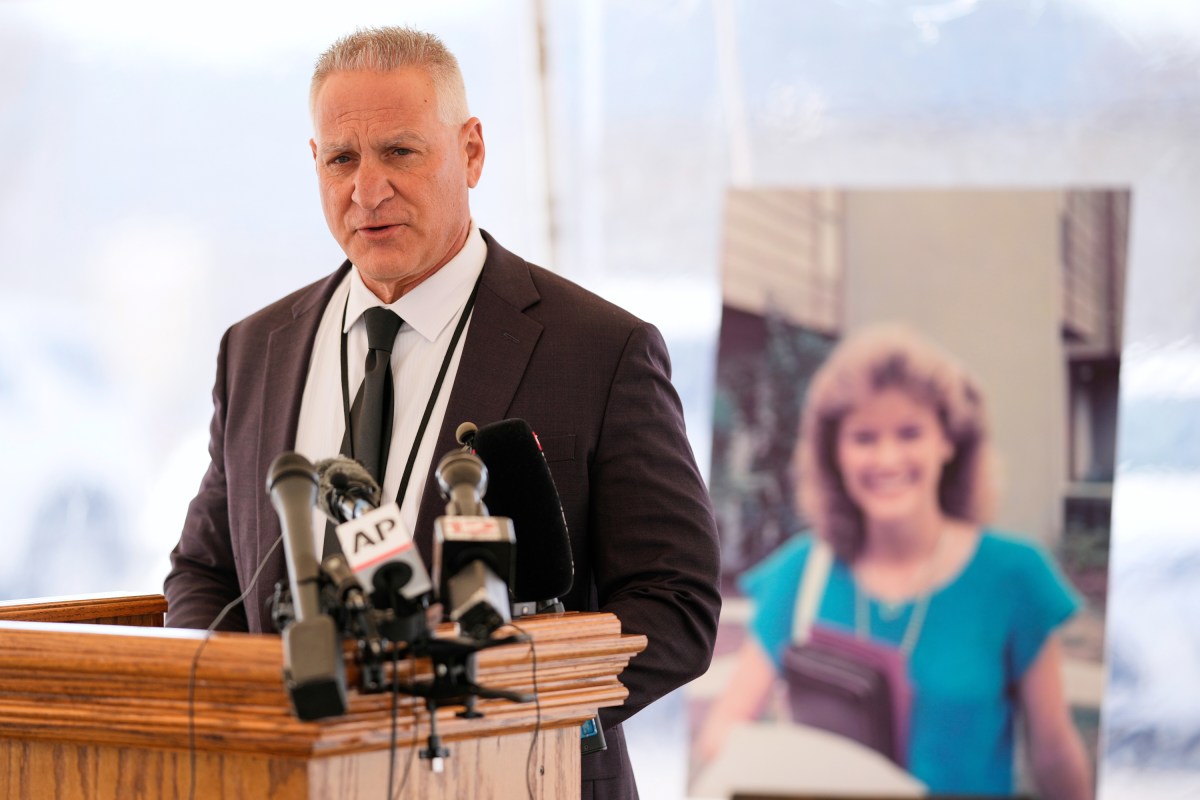
The U.S. Supreme Court is starting a new term and will decide important cases involving voting rights, gun rights, and climate change lawsuits. These cases could affect future laws and political debates in the United States.
Key Facts
The Supreme Court will review about 29 cases this term, with more expected to be added later.
One major voting rights case, Republican National Committee v. Mi Familia Vota, challenges Arizona laws requiring proof of citizenship to register to vote.
The Republican National Committee wants the court to allow stricter voter registration rules in Arizona.
Another key case, Viramontes v. Cook County, involves whether the Second Amendment protects the right to own AR-15 style rifles.
Petitioners in the gun case argue that AR-15 rifles are common and should be legally protected like other firearms.
The court recently handled cases tied to President Donald Trump’s policies, including tariffs and birthright citizenship.
Public trust in the Supreme Court is reported to be declining as some Americans see it as more political.
Read the Original
Want the full story? Tap a source to open the original
article.
Cornell University will review the role of fraternities and sororities after a student accused members of the Chi Phi fraternity of drugging and raping her in 2024. The university plans to increase transparency and improve safety measures while seeking community input on Greek life and accountability.
Key Facts
A student filed a lawsuit claiming she was drugged and raped by several Chi Phi fraternity members in 2024.
The accusations led to public outrage and concern about campus culture at Cornell in New York.
Cornell’s president, Michael Kotlikoff, said the university will seriously review fraternities and sororities.
The university barred the Chi Phi fraternity and took disciplinary actions, including expulsions.
The accused fraternity members deny the allegations.
Cornell promises to be more open about its actions and will ask the community for input.
New York state officials have appointed a special prosecutor to investigate the case.
The situation has raised questions about how schools and law enforcement handle sexual assault reports.
Read the Original
Want the full story? Tap a source to open the original
article.
President Donald Trump said he takes a daily aspirin but is unsure if it actually helps him. His doctors say he takes a higher-than-usual dose to prevent heart problems, and he has been doing this for about 25 years. Experts warn that daily aspirin is not recommended for many older adults without a history of heart issues because it can increase bleeding risks.
Key Facts
President Trump takes a 325-milligram aspirin every day, which is a higher dose than the typical low-dose aspirin of 81 milligrams.
He has been taking aspirin daily for around 25 years and says he feels psychologically better doing so.
White House doctors say he uses aspirin as a part of preventing heart disease.
The bruises on Trump’s hands have been linked to his aspirin use, which can cause easier bruising.
Medical experts say daily aspirin helps some people with heart disease but can increase bleeding risks in others, especially older adults without prior heart problems.
Current medical guidelines advise against daily aspirin use for adults aged 60 and older if they have not had a heart attack or stroke.
Trump is 80 years old and is currently the oldest U.S. president.
Read the Original
Want the full story? Tap a source to open the original
article.
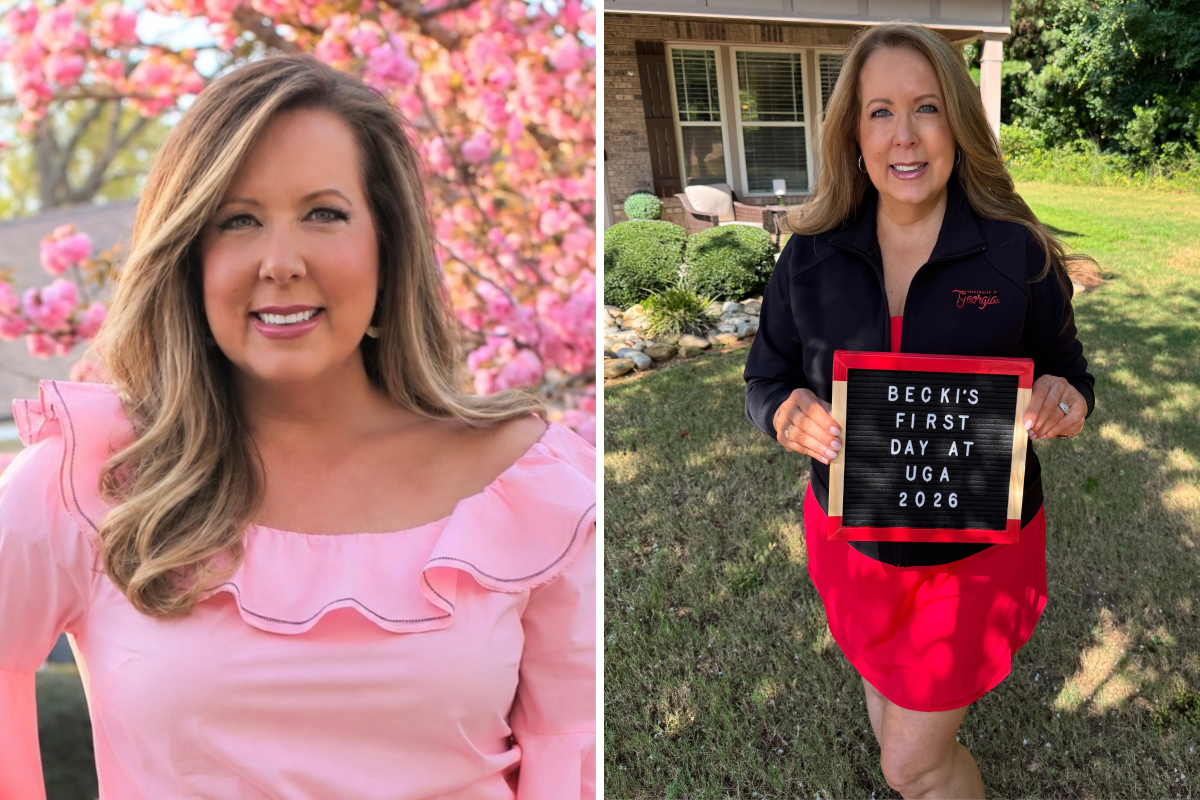
A woman shared her story about starting college at 62 to follow her dream of studying theater. After years of working in other fields and raising a family, she decided to go back to school when she learned that people over 62 in Georgia can attend public colleges for free.
Key Facts
The woman dreamed of studying theater but chose a different major due to family pressure.
She initially majored in Political Science and later earned a second degree in Journalism.
She worked in TV news, then paused her career to raise her daughter.
She later worked as a communications specialist to balance family needs.
At age 62, she became eligible for free college tuition through a Georgia program.
A breast cancer diagnosis led her to reflect on her life and pursue her original passion.
She enrolled at the University of Georgia to study theater and live her dream.
The University System of Georgia offers free tuition for residents aged 62 or older.
Read the Original
Want the full story? Tap a source to open the original
article.
President Donald Trump’s approval rating among voters aged 18 to 24 increased from 25% in July to 41% in September, according to recent Harvard/Harris polls. This rise shows that young voters’ opinions about Trump are changing, though their participation in elections remains lower than older groups.
Key Facts
Trump’s approval rate among 18-24-year-olds rose from 25% in July to 41% in September.
Disapproval in that age group fell from 67% in July to 54% in September.
The latest poll was conducted online from September 26-28 with 2,200 registered voters.
Young adults historically vote less than older Americans, with only 34% of 18-29-year-olds saying they would definitely vote in the midterms versus 78% of those 65 and older.
Experts suggest social media may influence young voters’ changing views and that some might be reconsidering their opinions as the election nears.
Despite higher approval ratings, youth turnout may not increase and could possibly stay low or fall.
The White House emphasized that the real measure is the 2024 election, where Trump was re-elected.
Trump’s approval among 18-24-year-olds is now higher than among people aged 55 and above.
Read the Original
Want the full story? Tap a source to open the original
article.
A New York divorce lawyer explains that divorce laws are changing in the U.S., especially for spouses who do not work and rely financially on their partners. Courts now tend to give less financial support and fewer assets to stay-at-home spouses compared to the past.
Key Facts
Divorce laws have shifted to be more gender-neutral and reflect current social roles, with more fathers seeking equal child custody and more mothers earning income.
Stay-at-home spouses, often women, are receiving less spousal support, fewer legal fee payments, and smaller shares of property after divorce.
No-fault divorce laws, enacted in New York about 15 years ago, allow divorces without blaming one partner, changing how cases are handled.
Courts now see each spouse more as an individual with their own income rather than part of a traditional household setup.
Financial dependence is a key issue; stay-at-home spouses may be at a disadvantage if financial roles change after divorce.
Prenuptial agreements mainly protect assets and inheritance before marriage and do not provide full protection for stay-at-home spouses.
Lifetime spousal support is becoming rare, so stay-at-home spouses should understand their financial rights before divorcing.
Understanding custody expectations and rights is important before making decisions about divorce.
Read the Original
Want the full story? Tap a source to open the original
article.
Sixteen candidates in close U.S. election races support policies that help data centers, which are large facilities that store and process data. These candidates come from important states and have different views on balancing data center growth with local concerns about energy use and costs.
Key Facts
Sixteen candidates support data center-friendly policies in tight House and Senate races.
Candidates are from key states like Pennsylvania, Iowa, Virginia, and Maine.
Their support scores range from 3.0 to 4.2 on a five-point AI Policy Scorecard.
The scorecard rates lawmakers based on their views on AI regulation, data centers, jobs, safety, privacy, and national security.
Voters are concerned about data centers, with many opposing new construction in their communities.
Some candidates support quicker building permits and more power generation while trying to protect local control and electricity rates.
Republican Senator Susan Collins supports case-by-case data center projects but worries about energy use.
Representative Scott Perry sees rapid data center growth as key to competing with China in AI technology.
Read the Original
Want the full story? Tap a source to open the original
article.
President Donald Trump has blocked or delayed $177 billion in federal funds that Congress approved to help states with services like education, health care, and disaster relief. Many state leaders, including attorneys general, are suing the federal government to recover this money and protect these services.
Key Facts
President Trump has withheld billions of dollars in federal money promised to states since early 2025.
The withheld funds affect programs such as reduced electric bills, teacher programs, DNA testing for sexual assault survivors, and food assistance.
Congress approves federal spending, and the Constitution does not allow the president to stop these funds.
A project called Lost Funds shows that all 50 states and Washington, D.C. have been hurt by these blocked funds.
Attorneys general from 22 states and D.C. sued the federal government and won a court order to restore some frozen funding in 2025.
Despite the ruling, the Trump administration continued to cut funding, leading to more state lawsuits.
In November 2025, SNAP food aid funding freeze left over 40 million Americans without access to food assistance until states sued.
Most Americans do not support the president’s power to withhold money that Congress has approved, according to an August 2026 poll.
Read the Original
Want the full story? Tap a source to open the original
article.
Cornell University’s president, Michael Kotlikoff, spoke in a video about problems with how the university handled gang rape claims in 2024. He said the school needs to improve its response to such serious cases.
Key Facts
The allegations were about a gang rape reported in 2024.
Michael Kotlikoff was the interim president of Cornell at that time.
Kotlikoff made a public video statement addressing the issue.
He acknowledged concerns about the university’s handling of the case.
He committed to doing better in dealing with rape and sexual assault concerns in the future.
Cornell University is an Ivy League school located in the United States.
Read the Original
Want the full story? Tap a source to open the original
article.
Flock Security uses cameras with artificial intelligence (AI) to track license plates and other vehicle details in the U.S. These cameras have raised privacy concerns and become a political issue before the midterm elections. Due to the controversy, some of the cameras have been damaged by vandals.
Key Facts
Flock Security operates AI-powered cameras that record license plates and vehicle information.
The cameras are part of a surveillance network used in the United States.
Their use has raised concerns about privacy among the public.
The issue has become important in the political debate before the midterm elections.
Some people have vandalized these cameras because of the controversy.
The company’s AI technology automatically collects and processes vehicle data.
The story was reported by Caitlin Brown with video coverage.
Read the Original
Want the full story? Tap a source to open the original
article.
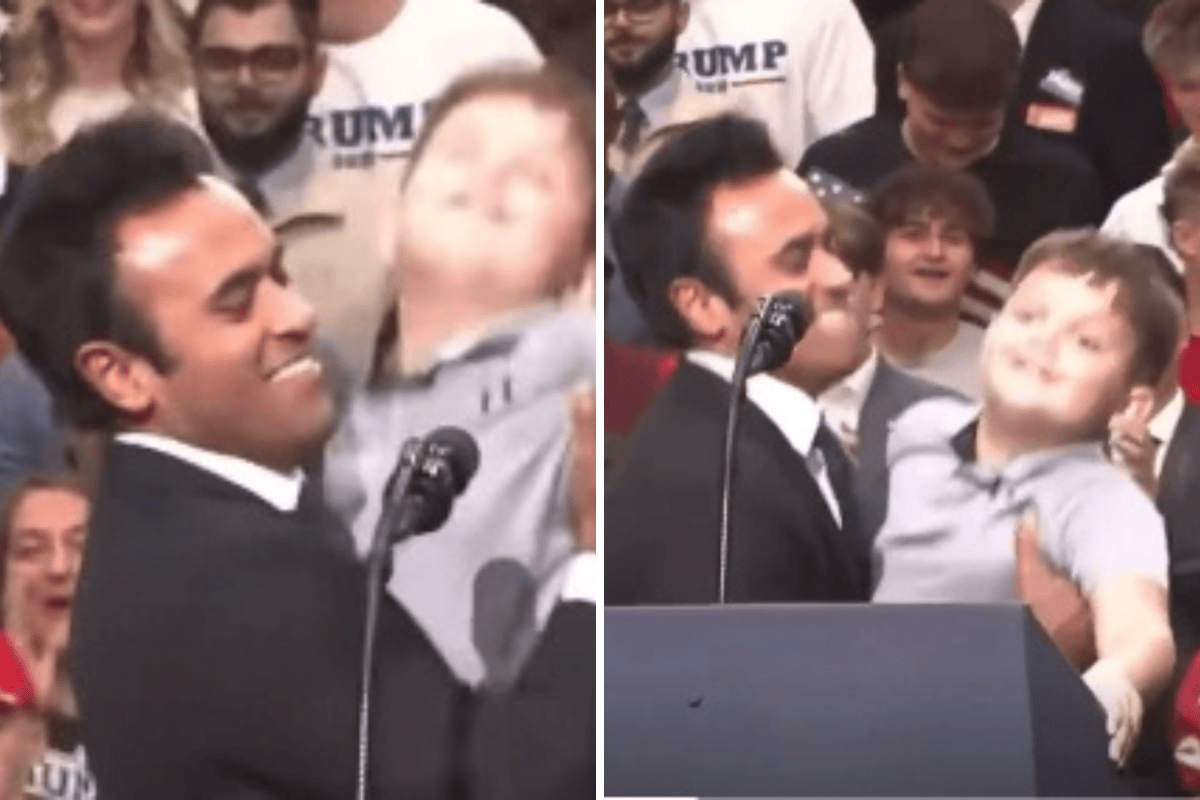
Ohio Republican candidate Vivek Ramaswamy almost dropped a child while picking him up at a campaign rally in Vandalia, Ohio. The event took place during a rally where President Donald Trump also appeared, as both campaigned ahead of the November elections.
Key Facts
Vivek Ramaswamy is running for governor of Ohio as a Republican.
The rally happened in Vandalia, Ohio, with President Donald Trump present.
Ramaswamy invited a boy from the crowd onto the stage after seeing his sign.
The boy’s sign said his father was deployed and called him a “proud military kid for Trump.”
While lifting the boy, Ramaswamy briefly lost his grip but quickly regained control.
Ramaswamy previously ran for the 2024 Republican presidential nomination but was unsuccessful.
He faces Democratic nominee Dr. Amy Acton, former Ohio Department of Health director, in the election.
Read the Original
Want the full story? Tap a source to open the original
article.
Senator Jon Ossoff from Georgia and Abdul El-Sayed from Michigan are Democratic candidates running in the 2026 US Senate midterm elections. Ossoff is seeking re-election and is seen as a moderate, while El-Sayed is a progressive running for an open seat. Both face strong attacks from Republicans during the campaign.
Key Facts
Jon Ossoff is the incumbent Democratic senator from Georgia running for a second term.
Abdul El-Sayed is a Democratic candidate in Michigan running for a Senate seat being vacated by Gary Peters.
Ossoff is considered a moderate Democrat and a possible candidate for president in 2028.
El-Sayed is a left-wing progressive and a physician with no previous elected office experience.
President Donald Trump has publicly criticized Ossoff, while Republican Senator Ted Cruz has attacked El-Sayed.
Ossoff's Republican opponent is Mike Collins, a current US House member.
El-Sayed's Republican opponent is Mike Rogers, a former FBI agent and Trump supporter.
Both Senate races are seen as important for the future direction of the Democratic Party.
Read the Original
Want the full story? Tap a source to open the original
article.
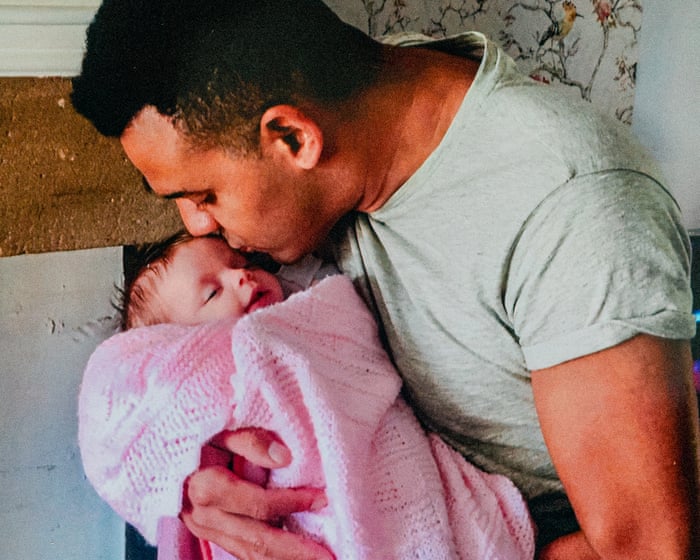
Many children in England and Wales are cared for by relatives or close family friends called kinship carers, who take children in when their parents cannot care for them. These carers often face sudden decisions with little support, as shown by stories like Clive, who became the legal guardian of his baby niece with only hours' notice.
Key Facts
Over 141,000 children in England and Wales live with kinship carers instead of their parents.
Kinship carers are usually family members or close friends who take temporary or permanent care of children.
Kinship care is used twice as often as foster care in these regions.
Kinship carers often receive less legal, financial, and practical support than foster or adoptive parents.
A survey showed 40% of kinship carers had less than one hour to decide to take in a child, and 20% had less than 24 hours.
Clive, a primary school headteacher, became a kinship carer for his six-week-old niece with only a few hours' warning.
Some kinship carers find the experience rewarding but also isolating and exhausting.
The current system can leave kinship carers feeling unsupported by policymakers and social services.
Read the Original
Want the full story? Tap a source to open the original
article.
President Donald Trump campaigned in Ohio to support Republican candidates for the November 3 midterm elections. He expressed confidence that Republicans will perform better than polls suggest and encouraged people to vote. Trump also highlighted issues like data centers, energy costs, and economic concerns affecting Ohio voters.
Key Facts
President Trump held a rally in Vandalia, Ohio, backing Republican candidates including Senator Jon Husted and gubernatorial candidate Vivek Ramaswamy.
Trump predicted a “big surprise” in the midterm elections and urged voters to turn out.
Polls show Democrats may gain in the midterms, but Trump said Republicans will do better than expected.
Ohio’s gas prices have risen about 35% in the past year, reaching $4.16 per gallon on average.
Trump’s trade policies have caused Canada to impose tariffs on about $3 billion of Ohio exports.
Data centers for AI and technology have become a political issue, with concerns about their impact on electricity, farmland, and water.
Senator Husted supported tax breaks for data centers, a move criticized by Democrats as raising costs for local residents.
Efforts to pass legislation charging large power users more were blocked by Democrats in the Senate.
Read the Original
Want the full story? Tap a source to open the original
article.
An 18-year-old driver, Indika Bambrick Samarasinghe, crashed his car into a crowd of Newcastle Knights fans, injuring ten people, including a critically hurt five-year-old girl in an induced coma. Samarasinghe was charged with several offenses, denied bail, and will return to court on October 15, while the community supports the victims.
Key Facts
The crash happened near a major roundabout in Newcastle during a gathering of Newcastle Knights supporters.
Ten people were injured, with six hospitalized; two are in serious condition, including a five-year-old girl in an induced coma who later stabilized.
Indika Bambrick Samarasinghe, 18 and a P-plater (a probationary driver), was charged with nine offenses, including dangerous driving causing serious injury.
Samarasinghe did not apply for bail and was formally refused release by the court.
One victim, Chris Clancy, suffered multiple fractures and described the crash as happening very quickly.
Investigators do not believe the crash was intentional, but reports suggest the car was driven erratically before the collision.
Fundraisers have been set up for the victims, including one for the five-year-old girl and a grandfather injured protecting his granddaughters.
The Newcastle Knights community and local leaders have expressed support and care for those affected.
Read the Original
Want the full story? Tap a source to open the original
article.
Frank Strada, head of Tennessee’s prison system, resigned after a failed execution attempt of Christa Pike in Nashville. Tennessee Governor Bill Lee ordered an independent review of the incident and paused executions in the state until the end of 2026.
Key Facts
Frank Strada resigned as commissioner of the Tennessee Department of Correction after the failed execution attempt of Christa Pike.
Christa Pike survived a lethal injection procedure on September 30 that involved two doses of pentobarbital.
Pike’s attorneys reported she was unconscious and on a ventilator while doctors tried to remove the drug.
Governor Bill Lee ordered an independent review of the attempted execution and stopped all Tennessee executions through 2026.
Strada defended the department’s actions but stepped down to allow an independent review to proceed.
Strada was appointed commissioner in January 2023 and has 37 years of experience in corrections and law enforcement.
Before Tennessee, Strada was deputy director of Arizona’s Department of Corrections and has served in the Federal Bureau of Prisons.
Pike’s attorneys said Strada’s resignation is justified but does not help Pike’s current situation.
Read the Original
Want the full story? Tap a source to open the original
article.
Prime Minister Andy Burnham has canceled plans to reduce jury trials in criminal cases. The original plans would have allowed judges alone to decide cases with sentences under three years to reduce court backlogs, but strong opposition led to the decision being reversed.
Key Facts
The government initially proposed that only complex fraud and financial crime cases would be decided by judges alone.
The plan aimed to limit jury trials for medium-level crimes and reserve jury trials mainly for serious crimes like murder and rape.
The backlog of court cases in England and Wales is close to 81,000 and was causing long delays for defendants and victims.
The proposal included removing the right for defendants to request jury trials for less serious offences.
Justice Secretary Alex Norris reversed the plan after hearing strong public and legal opposition.
Criminal lawyers welcomed the decision, saying jury trials build trust in the justice system.
The government still plans to invest money to reduce court delays and support victims and witnesses.
There are concerns about magistrate shortages, which may affect handling of cases without juries.
Read the Original
Want the full story? Tap a source to open the original
article.
President Donald Trump spoke at a campaign rally in Vandalia, Ohio, supporting the building of large data centers. He said these centers are important for the U.S. to compete with China in artificial intelligence (AI). He emphasized the economic benefits for Ohio from these facilities.
Key Facts
President Trump held a campaign rally in Vandalia, Ohio.
He defended the use of large data centers in the U.S.
Data centers store and process large amounts of information, important for AI development.
Trump stated the U.S. risks losing the global AI competition to China without these centers.
The data centers have faced more public and political scrutiny in recent years.
Trump highlighted the financial opportunities these centers bring to Ohio.
The rally took place amid a close Senate race in Ohio.
Read the Original
Want the full story? Tap a source to open the original
article.
President Donald Trump used a crude phrase during a rally in Ohio while encouraging supporters to vote in the November midterm elections. He promoted Republican candidates, warned about economic risks if Democrats win, and emphasized that the election would be a test of his presidency.
Key Facts
Trump said Republicans would “shove it up their ass” if they win big in the midterms, which drew cheers from the crowd.
He spoke at a rally in Vandalia, Ohio, supporting GOP Senate candidate Jon Husted and governor candidate Vivek Ramaswamy.
Trump warned a Democratic win could cause a “1929-style economic depression.”
He mentioned a proposed “Trump Dividend” plan to give $5,000 to adults if Republicans keep control of Congress.
Trump urged voters to turn out even if they do not like individual Republican candidates.
He talked about expanding data centers and artificial intelligence to boost the economy and compete with China, but this received less reaction than his other comments.
Trump referred to immigration at the rally and criticized Springfield, Ohio, for its migrant population numbers, though his figures were higher than official estimates.
The rally emphasized Trump’s strong role in the Republican Party and the importance of the midterms as a judgment on his presidency.
Read the Original
Want the full story? Tap a source to open the original
article.
Many parents feel overwhelmed by the large amount of parenting advice available online. Different parenting styles, like gentle parenting and helicopter parenting, can confuse parents and cause stress. Experts say that parenting should focus on love and clear boundaries rather than following strict trends.
Key Facts
Rosie Whitfield, a mother of two boys, felt overwhelmed by too much parenting advice after her children were born.
Gentle parenting focuses on empathy and respect with some limits, avoiding harsh punishment.
Research shows about two-thirds of parents with young children struggle with conflicting advice.
Parents of teenagers also report anxiety and exhaustion from the challenges of parenting.
Parenting styles include helicopter parenting (closely watching kids), tiger parenting (strict and demanding), snowplough parenting (removing obstacles), and dolphin parenting (firm but flexible).
Author Matilda Gosling says parenting trends often complicate the simple parent-child relationship.
Parenting advice tends to swing between extremes over generations.
The well-known psychologist Diana Baumrind identified four main parenting styles based on warmth and control.
Read the Original
Want the full story? Tap a source to open the original
article.