A UK court ruled that the government's decision to stop mothers and children in Gaza from joining their families in the UK was unlawful. The families are living in very poor and unsafe conditions, and the court said the children’s best interests must come first. The UK government plans to appeal this decision.
Key Facts
The UK Home Office blocked some mothers and children in Gaza from reuniting with family in the UK.
Gaza’s visa application center has been closed since October 2023, making it hard to complete biometric checks like fingerprinting.
A judge in the upper tribunal ruled the Home Office acted unlawfully in blocking two families with young children.
The affected families live in tents with poor conditions, risks of illness, and danger from the conflict in Gaza.
About 250-300 people in Gaza are waiting to reunite with family who have refugee status in the UK.
The UK government says biometrics must be done before travel, and the Foreign Office has offered to evacuate some families to Jordan to complete this.
The Home Office announced new refugee resettlement routes but suspended the larger family reunion scheme, with no restart until at least 2027.
The court emphasized the children’s best interests and health, calling the current separation harmful.
Read the Original
Want the full story? Tap a source to open the original
article.
President Donald Trump is starting a 32-day campaign tour to support Republican candidates before the midterm elections. While his rallies are known for energizing his supporters, some Republicans worry that his presence might hurt their chances because his approval ratings are very low.
Key Facts
President Trump began a long campaign tour to help Republicans keep control of Congress in the upcoming midterms.
His attendance at rallies has been a core part of his political strategy since 2015.
Trump’s approval ratings are currently at their lowest point.
Many voters are upset about issues like the cost of living, the ongoing situation in Iran, and strict immigration enforcement.
Some Republican politicians are trying to distance themselves from Trump, fearing he could lose them votes.
Despite skepticism, Trump's supporters still find his rallies exciting and motivating.
Trump himself asked supporters to imagine him running again and encouraged them to get more people to vote.
Political experts say Trump's rallies might actually harm Republican candidates by making the election focus too much on him.
Read the Original
Want the full story? Tap a source to open the original
article.
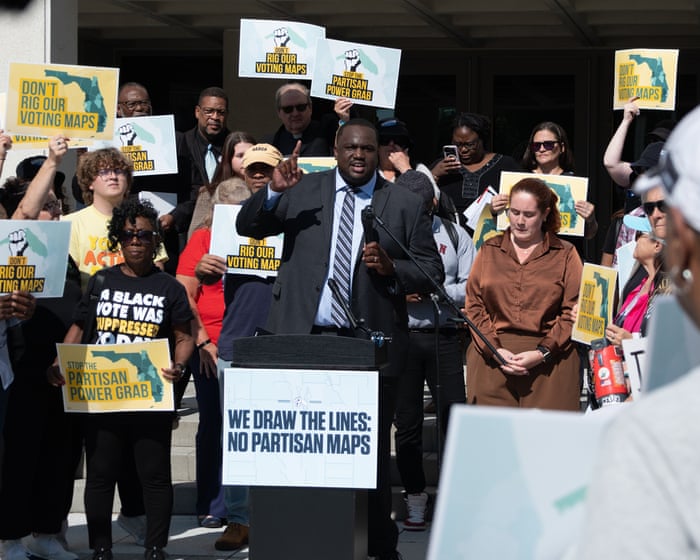
In Florida, redistricting has changed congressional districts, leading to a contested race in the 20th district. Veteran Congresswoman Debbie Wasserman Schultz, who is white and does not live in the district, is running against several Black candidates seeking to keep the seat traditionally held by Black representatives.
Key Facts
Florida’s congressional districts were redrawn after a court decision that allowed the state legislature to engage in partisan gerrymandering.
Governor Ron DeSantis urged the redrawing of district lines, affecting several Democratic seats including Debbie Wasserman Schultz’s.
Debbie Wasserman Schultz decided to run in Florida’s 20th congressional district, which has a 42% Black population.
The 20th district seat has been held by Black representatives since 1992.
Four Black candidates, including former Broward County mayor Dale Holness and former congresswoman Sheila Cherfilus-McCormick, sought to unite behind one candidate to keep the seat Black.
Wasserman Schultz has been in Congress for 21 years and has significant campaign funding compared to her opponents.
Meetings were held among Black candidates to try to consolidate support, but no agreement was reached.
The situation raises questions about representation, community experience, and the impact of redistricting on minority political power.
Read the Original
Want the full story? Tap a source to open the original
article.
The article discusses the U.S. government’s recent focus on testosterone therapy, especially within the military. Defense Secretary Pete Hegseth supports testing soldiers for testosterone levels and providing therapy to those with low levels, while Health Secretary Robert F. Kennedy Jr. removed restrictions to allow more men to get prescribed testosterone legally.
Key Facts
Defense Secretary Pete Hegseth wants soldiers tested for testosterone and offered testosterone replacement therapy (TRT) if levels are low.
Hegseth believes testosterone helps restore natural strength and supports long-term health for soldiers.
Health Secretary Robert F. Kennedy Jr. lifted limits on testosterone prescriptions in June 2024.
TRT’s benefits for men are debated and not scientifically settled.
The article’s author expresses skepticism about needing testosterone therapy for daily life or sexual function.
The Trump administration supports hormone therapy for cisgender men but has been opposed to such treatments for transgender troops.
Some believe testosterone therapy can increase athletic ability and sexual drive but it may worsen hair loss.
The author humorously contrasts the push for testosterone therapy with his own lifestyle and frustrations.
Read the Original
Want the full story? Tap a source to open the original
article.
President Donald Trump has increased government ownership in key U.S. industries during his term, focusing on national security and control over important companies. This shift towards more state involvement in the economy contrasts with past market-focused presidents in both parties.
Key Facts
Data from the V-Dem project shows U.S. state ownership of the economy dropped from 2nd to 16th place globally in 2025 during Trump’s term.
By late 2023, the Trump administration invested over $10 billion in critical companies like Intel and mineral producers.
The government secured special control rights ("golden share") in some firms, including US Steel, through negotiations.
Although increased, U.S. government ownership remains less than in 163 other countries.
State ownership is common globally; for example, Norway has majority control of its oil company, and China’s private companies make up 60% of its economy.
Trump’s approach differs from prior presidents by focusing more on protectionism and state control rather than global market openness.
He has threatened to stop trade with countries where the U.S. has trade deficits.
Trump’s political ads against communism are funded with taxpayer money, despite his own government expansion policies.
Read the Original
Want the full story? Tap a source to open the original
article.
Actor George Clooney has named three Democrats he is watching for the 2028 presidential race but will wait until after the November 2024 midterm elections to endorse anyone. The three politicians are Senator Jon Ossoff, Governor JB Pritzker, and Governor Andy Beshear, with Ossoff and Pritzker facing reelection this November.
Key Facts
George Clooney is interested in three Democrats as potential 2028 presidential candidates: Jon Ossoff, JB Pritzker, and Andy Beshear.
Clooney will not endorse any candidate until after the November 3, 2024, midterm elections.
Jon Ossoff, a 39-year-old Senator from Georgia, is currently running for reelection and leads his Republican opponent in polls.
JB Pritzker, the Governor of Illinois, is also up for reelection this November.
Andy Beshear, Kentucky’s Governor, is not facing an election this year.
Ossoff has shown the strongest national polling numbers among the three for the 2028 Democratic nomination.
Early polling shows Kamala Harris leading the field for the 2028 Democratic nomination, while Ossoff, Beshear, and Pritzker have lower percentages.
Clooney previously spoke out during the 2024 election and urged President Joe Biden to end his campaign after a debate loss to President Donald Trump.
Read the Original
Want the full story? Tap a source to open the original
article.
In September 2026, MS Now (formerly MSNBC) held a live fan event at the University of Texas-Arlington, drawing nearly 5,000 attendees in a traditionally Republican area. The event highlighted the network's effort to reach new viewers in Texas ahead of important midterm elections where Democrats see a chance to win a U.S. Senate seat.
Key Facts
Donald Trump and JD Vance won Tarrant County, Texas, by over 42,000 votes in 2024.
MS Now moved its annual fan event from New York City to Texas in 2026 to connect with new audiences.
The event featured liberal hosts like Rachel Maddow, Lawrence O’Donnell, Stephanie Ruhle, and Chris Hayes.
Texas has not elected a Democratic US Senator in 37 years, but the 2026 race is competitive with Democrat James Talarico running against Republican Ken Paxton.
MS Now’s primetime viewership has grown by 11% in 2026 compared to the previous year, especially among adults aged 25-54.
The network launched a $7.99/month membership plan that offers exclusive content, live Q&As, and other benefits.
The event was called “Together In Texas: We the People 2026” and aimed to inspire and engage viewers outside MS Now’s usual coastal audience.
MS Now wants to move beyond dividing audiences as “red” or “blue” and connect with people as individuals.
Read the Original
Want the full story? Tap a source to open the original
article.
Pennsylvania is facing a growing measles outbreak with nearly 1,000 confirmed cases and five deaths reported across 39 counties. Public health officials are working to increase vaccinations and control the spread, especially in counties without their own health departments.
Key Facts
Pennsylvania has confirmed 943 measles cases and five deaths so far this year.
The outbreak is mostly centered in Lancaster County, which has no local health department and 381 cases.
Many cases are among Amish or similar groups with low vaccination rates for measles, mumps, and rubella (MMR).
Only 7 of Pennsylvania’s 67 counties have their own health departments, limiting local response ability.
Chester County, with 83 cases, is preparing for more cases from neighboring Lancaster County.
Health officials say many Amish people are not anti-vaccine but may lack access or awareness of vaccines.
Officials are actively working on contact tracing, community vaccinations, and fighting vaccine misinformation.
Local health departments with existing infrastructure can respond faster and more effectively than state-level agencies alone.
Read the Original
Want the full story? Tap a source to open the original
article.
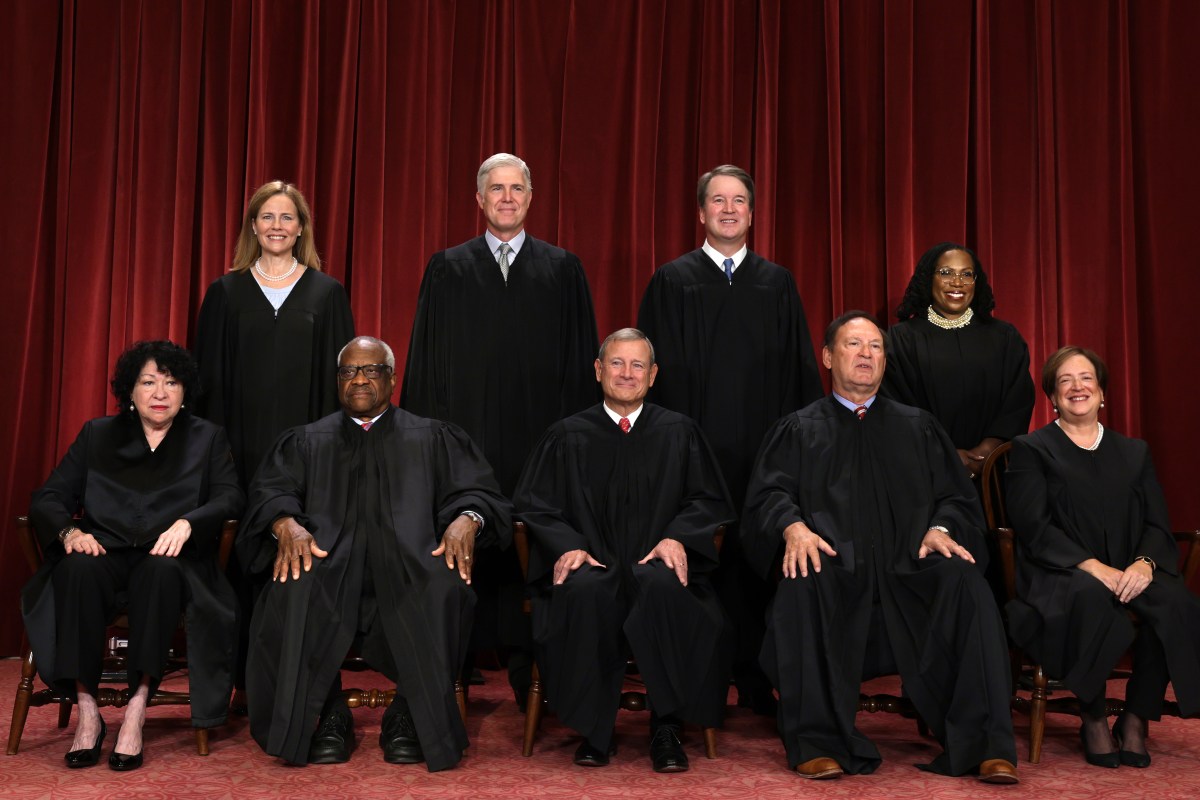
Supreme Court Justice Samuel Alito, 76, said in an interview that he thinks about retiring every year due to his age. He believes he can still contribute to the court but finds it hard to predict when he might step down.
Key Facts
Justice Samuel Alito is 76 years old and has considered retirement regularly.
He gave an interview to CBS News where he discussed his thoughts on retirement.
Alito became sick in March 2024 and was hospitalized for dehydration but returned to work shortly after.
His potential retirement has caused speculation about President Trump possibly appointing a fourth conservative Supreme Court justice.
Alito wrote the 2022 majority opinion that ended the federal right to abortion established by Roe v. Wade.
He has faced threats and harassment after this ruling, which he says is part of the job but is also concerning.
Alito acknowledged the difficulty of predicting future political situations or when a retirement might happen.
Other conservative justices, like Clarence Thomas, are also considered potential retirees in the near future.
Read the Original
Want the full story? Tap a source to open the original
article.
Bobby Pulido, a Tejano singer and Democratic candidate, is using a unique campaign approach called the "quinceañera strategy" to connect with Latino voters in Texas’s 15th congressional district. After a Republican rival criticized him for being a quinceañera performer, he embraced the role, appearing at many parties to meet voters directly.
Key Facts
Bobby Pulido is a well-known Tejano singer running for Congress as a Democrat in Texas’s 15th district.
A Republican incumbent, Monica De La Cruz, criticized Pulido by saying the election is not about who performs at quinceañeras but about trust.
Pulido responded by inviting families to have him perform at their quinceañeras, gaining over 5,000 invitations.
He has performed at 81 quinceañeras to date, using these events to connect with hundreds of voters.
Texas’s 15th district is about 81% Mexican American and voted for President Donald Trump by 18 points in 2024.
Pulido's campaign is seen as important for Democrats trying to regain control of the U.S. House of Representatives.
Latino voter turnout in this district could also affect other elections, like Democrat James Talarico's Senate race in Texas.
The “quinceañera strategy” highlights how cultural events play a role in local and national political campaigns.
Read the Original
Want the full story? Tap a source to open the original
article.
Lawmakers from both parties want stronger rules to protect people from sexual assault. This effort started after a former Cornell student accused seven men of gang rape at a fraternity house.
Key Facts
A former student at Cornell University accused seven men of raping her over several hours.
The alleged attack happened in 2024 at a fraternity house.
The case received national attention and stirred public controversy.
Lawmakers from both political parties are working to improve protections for survivors of sexual violence.
The focus is on creating stronger laws and policies to prevent sexual assault and support victims.
The issue highlights concerns about campus safety and handling of sexual violence cases.
The situation has sparked discussions about how fraternities are regulated in universities.
Read the Original
Want the full story? Tap a source to open the original
article.
President Donald Trump’s political action committees (PACs) have donated tens of millions of dollars to important Senate and House races about one month before the U.S. midterm elections. These donations aim to help the Republican Party keep control of Congress.
Key Facts
President Trump’s main super PAC, MAGA Inc., along with two other PACs, have made large financial contributions to election campaigns.
The other two groups are called No Going Back PAC Inc. and Safety & Affordability PAC Inc.
These groups have reported spending tens of millions of dollars on key Senate and House races.
The focus is on close races that will decide which party controls Congress.
The donations are happening roughly one month before the midterm elections.
This effort is part of the Republican Party’s strategy to maintain power in Congress.
Read the Original
Want the full story? Tap a source to open the original
article.
The U.S. Supreme Court is starting a new term and will decide important cases involving voting rights, gun rights, and climate change lawsuits. These cases could affect future laws and political debates in the United States.
Key Facts
The Supreme Court will review about 29 cases this term, with more expected to be added later.
One major voting rights case, Republican National Committee v. Mi Familia Vota, challenges Arizona laws requiring proof of citizenship to register to vote.
The Republican National Committee wants the court to allow stricter voter registration rules in Arizona.
Another key case, Viramontes v. Cook County, involves whether the Second Amendment protects the right to own AR-15 style rifles.
Petitioners in the gun case argue that AR-15 rifles are common and should be legally protected like other firearms.
The court recently handled cases tied to President Donald Trump’s policies, including tariffs and birthright citizenship.
Public trust in the Supreme Court is reported to be declining as some Americans see it as more political.
Read the Original
Want the full story? Tap a source to open the original
article.
Cornell University will review the role of fraternities and sororities after a student accused members of the Chi Phi fraternity of drugging and raping her in 2024. The university plans to increase transparency and improve safety measures while seeking community input on Greek life and accountability.
Key Facts
A student filed a lawsuit claiming she was drugged and raped by several Chi Phi fraternity members in 2024.
The accusations led to public outrage and concern about campus culture at Cornell in New York.
Cornell’s president, Michael Kotlikoff, said the university will seriously review fraternities and sororities.
The university barred the Chi Phi fraternity and took disciplinary actions, including expulsions.
The accused fraternity members deny the allegations.
Cornell promises to be more open about its actions and will ask the community for input.
New York state officials have appointed a special prosecutor to investigate the case.
The situation has raised questions about how schools and law enforcement handle sexual assault reports.
Read the Original
Want the full story? Tap a source to open the original
article.
President Donald Trump said he takes a daily aspirin but is unsure if it actually helps him. His doctors say he takes a higher-than-usual dose to prevent heart problems, and he has been doing this for about 25 years. Experts warn that daily aspirin is not recommended for many older adults without a history of heart issues because it can increase bleeding risks.
Key Facts
President Trump takes a 325-milligram aspirin every day, which is a higher dose than the typical low-dose aspirin of 81 milligrams.
He has been taking aspirin daily for around 25 years and says he feels psychologically better doing so.
White House doctors say he uses aspirin as a part of preventing heart disease.
The bruises on Trump’s hands have been linked to his aspirin use, which can cause easier bruising.
Medical experts say daily aspirin helps some people with heart disease but can increase bleeding risks in others, especially older adults without prior heart problems.
Current medical guidelines advise against daily aspirin use for adults aged 60 and older if they have not had a heart attack or stroke.
Trump is 80 years old and is currently the oldest U.S. president.
Read the Original
Want the full story? Tap a source to open the original
article.
A woman shared her story about starting college at 62 to follow her dream of studying theater. After years of working in other fields and raising a family, she decided to go back to school when she learned that people over 62 in Georgia can attend public colleges for free.
Key Facts
The woman dreamed of studying theater but chose a different major due to family pressure.
She initially majored in Political Science and later earned a second degree in Journalism.
She worked in TV news, then paused her career to raise her daughter.
She later worked as a communications specialist to balance family needs.
At age 62, she became eligible for free college tuition through a Georgia program.
A breast cancer diagnosis led her to reflect on her life and pursue her original passion.
She enrolled at the University of Georgia to study theater and live her dream.
The University System of Georgia offers free tuition for residents aged 62 or older.
Read the Original
Want the full story? Tap a source to open the original
article.
President Donald Trump’s approval rating among voters aged 18 to 24 increased from 25% in July to 41% in September, according to recent Harvard/Harris polls. This rise shows that young voters’ opinions about Trump are changing, though their participation in elections remains lower than older groups.
Key Facts
Trump’s approval rate among 18-24-year-olds rose from 25% in July to 41% in September.
Disapproval in that age group fell from 67% in July to 54% in September.
The latest poll was conducted online from September 26-28 with 2,200 registered voters.
Young adults historically vote less than older Americans, with only 34% of 18-29-year-olds saying they would definitely vote in the midterms versus 78% of those 65 and older.
Experts suggest social media may influence young voters’ changing views and that some might be reconsidering their opinions as the election nears.
Despite higher approval ratings, youth turnout may not increase and could possibly stay low or fall.
The White House emphasized that the real measure is the 2024 election, where Trump was re-elected.
Trump’s approval among 18-24-year-olds is now higher than among people aged 55 and above.
Read the Original
Want the full story? Tap a source to open the original
article.
A New York divorce lawyer explains that divorce laws are changing in the U.S., especially for spouses who do not work and rely financially on their partners. Courts now tend to give less financial support and fewer assets to stay-at-home spouses compared to the past.
Key Facts
Divorce laws have shifted to be more gender-neutral and reflect current social roles, with more fathers seeking equal child custody and more mothers earning income.
Stay-at-home spouses, often women, are receiving less spousal support, fewer legal fee payments, and smaller shares of property after divorce.
No-fault divorce laws, enacted in New York about 15 years ago, allow divorces without blaming one partner, changing how cases are handled.
Courts now see each spouse more as an individual with their own income rather than part of a traditional household setup.
Financial dependence is a key issue; stay-at-home spouses may be at a disadvantage if financial roles change after divorce.
Prenuptial agreements mainly protect assets and inheritance before marriage and do not provide full protection for stay-at-home spouses.
Lifetime spousal support is becoming rare, so stay-at-home spouses should understand their financial rights before divorcing.
Understanding custody expectations and rights is important before making decisions about divorce.
Read the Original
Want the full story? Tap a source to open the original
article.
Sixteen candidates in close U.S. election races support policies that help data centers, which are large facilities that store and process data. These candidates come from important states and have different views on balancing data center growth with local concerns about energy use and costs.
Key Facts
Sixteen candidates support data center-friendly policies in tight House and Senate races.
Candidates are from key states like Pennsylvania, Iowa, Virginia, and Maine.
Their support scores range from 3.0 to 4.2 on a five-point AI Policy Scorecard.
The scorecard rates lawmakers based on their views on AI regulation, data centers, jobs, safety, privacy, and national security.
Voters are concerned about data centers, with many opposing new construction in their communities.
Some candidates support quicker building permits and more power generation while trying to protect local control and electricity rates.
Republican Senator Susan Collins supports case-by-case data center projects but worries about energy use.
Representative Scott Perry sees rapid data center growth as key to competing with China in AI technology.
Read the Original
Want the full story? Tap a source to open the original
article.
President Donald Trump has blocked or delayed $177 billion in federal funds that Congress approved to help states with services like education, health care, and disaster relief. Many state leaders, including attorneys general, are suing the federal government to recover this money and protect these services.
Key Facts
President Trump has withheld billions of dollars in federal money promised to states since early 2025.
The withheld funds affect programs such as reduced electric bills, teacher programs, DNA testing for sexual assault survivors, and food assistance.
Congress approves federal spending, and the Constitution does not allow the president to stop these funds.
A project called Lost Funds shows that all 50 states and Washington, D.C. have been hurt by these blocked funds.
Attorneys general from 22 states and D.C. sued the federal government and won a court order to restore some frozen funding in 2025.
Despite the ruling, the Trump administration continued to cut funding, leading to more state lawsuits.
In November 2025, SNAP food aid funding freeze left over 40 million Americans without access to food assistance until states sued.
Most Americans do not support the president’s power to withhold money that Congress has approved, according to an August 2026 poll.
Read the Original
Want the full story? Tap a source to open the original
article.