Fact-first summaries of the news — stay informed, stay grounded.
Your favorite news sources, one calm feed — fact-first summaries that always link to the
original story. No outrage bait, and we tell you when you're caught up. How it works
US News
Latest developments and key stories from across the United States
More severe weather is expected to hit parts of the United States after recent storms affected Pennsylvania, Indiana, and Ohio. Weather experts warn that the upcoming storms may bring heavy rain, strong winds, and possible flooding.
Key Facts
Recent storms have already impacted Pennsylvania, Indiana, and Ohio.
More severe weather is forecasted to continue in these and other parts of the U.S.
The storms may include heavy rain and strong winds.
There could be a risk of flooding in some areas.
Weather authorities are monitoring the situation and providing updates.
People in the affected regions are advised to stay alert and take safety precautions.
Read the Original
Want the full story? Tap a source to open the original
article.
A Texas man named James Elmore Jr was sentenced to 20 years in prison for manslaughter in the 1980s death of teenager Laura Miller. The case is linked to the “Texas Killing Fields,” an area where many women’s bodies have been found over the years. Elmore was found guilty of helping give Laura a fatal dose of cocaine.
Key Facts
James Elmore Jr was convicted of manslaughter and sentenced to 20 years in prison for the death of Laura Miller.
Laura Miller disappeared in 1984, and her body was found in 1986 in the Texas Killing Fields area near Houston.
Elmore admitted being present when Laura died and was found guilty of preparing the cocaine that caused her death.
Clyde Hedrick, Elmore’s friend, gave the cocaine to Laura but died by suicide before charges could be filed against him.
The Texas Killing Fields is a stretch of land where over 30 women’s bodies have been found, many cases unsolved.
Laura Miller’s father, Tim Miller, started Texas EquuSearch, a nonprofit group that looks for missing people.
Hedrick had a history of manslaughter convictions and was suspected in several Texas Killing Fields cases.
Elmore faces additional charges, including evidence tampering and possession of child abuse images, with a trial scheduled later in the year.
Read the Original
Want the full story? Tap a source to open the original
article.
The judge in the Lindsay Clancy trial decided not to meet privately with a juror who has not agreed with the others. This happened during a tense discussion with the defense lawyers on Friday.
Key Facts
The trial involves Lindsay Clancy.
The jury has not reached a unanimous decision.
One juror is holding out and has not agreed with the rest.
The judge refused to hold a private meeting with this juror.
The decision was announced on a Friday.
The exchange with the defense was described as heated.
Read the Original
Want the full story? Tap a source to open the original
article.
Important policy choices that will impact many working women are set to be decided this November. These decisions are being shaped not only by lawmakers but also by actions happening in workplaces like warehouses.
Key Facts
Major policy decisions affecting working women will be finalized in November.
These decisions involve more than just government lawmakers.
Workplaces such as warehouses play a significant role in shaping these outcomes.
Many working women face challenges that are influenced by these policies.
The article suggests the setting of these struggles extends beyond government buildings.
Read the Original
Want the full story? Tap a source to open the original
article.
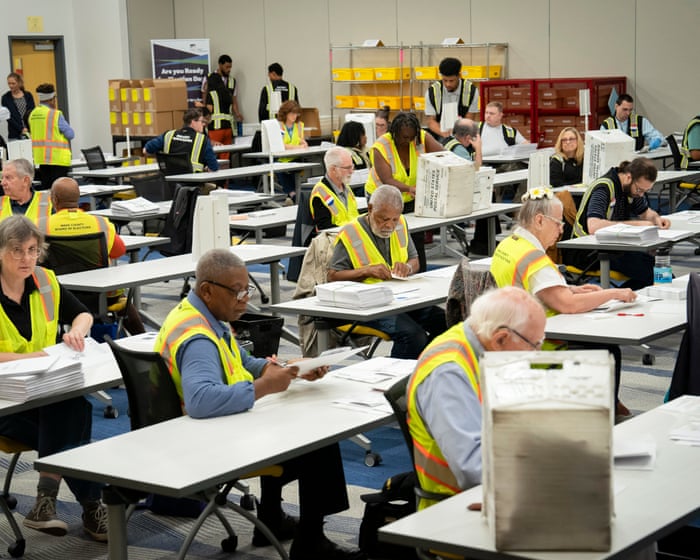
North Carolina started sending out mail-in ballots early for the November US midterm elections, following a state rule that requires ballots to be sent 60 days before the election. At the same time, President Donald Trump’s administration is trying to enforce new federal rules that would restrict how mail-in ballots are handled, but courts have blocked parts of these rules for now.
Key Facts
North Carolina is the first state to send mail-in ballots for the 2024 midterm elections due to a law requiring ballots to be sent 60 days before the election.
President Trump’s administration wants to impose stricter rules on mail-in ballots, including new screening methods and requiring states to share voter information with the federal government.
The US Supreme Court has been asked to allow these new rules, but so far courts have blocked or delayed their implementation.
A federal judge blocked the administration’s plan in June, saying it interferes with states’ control over elections.
The Supreme Court previously delayed ruling fully on the plan, leaving room for more legal arguments.
The US Postal Service is still working on systems to meet the new rules and plans to offer them voluntarily to states soon.
Courts have set tight deadlines for responses to the administration’s requests, limiting how quickly these new measures can be put in place.
The situation creates uncertainty about how mail ballots will be handled and delivered before the midterm elections.
Read the Original
Want the full story? Tap a source to open the original
article.
Benjamin Azariah Southworth, a former podcaster, was charged with making death threats against President Donald Trump. The FBI arrested him in Los Angeles after a federal grand jury indicted him.
Key Facts
Benjamin Azariah Southworth faced charges for threatening the life of President Trump.
The FBI arrested Southworth early in the morning in Los Angeles.
The arrest happened after a federal grand jury issued an indictment.
FBI Director Kash Patel announced the arrest on X, a social media platform.
Southworth is a former podcaster, but his current occupation is not mentioned.
The case involves federal authorities, indicating a serious legal matter.
The exact nature of the threats was not detailed in the announcement.
Read the Original
Want the full story? Tap a source to open the original
article.
The Trump administration has introduced video games that focus on anti-immigration themes. This comes as part of a larger effort to increase arrests and deportations of undocumented immigrants in the United States.
Key Facts
The Trump administration launched video games with anti-immigration messages.
These games coincide with a stronger campaign to arrest and deport undocumented immigrants.
Most people arrested in July by Immigration and Customs Enforcement (ICE) did not have criminal records.
The program targets undocumented immigrants living in the U.S. without legal permission.
The announcement was reported on April 9, 2026.
The initiative reflects the administration’s focus on immigration enforcement.
Read the Original
Want the full story? Tap a source to open the original
article.
The U.S. added 162,000 jobs in August, which was much more than experts expected. The unemployment rate stayed low at 4.1%, showing strong job market conditions.
Key Facts
Employers added 162,000 jobs in August.
Experts had predicted only 65,000 new jobs.
The unemployment rate remained at 4.1%.
The Labor Department updated June and July job numbers, adding 55,000 more jobs to previous counts.
In July, the job market actually grew by 21,000 jobs after revisions, instead of shrinking.
This strong jobs report came two months before the U.S. midterm elections.
The economic outlook, including jobs, is important to voters in these elections.
The report was released by the U.S. Labor Department on a Friday.
Read the Original
Want the full story? Tap a source to open the original
article.
The Tetris Company said it was not involved with a new White House online game called Build the Wall, which looks like the Tetris game. The company said it takes copyright seriously and warned against using their game without permission. The White House launched the arcade to highlight President Donald Trump’s policies, but some experts say the games may violate copyright and trademark laws.
Key Facts
The White House unveiled an online arcade with five games based on President Trump’s policies.
One game, Build the Wall, resembles the block-stacking game Tetris.
The Tetris Company publicly stated it was not involved and warned about copyright infringement.
The arcade also used branding similar to Sega’s logo and jingle, raising trademark questions.
Intellectual property experts say some games copy features closely and may not qualify as protected parody.
Trademark law protects parody only if it clearly comments on the original, which the White House games do not.
Legal issues depend on whether people will think companies like Tetris or Sega endorsed the games or if their brands are harmed.
The White House said the arcade aims to share President Trump’s achievements in a way Americans understand.
Read the Original
Want the full story? Tap a source to open the original
article.
Four women with different opinions discussed the trial of Lindsay Clancy, which has raised attention to maternal mental health and a condition called postpartum psychosis. The group included a psychiatrist, a columnist, a person who attended the trial, and a survivor of postpartum psychosis.
Key Facts
Lindsay Clancy is on trial, bringing focus to maternal mental health issues.
Postpartum psychosis is a rare mental health condition that can affect mothers after giving birth.
Dr. Gail Saltz, a psychiatrist, participated in the discussion.
Nicole Russell, a writer for USA Today, shared her views.
Ashlyn Rizzo attended the Lindsay Clancy trial and joined the debate.
Kathryn Myers, who has survived postpartum psychosis, contributed to the conversation.
The discussion aired on the TV program "CBS Mornings."
The case has started talks about the challenges new mothers may face with mental health.
Read the Original
Want the full story? Tap a source to open the original
article.
Ty Cobb, who worked as a lawyer for President Donald Trump, said that President Trump plans to try to "steal" the 2026 midterm elections when he can. Cobb made this comment during a TV interview where he also talked about some Republican lawmakers not wanting to go to a party event, showing worries about Trump's political influence.
Key Facts
Ty Cobb was a lawyer in President Trump’s White House.
Cobb said Trump intends to try to "steal" the 2026 midterm elections where possible.
These comments were made during an interview on the show MS NOW.
Some Republican lawmakers are reportedly choosing not to attend a Republican National Committee event.
The situation reveals concerns about President Trump's political impact.
The events discussed are happening almost two years into President Trump's second term.
Read the Original
Want the full story? Tap a source to open the original
article.
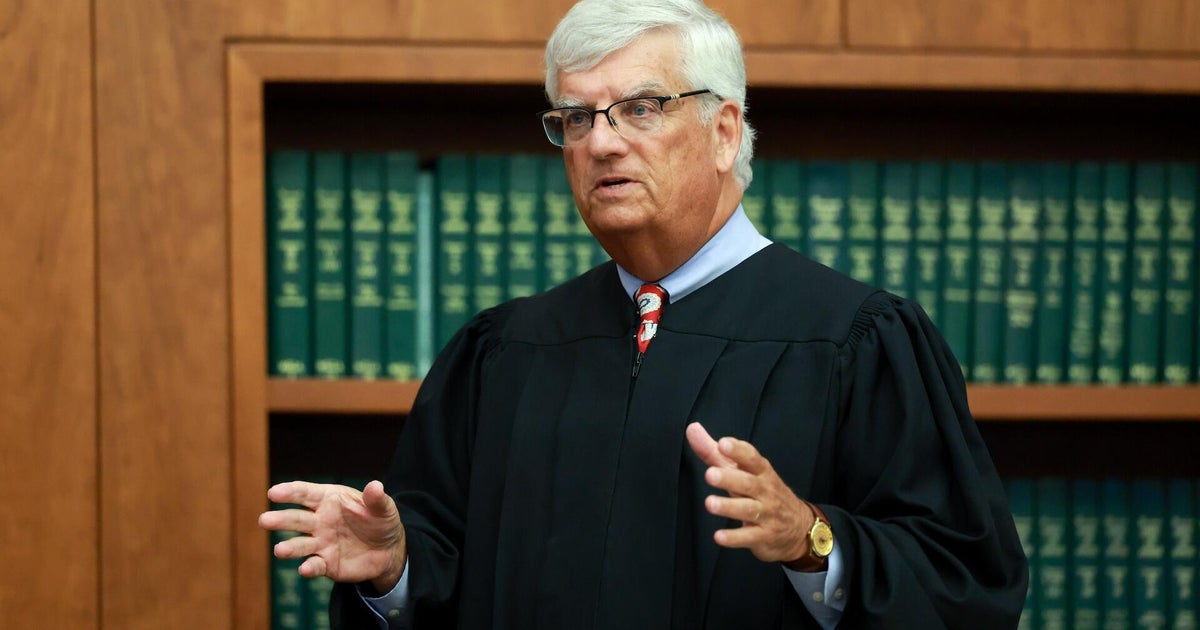
During the trial of Lindsay Clancy, her lawyer, Kevin Reddington, had a heated argument with Judge William Sullivan about a possible issue with a juror. The disagreement caused tense moments in Plymouth Superior Court.
Key Facts
Lindsay Clancy is on trial in Plymouth Superior Court.
Her attorney is Kevin Reddington.
Judge William Sullivan is presiding over the case.
There was a disagreement about a situation involving a juror.
The lawyer and judge exchanged tense words during the trial.
CBS News reporters Shanelle Kaul and Rebecca Roiphe covered the event.
The argument was part of ongoing legal proceedings in the trial.
Read the Original
Want the full story? Tap a source to open the original
article.
A federal judge has asked the Department of Homeland Security (DHS) to explain how a teenage asylum seeker, known as E.L.A., was deported to El Salvador despite a court order protecting him. The judge wants to know who approved the deportation and how the government will fix this mistake.
Key Facts
E.L.A. is a teenager seeking asylum in the United States.
He was initially deported in March 2026 but was later allowed to return in August 2026 after the court confirmed he belongs to a protected group.
E.L.A. was held in a detention center in Louisiana while preparing for his asylum interview and psychological evaluation.
On September 1, 2026, E.L.A.’s scheduled video appointment was canceled because he was no longer at the detention center.
The government removed E.L.A. to El Salvador on the same day, despite court orders that protect asylum seekers like him.
Attorneys for E.L.A. say this deportation breaks court orders and puts him in danger because he fears persecution in El Salvador.
A judge appointed by President Donald Trump ordered DHS to answer questions about who authorized E.L.A.'s removal and how the government will correct the error.
DHS confirmed that E.L.A. was put on a flight to El Salvador after learning about the government lawyers' email to the court.
Read the Original
Want the full story? Tap a source to open the original
article.
The EPA and Army Corps of Engineers, under President Trump’s administration, proposed new rules to reduce the number of streams and wetlands protected under the Clean Water Act. These changes would limit the types of water bodies that have federal protection.
Key Facts
The EPA and Army Corps of Engineers released a supplemental proposed rule to change Clean Water Act protections.
The proposal aims to narrow which streams and wetlands are protected.
The Clean Water Act currently protects many bodies of water to maintain water quality.
The new rule would likely reduce federal jurisdiction over certain streams and wetlands.
This is part of President Trump’s administration efforts to modify environmental regulations.
The change could affect water safety and environmental conservation efforts.
The rule proposal is open for public comment before any final decision is made.
The Clean Water Act is a key U.S. law that helps keep water safe for health and the environment.
Read the Original
Want the full story? Tap a source to open the original
article.
The article criticizes a U.S. government agency, Immigration and Customs Enforcement (ICE), for creating new gloves designed to deliver shocks. It argues that these gloves are harmful, violate rights, and are not needed.
Key Facts
ICE is a U.S. government agency that enforces immigration laws.
ICE has developed new gloves that can deliver electric shocks.
Critics say these shock gloves are dangerous to people’s health and safety.
The gloves raise concerns about human and civil rights violations.
The article states that these gloves are unnecessary for ICE’s work.
Read the Original
Want the full story? Tap a source to open the original
article.
President Donald Trump has raised about $400 million for the upcoming midterm elections, but most of this money has not yet been spent on local candidates. His team is focusing on getting his supporters to vote by emphasizing his role, even though few funds have gone directly to congressional campaigns so far.
Key Facts
President Trump has a $400 million war chest for the midterm elections.
The nonprofit Securing American Greatness, linked to Trump's super PAC MAGA Inc., released an ad focused on Trump, not local candidates.
Trump said he raised about $850 million total and plans to spend much of it supporting Republican candidates.
MAGA Inc. gave $827,000 to Senator Darlene Graham’s campaign, the only major donation so far.
MAGA Inc. spent $1.7 million last year and had raised $401 million by mid-2026.
A Republican midterm convention in Dallas will highlight party rising stars, but some candidates in tight races will focus on campaigning locally instead.
Vice President JD Vance emphasized the importance of candidates meeting voters directly.
Read the Original
Want the full story? Tap a source to open the original
article.
President Donald Trump has $400 million saved for his political efforts. Some Republicans are waiting to see when he will start using this money before the November elections.
Key Facts
President Trump currently has $400 million in a fund for his political activities.
This money is often called a "war chest," meaning it is saved for campaigns and elections.
The November elections are approaching soon.
Many Republicans are watching closely to see when he will spend this money.
The report about this comes from CBS News and journalist Ed O’Keefe.
President Trump's fundraising is significant compared to many other politicians.
The timing of spending this money could influence election results and party strategies.
Read the Original
Want the full story? Tap a source to open the original
article.
President Donald Trump’s administration plans to build a new United States Triumphal Arch in Washington, DC, that will be 250 feet tall. This arch will be taller than famous arches in Paris, London, Rome, and other world capitals. Construction work is expected to begin soon, although some approval and legal challenges remain.
Key Facts
The United States Triumphal Arch will be 250 feet tall.
It will be about 54% taller than Paris’s Arc de Triomphe, which stands 162.5 feet tall.
The design includes granite covering, gold statues, an observation deck, and inscriptions like “ONE NATION UNDER GOD.”
The arch will commemorate the 250th anniversary of American independence.
Excavation work is planned to start within weeks.
The project has preliminary federal approvals but awaits final design approval from the National Capital Planning Commission.
Some veterans, families of fallen soldiers, preservation groups, and architects oppose the arch, saying it may overshadow nearby landmarks like the Lincoln Memorial and Arlington National Cemetery.
Supporters say Washington, DC, is the only major Western capital without a triumphal arch and that this will become a major architectural landmark.
Read the Original
Want the full story? Tap a source to open the original
article.
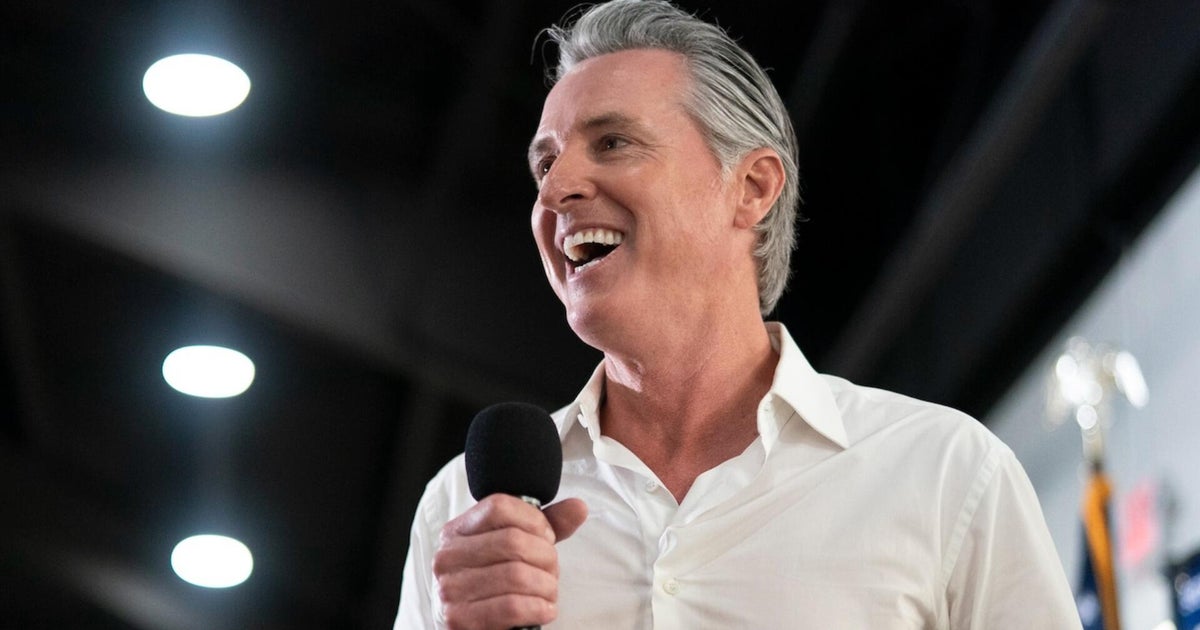
California Governor Gavin Newsom visited South Carolina while rumors continue about him possibly running for president. News outlets are watching his moves closely as speculation about his future political plans grows.
Key Facts
Gavin Newsom is the governor of California.
He traveled to South Carolina recently.
There is growing talk that he might run for president.
Newsom is a member of the Democratic Party.
Media outlets are reporting on his visit in connection with this speculation.
South Carolina is an important state in early presidential primary contests.
Newsom has not officially announced any plans to run for president.
Read the Original
Want the full story? Tap a source to open the original
article.