Neutral summaries of your favorite news sources — just the facts.
Your favorite news sources, one neutral feed — we distill their reporting into fact-first
summaries and always link to the original story. How it works
US News
Latest developments and key stories from across the United States
The US Supreme Court decided not to change the rule that grants citizenship to almost everyone born in the United States. This ruling ended President Donald Trump’s attempt to limit birthright citizenship.
Key Facts
The Supreme Court made the decision on June 30, 2026.
The vote was 6 to 3 in favor of keeping birthright citizenship as it is.
Birthright citizenship means that most people born on US soil are automatically US citizens.
President Donald Trump wanted to change this policy to reduce immigration.
The court’s decision is one of the last major rulings of its current term.
This ruling blocks a significant part of President Trump’s immigration plan.
The decision was widely anticipated and closely watched by the public.
Read the Original
Want the full story? Tap a source to open the original
article.
The Supreme Court will hear cases about whether bans on semiautomatic rifles like the AR-15 violate the Second Amendment, which protects the right to own guns. The challenges come from states like Connecticut and areas near Chicago, where such bans exist.
Key Facts
The Supreme Court will review laws banning semiautomatic rifles often called assault weapons.
The cases focus on bans in Connecticut and the Chicago area.
About a dozen states have similar bans in major cities like New York, Los Angeles, and Washington, D.C.
A national ban on assault weapons expired in 2004, and Democrats want to bring it back after mass shootings.
Some states continue to pass new gun restrictions, including Virginia and Rhode Island.
The court’s conservative majority expanded gun rights in a major 2022 ruling.
This case is part of ongoing legal battles over gun rights and laws in the U.S.
Read the Original
Want the full story? Tap a source to open the original
article.
The Supreme Court decided to uphold birthright citizenship, which means people born in the United States are citizens by law. Kevin Roberts, president of the Heritage Foundation, said he strongly disagreed with this decision.
Key Facts
The Supreme Court ruled to keep birthright citizenship in place.
Birthright citizenship means anyone born in the U.S. automatically becomes a citizen.
Kevin Roberts is the leader of the Heritage Foundation, a conservative group.
Roberts called the ruling a "tremendous betrayal of the public."
He said the decision weakens U.S. sovereignty, which means control over the country.
Roberts believes the ruling lowers the value of American citizenship.
The statement was made on the social media platform X (formerly Twitter).
Read the Original
Want the full story? Tap a source to open the original
article.
The Supreme Court ruled 6-3 to strike down federal limits on coordinated campaign spending between political parties and their candidates. The court said these spending limits violate free speech protections in the Constitution’s First Amendment and overturned a rule that had been in place for over 50 years.
Key Facts
The ruling was made by six conservative justices in favor, with three liberal justices dissenting.
The case challenged limits on coordinated party spending in US elections under the Federal Election Campaign Act of 1971.
This law had capped spending to help prevent corruption by limiting coordination between parties and candidates.
Vice President JD Vance was one of the Republican candidates involved in the lawsuit.
The Supreme Court overruled a 2001 decision that had upheld these spending limits.
The Federal Election Commission, under President Trump’s administration, declined to defend the spending cap in court.
Spending limits varied by state from about $127,000 to $3.9 million for Senate races in 2025.
The ruling comes before the November midterm elections, when Republicans control significant campaign funds compared to Democrats.
Read the Original
Want the full story? Tap a source to open the original
article.
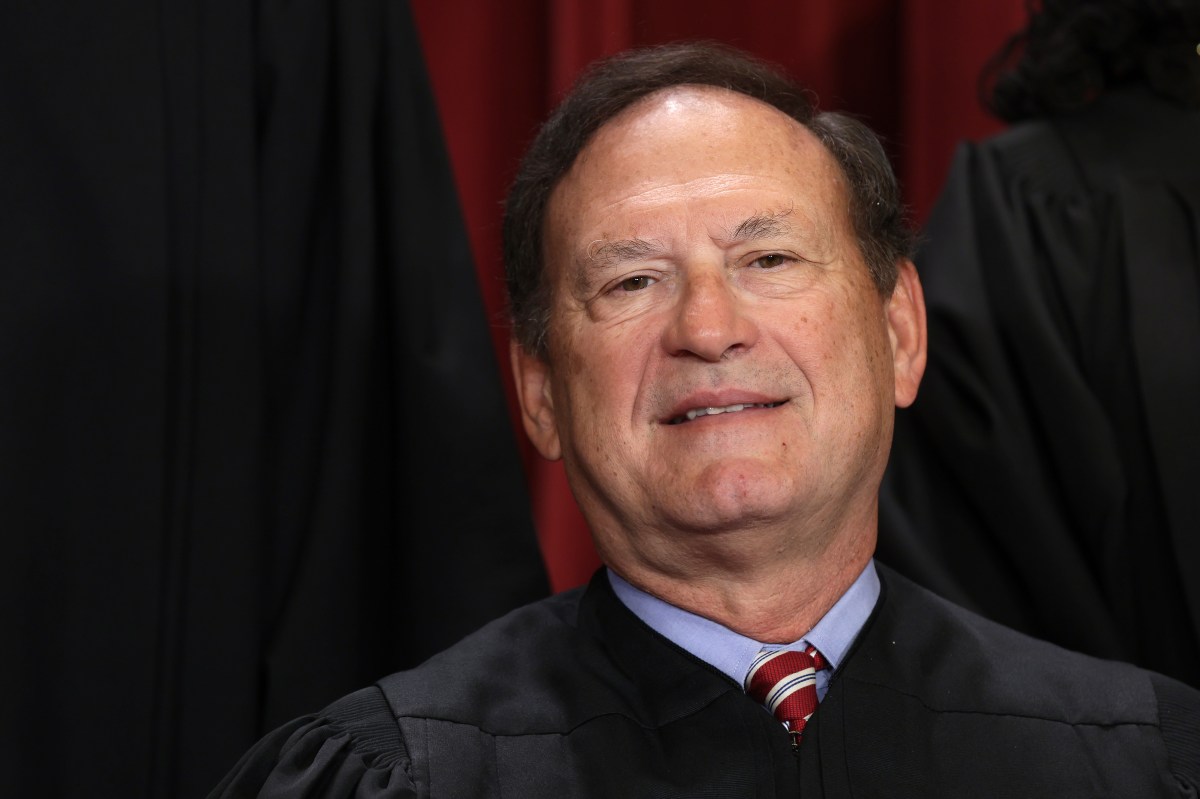
Justice Samuel Alito disagreed with the Supreme Court’s decision to reject restrictions on birthright citizenship that were put in place by President Trump’s administration. He wrote a dissenting opinion calling the ruling a major judgment but also a serious error.
Key Facts
The Supreme Court made a 6-3 decision against an executive order from President Trump limiting birthright citizenship.
Birthright citizenship means anyone born in the U.S. is automatically a citizen.
Justice Alito wrote a dissent saying the decision was very important but mistakenly decided.
The executive order aimed to change how citizenship is granted at birth.
The majority of justices rejected this approach, keeping birthright citizenship as it was.
Alito’s opinion shows disagreement within the court on this issue.
Read the Original
Want the full story? Tap a source to open the original
article.
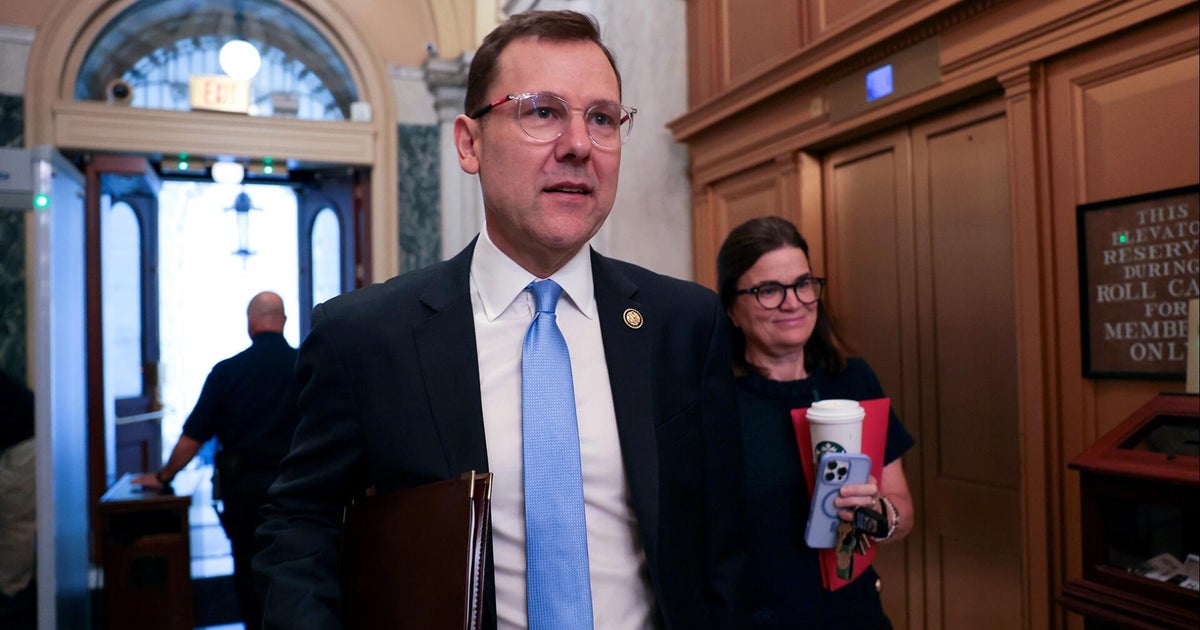
Representative Tom Kean, a Republican from New Jersey, returned to Capitol Hill after being away for several weeks. He said he was diagnosed with depression, which led to a long hospital stay.
Key Facts
Tom Kean is a Republican member of the U.S. House of Representatives from New Jersey.
He had been absent from Capitol Hill for an extended period.
His last recorded vote was on March 5.
Kean said he was diagnosed with depression during his time away.
He received treatment that required a long hospital stay.
Kean returned to work at Capitol Hill on a Tuesday.
His absence and health update were reported by CBS News.
Read the Original
Want the full story? Tap a source to open the original
article.
Progressive Democrats are competing against current officeholders in Colorado's primary elections. They aim to win important races to influence the direction of the Democratic Party.
Key Facts
The elections are primary contests, meaning members of the Democratic Party choose their candidates.
Progressive Democrats want to replace some current Democratic leaders.
These challenges could change the party’s policies and priorities.
The focus is on races happening in Colorado.
The outcome could affect future political decisions in the state.
The primaries were held on a Tuesday.
CBS News covered the event through reporter Zak Hudak.
Read the Original
Want the full story? Tap a source to open the original
article.
Bill Maher, a TV host, recently said that Democrats could lose the upcoming midterm elections because some far-left candidates won their primaries in New York. Earlier, he had predicted Democrats would easily win the midterms.
Key Facts
Bill Maher hosts the HBO show "Real Time."
He initially said Democrats were sure to win the midterms.
Now, he believes some far-left candidates in New York could hurt Democrats’ chances.
These far-left candidates won their party primaries.
Maher described these candidates as “really crazy.”
The midterm elections will take place in November.
This shift in Maher’s view highlights concerns about party unity and voter appeal.
Read the Original
Want the full story? Tap a source to open the original
article.
The Supreme Court has decided not to review an appeal made by President Donald Trump in a case involving E. Jean Carroll. Multiple courts have already supported the previous rulings in favor of Carroll.
Key Facts
E. Jean Carroll has been involved in a legal case against President Donald Trump.
Carroll has worked for years to defend her credibility in this case.
Several courts have ruled in favor of Carroll before.
The Supreme Court refused to hear President Trump’s appeal.
This decision means the lower court rulings will stand.
The case has attracted public attention due to its high-profile individuals.
Read the Original
Want the full story? Tap a source to open the original
article.
President Donald Trump is scheduled to give a speech on the National Mall on July 4, causing delays for the fireworks show in Washington, D.C. Security measures and hot weather are also affecting the event timing, which may push the fireworks start time as late as 11 p.m. or beyond.
Key Facts
President Trump will speak for about 45 minutes starting around 9:50 p.m. on July 4.
The speech is part of the Freedom 250 event aiming to break the record for the largest fireworks display with 850,000 shells over 40 minutes.
Fireworks were initially planned to start at 10:30 p.m., but may be delayed to 11 p.m. or later.
Mayor Muriel Bowser announced the fireworks "won't begin until 11 p.m."
The event includes a military flyover featuring a 17-aircraft formation showcasing the new Air Force One plane.
Temperatures could reach 102 degrees Fahrenheit, causing concern for attendees' safety during long waits.
Security is at a level comparable to a presidential inauguration, which adds to delays.
There is a 30% chance of thunderstorms, which could further delay or postpone the show.
Read the Original
Want the full story? Tap a source to open the original
article.
A strong heatwave is expected to hit the central and eastern United States this week, raising demand for electricity. Power grid operators warn that the high temperatures, combined with rising energy use from technology like data centers and electric vehicles, could strain the electric grid and push electricity demand to record levels.
Key Facts
The heatwave will peak from Tuesday through Thursday, with temperatures above 38°C (100°F) from Boston to Washington, DC.
Humidity could make it feel as hot as 46°C (114°F) in some places, with warm nights offering little relief.
The Fourth of July holiday and the FIFA World Cup knockout stage will increase electricity and travel demand.
PJM Interconnection, the largest US grid operator, forecasts a record electricity demand of 166.3 gigawatts on Thursday evening.
New power plants take longer and cost more to build, causing supply to lag behind growing demand.
Energy use is rising due to data centers, especially those supporting artificial intelligence, and electric vehicles.
Hyperscale data centers, which use a lot of power, are concentrated in northern Virginia within PJM’s area.
Researchers found that land near AI data centers can heat up by 2°C to 9°C (3.6°F to 16.2°F), a "data heat island effect."
The National Weather Service advises people to stay cool and hydrated, as heat has caused over 21,000 deaths in the US since 1999, with the highest number in 2023.
Read the Original
Want the full story? Tap a source to open the original
article.
The US Supreme Court will review cases about laws banning semi-automatic rifles, often called assault weapons, in Connecticut and near Chicago. These cases focus on whether such bans violate the Second Amendment, which protects the right to own guns.
Key Facts
The Supreme Court agreed to hear appeals challenging bans on AR-15 style rifles in Connecticut and Cook County, Illinois.
Similar assault weapon bans exist in about a dozen states, including cities like New York, Los Angeles, and Washington DC.
The national assault weapons ban expired in 2004; Democrats want to bring it back because of mass shootings.
Connecticut passed its ban after the 2012 Sandy Hook shooting where an AR-15 was used.
Gun control groups say these bans are important for public safety and legal under the Second Amendment.
Gun rights groups argue millions legally own these rifles and that banning them violates constitutional rights.
The Supreme Court recently expanded gun rights in cases about carrying guns and gun ownership rules.
The court is expected to hear arguments in the fall.
Read the Original
Want the full story? Tap a source to open the original
article.
OMB Director Russell Vought testified before a House Appropriations subcommittee about the White House's plans to cut foreign aid and reduce federal grant approvals. During the hearing, House Democrats challenged Vought over these proposed spending cuts as concerns rise about a possible government shutdown.
Key Facts
Russell Vought is the Director of the White House Office of Management and Budget.
He testified before a House Appropriations subcommittee focused on federal spending.
The administration plans to reduce funding for foreign aid programs.
The White House also intends to cut back on approvals for federal grants.
House Democrats questioned Vought strongly about these budget cuts.
Lawmakers on Capitol Hill are worried a government shutdown might happen again soon due to budget disagreements.
The hearing involved tense discussions between the White House and Congress members.
Read the Original
Want the full story? Tap a source to open the original
article.
The Supreme Court will hear cases next term about local bans on AR-15 rifles in Cook County, Illinois, and Connecticut. The justices will review if these bans are allowed, following recent decisions that expanded gun rights.
Key Facts
The court previously declined to review Maryland’s AR-15 ban but decided to hear new cases this term.
The cases focus on restrictions in Cook County, Illinois, and the state of Connecticut.
About 30 million AR- and AK-style rifles are owned in the U.S.
Justice Brett Kavanaugh has shown support for reviewing bans on semiautomatic rifles like the AR-15.
Gun rights supporters say AR-15s are commonly used for self-defense, citing a recent Supreme Court ruling on gun rights (New York State Rifle & Pistol Association v. Bruen).
Advocates argue the AR-15 is protected by the Second Amendment, linking it to historic rifles used by early American settlers and militiamen.
Cook County officials argue assault rifles are mainly used by criminals and terrorists, not law-abiding citizens.
The Supreme Court’s decision will impact how local governments can regulate firearms like the AR-15.
Read the Original
Want the full story? Tap a source to open the original
article.
A new CBS News poll shows that fewer Americans say they feel very patriotic. The poll also looks at how people feel about democracy and the economy as the country approaches its 250th birthday.
Key Facts
The number of Americans who feel very patriotic has decreased.
The poll was conducted by CBS News.
Anthony Salvanto, CBS News' election and survey director, discussed the results.
The poll examines views on democracy in the U.S.
It also explores American opinions about economic success.
The poll was released ahead of the nation’s 250th birthday.
The information was shared through a CBS News report and app.
Read the Original
Want the full story? Tap a source to open the original
article.
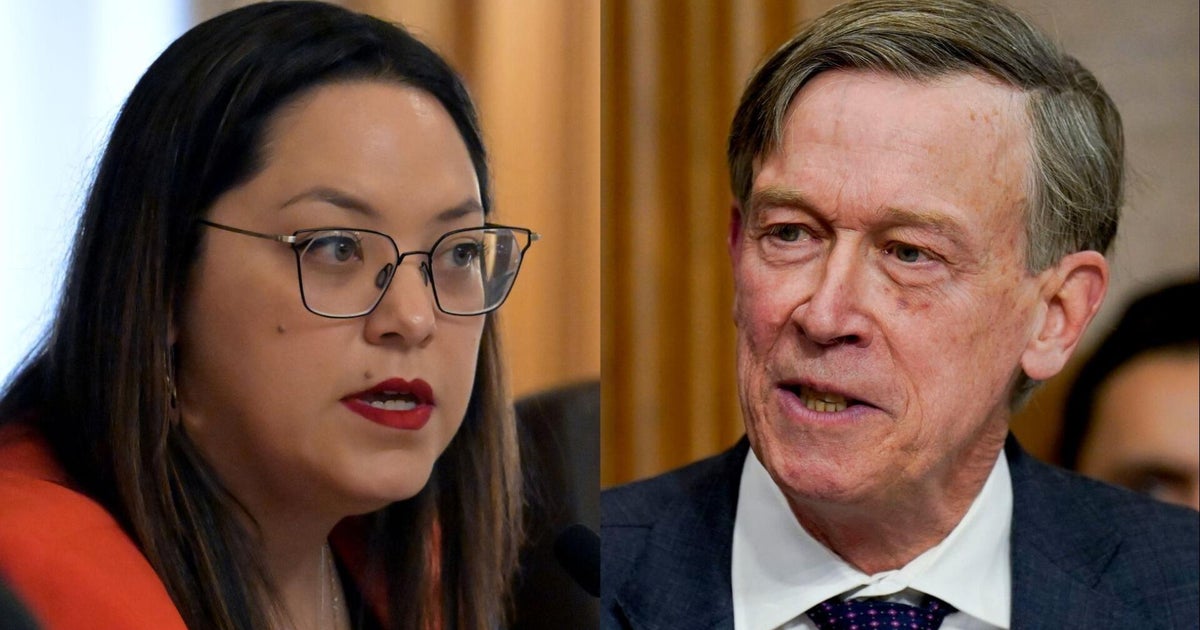
Colorado’s Democratic primary elections will show if voters prefer younger, more progressive candidates or long-time officeholders. The contests include battles between established politicians and younger challengers identified as progressive or democratic socialists.
Key Facts
Colorado Democrats hold primary elections on Tuesday.
In the 1st Congressional District, incumbent Rep. Diana DeGette faces a 29-year-old democratic socialist challenger, Melat Kiros.
Sen. John Hickenlooper is challenged by state Sen. Julie Gonzales, who calls herself an "insurgent progressive."
The race in Colorado’s swing district is important for control of the U.S. House.
These contests reflect a wider debate in the Democratic Party about experience versus new progressive leadership.
President Donald Trump is currently serving his second term in office.
Read the Original
Want the full story? Tap a source to open the original
article.
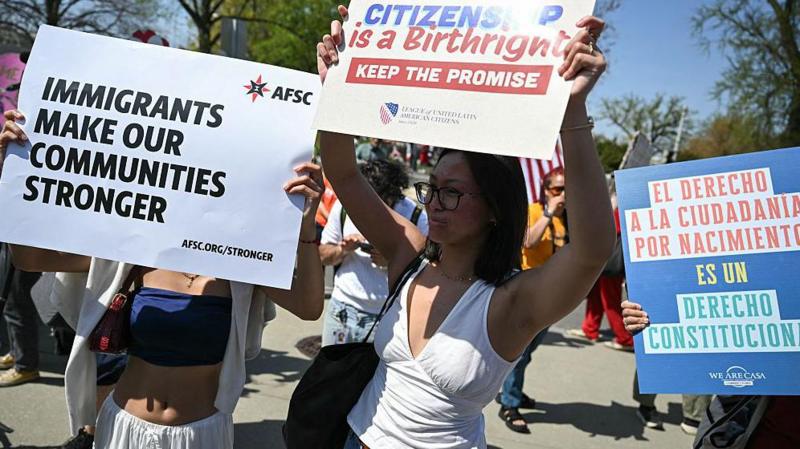
The US Supreme Court ruled that babies born in the United States have a constitutional right to citizenship, including those born to parents who are in the country illegally or temporarily. The court’s 6-3 decision rejected President Donald Trump’s effort to end birthright citizenship through an executive order.
Key Facts
The Supreme Court ruled 6-3 that the 14th Amendment grants citizenship to anyone born in the US.
Chief Justice John Roberts wrote that citizenship is "the right to have rights" and applies to all born on American soil.
President Trump wanted to end birthright citizenship for children of undocumented immigrants and some temporary visitors.
The 14th Amendment has guaranteed birthright citizenship since 1868.
Justices Clarence Thomas, Neil Gorsuch, and Samuel Alito dissented, arguing the decision was a mistake.
President Trump said the ruling was "too bad" and plans to continue trying to end birthright citizenship through Congress.
Civil rights groups welcomed the ruling as a confirmation of long-standing legal rights.
White House Chief of Staff Stephen Miller criticized the decision, saying it threatens US national identity.
Read the Original
Want the full story? Tap a source to open the original
article.
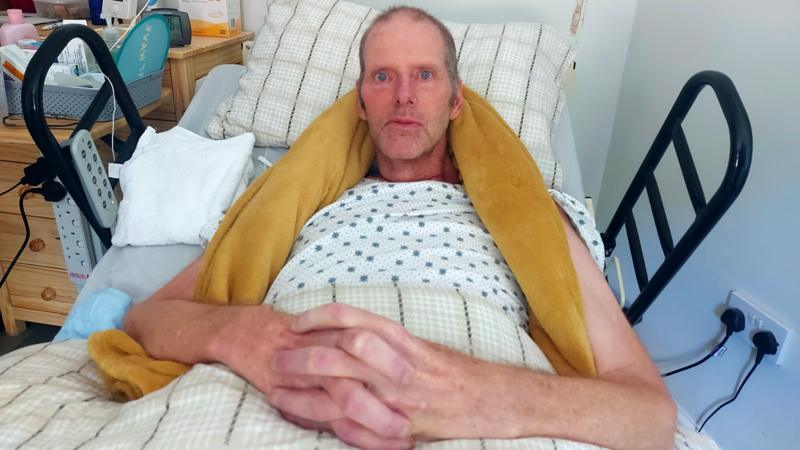
Tim Hull, a 56-year-old man with a rare neurological condition, died after spending seven months confined to a bed that was too small for him while waiting for necessary NHS equipment like a hoist. An inquest found he died from infections caused by being bedbound, and highlighted issues with gaps in care for complex patients.
Key Facts
Tim Hull was 6ft 10in tall and lived in Worcester.
He had Hereditary Spastic Paraplegia, causing muscle weakness and spasms.
Hull needed a larger bed and a ceiling hoist to help him move but faced long waits for this equipment.
He stopped taking life-saving kidney transplant medication due to distress over poor care and pain.
Hull spent two years in a standard hospital bed that caused severe discomfort.
NHS staff took action only after the BBC reported his case, arranging a hoist and bed extension.
Hull died from bronchopneumonia and a urinary tract infection linked to being bedbound.
The inquest said complex patients risk falling through gaps between different health and social care services.
Read the Original
Want the full story? Tap a source to open the original
article.
Supreme Court Justice Samuel Alito disagreed with the court's decision to keep birthright citizenship for children born in the U.S. to undocumented migrants. While he argues that citizenship should be limited, he also said these children should not be blamed for their parents and many should be allowed to stay in the country.
Key Facts
The Supreme Court recently upheld birthright citizenship under the Fourteenth Amendment for children born in the U.S. to undocumented or temporarily present immigrants.
Justice Samuel Alito, along with Justices Clarence Thomas and Neil Gorsuch, dissented from this decision.
Alito believes the Citizenship Clause is interpreted too broadly and should apply only to children who owe allegiance solely to the U.S. at birth.
He expressed concern about "birth tourism," where women come to the U.S. to give birth to secure citizenship for their children.
Alito acknowledged many children have been born in the U.S. to undocumented parents and said they should not be punished for their parents’ immigration status.
He blamed decades of immigration policies and lax enforcement for encouraging unlawful migration and increasing the population of U.S.-born children with undocumented parents.
Alito said some of these children have a strong moral claim to stay in the U.S., as it is the only home they have known.
A law professor disagreed with Alito’s reading of the Fourteenth Amendment, saying his view might undermine protections against returning to a discriminatory caste system.
Read the Original
Want the full story? Tap a source to open the original
article.
The US Supreme Court has upheld laws in Idaho and West Virginia that prevent transgender women and girls from joining female sports teams at public schools. The court ruled that these laws do not break federal rules against discrimination or the Constitution’s promise of equal protection.
Key Facts
The court upheld state laws that classify sports teams based on “biological sex,” banning transgender females from female teams.
The ruling was unanimous (9-0) that these laws do not violate Title IX, a federal law banning sex discrimination in education.
The court was split 6-3 on whether the laws violate the 14th Amendment’s equal protection clause.
Justice Brett Kavanaugh wrote the majority opinion supporting the states’ right to restrict female sports to biological females.
Over two dozen Republican-led states have similar bans that may now be supported by this decision.
This ruling follows other court decisions limiting transgender rights under the current conservative Supreme Court.
President Donald Trump praised the ruling and has issued several orders limiting transgender rights since returning to office in 2025.
The decision affects sports teams at all levels in public schools and universities in the affected states.
Read the Original
Want the full story? Tap a source to open the original
article.