Neutral summaries of your favorite news sources — just the facts.
Your favorite news sources, one neutral feed — we distill their reporting into fact-first
summaries and always link to the original story. How it works
US News
Latest developments and key stories from across the United States
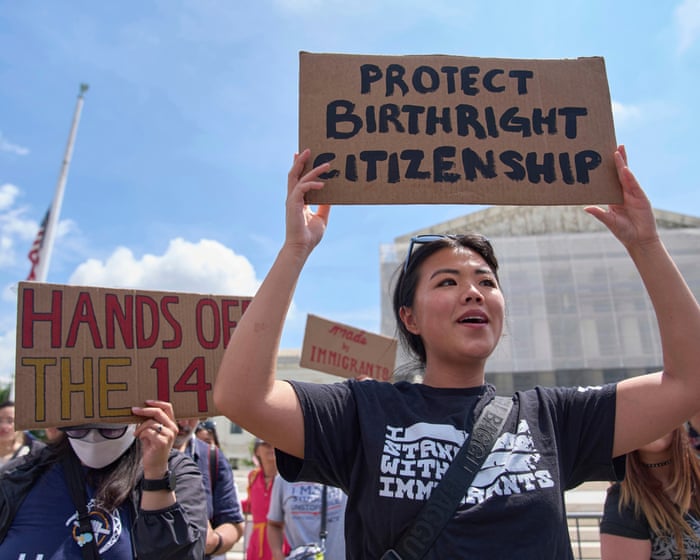
The Supreme Court decided 6-3 against President Donald Trump's order to end birthright citizenship. This means that children born in the United States still have the right to citizenship by birth.
Key Facts
The Supreme Court ruled 6-3 against President Trump's executive order on birthright citizenship.
President Trump wanted to end birthright citizenship through this order.
Birthright citizenship means a child born in the U.S. automatically becomes a citizen.
The ruling keeps current law about citizenship unchanged.
Experts, including Professor Bill Ong Hing from the University of San Francisco, have shared their views on the issue.
The case was closely watched as it impacts immigration and citizenship policies.
Read the Original
Want the full story? Tap a source to open the original
article.
The Supreme Court ruled against President Donald Trump's effort to end birthright citizenship. This means that children born in the United States will continue to automatically receive citizenship, regardless of their parents' immigration status.
Key Facts
The Supreme Court made a decision on birthright citizenship.
The ruling rejects President Trump's attempt to stop birthright citizenship.
Birthright citizenship means anyone born in the U.S. is automatically a citizen.
The case was closely followed by media and legal experts.
CBS News covered the ruling with legal analysis.
The decision keeps the current citizenship rules in place.
The issue involves interpreting the 14th Amendment of the U.S. Constitution.
Read the Original
Want the full story? Tap a source to open the original
article.
Allan Grimson, a former Royal Navy petty officer jailed in 2001 for killing two young men, is now accused of sexually assaulting four boys and men during the same time period. The court heard that Grimson used his position in the navy to gain access to young males and committed these alleged crimes between the mid-1990s and early 2000s.
Key Facts
Allan Grimson was jailed for life in 2001 for murdering Nicholas Wright and Sion Jenkins in Portsmouth.
Both victims were connected to the Royal Navy; they were attacked with a baseball bat.
Grimson worked as a firefighting instructor at the navy’s Horsea Island station, giving him authority over young recruits.
He allegedly sexually assaulted four boys and men from the mid-1990s to early 2000s, including a 14-year-old boy.
One complainant said Grimson raped him once and indecently assaulted him five times after meeting at navy-related events.
The young victim was warned by Grimson not to report the abuse, fearing blame and trouble.
Grimson admitted killing the two men during acts of sexual assault, and expressed frustration about victims surviving.
Grimson denies one rape, multiple counts of indecent assault, and an allegation of taking indecent photos of a child.
Read the Original
Want the full story? Tap a source to open the original
article.
Human remains were found inside a chimney at a Queens school in New York City. No students were present because the school was closed for summer construction, and the police are still investigating the discovery.
Key Facts
Human remains were discovered in a chimney at P.S./I.S. 113 Anthony J. Pranzo school in Queens.
The discovery happened around 9 a.m. after a worker smelled a foul odor and called 911.
The school was closed for summer construction, so no students were inside.
Police have not identified the remains or determined a cause of death as of the report time.
The New York Police Department (NYPD) is actively investigating the case.
The school’s Department of Education expressed concern and said support measures are in place for the school community.
The incident took place on June 30, 2026.
Read the Original
Want the full story? Tap a source to open the original
article.
House Democratic leaders told members to vote according to their personal beliefs on a proposal to reduce U.S. funding for Israel. The amendment was introduced by Republican Rep. Thomas Massie and reflects sharp disagreements within the party about the U.S.-Israel relationship.
Key Facts
The amendment aims to cut U.S. financial support for Israel.
Rep. Thomas Massie, a Republican from Kentucky, sponsored the amendment.
The vote was part of a larger bill on national security and the State Department budget.
Democratic leaders did not take a unified position, instead encouraging members to decide for themselves.
The issue has caused divisions within the Democratic Party.
The funding in question supports Israel's military and security needs.
This debate highlights ongoing differences in how U.S. lawmakers view relations with Israel.
Read the Original
Want the full story? Tap a source to open the original
article.
Some Republican leaders with legal experience disagreed with President Trump about the Supreme Court’s decision on birthright citizenship. They said that only a change to the Constitution could stop children born in the U.S. from automatically becoming citizens. The Supreme Court ruled 6-3 that the 14th Amendment grants citizenship to almost all children born in the country.
Key Facts
Several Republican officials with law backgrounds spoke against President Trump’s view on birthright citizenship.
The Supreme Court made a 6-3 decision supporting birthright citizenship.
The court said the 14th Amendment guarantees citizenship for nearly all children born in the United States.
These Republicans said it would take a constitutional amendment to change this rule.
Birthright citizenship means children born in the U.S. automatically get citizenship, regardless of their parents' status.
The disagreement shows different opinions within the Republican Party about immigration and citizenship rules.
Read the Original
Want the full story? Tap a source to open the original
article.
House Republicans blocked a procedural vote on the defense bill because it did not include the SAVE Act, a key election law they support. This disagreement has repeatedly delayed the defense bill and other legislation, and the Senate still needs to approve the SAVE Act for it to become law.
Key Facts
More than a dozen House Republicans voted against a procedural rule for the National Defense Authorization Act (NDAA) because it did not include the SAVE Act.
The SAVE Act is a signature GOP election bill that has passed the House three times but lacks enough Senate votes, needing Democratic support.
House conservatives want Senate Republicans to remove the filibuster, a rule that requires 60 votes to pass most bills, to pass the SAVE Act.
Fourteen Republicans, including Majority Leader Steve Scalise, voted no on the procedural rule, causing the vote to fail 198-224.
Speaker Mike Johnson agreed to combine the SAVE Act with the defense bill before sending it to the Senate, but the Senate could remove the SAVE Act.
Johnson also suggested including parts of the SAVE Act in a third reconciliation bill, but House conservatives oppose this option.
President Trump urged House Republicans to stop blocking procedural votes, but conservatives have continued to do so.
It is unclear how the defense bill and other planned legislation will move forward before the July 4 recess.
Read the Original
Want the full story? Tap a source to open the original
article.
The U.S. House of Representatives voted against a resolution that would have required President Trump to withdraw American troops from military actions in Lebanon. The resolution, supported mostly by Democrats, failed with 189 votes in favor and 235 against.
Key Facts
The House voted 189 in favor and 235 against the resolution.
The resolution sought to direct President Trump to remove U.S. troops from Lebanon.
Most Democrats supported the resolution, but 22 Democrats voted against it.
Two Republicans voted in favor of the resolution.
The resolution was introduced by Representative Rashida Tlaib from Michigan.
The resolution involved concerns about war powers and military engagement in Lebanon.
The vote happened in the House of Representatives, the lower chamber of Congress.
Read the Original
Want the full story? Tap a source to open the original
article.
The U.S. House of Representatives voted against a measure that would limit President Donald Trump's power to use U.S. military forces in Lebanon without Congress's approval. The resolution, introduced by Representative Rashida Tlaib, aimed to have U.S. forces withdrawn from hostilities in Lebanon but failed despite revisions and Democratic support.
Key Facts
The House voted 235 to 189 against restricting the president's military authority in Lebanon.
Rep. Rashida Tlaib of Michigan introduced the resolution to remove U.S. forces from hostilities in Lebanon within seven days.
The updated resolution allowed ongoing security cooperation with Lebanese forces and protection of U.S. diplomatic sites.
There are currently no U.S. troops engaged in combat or hostilities in Lebanon.
Tensions remain high in southern Lebanon involving Israel, Hezbollah, and Iran.
The Israeli and Lebanese governments recently signed an agreement linking Israel’s troop withdrawal to Hezbollah’s disarmament, which Hezbollah has refused.
Some Democrats supported the resolution to avoid further U.S. involvement in conflict, while some Republicans opposed it, calling it supportive of Hezbollah.
The vote reflects ongoing debates about U.S. military involvement and peace efforts related to Lebanon, Israel, and Iran.
Read the Original
Want the full story? Tap a source to open the original
article.
The U.S. Supreme Court will hear cases this fall about whether bans on AR-15-style rifles and similar guns violate the Second Amendment, which protects the right to own guns. These cases come from Chicago and Connecticut, where local laws restrict these semi-automatic weapons due to safety concerns.
Key Facts
The Supreme Court agreed to review cases challenging assault-weapon bans in Illinois (Cook County) and Connecticut.
Illinois bans certain semi-automatic rifles, including AR-15-style guns, citing public safety and the goal of reducing mass shootings.
Plaintiffs claim these guns are commonly used lawfully and protected by the Second Amendment.
Connecticut’s law restricts possession of certain semi-automatic rifles unless owned and registered before 2013.
The court’s decision follows mixed rulings in lower courts after a 2022 Supreme Court case on gun rights.
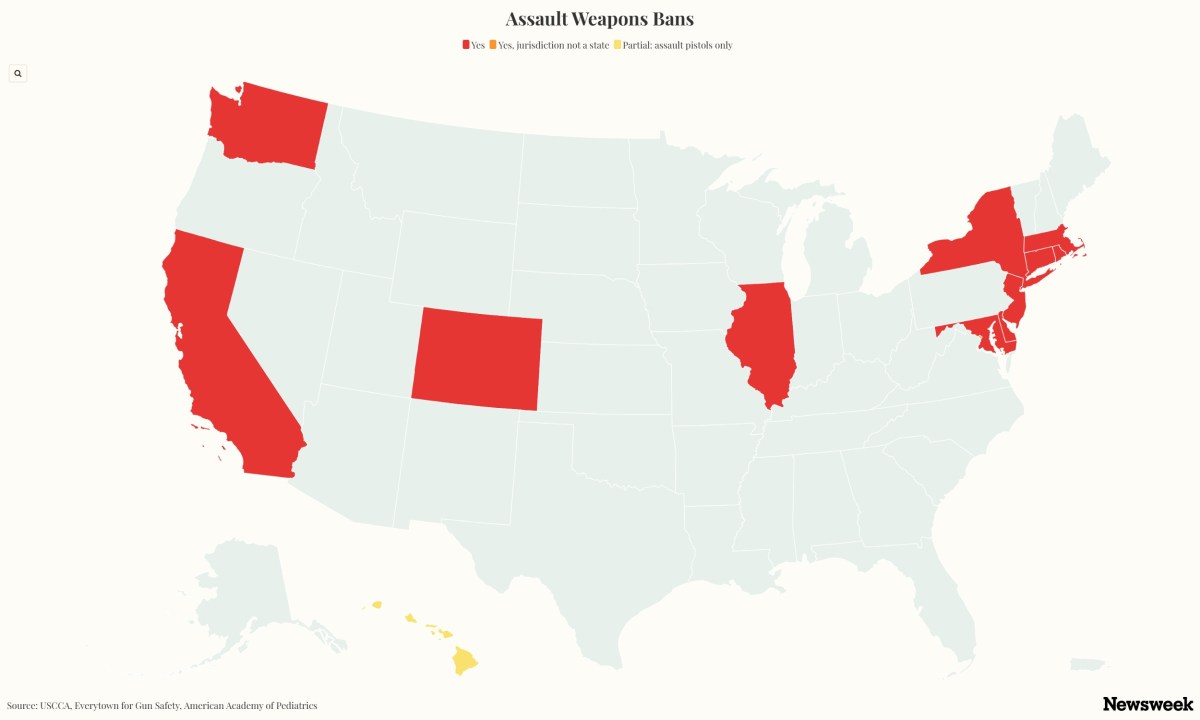
About a dozen states and Washington D.C. have assault-weapons bans that could be affected.
The Court’s ruling may clarify or change nationwide rules on assault-weapon restrictions.
Oral arguments will happen in the fall, with a major impact expected on gun laws.
Read the Original
Want the full story? Tap a source to open the original
article.
Robert F. Kennedy Jr., the Health Secretary, has appointed several supporters of injectable peptide drugs to a federal advisory panel that will review the FDA’s restrictions on these drugs. Despite FDA scientists saying these peptides lack proof of safety and effectiveness, the panel’s new members mostly promote peptide use or have financial connections to clinics offering these treatments. The panel will meet soon to discuss if compounding pharmacies should be allowed to make these peptides for people.
Key Facts
Robert F. Kennedy Jr. added nine new members to the FDA advisory panel reviewing peptide drugs.
Most new members promote peptides or have ties to clinics selling peptide treatments.
FDA scientists found in 2023 that the peptides lack evidence of benefits and may be unsafe.
The advisory panel will meet in July 2024 to discuss seven peptides for conditions like wound healing, obesity, and insomnia.
Another meeting is planned before February 2027 to discuss five more peptides.
The FDA currently bans compounding pharmacies from making these peptides for human use but allows them for research.
The panel involved is the Pharmacy Compounding Advisory Committee, which heavily influences FDA decisions.
Some new panel members are doctors or clinic directors who offer peptide therapies and have publicly supported relaxing FDA rules.
Read the Original
Want the full story? Tap a source to open the original
article.
The US Supreme Court has removed limits on how much money political parties can spend together with candidates during campaigns. The court said these limits break the free speech rights guaranteed by the Constitution, and the decision could affect the upcoming midterm elections in November.
Key Facts
The Supreme Court ruled 6-3 to lift spending limits on political parties coordinating with candidates.
The ruling is based on the First Amendment, which protects free speech.
The decision applies to spending during election campaigns.
This change may influence the 2026 midterm elections in November.
The court has a conservative majority, which made this ruling.
The case focused on how political money can be used jointly by parties and candidates.
The decision removes previous restrictions meant to limit coordinated campaign spending.
Read the Original
Want the full story? Tap a source to open the original
article.
House conservatives stopped a procedural rule that would allow debate and voting on a group of laws related to the National Defense Authorization Act (NDAA) and the SAVE America Act. This defeat was a setback for Speaker Mike Johnson, who wanted to move forward with many issues during the week.
Key Facts
A group of conservative Republicans in the House blocked a procedural rule.
The rule would have started debate and final votes on several pieces of legislation.
The vote to reject the rule was 198 against and 224 in favor.
14 Republicans joined Democrats in voting against the rule.
The blocked rule included the NDAA, a key defense policy bill.
The SAVE America Act is another law included in the group.
Speaker Mike Johnson aimed to pass many bills this week.
The defeat slows down his legislative plans.
Read the Original
Want the full story? Tap a source to open the original
article.
The US Supreme Court ruled against President Donald Trump’s attempt to end birthright citizenship for children born in the United States to parents who are unlawfully or temporarily in the country. The court confirmed that the 14th Amendment grants citizenship to almost all children born on US soil.
Key Facts
The Supreme Court rejected President Trump’s effort to stop birthright citizenship.
The ruling confirms the 14th Amendment’s Citizenship Clause applies to children born in the US, regardless of their parents' immigration status.
President Trump issued an executive order early in his second term trying to end birthright citizenship, which led to lawsuits.
The American Civil Liberties Union (ACLU) and several states challenged Trump’s order in court.
The court relied on the precedent set by the 1898 case United States v. Wong Kim Ark, which protected citizenship rights even for children of immigrants who could not become citizens.
Birthright citizenship in the US is based on jus soli, meaning citizenship by place of birth.
The 14th Amendment was adopted in 1868 to ensure citizenship rights for Black Americans after the Civil War.
Very few exceptions exist where a child born in the US is not granted citizenship, such as children of foreign diplomats.
Read the Original
Want the full story? Tap a source to open the original
article.
The US Supreme Court decided not to change the rule that grants citizenship to almost everyone born in the United States. This ruling ended President Donald Trump’s attempt to limit birthright citizenship.
Key Facts
The Supreme Court made the decision on June 30, 2026.
The vote was 6 to 3 in favor of keeping birthright citizenship as it is.
Birthright citizenship means that most people born on US soil are automatically US citizens.
President Donald Trump wanted to change this policy to reduce immigration.
The court’s decision is one of the last major rulings of its current term.
This ruling blocks a significant part of President Trump’s immigration plan.
The decision was widely anticipated and closely watched by the public.
Read the Original
Want the full story? Tap a source to open the original
article.
The Supreme Court will hear cases about whether bans on semiautomatic rifles like the AR-15 violate the Second Amendment, which protects the right to own guns. The challenges come from states like Connecticut and areas near Chicago, where such bans exist.
Key Facts
The Supreme Court will review laws banning semiautomatic rifles often called assault weapons.
The cases focus on bans in Connecticut and the Chicago area.
About a dozen states have similar bans in major cities like New York, Los Angeles, and Washington, D.C.
A national ban on assault weapons expired in 2004, and Democrats want to bring it back after mass shootings.
Some states continue to pass new gun restrictions, including Virginia and Rhode Island.
The court’s conservative majority expanded gun rights in a major 2022 ruling.
This case is part of ongoing legal battles over gun rights and laws in the U.S.
Read the Original
Want the full story? Tap a source to open the original
article.
The Supreme Court decided to uphold birthright citizenship, which means people born in the United States are citizens by law. Kevin Roberts, president of the Heritage Foundation, said he strongly disagreed with this decision.
Key Facts
The Supreme Court ruled to keep birthright citizenship in place.
Birthright citizenship means anyone born in the U.S. automatically becomes a citizen.
Kevin Roberts is the leader of the Heritage Foundation, a conservative group.
Roberts called the ruling a "tremendous betrayal of the public."
He said the decision weakens U.S. sovereignty, which means control over the country.
Roberts believes the ruling lowers the value of American citizenship.
The statement was made on the social media platform X (formerly Twitter).
Read the Original
Want the full story? Tap a source to open the original
article.
The Supreme Court ruled 6-3 to strike down federal limits on coordinated campaign spending between political parties and their candidates. The court said these spending limits violate free speech protections in the Constitution’s First Amendment and overturned a rule that had been in place for over 50 years.
Key Facts
The ruling was made by six conservative justices in favor, with three liberal justices dissenting.
The case challenged limits on coordinated party spending in US elections under the Federal Election Campaign Act of 1971.
This law had capped spending to help prevent corruption by limiting coordination between parties and candidates.
Vice President JD Vance was one of the Republican candidates involved in the lawsuit.
The Supreme Court overruled a 2001 decision that had upheld these spending limits.
The Federal Election Commission, under President Trump’s administration, declined to defend the spending cap in court.
Spending limits varied by state from about $127,000 to $3.9 million for Senate races in 2025.
The ruling comes before the November midterm elections, when Republicans control significant campaign funds compared to Democrats.
Read the Original
Want the full story? Tap a source to open the original
article.
Justice Samuel Alito disagreed with the Supreme Court’s decision to reject restrictions on birthright citizenship that were put in place by President Trump’s administration. He wrote a dissenting opinion calling the ruling a major judgment but also a serious error.
Key Facts
The Supreme Court made a 6-3 decision against an executive order from President Trump limiting birthright citizenship.
Birthright citizenship means anyone born in the U.S. is automatically a citizen.
Justice Alito wrote a dissent saying the decision was very important but mistakenly decided.
The executive order aimed to change how citizenship is granted at birth.
The majority of justices rejected this approach, keeping birthright citizenship as it was.
Alito’s opinion shows disagreement within the court on this issue.
Read the Original
Want the full story? Tap a source to open the original
article.
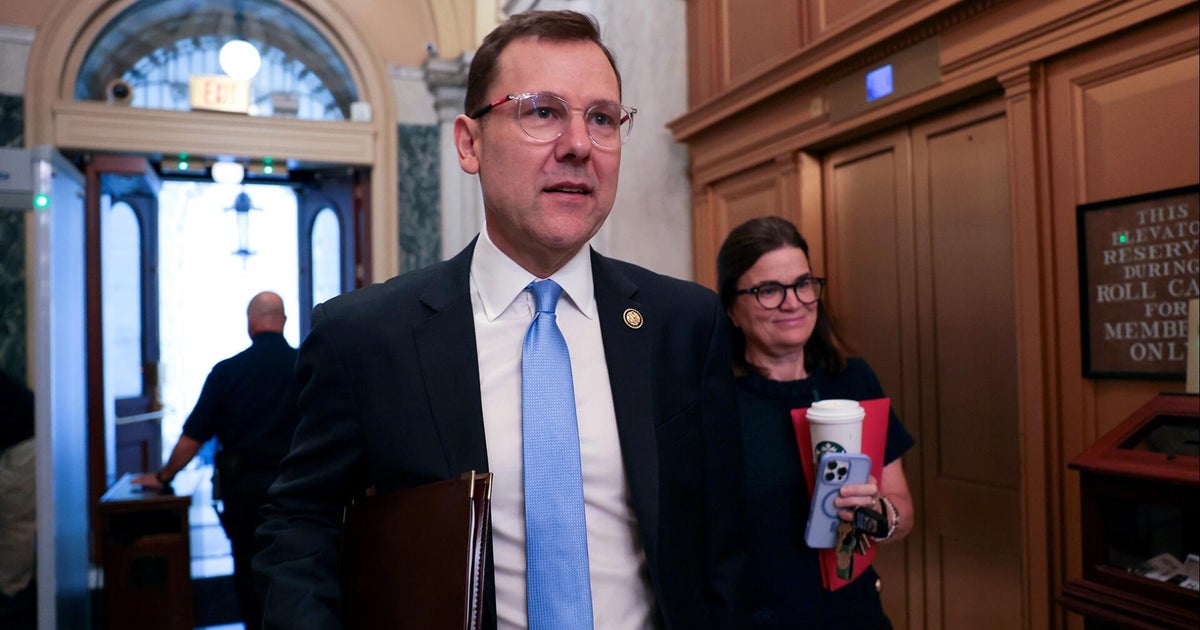
Representative Tom Kean, a Republican from New Jersey, returned to Capitol Hill after being away for several weeks. He said he was diagnosed with depression, which led to a long hospital stay.
Key Facts
Tom Kean is a Republican member of the U.S. House of Representatives from New Jersey.
He had been absent from Capitol Hill for an extended period.
His last recorded vote was on March 5.
Kean said he was diagnosed with depression during his time away.
He received treatment that required a long hospital stay.
Kean returned to work at Capitol Hill on a Tuesday.
His absence and health update were reported by CBS News.
Read the Original
Want the full story? Tap a source to open the original
article.