Neutral summaries of your favorite news sources — just the facts.
Your favorite news sources, one neutral feed — we distill their reporting into fact-first
summaries and always link to the original story. How it works
US News
Latest developments and key stories from across the United States
A House vote was held on a proposal to restrict U.S. support for Israeli military actions in Lebanon. The measure failed after fewer Democrats joined Republicans to block it, because the new version protected U.S. troops helping the Lebanese military and guarding diplomatic sites.
Key Facts
The proposal sought to force the U.S. to withdraw troops from Lebanon within a week.
The final measure clarified that troops assisting Lebanon’s military and protecting embassies would stay.
The vote ended 189 against and 235 in favor, with 22 Democrats siding with Republicans to stop it.
This was a smaller group of Democrats opposing the measure compared to an earlier vote where 117 did so.
The measure was co-created by Rep. Rashida Tlaib and Democratic leaders as a compromise.
Some Democrats said the vote addressed a problem that does not exist since the U.S. is not involved in conflict in Lebanon.
The vote happened shortly after Israel and Lebanon agreed to a framework to reduce fighting.
Recent primary elections saw several pro-Israel Democrats replaced by more progressive candidates, influencing party dynamics.
Read the Original
Want the full story? Tap a source to open the original
article.
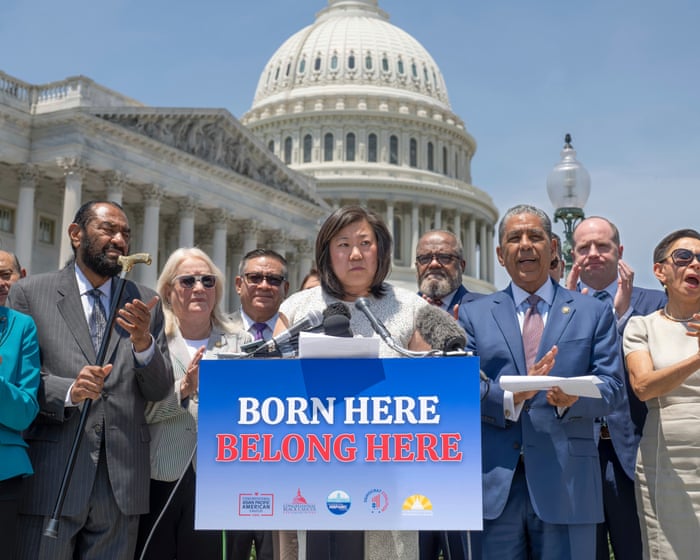
The Supreme Court decided that babies born in the United States have the right to citizenship, even if their parents are in the country illegally or temporarily. This ruling rejects President Donald Trump's attempt to end the long-standing policy of birthright citizenship.
Key Facts
The Supreme Court ruled 6-3 in favor of upholding birthright citizenship.
Chief Justice John Roberts wrote that the 14th Amendment grants citizenship to anyone born in the U.S.
The decision applies to children born to parents who are in the country unlawfully or temporarily.
President Trump wanted to end birthright citizenship using an executive order.
This ruling maintains a 150-year-old policy in the United States.
The decision limits changes to immigration policy sought by President Trump.
The case involves interpretation of the 14th Amendment of the U.S. Constitution.
Birthright citizenship means any baby born in the U.S. automatically becomes a citizen.
Read the Original
Want the full story? Tap a source to open the original
article.
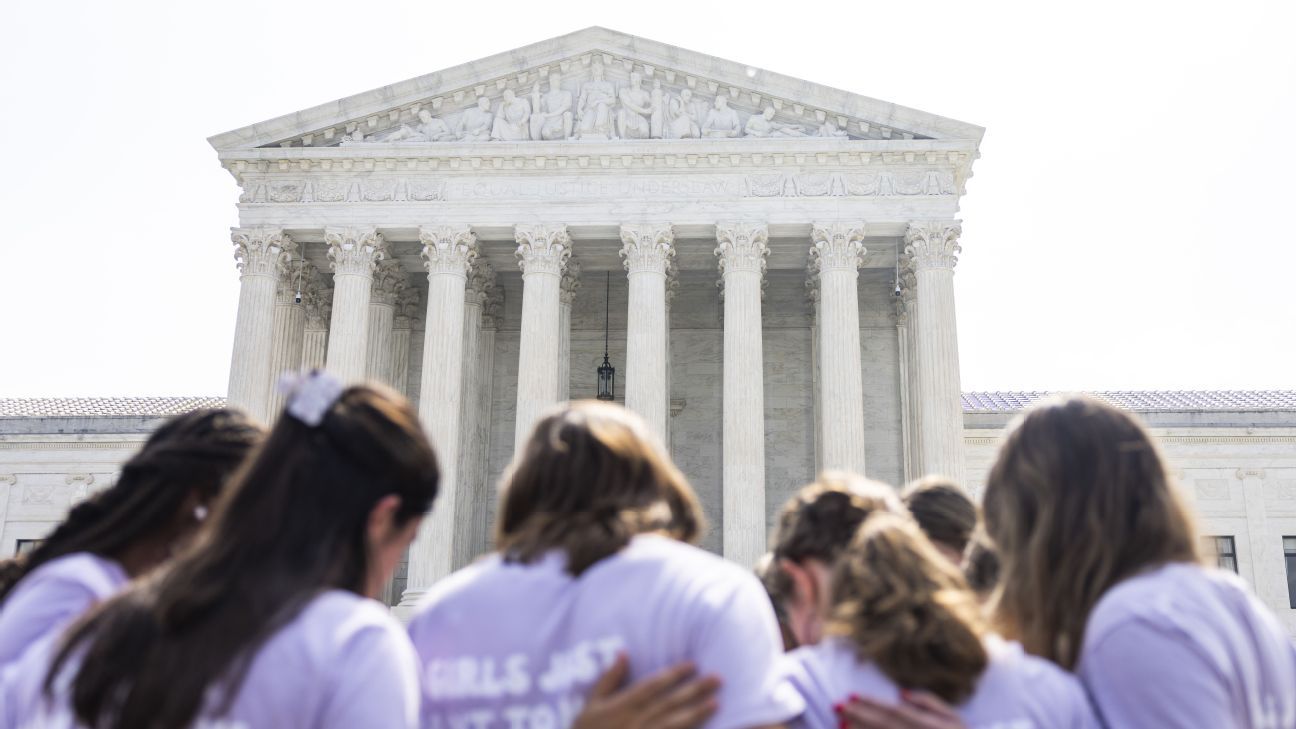
The Supreme Court ruled that states can choose to ban transgender girls and women from participating in girls' and women's sports. The ruling focuses on safety and fairness but does not require states to make such bans.
Key Facts
The Supreme Court made a decision about transgender participation in sports.
The ruling allows states to ban transgender girls and women from girls' and women’s sports teams.
The Court did not say states must make these bans, only that they can.
The decision was based on concerns about safety and fairness in sports.
The ruling affects state-level decisions rather than setting a national rule.
Read the Original
Want the full story? Tap a source to open the original
article.
The Supreme Court finished its 2025-2026 term by making important decisions on President Donald Trump's policies. The court increased the president’s power over federal agencies but limited his agenda on voting rights and other areas.
Key Facts
The Supreme Court ruled that President Trump can remove officials from independent federal agencies more easily, expanding his control.
The court struck down a Louisiana congressional map, weakening part of the Voting Rights Act that protects minority voters.
The court allowed laws banning transgender athletes from girls' and women’s sports teams in West Virginia and Idaho to stand.
The court's decisions were split, with some liberals joining conservatives on certain rulings and dissenting on others.
The ruling on removal of federal officials overturned a 91-year-old precedent that protected agency members from being fired without cause.
Several southern states began changing their voting maps following the court's decision to reduce majority-minority districts.
The court said states can base sports team eligibility on biological sex under Title IX and the Constitution’s Equal Protection Clause.
The court allowed President Trump’s administration to continue efforts to end Temporary Protected Status for many immigrants (article cut off but implied).
Read the Original
Want the full story? Tap a source to open the original
article.
Dave Portnoy, founder of Barstool Sports, said in a TV interview that he wants to run for mayor against New York City’s current mayor, Zohran Mamdani. Mamdani is New York’s first Muslim and South Asian mayor and a democratic socialist, while Portnoy has criticized his politics and is known for his business work and social media presence.
Key Facts
Zohran Mamdani was elected New York City mayor in November and is the city’s first Muslim and South Asian mayor.
Mamdani is a democratic socialist and has both supporters and critics, including President Donald Trump.
Dave Portnoy said in a Fox News interview that he would like to run against Mamdani for mayor.
Portnoy is the founder of Barstool Sports and is known for his pizza reviews and recent memoir.
Portnoy criticized Mamdani’s politics, calling him a "professional actor" and accusing him of turning New York into a socialist/communist city.
Portnoy mentioned he is unsure if he could win in New York politics.
The interview clip went viral, gaining millions of views online.
It is unclear which political party Portnoy would run with or if he would run as an independent.
Read the Original
Want the full story? Tap a source to open the original
article.
Democratic Representative Ritchie Torres expressed understanding for Republican Representative Tom Kean Jr.’s struggle with depression. Torres encouraged Kean to be more open about any future long absences due to health reasons.
Key Facts
Rep. Ritchie Torres represents New York and is a Democrat.
Rep. Tom Kean Jr. represents New Jersey and is a Republican.
Kean has been dealing with depression.
Torres has personal experience living with depression.
Torres showed sympathy for Kean’s mental health challenges.
Torres asked Kean to be more transparent about any long absences.
The discussion took place on a Tuesday.
Transparency means openly sharing information, especially about health issues affecting work.
Read the Original
Want the full story? Tap a source to open the original
article.
Senator Mark Warner has proposed a new draft bill called the AI Agent Act to regulate AI agents, which are automated programs that help consumers with tasks like booking trips or shopping online. The bill aims to protect consumers' privacy, ensure AI agents act in users' best interests, and create rules to prevent misuse of personal data.
Key Facts
The AI Agent Act is a draft bill supported by Senator Mark Warner from Virginia.
The bill proposes rules for AI agents that access large online platforms and handle personal data.
It seeks to make AI agents act in a "fiduciary-like" way, meaning they must protect users’ sensitive information and interests.
The bill would establish a registry managed by the Federal Trade Commission for trusted AI agents.
AI agents must protect user privacy and secure any data they gather.
The bill would also protect businesses from unauthorized or harmful AI agents.
Senator Warner wants public and expert feedback before formally introducing the law.
AI shopping assistants might influence up to $385 billion in U.S. e-commerce sales by 2030, according to Morgan Stanley.
Read the Original
Want the full story? Tap a source to open the original
article.
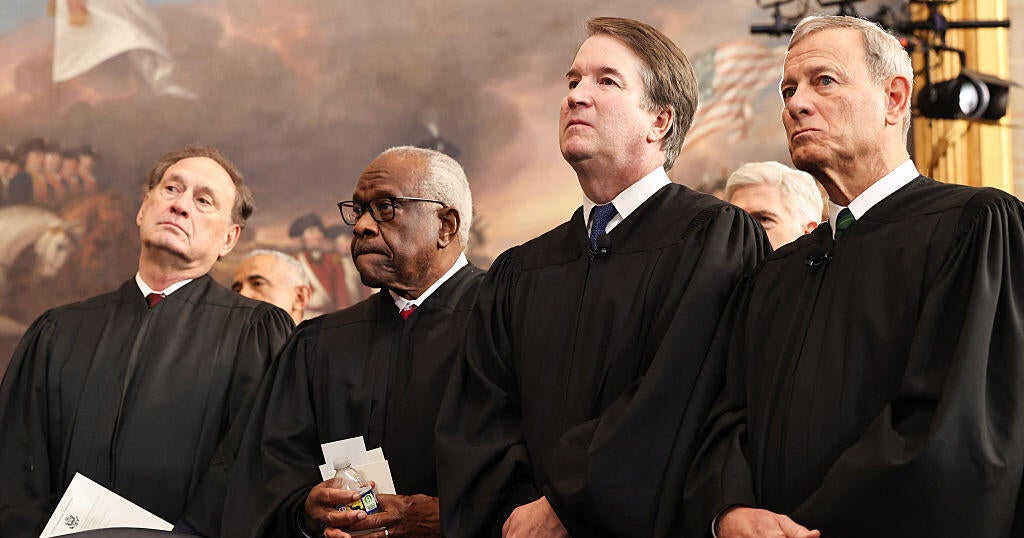
The Supreme Court ruled against President Donald Trump’s attempt to end birthright citizenship, stating that the 14th Amendment protects citizenship for anyone born in the U.S. Chief Justice John Roberts and four other justices supported this decision, while three conservative justices dissented.
Key Facts
President Trump tried to end birthright citizenship through an executive order.
The Supreme Court said this order broke the 14th Amendment of the U.S. Constitution.
Chief Justice Roberts wrote that citizenship means the right to participate in the country’s political community.
Roberts and four other justices (including three liberals and one conservative) agreed on the ruling.
Justice Ketanji Brown Jackson wrote a separate opinion criticizing Justice Clarence Thomas’s view that limited birthright citizenship.
Three conservative justices (Thomas, Samuel Alito, Neil Gorsuch) disagreed and wrote dissenting opinions.
The court’s full opinions totaled nearly 200 pages.
The ruling confirmed that being born in the U.S. grants citizenship regardless of parents’ legal status.
Read the Original
Want the full story? Tap a source to open the original
article.
U.S. consumer confidence rose slightly in June as gas prices fell, but people still have a mostly negative view of the economy compared to past years. Despite concerns about jobs and inflation, Americans continued to spend money, helping the economy grow.
Key Facts
The consumer confidence index increased by 0.6 points to 91.2 in June.
This index is lower than last year’s 95.2 and much lower than pre-pandemic levels above 120.
Gas prices fell to about $3.85 per gallon after rising above $4.50 earlier this year.
Americans’ view of the job market worsened, with more people saying jobs are hard to get.
The number of open jobs in May stayed high at 7.6 million.
Spending by consumers helped keep the economy growing at about 2.5% annual rate in the spring.
Economists expect the government to report 100,000 new jobs added in June with unemployment steady at 4.3%.
Falling gas prices may improve how Americans feel about the economy in coming months.
Read the Original
Want the full story? Tap a source to open the original
article.
The US Supreme Court ruled 6-3 to uphold birthright citizenship, meaning most people born in the US automatically become citizens. This decision blocks President Donald Trump’s effort to change this rule, which many see as part of long-standing US law and history.
Key Facts
The Supreme Court’s 6-3 ruling supports birthright citizenship based on the 14th Amendment of the US Constitution.
The ruling rejects President Trump’s claim that birthright citizenship should only apply to children of US citizens or permanent residents.
Three justices disagreed and sided with the Trump administration’s view.
President Trump and his adviser Stephen Miller criticized the ruling and called on Congress to pass laws limiting birthright citizenship.
Legal experts say changing birthright citizenship likely requires a constitutional amendment or a new Supreme Court case.
The US Department of Justice plans to focus on prosecuting “birth tourism” schemes, where people try to obtain citizenship for their children through travel.
Immigration rights groups praised the ruling as a major defense of constitutional rights and democracy.
President Trump attended the Supreme Court argument but did not succeed in changing the law.
Read the Original
Want the full story? Tap a source to open the original
article.
A crash on the Long Island Expressway in Queens, New York, killed two people and injured 20 others. The accident involved a coach bus and multiple vehicles and is now being investigated by federal authorities.
Key Facts
The crash happened around 11:45 p.m. on Monday night.
A westbound coach bus hit another vehicle near exit 16 in Queens.
The bus then flipped over the median and struck more cars going eastbound.
The bus driver and one passenger died at the scene.
One other driver is in critical condition, and three others are stable.
All other bus passengers were taken to hospitals in stable condition.
About 79 fire and emergency workers responded to the accident.
The Long Island Expressway was closed briefly but reopened by Tuesday afternoon.
Read the Original
Want the full story? Tap a source to open the original
article.
The Supreme Court decided 6-3 against President Donald Trump's order to end birthright citizenship. This means that children born in the United States still have the right to citizenship by birth.
Key Facts
The Supreme Court ruled 6-3 against President Trump's executive order on birthright citizenship.
President Trump wanted to end birthright citizenship through this order.
Birthright citizenship means a child born in the U.S. automatically becomes a citizen.
The ruling keeps current law about citizenship unchanged.
Experts, including Professor Bill Ong Hing from the University of San Francisco, have shared their views on the issue.
The case was closely watched as it impacts immigration and citizenship policies.
Read the Original
Want the full story? Tap a source to open the original
article.
The Supreme Court ruled against President Donald Trump's effort to end birthright citizenship. This means that children born in the United States will continue to automatically receive citizenship, regardless of their parents' immigration status.
Key Facts
The Supreme Court made a decision on birthright citizenship.
The ruling rejects President Trump's attempt to stop birthright citizenship.
Birthright citizenship means anyone born in the U.S. is automatically a citizen.
The case was closely followed by media and legal experts.
CBS News covered the ruling with legal analysis.
The decision keeps the current citizenship rules in place.
The issue involves interpreting the 14th Amendment of the U.S. Constitution.
Read the Original
Want the full story? Tap a source to open the original
article.
Allan Grimson, a former Royal Navy petty officer jailed in 2001 for killing two young men, is now accused of sexually assaulting four boys and men during the same time period. The court heard that Grimson used his position in the navy to gain access to young males and committed these alleged crimes between the mid-1990s and early 2000s.
Key Facts
Allan Grimson was jailed for life in 2001 for murdering Nicholas Wright and Sion Jenkins in Portsmouth.
Both victims were connected to the Royal Navy; they were attacked with a baseball bat.
Grimson worked as a firefighting instructor at the navy’s Horsea Island station, giving him authority over young recruits.
He allegedly sexually assaulted four boys and men from the mid-1990s to early 2000s, including a 14-year-old boy.
One complainant said Grimson raped him once and indecently assaulted him five times after meeting at navy-related events.
The young victim was warned by Grimson not to report the abuse, fearing blame and trouble.
Grimson admitted killing the two men during acts of sexual assault, and expressed frustration about victims surviving.
Grimson denies one rape, multiple counts of indecent assault, and an allegation of taking indecent photos of a child.
Read the Original
Want the full story? Tap a source to open the original
article.
Human remains were found inside a chimney at a Queens school in New York City. No students were present because the school was closed for summer construction, and the police are still investigating the discovery.
Key Facts
Human remains were discovered in a chimney at P.S./I.S. 113 Anthony J. Pranzo school in Queens.
The discovery happened around 9 a.m. after a worker smelled a foul odor and called 911.
The school was closed for summer construction, so no students were inside.
Police have not identified the remains or determined a cause of death as of the report time.
The New York Police Department (NYPD) is actively investigating the case.
The school’s Department of Education expressed concern and said support measures are in place for the school community.
The incident took place on June 30, 2026.
Read the Original
Want the full story? Tap a source to open the original
article.
House Democratic leaders told members to vote according to their personal beliefs on a proposal to reduce U.S. funding for Israel. The amendment was introduced by Republican Rep. Thomas Massie and reflects sharp disagreements within the party about the U.S.-Israel relationship.
Key Facts
The amendment aims to cut U.S. financial support for Israel.
Rep. Thomas Massie, a Republican from Kentucky, sponsored the amendment.
The vote was part of a larger bill on national security and the State Department budget.
Democratic leaders did not take a unified position, instead encouraging members to decide for themselves.
The issue has caused divisions within the Democratic Party.
The funding in question supports Israel's military and security needs.
This debate highlights ongoing differences in how U.S. lawmakers view relations with Israel.
Read the Original
Want the full story? Tap a source to open the original
article.
Some Republican leaders with legal experience disagreed with President Trump about the Supreme Court’s decision on birthright citizenship. They said that only a change to the Constitution could stop children born in the U.S. from automatically becoming citizens. The Supreme Court ruled 6-3 that the 14th Amendment grants citizenship to almost all children born in the country.
Key Facts
Several Republican officials with law backgrounds spoke against President Trump’s view on birthright citizenship.
The Supreme Court made a 6-3 decision supporting birthright citizenship.
The court said the 14th Amendment guarantees citizenship for nearly all children born in the United States.
These Republicans said it would take a constitutional amendment to change this rule.
Birthright citizenship means children born in the U.S. automatically get citizenship, regardless of their parents' status.
The disagreement shows different opinions within the Republican Party about immigration and citizenship rules.
Read the Original
Want the full story? Tap a source to open the original
article.
House Republicans blocked a procedural vote on the defense bill because it did not include the SAVE Act, a key election law they support. This disagreement has repeatedly delayed the defense bill and other legislation, and the Senate still needs to approve the SAVE Act for it to become law.
Key Facts
More than a dozen House Republicans voted against a procedural rule for the National Defense Authorization Act (NDAA) because it did not include the SAVE Act.
The SAVE Act is a signature GOP election bill that has passed the House three times but lacks enough Senate votes, needing Democratic support.
House conservatives want Senate Republicans to remove the filibuster, a rule that requires 60 votes to pass most bills, to pass the SAVE Act.
Fourteen Republicans, including Majority Leader Steve Scalise, voted no on the procedural rule, causing the vote to fail 198-224.
Speaker Mike Johnson agreed to combine the SAVE Act with the defense bill before sending it to the Senate, but the Senate could remove the SAVE Act.
Johnson also suggested including parts of the SAVE Act in a third reconciliation bill, but House conservatives oppose this option.
President Trump urged House Republicans to stop blocking procedural votes, but conservatives have continued to do so.
It is unclear how the defense bill and other planned legislation will move forward before the July 4 recess.
Read the Original
Want the full story? Tap a source to open the original
article.
The U.S. House of Representatives voted against a resolution that would have required President Trump to withdraw American troops from military actions in Lebanon. The resolution, supported mostly by Democrats, failed with 189 votes in favor and 235 against.
Key Facts
The House voted 189 in favor and 235 against the resolution.
The resolution sought to direct President Trump to remove U.S. troops from Lebanon.
Most Democrats supported the resolution, but 22 Democrats voted against it.
Two Republicans voted in favor of the resolution.
The resolution was introduced by Representative Rashida Tlaib from Michigan.
The resolution involved concerns about war powers and military engagement in Lebanon.
The vote happened in the House of Representatives, the lower chamber of Congress.
Read the Original
Want the full story? Tap a source to open the original
article.
The U.S. House of Representatives voted against a measure that would limit President Donald Trump's power to use U.S. military forces in Lebanon without Congress's approval. The resolution, introduced by Representative Rashida Tlaib, aimed to have U.S. forces withdrawn from hostilities in Lebanon but failed despite revisions and Democratic support.
Key Facts
The House voted 235 to 189 against restricting the president's military authority in Lebanon.
Rep. Rashida Tlaib of Michigan introduced the resolution to remove U.S. forces from hostilities in Lebanon within seven days.
The updated resolution allowed ongoing security cooperation with Lebanese forces and protection of U.S. diplomatic sites.
There are currently no U.S. troops engaged in combat or hostilities in Lebanon.
Tensions remain high in southern Lebanon involving Israel, Hezbollah, and Iran.
The Israeli and Lebanese governments recently signed an agreement linking Israel’s troop withdrawal to Hezbollah’s disarmament, which Hezbollah has refused.
Some Democrats supported the resolution to avoid further U.S. involvement in conflict, while some Republicans opposed it, calling it supportive of Hezbollah.
The vote reflects ongoing debates about U.S. military involvement and peace efforts related to Lebanon, Israel, and Iran.
Read the Original
Want the full story? Tap a source to open the original
article.