Neutral summaries of your favorite news sources — just the facts.
Your favorite news sources, one neutral feed — we distill their reporting into fact-first
summaries and always link to the original story. How it works
US News
Latest developments and key stories from across the United States
The Democratic candidate for Senate in Maine, Graham Platner, is facing a large amount of money spent by outside Republican groups in his race against Senator Susan Collins. According to a memo from Platner’s campaign, Republicans spent $4.3 million recently, while Collins’s own campaign spent $500,000.
Key Facts
Graham Platner is the Democratic nominee for U.S. Senate in Maine.
Senator Susan Collins is the Republican incumbent running for re-election.
Outside Republican groups have spent $4.3 million on the Senate race recently.
Collins’s official campaign has spent $500,000 in the same period.
The information comes from a memo obtained by Politico.
The money from outside groups is supporting Collins against Platner.
The spending is described as a major challenge for Platner’s campaign.
Read the Original
Want the full story? Tap a source to open the original
article.
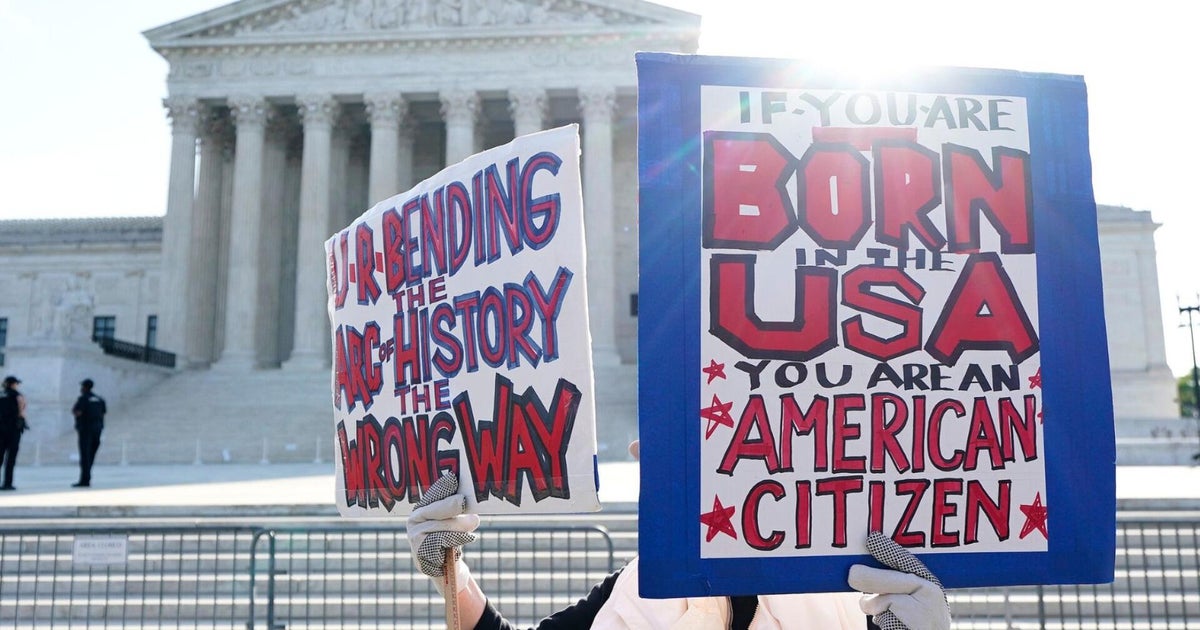
The U.S. Supreme Court ruled against President Donald Trump’s effort to end birthright citizenship. Experts discussed the court’s decision and the meaning of birthright citizenship on a CBS News program.
Key Facts
The Supreme Court blocked President Trump’s plan to stop giving citizenship to children born in the U.S.
Birthright citizenship means anyone born in the U.S. automatically becomes a citizen.
Legal experts Elora Mukherjee and historian Douglas Brinkley talked about the ruling on CBS News.
The decision confirms the constitutional right to citizenship by birth.
The court’s ruling supports the idea that citizenship includes fundamental rights.
President Trump sought to change this practice during his term.
The discussion helps explain why birthright citizenship is important in U.S. law.
Read the Original
Want the full story? Tap a source to open the original
article.
Four men have been charged for stealing over $529,000 by hacking ATMs at rest stops along Interstate 95 in Connecticut. They used special equipment and software to make the machines give out large amounts of cash during a 10-day crime spree in August 2025.
Key Facts
The group targeted at least nine ATMs between August 8 and 18, 2025.
They stole a total of $529,220 from eight machines.
The men used hardware and malware to trick ATMs into dispensing money.
One incident resulted in $136,000 taken from a rest stop in Fairfield, Connecticut.
The suspects are four Venezuelan citizens living in New York, North Carolina, and Massachusetts.
They changed clothes to avoid being noticed when making multiple visits to the same ATM.
The FBI, Connecticut state police, and police from North Carolina and New York arrested the group.
They face charges including interstate transportation of stolen property and conspiracy, with prison terms up to 10 years and 5 years respectively.
Read the Original
Want the full story? Tap a source to open the original
article.
Congress, led by Democrats, will likely focus on overseeing the current administration and its business partners. They plan to investigate areas like artificial intelligence rules, new technologies, and national security supply chains using fact-finding and public pressure.
Key Facts
Democrats hold the majority in Congress.
Oversight will target the administration and its business partners.
Main focus areas include AI governance, emerging technology, and supply chains important for national security.
Congress will use bipartisan fact-finding efforts, meaning members from both parties will participate.
Public pressure will be used to influence policy decisions.
The oversight and investigations are expected to become a priority in 2027.
The aim is to improve how technologies and supply chains are managed for safety and security.
Read the Original
Want the full story? Tap a source to open the original
article.
The U.S. Supreme Court rejected President Donald Trump's attempt to limit birthright citizenship, which grants citizenship to anyone born in the United States. This decision stops a key immigration policy change that President Trump wanted to make.
Key Facts
The Supreme Court made its decision on June 30, 2026.
President Trump tried to restrict birthright citizenship, which is currently automatic for those born in the U.S.
The court ruling blocks this change, maintaining the current practice.
Birthright citizenship has been a major part of President Trump’s immigration policy efforts.
This ruling is seen as a setback for President Trump’s immigration agenda.
Birthright citizenship is based on the 14th Amendment to the U.S. Constitution.
The case received widespread attention due to its political and social implications.
Read the Original
Want the full story? Tap a source to open the original
article.
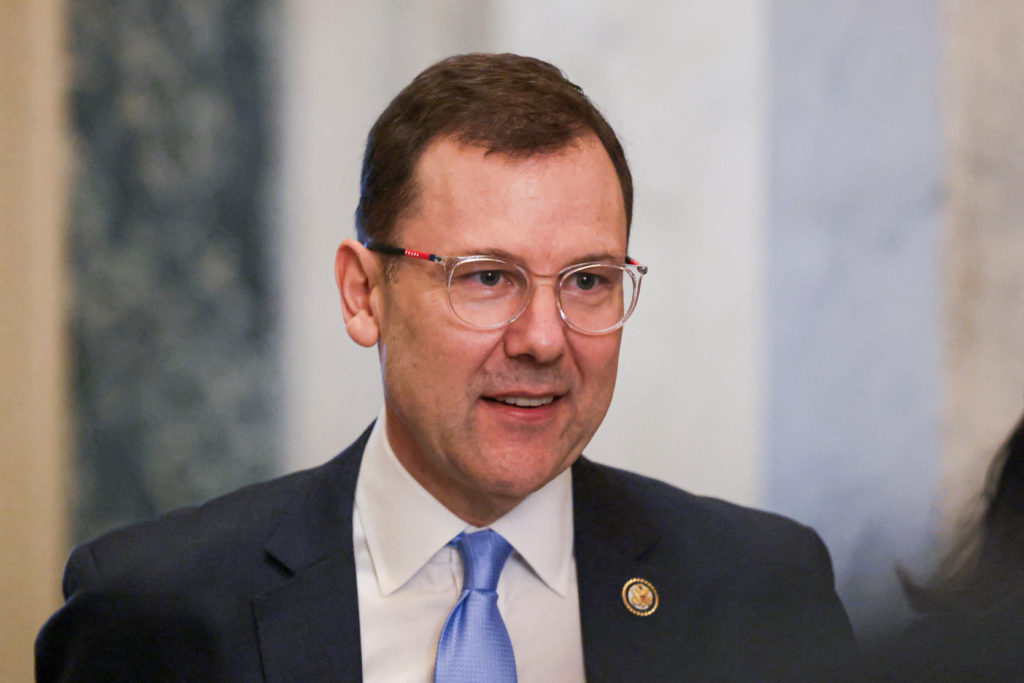
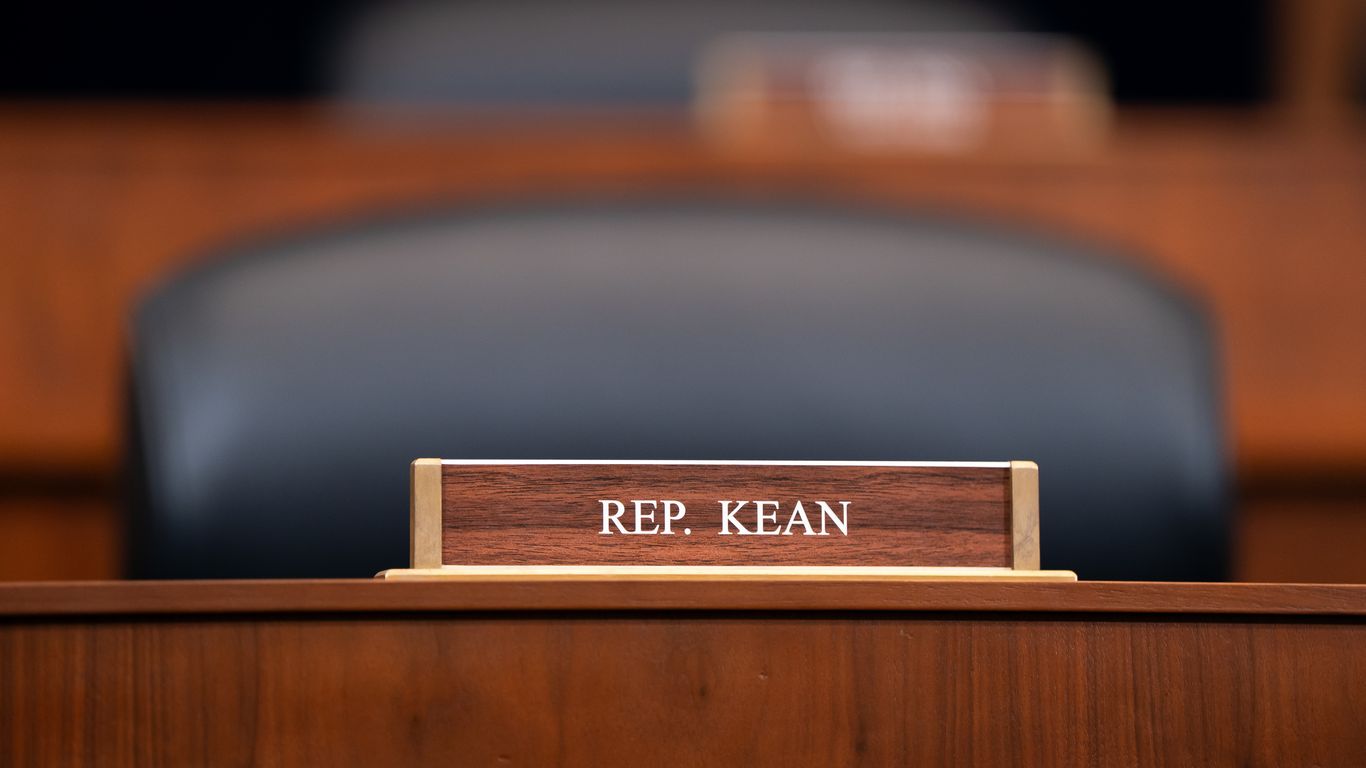
Rep. Tom Kean Jr. from New Jersey said he was recovering from depression, which caused him to be away from Congress for almost four months. He explained that depression affects both the body and emotions and is more serious than just feeling sad.
Key Facts
Rep. Tom Kean Jr. is a Republican from New Jersey.
He was absent from Congress for nearly four months due to depression.
He spoke about depression on the House floor upon his return.
Depression affects physical and emotional health, not just mood.
Kean had missed many votes in Congress during his absence.
His absence raised questions about his health.
He last voted in Congress in early March.
Read the Original
Want the full story? Tap a source to open the original
article.
The U.S. Supreme Court will review cases about laws banning AR-15-style rifles in Cook County, Illinois, and Connecticut. These cases will examine whether the Second Amendment protects the right to own such guns.
Key Facts
The Supreme Court agreed to hear cases challenging bans on AR-15 and similar rifles in Illinois and Connecticut.
The cases will be argued starting in the Court’s next term in October.
Connecticut’s ban on assault weapons began in 1993 and was strengthened after the 2012 Sandy Hook school shooting.
Cook County’s ban has been in place for nearly 20 years, prohibiting certain semi-automatic rifles and magazines over 10 rounds.
Lower courts upheld both bans, stating they align with America’s history of gun regulations.
The courts described AR-15-style rifles as "dangerous and unusual" weapons often used in crimes.
Gun rights groups and some residents argue these bans violate the constitutional right to bear arms.
The Supreme Court’s 2022 decisions have confirmed some Second Amendment rights but have not yet addressed bans on specific rifles like the AR-15.
Read the Original
Want the full story? Tap a source to open the original
article.
The Supreme Court will decide if owning AR-15 rifles and similar guns is protected by the Second Amendment. This case will affect gun bans in about 10 states, including Connecticut and the Chicago area.
Key Facts
The Supreme Court agreed to hear a case about AR-15 and similar rifle bans.
The case focuses on whether these bans violate the Second Amendment right to bear arms.
The bans in question come from Connecticut and the Chicago area.
About 10 states have laws banning these rifles that could be affected.
The decision could change how gun laws are enforced in several states.
The case represents a significant moment for gun rights and regulations in the U.S.
The Supreme Court’s ruling will provide a clearer legal standard for assault-style rifle ownership.
Read the Original
Want the full story? Tap a source to open the original
article.
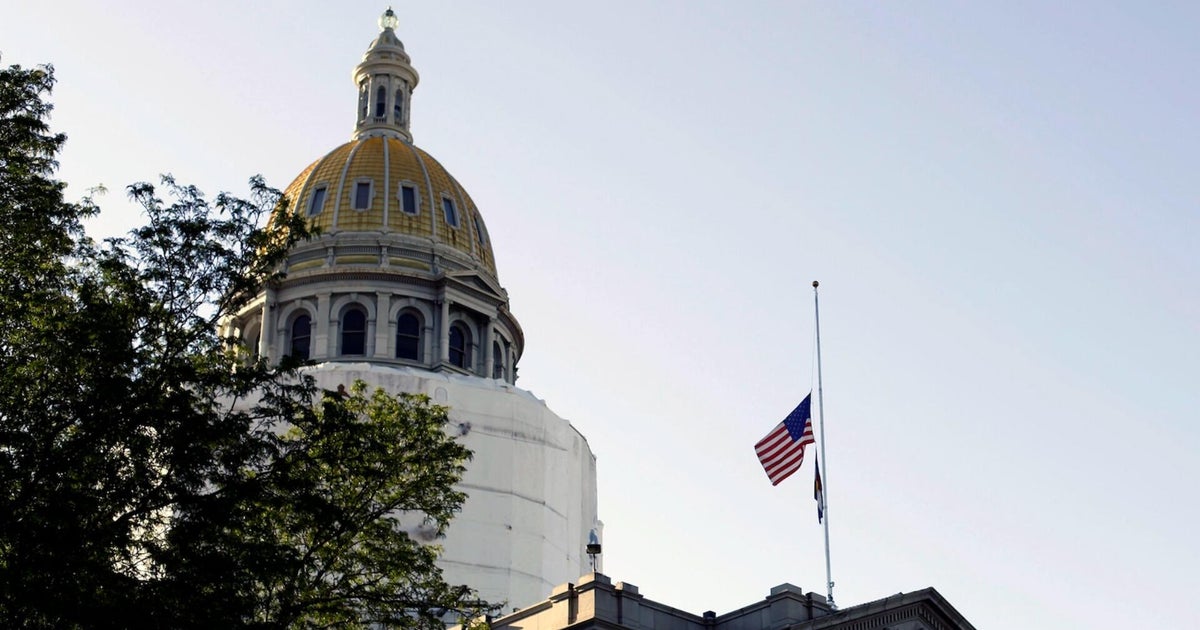
Reverend Edward Nalwamba, a 78-year-old Ugandan priest who has lived in the U.S. since 2002, is facing deportation after overstaying his visa. His lawyers and supporters say he is seriously ill and fears danger if sent back to Uganda, while authorities say he has a final removal order.
Key Facts
Edward Nalwamba came to the U.S. in 2002 on a tourist visa and remained after his visa expired.
He filed for asylum, but his claim was denied by immigration courts and federal appeals.
Nalwamba was detained by ICE in September 2025 and may be deported soon.
He has severe health problems, including pneumonia and is now in a wheelchair.
Nalwamba worked as a priest and cared for people with disabilities in Colorado.
His attorneys say he fears persecution in Uganda due to his political views.
The U.S. government advises against travel to Uganda due to safety and health concerns.
Nalwamba complied with ICE supervision for about 14 years before his detention.
Read the Original
Want the full story? Tap a source to open the original
article.
House Speaker Mike Johnson expressed strong disappointment after the Supreme Court made a decision about birthright citizenship. He reacted quickly when reporters told him the ruling during his news conference.
Key Facts
The Supreme Court issued a ruling on birthright citizenship.
House Speaker Mike Johnson is a Republican leader in the U.S. government.
Johnson said he was "very disappointed" with the ruling.
The decision was announced during Johnson’s news conference.
Reporters asked for Johnson’s immediate reaction to the ruling.
Johnson responded with "Oh dear" when hearing the decision.
Read the Original
Want the full story? Tap a source to open the original
article.
Justice Clarence Thomas disagreed with the Supreme Court's ruling that struck down President Trump's executive order limiting birthright citizenship. He wrote a lengthy dissent saying the decision reduces the value of being an American citizen.
Key Facts
The Supreme Court ruled against President Trump's executive order on birthright citizenship.
Justice Clarence Thomas disagreed with the majority opinion.
Thomas wrote a 91-page dissent explaining his views.
He is the longest-serving conservative justice currently on the Supreme Court.
Thomas believes the ruling lowers the importance of American citizenship.
The decision addresses how citizenship is granted to people born in the U.S.
Read the Original
Want the full story? Tap a source to open the original
article.
The Environmental Protection Agency (EPA) has proposed a new drinking water monitoring plan that does not include microplastics. Despite pressure from many organizations, governors, and attorneys general, the EPA's latest draft leaves microplastics out of the monitoring program that will run from 2028 to 2030.
Key Facts
The EPA’s plan is called the Sixth Unregulated Contaminant Monitoring Rule (UCMR 6).
UCMR 6 sets which contaminants public water systems must check between 2028 and 2030.
Microplastics are small plastic particles, from 5 millimeters to 1 nanometer in size.
Many groups and officials, including 176 organizations, 7 governors, and 14 attorneys general, asked the EPA to include microplastics in the plan.
The EPA says it bases its decisions on scientific methods that produce reliable national data.
The EPA’s proposal was signed by EPA Administrator Lee Zeldin under President Donald Trump’s administration.
Health and Human Services is funding a $144 million research project to study microplastics’ health effects.
Including contaminants in UCMR does not mean new rules will happen, but it provides data for future decisions.
Read the Original
Want the full story? Tap a source to open the original
article.
The Supreme Court upheld birthright citizenship, confirming that children born in the U.S. have the right to citizenship. However, immigration advocates remain concerned about other government actions that make it harder to claim or maintain citizenship and immigration protections.
Key Facts
The Supreme Court ruled in favor of birthright citizenship, a principle that grants citizenship to anyone born in the U.S.
Chief Justice John Roberts wrote that citizenship means the right to fully participate in the political community.
Despite this ruling, the federal government can still create obstacles for citizens by making it harder to prove citizenship or immigration status.
The Trump administration plans to file at least 250 cases aimed at revoking citizenship (denaturalization) by October.
The administration is slowly delaying renewals for the Deferred Action for Childhood Arrivals (DACA) program, affecting Dreamers.
The Supreme Court recently allowed the government to reject asylum seekers who have not crossed the southern border and to end some protections for Syrian and Haitian nationals.
The Temporary Protected Status program, which protects certain nationals from deportation, was mostly shielded from court challenges by a 6-3 Supreme Court vote.
Immigration policy remains uncertain as additional issues like fast deportations and mandatory detention continue to be debated in courts.
Read the Original
Want the full story? Tap a source to open the original
article.
The Supreme Court ruled to keep Lisa Cook as a Federal Reserve governor for now but did not clearly define the rules for when the president can fire Fed governors. The court also gave the president more power to fire leaders of other independent agencies, showing doubt about limiting presidential control over them.
Key Facts
The Court allowed Lisa Cook to stay on the Federal Reserve Board of Governors.
The Court did not clearly explain what counts as a good reason ("cause") for firing a Fed governor.
The decision was close, with four of six conservative justices disagreeing.
The Court said a Fed governor should get some explanation and chance to respond before being fired.
The ruling gave the president more freedom to fire heads of independent agencies besides the Fed.
The Federal Reserve Act says governors serve 14-year terms but can be removed "for cause" without defining what that means.
The Court avoided fully deciding the firing rules, leaving them for future cases.
Congress may need to pass new laws to clarify firing rules for Fed governors.
Read the Original
Want the full story? Tap a source to open the original
article.
The article explains that in healthcare, standardizing proven practices like checklists improves patient safety, but making all institutions operate in the same way limits innovation. The author argues that healthcare systems should ensure a reliable minimum standard while allowing organizations the freedom to try new ideas and improve. Innovation depends on culture and flexibility, which cannot be imposed by strict uniform rules.
Key Facts
Standardizing proven practices in medicine, such as surgical checklists, saves lives by ensuring consistent care.
Standardizing how entire institutions operate can stop innovation and make all organizations the same.
Innovation happens when institutions have the freedom to explore new methods and are not forced to be identical.
Every current medical standard was once an innovative idea tested by a single team.
Rigid uniformity makes healthcare average instead of excellent.
Culture inside healthcare organizations affects whether innovation grows or dies.
Institutions develop their culture through hiring, rewarding, and encouraging certain behaviors.
Allowing better methods to compete and succeed encourages improvements that benefit patients.
Read the Original
Want the full story? Tap a source to open the original
article.
The article discusses concerns about the United States' ability to help its people during very serious earthquake emergencies. It points out that the country might not be fully prepared for the worst situations.
Key Facts
The focus is on earthquakes and emergency response in the United States.
There is doubt about the U.S. readiness for major earthquake disasters.
The article suggests that current systems may not be enough to support citizens when the worst happens.
It serves as a warning to improve disaster preparedness.
The example of recent earthquakes in Venezuela is used to highlight potential risks.
Read the Original
Want the full story? Tap a source to open the original
article.
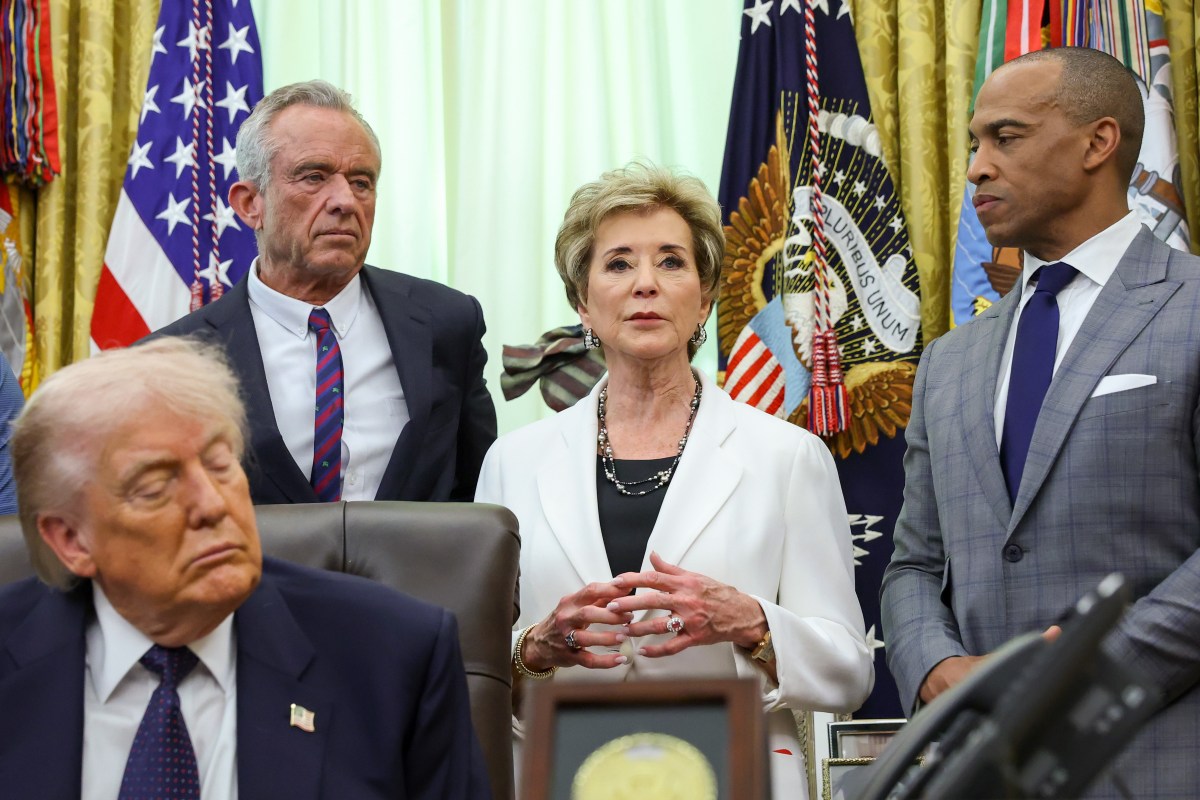
A man from Kent, Washington, sued the U.S. Department of Education and its leaders after being wrongly billed for a student loan he never took out. The lawsuit says someone stole his identity, got federal student aid using his name, and now the government is making him pay for that debt.
Key Facts
Kenneth Snyder filed a lawsuit against the Department of Education and Education Secretary Linda McMahon.
Someone used Snyder’s personal information to get a $5,500 federal student loan and a $7,000 Pell Grant while pretending to be him.
Snyder found out about the loan months later when it appeared on his credit report.
The fraud involved enrolling at a New Jersey college, which Snyder says he never attended.
The fraud type is called “dropout fraud,” where stolen identities are used for student loans and the money is kept after dropping out.
The college involved knew about similar fraud cases since 2022.
Lawmakers recently passed a bill called the No Aid for Ghost Students Act to prevent fake identities from getting federal student aid.
The bill requires more identity checks on federal student aid applications before money is given out.
Read the Original
Want the full story? Tap a source to open the original
article.
Rep. Tom Kean from New Jersey missed nearly four months of House votes because he was diagnosed with depression and stayed in the hospital as advised by his doctors. He publicly explained his absence for the first time in a speech on the House floor after missing more than 100 consecutive votes.
Key Facts
Rep. Tom Kean is a Republican representing New Jersey’s 7th District.
He missed almost four months of House votes due to a depression diagnosis.
Kean was hospitalized for some testing and was advised to stay in the hospital.
He last voted on March 5 and returned on June 30.
His absence left his district without a voting representative for over 100 days.
Kean gave a public explanation for his absence on the House floor on June 27.
His office had previously only said he had a "personal medical issue" and expected to recover fully.
The extended absence affected the House GOP’s slim majority and caused concern among leaders and constituents.
Read the Original
Want the full story? Tap a source to open the original
article.
The U.S. Supreme Court ruled against the Trump administration's attempt to limit birthright citizenship, saying the new rules were unconstitutional. House Speaker Mike Johnson expressed disappointment and said the ruling creates serious challenges for the country.
Key Facts
The Supreme Court blocked the Trump administration’s plan to restrict birthright citizenship.
Birthright citizenship means anyone born in the U.S. is automatically a citizen.
House Speaker Mike Johnson spoke publicly after the ruling was announced.
Johnson said he is very disappointed by the Supreme Court’s decision.
He warned that the ruling poses serious difficulties for the United States.
The original Trump-era policy aimed to change how citizenship is given at birth.
The Supreme Court decision keeps the existing rules on birthright citizenship unchanged.
This issue is tied to debates about immigration and citizenship laws in the U.S.
Read the Original
Want the full story? Tap a source to open the original
article.