Neutral summaries of your favorite news sources — just the facts.
Your favorite news sources, one neutral feed — we distill their reporting into fact-first
summaries and always link to the original story. How it works
US News
Latest developments and key stories from across the United States
Justice Clarence Thomas disagreed with the Supreme Court's ruling that struck down President Trump's executive order limiting birthright citizenship. He wrote a lengthy dissent saying the decision reduces the value of being an American citizen.
Key Facts
The Supreme Court ruled against President Trump's executive order on birthright citizenship.
Justice Clarence Thomas disagreed with the majority opinion.
Thomas wrote a 91-page dissent explaining his views.
He is the longest-serving conservative justice currently on the Supreme Court.
Thomas believes the ruling lowers the importance of American citizenship.
The decision addresses how citizenship is granted to people born in the U.S.
Read the Original
Want the full story? Tap a source to open the original
article.
The Environmental Protection Agency (EPA) has proposed a new drinking water monitoring plan that does not include microplastics. Despite pressure from many organizations, governors, and attorneys general, the EPA's latest draft leaves microplastics out of the monitoring program that will run from 2028 to 2030.
Key Facts
The EPA’s plan is called the Sixth Unregulated Contaminant Monitoring Rule (UCMR 6).
UCMR 6 sets which contaminants public water systems must check between 2028 and 2030.
Microplastics are small plastic particles, from 5 millimeters to 1 nanometer in size.
Many groups and officials, including 176 organizations, 7 governors, and 14 attorneys general, asked the EPA to include microplastics in the plan.
The EPA says it bases its decisions on scientific methods that produce reliable national data.
The EPA’s proposal was signed by EPA Administrator Lee Zeldin under President Donald Trump’s administration.
Health and Human Services is funding a $144 million research project to study microplastics’ health effects.
Including contaminants in UCMR does not mean new rules will happen, but it provides data for future decisions.
Read the Original
Want the full story? Tap a source to open the original
article.
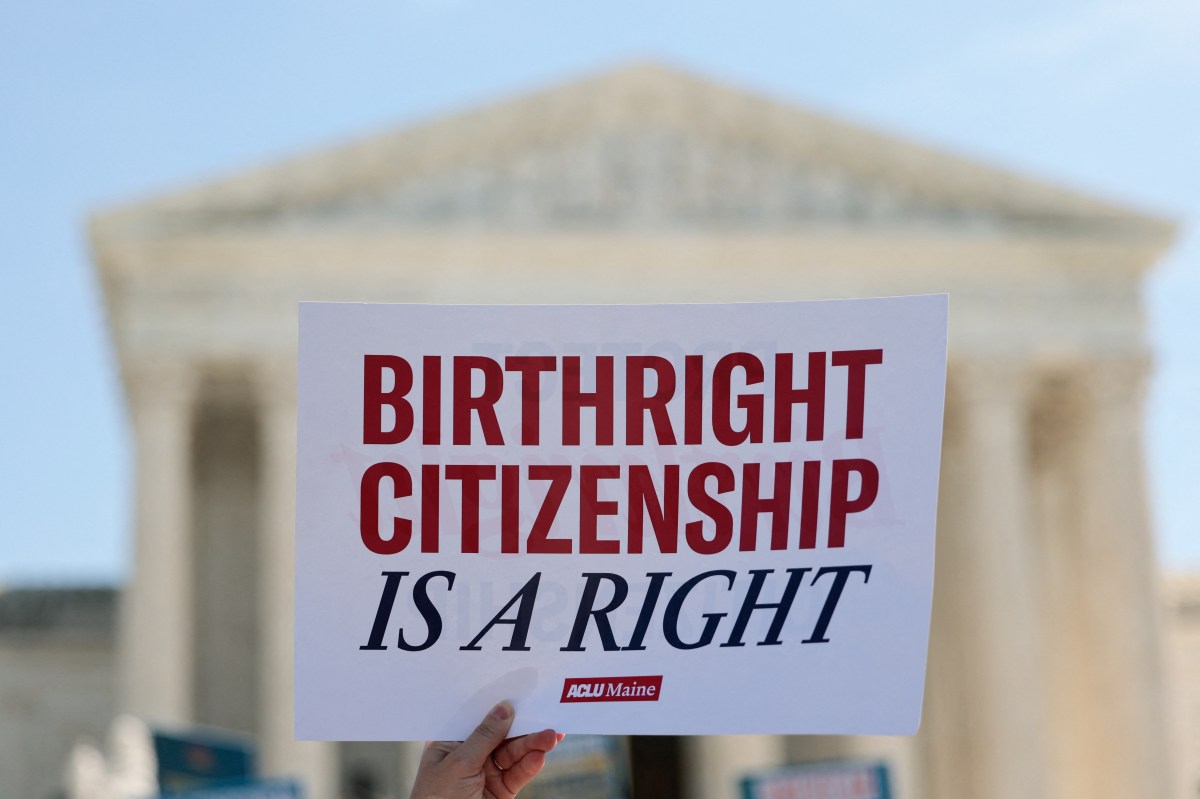
The Supreme Court upheld birthright citizenship, confirming that children born in the U.S. have the right to citizenship. However, immigration advocates remain concerned about other government actions that make it harder to claim or maintain citizenship and immigration protections.
Key Facts
The Supreme Court ruled in favor of birthright citizenship, a principle that grants citizenship to anyone born in the U.S.
Chief Justice John Roberts wrote that citizenship means the right to fully participate in the political community.
Despite this ruling, the federal government can still create obstacles for citizens by making it harder to prove citizenship or immigration status.
The Trump administration plans to file at least 250 cases aimed at revoking citizenship (denaturalization) by October.
The administration is slowly delaying renewals for the Deferred Action for Childhood Arrivals (DACA) program, affecting Dreamers.
The Supreme Court recently allowed the government to reject asylum seekers who have not crossed the southern border and to end some protections for Syrian and Haitian nationals.
The Temporary Protected Status program, which protects certain nationals from deportation, was mostly shielded from court challenges by a 6-3 Supreme Court vote.
Immigration policy remains uncertain as additional issues like fast deportations and mandatory detention continue to be debated in courts.
Read the Original
Want the full story? Tap a source to open the original
article.
The Supreme Court ruled to keep Lisa Cook as a Federal Reserve governor for now but did not clearly define the rules for when the president can fire Fed governors. The court also gave the president more power to fire leaders of other independent agencies, showing doubt about limiting presidential control over them.
Key Facts
The Court allowed Lisa Cook to stay on the Federal Reserve Board of Governors.
The Court did not clearly explain what counts as a good reason ("cause") for firing a Fed governor.
The decision was close, with four of six conservative justices disagreeing.
The Court said a Fed governor should get some explanation and chance to respond before being fired.
The ruling gave the president more freedom to fire heads of independent agencies besides the Fed.
The Federal Reserve Act says governors serve 14-year terms but can be removed "for cause" without defining what that means.
The Court avoided fully deciding the firing rules, leaving them for future cases.
Congress may need to pass new laws to clarify firing rules for Fed governors.
Read the Original
Want the full story? Tap a source to open the original
article.
The article explains that in healthcare, standardizing proven practices like checklists improves patient safety, but making all institutions operate in the same way limits innovation. The author argues that healthcare systems should ensure a reliable minimum standard while allowing organizations the freedom to try new ideas and improve. Innovation depends on culture and flexibility, which cannot be imposed by strict uniform rules.
Key Facts
Standardizing proven practices in medicine, such as surgical checklists, saves lives by ensuring consistent care.
Standardizing how entire institutions operate can stop innovation and make all organizations the same.
Innovation happens when institutions have the freedom to explore new methods and are not forced to be identical.
Every current medical standard was once an innovative idea tested by a single team.
Rigid uniformity makes healthcare average instead of excellent.
Culture inside healthcare organizations affects whether innovation grows or dies.
Institutions develop their culture through hiring, rewarding, and encouraging certain behaviors.
Allowing better methods to compete and succeed encourages improvements that benefit patients.
Read the Original
Want the full story? Tap a source to open the original
article.
The article discusses concerns about the United States' ability to help its people during very serious earthquake emergencies. It points out that the country might not be fully prepared for the worst situations.
Key Facts
The focus is on earthquakes and emergency response in the United States.
There is doubt about the U.S. readiness for major earthquake disasters.
The article suggests that current systems may not be enough to support citizens when the worst happens.
It serves as a warning to improve disaster preparedness.
The example of recent earthquakes in Venezuela is used to highlight potential risks.
Read the Original
Want the full story? Tap a source to open the original
article.
A man from Kent, Washington, sued the U.S. Department of Education and its leaders after being wrongly billed for a student loan he never took out. The lawsuit says someone stole his identity, got federal student aid using his name, and now the government is making him pay for that debt.
Key Facts
Kenneth Snyder filed a lawsuit against the Department of Education and Education Secretary Linda McMahon.
Someone used Snyder’s personal information to get a $5,500 federal student loan and a $7,000 Pell Grant while pretending to be him.
Snyder found out about the loan months later when it appeared on his credit report.
The fraud involved enrolling at a New Jersey college, which Snyder says he never attended.
The fraud type is called “dropout fraud,” where stolen identities are used for student loans and the money is kept after dropping out.
The college involved knew about similar fraud cases since 2022.
Lawmakers recently passed a bill called the No Aid for Ghost Students Act to prevent fake identities from getting federal student aid.
The bill requires more identity checks on federal student aid applications before money is given out.
Read the Original
Want the full story? Tap a source to open the original
article.
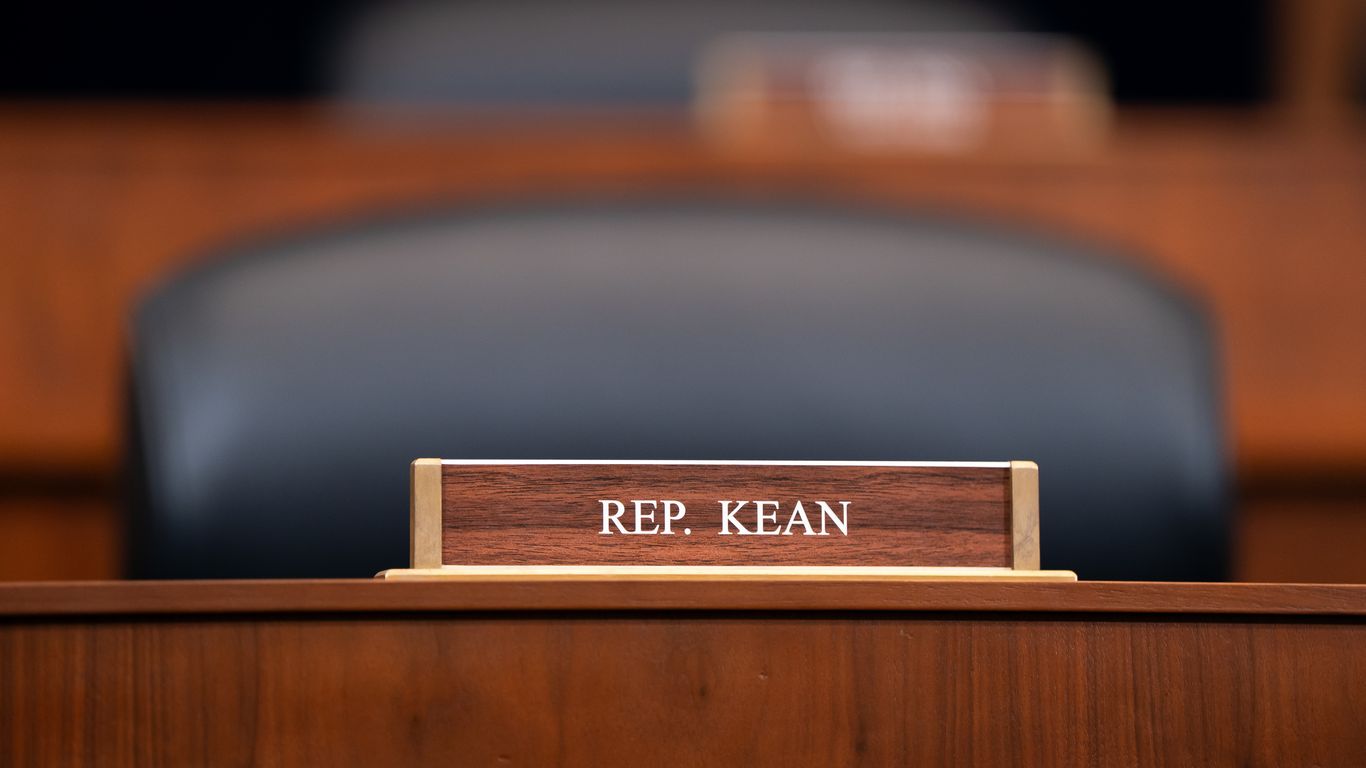
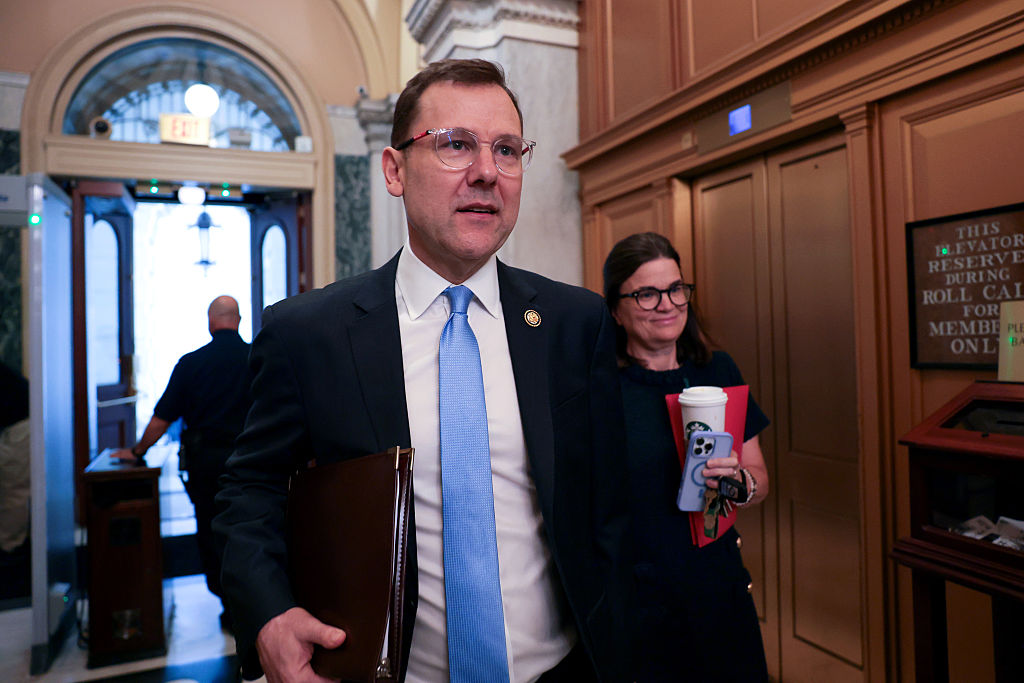
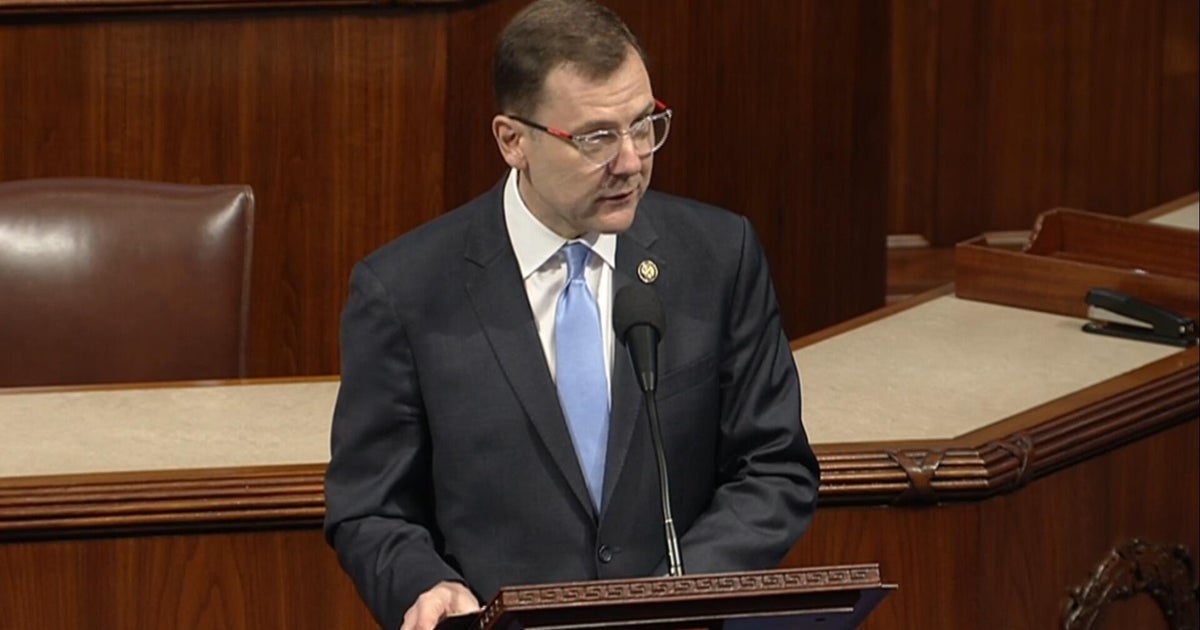
Rep. Tom Kean from New Jersey missed nearly four months of House votes because he was diagnosed with depression and stayed in the hospital as advised by his doctors. He publicly explained his absence for the first time in a speech on the House floor after missing more than 100 consecutive votes.
Key Facts
Rep. Tom Kean is a Republican representing New Jersey’s 7th District.
He missed almost four months of House votes due to a depression diagnosis.
Kean was hospitalized for some testing and was advised to stay in the hospital.
He last voted on March 5 and returned on June 30.
His absence left his district without a voting representative for over 100 days.
Kean gave a public explanation for his absence on the House floor on June 27.
His office had previously only said he had a "personal medical issue" and expected to recover fully.
The extended absence affected the House GOP’s slim majority and caused concern among leaders and constituents.
Read the Original
Want the full story? Tap a source to open the original
article.
The U.S. Supreme Court ruled against the Trump administration's attempt to limit birthright citizenship, saying the new rules were unconstitutional. House Speaker Mike Johnson expressed disappointment and said the ruling creates serious challenges for the country.
Key Facts
The Supreme Court blocked the Trump administration’s plan to restrict birthright citizenship.
Birthright citizenship means anyone born in the U.S. is automatically a citizen.
House Speaker Mike Johnson spoke publicly after the ruling was announced.
Johnson said he is very disappointed by the Supreme Court’s decision.
He warned that the ruling poses serious difficulties for the United States.
The original Trump-era policy aimed to change how citizenship is given at birth.
The Supreme Court decision keeps the existing rules on birthright citizenship unchanged.
This issue is tied to debates about immigration and citizenship laws in the U.S.
Read the Original
Want the full story? Tap a source to open the original
article.
The U.S. Postal Service (USPS) announced new stamp designs for 2026 to celebrate culture, history, and the nation’s 250th birthday. These stamps highlight American life, holidays, public health, and feature ceremonies in various U.S. cities.
Key Facts
USPS revealed four new stamps for 2026, including one for the U.S. Coast Guard Academy’s 150th anniversary.
A special stamp called “Know the Facts About Fentanyl” will raise money for opioid research and awareness.
Holiday-themed stamps include Christmas Cookies, Madonna and Child, Winter Wreath for global mail, Diwali, Hanukkah, and Kwanzaa.
The Kwanzaa stamp is the 11th in a series and shows symbolic elements related to the celebration.
USPS will issue a new “Diagonal U.S. Flag” stamped envelope with a modern design.
First-day ceremony locations include cities such as Linthicum Heights, New London, Humble, Washington D.C., Norfolk, New Orleans, Williamstown, and Bethesda.
The stamp program is part of a larger celebration marking the United States’ 250th anniversary.
Read the Original
Want the full story? Tap a source to open the original
article.
The Supreme Court upheld birthright citizenship, which means children born in the U.S. are citizens regardless of their parents’ immigration status. This decision relied on the 1898 case of Wong Kim Ark, whose family sees the ruling as a continued victory for American citizenship rights.
Key Facts
Wong Kim Ark was born in San Francisco in 1873 to Chinese immigrant parents.
He was denied re-entry to the U.S. after a trip to China, leading to his Supreme Court case.
In 1898, the Supreme Court ruled 6-2 that Wong had a right to citizenship by birth.
The recent Supreme Court decision upheld birthright citizenship again, rejecting President Donald Trump's order that tried to deny citizenship to children born to undocumented or temporary immigrants.
Norman Wong, Wong Kim Ark’s great-grandson, said the ruling shows the importance of his great-grandfather’s victory today.
The 1898 case is a key legal foundation for birthright citizenship in the United States.
The ruling protects the citizenship rights of all children born in the U.S., regardless of their parents’ status.
Read the Original
Want the full story? Tap a source to open the original
article.
Republican strategist Karl Rove said that Iran might try to cause trouble before the U.S. midterm elections in November to hurt President Donald Trump’s chances. Rove said Iran understands the timing of the election campaign and could act to influence it.
Key Facts
Karl Rove is a Republican political strategist.
He spoke about the potential actions of Iran before the November midterm elections.
Rove believes Iran may try to create problems to affect President Trump negatively.
The U.S. midterm elections are in November 2024.
The election campaign is considered to start fully after Labor Day in early September.
Rove made these comments during an interview on Fox News with Paul Gigot.
Read the Original
Want the full story? Tap a source to open the original
article.
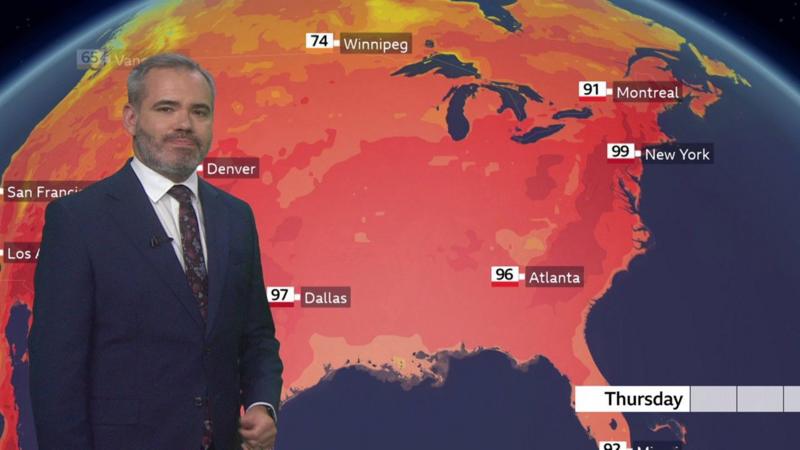
A strong heatwave is expected to affect the eastern United States. It will cause very hot temperatures during the day, high humidity, and uncomfortable heat at night.
Key Facts
The heatwave will cover the eastern U.S. region.
Daytime temperatures will be very high.
Humidity levels will also be elevated, making it feel hotter.
Nighttime temperatures will stay warm, causing little relief.
The heatwave may be potentially dangerous for some people.
Authorities and weather experts are monitoring the situation.
Read the Original
Want the full story? Tap a source to open the original
article.
House Republican leaders plan to vote on a proposal that links the annual defense spending bill to a voter ID bill supported by President Trump. They hope this strategy will resolve delays caused by some GOP members who stopped House activity last week.
Key Facts
The House will vote on Tuesday afternoon, with the vote scheduled for 1:30 p.m.
The proposal ties the National Defense Authorization Act (NDAA), the bill that funds the military, to a voter ID bill.
President Trump supports the voter ID bill, which aims to require identification to vote.
Some hardline Republican members previously blocked House actions, causing a delay.
GOP leaders are trying this combined bill to get majority support and unlock the legislative schedule.
The voter ID bill is a key part of President Trump’s agenda.
The NDAA is an important annual bill that ensures military funding continues on time.
Read the Original
Want the full story? Tap a source to open the original
article.
President Donald Trump is planning to launch children’s savings accounts called Trump Accounts on July 4th, aimed at helping kids start saving money early. He has discussed with SpaceX the idea of receiving donations of company stock to add value to these accounts, but no final agreement has been made yet.
Key Facts
Trump Accounts are new savings accounts for children under 18 with Social Security numbers.
Parents can sign up their children through an app already available.
Children born between 2025 and 2028 will receive a $1,000 government contribution to their accounts.
Families can contribute up to $5,000 a year to these accounts, which are invested in select American companies.
So far, 6 million children have been signed up for Trump Accounts before the official launch.
Billionaire Michael Dell and his wife have donated $6.25 billion to the program.
Companies like BlackRock and Bank of America will match employee donations to Trump Accounts.
President Trump has also discussed plans to involve AI companies and possibly create a government fund based on equity stakes from AI firms.
Read the Original
Want the full story? Tap a source to open the original
article.
Lisa Cook’s lawyer said that President Trump and Bill Pulte, head of the Federal Housing Finance Agency, will not succeed in trying to prosecute her for mortgage fraud. This statement came after the Supreme Court rejected President Trump’s attempt to remove Cook from the Federal Reserve board.
Key Facts
Lisa Cook is a member of the Federal Reserve board.
President Donald Trump tried to remove Lisa Cook from her position.
The Supreme Court ruled 5-4 against President Trump’s effort.
Bill Pulte is the director of the Federal Housing Finance Agency (FHFA).
President Trump and Bill Pulte have accused Lisa Cook of mortgage fraud.
Cook’s lawyer says these prosecution efforts will fail.
The dispute involves high-level government officials and the U.S. Supreme Court.
Read the Original
Want the full story? Tap a source to open the original
article.
President Donald Trump says that Republicans will not win future elections unless the SAVE Act becomes law. The SAVE Act would require voters to show photo ID and proof of citizenship, and it would stop mail-in voting. There is no evidence supporting claims that the 2020 election was stolen.
Key Facts
President Trump claims the 2020 election was stolen, but no proof supports this.
He says Republicans need the SAVE Act to win elections again.
The SAVE Act requires voters to show a photo ID.
It also requires proof of U.S. citizenship to vote.
The law would end mail-in voting.
The SAVE Act aims to change voting rules in the U.S.
Voting by mail currently allows people to vote without going to a polling place.
Read the Original
Want the full story? Tap a source to open the original
article.
Republican Representative Tom Kean Jr. revealed he has been diagnosed with depression, explaining his absence from the U.S. House of Representatives for several months. He will return to Washington on June 30 and promises to be open about his health condition.
Key Facts
Tom Kean Jr. is a Republican member of the U.S. House representing New Jersey’s 7th District.
He has been absent from House activities since early March due to depression.
Kean missed more than 130 roll-call votes during his absence.
His office initially described his absence as a “medical emergency” without details.
Kean announced on social media that he will move from remote to in-person work soon.
He plans to be fully transparent about his medical condition upon return.
His absence occurred at a time when House Republicans had a very small majority.
Kean’s condition and return could impact his constituents, party leaders, and upcoming elections.
Read the Original
Want the full story? Tap a source to open the original
article.
Rep. Tom Kean, a Republican from New Jersey, returned to Congress on June 30 after being away for several months. He explained that he was receiving treatment for depression during his absence.
Key Facts
Rep. Tom Kean represents New Jersey in the U.S. House of Representatives.
He was absent from Congress for several months due to medical reasons.
On June 30, he returned to Congress and spoke on the House floor.
Kean said he was undergoing treatment for depression.
His return marks the end of his medical leave.
The remarks were covered by CBS News.
Read the Original
Want the full story? Tap a source to open the original
article.