Neutral summaries of your favorite news sources — just the facts.
Your favorite news sources, one neutral feed — we distill their reporting into fact-first
summaries and always link to the original story. How it works
US News
Latest developments and key stories from across the United States
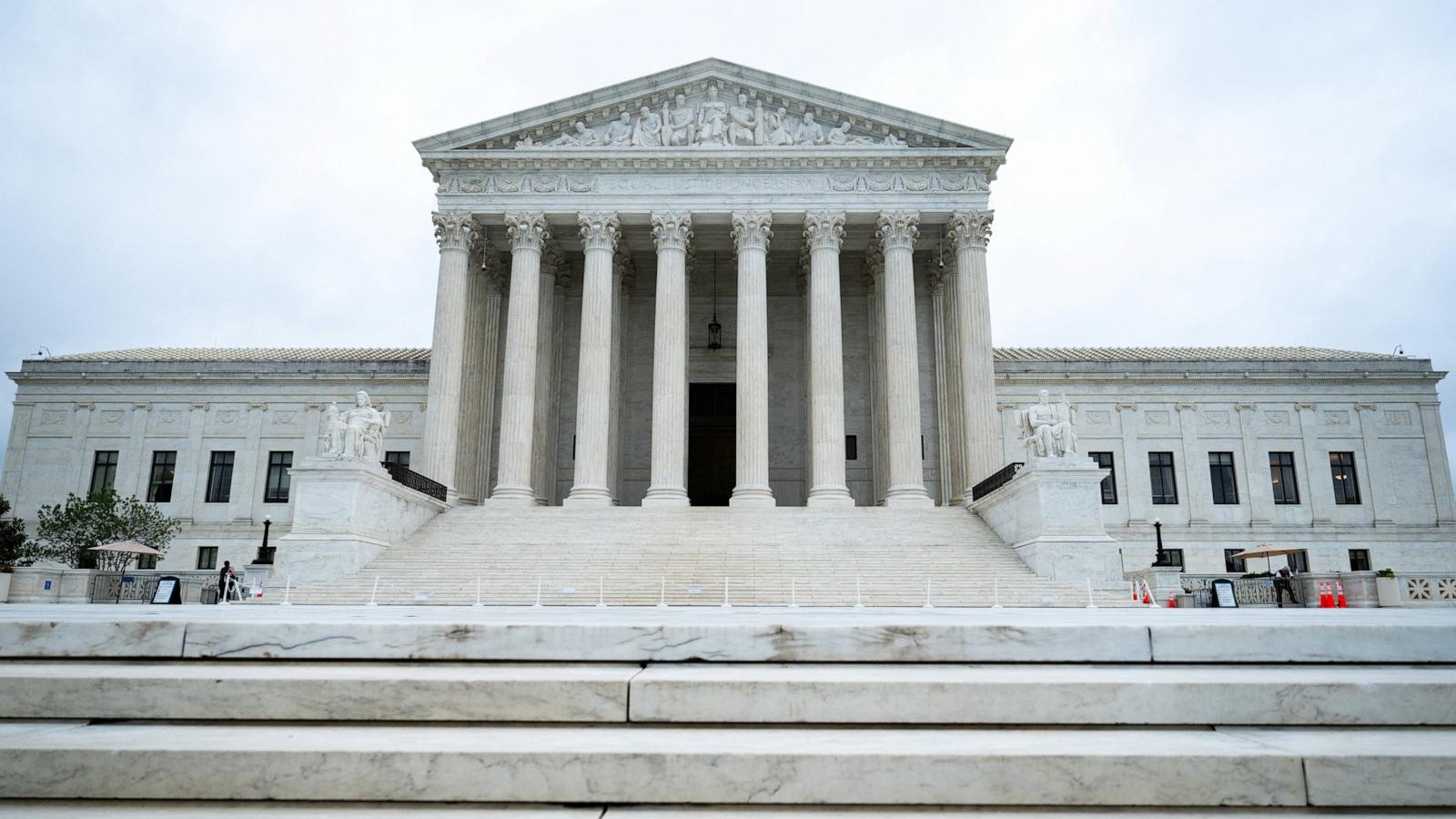
The U.S. Supreme Court ruled that Exxon Mobil can sue the Cuban government over property worth more than $1 billion that Cuba seized. The court said Cuba cannot use sovereign immunity to avoid these lawsuits under the Helms-Burton Act, a law allowing Americans to sue over Cuban property seizures.
Key Facts
The Supreme Court decided 6-3 that Exxon Mobil can sue Cuba over seized assets.
The seized property includes gas stations, an oil refinery, depots, and packaging plants in Cuba.
The ruling is based on the Helms-Burton Act, passed in 1996, which allows U.S. nationals to sue over Cuban property seizures.
Until 2019, U.S. presidents waived the right to sue under this law, but President Donald Trump ended this waiver.
Cuba argued it was protected by the Foreign Sovereign Immunities Act, but the Supreme Court rejected this claim.
Justice Brett Kavanaugh wrote the main opinion, saying the Helms-Burton Act removes Cuba's immunity from these lawsuits.
The decision may increase legal and financial pressure on Cuba, which faces economic difficulties.
Three Supreme Court justices disagreed, believing the Helms-Burton Act does not clearly remove Cuba’s immunity.
Read the Original
Want the full story? Tap a source to open the original
article.
A federal judge stopped the Trump administration and some states from banning people on SNAP from using their benefits to buy soda, candy, and other unhealthy foods. This decision comes after health officials pushed states to restrict these purchases.
Key Facts
The ban would have prevented SNAP recipients from buying soda, candy, and certain unhealthy foods.
The Trump administration and several states supported these bans.
Health Secretary Robert F. Kennedy Jr. and Agriculture Secretary Brooke Rollins promoted the restrictions.
A federal judge blocked these bans on Monday.
SNAP is a government program that helps low-income people buy food.
The ban aimed to improve public health by limiting unhealthy food purchases through SNAP.
The judge’s decision means SNAP recipients can continue buying soda, candy, and similar items.
Read the Original
Want the full story? Tap a source to open the original
article.
A federal appeals court decided to support the Trump administration's plan to speed up the deportation process for undocumented immigrants across the United States. This faster process was originally meant only for people who recently entered through the southern border.
Key Facts
The Court of Appeals for the District of Columbia Circuit made the decision.
The ruling was 2-1, meaning two judges agreed and one disagreed.
The court overturned a previous decision from a lower court.
The decision allows faster deportations not just at the southern border but nationwide.
The fast-track process was designed for people recently crossing the southern border.
This ruling impacts how undocumented immigrants are handled in deportation cases across the country.
The Trump administration sought this broader use of the expedited deportation process.
Read the Original
Want the full story? Tap a source to open the original
article.
David Hearn, a former Olympian, was arrested for allegedly damaging the Lincoln Memorial Reflecting Pool during its renovation but denies any wrongdoing. He plans to fight the misdemeanor charge, while President Donald Trump said several people were arrested or cited for vandalism at the site.
Key Facts
David Hearn, 67, was arrested at the Lincoln Memorial Reflecting Pool on charges of destroying government property.
The Reflecting Pool is undergoing a $14 million renovation.
Hearn was held by National Guard troops and U.S. Park Police for five hours.
President Trump announced six arrests and seven citations related to vandalism of the pool.
Trump claimed a 350-foot gash was cut with knives or razors, causing significant damage.
Hearn says he only touched a peeling piece of liner and denies causing damage.
Hearn’s court date is scheduled for July 9, and his attorney says he will contest the charges.
There are concerns from Hearn and his lawyer about being unfairly targeted by the government.
Read the Original
Want the full story? Tap a source to open the original
article.
Senate Republicans introduced a new five-year farm bill that does not include key priorities from Democrats. The bill aims to support rural communities and strengthen farming.
Key Facts
The farm bill was released by Senate Republicans on a Tuesday afternoon.
It covers a period of five years.
Democrats’ main goals were left out of the bill.
Senator John Boozman from Arkansas leads the Senate Agriculture Committee.
Boozman said the bill will increase investments in rural areas.
The bill focuses on making agriculture more resilient to challenges.
The legislation is intended to guide farming policy for the next several years.
Read the Original
Want the full story? Tap a source to open the original
article.
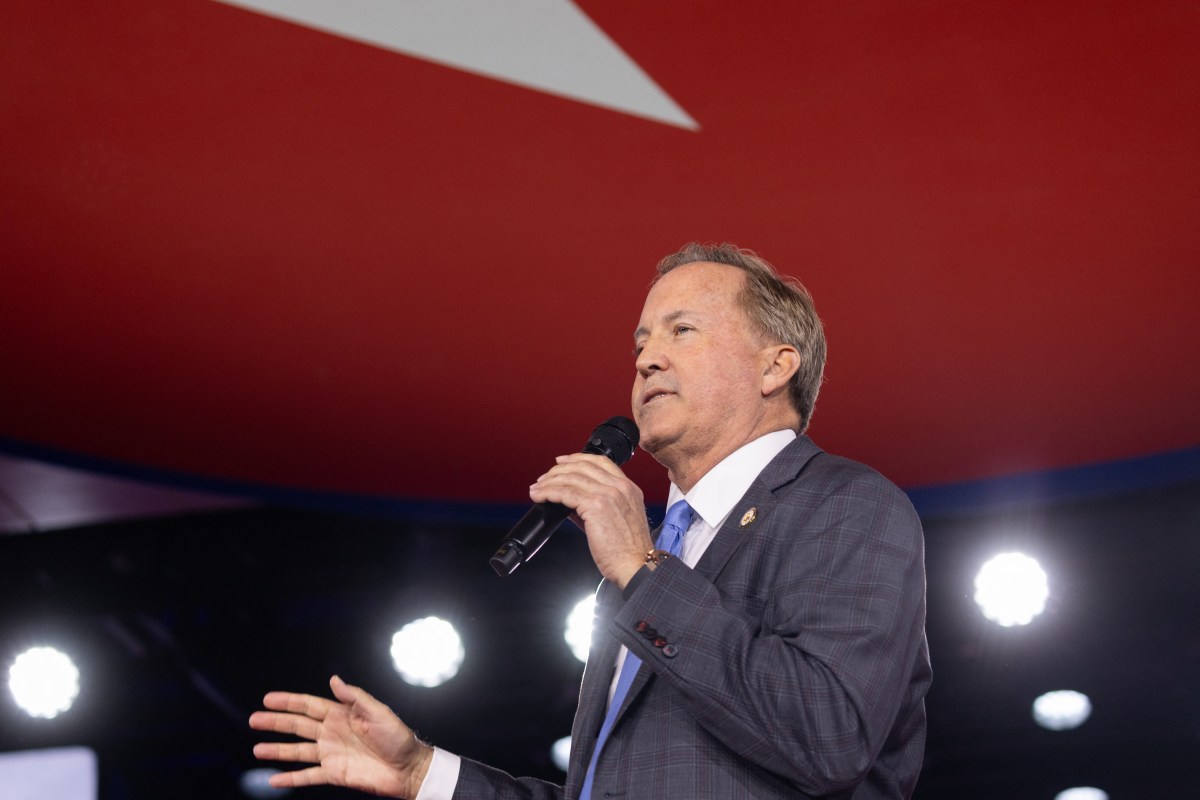
A new poll shows Texas Attorney General Ken Paxton, a Republican, slightly leading Democrat James Talarico in the race for U.S. Senate. The race is close, with both candidates gaining support from their parties and different voter groups ahead of the November election.
Key Facts
Ken Paxton leads James Talarico by 1 percentage point in a recent poll (43% to 42%).
The poll surveyed 1,251 registered Texas voters in June with a margin of error of about 3 points.
Paxton’s support among Republicans rose from 63% in April to 84% in June.
Talarico’s support among Democrats increased from 82% to 88%, and among independents from 39% to 40%.
Ten percent of voters remain undecided about who they will vote for.
Texas voted for President Donald Trump by 14 points in 2024, making it a challenging state for Democrats.
The GOP primary was intense, but Republicans are now focusing on the general election.
Winning for Talarico will require strong Democratic turnout, lower Republican enthusiasm, and good support from independents, suburban, and Latino voters.
Read the Original
Want the full story? Tap a source to open the original
article.
The U.S. auto safety agency, NHTSA, is investigating a crash where a Tesla Model 3 with automated driving hit a Texas home and killed a 76-year-old woman. The driver said he used the self-driving system, but Tesla’s AI chief said the driver was pressing the accelerator fully during the crash.
Key Facts
The crash happened near Houston, Texas, on a Friday and involved a Tesla Model 3.
A 76-year-old woman inside the home, Martha Avila, died in the accident.
The driver reported using Tesla’s automated driving feature at the time of the crash.
Tesla’s AI lead said the driver manually accelerated to 73 mph in a residential area before the crash.
NHTSA has opened a special investigation into this incident as part of its ongoing Tesla self-driving probes.
Over the past decade, NHTSA has investigated 46 Tesla crashes involving self-driving or driver-assistance technology.
Tesla stock dropped earlier in 2025 due to sales declines and political controversies but has risen 16% in the last year.
The safety agency found in a previous probe that Tesla had delayed reporting some crash data as required by law.
Read the Original
Want the full story? Tap a source to open the original
article.
A federal appeals court allowed President Donald Trump’s administration to restart a policy that speeds up the deportation of undocumented migrants across the United States, not just near the border. This reversed a lower court ruling that had temporarily blocked the expanded use of quick deportations called expedited removal.
Key Facts
The U.S. Court of Appeals for the D.C. Circuit ruled in favor of the Trump administration’s expanded expedited removal policy.
Expedited removal means deporting migrants quickly without a chance to appear before a judge.
Previously, this process applied mostly to migrants caught near the border or arriving by sea.
In January, President Trump expanded expedited removal to migrants anywhere in the U.S.
A lower court blocked this expansion, saying it risked violating migrants’ rights to due process and could wrongfully deport people who have lived in the U.S. for years.
The appeals court judges in the majority were appointed by President Trump; the dissenting judge was appointed by President Obama.
The Trump administration argued that the policy is legal and necessary to handle increased illegal immigration.
Critics, including the ACLU, say the policy is unfair and prone to errors that deny people a fair chance to present their case.
Read the Original
Want the full story? Tap a source to open the original
article.
The Senate’s defense bill now includes new rules to protect retired military members when they speak out on political issues. This change comes during a dispute involving Senator Mark Kelly and Defense Secretary Pete Hegseth about criticism of President Donald Trump’s administration.
Key Facts
The Senate defense authorization bill has a section to protect retired service members’ political speech.
This provision aims to safeguard retirees who criticize the government.
The change is part of the Senate Armed Services Committee’s version of the bill.
The issue arose amid a conflict between Senator Mark Kelly and Defense Secretary Pete Hegseth.
Senator Kelly has criticized the Trump administration.
Defense Secretary Hegseth is involved in the disagreement related to those criticisms.
The protection seeks to ensure military retirees can speak freely without punishment.
Read the Original
Want the full story? Tap a source to open the original
article.
The Department of Justice announced charges against over 450 people involved in healthcare fraud schemes that totaled more than $6.5 billion in false claims. This case is the second-largest healthcare fraud case ever brought by the government and is part of President Donald Trump’s increased efforts to reduce fraud.
Key Facts
More than 450 individuals were charged with healthcare fraud.
The total amount involved in the fraud schemes is over $6.5 billion.
This is the second-largest healthcare fraud operation charged in U.S. history.
The Department of Justice made the announcement on a Tuesday.
The case is part of President Donald Trump’s administration focus on fighting fraud.
The fraud involved false claims submitted to healthcare programs.
The DOJ is aiming to stop large-scale healthcare fraud to protect government funds.
Read the Original
Want the full story? Tap a source to open the original
article.
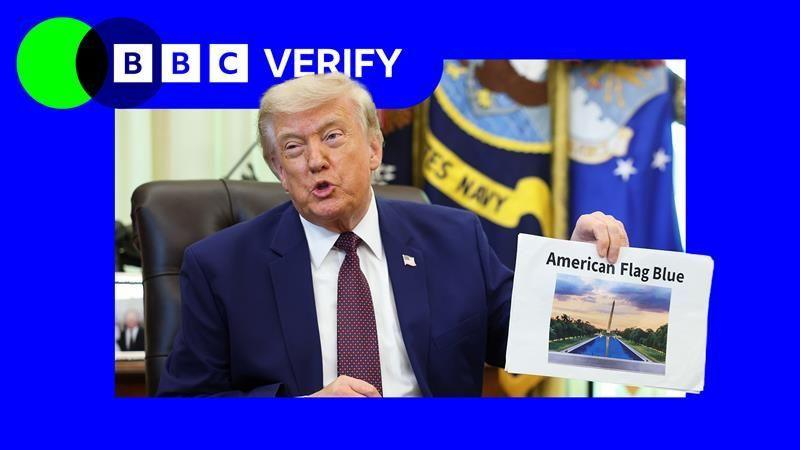
The reflecting pool near the Lincoln Memorial in Washington DC has paint peeling off soon after expensive repairs. President Donald Trump said the pool will likely need to be drained and fixed again. This issue has attracted attention worldwide.
Key Facts
The reflecting pool is located near the Lincoln Memorial in Washington DC.
Renovations costing millions were recently completed on the pool.
Blue paint on the pool's bottom is peeling just two weeks after repairs.
President Donald Trump said the pool probably needs to be drained again.
The condition of the pool has become a topic discussed globally.
The BBC's Jake Horton provided an explanation of how this situation happened.
The pool’s issues highlight challenges in maintaining historic landmarks.
Read the Original
Want the full story? Tap a source to open the original
article.
The US Supreme Court ruled 6-3 that ExxonMobil can sue Cuban state-owned companies in US courts for property seized by Cuba after Fidel Castro came to power. This decision applies a 1996 law that removes legal protections usually given to foreign governments, allowing lawsuits over Cuban confiscated property.
Key Facts
ExxonMobil is suing Cuban companies for property taken after Castro’s rise to power more than 65 years ago.
The Supreme Court’s 6-3 decision reversed a lower court ruling that had protected Cuban companies from US lawsuits.
The court said the Helms-Burton Act of 1996 removes “sovereign immunity” for Cuban agencies, allowing private lawsuits in US courts.
Conservative Justice Brett Kavanaugh wrote the majority opinion supporting ExxonMobil’s case.
Justice Elena Kagan and two other liberal justices dissented, arguing the law does not clearly remove immunity.
The seized property includes over 100 gas stations and an oil refinery once owned by ExxonMobil’s predecessor.
The decision aligns with President Donald Trump’s administration policy to pressure Cuba by enforcing the Helms-Burton Act.
A 1969 US commission valued ExxonMobil’s lost Cuban property at about $71.6 million plus interest, which would be worth around $3 billion today.
Read the Original
Want the full story? Tap a source to open the original
article.
The U.S. Supreme Court is set to decide on a case challenging President Donald Trump’s executive order that tries to limit birthright citizenship. This order would stop children born in the U.S. from getting automatic citizenship if their parents are not citizens or legal residents. The current law, based on the 14th Amendment, gives citizenship to almost all children born in the country.
Key Facts
President Trump signed an executive order to restrict birthright citizenship for children born in the U.S. to non-citizen, non-legal resident parents.
The 14th Amendment states that anyone born or naturalized in the U.S. is a citizen.
Trump’s administration argues that some children are not “subject to the jurisdiction” of the U.S. and so should not get citizenship.
Multiple federal courts have blocked Trump’s order, so it has not taken effect.
The Supreme Court heard arguments in the case called Trump v. Barbara earlier this year.
President Trump has publicly criticized the Supreme Court, predicting it will rule against him.
The Supreme Court will issue its opinion by early July, but it is unclear if the birthright citizenship case will be included among the next rulings.
About 30 countries, including most in the Americas, grant birthright citizenship; many others base citizenship on parents’ nationality or legal status.
Read the Original
Want the full story? Tap a source to open the original
article.
A federal heat risk map shows that many parts of the United States could face dangerous high temperatures and humidity from June 30 to July 6. This extreme heat can cause health problems, especially for older people, children, and outdoor workers.
Key Facts
The National Weather Service’s Climate Prediction Center expects many states to experience heat index values over 100 degrees Fahrenheit.
The heat index combines air temperature and humidity to measure how hot it actually feels.
Extreme heat increases risks of heat exhaustion and heat stroke, and can worsen health issues.
The Mid-Atlantic region, including Washington D.C., faces a high risk of extreme heat with heat indices possibly over 105 degrees.
Moderate risk areas include parts of Texas, Oklahoma, Kansas, and the East Coast from South Carolina to Pennsylvania.
Slight risk of extreme heat is forecasted for much of the eastern U.S. and parts of the Great Plains.
Some areas may see nighttime temperatures reaching the high 70s to low 80s degrees, which is unusually warm.
Symptoms of heat exhaustion include heavy sweating, dizziness, headache, nausea, weakness, and a weak pulse.
Read the Original
Want the full story? Tap a source to open the original
article.
Savannah Guthrie, host of the "Today" show, asked the public for help to find her missing mother, Nancy Guthrie, who disappeared from her Tucson, Arizona home in February. Authorities found a ransom note months ago stating Nancy had died, but the case remains open and unsolved.
Key Facts
Nancy Guthrie, 84, went missing on February 1 from her home near Tucson, Arizona.
The FBI released video showing a masked person near her front door after she disappeared.
Nancy's blood was found on the porch, indicating possible violence.
Two ransom notes were received: one demanding Bitcoin money, another stating Nancy had died.
Authorities believe the kidnappers did not plan to kill Nancy, but she died soon after being taken.
Savannah Guthrie made a public plea for anyone with information to come forward.
Search teams have looked for Nancy in desert areas and near the Arizona-Mexico border without success.
The FBI and Pima County Sheriff’s Department are involved, but details are limited due to the ongoing investigation.
Read the Original
Want the full story? Tap a source to open the original
article.
The U.S. Supreme Court ruled 6-3 in favor of the Trump administration, allowing border agents to place green card holders on immigration parole based on criminal allegations without clear proof of guilt. This decision affects the rights of lawful permanent residents by giving the government broader power to restrict their status before any conviction.
Key Facts
The case involved Muk Choi Lau, a green card holder accused of selling counterfeit clothing.
Lau was placed on immigration parole upon returning from China in 2012 because of these allegations.
The Supreme Court ruled that suspicion of criminal wrongdoing is enough to justify immigration parole.
The decision was split 6-3, with the conservative majority supporting the Trump administration.
Justice Clarence Thomas wrote that border officers do not need to prove crimes by clear evidence to impose parole.
Justice Ketanji Brown Jackson warned this ruling weakens legal protections for green card holders.
The Trump administration aims to use this ruling to increase deportations and limit migrant rights.
The ruling affects migrants with lawful status but no criminal convictions yet.
Read the Original
Want the full story? Tap a source to open the original
article.
An 18-year-old man named Bradley Scott Sayer was arrested after a shooting at a library in Chico, Northern California, which killed two people and injured one child. Police said the suspect aimed to copy the 1999 Columbine school attack and acted alone.
Key Facts
The shooting happened just after 5 p.m. at the Butte County Library in Chico, California.
Two people were killed, and one child was taken to the hospital with minor injuries.
The suspect, Bradley Scott Sayer, fled the scene but was caught by police.
Sayer is charged with two counts of murder and is being held in Butte County Jail.
Police said Sayer wanted to do a shooting similar to the 1999 Columbine massacre.
The suspect wore clothing similar to one of the Columbine shooters and is linked to an online group related to mass killers.
The police believe Sayer acted alone and do not believe there is a continuing threat to the public.
All branches of the Butte County Library were closed the day after the shooting while investigations continue.
Read the Original
Want the full story? Tap a source to open the original
article.
Senator Bill Cassidy, who lost his primary election to a candidate supported by President Donald Trump, is promoting a plan to invest $1.5 trillion into Social Security before he leaves the Senate. This comes after the Trump administration reported that Social Security may run out of money to pay full benefits in about seven years.
Key Facts
Senator Bill Cassidy from Louisiana lost his GOP primary to a Trump-backed challenger.
Cassidy wants to reform Social Security before his Senate term ends.
The Trump administration projected Social Security funds will be insufficient to pay full benefits in seven years.
Cassidy’s plan includes a $1.5 trillion investment to sustain the program.
Social Security is a government program that provides financial help to retirees and disabled people.
Cassidy spoke about his plan in an interview with CNBC.
His effort highlights concerns about the future of Social Security funding.
Read the Original
Want the full story? Tap a source to open the original
article.
The U.S. Senate will vote again on a resolution to limit war powers related to military actions against Iran. This follows President Donald Trump’s efforts to negotiate an end to the conflict and requests for Congress to fund ongoing military costs.
Key Facts
The Senate is holding its 10th vote on a resolution to block U.S. military action against Iran.
Previous attempts to pass the resolution have all failed due to Senate voting outcomes.
President Trump signed a Memorandum of Understanding with Iran, starting a 60-day period to finalize a broader deal on Iran’s nuclear program.
The Pentagon is asking Congress for about $80 billion to fund military supplies and costs related to the Iran conflict.
Some Republican lawmakers oppose the deal, especially the $300 billion fund proposed to help Iran rebuild.
Democrats are pushing for these votes to challenge the Trump administration’s military actions.
The House passed a similar resolution earlier with some Republican support, but Senate approval is uncertain.
Defense Secretary Pete Hegseth is requesting the additional war funding despite public concern over high costs and inflation.
Read the Original
Want the full story? Tap a source to open the original
article.
The U.S. government has imposed new sanctions on five Cuban state companies that are key to Cuba’s economy, including those linked to the military-run conglomerate GAESA. These sanctions aim to limit foreign investment and pressure Cuba’s government by cutting off access to the U.S. financial system.
Key Facts
The U.S. targeted five Cuban companies, including three connected to GAESA, which controls about 40% of Cuba’s economy.
GAESA holds $14.5 billion in liquid reserves as of early 2024.
The sanctioned companies include Almacenes Universales S.A. (a major logistics and storage firm), Rafin S.A. (a financial arm of GAESA), and Banco Financiero Internacional S.A. (a bank used by foreign investors).
Other companies hit by sanctions are Geominera S.A. (mining) and Empresa Siderúrgica Jose Martí (steel production).
The daughter-in-law of former Cuban President Raúl Castro, Annalie Lilliam Rueda Cardero, was personally sanctioned.
Sanctions threaten foreign investors who work with these entities by risking bans or loss of access to U.S. financial services.
Cuban officials condemned the sanctions and said Cuba is stronger than expected despite U.S. pressure.
These sanctions come shortly after Cuba announced economic reforms intended to ease import restrictions for the private sector.
Read the Original
Want the full story? Tap a source to open the original
article.