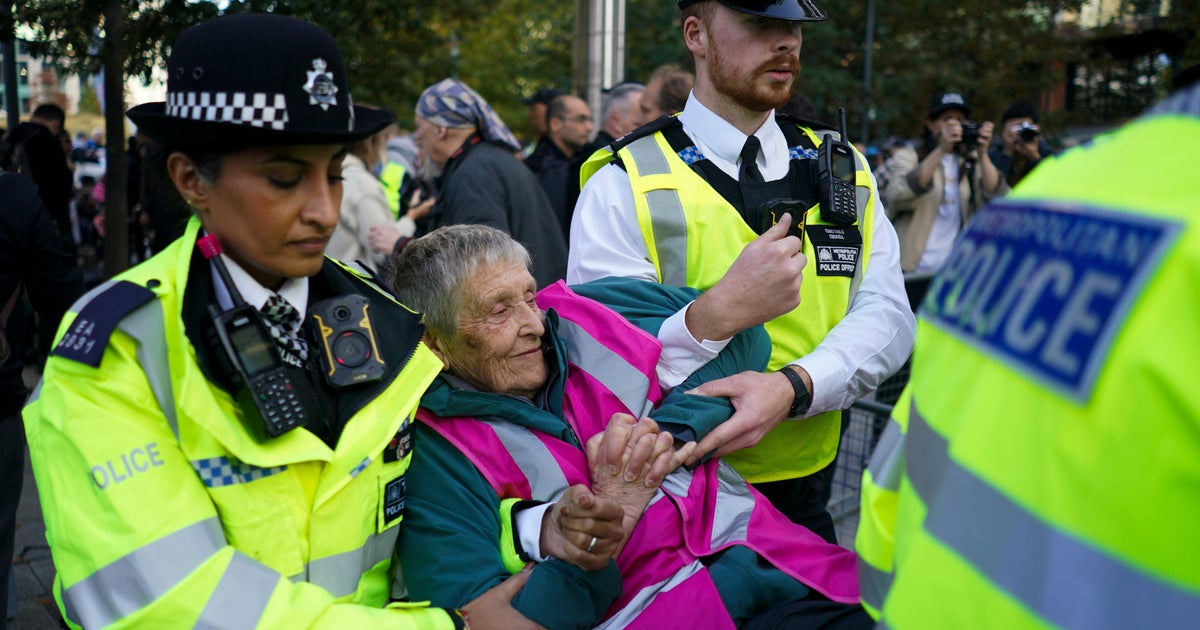
Police arrested 48 people at a protest outside the U.S. Embassy in London on Oct. 31, where demonstrators showed support for Palestine Action, which the U.K. has outlawed as a terrorist organization. The protest took place ahead of a Nov. 4 Supreme Court appeal against the group’s designation; a separate vigil in Edinburgh led to no reported arrests.
Key Facts
More than 100 people took part in the London protest, according to the article.
The Metropolitan Police said 48 people had been arrested and most arrests involved expressing support for a proscribed organization.
The U.K. outlawed Palestine Action last year; membership in or support for the group can carry a prison sentence of up to 14 years.
Police Scotland said it was reviewing evidence and investigating people at the Edinburgh vigil who appeared to show support for a proscribed organization.
Palestine Action is appealing its designation at the Supreme Court on Nov. 4.
The U.S. government announced sanctions against Palestine Action in August and designated it a terrorist group.
Palestine Action was founded in 2020 and says it seeks to disrupt companies it considers enablers of Israel’s military.
Read the Original
Want the full story? Tap a source to open the original
article.
Israeli attacks and related incidents killed at least four Palestinians in Gaza on Saturday, while Gaza’s Health Ministry reported six deaths and 26 injuries over the previous 48 hours. The ministry says 1,580 Palestinians have been killed and 5,711 injured since the October 2025 ceasefire began. UN human rights officials warned that Israeli actions were displacing Palestinians and damaging civilian infrastructure; talks to end the conflict have stalled.
Key Facts
A strike on the Nuseirat refugee camp killed Palestinian teacher Diaa Abu al-Rous, al-Awda Hospital said.
Arafat al-Arair died from injuries suffered in an Israeli strike on a vehicle in Gaza City’s Tel al-Hawa neighbourhood, a source at al-Shifa Hospital said.
Two girls died from injuries after their tent caught fire at a displaced people’s camp in al-Mawasi; the cause of the fire was unclear.
Gaza’s Health Ministry reported six deaths and 26 injuries over 48 hours.
The ministry says 1,580 people have been killed and 5,711 injured in Gaza since the October 2025 ceasefire began.
The UN human rights office said Israeli actions were forcing Palestinians into a shrinking area and destroying civilian infrastructure.
The Israeli military is working to expand its control over 70 percent of Gaza, following an order from Prime Minister Benjamin Netanyahu in May.
Talks on a permanent end to the war and reconstruction have stalled amid disputes over Hamas disarmament and an Israeli withdrawal.
Read the Original
Want the full story? Tap a source to open the original
article.
Benjamin Netanyahu and Gadi Eisenkot are competing to form a governing coalition in Israel’s Knesset. The article says accusations of foreign interference have continued, while officials dismiss them as efforts to undermine the election results.
Key Facts
Netanyahu and Eisenkot are seeking to form a governing coalition.
The coalition would govern through Israel’s Knesset.
The article reports continuing accusations of foreign interference.
Officials are dismissing the accusations as attempts to undermine the election results.
Al Jazeera correspondent Mohammad Saleh is reporting on the latest developments.
Read the Original
Want the full story? Tap a source to open the original
article.
Residents evacuated from Russian-occupied Oleshky returned to Ukraine on Saturday during a localized ceasefire brokered by the United States. The agreement took effect Tuesday and was due to last through Saturday.
Key Facts
The evacuees came from Oleshky, a city under Russian occupation.
They arrived back in Ukraine on Saturday.
A localized ceasefire enabled the return.
The United States brokered the agreement.
The ceasefire took effect on Tuesday and was scheduled to end Saturday.
The article says first lady Melania Trump secured the halt in fighting earlier this month.
Residents could choose whether to be transported.
Read the Original
Want the full story? Tap a source to open the original
article.
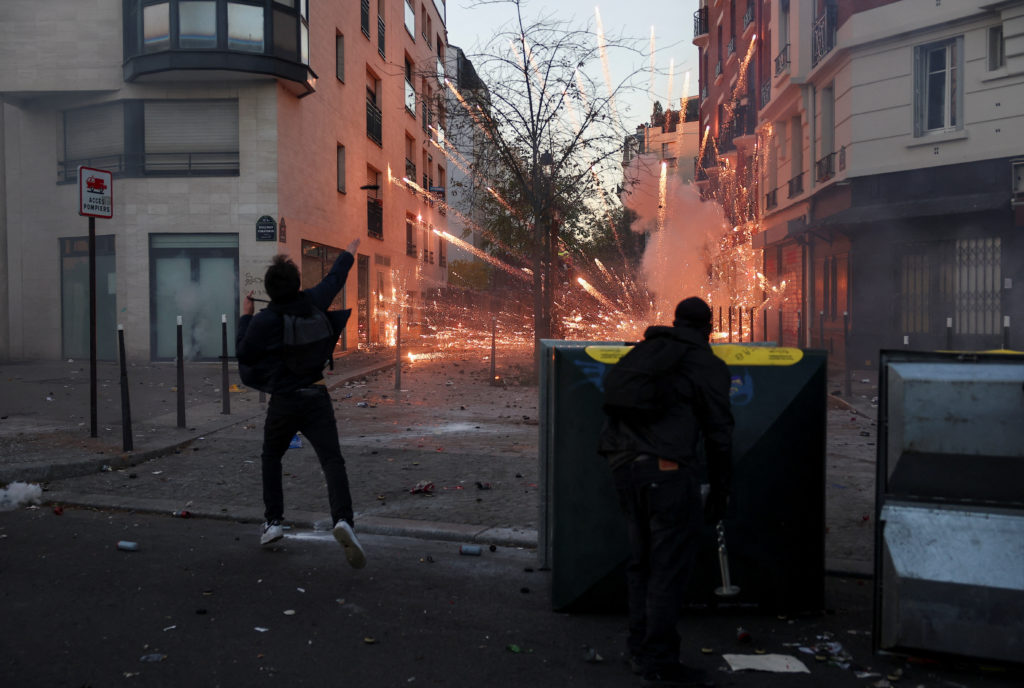
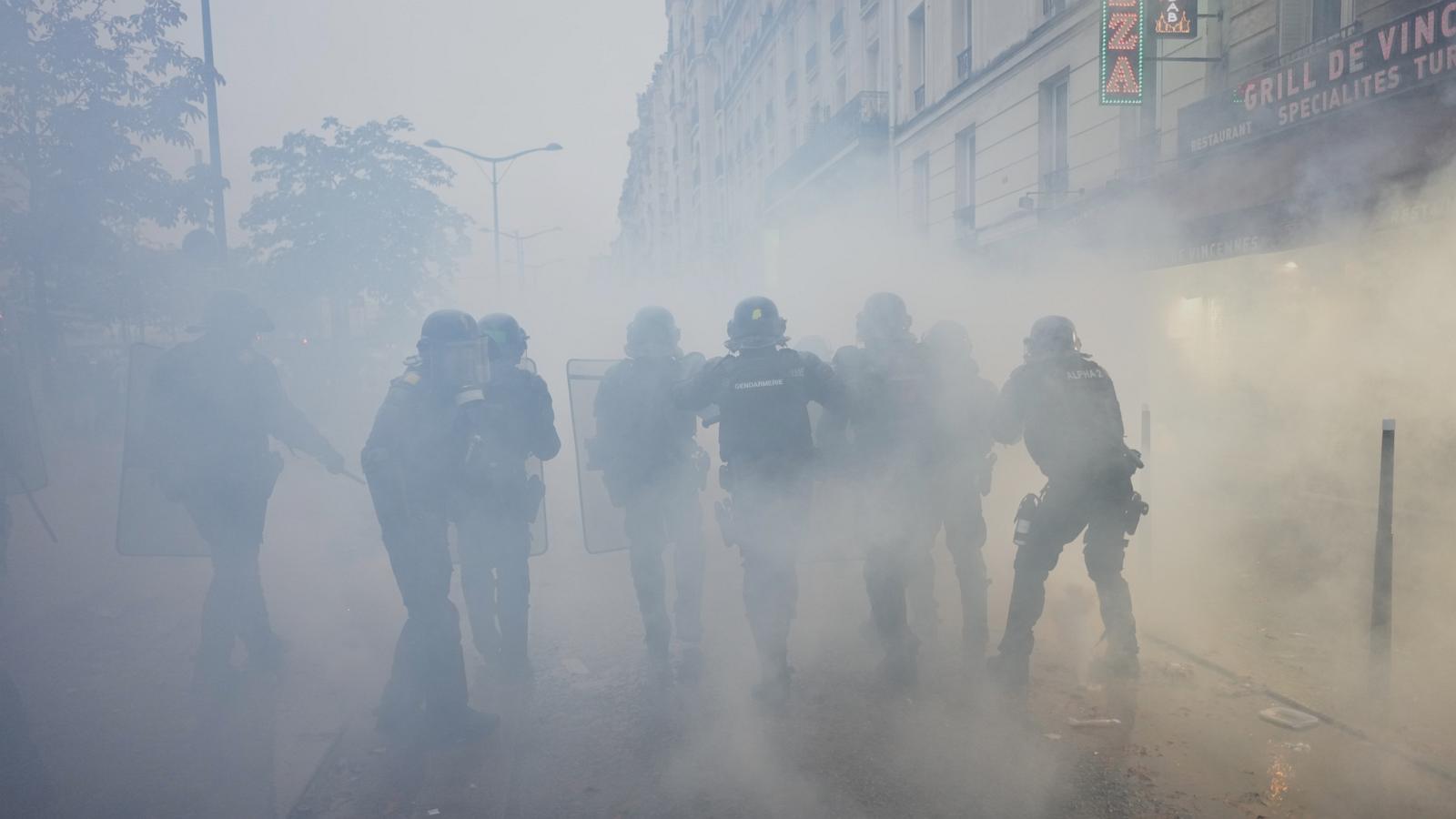
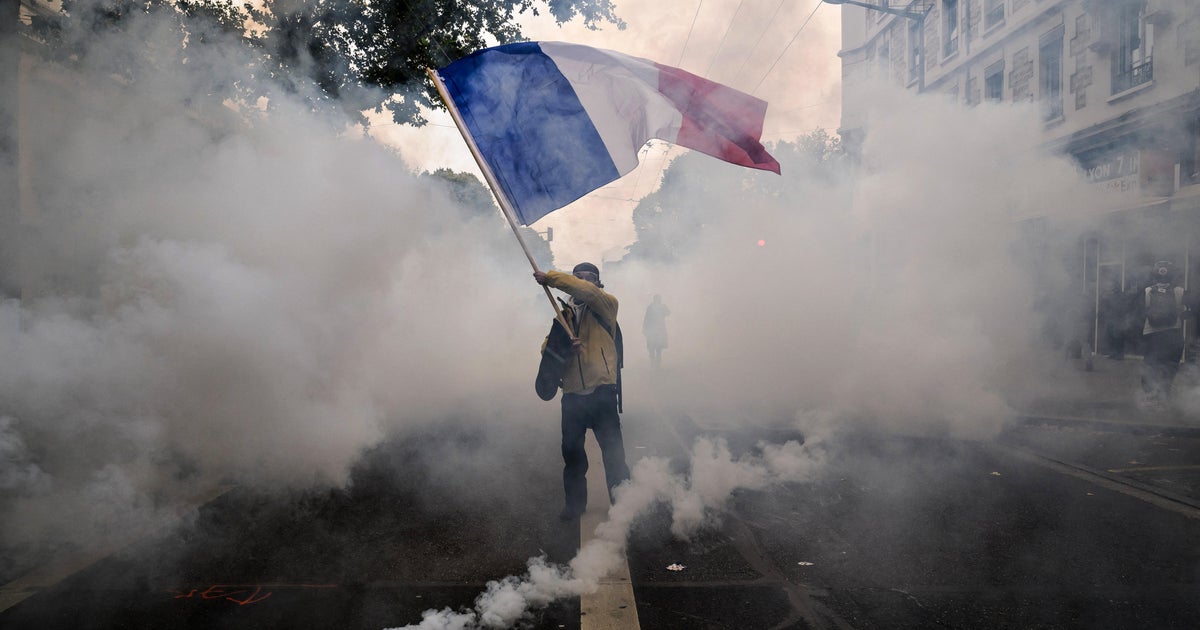
France saw a third consecutive weekend of protests over living costs, education and other grievances, with the government estimating that 320,000 people took part nationwide on Saturday. Most marches were peaceful, though earlier demonstrations had included riots and looting; youth-led rallies were also reported in Germany and Italy.
Key Facts
The French government estimated that 320,000 people protested nationwide on Saturday, down from 410,000 on Oct. 24 and more than 500,000 on Oct. 17.
Organizers gave higher turnout estimates than the government.
Authorities deployed about 70,000 police and gendarmes across France.
Police moved the main Paris march to the city's edge; the Interior Ministry estimated that 70,000 people attended it.
The protests began with high school students objecting to neglected school buildings, teacher shortages and an admissions system they viewed as unfair to disadvantaged students.
Labor unions and other groups joined the demonstrations with demands that included concerns about living costs and fuel prices.
Police imposed restrictions in parts of Paris, including overnight limits around Place de la République and Les Halles, and a separate curfew for unaccompanied minors near the Champs-Elysees.
Authorities said previous protests were largely peaceful but included episodes of rioting and looting; police used tear gas, dispersion grenades and water cannons.
Read the Original
Want the full story? Tap a source to open the original
article.
Pope Leo XIV urged governments to keep humans responsible for decisions involving force and to take steps toward banning lethal autonomous weapons. His appeal comes ahead of November talks in Geneva, where states will review an international convention on conventional weapons.
Key Facts
Leo said the future of AI depends on choices made by the people who develop, deploy and regulate it.
He called for decisions affecting life, freedom and the use of force to remain under effective human oversight.
The pope urged states meeting in Geneva in November to take concrete steps toward banning lethal autonomous weapons.
Lethal autonomous weapons can identify and attack targets with limited or no direct human control.
UN Secretary-General António Guterres and International Committee of the Red Cross President Mirjana Spoljaric called for rules restricting autonomous weapons.
Guterres and Spoljaric said the November review conference offers a chance to begin negotiating a legally binding agreement.
Former Anthropic and OpenAI researcher Jacob Coxon resigned in September and criticized the companies' pursuit of advanced AI, according to the article.
OpenAI chief executive Sam Altman has warned that AI development could go badly if people lose control or power becomes concentrated.
Read the Original
Want the full story? Tap a source to open the original
article.
Iranian Supreme Leader Mojtaba Khamenei warned the United States and Israel that any new attack would prompt an immediate response. U.S. Secretary of State Marco Rubio said President Donald Trump had not decided whether to order further strikes, while Iran’s foreign minister said there were no plans for talks with Washington as Qatar-mediated contacts continued.
Key Facts
Khamenei delivered his warning at a meeting with senior Iranian military commanders, the first such meeting reported since he became supreme leader in March.
Khamenei ordered commanders to update Iran’s target list to include assets belonging to what he called the “American-Zionist enemy.”
Trump has warned of possible military action after U.S. midterm elections scheduled for early next week.
Israeli Prime Minister Benjamin Netanyahu has described a chance to topple Iran’s government as a “historic, one-time opportunity.”
Rubio said Trump had made no decision about new strikes when speaking at a G20 press conference in Atlanta on Saturday.
Qatar is mediating indirectly between Iran and the United States, but Iran’s top diplomat said there were no plans for talks.
The article says Iran has restricted shipping through the Strait of Hormuz, a waterway that normally carries about one-fifth of global oil consumption.
Read the Original
Want the full story? Tap a source to open the original
article.
France’s government estimated that 320,000 people, mostly young protesters, joined demonstrations across the country on Oct. 31 over living costs and education. The marches were largely peaceful, but authorities deployed about 70,000 police and gendarmes amid concerns about disorder after earlier protests turned violent.
Key Facts
The Oct. 31 demonstrations were the third consecutive weekend of protests.
The government estimated 320,000 people protested nationwide, including 70,000 in Paris.
Government estimates put turnout at more than 500,000 on Oct. 17 and 410,000 on Oct. 24.
Authorities deployed about 70,000 police and gendarmes across France.
Organizers’ estimates of protest turnout were much higher than the government’s figures.
Paris authorities moved the main march outside the city center and restricted access to some areas overnight.
The protests began with high school students’ concerns about school buildings, teacher shortages and university admissions.
Youth-led demonstrations were also reported in Germany and Italy.
Read the Original
Want the full story? Tap a source to open the original
article.
Thousands of people marched across France on Saturday to protest rising living costs, inequality, and police violence. Most demonstrations were peaceful, though police clashed with protesters in several cities; authorities reported fewer arrests than the previous week.
Key Facts
France’s interior ministry estimated that about 320,000 people demonstrated nationwide.
Police estimated that about 70,000 people marched in Paris.
Police reported 27 arrests by 2:00 p.m., compared with 217 arrests a week earlier.
Police used tear gas in Lyon and water cannon at an unauthorized protest in Toulouse; demonstrators also clashed with police in Marseille.
The protest movement has expanded to include demands for civil-liberty protections and the right to protest.
Student protesters said police had not authorized a march through central Paris and vowed to organize more school and university blockades the following week.
Presidential elections are less than six months away, and far-right leader Marine Le Pen is leading polls, according to the article.
France’s government faces limited room for additional spending as the economy nears recession and the country comes under pressure to reduce its debt.
Read the Original
Want the full story? Tap a source to open the original
article.
Evacuees from Russian-occupied Oleshky reunited with family members in Ukraine’s Chernihiv region on Saturday. They reached Ukraine from Belarus after travelling through Crimea and Russia; a ceasefire in the Kherson frontline region is set to remain in place through Sunday, November 1.
Key Facts
The evacuees had left Oleshky on Friday.
They travelled through Crimea and Russia before crossing from Belarus into Ukraine.
Families reunited at a site in northern Ukraine’s Chernihiv region.
People arrived at the site by bus and ambulance.
A ceasefire brokered by U.S. First Lady Melania Trump took effect across the Kherson frontline region on Tuesday.
The ceasefire measures are scheduled to remain in place until the end of Sunday, November 1.
Read the Original
Want the full story? Tap a source to open the original
article.
Sebastian Croft and Romesh Ranganathan won the second series of BBC One’s Celebrity Traitors and split the £83,000 prize between their chosen charities. They said they were relieved to reveal the result after keeping it secret, and Croft said he helped persuade Ranganathan to vote out the last traitor, King Kenny.
Key Facts
Croft and Ranganathan were the final contestants standing and won the series.
The pair split the £83,000 prize pot between their chosen charities.
The series finale aired on Friday.
Ranganathan said he was delighted to win and credited Croft’s role in banishing King Kenny.
Croft said he had wanted to be a traitor but ended up playing as a faithful contestant.
The finale averaged 11.2 million live viewers, according to the BBC article.
The final round saw the contestants banish traitors Maya Jama and King Kenny.
Read the Original
Want the full story? Tap a source to open the original
article.
They Might Be Giants performed “Wu-Tang” on CBS News’ Saturday Sessions. The Grammy-winning indie rock band formed more than 40 years ago, and its latest album, “The World Is to Dig,” is out now.
Key Facts
They Might Be Giants performed “Wu-Tang” on Saturday Sessions.
CBS News featured the performance.
The band formed more than 40 years ago.
They Might Be Giants has won a Grammy.
The band’s latest album is titled “The World Is to Dig.”
Read the Original
Want the full story? Tap a source to open the original
article.
Thousands gathered in Berlin and more than 30 other German cities for protests organized by the Gen Z Regelt alliance. Organizers said nearly 180,000 people across 34 cities had signed up by Saturday morning; protesters cited living costs, education cuts and military conscription among their concerns.
Key Facts
The Berlin rally began at Platz des 18 Maerz, beside the Brandenburg Gate, at 2 p.m. local time.
Nearly 12,000 people had signed up to join the Berlin protest.
Frankfurt, Cologne and Munich were among the other main host cities.
Protest organizers identified six key issues, including rising living costs, education cuts and military conscription.
Students said they were frustrated by reductions in education and social-service funding while military spending increases.
Student Veronika Dinter, 23, said she took a part-time job to help pay for her studies.
Scuffles broke out between protesters and police at a rally in Cologne, where police moved to contain a march.
Read the Original
Want the full story? Tap a source to open the original
article.
Iranian Supreme Leader Mojtaba Khamenei ordered military commanders to update target lists of U.S. and Israeli assets and called for an immediate response to renewed threats, according to Iranian state media. The directive came as regional mediators pursued talks to prevent further escalation, while Iran said it had reviewed a letter from U.S. Vice President JD Vance but was not planning direct talks with Washington.
Key Facts
Khamenei called for an immediate response to any kind and level of threat, according to Iran’s official IRNA news agency.
Tasnim reported that Khamenei ordered a response “without geographical limitations” and said U.S. and Israeli assets could be within reach of Iranian forces.
Khamenei did not specify countries or targets, according to the report.
Tasnim said Khamenei also ordered improvements to Iran’s intelligence, military doctrine, tactics and use of modern technology.
Iranian Foreign Minister Abbas Araghchi said Tehran had reviewed a letter from Vice President JD Vance and described the U.S. effort to open dialogue as a positive step.
Araghchi said direct talks with the United States were not planned and that mediators were consulting on Iran’s conditions.
Iranian negotiators arrived in Doha after more than 12 hours of talks in Tehran, Reuters reported; Qatari and Pakistani mediators were discussing Iran’s conditions.
Read the Original
Want the full story? Tap a source to open the original
article.
In 2009, Lorraine Ingram moved with her 10-year-old son, Cameron, from London to a village near Bristol. Three days before he was due to start at a new school, doctors diagnosed him with a grade 4 glioblastoma; after surgery, radiotherapy and chemotherapy, the tumor returned about a year later and spread to his spine.
Key Facts
Lorraine said she moved from London because she feared rising knife crime and worried about Cameron's safety.
Cameron became unwell three days before he was due to start at his new school and was unable to stand or walk.
A hospital CT scan revealed a grade 4 glioblastoma, an aggressive type of brain cancer.
Surgeons operated for eight hours and removed nearly all of the tumor, leaving a small portion they considered too risky to remove.
Cameron received radiotherapy and chemotherapy after spending three weeks in hospital.
About a year later, headaches and bruises prompted an MRI, which showed that the tumor had returned to its original size.
Doctors told the family Cameron had two weeks to live, and later said the cancer had spread from his brain to his spine.
At a children's hospice, Lorraine asked about liquid chemotherapy because Cameron could no longer swallow tablets; the article says the liquid treatment arrived two days later.
Read the Original
Want the full story? Tap a source to open the original
article.
An ABC News segment explores Halloween’s ancient origins and its connection to tourism in Ireland. Travel expert Gabe Saglie discusses Ireland’s appeal to people interested in Halloween.
Key Facts
The segment was published on October 31, 2026.
Travel expert Gabe Saglie appears in the segment.
The segment discusses increased tourism in Ireland related to Halloween.
It focuses on travelers interested in Halloween.
The segment is titled “Exploring the ancient origins of Halloween.”
The listing gives the segment a runtime of 3 minutes and 13 seconds.
Read the Original
Want the full story? Tap a source to open the original
article.
Iranian Supreme Leader Mojtaba Khamenei warned the United States against reported plans to resume strikes on Iran after the U.S. midterm elections. Iran’s state news agency IRNA said he told senior military officials to prepare an immediate response without geographical limits.
Key Facts
Khamenei issued the warning on Friday, according to the article.
The warning concerned reported U.S. plans to resume strikes against Iran after the midterm elections.
Khamenei met with senior Iranian military officials.
He directed officials to deliver what he called an “immediate, impactful response.”
He said the response would have no geographical limits.
Iran’s official IRNA news agency reported his remarks.
Read the Original
Want the full story? Tap a source to open the original
article.
The BBC listing describes its 1995 film adaptation of Jane Austen’s *Sense and Sensibility*. After their father dies, sisters Elinor and Marianne Dashwood face hardship when their brother inherits his fortune.
Key Facts
The film first aired in 1995.
The listed runtime is 2 hours and 10 minutes.
The story follows sisters Elinor and Marianne Dashwood.
Their father’s death leaves the sisters in sudden hardship.
Their brother, John, inherits their father’s fortune.
The BBC listing says the program is available for 24 days.
Read the Original
Want the full story? Tap a source to open the original
article.
Congo’s Ebola outbreak has killed 5,026 of 10,351 infected people, according to government data, making it the second-deadliest Ebola outbreak on record. The Bundibugyo virus has spread across eight provinces, while conflict, gaps in contact tracing, community distrust and unpaid health workers have complicated response efforts; cases have also been reported in other African countries.
Key Facts
The Congolese Ministry of Health reported 5,026 deaths among 10,351 infected people, a fatality rate of nearly 50%.
The outbreak was declared in mid-May and is caused by the Bundibugyo virus, for which there is no known vaccine or treatment.
A total of 2,788 people have recovered, and about one-third of recorded deaths occurred outside treatment centers.
The virus has spread to 67 of Congo’s 178 health zones in eight provinces; 50 of those zones have active cases.
Ituri and North Kivu have recorded 9,782 confirmed cases and 4,792 deaths combined.
The Africa Centers for Disease Control and Prevention said about 80% of new cases are outside monitored chains of contacts.
Conflict, attacks on health workers and facilities, and community disbelief have hindered response efforts.
Workers at an Ebola treatment center in Tchomia stopped work on Friday to demand four months of unpaid wages.
Read the Original
Want the full story? Tap a source to open the original
article.
An Ebola outbreak in the Democratic Republic of Congo has killed more than 5,000 people and caused more than 10,300 confirmed cases across eight provinces. The Bundibugyo strain has no approved treatment or vaccine, and conflict and attacks on health workers are hindering the response.
Key Facts
The outbreak began in May and became DR Congo’s deadliest on record in August.
The reported case fatality rate is 48.6%.
Ituri province in north-eastern DR Congo remains the outbreak’s epicentre.
Cases have also been confirmed in Kenya, Nigeria and Uganda.
Kenya has recorded nine confirmed cases and two deaths; Uganda has reported no cases since August.
Nigeria’s disease control centre said two suspected cases were isolated and undergoing testing.
The World Health Organization says responders need to expand control measures, access to affected areas and community outreach.
Health workers and others responding to the outbreak have faced attacks, including the killing of a nurse earlier in the week.
Read the Original
Want the full story? Tap a source to open the original
article.