Ellen Greene, known for her role as Audrey in the musical "Little Shop of Horrors," revisited the character for the film’s 40th anniversary. She will appear at special screenings across the U.S., performing the song “Somewhere That’s Green,” which is important to her both personally and professionally.
Key Facts
Ellen Greene played Audrey in the 1982 off-Broadway musical and the 1986 movie version directed by Frank Oz.
The character Audrey became iconic because of Greene’s unique voice style, which she developed naturally during her audition.
Greene is touring to celebrate the 40th anniversary of the film, performing in cities from Seattle to Atlanta between August and November 2026.
“Somewhere That’s Green” is a key song from the show that Greene feels connected to emotionally.
When the show started off-Broadway, Greene was paid $50 a week during rehearsals and performances.
The film’s production was complicated, and changes were made based on audience reactions.
In the stage show, Greene sang “Somewhere That’s Green” sitting on a trash can, but in the film, the scene was made more elaborate with costume changes and expanded staging.
Composer Alan Menken and lyricist Howard Ashman were closely involved in the original production and recording of the musical.
Read the Original
Want the full story? Tap a source to open the original
article.
During World War II, hundreds of Navajo soldiers created a secret code using their native language to help the U.S. win battles in the Pacific. August 14 is recognized as National Code Talker Day to honor these soldiers and other Native Americans who served. A 101-year-old Navajo Code Talker, Thomas H. Begay, will attend a celebration in Phoenix.
Key Facts
The Navajo Code Talkers developed a secret code based on their language to send military messages during WWII.
This code helped the U.S. military defeat Japanese forces in the Pacific.
More than 400 Navajo men served as Code Talkers between 1942 and 1945.
Their mission stayed secret for years; they were not allowed to talk about it even after the war.
In 1982, President Ronald Reagan officially declared August 14 as Navajo Code Talkers Day.
Other Native American tribes also contributed languages for military codes during the world wars.
Over 40,000 Native Americans served in the U.S. armed forces during WWII.
A 101-year-old Code Talker, Thomas H. Begay, is one of the last surviving members and will attend the Phoenix event.
Read the Original
Want the full story? Tap a source to open the original
article.
Arizona State University has started a new bachelor’s degree program focused on content creation, which teaches skills like podcasting and video production. This move reflects a growing trend in colleges offering courses to prepare students for careers as social media creators, although some people question the value of these programs.
Key Facts
Arizona State University launched a bachelor’s degree in content creation through its journalism and communication school.
The program includes classes on podcasting, studio production, and being comfortable on camera.
Many people have criticized the degree, doubting if being a content creator is a real job or if a college degree helps in this field.
Other universities like Syracuse, Quinnipiac, Colorado State, and St. Bonaventure offer similar content creation programs or minors.
Content creation involves creating social media, video, or podcasts and requires skills in media production and managing business relationships.
Many content creators work hard and do not earn much money at first, despite online fame appearing easy and lucrative.
The creator economy is growing, with social media creator revenue in the U.S. expected to exceed $20 billion this year.
With more people trying to become creators, the field is becoming very competitive.
Read the Original
Want the full story? Tap a source to open the original
article.
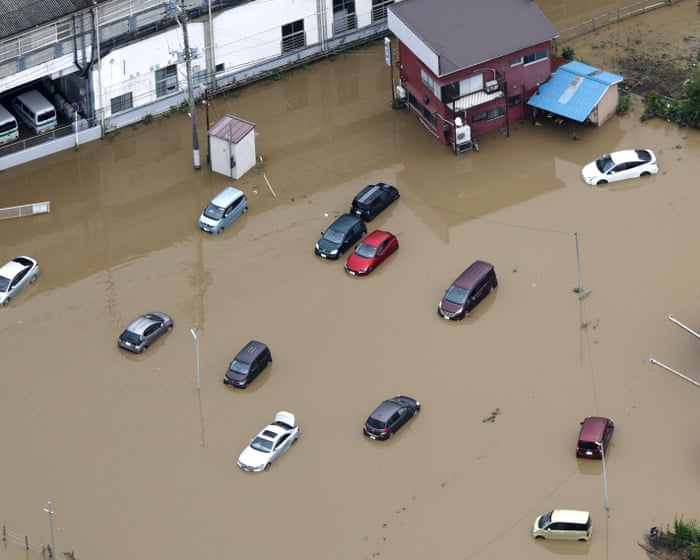
Heavy rain hit eastern Japan, causing floods and landslides that killed at least four people and stranded nearly 7,000 travelers at Tokyo’s Narita airport. Authorities issued evacuation orders for hundreds of thousands of people and warned of continuing flood risks.
Key Facts
At least four people died due to floods and landslides in Chiba prefecture, east of Tokyo.
Nearly 7,000 passengers were stranded overnight at Narita airport.
Around 45,000 homes lost power during the storm.
More than 400,000 people were ordered to evacuate in Chiba and nearby areas.
The Japan Meteorological Agency issued the highest level 5 warning for heavy rain and landslides for the first time.
Floodwaters trapped some people in their cars, causing some of the deaths.
Soldiers were sent to help with rescue and relief efforts.
Officials warned residents to follow evacuation advisories to stay safe from further flooding.
Read the Original
Want the full story? Tap a source to open the original
article.
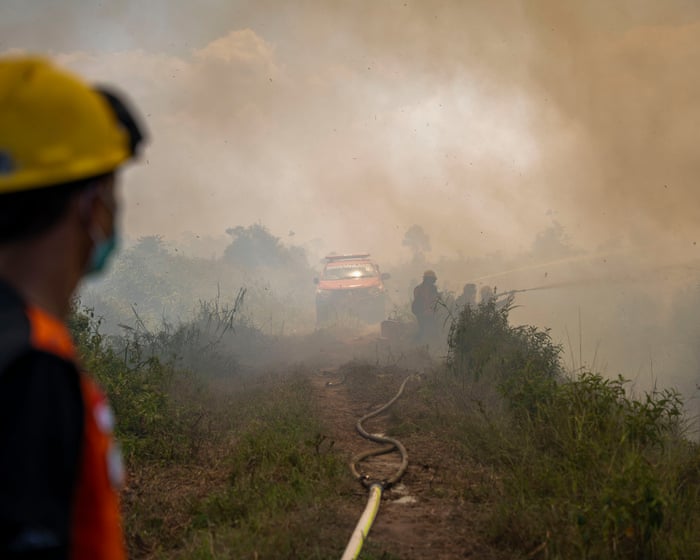
Orangutans rescued from traffickers in Indonesia face danger from a large number of wildfires caused by dry weather and climate change. The fires have come very close to a rehabilitation center in West Kalimantan, where staff are working hard to protect the animals.
Key Facts
Indonesia has seen a record number of forest fires recently, especially in August.
West Kalimantan has experienced severe fires after 40 days without rain.
The Yiari orangutan rehabilitation center was almost reached by flames, forcing staff to move orangutans to safer enclosures.
Firefighters and center staff are working together to control the blazes, including water bombing from above.
The air pollution from the fires threatens both animals and the environment.
The fire situation had somewhat stabilized by Thursday evening, with all orangutans reported safe.
Weather forecasts predict continued hot and dry conditions, which may cause more fires.
Indonesian officials warn people not to set fires and to be careful during the peak fire season in September and October.
The Yiari center is asking for money to buy more firefighting tools and had previously warned about fire risks to their restoration sites.
Read the Original
Want the full story? Tap a source to open the original
article.
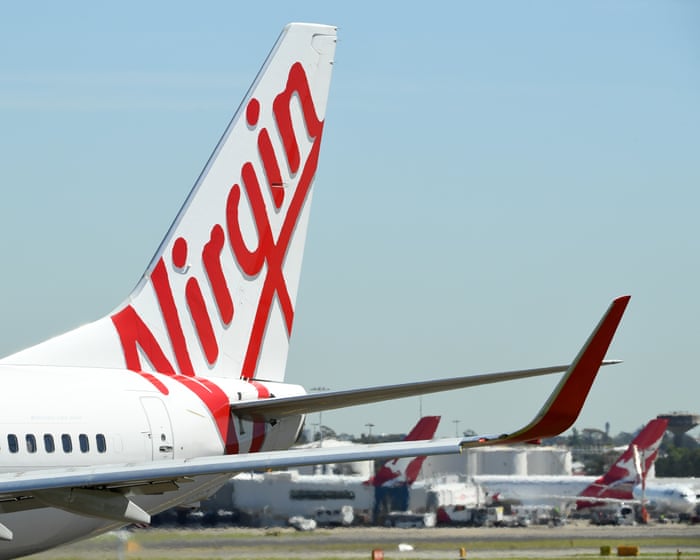
Airservices Australia did not immediately report a safety incident at Sydney airport where a Virgin plane stopped its takeoff because a Qantas plane crossed the runway in front of it. The incident, which did not meet mandatory reporting rules according to Airservices, is now under investigation by the Australian Transport Safety Bureau (ATSB).
Key Facts
A Virgin plane aborted takeoff at Sydney airport due to a Qantas plane crossing the runway ahead.
Airservices Australia’s CEO Rob Sharp said the planes were over 1 km apart when clearances were rescinded.
Airservices decided the incident did not require immediate reporting under current rules.
The incident was reported to the ATSB four days later.
This is the third recent safety issue at Sydney airport, involving runway incursions.
Runway incursions happen about 60 times a year in Australia but are rare at major airports with large planes.
The ATSB is investigating the incident and looking into the delay in reporting.
The ATSB will examine if any organizational or system factors contributed to the event.
Read the Original
Want the full story? Tap a source to open the original
article.
Mali has announced the release of 82 soldiers who were held captive by armed groups in the country’s north. The soldiers were freed through a process involving negotiations and are now safe under government care.
Key Facts
82 Malian soldiers held by armed groups have been released and returned to government custody.
The soldiers were held captive by al-Qaeda-linked group Jama’at Nusrat al-Islam wal Muslimin (JNIM) and the Tuareg-led Azawad Liberation Front (FLA).
The soldiers were captured at different times, some since 2023 and others after attacks in April 2024.
The release was described as a humanitarian gesture by the FLA.
About 118 other soldiers remain captive according to the FLA.
Algeria helped mediate the release of the soldiers.
Mali has been in conflict since 2012, involving separatist groups and jihadist armed groups.
The current military government came to power in a 2021 coup and relies on Russian paramilitary forces after expelling French and UN peacekeepers.
Read the Original
Want the full story? Tap a source to open the original
article.
Heavy rain near Tokyo caused severe flooding, killing four people and leaving one missing. The storms flooded roads, homes, and railway tracks, disrupted train and air travel, and caused power outages affecting thousands.
Key Facts
Record rainfall hit cities east of Tokyo, including Chiba prefecture.
Four people died and one person is missing due to flooding.
Over 80 homes were flooded, and about 230,000 residents were told to take shelter.
Thousands of people were stranded overnight at Soga train station and Narita airport.
The Japan Ground Self-Defense Force helped evacuate about 4,000 stranded people by bus.
Power outages affected around 23,000 homes as of Friday morning, down from 68,000 earlier.
Rainfall reached 11.5 cm (4.5 inches) in one hour in Chiba City, a record level.
Train services were partially restarted Friday morning but with delays; flights at Narita airport returned to normal.
Read the Original
Want the full story? Tap a source to open the original
article.
An oil spill from the tanker Caroline Bezengi has reached the coast of Oman. The ship, carrying about 800,000 barrels of Russian crude oil that are under international sanctions, ran aground near a marine reserve after an apparent attack.
Key Facts
The tanker Caroline Bezengi was carrying about 800,000 barrels of sanctioned Russian crude oil.
The vessel ran aground near a marine reserve.
The grounding happened after the tanker was apparently attacked.
Oil from the tanker has now reached Oman’s coastline.
The oil slick could harm the marine environment near Oman.
The crude oil onboard is subject to international sanctions.
The incident occurred weeks before the oil slick arrived on the shore.
Read the Original
Want the full story? Tap a source to open the original
article.
Voters in Osun State, Nigeria, are electing a new governor in a vote seen as important for understanding political trends before Nigeria’s 2027 presidential election. The race highlights whether President Bola Tinubu’s party can win votes or just gain politicians through defections. Local issues also play a big role in how people will vote.
Key Facts
Osun State in southwestern Nigeria has about 4.7 million people.
The gubernatorial election in Osun is held separately from the national elections.
The main candidates are Ademola Adeleke (Accord Party, formerly PDP), Bola Oyebamiji (APC, President Tinubu’s party), and Najeem Folasayo Salaam (ADC).
President Tinubu’s political base is in the southwest, including Osun, where his cousin was a former governor.
APC wants to win Osun to strengthen its position in the southwest before the 2027 presidential election.
The election tests if politicians who change parties can still bring their voters with them.
Local issues such as roads, jobs, and public services are important in voters’ decisions.
The election result could show the strength of political alliances for upcoming national elections.
Read the Original
Want the full story? Tap a source to open the original
article.
The United States is planning to impose unprecedented economic isolation on Iran as tensions rise in the Middle East. In related developments, President Trump’s negotiator Jared Kushner will visit the region to work on a Gaza ceasefire, while the U.S. aims to keep oil prices low amid the conflict involving Iran and the Strait of Hormuz.
Key Facts
U.S. Treasury Secretary Scott Bessent warned of economic isolation measures against Iran that the world has never seen before, with new actions expected next week.
Jared Kushner, President Trump’s son-in-law and negotiator, will travel to the Middle East to push for a ceasefire in Gaza after initial deal resistance.
Kushner will join officials, including former British Prime Minister Tony Blair, on a visit to Israel and Cairo to support the Palestinian group set to manage Gaza under the ceasefire plan.
Vice President JD Vance said the top U.S. priority is to keep oil and gas prices low for Americans during the Iran conflict.
The United Arab Emirates condemned an Iranian attack on two vessels linked to the state-owned Abu Dhabi National Oil Company in the Strait of Hormuz.
Iran has effectively blockaded the Strait of Hormuz and seeks to charge fees for passage, a move opposed by the U.S.
Oil prices rose slightly after the U.S. threatened to maintain a naval blockade of Iran, which could limit crude oil supply.
The U.S. is focusing on preventing Iran from obtaining nuclear weapons while managing economic and strategic concerns around the Strait of Hormuz.
Read the Original
Want the full story? Tap a source to open the original
article.
Cook Islands Prime Minister Mark Brown is expected to remain in power after his party won the most seats in the recent election. Despite a delay in final results from one island due to bad weather, Brown’s Cook Islands Party is set to continue governing with support from independent lawmakers.
Key Facts
Mark Brown is the Prime Minister of the Cook Islands and leader of the Cook Islands Party.
The Cook Islands Party won 12 seats in the parliamentary election; a majority requires 13 seats.
Brown’s party has formed alliances with independent members to secure a working majority.
The Cook Islands has 24 parliamentary seats and a population of about 17,000 people spread over 15 islands.
The last seat’s results were delayed because bad weather prevented election officials from reaching the island of Nassau.
Inflation and high living costs were major concerns for voters in this election.
The Cook Islands United Party won 4 seats, and the Democratic Party lost all its seats, including its leader Tina Pupuke-Browne.
Relations with New Zealand were strained after Brown signed deals with China without consulting New Zealand, but tensions later eased with a new defense pact in April 2026.
Read the Original
Want the full story? Tap a source to open the original
article.
Staying informed here is free for everyone. If it's worth something to you, pay what you want. Supporters also get the daily digest by email every morning.
The United Nations and the Palestinian Foreign Ministry criticized Israeli settlers for trapping three Palestinian families in their West Bank homes, cutting off their water and electricity. The families have been under siege for five days, with local reports saying Israeli soldiers have not effectively stopped the settlers.
Key Facts
Three Palestinian families with 15 people, including children, are confined to their homes in Qusra, West Bank.
Their water and power have been cut off since Sunday, and settlers continue to surround their houses.
The UN called the settlers’ actions criminal and warned the families face forced displacement.
The Palestinian Foreign Ministry described the settlers’ attacks as acts of terrorism and accused Israel of using settlers to push out Palestinians.
A US ambassador called the settlers’ actions an act of terror.
Israeli troops said they dismantled two illegal settler outposts nearby and detained one Israeli.
Residents and local officials say the Israeli army is protecting settlers rather than helping Palestinian families.
Violence and demolitions by Israeli forces continue in other parts of the West Bank.
Read the Original
Want the full story? Tap a source to open the original
article.
Indian scientists have studied the Sun using data from Aditya-L1, India's first space mission to observe the Sun. They found new clues explaining why the Sun’s outer atmosphere, called the corona, is much hotter than its surface and how it stays hot even after releasing large amounts of energy during solar eruptions.
Key Facts
The Sun’s core is about 15 million degrees Celsius, the surface about 5,500 degrees, and the corona about 2 million degrees but can reach up to 40 million degrees.
The corona is the origin of solar flares and coronal mass ejections (CMEs), which release huge amounts of energy into space.
CMEs cause auroras on Earth and can disrupt power grids, weather, and satellites.
The Sun releases 2-3 CMEs daily at low activity and up to 10 or more during peak activity every 11 years.
Despite the large energy loss from CMEs, the corona remains extremely hot due to two main processes.
One process involves waves generated by bubbling motions on the Sun’s surface that carry energy outward like waves carrying foam to shore.
The other, more important process, is the snapping and reconnecting of tangled magnetic field lines, which quickly restore lost energy.
The research quantified how much energy each process provides and found the magnetic field reconnection supplies most of the corona’s heat.
Read the Original
Want the full story? Tap a source to open the original
article.
The Venezuelan government and opposition recently held their first talks in several years in Caracas to discuss reforms. Many citizens, including workers and pensioners, hope these talks will lead to better salaries and political change.
Key Facts
Venezuelan teacher Nieves Jose Benitez earns only $0.17 a month, too little to cover basic costs.
Delta Amacuro, a remote region of Venezuela, has lost many experienced professionals due to migration.
Benitez and others rely on odd jobs, hunting, and money from relatives abroad to survive.
Government and opposition met for six days at a hotel in Caracas to negotiate reforms.
This was the first meeting since the U.S. took custody of former President Nicolas Maduro.
Protesters and citizens demand urgent solutions and better government actions.
People hope the talks will lead to increased salaries and new elections.
Dialogue between the sides is seen as a key step toward resolving Venezuela's problems.
Read the Original
Want the full story? Tap a source to open the original
article.
A man who worked as a driver and assistant for broadcaster Alan Jones testified in court that his job included making breakfast, cleaning, ironing underpants, and running personal errands. He described how he was "star-struck" to work with Jones but felt his tasks were more like being a servant than a radio producer.
Key Facts
The man, referred to as Complainant C, worked for Alan Jones at the 2GB radio station in Sydney in the mid-2000s.
His official position was driver, but he also performed duties like making soft-boiled eggs with bread soldiers for Jones.
He cleaned Jones’s apartment bathroom and ironed small clothing items such as underpants.
C did not have a formal contract because Jones said contracts could intimidate young people.
Complainant C wanted to work in radio production, not just as a driver or personal assistant.
After the radio show, C often drove Jones home and then was expected to help with household tasks.
Ray Hadley, another radio host, helped C get started in the industry by paying him for three months.
Jones is currently on trial, pleading not guilty to multiple charges of indecent assault and sexual touching.
Read the Original
Want the full story? Tap a source to open the original
article.
Chang An-lo, known as the "White Wolf," leads a party in Taiwan that supports reuniting Taiwan with China. His party is controversial and faces legal action from Taiwan’s government, which accuses it of working with China and breaking laws.
Key Facts
Chang An-lo is the leader of the Chinese Unification Promotion Party (CUPP), which wants Taiwan to reunite with China.
The CUPP is unpopular in Taiwan, where most people prefer to remain independent from China.
Taiwan’s government says the CUPP has broken national security, election, and anti-infiltration laws.
Authorities have asked Taiwan’s Constitutional Court to dissolve the CUPP because of its links to China.
The party is accused of spying, accepting orders from Beijing, and interfering in Taiwan’s elections.
Chang claims his party members commit fewer crimes than average Taiwanese and denies wrongdoing.
Critics say Chang’s message discourages loyalty to Taiwan’s government and could harm Taiwan’s democracy.
Taiwan has been separate from mainland China for over 100 years and has its own government and democracy.
Read the Original
Want the full story? Tap a source to open the original
article.
North Korea has threatened to use self-defense in response to upcoming U.S.-South Korea military drills, calling them provocative and a rehearsal for war. The U.S. and South Korea say the exercises are defensive and aimed at preparing for threats from North Korea.
Key Facts
The U.S. and South Korea will start their annual large-scale military drills called Ulchi Freedom Shield.
North Korea views these drills as aggressive and more provocative than last year.
North Korea recently launched two ballistic missiles off its east coast, likely to protest the drills or test weapons.
North Korea's Foreign Ministry warned it will respond decisively to perceived threats.
The U.S. and South Korea say their exercises are defensive and meant to boost readiness.
North Korea has frequently used U.S.-South Korea drills as a reason to increase missile and nuclear tests.
North Korean leader Kim Jong Un has increased ties with Russia and China while ignoring U.S. diplomacy offers.
North Korea has provided Russia with military support in exchange for help during the conflict in Ukraine.
Read the Original
Want the full story? Tap a source to open the original
article.
Each summary links back to the original reporting, so you can check the work. Support that, and get the daily digest every morning. Most choose $3.99/month.
Rescue teams in Colombia continue to search through rubble after a deadly earthquake that killed at least 274 people. Although the most important time to find survivors has ended, efforts to recover those affected go on, challenging the country's new government.
Key Facts
A strong earthquake struck Colombia, causing significant damage and loss of life.
At least 274 people have died due to the earthquake.
Rescue workers focused on finding survivors immediately after the quake.
The most critical 72-hour period to find survivors has passed.
Despite this, rescue teams keep searching through the rubble.
The disaster recovery is putting pressure on Colombia’s new government.
The information comes from Al Jazeera’s Latin America editor Lucia Newman.
Read the Original
Want the full story? Tap a source to open the original
article.
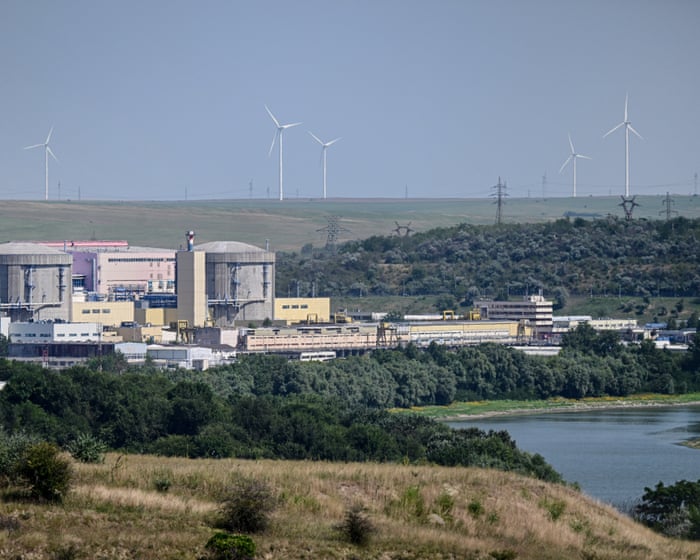
Romania has shut down its last active nuclear reactor at the Cernavoda plant because the Danube River’s water level dropped to record lows due to drought. This shutdown reduces Romania’s electricity supply and affects neighboring Moldova, which depends on Romanian power and now faces potential electricity shortages.
Key Facts
Romania’s two nuclear reactors at Cernavoda each produce 706 megawatts, together supplying 20% of the country’s electricity.
Both reactors have been stopped because the Danube River’s water, used for cooling, fell to a dangerously low level.
Moldova relies on Romanian electricity for up to 60% of its needs and now may have to buy more expensive electricity or deal with power outages.
Romania has declared an energy emergency for August and urged reduced power use during peak times.
To compensate, Romania activated a 330-megawatt coal (lignite) power plant and increased wind and hydro power where possible.
Some large factories, including car makers Dacia and Ford, paused production to save electricity.
Many Danube River sections recorded the lowest water flows in 34 years due to drought worsened by climate change.
Other European countries like France and Hungary also face nuclear power drops caused by drought and low river water affecting reactor cooling.
Read the Original
Want the full story? Tap a source to open the original
article.