Cuba marked the 100th birthday of Fidel Castro with events and public displays remembering his legacy. While some Cubans honor him for his contributions to the country’s culture, education, and health, others blame him for the economic problems Cuba faces today, worsened by U.S. sanctions and a fuel blockade.
Key Facts
Fidel Castro was born 100 years ago, and his influence remains strong in Cuba.
Cuba held celebrations like a book fair, art shows, concerts, and meetings with leftist groups to honor Castro.
Posters and billboards with Castro’s image and slogans are common in Cuban cities.
Some Cubans praise Castro’s work on culture, education, and health, describing it as a positive legacy.
The U.S. imposed a fuel blockade on Cuba in January and added sanctions to pressure political and economic changes.
These U.S. actions worsened an ongoing economic crisis, causing power outages, shortages, and transportation problems.
Castro ruled Cuba for 50 years before handing power to his brother in 2008 and remained influential until he died in 2016.
Opinions about Castro vary, with some remembering him fondly and others blaming him for current difficulties.
Read the Original
Want the full story? Tap a source to open the original
article.
Two years ago, Ukrainian soldiers launched an operation into Russia’s Kursk region, briefly capturing land as a bargaining tool. Although Ukraine eventually lost most of that territory, it has since developed long-range drone and missile strikes that allow it to hit important Russian targets far inside Russian territory, increasing its leverage in peace talks.
Key Facts
In 2022, Ukrainian forces crossed into Russia’s Kursk region, capturing over 500 square miles briefly.
Russia pushed Ukrainian troops back out of Kursk by early 2025.
Ukraine has not made large land incursions into Russia since, except small operations like in Belgorod.
Ukraine has developed advanced drone and missile technology to strike deep into Russia without holding land.
Since early 2025, Ukraine’s long-range attacks on Russian energy, logistics, and military sites have increased significantly.
Russian defenses claim to have shot down many Ukrainian drones but have been overwhelmed by the volume of attacks.
A recent attack hit the Russian Black Sea port of Novorossiysk, damaging grain terminals and warships.
Ukraine’s new strategy focuses on disabling important targets rather than holding territory.
Read the Original
Want the full story? Tap a source to open the original
article.
Elbridge Colby, a senior Pentagon official, supports the Aukus nuclear submarine deal with Australia, aligning with President Donald Trump’s positive stance. The deal involves the U.S. selling Virginia-class submarines to Australia and helping Australia build its own nuclear-powered submarines by the 2040s.
Key Facts
Elbridge Colby is the third-highest-ranking official at the Pentagon and was once skeptical of the Aukus deal.
Colby now says the Aukus submarine deal is “full steam ahead,” echoing President Trump’s position.
The U.S. plans to sell Australia three Virginia-class nuclear-powered submarines, starting in 2032.
Australia will later build up to eight of its own nuclear submarines, with the first expected in the early 2040s.
The U.S. submarine production rate must increase from about 1.1 boats per year to over 2 boats per year to meet both U.S. and Australian needs.
The U.S. Navy currently has only 49 submarines but aims to have 66 to meet its goals.
Australia will manage the nuclear waste from its submarines, which must be safely stored for thousands of years.
The Aukus deal could cost Australia up to A$368 billion by the mid-2050s.
Read the Original
Want the full story? Tap a source to open the original
article.
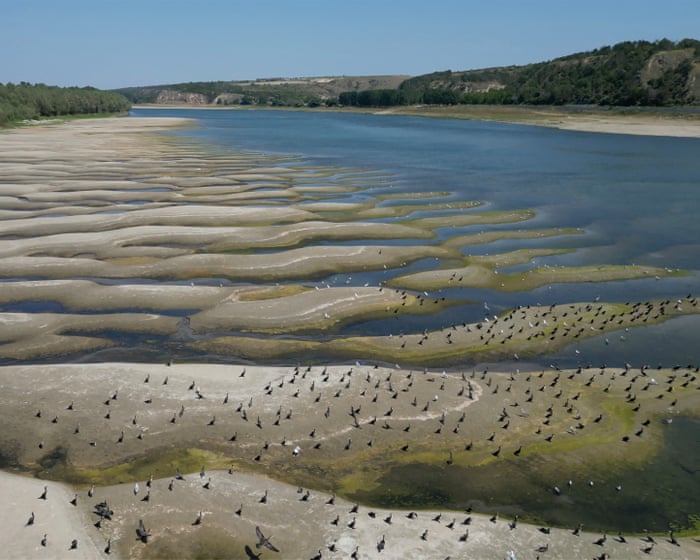
Europe is experiencing a heatwave with temperatures expected to reach up to 40°C in Spain and up to 38°C in parts of England under an amber heat health warning. Romania has shut down its only nuclear plant due to low water levels in the Danube River, which is used to cool the reactors.
Key Facts
England faces an amber heat warning covering areas from London to Sheffield, with temperatures possibly reaching 38°C.
High temperatures can affect infrastructure like roads and railways and can also impact people’s health.
The UK is experiencing extreme conditions such as heatwaves, droughts, and wildfires, worsened by climate change from greenhouse gas emissions.
Romania’s only nuclear plant at Cernavoda was completely shut down because the Danube River water level dropped to a record low, making cooling the reactors unsafe.
Efforts to redirect the Danube’s flow, such as blowing up rocks and sinking rocks in the river, were not enough to prevent the shutdown.
UK officials are considering banning disposable barbecues because they have caused serious wildfires in recent years.
Disposable barbecues can remain hot for hours, causing fires if improperly discarded or buried, and also pose dangers to people and animals.
Several large wildfires in the UK and Scotland in recent years have been linked to discarded disposable barbecues.
Read the Original
Want the full story? Tap a source to open the original
article.
The United Kingdom is facing a severe drought caused by record-low rainfall and high temperatures, which is damaging farmland and reducing crop yields. Farmers like Tom Pearson are struggling despite efforts to grow drought-resistant crops and improve soil health. This drought is one of several recurring dry spells over recent years with lasting effects on agriculture.
Key Facts
Almost 75% of England’s land is in drought due to very low rainfall and unusually hot weather.
July was the driest month in England and Wales since 1836.
Many farmers are harvesting crops like winter wheat earlier than usual because of poor growing conditions.
The UK has experienced three droughts in the last five years, with two consecutive severe dry seasons.
Tom Pearson uses regenerative farming methods and ancient grain varieties with deep roots better suited for dry conditions.
Despite these methods, Pearson’s farm yields have declined for three years in a row.
Farming organizations call for more government support to develop drought-resistant crops and improve water storage on farms.
The drought is described as an “exceptionally serious situation” with long-term impacts on farming.
Read the Original
Want the full story? Tap a source to open the original
article.
France has started an official investigation against its ambassador to the Central African Republic (CAR), Bruno Foucher, over claims that he brought multiple women into his official residence and had sex with some of them. These events reportedly happened between January and March 2024, raising security concerns.
Key Facts
Bruno Foucher has been France’s ambassador to the CAR since 2023.
Allegations say he invited about 30 women to his residence in Bangui, the capital, with some staying overnight.
The French foreign ministry launched disciplinary proceedings and security investigations against him.
Details about the disciplinary process and its length have not been made public.
The accusations come as France and the CAR are working to improve their diplomatic relations.
French Foreign Minister Jean-Noël Barrot praised the restored relationship between the two countries during his visit in March 2024.
The BBC sought comment from the French embassy in Bangui but received no immediate response.
Read the Original
Want the full story? Tap a source to open the original
article.
Scientists studied how dogs' brains react when they see human facial expressions. They found that dogs respond differently to happy, angry, fearful, and sad faces, showing they can tell apart some human emotions.
Key Facts
Researchers used brain scans to study eight pet dogs looking at photos of people with different facial expressions.
Dogs' brains showed more activity in reward and thinking areas when they saw happy faces.
Fearful faces caused different brain responses than angry or sad faces in dogs.
Dogs might notice fear more because it can signal danger.
This is the first proof that dogs can distinguish specific negative emotions, not just good or bad feelings.
Dogs respond differently to human smells linked to fear or happiness, supporting the importance of these emotions.
The study helps explain why dogs seem to sense when their owners are upset.
Scientists used machine learning to identify patterns in dogs’ brain activity linked to each expression.
Read the Original
Want the full story? Tap a source to open the original
article.
Babies and young children are more at risk during heatwaves because their bodies do not control temperature as well as adults. To keep them safe, it is important to keep them cool, hydrated, and watch for signs of overheating like dizziness or tiredness.
Key Facts
Children's brains, especially under age five, do not fully control body temperature and thirst as adults do.
Children sweat less and absorb heat faster due to their smaller size and higher activity levels.
Heat exhaustion in children can cause heavy sweating, pale skin, dizziness, muscle cramps, and nausea.
Heatstroke is a serious emergency where the body temperature can rise above 40°C, causing confusion, headache, and possible unconsciousness.
Overheating is especially dangerous for babies and can increase the risk of sudden infant death syndrome (SIDS).
To protect children, keep them hydrated, dress them in light clothes, provide shade or cool places, and avoid letting babies sleep in hot, unventilated prams.
Newborns should sleep in rooms kept between 16°C and 20°C with good air circulation; fans should not blow directly on the baby.
Cooling methods like wet cloths can help babies, but they must be checked regularly to avoid overcooling.
Read the Original
Want the full story? Tap a source to open the original
article.
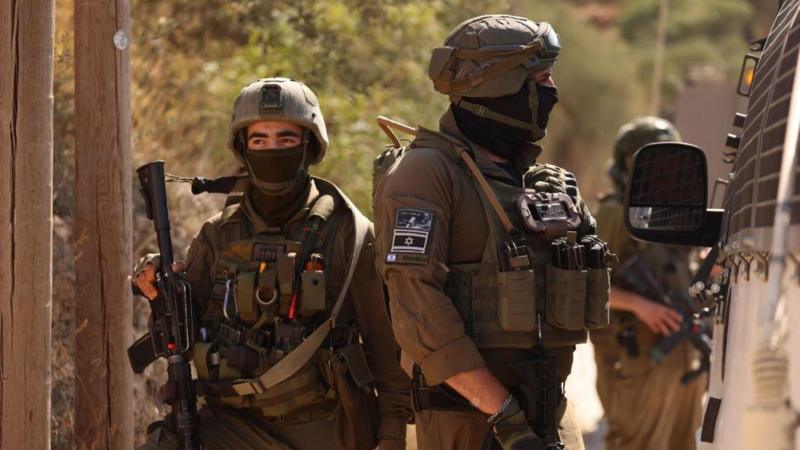
The Israeli military will send more troops to the West Bank village of Qusra after Israeli settlers trapped two Palestinian families in their homes and cut off their water and power. Attempts to remove the settlers have failed so far, raising concerns about settler violence and the difficulty Israeli forces face in handling the situation.
Key Facts
Israeli settlers have blocked two Palestinian families in Qusra since Sunday, cutting their water and electricity.
The Palestinian families' food supplies are running low due to the siege.
Israeli troops tried but failed to remove the settlers, leading to confrontations that included tear gas and stun grenades.
Local Palestinians say settlers aim to remove them and take over their homes and land.
Settlements are considered illegal under international law, but the Israeli government supports their expansion.
The US embassy condemned the settlers’ actions and requested Israel to act.
In past months, similar attacks in nearby villages have led to violence and deaths on both sides.
The UN reports that 76 Palestinians, including children, have been killed in the West Bank this year.
Read the Original
Want the full story? Tap a source to open the original
article.
Japan’s Crown Prince Akishino expressed mixed feelings about the government’s recent change to the Imperial House Law that only allows men to become emperor. He said men and women can equally serve the imperial family’s roles, but he could not openly discuss the government’s decision. The law keeps the throne limited to male heirs, excluding the popular princess from succession.
Key Facts
Crown Prince Akishino is the younger brother of Emperor Naruhito and next in line to the throne.
The Japanese government revised the Imperial House Law to allow only men from the paternal bloodline to become emperor.
This revision sparked criticism for being old-fashioned and unfair to women, especially Princess Aiko, Emperor Naruhito’s daughter.
Princess Aiko is currently ineligible to succeed the throne because she is female.
The law allows princesses to stay royal and perform duties if they marry commoners, but their spouses and children won’t become royals.
It also allows male relatives aged 15 or older from distant imperial branches to be adopted into the royal family to provide heirs.
Crown Prince Akishino said the issue is difficult and society needs to keep discussing what is best.
The government’s goal is to preserve the male imperial bloodline.
Read the Original
Want the full story? Tap a source to open the original
article.
Russian President Vladimir Putin visited the Kuril Islands, a group of islands controlled by Russia but also claimed by Japan. This was his first visit there and led to a formal protest from Japan, which disputes Russia's control of the islands.
Key Facts
Putin visited Iturup, the largest of the Kuril Islands, on August 13, 2026.
The Kuril Islands are controlled by Russia but claimed by Japan, which calls the four southernmost islands the Northern Territories.
The Soviet Union took control of the islands from Japan at the end of World War II.
Japan has never signed a peace treaty with Russia because of this territorial dispute.
Putin visited local facilities including a fish plant, a hospital, and a school.
Japan’s Foreign Minister Toshimitsu Motegi issued a strong protest against Putin’s visit.
Russia has increased its military presence on the Kuril Islands over the years.
Before visiting Iturup, Putin attended military drills on nearby Sakhalin Island.
Read the Original
Want the full story? Tap a source to open the original
article.
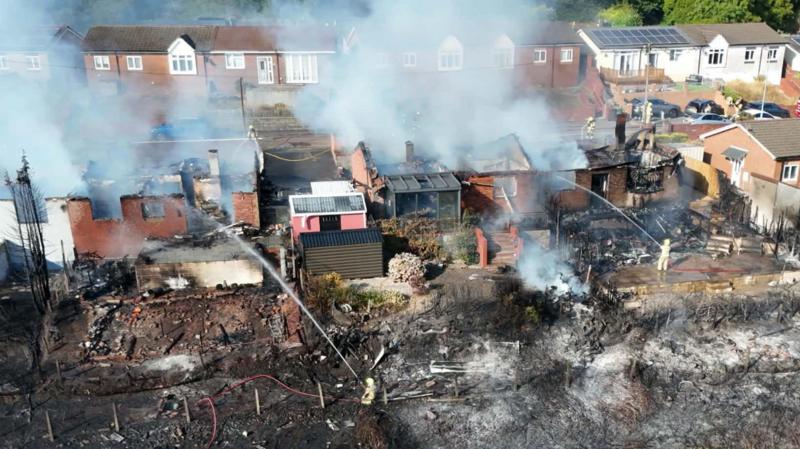
A large fire destroyed several homes in Newbridge, South Wales, causing residents to evacuate. Emergency services responded quickly, and no injuries were reported. People affected by the fire are being given temporary housing and support.
Key Facts
The fire involved five bungalows on Hazlewood Road in Newbridge, Caerphilly county.
Residents were moved to a nearby leisure centre for safety.
No casualties or injuries have been reported.
Some homes and cars were completely destroyed by the flames.
The South Wales Fire and Rescue Service started working on the fire at 4:00 PM local time on Wednesday.
The Welsh Ambulance Service sent two ambulances and a specialist team.
Local officials and the county council promised to help affected families find temporary places to stay.
Newbridge Rugby Football Club offered refreshments and shower facilities to those in need.
Read the Original
Want the full story? Tap a source to open the original
article.
On the biggest stories we show what the outlets agree on and where they differ. Readers keep that going, and get the daily digest by email every morning. Most choose $3.99/month.
Lebanon’s Prime Minister Nawaf Salam accused Israel of damaging homes and civilian areas in southern Lebanon during a fragile ceasefire. Israel says it is targeting military sites linked to Hezbollah but refuses to withdraw from occupied zones, while attacks have wounded several people.
Key Facts
Lebanon’s Prime Minister says Israeli attacks destroy homes and violate international law.
Israel claims it is destroying underground military infrastructure and will not leave occupied areas in Lebanon, Syria, or Gaza.
Israeli strikes on southern Lebanon towns, including Mansouri and Burj al-Shemali, have caused deaths and injuries.
Hezbollah did not claim responsibility for attacks that led to the recent Israeli military response.
A US-mediated ceasefire started on April 17, but conflict and Israeli occupation continue in parts of southern Lebanon.
The ceasefire agreement includes Israeli withdrawal from some areas as Lebanese forces replace them, in exchange for Hezbollah’s partial disarmament.
Lebanon and Israel have held several talks in Washington and Rome to implement this framework, but Hezbollah is not part of the talks.
US senators have proposed $1.2 billion in security aid for Lebanon, linked to progress on weapons control and Hezbollah disarmament.
Read the Original
Want the full story? Tap a source to open the original
article.
A famous Indian actor named Vikram shared a video of himself playing with an endangered lar gibbon, which triggered an investigation by wildlife officials. The animal was found at a relative’s home in Tamil Nadu, and authorities are checking if all wildlife laws were followed in possessing or moving the gibbon.
Key Facts
Vikram is a well-known actor from Tamil Nadu in India who posted a video cuddling a lar gibbon.
The lar gibbon is an endangered small ape protected by international and Indian wildlife laws.
The video was removed from Instagram soon after posting.
Tamil Nadu forest officials are investigating how the gibbon came to be at a private home and whether legal permits were obtained.
The gibbon was reported to be at a relative’s house in Chennai, Tamil Nadu’s capital.
Lar gibbons are native to parts of Southeast Asia and are threatened by habitat loss, hunting, and illegal pet trade.
Records show eight lar gibbons were registered in 2020 by a man from Manipur, a state in northeastern India, with the animals originating from Malaysia.
Authorities are verifying import permits, no-objection certificates, and wildlife conservator approvals as required by law.
Read the Original
Want the full story? Tap a source to open the original
article.
Many women in Gaza, like Sohair al-Bordani, face delays and difficulties in getting divorces because the ongoing war has damaged the courts and slowed down legal processes. Courts in Gaza continue to handle divorce cases despite limited resources and damage, but many women end up giving up financial rights just to finalize their divorces and move on.
Key Facts
The war in Gaza has damaged court buildings and slowed legal processes, especially for divorce cases.
Since October 2023, Gaza courts have handled over 8,700 divorce cases despite many challenges.
Many women choose a faster type of divorce called "khulu," where they give up financial claims to speed up the process.
Courts in Gaza operate with minimal equipment, often just one computer each, and face power cuts and supply shortages.
Legal delays affect women’s access to child custody, financial support, and other rights after separation.
Some legal documents and files have been lost due to bombing and destruction of offices.
Courts try to keep services running but focus on continuing rather than improving them because of the difficult conditions.
The war’s disruption has left many cases postponed and legal outcomes uncertain for families.
Read the Original
Want the full story? Tap a source to open the original
article.
A Palestinian family in the occupied West Bank lost their home when it was demolished by Israeli forces despite having a court order meant to protect it. The family now lives outside under makeshift shelter and struggles without basic needs like medication, water, or electricity.
Key Facts
The Daraghmeh family’s home in Ein el-Hilweh, West Bank, was destroyed by an Israeli bulldozer on July 28, despite a court injunction preventing demolition.
Adel Daraghmeh, the father, manages diabetes but lost his medication in the demolition.
The family’s belongings, including phones and solar panels, were destroyed, leaving them without electricity or water.
Soldiers, settlers, and Civil Administration officials arrived early in the morning and demolished the house within five minutes.
The mother, Kheirieh, was at home and tried to show legal papers but the demolition proceeded.
Their son’s home had been demolished days earlier without warning, despite promises from the army that it would not happen again.
A lawyer representing the family stated the demolitions happened even though there was a clear court order against them.
The destruction cuts the family off from land they have used for generations, and an Israeli flag now flies nearby.
Read the Original
Want the full story? Tap a source to open the original
article.
The US government labeled two major Brazilian criminal groups, Primeiro Comando da Capital (PCC) and Comando Vermelho (CV), as “terrorist” organizations in 2026. This decision links more to Brazilian political struggles and US involvement in Latin America than to new security concerns.
Key Facts
The US designated PCC and CV, Brazil’s two biggest crime groups, as terrorist organizations in 2026.
PCC and CV have been active and known to officials since the early 1990s or earlier.
These groups commit large-scale violence but mainly seek criminal profit, not political change.
Terrorism usually means violence driven by political or ideological goals, which PCC and CV do not primarily have.
The designation coincides with political conflicts involving Brazil’s far right and President Luiz Inacio Lula da Silva.
Jair Bolsonaro, former Brazilian president, is imprisoned for his role in a 2022 coup attempt.
Bolsonaro’s sons, Flavio and Eduardo, have lobbied US officials to take a tougher stance on Brazil’s government and supported the terrorism label.
The terrorism label supports political narratives used by Bolsonaro’s supporters in the upcoming October elections.
Read the Original
Want the full story? Tap a source to open the original
article.
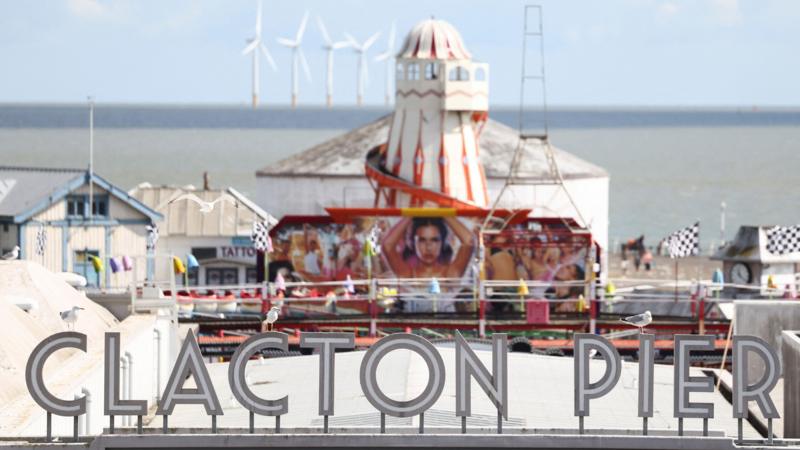
People in Clacton-on-Sea, Essex, are voting in a by-election to choose their new Member of Parliament (MP). This election has a record number of 34 candidates, including members from 12 political parties and 20 independent individuals.
Key Facts
The election is happening in Clacton-on-Sea and nearby towns in Essex, England.
There are 79,785 registered voters eligible to vote.
A total of 34 candidates are running, the highest number ever in a British election.
Voters must show accepted ID like a driver’s license or passport to vote.
The ballot paper used is about 90 cm (3 feet) long, the longest in British election history.
Polling stations opened at 7:00 AM and will close at 10:00 PM BST.
Votes will be counted overnight after the polls close.
Candidates come from many parties, including the Reform UK, The Reclaim Party, and The Official Monster Raving Loony Party, plus many independents.
Read the Original
Want the full story? Tap a source to open the original
article.
Staying informed here is free for everyone. If it's worth something to you, pay what you want. Supporters also get the daily digest by email every morning.
A strong earthquake hit Colombia on August 10, 2026, causing significant damage and casualties. The government responded quickly by setting up emergency teams and using heavy equipment for rescue, unlike Venezuela’s slower and less coordinated response to earthquakes in June 2026.
Key Facts
Colombia experienced a 7.4-magnitude earthquake on August 10, 2026.
At least 111 people died from the earthquake in Colombia.
Colombia’s President Abelardo de la Espriella declared an emergency and started rescue efforts within an hour.
In contrast, Venezuela’s acting President Delcy Rodríguez waited almost four hours to address her nation after earthquakes in June 2026.
Venezuelan civilians had to dig through rubble by hand for weeks due to slow government help.
Colombia used cranes and excavators to search for survivors shortly after the quake.
Venezuela called for international rescue teams to help; Colombia allowed only U.S. personnel and mainly requested supplies.
The different responses highlight the contrast between Venezuela’s authoritarian government and Colombia’s democratic system.
Read the Original
Want the full story? Tap a source to open the original
article.
Europe is experiencing a severe drought that is damaging many crops across different countries, including potatoes in the Netherlands and corn in Bosnia. The drought and heat waves are causing water shortages and harming farmers' ability to grow enough food.
Key Facts
A strong drought and heat waves are impacting many European countries this summer.
Temperatures in parts of the Balkans reached nearly 40°C (104°F).
Wildfires and water shortages are making it harder for farmers to keep crops healthy.
Dutch farmers cannot use water from streams and drainage to irrigate fields in some areas.
Potato crops in the Netherlands are smaller and will be harvested earlier than usual.
The drought may reduce the European Union’s economic output by about 1% in 2026, equal to around 180 billion euros ($208 billion).
Farmers are using compost, straw, and manure to try to help dry soil recover.
The heat and drought effects are linked to human-caused global warming and a strong El Niño weather pattern.
Read the Original
Want the full story? Tap a source to open the original
article.