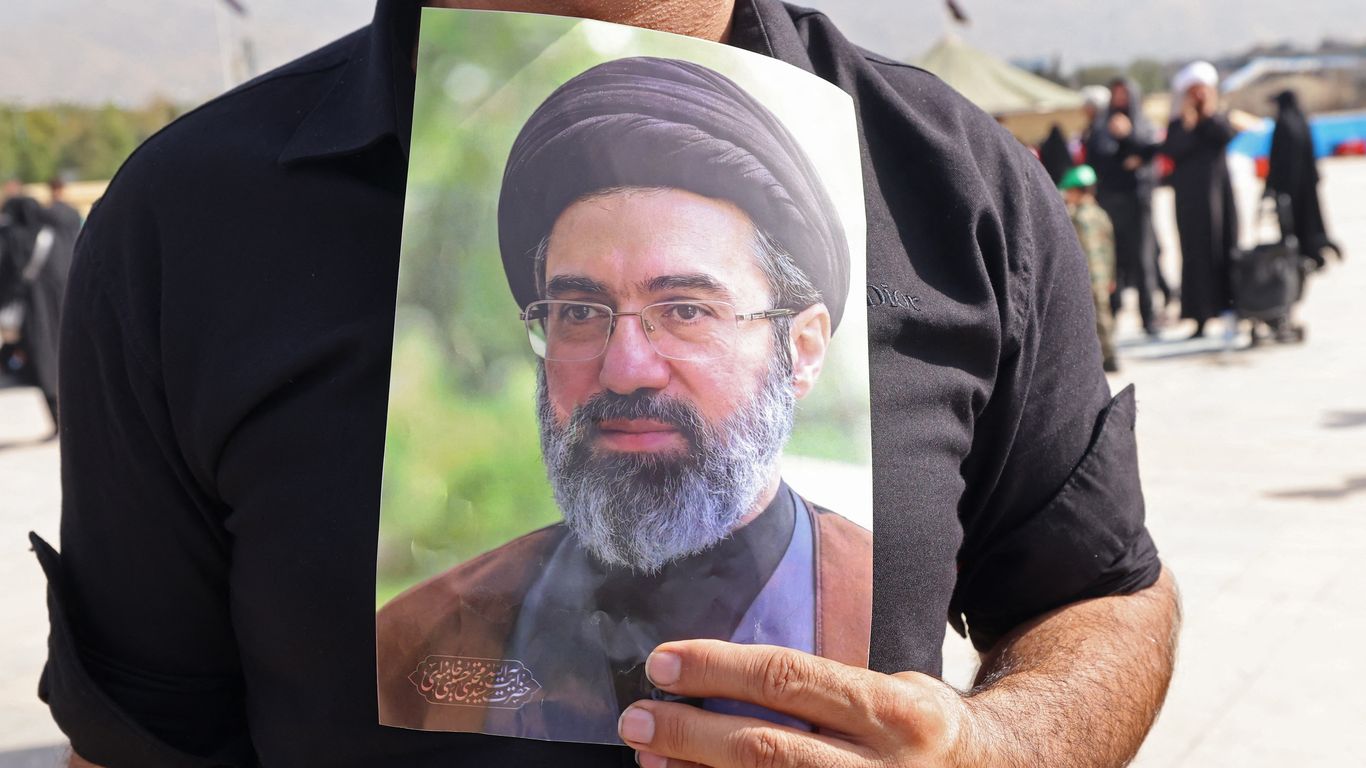
Iran’s Supreme Leader Mojtaba Khamenei criticized President Donald Trump’s signature on a peace agreement with Iran, calling it worthless. He also accused the U.S. of breaking the ceasefire by carrying out new military strikes against Iran.
Key Facts
Iran’s Supreme Leader is Mojtaba Khamenei.
Khamenei said President Trump’s signature on a peace deal is not trustworthy.
The U.S. and Iran had agreed on a ceasefire.
Khamenei claims the U.S. has launched new attacks against Iran after the ceasefire.
Khamenei shared his statements on the social media platform X.
The dispute is part of ongoing tensions and conflict between the U.S. and Iran.
Read the Original
Want the full story? Tap a source to open the original
article.
Two US service members were killed and four were injured in an Iranian missile and drone attack in Jordan, according to the US military. One service member is still missing, and the attacks mark a rise in tensions after a breakdown in a previous understanding meant to pause fighting between the US, Israel, and Iran.
Key Facts
On July 17, two US military personnel died in an Iranian attack in Jordan.
Four other service members were injured and treated in Jordanian hospitals but have been released.
One US service member is currently missing following the attack.
The US Central Command confirmed the attack involved Iranian ballistic missiles and drones.
The attack comes after a failed memorandum of understanding meant to reduce conflict between the US, Israel, and Iran.
Both the US and Iran have attacked civilian infrastructure like bridges and water plants in the region.
The Gulf Cooperation Council called recent Iranian attacks on Gulf states “war crimes” and dangerous escalations.
Iranian Supreme Leader Mojtaba Khamenei criticized recent US strikes, questioning the value of President Trump’s agreements.
Read the Original
Want the full story? Tap a source to open the original
article.
Two US soldiers died and one is missing after Iran launched missile and drone attacks in Jordan. The US military responded with strikes against Iran, continuing a series of actions since President Donald Trump ended a ceasefire agreement.
Key Facts
Two US service members were killed in missile and drone attacks in Jordan.
One US service member is still missing after the attacks.
Four other US troops were evacuated to Jordanian hospitals and have been released.
Some US soldiers with minor injuries have returned to their duties.
Jordan's military intercepted 10 Iranian missiles fired into its airspace with no reported damage.
The US military carried out its seventh night of strikes on Iran.
President Donald Trump declared that the temporary ceasefire with Iran was over.
Read the Original
Want the full story? Tap a source to open the original
article.
Two U.S. service members were killed, one is missing, and four were injured in Jordan after Iranian ballistic missile and drone attacks, according to U.S. Central Command (CENTCOM). The attacks occurred as tensions rise following the failure of a recent U.S.-Iran agreement meant to ease conflict and restart negotiations.
Key Facts
Two U.S. service members died in Jordan on Friday during an Iranian missile and drone attack.
One U.S. service member is currently missing; four others were injured but have been treated and released from hospitals.
Additional personnel with minor injuries returned to duty after evaluation.
The U.S. military withheld the identities of those killed to notify families first.
The attacks happened while U.S. personnel were defending themselves.
The incident follows the collapse of a Memorandum of Understanding between the U.S. and Iran.
The failed agreement sought to halt conflict, reopen shipping routes, and start talks on Iran’s nuclear program.
CENTCOM provided the information via a public post on social media platform X.
Read the Original
Want the full story? Tap a source to open the original
article.
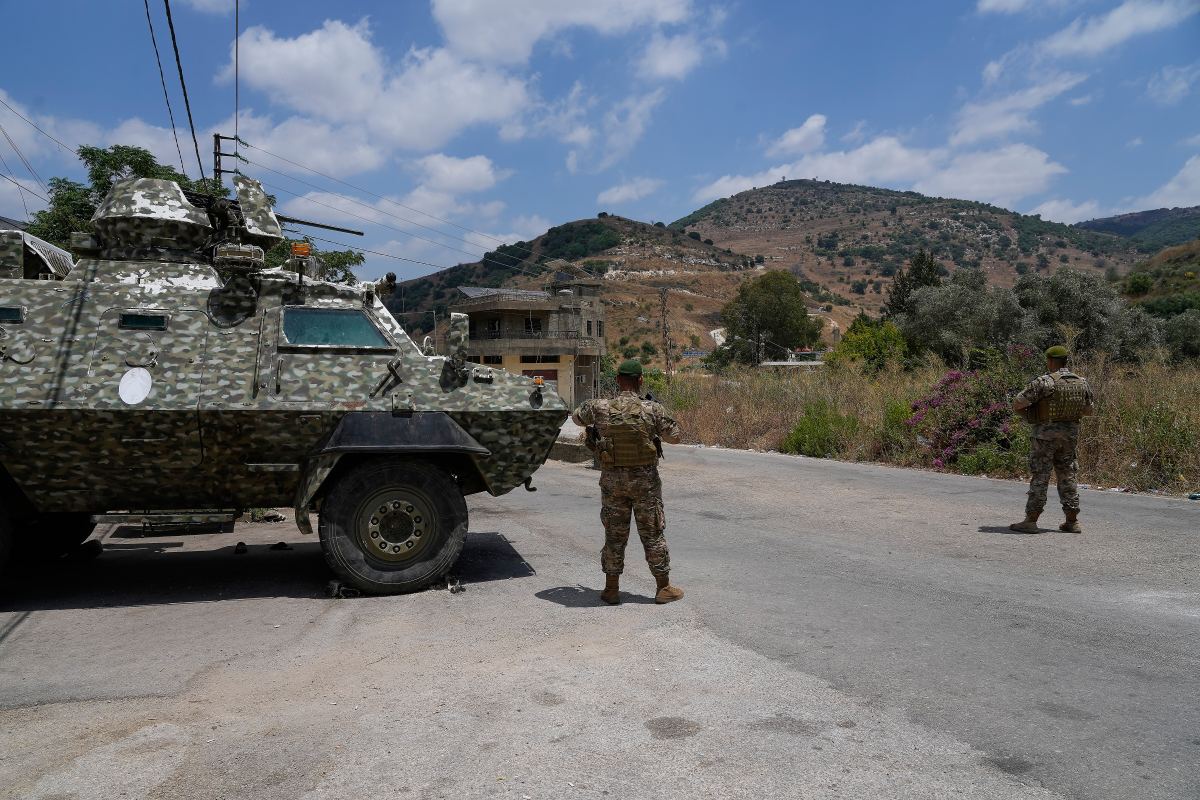
Lebanese President Joseph Aoun will meet with President Donald Trump in Washington to discuss peace efforts between Israel and Hezbollah. They will talk about ways to keep a ceasefire, help Israel leave southern Lebanon, and improve security in Lebanon.
Key Facts
President Aoun is visiting the U.S. at President Trump’s invitation.
The meeting will cover the ceasefire and plans for Israel to withdraw troops from southern Lebanon.
Talks also aim to boost Lebanese government control across the country.
Lebanese and Israeli officials recently held U.S.-mediated talks in Rome about “pilot zones” for troop withdrawal.
Israel has not set a deadline to leave southern Lebanon; withdrawals depend on Hezbollah disarming, which Hezbollah rejects.
Israeli forces remain in a 10km “security zone” inside Lebanon and have continued air strikes.
Hezbollah refuses to disarm and opposes the negotiations, saying Iran’s pressure is needed to end the war.
Over 4,000 Lebanese people have died and more than a million have been displaced since March due to the conflict.
Read the Original
Want the full story? Tap a source to open the original
article.
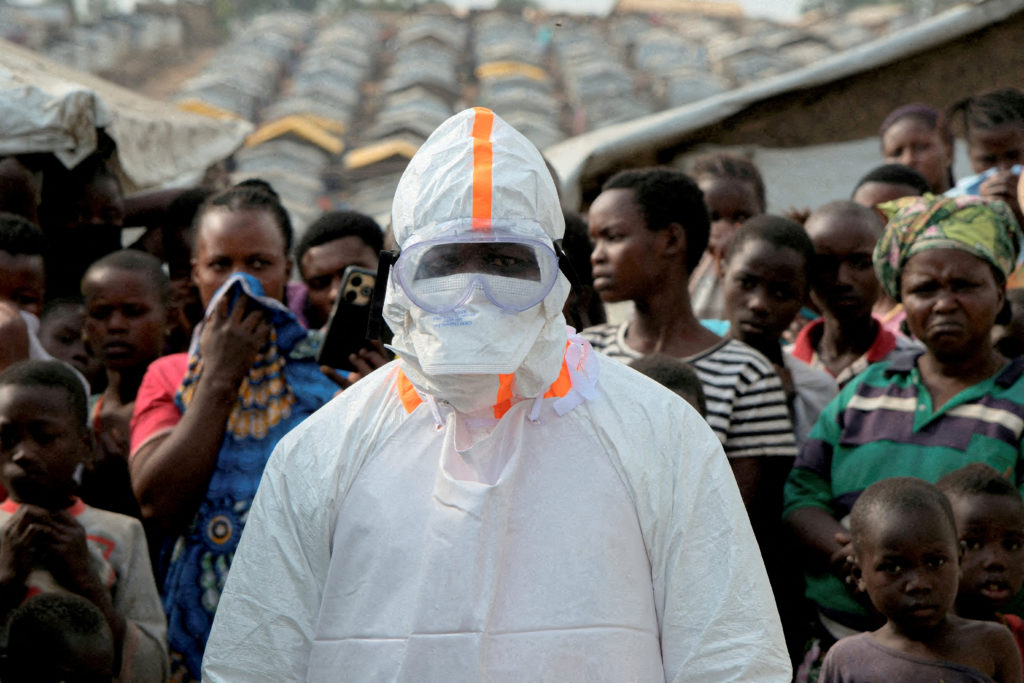
In Congo's Ituri province, over a dozen attacks have targeted health workers and Ebola treatment centers during the ongoing outbreak. These attacks, along with unpaid strikes by health workers, have made it harder to fight the fast-growing Ebola outbreak, which has recorded more than 2,100 cases and 860 deaths.
Key Facts
At least 12 attacks on health facilities and workers have occurred during the Ebola outbreak in Congo.
The outbreak in Ituri province is the fastest-growing Ebola outbreak recorded so far.
There have been 2,181 Ebola cases and 864 deaths reported.
The Bundibugyo virus causing this outbreak is less common and has no approved vaccine or treatment.
Angry mobs have attacked healthcare and burial teams, disrupting safe burials and treatment efforts.
Traditional funeral practices have been restricted, which has caused local anger.
Many health and aid workers have left remote hotspots due to safety concerns and have moved to safer areas like Bunia.
The security situation has forced some humanitarian groups to temporarily relocate or reduce their work in the area.
Read the Original
Want the full story? Tap a source to open the original
article.
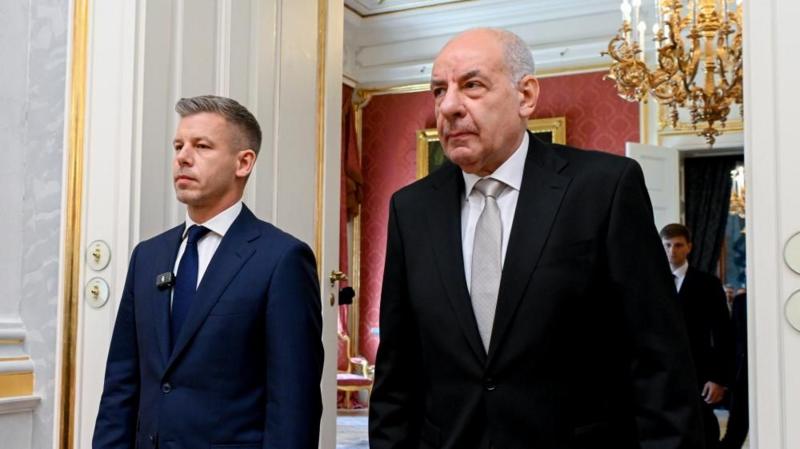
Hungarian President Tamás Sulyok has agreed to resign after the new government passed a constitutional amendment ending his term at midnight Sunday. The amendment also removes other senior judges and limits parliamentary terms, following a major election win by Prime Minister Péter Magyar's party.
Key Facts
Tamás Sulyok, Hungary's president, will step down as his presidency ends Sunday at midnight.
Prime Minister Péter Magyar's Tisza party pushed through a constitutional change to remove Sulyok.
Sulyok was seen as an ally of former Prime Minister Viktor Orbán, who lost power after 16 years.
The amendment removes the head of Hungary’s Constitutional Court, Péter Polt, and judges over 70.
The law stops parliament members who served three terms from running again, affecting over half of the current majority party members.
Viktor Orbán called the amendment an abuse of power and urged protests.
Orbán’s party suffered a big defeat in April, and he has stayed mostly out of public and refused his seat in parliament.
The new government has passed several constitutional changes since winning the election.
Read the Original
Want the full story? Tap a source to open the original
article.
The European Commission will allow industries in the EU to keep emitting carbon dioxide until the 2040s as part of changes to the EU's carbon market. Starting in 2036, companies can buy carbon credits from outside the EU to offset their emissions, which may lower carbon prices and allow more pollution if EU limits run out.
Key Facts
The EU is revising its Emissions Trading System (ETS), which controls carbon emissions.
Industries can continue emitting CO₂ gases until the 2040s.
From 2036, EU industries can buy carbon credits from outside the EU to balance their emissions.
Buying carbon credits from outside means companies might pay less for the right to emit.
This change could allow companies to pollute more if EU carbon allowances are used up.
The plan aims to provide industries with more flexibility in managing emissions.
Critics include European lawmakers and environmental groups worried about effectiveness.
The goal of ETS is to reduce planet-warming greenhouse gases gradually over time.
Read the Original
Want the full story? Tap a source to open the original
article.
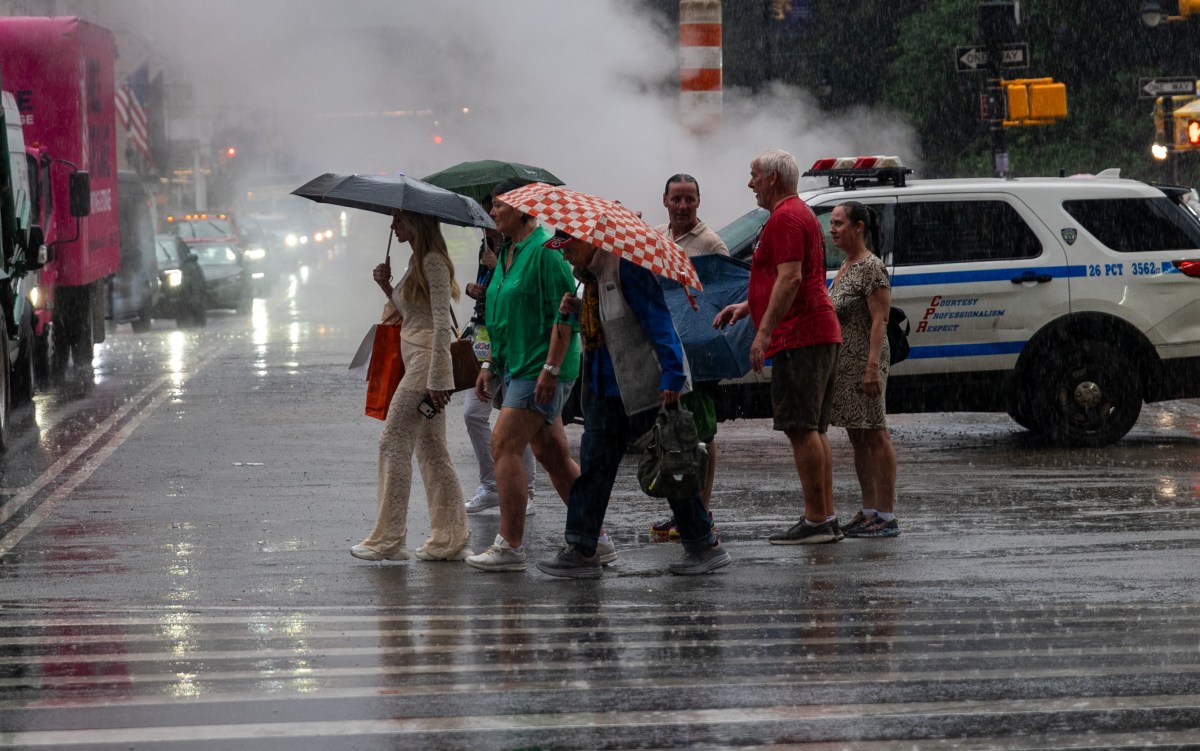
Severe thunderstorms caused heavy rain and flash flooding in much of New York City and parts of northeastern New Jersey. Emergency officials warned the flooding could be life-threatening and activated emergency plans to respond.
Key Facts
The National Weather Service issued a flash flood warning for most of New York City on Saturday afternoon.
Rainfall in some areas reached 2 to 3 inches in one hour, causing flash floods on streets, highways, and low areas.
The warning covers four NYC boroughs (Brooklyn, Queens, Manhattan, Staten Island) and parts of northeastern New Jersey.
New York City’s emergency management activated flood emergency plans involving multiple agencies and utility companies.
Meteorologists warned storms could drop 2 to 4 inches of rain due to repeated storms over the same locations.
Winds of 50 to 70 mph and a small chance of an isolated tornado were possible during the storms.
Residents in flood-prone areas were advised to move to higher ground and avoid travel.
Officials reminded drivers to avoid flooded roads with the rule: "Turn Around, Don't Drown."
Read the Original
Want the full story? Tap a source to open the original
article.
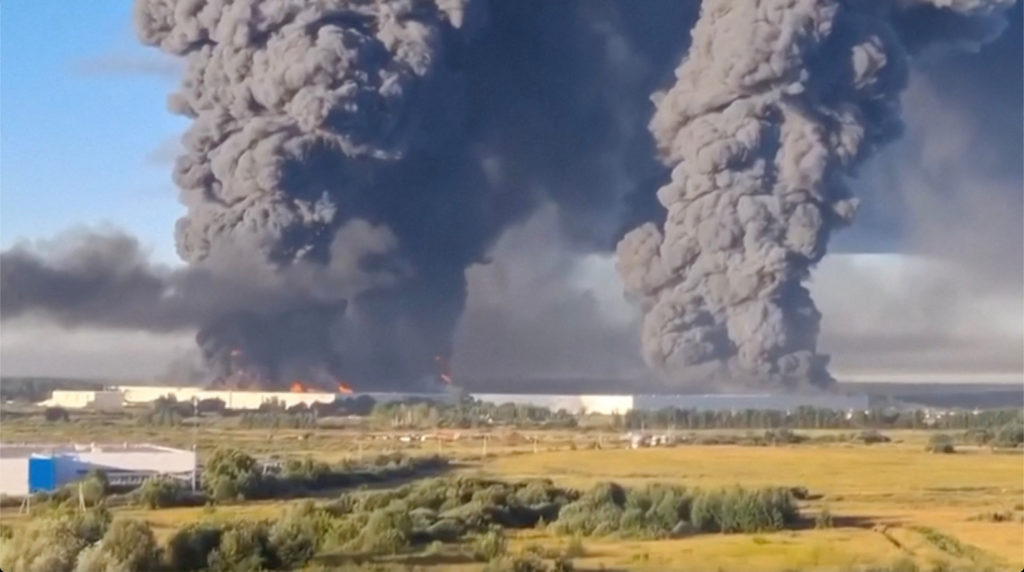
Ukrainian drones attacked warehouses and other sites in Russia, killing nine people and injuring over 60. These strikes target Russian military and energy facilities, aiming to disrupt Moscow's war effort in the ongoing conflict with Ukraine.
Key Facts
Ukrainian drones hit two large warehouses, one near Moscow and one in the Tambov region, causing serious damage and fires.
Nine people died and more than 60 were wounded in these attacks, including workers and civilians.
An oil depot north of Elektrostal was also hit, leading to evacuations and a fire.
Drones damaged a kindergarten building, causing a fire that was later extinguished.
Ukrainian strikes also targeted military logistics, including ships and a railway bridge in occupied territories.
The Russian Defense Ministry reported intercepting 379 Ukrainian drones over multiple regions overnight.
Ukrainian President Zelenskyy said the attacked warehouses supplied parts for drone and navigation equipment used by Russia.
Separate drone attacks hit facilities in the Belgorod and Vladimir regions, with some fires but no casualties there.
Read the Original
Want the full story? Tap a source to open the original
article.
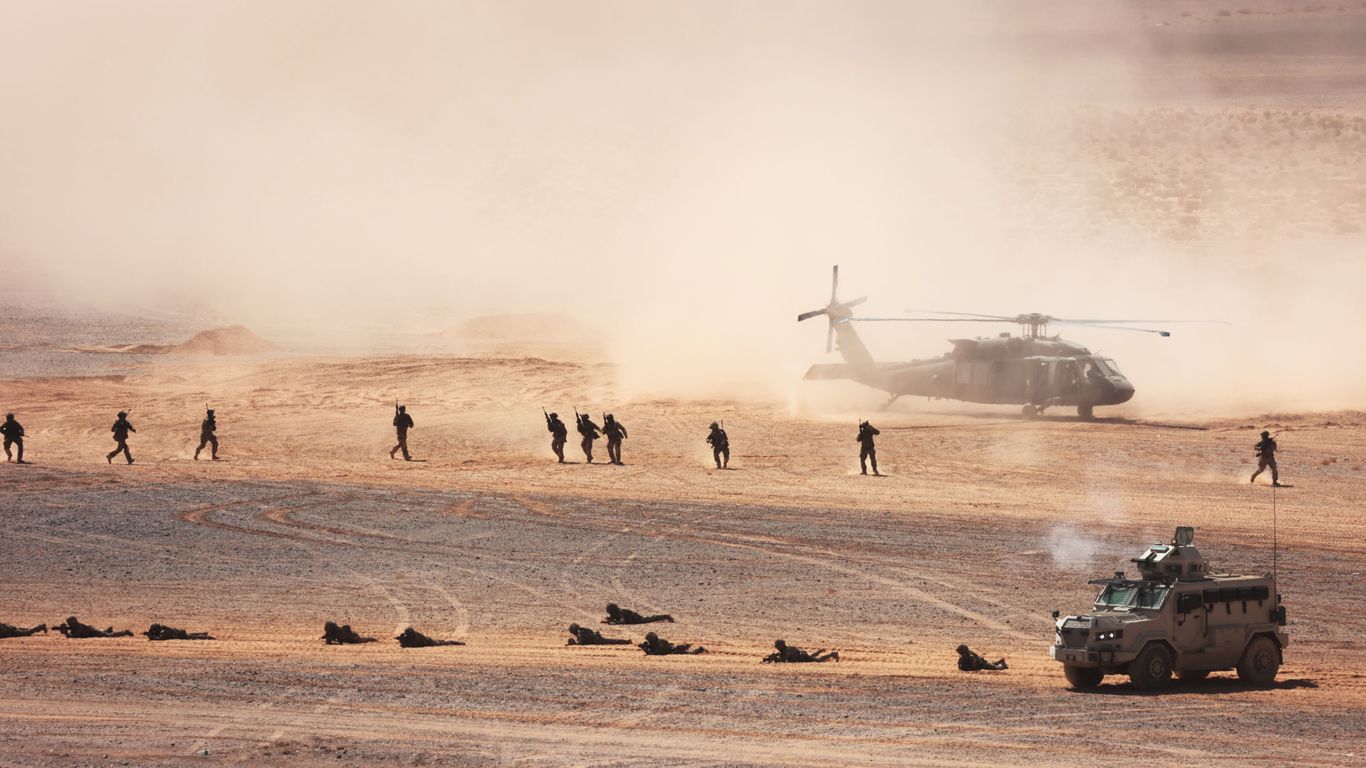
Two U.S. service members were killed and more were injured in an Iranian missile attack on a military base in Jordan. This is the first time U.S. troops have died since fighting restarted two weeks ago, bringing the total U.S. deaths in the conflict to 16.
Key Facts
Two Iranian ballistic missiles struck the Muwaffaq Salti Air Base in Jordan.
The base hosts U.S. troops and fighter jets.
At least two U.S. service members were killed in the attack.
Additional U.S. personnel were wounded.
This is the first U.S. troop death since fighting began again two weeks ago.
The total number of U.S. military deaths in the war is now 16.
Videos on social media showed missile impacts and smoke from the attack.
Read the Original
Want the full story? Tap a source to open the original
article.
Iran’s Supreme Leader Mojtaba Khamenei accused President Donald Trump of breaking a U.S.-Iran deal and promised a strong response if fighting continues between the two countries. Khamenei used harsh language, calling the U.S. “the Great Satan” and said America seeks to start a war, warning that Iran and its allies will respond firmly.
Key Facts
Khamenei accused President Trump’s administration of violating the U.S.-Iran agreement.
Fighting between the U.S. and Iran has lasted for eight days with escalating attacks.
Khamenei referred to the U.S. as “the Great Satan,” a phrase not used by him since he took office.
He called the U.S. government’s promises unreliable and accused it of bullying and aggression.
Khamenei warned that America will face heavier costs and disgrace if it continues escalating conflict.
He mentioned that Iran and its allied groups, called the “Axis of resistance,” are prepared to respond strongly.
The statement was shared on Khamenei’s Telegram channel.
The rhetoric signals a return to more hostile language after the U.S. withdrew from the deal during President Trump’s term.
Read the Original
Want the full story? Tap a source to open the original
article.
A weather disturbance in the Gulf of Mexico is bringing heavy rain and possible flooding to Florida and nearby states. While it has a low chance of becoming a named storm, officials warn of significant rainfall and potential flooding over the coming days during the Atlantic hurricane season.
Key Facts
A tropical disturbance is moving slowly northward in the eastern Gulf of Mexico.
The National Hurricane Center gives it a 20% chance to develop in 48 hours and 30% over seven days.
Rainfall is expected to be the main danger, with 1 to 3 inches likely and some places possibly getting over 5 inches.
Flooding may occur in west-central and southwest Florida, especially in low-lying areas.
AccuWeather forecasts 1 to 4 inches of rain from central Florida to southern Georgia and parts of Alabama and Mississippi.
The 2026 Atlantic hurricane season has been quiet so far, with only Tropical Storm Arthur forming near Texas in mid-June.
NOAA predicts a 55% chance of a below-normal hurricane season due to factors like El Niño, which can weaken storms.
The busiest part of the season usually happens from August to mid-September.
Read the Original
Want the full story? Tap a source to open the original
article.
The United States has reimposed a naval blockade on Iran’s southern ports amid renewed military conflict, aiming to restrict Iranian oil exports. This escalation has led to strikes on both sides, damaged key infrastructure, and increased tensions around the Strait of Hormuz, a vital oil shipping route.
Key Facts
The US first imposed a naval blockade on Iran’s southern ports in April, lasting over nine weeks.
The blockade was lifted in June after a deal to end fighting and reopen the Strait of Hormuz.
Recent military strikes have caused the US to cancel oil and banking waivers and block ships linked to Iran.
US Central Command disabled a supertanker accused of transporting Iranian crude during the conflict.
Iran claims the previous blockade stopped all crude oil exports during that period.
Energy experts estimate the new blockade could cut 1.5 million barrels of Iranian oil exports per day.
Strikes have targeted civilian infrastructure in southern Iran and key transport links like a northern railway bridge.
The conflict has involved missile and drone attacks on US allies in the region, including Kuwait and Bahrain.
Read the Original
Want the full story? Tap a source to open the original
article.
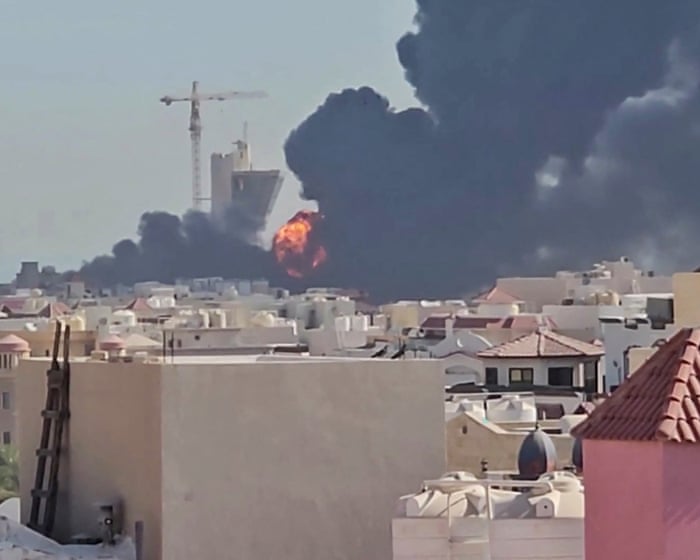
Iran has launched attacks on U.S. allies in the Middle East, including Kuwait, Bahrain, and Jordan, targeting civilian and military sites. These attacks come during the second week of renewed U.S. strikes on Iran, escalating tensions especially around the strategic Strait of Hormuz.
Key Facts
Iran targeted Kuwait’s power and water desalination plants, causing injuries and forcing a brief airspace closure.
Bahrain activated air sirens warning of incoming drones or missiles.
Jordan’s air defenses reportedly shot down Iranian missiles.
Iran claimed attacks that destroyed U.S. infrastructure and aircraft, but some claims were denied by the U.S. military.
U.S. strikes focused on degrading Iran’s military capabilities by hitting surveillance, weapons storage, and logistics sites.
Iran reported 50 deaths and over 500 injuries from U.S. attacks since the conflict escalated.
Gulf Cooperation Council called Iran’s attacks “war crimes” and violations of international law.
Iran’s Revolutionary Guard said it stopped ships in the Strait of Hormuz and targeted U.S. bases in Bahrain and Jordan.
Read the Original
Want the full story? Tap a source to open the original
article.
Armed groups linked to al-Qaeda and a separatist group attacked a Malian military convoy in the Gao region. The Malian army responded with a counterattack, and fighting is still ongoing in the area.
Key Facts
Armed groups Jama’at Nusrat al-Islam wal-Muslimin (JNIM) and Azawad Liberation Front (FLA) ambushed a military convoy near Tabankort in Gao region.
Both groups claimed responsibility and reported heavy losses for the Malian army.
The army mentioned that its partners, probably including Russian mercenaries, were also attacked.
The convoy was moving from Anefis to Gao when ambushed; Anefis was retaken by the army on July 10 after being held by the rebels.
The conflict has lasted over 14 years and involves separatists seeking northern Mali independence and jihadist groups trying to control more territory.
The fighting has caused a humanitarian crisis affecting about 20% of Mali’s population.
Rebel groups released videos showing captured soldiers and some reportedly being shot while lying on the ground.
The FLA reported losing some of its best fighters during recent fighting.
Read the Original
Want the full story? Tap a source to open the original
article.
The United States and Iran are exchanging military strikes near the Strait of Hormuz. The Gulf Cooperation Council condemned Iran's attacks on civilian sites and called them war crimes.
Key Facts
The US Central Command carried out air strikes against Iran for seven nights in a row.
These strikes targeted Iran's military facilities and naval capabilities.
Iran launched attacks on nearby Gulf countries in response.
A water desalination plant in Kuwait suffered major damage during the strikes.
The Gulf Cooperation Council, a regional group of Gulf countries, condemned Iran's attacks on civilian areas.
The council described the attacks as violations of war laws, calling them war crimes.
The conflict escalates tensions over control of the Strait of Hormuz, a key shipping route.
Both sides continue military actions despite some diplomatic efforts.
Read the Original
Want the full story? Tap a source to open the original
article.
The United States and Iran have exchanged military strikes for seven days, increasing tensions around the Strait of Hormuz. Iran attacked a water desalination plant in Kuwait, causing serious damage, while the Gulf Cooperation Council called Iran’s attacks on civilian areas war crimes.
Key Facts
The US Central Command has launched attacks for seven nights in a row targeting Iranian military and maritime sites.
Iran responded by striking countries near the Gulf, including Kuwait.
A water desalination plant in Kuwait suffered major damage from Iran’s strikes.
The Strait of Hormuz region is a key strategic waterway for global oil transport.
The Gulf Cooperation Council, a regional political group, condemned Iran’s attacks on civilian places and called them war crimes.
The conflict reflects rising tensions between the US and Iran over control in the Middle East.
Diplomatic efforts to ease the conflict are still being discussed but progress is limited.
The ongoing exchange of strikes threatens stability in the Gulf region.
Read the Original
Want the full story? Tap a source to open the original
article.
Belgium’s government has approved a ban on importing goods made in Israeli settlements in the occupied Palestinian territories. This decision follows similar moves by other European countries and comes amid calls for the European Union to adopt a common policy on the matter.
Key Facts
Belgium banned imports from Israeli settlements in occupied Palestinian territories.
The decision was made before Belgium’s summer break and fulfilled a previous government promise.
The ban aims to respond to Israel’s attacks in Gaza and settlement expansion.
Investigations found many Israeli agricultural exports to Europe include products from settlements, often mislabeled.
Other European countries like Spain, the Netherlands, Slovenia, and Ireland have also taken similar steps.
The EU, Israel’s biggest trading partner, has not agreed on a unified policy yet.
Some former European leaders urge the EU to adopt a block-wide ban to strengthen trade rules.
Several EU members have limited arms exports to Israel due to the Gaza conflict.
Read the Original
Want the full story? Tap a source to open the original
article.
A Legionnaires' disease outbreak in New York City's Upper East Side has caused the first reported death and sickened at least 67 people. Health officials are investigating the source, focusing on cooling towers atop many buildings where bacteria can grow and spread.
Key Facts
At least 67 people have been sickened in a Legionnaires' disease outbreak in Manhattan's Upper East Side.
One death has been reported, but details about the person have not been made public.
The outbreak began being tracked on July 2 after two initial cases.
Legionella bacteria, which causes Legionnaires' disease, has been found in cooling towers on over 75 buildings in the affected area.
Cooling towers are large devices used to cool buildings and can spread bacteria through water droplets in the air.
The city has ordered all affected buildings to clean and disinfect their cooling towers.
Legionnaires' disease is a type of pneumonia that is treatable but has about a 10% death rate.
The disease does not spread from person to person, usually spreading through inhaling contaminated water droplets.
Read the Original
Want the full story? Tap a source to open the original
article.