A weather disturbance in the Gulf of Mexico is bringing heavy rain and possible flooding to Florida and nearby states. While it has a low chance of becoming a named storm, officials warn of significant rainfall and potential flooding over the coming days during the Atlantic hurricane season.
Key Facts
A tropical disturbance is moving slowly northward in the eastern Gulf of Mexico.
The National Hurricane Center gives it a 20% chance to develop in 48 hours and 30% over seven days.
Rainfall is expected to be the main danger, with 1 to 3 inches likely and some places possibly getting over 5 inches.
Flooding may occur in west-central and southwest Florida, especially in low-lying areas.
AccuWeather forecasts 1 to 4 inches of rain from central Florida to southern Georgia and parts of Alabama and Mississippi.
The 2026 Atlantic hurricane season has been quiet so far, with only Tropical Storm Arthur forming near Texas in mid-June.
NOAA predicts a 55% chance of a below-normal hurricane season due to factors like El Niño, which can weaken storms.
The busiest part of the season usually happens from August to mid-September.
Read the Original
Want the full story? Tap a source to open the original
article.
The United States has reimposed a naval blockade on Iran’s southern ports amid renewed military conflict, aiming to restrict Iranian oil exports. This escalation has led to strikes on both sides, damaged key infrastructure, and increased tensions around the Strait of Hormuz, a vital oil shipping route.
Key Facts
The US first imposed a naval blockade on Iran’s southern ports in April, lasting over nine weeks.
The blockade was lifted in June after a deal to end fighting and reopen the Strait of Hormuz.
Recent military strikes have caused the US to cancel oil and banking waivers and block ships linked to Iran.
US Central Command disabled a supertanker accused of transporting Iranian crude during the conflict.
Iran claims the previous blockade stopped all crude oil exports during that period.
Energy experts estimate the new blockade could cut 1.5 million barrels of Iranian oil exports per day.
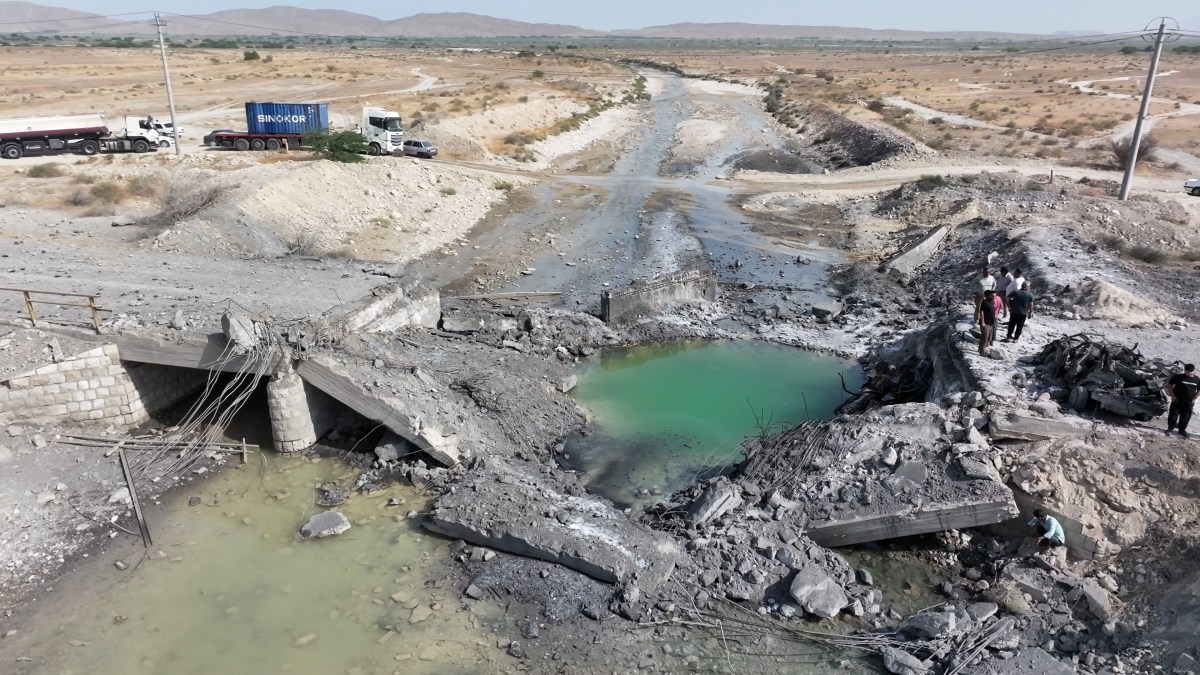
Strikes have targeted civilian infrastructure in southern Iran and key transport links like a northern railway bridge.
The conflict has involved missile and drone attacks on US allies in the region, including Kuwait and Bahrain.
Read the Original
Want the full story? Tap a source to open the original
article.
Iran has launched attacks on U.S. allies in the Middle East, including Kuwait, Bahrain, and Jordan, targeting civilian and military sites. These attacks come during the second week of renewed U.S. strikes on Iran, escalating tensions especially around the strategic Strait of Hormuz.
Key Facts
Iran targeted Kuwait’s power and water desalination plants, causing injuries and forcing a brief airspace closure.
Bahrain activated air sirens warning of incoming drones or missiles.
Jordan’s air defenses reportedly shot down Iranian missiles.
Iran claimed attacks that destroyed U.S. infrastructure and aircraft, but some claims were denied by the U.S. military.
U.S. strikes focused on degrading Iran’s military capabilities by hitting surveillance, weapons storage, and logistics sites.
Iran reported 50 deaths and over 500 injuries from U.S. attacks since the conflict escalated.
Gulf Cooperation Council called Iran’s attacks “war crimes” and violations of international law.
Iran’s Revolutionary Guard said it stopped ships in the Strait of Hormuz and targeted U.S. bases in Bahrain and Jordan.
Read the Original
Want the full story? Tap a source to open the original
article.
Armed groups linked to al-Qaeda and a separatist group attacked a Malian military convoy in the Gao region. The Malian army responded with a counterattack, and fighting is still ongoing in the area.
Key Facts
Armed groups Jama’at Nusrat al-Islam wal-Muslimin (JNIM) and Azawad Liberation Front (FLA) ambushed a military convoy near Tabankort in Gao region.
Both groups claimed responsibility and reported heavy losses for the Malian army.
The army mentioned that its partners, probably including Russian mercenaries, were also attacked.
The convoy was moving from Anefis to Gao when ambushed; Anefis was retaken by the army on July 10 after being held by the rebels.
The conflict has lasted over 14 years and involves separatists seeking northern Mali independence and jihadist groups trying to control more territory.
The fighting has caused a humanitarian crisis affecting about 20% of Mali’s population.
Rebel groups released videos showing captured soldiers and some reportedly being shot while lying on the ground.
The FLA reported losing some of its best fighters during recent fighting.
Read the Original
Want the full story? Tap a source to open the original
article.
The United States and Iran are exchanging military strikes near the Strait of Hormuz. The Gulf Cooperation Council condemned Iran's attacks on civilian sites and called them war crimes.
Key Facts
The US Central Command carried out air strikes against Iran for seven nights in a row.
These strikes targeted Iran's military facilities and naval capabilities.
Iran launched attacks on nearby Gulf countries in response.
A water desalination plant in Kuwait suffered major damage during the strikes.
The Gulf Cooperation Council, a regional group of Gulf countries, condemned Iran's attacks on civilian areas.
The council described the attacks as violations of war laws, calling them war crimes.
The conflict escalates tensions over control of the Strait of Hormuz, a key shipping route.
Both sides continue military actions despite some diplomatic efforts.
Read the Original
Want the full story? Tap a source to open the original
article.
The United States and Iran have exchanged military strikes for seven days, increasing tensions around the Strait of Hormuz. Iran attacked a water desalination plant in Kuwait, causing serious damage, while the Gulf Cooperation Council called Iran’s attacks on civilian areas war crimes.
Key Facts
The US Central Command has launched attacks for seven nights in a row targeting Iranian military and maritime sites.
Iran responded by striking countries near the Gulf, including Kuwait.
A water desalination plant in Kuwait suffered major damage from Iran’s strikes.
The Strait of Hormuz region is a key strategic waterway for global oil transport.
The Gulf Cooperation Council, a regional political group, condemned Iran’s attacks on civilian places and called them war crimes.
The conflict reflects rising tensions between the US and Iran over control in the Middle East.
Diplomatic efforts to ease the conflict are still being discussed but progress is limited.
The ongoing exchange of strikes threatens stability in the Gulf region.
Read the Original
Want the full story? Tap a source to open the original
article.
Belgium’s government has approved a ban on importing goods made in Israeli settlements in the occupied Palestinian territories. This decision follows similar moves by other European countries and comes amid calls for the European Union to adopt a common policy on the matter.
Key Facts
Belgium banned imports from Israeli settlements in occupied Palestinian territories.
The decision was made before Belgium’s summer break and fulfilled a previous government promise.
The ban aims to respond to Israel’s attacks in Gaza and settlement expansion.
Investigations found many Israeli agricultural exports to Europe include products from settlements, often mislabeled.
Other European countries like Spain, the Netherlands, Slovenia, and Ireland have also taken similar steps.
The EU, Israel’s biggest trading partner, has not agreed on a unified policy yet.
Some former European leaders urge the EU to adopt a block-wide ban to strengthen trade rules.
Several EU members have limited arms exports to Israel due to the Gaza conflict.
Read the Original
Want the full story? Tap a source to open the original
article.
A Legionnaires' disease outbreak in New York City's Upper East Side has caused the first reported death and sickened at least 67 people. Health officials are investigating the source, focusing on cooling towers atop many buildings where bacteria can grow and spread.
Key Facts
At least 67 people have been sickened in a Legionnaires' disease outbreak in Manhattan's Upper East Side.
One death has been reported, but details about the person have not been made public.
The outbreak began being tracked on July 2 after two initial cases.
Legionella bacteria, which causes Legionnaires' disease, has been found in cooling towers on over 75 buildings in the affected area.
Cooling towers are large devices used to cool buildings and can spread bacteria through water droplets in the air.
The city has ordered all affected buildings to clean and disinfect their cooling towers.
Legionnaires' disease is a type of pneumonia that is treatable but has about a 10% death rate.
The disease does not spread from person to person, usually spreading through inhaling contaminated water droplets.
Read the Original
Want the full story? Tap a source to open the original
article.
Midland is a country music group from Texas. They performed their song "Shooting Memories With Tequila" on CBS News Saturday Sessions. Their new album "Stages" has received positive reviews as a top traditional country album this year.
Key Facts
Midland is a trio, meaning it has three members.
The band is known for traditional country music.
Their album "Stages" is new and well-reviewed.
The song performed is called "Shooting Memories With Tequila."
The performance was shown on CBS News Saturday Sessions.
Midland has been nominated for a Grammy award.
They come from the Texas country music scene.
Read the Original
Want the full story? Tap a source to open the original
article.
Midland, a Grammy-nominated country music group from Texas, performed their song "Drinkin' Problem" on CBS News Saturday Sessions. Their latest album "Stages" is recognized as one of the best traditional country albums this year.
Key Facts
Midland is a country music trio from Texas.
They have been nominated for a Grammy Award.
Their song "Drinkin' Problem" was performed on CBS News Saturday Sessions.
Their new album is called "Stages."
The album "Stages" has received praise as a top traditional country album this year.
Read the Original
Want the full story? Tap a source to open the original
article.
French lawmakers have approved a law that allows adults with incurable illnesses to choose assisted dying. The law was supported by President Emmanuel Macron and reflects public support for this option in France.
Key Facts
The new law gives adults with incurable diseases the right to assisted dying.
President Emmanuel Macron supports the assisted dying law.
The topic has been debated politically in France for a long time.
Opinion polls show most French people agree with assisted dying.
The approval happened on July 18, 2026.
The article also mentions Macron's promise to replant the Fontainebleau forest after wildfires.
France celebrated its Independence Day with a fireworks display at the Eiffel Tower.
The Grand Mosque of Paris marked its 100th anniversary recently.
Read the Original
Want the full story? Tap a source to open the original
article.
Over 5,000 people have died after two strong earthquakes hit Venezuela’s Caribbean coast in June, especially in the coastal state of La Guaira. Venezuela has received $346 million from the International Monetary Fund (IMF) to help with emergency relief and humanitarian needs.
Key Facts
The earthquakes, measuring 7.2 and 7.5 in magnitude, struck within one minute on June 24.
Most deaths and damage occurred in La Guaira, a coastal state with a major airport, seaport, and many apartment buildings.
Over 16,700 people were injured; most have left hospitals.
Rescue efforts have been slowed by aftershocks, equipment shortages, and command confusion.
About 20,000 people are still displaced, living in crowded shelters without consistent access to clean water or sanitation.
Venezuela secured $346 million in emergency aid from the IMF, released from the country’s reserve funds.
The IMF and World Bank restored relations with Venezuela in April after suspending them in 2019.
Some survivors and international observers say the government was slow to respond immediately after the quakes, while officials deny these claims.
Read the Original
Want the full story? Tap a source to open the original
article.
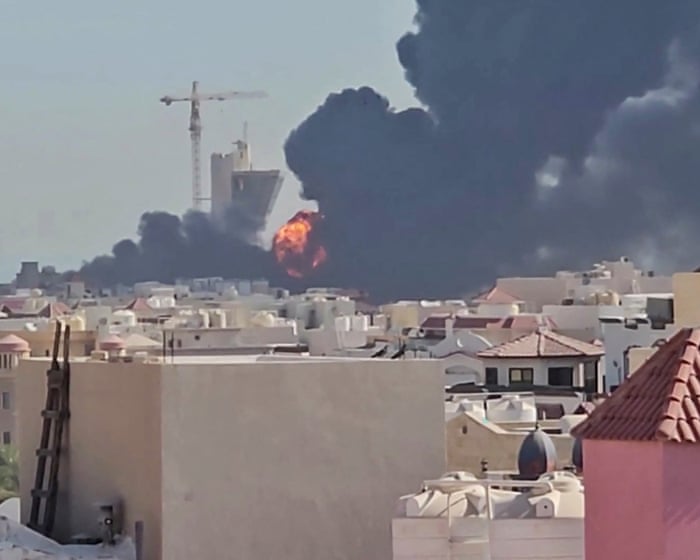
Large smoke clouds appeared in Kuwait after several Iranian attacks hit areas in Mangaf. The strikes targeted a power plant and a facility that turns seawater into drinking water. Kuwaiti officials have asked people to save electricity when they can.
Key Facts
Iranian attacks struck multiple places in Mangaf, Kuwait.
The targets were a power generation plant and a water desalination plant.
The attacks caused large plumes of smoke to rise over the area.
Kuwaiti authorities advised citizens to conserve electricity.
These events affected essential services like power and water supply.
The attacks are part of ongoing regional tensions involving Iran and its neighbors.
Read the Original
Want the full story? Tap a source to open the original
article.
The United States and Iran have exchanged military strikes targeting key infrastructure and military sites, escalating tensions in the region near the Strait of Hormuz. Iran has announced it will stop following its part of a recent interim agreement with the U.S., while attacks have caused damage to water plants and oil facilities in countries including Kuwait and Iran itself.
Key Facts
Iran said it suspended commitments under an interim deal with the U.S. amid ongoing military strikes.
The conflict focuses on control of the Strait of Hormuz, a vital route for about one-fifth of the world's crude oil.
U.S. military strikes have targeted Iranian surveillance sites, military infrastructure, weapons storage, and naval facilities.
Iranian missile and drone attacks have hit infrastructure in Kuwait, damaging a desalination plant and an oil facility, injuring several people.
Kuwait depends heavily on desalination plants for drinking water; these attacks caused power outages and fires.
Iraq and Jordan reported shooting down Iranian drones and missiles; Bahrain and Saudi Arabia experienced air raid sirens.
U.S. airstrikes damaged Iranian electricity and desalination plants, cutting off water supply to thousands and damaging key transportation routes.
Iran’s Revolutionary Guard warned countries hosting U.S. forces to expect retaliatory responses.
At least 50 people have been killed and over 500 injured in recent weeks due to U.S. strikes; U.S. service member injuries have also increased.
Read the Original
Want the full story? Tap a source to open the original
article.
Iran's supreme leader warned of serious consequences if the United States continues its attacks and called President Donald Trump's signature invalid. Recent military strikes between the two countries have targeted infrastructure and water facilities, escalating tensions around the important Strait of Hormuz.
Key Facts
Iran’s supreme leader issued a warning against continued U.S. attacks and dismissed President Trump’s signature as worthless.
Tehran announced it is suspending its commitments to a peace deal signed about a month ago.
Both the U.S. and Iran have carried out strikes targeting military and infrastructure sites.
Iranian strikes damaged a water desalination plant and oil facility in Kuwait, injuring several people.
Kuwait relies on desalination plants for 90% of its drinking water; two plants were hit recently.
The U.S. Central Command reported hitting surveillance and weapons sites in Iran for seven consecutive nights.
The Gulf Cooperation Council accused Iran of war crimes for attacking civilian infrastructure.
Air defenses in Iraq, Jordan, Bahrain, and Saudi Arabia intercepted Iranian drones and missiles on the same day.
Read the Original
Want the full story? Tap a source to open the original
article.
The U.S. military reported two soldiers killed and one missing after Iran attacked a base in Jordan with missiles and drones. The conflict continues to escalate, with Iran suspending its commitments to a recent peace agreement and striking facilities in Kuwait and Iran, while regional countries boost their defenses.
Key Facts
Two U.S. troops died and one went missing in an Iranian missile and drone attack on a base in Jordan.
Four other U.S. service members were injured but later released from hospitals.
Iran’s supreme leader warned the U.S. of consequences if attacks continue and dismissed President Trump’s peace deal as invalid.
Iran announced it will no longer follow the peace deal signed roughly a month ago to stop the fighting.
Iranian strikes hit a water desalination plant and oil facility in Kuwait, causing fires and injuries.
Kuwait closed its airspace temporarily and rescheduled flights due to missile threats.
Iraq and Jordan shot down Iranian drones and missiles, and Bahrain and Saudi Arabia experienced air raid sirens.
The U.S. conducted airstrikes inside Iran, damaging water and electricity infrastructure near the Strait of Hormuz, a key global oil route.
Read the Original
Want the full story? Tap a source to open the original
article.
The U.S. military launched new airstrikes against Iran’s Revolutionary Guard to punish them for a recent attack in Jordan that killed two American soldiers and injured others. These strikes aim to reduce Iran’s ability to control oil tanker traffic through the Strait of Hormuz, a vital waterway for global oil supplies. Tensions remain high as Iran’s leaders threaten retaliation and suspend parts of a recent peace agreement.
Key Facts
The U.S. carried out airstrikes targeting Iran’s Revolutionary Guard after an attack in Jordan killed two U.S. service members and injured others.
The strikes focus on limiting Iran’s control over the Strait of Hormuz, through which about 20% of the world’s oil passes.
Since the war’s start, 16 U.S. soldiers have died and over 430 have been wounded.
Iran’s supreme leader warned of "unforgettable lessons" if the U.S. continues attacks and criticized President Trump’s peace deal as invalid.
Iran suspended its commitments to a recently signed interim peace deal aimed at ending the conflict.
Iranian strikes hit a water desalination plant and an oil facility in Kuwait, causing injuries and a fire.
Kuwait closed its airspace temporarily, and several Gulf countries reported missile attacks or defenses against missiles from Iran.
The Gulf Cooperation Council accused Iran of war crimes for striking infrastructure in the region.
Read the Original
Want the full story? Tap a source to open the original
article.
The United States and Iran have exchanged attacks targeting important military and infrastructure sites in the Middle East. The conflict centers on control of the Strait of Hormuz, a key shipping route for global oil supplies, with no ceasefire currently in place.
Key Facts
The U.S. Central Command reported hitting surveillance sites, military logistics, weapons storage, and maritime facilities over seven nights.
Iran struck a water desalination plant and an oil facility in Kuwait, causing injuries and power outages.
Key locations hit include places in Iran (Hormozgan province), Kuwait, Bahrain, Jordan, and U.S. military bases in the region.
Iran has effectively closed the Strait of Hormuz since February 28, disrupting global oil transportation.
Iran demands sole control of the strait and seeks fees from vessels passing through it.
President Donald Trump threatened to target Iranian power plants and bridges to pressure Iran on the strait.
Iran’s Islamic Revolutionary Guard Corps warned countries hosting U.S. forces to prepare for possible retaliations.
The conflict has involved attacks on hospitals, bridges, airports, ports, and other civilian infrastructure.
Read the Original
Want the full story? Tap a source to open the original
article.
More than 50 million people in the Northeast and Mid-Atlantic face severe weather risks this weekend, including strong winds, hail, tornadoes, and flash flooding. At the same time, smoke from wildfires in Canada and Minnesota has worsened air quality over a large part of the U.S., affecting at least 19 states.
Key Facts
Severe weather warnings cover areas from the Ohio Valley to the Northeast, including cities like New York, Philadelphia, D.C., Pittsburgh, and Cleveland.
Possible weather hazards include damaging winds, large hail, isolated tornadoes, and flash flooding.
A cold front moving into the region may cause scattered flash flooding, especially in urban areas with lots of runoff.
Wildfire smoke from Canada and Minnesota is causing poor air quality and reduced visibility in the Midwest and Northeast.
At least 19 U.S. states are experiencing the effects of the wildfire smoke.
Conditions are expected to improve after the cold front passes through the East.
Tens of thousands attending the World Cup final may see better air quality, but concerns remain if rain does not clear the smoke.
Texas is recovering from heavy flooding that caused damage and ongoing rescue efforts.
Read the Original
Want the full story? Tap a source to open the original
article.
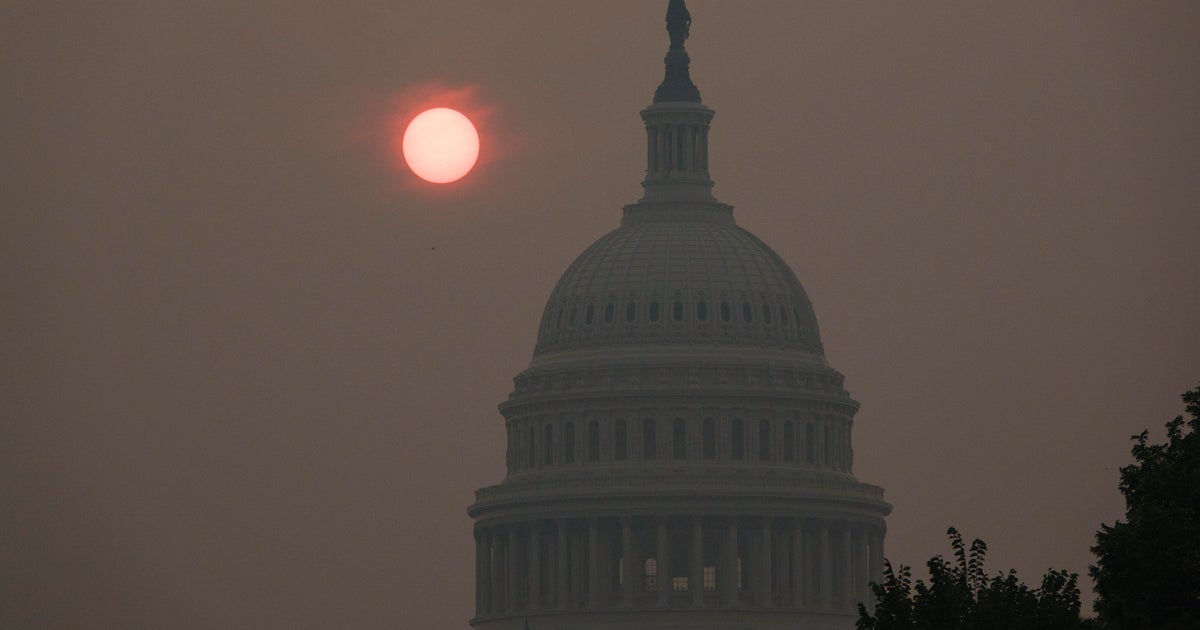
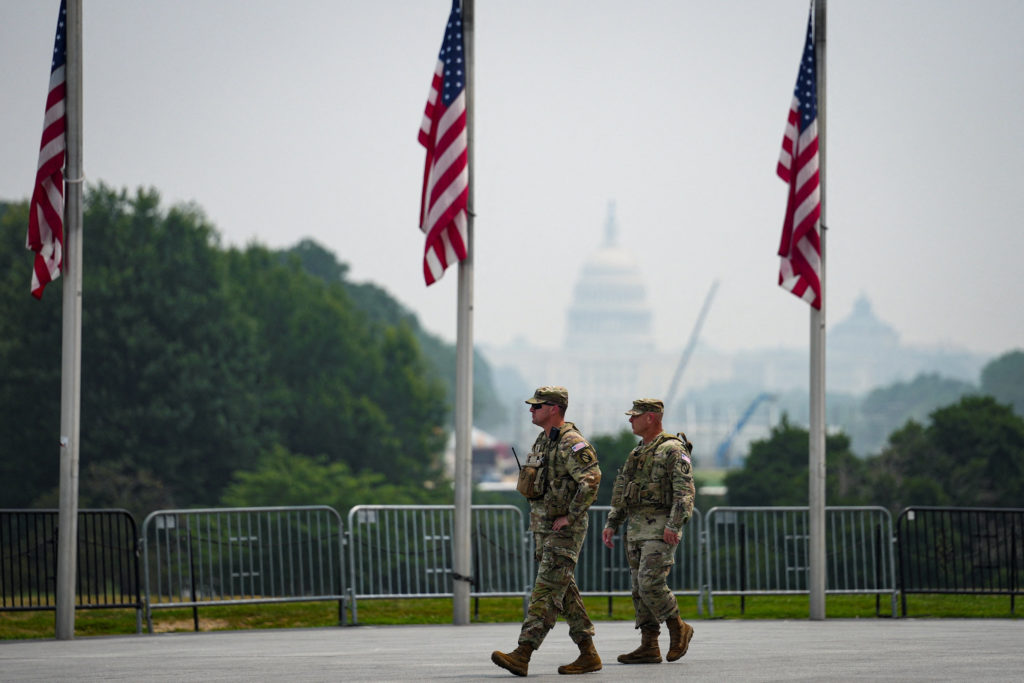
Smoke from large wildfires in Canada and Minnesota has spread over parts of the U.S., causing poor air quality especially in the Great Lakes, Northeast, and Mid-Atlantic regions. The smoke has made it hard to see landmarks in Washington, D.C., led to event cancellations, and raised health warnings for vulnerable people.
Key Facts
Wildfires in northern Ontario, Canada, and Minnesota's Boundary Waters area are producing heavy smoke.
The smoke has caused unhealthy air quality across many U.S. states, including around Detroit and New York City.
Washington, D.C., was covered in an orange haze, obscuring landmarks like the Washington Monument and Lincoln Memorial.
Health officials advise people with heart or lung problems, older adults, and children to stay inside until air quality improves.
The wildfires have forced evacuations, destroyed a First Nation community in Canada, and continue to burn uncontrolled.
Major League Baseball postponed a game in Cleveland due to poor air quality from the smoke.
U.S. President Donald Trump criticized Canada’s forest management and threatened tariffs in response to the smoke situation.
Forecasters say the smoky conditions will last at least a week, depending on wind patterns, with some relief possible from weekend storms.
Read the Original
Want the full story? Tap a source to open the original
article.