Neutral summaries of your favorite news sources — just the facts.
Your favorite news sources, one neutral feed — we distill their reporting into fact-first
summaries and always link to the original story. How it works
World News
Comprehensive coverage of international news and global events
The BRICS group of developing countries ended their meeting in India without a joint statement because of disagreements over the war involving Iran. Members had different views on the conflict in the Middle East, which caused divisions within the alliance.
Key Facts
BRICS includes Brazil, Russia, India, China, South Africa, Ethiopia, Egypt, Iran, Indonesia, and the UAE.
The meeting took place in New Delhi, with India currently leading BRICS.
Iran asked BRICS members to condemn the actions of the United States and Israel in the conflict.
Tensions rose because Iran and some Gulf countries in BRICS, like the UAE, are involved in the war.
UAE accused Iran of launching about 3,000 attacks using missiles and drones.
BRICS discussed the situation in Gaza and stated it should be part of a future Palestinian state.
The group called for reforms in international organizations like the UN to increase influence of Global South countries.
They also focused on conflicts in Sudan and Syria, urging peace talks and actions against terrorism.
Read the Original
Want the full story? Tap a source to open the original
article.
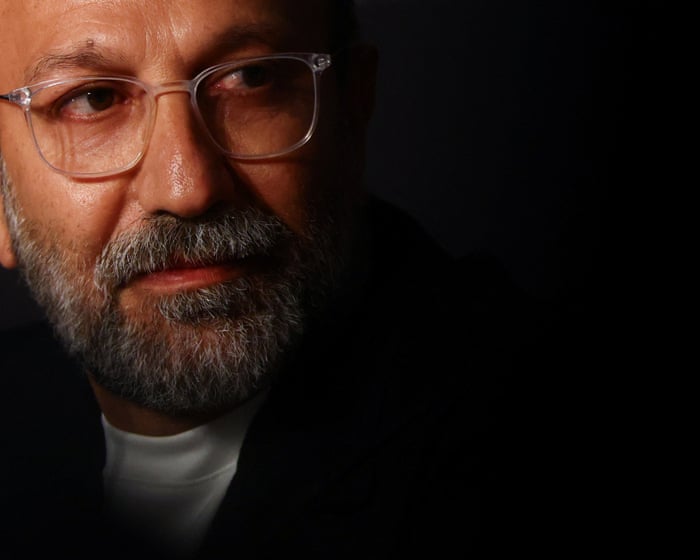
Iranian director Asghar Farhadi spoke at the Cannes film festival about the deaths of innocent civilians and protesters in Iran. He condemned all violence and killings, whether from war or state actions, calling them tragic and unacceptable.
Key Facts
Asghar Farhadi is an Oscar-winning Iranian director currently living outside Iran.
He recently attended Cannes to premiere his new film, Parallel Tales, set in Paris.
Farhadi described the deaths of civilians in Iran’s war and protesters as “extremely cruel and tragic.”
He said condemning deaths caused by war and state violence are not contradictory and must be opposed equally.
Farhadi will not make films in Iran as long as censorship exists.
He called attacks on civilian places during the war a war crime and urged filmmakers to speak out.
Farhadi boycotted the 2017 Oscars in protest of President Donald Trump’s travel ban affecting Iran.
Iranian filmmakers continue to gain recognition at Cannes while facing repression at home, with some living in exile.
Read the Original
Want the full story? Tap a source to open the original
article.
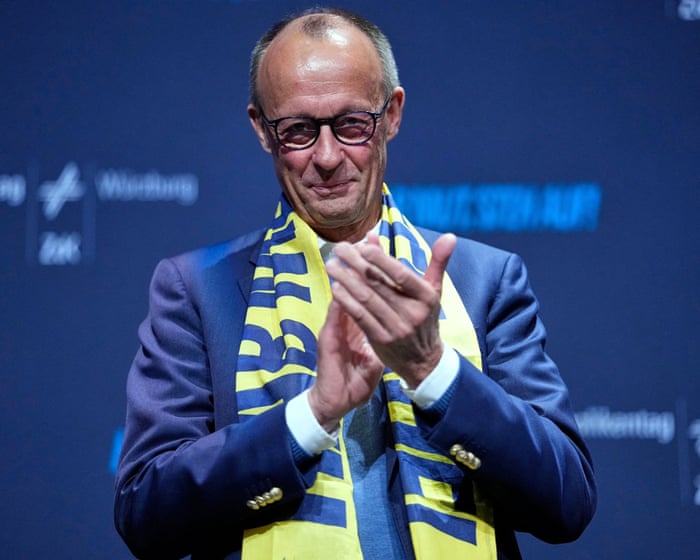
German Chancellor Friedrich Merz said he would not recommend his children study or work in the US due to its current social and political environment. His comments sparked criticism from supporters of President Trump and German politicians, highlighting ongoing tensions between the US and Germany over issues like Iran, trade, and military cooperation.
Key Facts
Chancellor Friedrich Merz expressed concern about the US social climate and said he would not advise his children to go there now.
Merz said even well-educated Americans struggle to find jobs in the current US environment.
He called Germany a land of great opportunities, especially for young people.
Merz’s remarks upset President Trump’s allies, who accused him of political bias and undermining the US.
The German far-right leader Alice Weidel criticized Merz for harming Germany’s interests with his comments.
There are ongoing disputes between the US and Europe over trade, military aid to Ukraine, and NATO issues.
Merz remains committed to working with President Trump despite recent disagreements, including over Iran.
Recently, the US announced partial troop withdrawals from Germany and raised tariffs on European cars, straining relations.
Read the Original
Want the full story? Tap a source to open the original
article.
Taiwan’s foreign affairs ministry issued a statement addressing President Trump’s recent hesitation to support a U.S. arms sale to Taiwan. The statement highlighted that the U.S. has a long-standing, consistent policy of providing arms to Taiwan despite recent discussions between President Trump and Chinese President Xi Jinping.
Key Facts
President Trump expressed hesitation about a U.S. arms sale to Taiwan after meeting with Chinese President Xi Jinping.
Taiwan quickly responded with a statement from its foreign affairs ministry.
Taiwan reminded the public and the world about the U.S.’s long-standing policy of selling arms to Taiwan.
The statement aimed to reinforce the stability and continuation of U.S.-Taiwan relations.
The timing came soon after two days of high-level meetings between the U.S. and China.
Arms sales to Taiwan are a sensitive issue given China’s opposition to these transactions.
Taiwan’s government uses such statements to maintain confidence in international support.
The situation reflects ongoing tensions in U.S.-China-Taiwan relations regarding security and diplomacy.
Read the Original
Want the full story? Tap a source to open the original
article.
Israeli and Lebanese officials continued direct talks in Washington, DC, amid ongoing Israeli attacks in southern Lebanon that killed at least seven people. The talks aim to address conflict issues, but both countries have different goals: Lebanon wants Israel to stop attacks and leave its territory, while Israel seeks the disarmament of Hezbollah and possible normalization of relations.
Key Facts
Israeli and Lebanese delegations met in Washington for the third round of talks this year.
Talks are happening despite ongoing Israeli military actions in Lebanon.
At least seven people were killed in recent Israeli attacks in southern Lebanon.
Since fighting resumed on March 2, nearly 3,000 Lebanese have died and 20 Israeli soldiers have been killed.
Lebanon demands a full end to Israeli attacks and occupation before further negotiations.
Israel wants Hezbollah, an Iran-backed group, to disarm and seeks normal relations with Lebanon.
Lebanon’s President Joseph Aoun refuses direct meetings with Israeli Prime Minister Netanyahu for now.
The April 16 ceasefire is set to expire soon, but attacks have continued despite the truce.
Read the Original
Want the full story? Tap a source to open the original
article.
President Donald Trump said he talked with Chinese President Xi Jinping about Iran and the Strait of Hormuz, a key waterway for global oil shipments. Trump claimed that Xi offered help to reopen the Strait of Hormuz, which has been tense due to conflicts in the Middle East.
Key Facts
The Strait of Hormuz is an important route for oil transport between the Middle East and the world.
There have been recent conflicts in the Middle East affecting the Strait of Hormuz.
President Trump discussed these issues with Chinese President Xi Jinping.
Xi Jinping reportedly offered assistance to help reopen the Strait.
The discussion highlights international concern about the security of global oil supplies.
Tony Fernandes, CEO of Capital A and co-founder of AirAsia, commented on the economic impact of the Middle East conflict.
The information was reported by CBS News.
Read the Original
Want the full story? Tap a source to open the original
article.
Iran’s Foreign Minister Abbas Araghchi said the main problem in talks with the United States is a lack of trust. He stated that Iran will only accept a deal that is fair and balanced.
Key Facts
Iran’s Foreign Minister is Abbas Araghchi.
Araghchi spoke at a BRICS meeting in India.
He said mistrust between Iran and the US is blocking progress in negotiations.
The negotiations are related to an ongoing conflict or war.
Iran wants a deal that is fair and balanced.
The talks between Iran and the US have not produced an agreement so far.
Read the Original
Want the full story? Tap a source to open the original
article.
The New York Times published an article claiming widespread sexual abuse by Israeli security forces against Palestinian detainees. In response, Israeli Prime Minister Benjamin Netanyahu and the foreign minister threatened to sue the newspaper for defamation, calling the report false. The New York Times rejected the lawsuit threat and defended its reporting as based on multiple victim testimonies.
Key Facts
The article alleges sexual violence by Israeli soldiers, settlers, interrogators, and prison guards against Palestinians.
Israeli Prime Minister Netanyahu and Foreign Minister Gideon Saar called the article a "hideous and distorted lie" and ordered a defamation lawsuit.
The Israeli government said the article was based on unverified sources connected to Hamas-linked groups.
New York Times said the lawsuit threat is politically motivated and lacks legal merit.
The article included personal accounts from 14 people claiming sexual abuse, including rape and other assaults.
Israeli officials and media strongly criticized the New York Times and the journalist, Nicholas Kristof.
Protests against the article and Kristof took place outside the New York Times office in Manhattan.
Previous reports and cases have documented sexual abuse allegations in Israeli detention centers.
Read the Original
Want the full story? Tap a source to open the original
article.
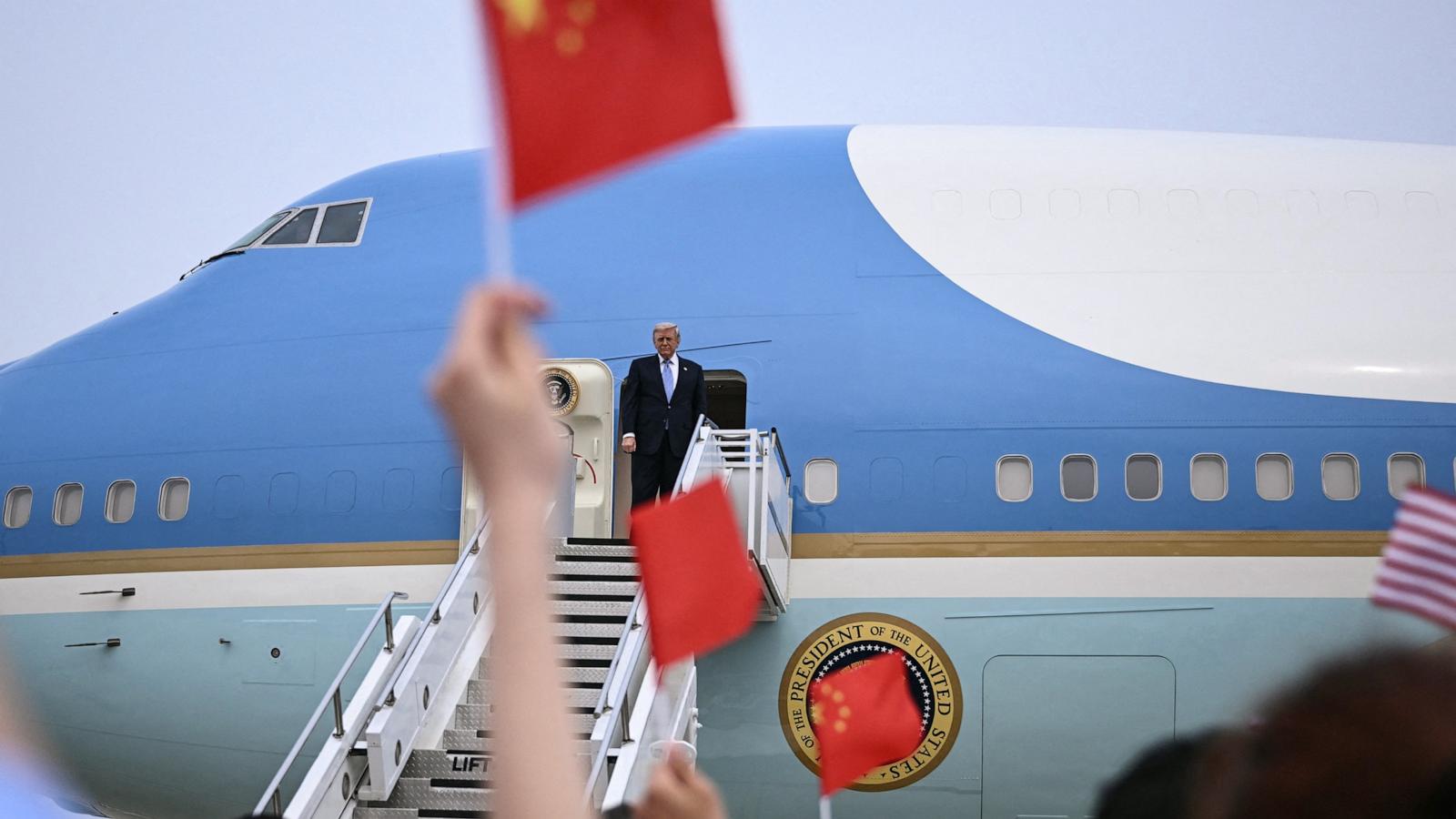
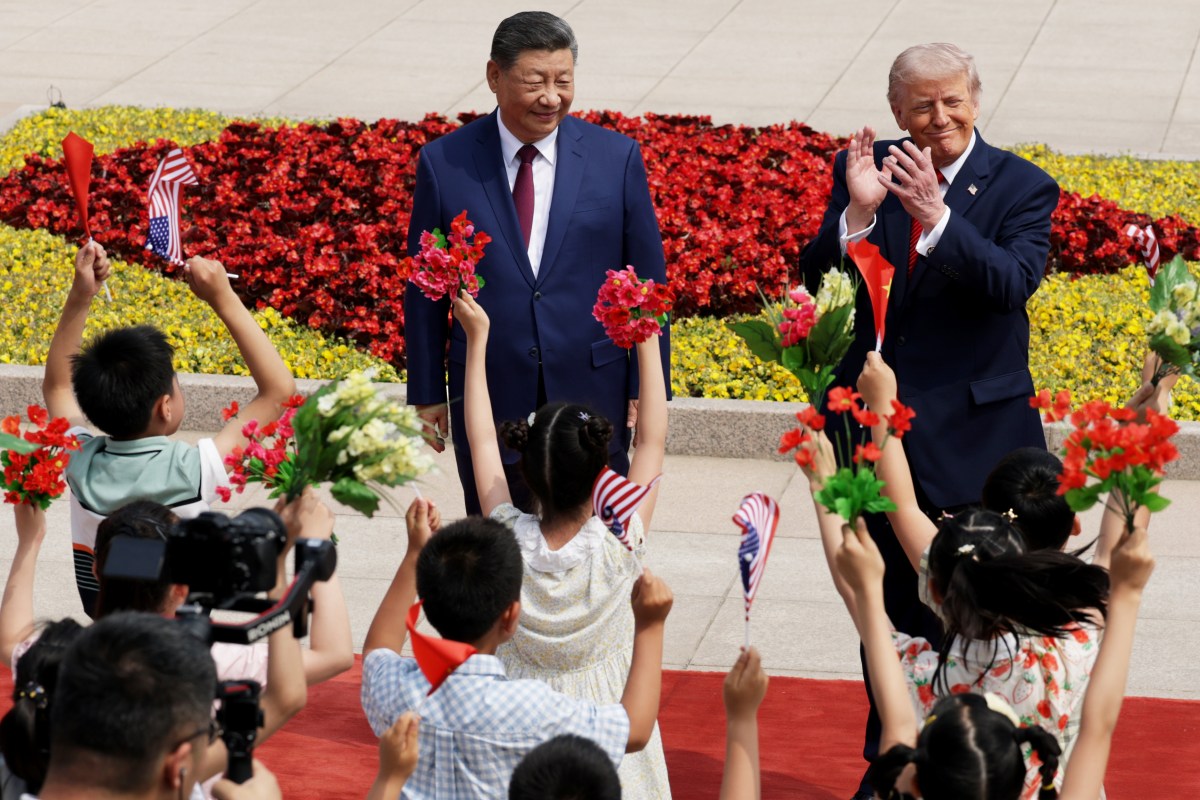
President Donald Trump met with Chinese President Xi Jinping in Beijing for a summit that included ceremonies and talks but ended without major agreements on key issues. They discussed topics like Iran, Taiwan, and trade, but no big breakthroughs were announced.
Key Facts
President Trump and President Xi held a summit in Beijing with formal ceremonies and meetings.
Trump hoped Xi would use China’s influence to help reopen the Strait of Hormuz amid the Iran conflict, but China did not confirm this in its statements.
Xi warned that mishandling Taiwan could lead to clashes or conflicts between the U.S. and China.
Trump did not commit to changing U.S. arms sales to Taiwan and said no final decision has been made yet.
Trump said Xi agreed to potentially buy over 200 Boeing airplanes, with a promise of 750 planes eventually, though no official confirmation has come from Boeing or China.
Trade talks did not include discussion about tariffs, and it remains unclear if trade tensions will ease.
Overall, the summit showed hopes for stability but no major progress on challenging issues.
Read the Original
Want the full story? Tap a source to open the original
article.
Iranian director Asghar Farhadi spoke at the Cannes Film Festival, condemning both the civilian deaths caused by US and Israeli air strikes in Iran and the killing of protesters by Iran's government. He emphasized that all loss of innocent life, whether in war or protests, is a crime.
Key Facts
Asghar Farhadi is an Oscar-winning Iranian director.
He premiered his latest film, "Parallel Tales," at the 2026 Cannes Film Festival.
Farhadi denounced civilian deaths from US and Israeli attacks on Iran.
He also condemned the Iranian government’s killing of protestors.
Iran has been in conflict with Israel and the US since February 28, 2026.
A fragile ceasefire has been in place since April 8, 2026.
Iran's government reported over 3,000 deaths in recent protests but blamed foreign "terrorist acts."
Outside human rights groups estimate 7,000-35,000 protestors were killed by security forces in Iran.
Read the Original
Want the full story? Tap a source to open the original
article.
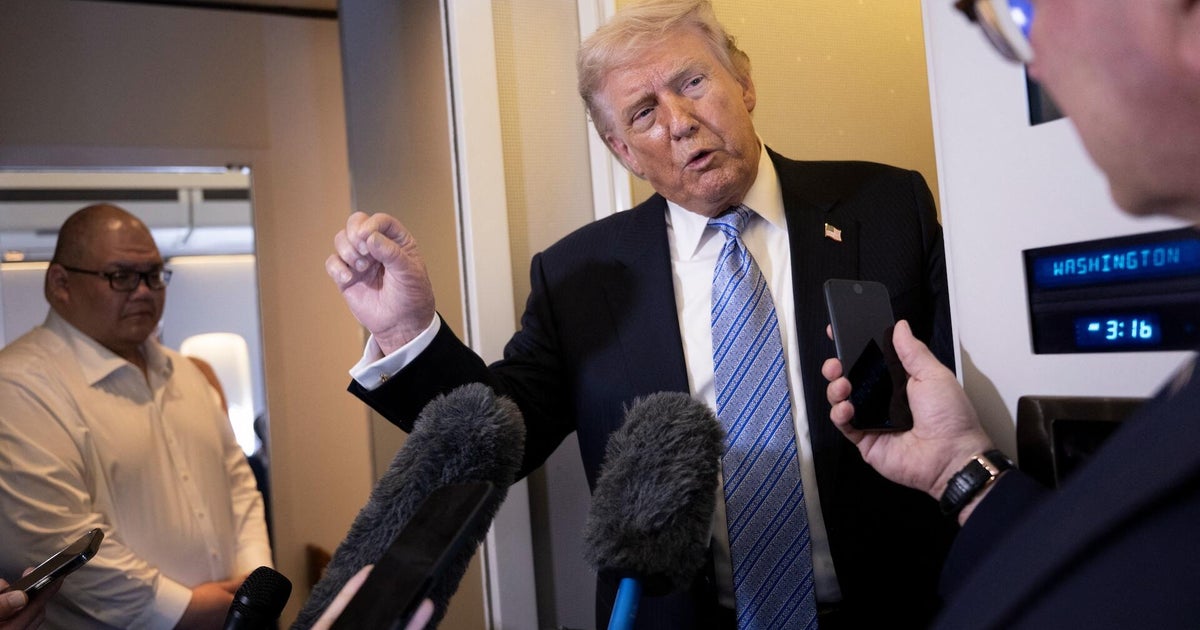
President Donald Trump said he talked with Chinese President Xi Jinping about cooperating on rules to control artificial intelligence (AI). This discussion came as officials in Washington are trying to decide how to handle the dangers of new AI technology.
Key Facts
President Trump and President Xi met in China.
They discussed working together on AI guardrails, which means rules to keep AI safe.
The talks happened amid debates in Washington about managing AI risks.
President Trump spoke to reporters on Air Force One after the meeting.
Both leaders showed interest in cooperating on AI safety measures.
AI guardrails refer to limits or controls to prevent AI from causing harm.
Read the Original
Want the full story? Tap a source to open the original
article.
Iran says it is working with Oman to manage the Strait of Hormuz, a key waterway for global oil shipments, including plans to charge fees to ships passing through. The United States and other countries oppose these fees and argue that the strait should remain open for free navigation.
Key Facts
The Strait of Hormuz carries about one-fifth of the world’s oil transported by sea.
Iran claims the strait is shared only by Iran and Oman and wants to manage it jointly with Oman.
Iran established the Persian Gulf Strait Authority on May 5 to oversee the strait and charge fees to commercial ships.
The United States opposes Iran’s plan to charge tolls and restrict ship passage, supporting freedom of navigation instead.
Oman has not publicly responded to Iran’s proposal to impose fees or require detailed registration of ships.
France and the UK have proposed an alternative plan supporting free passage through the strait, backed by many Gulf countries.
Iran argues that it can restrict passage if it considers there is a threat to the coastal states’ security or sovereignty.
Ships passing the strait must register with Iran’s new agency and may need to pay fees in Iran’s currency.
Read the Original
Want the full story? Tap a source to open the original
article.
At least 78 people have died since May 9 because of violent fights between gangs near Port-au-Prince, the capital of Haiti. The violence from gangs in Haiti has become worse over the last two years.
Key Facts
The deadly clashes started on May 9, 2026.
The fights are happening in the suburbs of Port-au-Prince, Haiti’s capital city.
At least 78 people have died due to these gang clashes.
Gang violence has been a growing problem in Haiti for the past two years.
The country is struggling with safety because of these ongoing conflicts.
The news report includes a short video by Ciara Boulman showing the situation.
Haiti continues to face challenges caused by organized gangs fighting for control.
Read the Original
Want the full story? Tap a source to open the original
article.
President Donald Trump announced that he made several trade deals with China during a recent summit with Chinese President Xi Jinping. He described the deals as beneficial for both the United States and China.
Key Facts
President Trump held a high-level meeting with Chinese President Xi Jinping.
The meeting took place on a Friday during Trump’s trip to China.
Trump stated that the visit led to “fantastic trade deals.”
The deals were described as good for both countries.
The summit was considered high-stakes, indicating important discussions were held.
Trump spoke directly to reporters while leaving the summit.
Specific details of the trade deals were not provided in the article excerpt.
Read the Original
Want the full story? Tap a source to open the original
article.
A group is using Russia’s own method of spreading misleading information to fight back against the Russian government’s influence in Africa. This shows a new way that countries or groups try to influence opinions in other places.
Key Facts
Russia uses propaganda to promote its views and goals.
Propaganda means sharing misleading or false information to influence people.
Someone is now using Russia’s propaganda methods against Russia.
The focus of this counter-propaganda is in Africa.
This effort aims to reduce Russia’s influence on the continent.
It represents a strategy of battling propaganda with similar tactics.
Read the Original
Want the full story? Tap a source to open the original
article.
President Donald Trump visited China and met with President Xi Jinping, marking the first visit by a sitting U.S. president to China since 2017. The talks focused on trade relations and issues involving Iran, with Trump showing a more cooperative and positive tone compared to past interactions.
Key Facts
President Trump traveled to China for a high-level summit with President Xi Jinping.
This was the first visit by a sitting U.S. president to China since Trump's last term in 2017.
Trade relations and the conflict involving Iran were the main topics discussed.
Trump praised Xi Jinping and called for cooperation, which was different from his usual tough approach.
Some readers are skeptical, suggesting Trump praised Xi to help resolve issues with Iran and to reopen a key shipping route.
Others argued that China has the upper hand in the relationship and does not need much from the U.S. compared to other options.
Trump mentioned that Xi liked the idea of buying U.S. oil, which led to criticism about U.S. energy policy priorities.
Public opinion was mixed, with some seeing the visit as a strategic win and others as a sign of weakness or poor preparation.
Read the Original
Want the full story? Tap a source to open the original
article.
Ireland’s Minister for Climate, Energy and the Environment, Darragh O’Brien, said the European Union (EU) is facing a second major warning about its energy supply after the crisis in the Middle East. Although Ireland and most EU countries have enough fossil fuels, rising prices are a big problem, and the EU needs to reduce its dependence on imported fossil fuels.
Key Facts
The closure of the Strait of Hormuz has not caused fossil fuel shortages in Ireland or most EU countries, but fuel prices have risen sharply.
Ireland is providing direct financial help to low-income families facing high energy costs, but this is only a temporary solution.
The EU sees the Middle East crisis as the “second big wake-up call” after Russia’s invasion of Ukraine in 2022, showing how vulnerable it remains to foreign disruptions.
The EU has spent an extra €24 billion on energy imports since the Iran war began.
Imports of Russian liquefied natural gas to the EU increased by 16% in the first quarter of 2026, reaching a record high since the Ukraine war started.
O’Brien acknowledges that increasing fossil fuel imports from Russia is not a long-term solution.
The EU is working on increasing renewable energy and electrification but needs to speed up these efforts.
O’Brien warns that the EU must prepare better for future crises, as it has faced several major problems in less than 10 years.
Read the Original
Want the full story? Tap a source to open the original
article.
Nina Gold, a well-known casting director famous for Game of Thrones and The Crown, has been hired to help choose the next actor to play James Bond. This move shows that Amazon MGM Studios is serious about shaping the future of the Bond series and selecting the right new lead for the franchise.
Key Facts
Nina Gold is the new casting director for the James Bond franchise.
She has worked on shows like Game of Thrones, The Crown, and Les Misérables.
The casting choice for Bond is important because it sets the tone for a new era of films.
Previous actors like Sean Connery, Roger Moore, Timothy Dalton, and Daniel Craig each brought a different style to the role.
Potential actors considered for Bond include Callum Turner, Jacob Elordi, Aaron Taylor Johnson, Tom Holland, Idris Elba, and Tom Hardy.
Amazon MGM Studios is carefully choosing the next Bond to ensure the franchise's future success.
Industry experts believe Nina Gold’s involvement signals how seriously the studio is taking this decision.
The next Bond actor will influence the direction and style of upcoming films in the series.
Read the Original
Want the full story? Tap a source to open the original
article.
Thirty-six countries, including 34 European nations, Australia, and Costa Rica, have agreed to create a special tribunal to prosecute Russia for its invasion of Ukraine. This tribunal aims to hold Russia accountable for the "crime of aggression," a status not covered by the International Criminal Court’s current powers.
Key Facts
The special tribunal will focus on prosecuting Russia's invasion of Ukraine, declared a "crime of aggression."
Ukrainian President Volodymyr Zelensky signed an agreement with the Council of Europe to establish this legal body in 2025.
The Council of Europe, including 46 member states, approved a resolution to set up the tribunal.
34 European states, the EU, Australia, and Costa Rica have expressed their intention to join the tribunal agreement.
Russia was expelled from the Council of Europe in 2022 after it invaded Ukraine.
The tribunal could try senior Russian officials, including President Vladimir Putin.
The International Criminal Court has issued arrest warrants related to other war crimes but cannot prosecute the invasion itself.
Twelve Council of Europe members, including Hungary, Slovakia, Bulgaria, Malta, and several Balkan and Caucasus countries, have not yet joined the tribunal agreement.
Read the Original
Want the full story? Tap a source to open the original
article.