Fact-first summaries of the news — stay informed, stay grounded.
Your favorite news sources, one calm feed — fact-first summaries that always link to the
original story. No outrage bait, and we tell you when you're caught up. How it works
World News
Comprehensive coverage of international news and global events
Bristol has started a series of events to highlight its history of activism and aims to become the UK’s civil rights capital. The campaign marks the anniversary of the 1963 Bristol bus boycott, a key moment that helped create the UK’s first Race Relations Act.
Key Facts
Bristol has a long history of activism dating back to the 18th century.
The 1963 Bristol bus boycott challenged racial discrimination in bus crew hiring.
The boycott contributed to the UK’s first Race Relations Act in 1965.
A new campaign led by CuriosityUnLtd is organizing talks, films, exhibitions, and performances about Bristol’s activist past.
Bristol’s mayor, Marvin Rees, is the first directly elected mayor of major European city with black African heritage.
A mural on civil rights will be created by artist Ella-Mia Grant during the Upfest street art festival.
Events will include a performance of the musical Jamaica Love at the Bristol Beacon.
By the end of summer, a civil rights manifesto will be created to help Bristol claim the title of civil rights capital.
Read the Original
Want the full story? Tap a source to open the original
article.
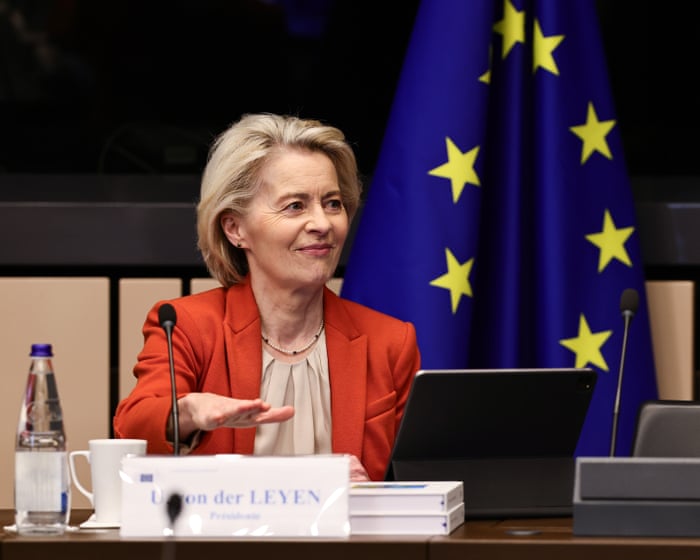
European Commission President Ursula von der Leyen warned that the conflict in the Middle East could have long-lasting effects that last months or years. She emphasized the need for peace talks in Iran and Lebanon and called on the EU to reduce its reliance on imported fossil fuels by increasing clean energy production.
Key Facts
The EU wants ceasefires in Iran and Lebanon to continue and supports diplomatic efforts for peace.
President von der Leyen said the Middle East conflict’s consequences may last for a long time.
The EU has faced a second energy crisis in four years, highlighting its dependence on imported fossil fuels.
The EU aims to reduce this reliance by using clean energy sources like renewables and nuclear power.
Coordination is needed in the EU for fuel reserves, especially for jet fuel and diesel.
The EU plans to target vulnerable households and industries with energy support, avoiding untargeted spending.
Modernizing energy use and increasing electrification in transport, industry, and heating are priorities for economic security.
The EU will continue its financial support to Ukraine, with a €90 billion loan agreement finalized after Hungary ended its veto.
Read the Original
Want the full story? Tap a source to open the original
article.
Plastic pollution from oceans is entering human bodies, including brains and unborn children. Scientists and activists say this pollution may be linked to health problems like obesity and dementia, and solving the problem requires both practical actions and a change in how people relate to nature.
Key Facts
Plastic pollution is found not just in the environment but also inside human bodies.
Research suggests a connection between plastic pollution and health issues such as obesity and dementia.
Merijn Tinga, called the Plastic Soup Surfer, raises awareness by traveling on water to show the seriousness of plastic waste.
A deposit return scheme, which encourages recycling by giving money back for returned containers, can reduce plastic pollution.
The problem is tied to a "throwaway culture" where people use and discard plastic quickly.
Addressing plastic pollution needs both technology and a shift in how humans see their relationship with nature.
People and nature are interconnected, so protecting the environment also protects human health.
Awareness and effective policies are key to reducing plastic pollution worldwide.
Read the Original
Want the full story? Tap a source to open the original
article.
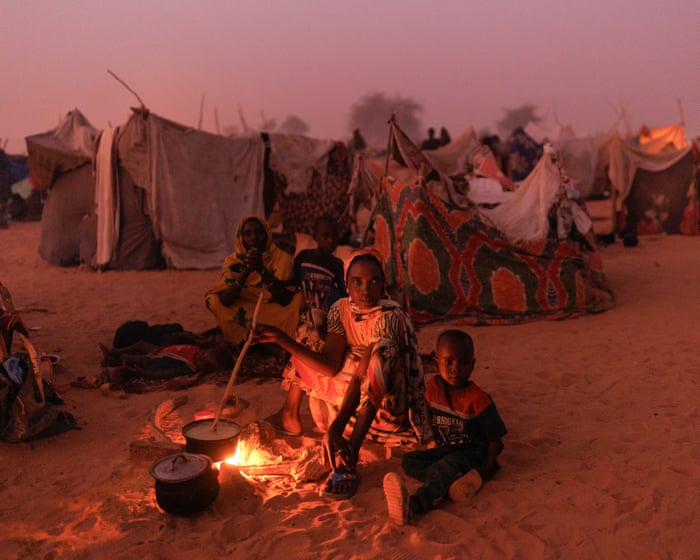
The conflict involving the US, Israel, and Iran has caused a rise in global oil prices and disrupted shipping through the Strait of Hormuz. This has made it harder and more expensive to deliver food and medical aid to vulnerable people in places like Sudan, Nigeria, Ethiopia, and Yemen. Aid groups are asking for a safe route through the strait to help get supplies to those in need.
Key Facts
The US and Israel’s war on Iran has caused oil prices to nearly double, reaching around $111 a barrel.
The Strait of Hormuz is a 5 km-wide shipping channel critical for transporting oil, food, fertilizer, and medicine.
Shipping delays have blocked $130,000 worth of medical supplies in Dubai needed by 20,000 people in Sudan.
Rising fuel costs are forcing aid groups to limit electricity use in health clinics in Nigeria and Ethiopia.
Aid organizations like the IRC and Save the Children say higher oil prices increase their shipping costs by millions of dollars.
The World Food Programme warns that 45 million more people could face hunger due to these rising costs and disruptions.
Major donors like the US, UK, Germany, Norway, and France have cut foreign aid budgets in recent years.
In Yemen, the cost of shipping aid has risen by 20%, and food prices have increased by 30% amid ongoing conflict.
Read the Original
Want the full story? Tap a source to open the original
article.
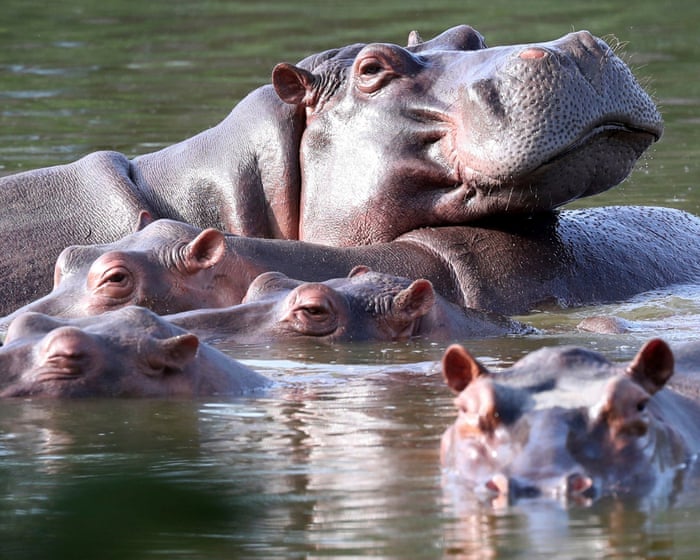
Anant Ambani, son of Indian billionaire Mukesh Ambani, has offered to house 80 wild hippos from Colombia at his private animal sanctuary in Gujarat, India. These hippos are descendants of animals originally imported by drug lord Pablo Escobar and have become an environmental problem in Colombia, where authorities plan to cull them.
Key Facts
Pablo Escobar imported four hippos from Africa to his private zoo in Colombia in the 1980s.
After Escobar’s death in 1993, the hippos were left to roam freely and their population grew to over 200.
The hippos are considered an environmental threat in Colombia as they damage vegetation and harm local animals.
Colombia plans to kill some of these hippos to control their population.
Anant Ambani has offered to move 80 hippos to his Vantara animal sanctuary in Gujarat to save them from being killed.
Vantara is home to many animals but has faced accusations of illegal wildlife trade, which it denies.
The cost and difficulty of transporting the large hippos, which can weigh around two tonnes each, make the plan challenging.
The Ambani family and the Indian Supreme Court have cleared allegations against Vantara regarding illegal activities.
Read the Original
Want the full story? Tap a source to open the original
article.
Two brothers from Kashmir were killed decades apart in the ongoing conflict in the region—one by armed rebels in 2000 and the other by the Indian army in 2023. The family faces continued grief and difficulties related to the disputed status and violence in Kashmir.
Key Facts
In 2000, Ishfaq Ahmad Mughal was killed by armed rebels in their home in Ganderbal district, Kashmir.
Ishfaq was targeted because he worked for the Indian army.
Rashid Ahmad Mughal, Ishfaq’s younger brother, was killed in March 2023 by the Indian army, accused of being a suspected rebel.
The army said Rashid died in a shootout during an operation based on intelligence about rebels.
Local residents dispute the army’s claim and call Rashid’s death a “fake encounter,” meaning a staged killing.
Rashid was buried far from his home in a graveyard for alleged rebels to prevent protests.
Kashmir is a disputed region claimed by India, Pakistan, and partially controlled by China, with a history of armed rebellion and military presence.
The Indian government revoked Kashmir’s special autonomy in 2019, leading to increased tensions and violence.
Read the Original
Want the full story? Tap a source to open the original
article.
In Tehran, many homes and buildings damaged by recent bombings remain unrepaired due to high costs and fear of renewed conflict. Despite a fragile truce and ongoing talks, Iran faces severe economic difficulties caused by a U.S. blockade that disrupts imports and raises prices for everyday goods.
Key Facts
Bombed homes in Tehran, like Sajjad’s father’s house, are still in ruins with no repairs underway.
Partial repairs happen on some buildings, but completely destroyed ones are left untouched as people wait for peace and international support.
The U.S. has imposed a maritime blockade restricting Iran’s southern ports, harming the country’s supply chains.
Iran’s currency has lost value because of the blockade and previous U.S. sanctions.
Building materials, like steel, have become much more expensive due to damage to domestic producers.
Many residents face housing problems, including eviction from government shelters and inadequate rental assistance.
Tehran tries to reroute goods overland and use unofficial ships in the Gulf to bypass the blockade, but this causes delays and higher costs.
Price changes for important items like food, medicine, and construction materials make life harder for low-income families.
Read the Original
Want the full story? Tap a source to open the original
article.
The conflict involving Iran, Israel, and Gulf countries continues with ongoing air strikes and political tensions. The United Arab Emirates will leave OPEC, and Gulf leaders condemned Iran’s threats to close a vital shipping route. President Trump stated that Iran is weakening and stressed preventing Iran from getting nuclear weapons.
Key Facts
Iranian air force claims to have hit more than 170 enemy aircraft and promises stronger responses if attacked again.
President Trump criticized German Chancellor Merz’s comments about the US strategy on Iran.
Yemen’s Houthi rebels support Iran and warned they might block the Bab al-Mandeb Strait, an important trade route.
The UAE announced it will leave OPEC after nearly 60 years of membership.
Gulf countries rejected Iran’s attempt to close the Strait of Hormuz and called for restoring safe shipping.
The US Treasury says the blockade on Iran is forcing oil production cuts, costing about $170 million per day.
President Trump met with King Charles III and emphasized preventing Iran from acquiring nuclear weapons.
In Israel, protesters against military drafts stormed a police chief’s home, leading to condemnation from the Prime Minister.
Read the Original
Want the full story? Tap a source to open the original
article.
Mali is facing ongoing violence and instability despite using mostly military force. Experts say the country needs to also focus on political talks, regional cooperation, and fixing social and economic problems to achieve lasting peace.
Key Facts
Mali’s current leader is Colonel Assimi Goïta.
The government relies heavily on military action to handle the conflict.
Armed groups linked to international jihadist networks are active and spreading in Mali and the Sahel region.
External support, including from Russia, has been changing and shows limits in ensuring security.
Major causes of instability include poor governance, economic hardship, and local disputes.
Experts say lasting peace requires combining security efforts with political dialogue and long-term solutions.
The conflict in Mali is multidimensional, meaning it has many causes and cannot be solved by military means alone.
Read the Original
Want the full story? Tap a source to open the original
article.
A worker at Asahiyama Zoo in Japan told police he disposed of his wife’s body in the zoo’s incinerator, which is normally used to burn dead animals. The zoo, located in Asahikawa city, delayed its summer opening and remains closed while the police investigate.
Key Facts
Asahiyama Zoo is a well-known zoo in northern Japan, popular for its unique animal enclosures.
The zoo planned to reopen after maintenance on April 8, just before Japan’s Golden Week holiday.
The employee informed police that he used the zoo’s incinerator to get rid of his wife’s body.
Police are searching for the missing wife after a friend reported her absence.
The incinerator is usually used to burn animal carcasses.
The zoo will stay closed at least until Friday, with possible further closures depending on the investigation.
The mayor of Asahikawa called the situation an “unprecedented crisis” and expressed deep concern.
The zoo normally attracts over one million visitors each year.
Read the Original
Want the full story? Tap a source to open the original
article.
Europe experienced higher-than-normal temperatures across nearly the entire continent in 2025, leading to record heat, wildfires, and droughts. A report by the World Meteorological Organization and the European Centre for Medium-Range Weather Forecasts showed Europe is the fastest-warming continent with severe climate impacts already happening.
Key Facts
Almost all of Europe had above-average yearly temperatures in 2025.
Europe is warming faster than any other continent.
Over 1 million hectares (2.5 million acres) burned in wildfires last year.
About 70% of European rivers had less water than usual.
Marine heatwaves occurred near the UK, Ireland, Iceland, and around the Mediterranean Sea.
Norway, Sweden, and Finland saw a 21-day heatwave with temperatures over 30°C (86°F) in July 2025.
Snow cover dropped by nearly 30%, losing an area as big as France, Italy, Germany, Switzerland, and Austria combined.
Glacier loss was significant, with Iceland experiencing its second-largest loss on record.
Read the Original
Want the full story? Tap a source to open the original
article.
French prosecutors are investigating the reopening of the adult website Coco, now called Cocoland, which was used by Dominique Pelicot to find people to rape his sedated wife. The site has been linked to serious crimes like child sexual abuse, rape, and murder, and it was previously shut down in 2024 but has come back online.
Key Facts
The Coco website was used by Dominique Pelicot to recruit people to rape his wife after drugging her.
The site has connections to multiple crimes, including child abuse, rape, and murder.
Coco was shut down in June 2024 but reappeared as Cocoland with a new name and design.
French prosecutors have opened an investigation into the site's reopening.
The site’s founder, Isaac Steidl, was charged in January 2025 with crimes related to child pornography and drug trafficking; he denies involvement with the reopened site.
French children’s commissioner Sarah el Hairy criticized the website for exploiting children and promised to fight it.
Women’s rights groups have called for broader investigations into similar websites that support sexual violence.
The case of Pelicot has raised awareness about organized online communities promoting sexual crimes.
Read the Original
Want the full story? Tap a source to open the original
article.
Iran is looking to increase trade with Russia to reduce its economic problems caused by a blockade of the Strait of Hormuz. Both countries have been growing their trade ties using railways and ports that avoid Western-controlled shipping routes, but the trade volume is still small compared to Iran’s trade with China and Gulf countries.
Key Facts
Iran faces economic challenges due to a blockade of the Strait of Hormuz.
Iran’s foreign minister recently met Russian President Vladimir Putin to discuss their partnership.
After the U.S. left the 2015 nuclear deal and reimposed sanctions, Iran and Russia increased trade to avoid Western financial systems.
Their trade reached $4.8 billion in 2024, with a 16% growth mainly in Russian exports of grain, metals, and machinery.
Both countries produce similar goods, limiting the potential for larger trade volumes.
The International North-South Transport Corridor (INSTC) is a key transport route linking Russia and Iran through Caspian Sea ports.
The INSTC bypasses Western-controlled shipping lanes, offering an alternative trade path.
Russia uses Iranian drones in its war in Ukraine.
Read the Original
Want the full story? Tap a source to open the original
article.
A study found that stress from racism and poverty may explain why black women face higher risks during childbirth. Researchers say this stress affects key biological processes in pregnancy, leading to more complications and deaths among black women compared to white women.
Key Facts
Researchers reviewed 44 studies on three biological factors linked to pregnancy problems: oxidative stress, inflammation, and blood flow to the placenta.
Black women showed higher levels of these biological factors, which are linked to conditions like pre-eclampsia and preterm birth.
These differences are not due to genetics but are believed to result from social and environmental stresses like racism and poverty.
In the UK, black women are 2.7 times more likely to die during childbirth than white women.
Black babies are twice as likely to be stillborn compared to white babies in the UK.
Social inequalities and racism affect black women’s bodies, making it harder for them to have healthy pregnancies.
Experts say more government action and investment in maternity care are needed to reduce these health differences.
The study was published in the journal Trends in Endocrinology and Metabolism by researchers at the University of Cambridge.
Read the Original
Want the full story? Tap a source to open the original
article.
Prime Minister Keir Starmer is facing serious questions in the UK Parliament about appointing Peter Mandelson as the US ambassador, a position Mandelson got without passing security checks. Despite most Labour MPs supporting Starmer in a vote against an inquiry, many in his party doubt his leadership, especially with upcoming local and parliamentary elections.
Key Facts
Keir Starmer is being questioned about the appointment of Peter Mandelson as US ambassador.
Mandelson failed security checks but was still appointed.
Starmer claims he did not know about the failed vetting and followed the correct process.
Most Labour MPs voted to block an official inquiry into whether Starmer misled Parliament.
Opposition leaders from other parties criticized Starmer for a possible cover-up.
The controversy has damaged Starmer’s reputation within his party.
The UK faces additional challenges including economic risks linked to the Iran conflict and ongoing energy market issues.
Upcoming local and parliamentary elections are seen as a critical test of Starmer’s leadership.
Read the Original
Want the full story? Tap a source to open the original
article.
At a White House state dinner, King Charles III joked with President Donald Trump by saying that without the British, Americans would be speaking French, responding to Trump's earlier remark that without the US, Europeans would be speaking German. The event was friendly and included several lighthearted comments about history and the close US-UK relationship.
Key Facts
King Charles III made a joke about language at a White House dinner, saying Americans would speak French without the British.
This was a response to President Trump’s earlier comment that Europeans would speak German without US help in World War II.
The dinner highlighted the long historical ties and "special relationship" between the US and the UK.
Charles also joked about renovations to the White House and referenced the 1814 burning of the building by British soldiers.
The event included humorous remarks about the Boston Tea Party of 1773.
President Trump praised King Charles’s speech to the US Congress during the visit.
King Charles gave President Trump a bell from the British submarine HMS Trump as a symbolic gift.
The meeting took place amid ongoing tensions over the war in Iran.
Read the Original
Want the full story? Tap a source to open the original
article.
A British company, Merrythought, recreated the missing Roo stuffed toy from the Winnie-the-Pooh stories for Queen Camilla’s visit to the United States. Queen Camilla delivered the toy to the New York Public Library to complete the original collection on display, marking 100 years since the first Winnie-the-Pooh book was published.
Key Facts
Roo is a baby kangaroo character from AA Milne’s Winnie-the-Pooh stories.
The original Roo toy was lost in the 1930s and was missing from the New York Public Library’s collection.
Merrythought, a Shropshire-based toy maker, recreated Roo using traditional mohair material.
Merrythought has a connection to the original Winnie-the-Pooh toys, including Christopher Robin’s bear.
Queen Camilla personally brought the new Roo toy to the library in New York during a state visit.
The collection also includes Pooh, Eeyore, Piglet, Kanga, and Tigger, originally owned by Milne’s son.
The visit marks the 100th anniversary of the first Winnie-the-Pooh book’s publication.
The event supports a campaign to promote reading and literacy.
Read the Original
Want the full story? Tap a source to open the original
article.
King Charles III visited the White House and spoke to both Congress and a state dinner, highlighting the strong relationship between the United States and the United Kingdom. His visit marks 250 years since American independence and comes during a tense time related to the war in Iran.
Key Facts
King Charles III made a rare appearance before a joint session of the U.S. Congress.
He was honored with a state dinner at the White House.
The visit celebrates 250 years since the United States became independent.
King Charles emphasized the strong ties between the U.S. and the U.K.
The visit occurs amid tensions related to the ongoing war in Iran.
The British monarch’s remarks included pointed comments, reflecting current global issues.
This event is notable because British monarchs seldom address the U.S. Congress.
Read the Original
Want the full story? Tap a source to open the original
article.
A missile hit a university in Afghanistan’s Kunar Province, killing at least seven people. Afghan officials say Pakistan is responsible for the attack, but Pakistan denies this claim.
Key Facts
The missile struck a university in Kunar Province, Afghanistan.
At least seven people died in the attack.
Afghan officials accuse Pakistan of launching the missile.
Pakistan denies involvement in the attack.
There is a history of accusations between Pakistan and Taliban leaders regarding fighters against Pakistan.
The incident happened on Monday.
Afghan students witnessed the missile strike at their university.
Read the Original
Want the full story? Tap a source to open the original
article.
Sarah, a mother of three from the UK, experiences severe obsessive-compulsive disorder (OCD) that makes her have unwanted, scary thoughts about harm coming to her children. OCD is a serious mental illness that is more than just needing cleanliness—it causes upsetting thoughts and repetitive behaviors that sufferers cannot control. Sarah sought medical help to cope and improve her life and her family's well-being.
Key Facts
OCD affects around 750,000 people in the UK.
The World Health Organization ranks OCD as one of the top 10 most disabling illnesses.
Many people believe OCD is only about cleanliness, but it also involves intrusive and disturbing thoughts.
Sarah's OCD causes her to imagine terrible harm to her children daily.
To manage her fears, Sarah decided to homeschool her children for a time.
Her OCD began after her second son was born and worsened after her third son.
She takes antidepressant and antipsychotic medication to help manage her condition.
Sarah says raising awareness about OCD is important so people can recognize symptoms and seek help.
Read the Original
Want the full story? Tap a source to open the original
article.