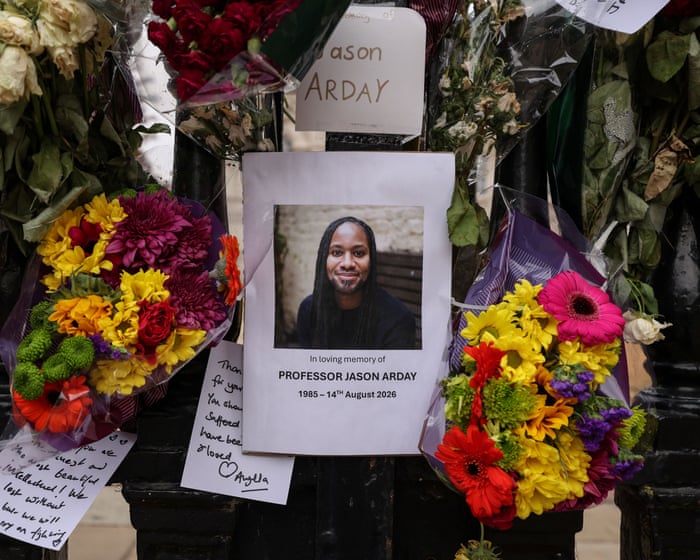
Oxford campaign groups, academics, alumni and members of the public have urged Oriel College to cancel a student-organised event featuring Nathan Cofnas, who made unproven plagiarism allegations against the late Cambridge professor Jason Arday. Oriel says it must uphold lawful free speech while also protecting students from discrimination and harassment, and says hosting a speaker does not mean the college endorses their views.
Key Facts
The event, titled “An evening with Nathan Cofnas: Is DEI undermining higher education?”, is scheduled for 17 November in Oriel College’s Harris lecture theatre.
Oxon Universities’ Reform Society, a student group formed to support Reform UK, organised the event.
An open letter asks Oriel to withdraw its facilities, citing concerns about the impact on ethnic-minority students and the college’s reputation.
Cofnas made unproven allegations of plagiarism against Jason Arday and questioned aspects of his biographical claims.
Arday, 41, was found dead in August after resigning from his Cambridge professorship.
Oriel says it considers student society events under its freedom-of-speech rules and also assesses security and member safety.
The Reform Society says it is committed to hosting Cofnas and argues that colleges have a legal duty to host events organised by registered student societies.
Read the Original
Want the full story? Tap a source to open the original
article.
Israelis voted on October 27, 2026, in an election described as pivotal for the country. The vote comes amid unresolved wars, the ongoing impact of Hamas’s 2023 attack, and divisions over Israel’s character and leadership.
Key Facts
Israel held a national election on Tuesday, October 27, 2026.
The article describes the election as pivotal.
Israel faces unresolved wars as voters cast their ballots.
The country continues to feel the effects of Hamas’s 2023 attack.
Voters are divided over the character of the state and who should lead it.
FRANCE 24’s International Affairs Editor Angela Diffley provided details in the video report.
Read the Original
Want the full story? Tap a source to open the original
article.
Gadi Eisenkot, a former Israeli military chief and leader of the centrist Yashar party, has praised President Donald Trump’s role in the Middle East while arguing that Israel should rely less on the White House. The article says Yashar narrowly led Benjamin Netanyahu’s Likud in a recent poll, but neither party was expected to win enough support to govern alone.
Key Facts
Eisenkot served more than four decades in the Israeli military and was elected to the Knesset in 2022.
He founded the Yashar party about two months after leaving the Knesset and the National Unity Party in mid-2025.
Trump endorsed Netanyahu and said another candidate would be the wrong leader for Israel.
Eisenkot called the U.S.-led war with Iran courageous and credited Trump with an enormous contribution to securing the return of hostages from Gaza.
Eisenkot told the New York Post that the hostage agreement would not have happened without Trump’s involvement.
Eisenkot has also criticized Netanyahu for making Israel too dependent on the White House, according to the article.
Polling published Friday in Israeli media put Yashar slightly ahead of Likud, but neither party was projected to win enough votes to govern outright.
The article says Eisenkot’s son and two nephews were killed while fighting in Gaza.
Read the Original
Want the full story? Tap a source to open the original
article.
Canadian musician Peaches has turned 60 after a career spanning three decades in electroclash and dance-punk. In an interview with FRANCE 24’s Marjorie Hache, she discussed her career and legacy as she promotes her latest album, “No Lube So Rude,” and its tour.
Key Facts
Peaches is a Canadian electroclash artist.
Her career has spanned about three decades.
Her live shows feature elaborate costumes and crowd surfing.
The article describes her concerts as welcoming to people of all genders and sexualities.
Her latest album is titled “No Lube So Rude.”
She is touring in support of the album.
She spoke with FRANCE 24’s Marjorie Hache about her career and legacy.
Read the Original
Want the full story? Tap a source to open the original
article.
Sudan’s war has disrupted education for millions of children through school closures, damage to facilities and repeated displacement. Aid workers and officials warn that children who stay out of school face greater risks, including child labour, recruitment by armed groups and early marriage.
Key Facts
UNICEF estimates that eight million of Sudan’s 17 million school-age children are out of school.
In Darfur, about 80 percent of schools remained closed, and 70 percent of children were not attending classes.
Save the Children estimates that children in Sudan have missed an average of about 484 days of classroom learning since the conflict began in April 2023.
Nearly half of Sudan’s school buildings no longer function as classrooms, according to UNICEF’s head of advocacy and communication in Sudan.
A drone attack on two warehouses in North Kordofan in September 2026 destroyed more than 330,000 school textbooks and other learning materials.
Nine-year-old Abkar Mohammed, displaced from Khartoum to Port Sudan, cleans and repairs shoes to help support his family and does not attend school.
Officials and aid workers say school closures and displacement leave children exposed to risks including child labour, recruitment by armed groups, sexual violence and early marriage.
Read the Original
Want the full story? Tap a source to open the original
article.
Israeli voters went to the polls on October 27, 2026, in the country’s first national election since the October 7, 2023 attack. Turnout was reported as unusually high, with a deeply divided electorate weighing Prime Minister Benjamin Netanyahu’s leadership.
Key Facts
The election took place on Tuesday, October 27, 2026.
It was Israel’s first national election since the October 7, 2023 attack.
The article described turnout as unseen in decades.
The electorate was deeply divided.
The vote was presented as a verdict on Prime Minister Benjamin Netanyahu.
Read the Original
Want the full story? Tap a source to open the original
article.
Israelis vote for parties, not directly for prime minister. Because no major party is expected to win the 61 seats needed for a Knesset majority, the next prime minister will depend on coalition talks, which could take weeks or months and may lead to another election.
Key Facts
Israel's polling stations are scheduled to close Tuesday evening.
Voters choose parties rather than individual prime ministerial candidates.
The Knesset is Israel's parliament.
A party needs 61 seats for a majority in the Knesset.
No major party is expected to win close to 61 seats on its own.
The next prime minister will need to assemble a coalition of parties.
If coalition talks fail, Israel could hold another election.
Read the Original
Want the full story? Tap a source to open the original
article.
Israelis are voting in the country’s first national election since the October 7, 2023, attacks. Former Israeli ambassador to the United States Michael Oren said the election’s outcome is unlikely to change the wars involving Iran and Gaza.
Key Facts
Israel is holding its first national election since the October 7, 2023, attacks.
Former Israeli ambassador to the United States Michael Oren discussed Israel’s political landscape.
Oren said the election results are unlikely to change the wars involving Iran and Gaza.
The article does not report the election results.
Read the Original
Want the full story? Tap a source to open the original
article.
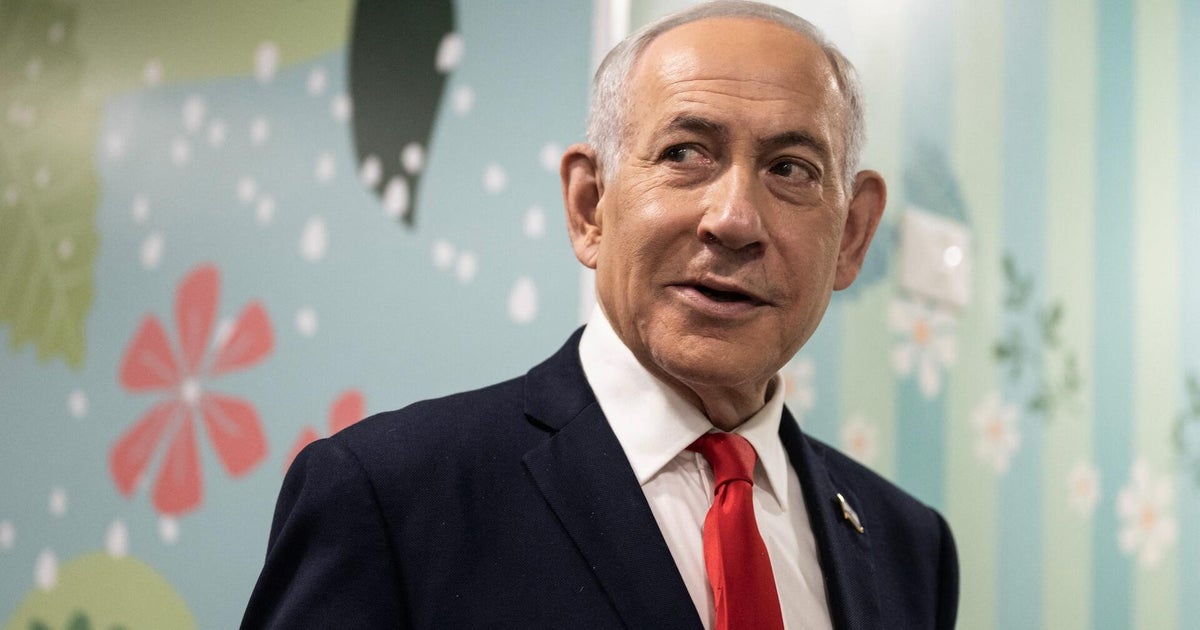
Supporters of Israeli Prime Minister Benjamin Netanyahu gathered outside a polling station in Jerusalem as he voted on Tuesday. The election is Israel’s first since the Hamas attack of October 7, 2023, and is widely seen as a referendum on Netanyahu.
Key Facts
Benjamin Netanyahu voted in Israel’s election on Tuesday.
Netanyahu supporters gathered outside the polling station where he voted.
The report was filed from Jerusalem.
This is Israel’s first national election since the October 7, 2023 Hamas attack.
The election is seen as a referendum on Netanyahu.
Read the Original
Want the full story? Tap a source to open the original
article.
Human rights advocates and performers have asked UK Home Secretary Shabana Mahmood to reconsider the refusal of a visitor visa for Judith Clark, a 77-year-old former member of the Weather Underground. Clark planned to speak about rehabilitation at a Royal Shakespeare Company event and attend her daughter’s book launch; she was convicted in connection with a 1981 attempted armored-truck robbery in which three people were killed, served 37 years, and was released in 2019.
Key Facts
The Home Office refused Clark’s visa application last week.
Clark was invited to speak about rehabilitation and restorative justice after a Royal Shakespeare Company production of Julius Caesar in Stratford-upon-Avon.
She also hoped to attend the 5 November UK launch of her daughter Harriet Clark’s novel, The Hill.
Lawyer Helena Kennedy, actor Harriet Walter and theatre director Phyllida Lloyd urged the Home Office to reconsider the decision.
Clark was convicted in 1983 for her role as a getaway driver in a 1981 attempted Brinks armored-truck robbery that killed a security guard and two police officers.
New York Governor Andrew Cuomo commuted Clark’s sentence in 2017; she was paroled in 2019 after serving 37 years.
During her imprisonment, Clark helped establish an AIDS support group, programs for mothers, a service-dog effort and a college education program.
Clark became director of the Survivors Justice Project in 2025, an organization that seeks legal relief for survivors of domestic violence facing prison sentences.
Read the Original
Want the full story? Tap a source to open the original
article.
The Ballon d’Or ceremony in London called attention to French sports journalist Christophe Gleizes, who is serving a seven-year sentence in Algeria. Gleizes was arrested while reporting on a football club in the Kabylie region; Algerian authorities accused him of supporting terrorism, while press freedom group RSF says his contacts were part of his journalism.
Key Facts
Presenters Kate Scott and Thierry Henry dedicated the ceremony to Gleizes and displayed the hashtag “#FreeGleize.”
Gleizes, 37, writes for French magazines So Foot and Society and covers African football.
He travelled to Algeria in May 2024 to report on Jeunesse Sportive de Kabylie, a football club based in Tizi Ouzou.
Algeria designated the Movement for the Self-Determination of Kabylie a terrorist organisation in 2021.
Authorities accused Gleizes of possessing publications deemed harmful to national security and of contacting a club official associated with the movement.
At his appeal hearing, Gleizes said he had made mistakes and should have entered Algeria on a journalist visa instead of a tourist visa.
RSF announced a solidarity football match for 11 November, which it said would mark Gleizes’s 500th day in detention.
Gleizes’s case unfolded amid strained relations between France and Algeria, including diplomatic expulsions and disagreements over Western Sahara.
Read the Original
Want the full story? Tap a source to open the original
article.
Prosecutors told Winchester Crown Court that Philip Young drugged and raped his then-wife, Joanne Young, and advertised her online to strangers without her consent. Four men are on trial for alleged sexual offences against her; they deny the charges. Philip Young has admitted multiple offences, and the trial is expected to last up to four weeks.
Key Facts
The four defendants are Norman Macksoni, Richard Wilkins, Connor Sanderson-Doyle and Mohammed Hassan.
The defendants have pleaded not guilty to charges including rape, sexual assault and assault by penetration.
Prosecutors said Philip Young advertised his wife on Craigslist, Grindr and swinging websites.
Joanne Young told police that she had believed she and her husband had a monogamous sex life.
Philip Young admitted 11 counts of rape, 14 counts of voyeurism and other sexual offences against his ex-wife.
The court was told that Philip Young published more than 500 intimate images and videos of his ex-wife without her consent.
A sixth defendant, Dean Hamilton, has admitted charges including rape and sexual assault; he and Philip Young will be sentenced after the trial.
Read the Original
Want the full story? Tap a source to open the original
article.
A France 24 program examines the Chinese Communist Party’s plenum and what its closed-door discussions may reveal about President Xi Jinping’s hold on power. The program also focuses on Xi’s ongoing anti-corruption drive and features analysis from Jean-François Di Méglio of the Asia Centre think tank.
Key Facts
The program was published on October 27, 2026.
It discusses a plenum meeting of the Chinese Communist Party.
The meeting’s discussions take place behind closed doors.
The program focuses on Xi Jinping’s grip on power.
The program addresses Xi’s anti-corruption drive.
Jean-François Di Méglio of the Asia Centre think tank provides analysis.
Read the Original
Want the full story? Tap a source to open the original
article.
The UK government plans to provide £15 million for a fund to prevent misogyny in workplaces, schools and public places. Women and Equalities Minister Bridget Phillipson will lead the fund, which will support services such as youth mentoring, workplace training and awareness campaigns; ministers also plan to seek private contributions.
Key Facts
The £15 million funding is expected to be confirmed by Chancellor John Healey in the budget on Wednesday.
The fund is the first dedicated national funding in the UK to address misogyny, according to the government.
Organisations will be able to apply for money to provide mentoring, workplace training and safety campaigns.
The government will seek matching contributions from businesses and philanthropists.
Examples of campaigns that could receive funding include Transport for London posters and the “Have a Word” and “Say Maaate to a Mate” campaigns.
The government has separately announced a £20 million package for schools to address relationship issues, online misogyny and misinformation.
Bridget Phillipson announced a misogyny prevention taskforce last month.
Read the Original
Want the full story? Tap a source to open the original
article.
France’s Senate is considering a bill that would require rioters to pay for damage caused during recent unrest. Senators will also vote on a provision that would let the government block social media platforms that respond too slowly to authorities’ reports of dangerous content.
Key Facts
The bill is known as the “casseurs-payeurs” bill, or “rioters pay” bill.
The proposal follows recent unrest across France.
The bill would make rioters pay for damage they cause.
The draft legislation includes a provision concerning social media platforms.
Senators will vote on whether the government can block platforms that act too slowly on authorities’ reports of dangerous content.
The Senate had not yet decided the bill at the time of the report.
Read the Original
Want the full story? Tap a source to open the original
article.
King Charles is beginning a nine-day visit to the Bahamas, Guyana, and Antigua and Barbuda, including the Commonwealth Heads of Government Meeting from November 1 to 4. The tour comes amid calls for Britain to apologize and pay reparations for slavery, and debate in some countries over ending the monarchy’s role as head of state.
Key Facts
The tour begins in the Bahamas, continues in Guyana, and ends in Antigua and Barbuda.
King Charles is expected to attend the Commonwealth Heads of Government Meeting, where topics include the environment, trade, and development; reparations may also be discussed.
Officials in the Bahamas and Antigua and Barbuda have signalled support for becoming republics.
Guyana’s President Mohamed Irfaan Ali said an apology should follow the king’s recognition of slavery as a dark period in history.
A 2023 poll found that 51 percent of surveyed people in the Bahamas wanted a republic, while 27 percent preferred to keep the monarchy as head of state.
Jamaica filed a $10 billion slavery reparations petition in London in September, and the article says it is due to be heard by a UK Privy Council in March next year.
The UK has not formally apologized for slavery or paid reparations, according to the article.
Read the Original
Want the full story? Tap a source to open the original
article.
The article reviews Andy Burnham’s first 100 days as UK prime minister, highlighting household-cost measures, funding to address rough sleeping, plans for social care and a more consultative approach to Labour. It says some policies have begun, while others remain planned, and raises questions about their long-term effects and funding.
Key Facts
The government removed VAT from domestic electricity bills across Britain on 1 October, estimating an annual saving of £45 for a typical household; the temporary measure is funded until March.
A £2 cap on participating bus services in England outside London and easier subscription cancellations are due to begin in January.
Part of the bus-fare policy is funded by changing some international climate finance from grants to loans, a move criticised by development charities.
The government initially allocated £442 million to tackling rough sleeping and later announced another £432 million, bringing its commitment to £874 million across different funding periods.
Burnham aims to offer people sleeping rough in England a route off the streets or appropriate support before Christmas.
The government plans to legislate during this parliament for a national care service in England and intends to help fund it by reforming the state pension triple lock from 2030.
The existing triple-lock guarantee is to remain in place until 2030, but the article says the savings from reform are uncertain.
Burnham appointed members of Labour’s Socialist Campaign Group to government roles as part of a promised more consultative approach to managing the party.
Read the Original
Want the full story? Tap a source to open the original
article.
Australia’s commonwealth ombudsman says the algorithm-based Integrated Assessment Tool (IAT) has produced unfair aged care funding decisions and recommends allowing assessors to change outcomes. Greens leader David Shoebridge urged parliament to restore that power, while the government said it is reviewing the report and has introduced an escalation process for disputed decisions.
Key Facts
The ombudsman published a 104-page report on Monday and made 10 recommendations.
The IAT uses an algorithm to decide whether older people receive home support funding and at what level.
The report found that the tool has led to unfair outcomes and weakened public confidence in aged care.
The government accepted six recommendations and noted two, including proposals for human overrides and legislative changes.
The government commissioned an independent review of how the IAT assesses and prioritises people.
A new escalation pathway allows a disputed assessment to go to a delegate for review.
Ombudsman Iain Anderson said the escalation pathway may not let assessors correct decisions they consider clinically inappropriate.
An experienced aged care assessor said delegate reviews add time and administrative work because the delegate has not met the older person being assessed.
Read the Original
Want the full story? Tap a source to open the original
article.
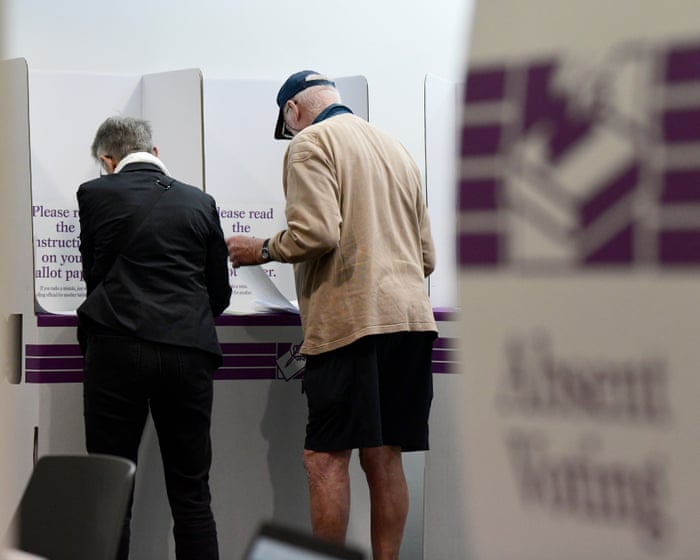
Australian MP Garth Hamilton called for a review of federal pre-poll voting arrangements after security concerns following an alleged attack on independent MP Helen Haines. A parliamentary inquiry has recommended that the Australian Electoral Commission review the duration and staffing of early voting, while the commission warned that shortening the period could create longer queues and other operational risks.
Key Facts
Hamilton said risks to voters and volunteers near roads and car parks should be assessed.
Hamilton suggested reviewing the length of pre-poll voting, resources at voting centres and the role of postal voting.
More than 9 million votes, or 56% of votes, were cast at early voting centres in the 2025 federal election, according to the Australian Electoral Commission.
The parliamentary inquiry’s interim report recommends that the commission review pre-poll voting duration and resourcing.
The commission told the inquiry that shortening the pre-poll period could compress demand and increase queues and venue shortages.
Inquiry submissions described neo-Nazi groups bringing speakers to voting booths and reports of volunteers being bullied or harassed.
MP Monique Ryan called for clearer guidance on how candidates, volunteers and campaign workers facing threats should work with police.
Read the Original
Want the full story? Tap a source to open the original
article.
A Guardian Essential poll of 1,087 Australians found Labor and One Nation tied at 28% on primary vote, with the Coalition on 23%. Disapproval of Prime Minister Anthony Albanese rose to 56%, while 61% said Australia was on the wrong track; Labor remained the most trusted party on the economy and governing.
Key Facts
The poll was conducted last week, after the alleged attack on independent MP Helen Haines.
Labor’s primary vote was 28%, down one point from September; One Nation rose to 28% from 25%, and the Coalition rose to 23% from 22%.
Albanese had 38% approval and 56% disapproval, for a net approval rating of -18.
Opposition leader Angus Taylor had 35% approval and 40% disapproval, for a net approval rating of -5.
Sixty-one percent said Australia was on the wrong track, while 25% said it was on the right track.
Asked what was most responsible for rising living costs, 32% cited government spending, 24% cited global events such as the war in the Middle East, and 19% cited supermarket price gouging.
On whether the economy serves everyday Australians, 32% trusted Labor, 29% trusted One Nation, and 18% trusted the Coalition.
Read the Original
Want the full story? Tap a source to open the original
article.