Iran said the United States was not serious about talks, according to the article’s headline. Officials from Iran, Pakistan, Turkiye and Saudi Arabia met in Tehran on Monday to try to prevent further escalation.
Key Facts
Iran said the United States was not serious about talks.
Officials from Iran took part in the Tehran meeting.
Officials from Pakistan took part in the meeting.
Officials from Turkiye and Saudi Arabia also took part.
The officials met in Tehran on Monday.
The talks aimed to stop further escalation.
Read the Original
Want the full story? Tap a source to open the original
article.
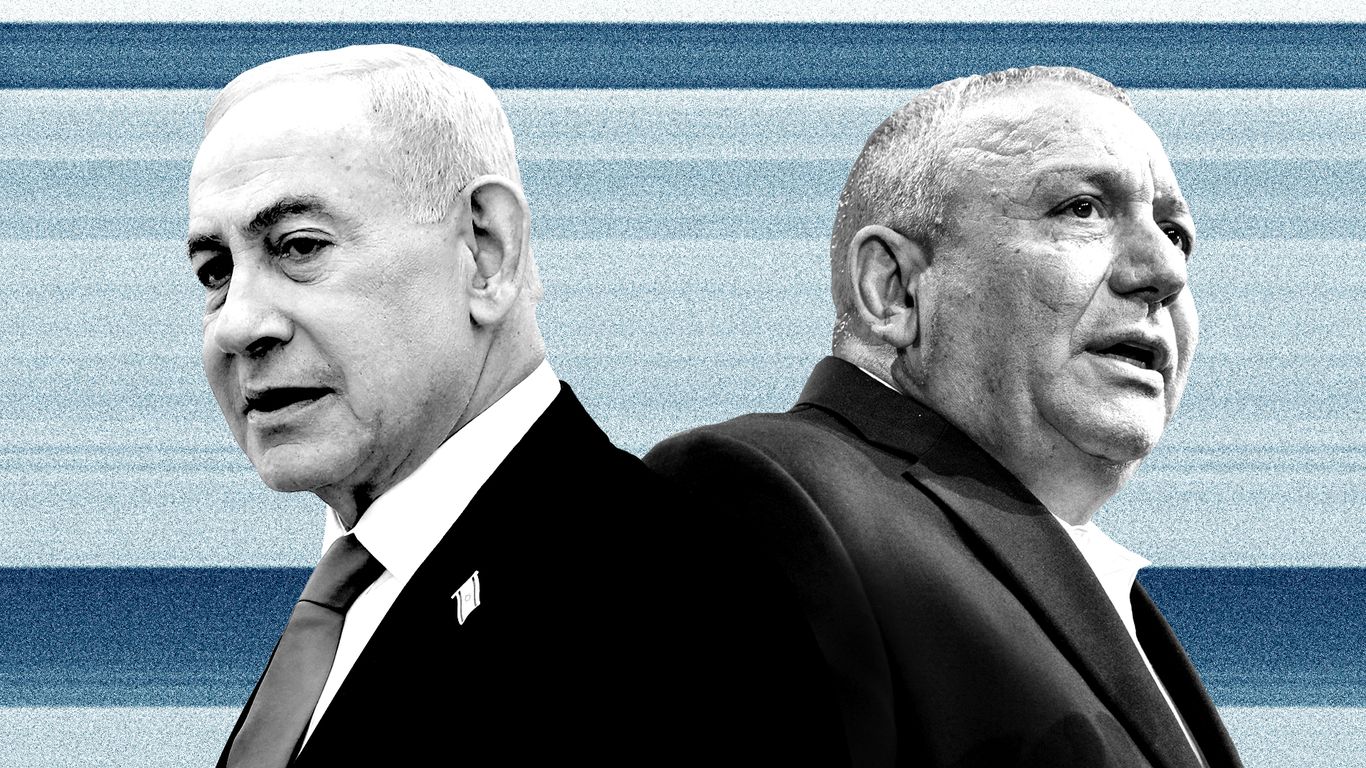
Israelis are voting in an election that could determine who becomes prime minister. Polls published Friday show incumbent Benjamin Netanyahu in a close race with former military chief Gadi Eisenkot. The report examines how the rivals’ foreign-policy approaches could affect Gaza and the occupied West Bank.
Key Facts
Israel is holding a pivotal election.
Benjamin Netanyahu is the incumbent prime minister.
Gadi Eisenkot is a former military chief.
Polls published Friday suggest Netanyahu and Eisenkot are in a close race.
The report compares the rivals’ foreign-policy positions.
The report considers possible effects on Gaza and the occupied West Bank.
BBC diplomatic correspondent James Landale reports from Jerusalem.
Read the Original
Want the full story? Tap a source to open the original
article.
A new government rule in Azerbaijan bars clothing considered incompatible with secular education, prompting rare protests. Although it does not explicitly name the Islamic hijab, girls and teachers who wear one have been turned away from schools.
Key Facts
The protests concern a new ban on certain clothing in schools.
The rule describes the prohibited clothing as incompatible with the secular principles of general education.
The rule does not explicitly mention the Islamic hijab.
Girls and teachers wearing hijabs have reportedly been denied entry to schools.
The ban has sparked tensions in Azerbaijan.
The article says 96% of Azerbaijan’s population is Muslim.
Read the Original
Want the full story? Tap a source to open the original
article.
Israeli Prime Minister Benjamin Netanyahu faces a challenge to his political survival in the election held on October 27, 2026. Voters are weighing his leadership after the 2023 Hamas-led attacks, wars in Gaza and with Iran, and Israel’s growing international isolation.
Key Facts
Israel held its election on Tuesday, October 27, 2026.
The election is described as a test of Netanyahu’s political survival.
Voters are assessing Netanyahu’s leadership after the Hamas-led attacks in 2023.
The article cites wars in Gaza and with Iran as issues facing voters.
The article says Israel’s international isolation has deepened.
France 24 correspondent Douglas Herbert provided analysis of the election.
Read the Original
Want the full story? Tap a source to open the original
article.
Three British politicians said Israeli authorities detained them for eight hours and refused them entry to the West Bank. They were part of a 23-person Progressive International delegation that said it planned to show support for Palestinians; Israel had announced that West Bank land crossings would close during Tuesday’s national elections.
Key Facts
The group included SNP MP Lara Bird, Labour MP Clive Lewis and Scottish Greens MSP Kate Nevens.
The politicians said authorities questioned the group before turning them away.
Bird said the delegation intended to support Palestinians facing attacks while harvesting olives.
Nevens described the detention as frightening and said the group left safely.
Israel’s military announced that West Bank land crossings would close during increased security measures for the national elections.
The article reported that about 2,000 Palestinian residents had been displaced in Hebron in recent days.
The article said the elections were the first since the Hamas-led attack on Israel on 7 October 2023.
Read the Original
Want the full story? Tap a source to open the original
article.
Israeli voters went to the polls on October 27, 2026, in the country’s first election since the October 7, 2023 Hamas attack. Turnout reached 16.7% four hours after polling stations opened, and the vote is framed as a test of Prime Minister Benjamin Netanyahu and Israel’s rightward political shift.
Key Facts
The election took place on Tuesday, October 27, 2026.
The article reports voter turnout at 16.7% four hours after polls opened.
This was Israel’s first election since the October 7, 2023 Hamas attack.
The article describes Israel as deeply divided.
Voters are delivering a verdict on veteran Prime Minister Benjamin Netanyahu.
The election is also presented as a test of Israel’s rightward political shift.
Read the Original
Want the full story? Tap a source to open the original
article.
Oxford Street in central London has become a pedestrian-only zone between Great Portland Street and Orchard Street. London officials say the change could boost retail activity and support jobs, while some residents and shoppers have raised concerns about consultation and access for people who cannot walk far.
Key Facts
The vehicle-free zone covers part of Oxford Street, a roughly 1km stretch of major shopping street.
The Greater London Authority estimates partial pedestrianisation could generate more than $109 million a year and support 700 additional jobs.
Footfall on Oxford Street is about 57 percent of its 2006 level, according to retail trade body New West End Company.
After a weekend trial in October 2025, two-thirds of businesses in the area reported higher or similar sales during pedestrianisation.
Plans for the wider regeneration project include two public squares, 50 trees and hundreds of public seats.
Mayor Sadiq Khan first pursued pedestrianisation in 2017, but the plan fell apart in 2018 after Westminster Council withdrew its support.
Some shoppers said buses and cabs should remain available to help people with disabilities or those who cannot walk far.
Westminster Council deputy leader Tim Barnes said residents had mostly been told what would happen rather than meaningfully consulted.
Read the Original
Want the full story? Tap a source to open the original
article.
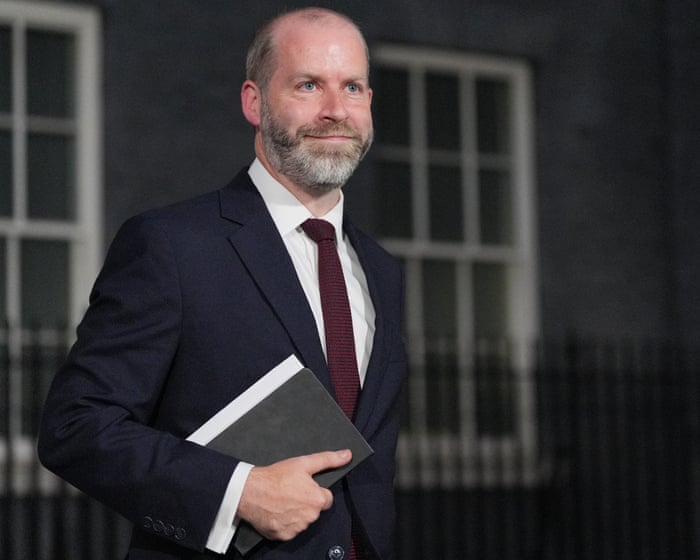
UK and EU officials are expected to discuss future options for their relationship, including freedom of movement, before an EU summit on 20 November. Business Secretary Jonathan Reynolds said the government has made no assumptions about the long-term relationship, while Downing Street says its immediate focus is deals on areas such as food and youth mobility.
Key Facts
Officials from the UK and EU are expected to discuss a range of future relationship options before the 20 November summit.
Reynolds said officials would discuss possible future options, but current talks focus on food and drink, electricity, and emissions trading.
Downing Street says the government's immediate priority is securing new agreements in areas including food and youth mobility.
Prime Minister Keir Starmer has said Labour will not return to freedom of movement, the EU single market, or the customs union during the current parliamentary session.
Freedom of movement allows EU citizens to travel, live, study, and work in any EU member country.
Andy Burnham has called for an honest discussion about returning to freedom of movement and has left open the possibility of a referendum.
Labour MP Melanie Onn warned that discussing changes beyond Labour's 2024 manifesto could undermine public trust.
Reform UK leader Nigel Farage said Burnham has no mandate to negotiate with the EU and called for the prime minister to present proposals at a general election.
Read the Original
Want the full story? Tap a source to open the original
article.
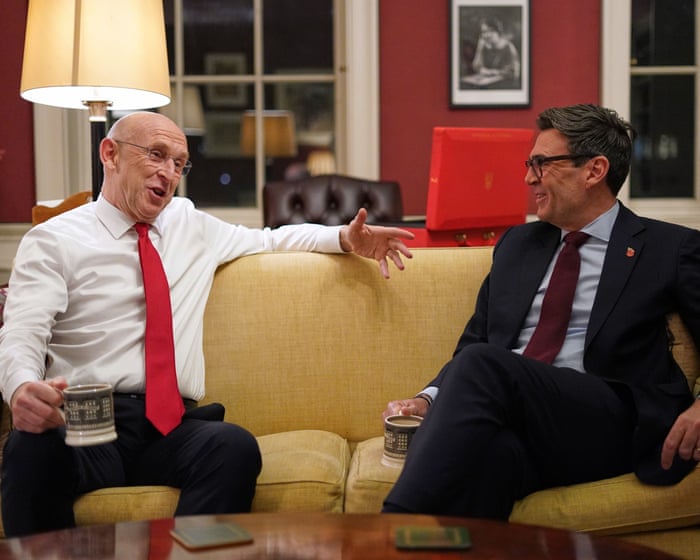
UK officials have begun discussing possible long-term arrangements with the EU, which could include free movement, Business Secretary Jonathan Reynolds said. The immediate focus is a November summit on trade changes and a youth mobility deal; Prime Minister Andy Burnham says he will explain longer-term options and trade-offs afterward, with voters having a say.
Key Facts
Reynolds said officials are discussing possible future options for the UK-EU relationship.
The November EU summit is expected to focus on easing some trading restrictions and agreeing a youth mobility deal.
Proposed summit measures include agreements on food and drink and emissions trading.
Burnham said he would set out the options for a long-term relationship after the summit and explain the trade-offs.
Reynolds said voters would decide on any future changes, but he did not specify whether they would vote in an election or referendum.
Labour MP Melanie Onn warned that reopening the debate could revive divisions over Brexit.
Reform UK leader Nigel Farage criticized officials for discussing freedom of movement and said Burnham lacked a mandate for the debate.
Burnham has said that rejoining the single market and accepting free movement could be included in a Labour manifesto, while fully rejoining the EU would require another referendum.
Read the Original
Want the full story? Tap a source to open the original
article.
Severe rains flooded parts of Ecuador’s largest city after battering the country’s coast. The article describes the flooding as the latest storm to hit Ecuador amid a strengthening El Niño.
Key Facts
Severe rains battered Ecuador’s coast.
Parts of Ecuador’s largest city are underwater.
The article describes the flooding as the latest storm to hit the country.
The storm occurred amid a strengthening El Niño.
Read the Original
Want the full story? Tap a source to open the original
article.
Human Rights for Sport says at least six Iranian athletes face execution after Iran’s Supreme Court upheld their death sentences. The group says athletes have been targeted amid political protests and reports that six athletes have already been executed in cases linked to protests or earlier political charges.
Key Facts
Mountaineer Ali-Sina Mostafavi was executed on 14 October, after his death sentence was upheld by Iran’s Supreme Court in late September.
Mostafavi was arrested in April and accused of firing on civilians in Kerman’s Azadi Square and taking part in January protests.
Human Rights for Sport says at least six other athletes face execution, including swimmer Ali Pishevarzadeh, footballer Ehsan Hosseinpour and boxer Mohammad Javad Vafaei Sani.
The group also names MMA fighter Benyamin Naghdi, equestrian athlete Taraneh Rahimi and climber Maryam Siri among athletes sentenced to death this year.
Taekwondo athlete Siavash Jamshidi Kheirabadi was killed in early October, and MMA fighter Gholamreza Khani Shakarab was hanged in May, according to the article.
Human Rights for Sport says six athletes have already been executed in cases connected to January protests or earlier political charges.
The group reports that 217 Iranian athletes were killed by direct gunfire in January and more than 100 others were detained.
Human Rights for Sport says it is difficult to contact some athletes facing execution because security services are also targeting their families.
Read the Original
Want the full story? Tap a source to open the original
article.
Two men have been charged in connection with an incident near RAF Fairford in Gloucestershire on 27 September. Mohmed Abdulkarim faces a charge of assisting a foreign intelligence service, while Nouman Essghir faces a charge of entering a prohibited place for a purpose prejudicial to the UK.
Key Facts
The incident took place near RAF Fairford on 27 September.
Three suspicious vehicles were seen near the US-operated airbase.
The sighting led authorities to declare a major incident.
Mohmed Abdulkarim has been charged with assisting a foreign intelligence service.
Nouman Essghir, 24, has been charged with entering a prohibited place for a purpose prejudicial to the UK.
Both men are due to appear at Westminster Magistrates’ Court.
A 25-year-old UK-Iranian man was released without charge and remains on police bail after being re-arrested last week.
Read the Original
Want the full story? Tap a source to open the original
article.
Israelis are voting in an election that could leave Prime Minister Benjamin Netanyahu’s bloc short of a majority. Exit polls are expected after voting ends, but coalition talks may delay the formation of a government; official results are scheduled for publication on November 4.
Key Facts
Polling runs from 7 a.m. to 10 p.m. local time on Tuesday.
About 7.3 million Israelis are eligible to vote, including 1.2 million Palestinian citizens of Israel.
Final polls published Friday put Netanyahu’s bloc at an average of 50 seats and the opposition bloc led by Gadi Eisenkot at 54 seats.
The Knesset has 120 seats, and a coalition needs at least 61 for a majority.
Israel uses proportional representation: voters choose a party, and parties need at least 3.25 percent of the vote to enter the Knesset.
The final vote tally is expected by Friday, while official results are scheduled to be published on November 4.
President Isaac Herzog will consult party leaders and nominate the candidate he believes can best form a government; that candidate can take up to 42 days to do so.
Read the Original
Want the full story? Tap a source to open the original
article.
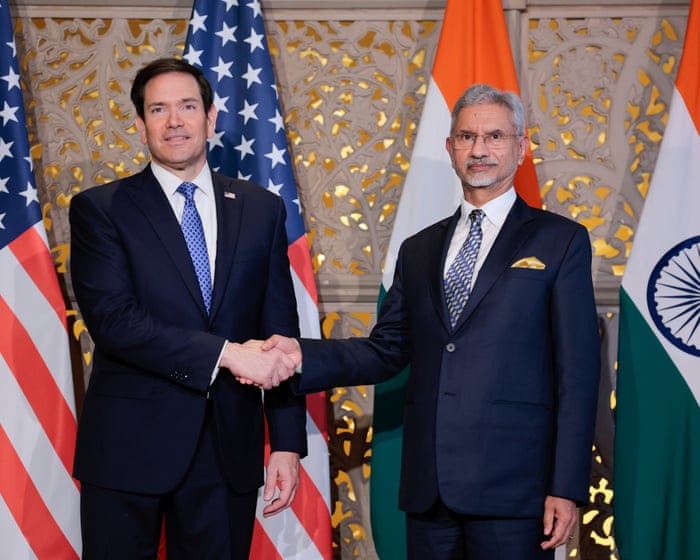
U.S. Secretary of State Marco Rubio visited Mumbai and Jamnagar on his second trip to India this year, but did not travel to New Delhi or meet Prime Minister Narendra Modi. Analyst Milan Vaishnav said the itinerary reflected the Trump administration’s focus on business deals and efforts to encourage India to process more Venezuelan crude, even as trade disputes and U.S. ties with Pakistan complicate relations.
Key Facts
Rubio met India’s foreign minister, Subrahmanyam Jaishankar, and business leaders in Mumbai.
Rubio visited Jamnagar, home to Reliance Industries’ large oil refinery complex, and met Reliance chair Mukesh Ambani.
The article says U.S.-India ties have faced strain over tariffs and India’s purchases of Russian oil.
Vaishnav said Mumbai was a fitting location for promoting business deals, though he noted that the choice of venues was intentional.
Vaishnav said the administration wanted to encourage Reliance and India to process more Venezuelan crude.
Vaishnav cited high U.S. petrol prices and the November 3 midterm elections as reasons the administration wanted to show it was working to lower fuel costs.
Vaishnav described the Trump administration’s embrace of Pakistan after the May 2025 India-Pakistan conflict as a major shift.
Read the Original
Want the full story? Tap a source to open the original
article.
Israelis are voting in an election centered on Benjamin Netanyahu’s leadership, the October 7 security failures and the country’s direction after three years of war. Netanyahu campaigned on the threat from Iran, while opponents promised accountability and political changes; the article says the opposition entered the vote with stronger organization and voter motivation, though its parties faced late infighting.
Key Facts
The election is the first opportunity for voters to judge Netanyahu over the security failures before the Hamas-led October 7 attacks and his record during the subsequent war.
Netanyahu made Iran a central campaign issue and warned that Iran was moving closer to building a nuclear weapon.
Israeli officials said Netanyahu sought President Donald Trump’s approval for a strike on Iran before the election, but Trump did not agree.
The officials said IDF chief of staff General Eyal Zamir refused to prepare for a potential strike, warning it could trigger escalation and disrupt the election.
Netanyahu opponent Gadi Eisenkot called for accountability over October 7, a national commission of inquiry and drafting ultra-Orthodox men into the military.
Netanyahu’s opponents criticized claims that some of his advisers and his campaign manager received money from Qatar; Netanyahu said he did not know his advisers were paid.
The article described Netanyahu’s bloc as divided and unpopular, while the opposition had stronger organization and turnout efforts.
The article said more than 50,000 Israelis who had left the country returned to vote, and that Arab turnout was expected to be unusually high.
Read the Original
Want the full story? Tap a source to open the original
article.
Two London men, both 24, have been charged under the UK’s National Security Act 2023 following an investigation into a suspected plot near RAF Fairford. Police have said Iranian state involvement was highly likely; five other men arrested in the investigation remain on bail.
Key Facts
Mohmed Ahmad Abdulkarim is charged with assisting a foreign intelligence service.
Nouman Essghir is charged with entering a prohibited place for a purpose prejudicial to the UK.
Both men are 24 and from London.
They are due to appear at Westminster Magistrates’ Court on Tuesday.
The incident took place near RAF Fairford in Gloucestershire on 27 September.
Five other men arrested during the investigation remain on police bail.
The Crown Prosecution Service said the charges followed a Counter Terrorism Policing investigation.
Read the Original
Want the full story? Tap a source to open the original
article.
Australia’s public broadcaster, the ABC, plans to send One Nation a cease-and-desist letter over the party’s use of Bluey in a political cartoon. ABC managing director Hugh Marks said the character was used without permission and that the broadcaster believes the video infringes its intellectual property. At a Senate hearing, Marks also discussed a former news director’s termination payout and changes to Four Corners after a review found flaws in some programs.
Key Facts
The 2024 One Nation video, titled “State of Melbourne,” has received about 1.3 million YouTube views.
The cartoon shows Bluey and political figures being struck by an SUV; some scenes depict characters putting bodies in the vehicle’s trunk.
Marks said the ABC had sought legal advice and contacted Bluey distributor BBC Studios and creator Ludo.
Marks said One Nation had not sought permission to use Bluey and that the ABC planned to issue a cease-and-desist letter.
The Senate hearing took place a week after an alleged attack outside independent MP Helen Haines’s electorate office that left her without both legs.
Former ABC news director Justin Stevens received a $353,230 termination payout after Marks decided he should not work out his notice period.
Marks said the ABC found substantial flaws in much of former Four Corners reporter Mahmood Fazal’s work and had replaced the program’s leadership.
The ABC said it was reviewing its editorial guidance on anonymous sources.
Read the Original
Want the full story? Tap a source to open the original
article.
UK prosecutors charged two men under the National Security Act over a September incident at RAF Fairford, an English airbase used by the United States. One is accused of assisting Iran’s intelligence service, while the other is accused of entering a prohibited place; both are due in court Tuesday.
Key Facts
Mohmed Abdulkarim, a 24-year-old British-Iranian dual national, is charged with assisting Iran’s intelligence service.
Nouman Essghir, a 24-year-old British citizen, is charged with entering a prohibited place for a purpose prejudicial to the UK.
Essghir was arrested outside RAF Fairford on September 27.
Police and army bomb-disposal experts searched the area, and dozens of residents were evacuated from their homes.
Abdulkarim was arrested in the week before the charges were announced.
Six other men have been arrested and released on bail while the investigation continues.
RAF Fairford, in Gloucestershire, was used by US bombers during the US-Israeli war on Iran this year.
UK counterterrorism police said they believed Iran was the country Abdulkarim was assisting; Iran’s ambassador to Britain denied that activity at the base was coordinated in Iran.
Read the Original
Want the full story? Tap a source to open the original
article.
Ahead of the UK budget, the government announced five cost-of-living measures it calls “everyday fixes,” including changes to mileage tax relief, parental pay and Carer’s Allowance rules. Unison welcomed the mileage change but said rising food and fuel costs require bolder, longer-term policies.
Key Facts
The government plans to make the 55p-per-mile tax-free rate permanent for the first 10,000 business miles and raise the rate for additional miles from 25p to 35p.
The Treasury says about three million employees and self-employed people who drive their own vehicles for work will benefit from the mileage changes.
The Treasury estimates the mileage changes will save a worker who drives 6,000 business miles £120 a year in tax, and someone who drives 15,000 miles up to £300.
The government plans to extend parental pay to more than 150,000 additional parents a year, including some self-employed fathers and partners, with eligible parents receiving two weeks of support.
The budget will scrap the Carer’s Allowance rule that can remove a carer’s entire allowance for earning just over the weekly limit.
Unison general secretary Andrea Egan welcomed permanent higher mileage rates but called for policies that make wealthier people pay more and improve working-class communities.
The measures were announced ahead of the UK budget, which is due the following day.
Read the Original
Want the full story? Tap a source to open the original
article.
The opinion article describes Israel’s competitive multiparty system and says voters may be able to replace the government through elections. It cites an October 23 Maariv poll that projected Netanyahu’s governing bloc short of a Knesset majority, while noting that opposition parties could face difficulty forming a government without Arab-party support.
Key Facts
Israel’s Knesset has 120 seats, and a government needs 61 seats for a majority.
An October 23 Maariv poll projected 48 seats for Netanyahu’s governing bloc.
The article says the poll projected that parties opposed to Netanyahu could hold a substantial majority.
The article identifies former military chief Gadi Eisenkot as the opposition’s leading figure and says his party was projected to be the opposition’s largest.
Several opposition leaders have ruled out relying on Arab parties, whose support may be needed to form a government.
Arab citizens of Israel can vote in national elections.
The article notes that Palestinians living under Israeli occupation in the West Bank cannot vote for the Knesset.
The article describes Israel as having a multiparty system, an opposition, an independent press and a judiciary that has resisted political interference.
Read the Original
Want the full story? Tap a source to open the original
article.