Fact-first summaries of the news — stay informed, stay grounded.
Your favorite news sources, one calm feed — fact-first summaries that always link to the
original story. No outrage bait, and we tell you when you're caught up. How it works
World News
Comprehensive coverage of international news and global events
Roman Abramovich has filed a claim with the European Court of Human Rights saying that an investigation by Jersey authorities into his finances violates his human rights. The investigation involves frozen assets linked to the £2.4 billion sale of Chelsea football club, with the UK government seeking to control how the money is used for victims of the war in Ukraine.
Key Facts
Roman Abramovich is under UK sanctions because of his ties to Vladimir Putin.
Jersey authorities are investigating Abramovich for corruption and money laundering.
£5.3 billion of Abramovich’s assets are frozen in Jersey.
The investigation affects £2.4 billion from the sale of Chelsea FC, which Abramovich promised to donate to Ukraine war victims.
Abramovich claims the investigation is unfair, lacks evidence, and is politically motivated.
He argues his right to a fair trial and privacy were violated under the European Convention on Human Rights.
The UK government wants the sale proceeds to be used only for helping Ukraine.
Abramovich wants flexibility on how the funds are spent, including in parts of Ukraine controlled by Russia.
Read the Original
Want the full story? Tap a source to open the original
article.
Israel has attacked Lebanon’s water systems during recent conflicts, damaging key water facilities and making it harder for people to access water. Experts say these actions aim to displace local populations and create a buffer zone in southern Lebanon.
Key Facts
Israel intensified military actions in Lebanon starting March 2, 2026, after Hezbollah fired rockets.
Israeli strikes damaged at least seven important water sources in southern Lebanon and the Bekaa Valley.
More than 1.2 million people have been displaced in Lebanon due to the bombing campaign.
Israel occupies several villages in southern Lebanon and is maintaining a security buffer zone about 10 kilometers deep.
Targeting of water infrastructure includes direct attacks on water facilities and indirect attacks on electricity that powers water systems.
Local experts and humanitarian groups say these attacks are deliberate to prevent residents from returning home.
Israel previously damaged six water facilities in Lebanon in 2023.
Medical and journalistic infrastructure in southern Lebanon have also been affected during the conflict.
Read the Original
Want the full story? Tap a source to open the original
article.
The ongoing war between the US, Israel, and Iran has caused serious environmental damage in the Middle East. Attacks on oil refineries, gas plants, and ships have released large amounts of pollution, risking harm to people and nature around the region.
Key Facts
The conflict has caused oil refineries and factories to catch fire, releasing at least five million tonnes of carbon dioxide in the first two weeks.
Smoke from refinery fires contains harmful chemicals that can worsen health problems, especially for people with asthma or the elderly.
An Iranian strike hit a Bahraini oil refinery on April 5, while Israeli attacks targeted multiple sites near Tehran, Iran’s capital.
Pollution from damaged fuel depots has leaked into Tehran’s water system, causing explosions in nearby residential areas.
Damaged liquefied natural gas plants in Qatar release methane, a gas much more harmful to the climate than carbon dioxide.
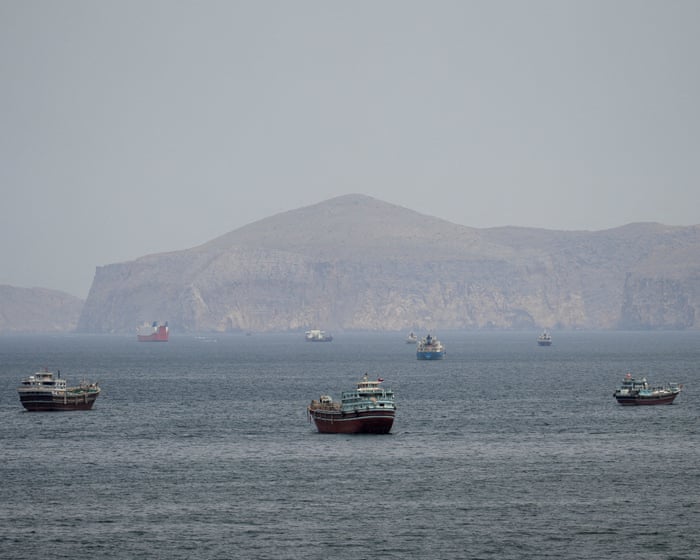
A US strike on an Iranian ship caused a 20-kilometer-long oil slick near the Strait of Hormuz, threatening coastal ecosystems like mangroves.
The conflict’s environmental impact is complex because many different industrial sites, each with various risks, have been damaged.
Mountains surrounding Tehran trap pollution, increasing health risks for the city’s nine million residents.
Read the Original
Want the full story? Tap a source to open the original
article.
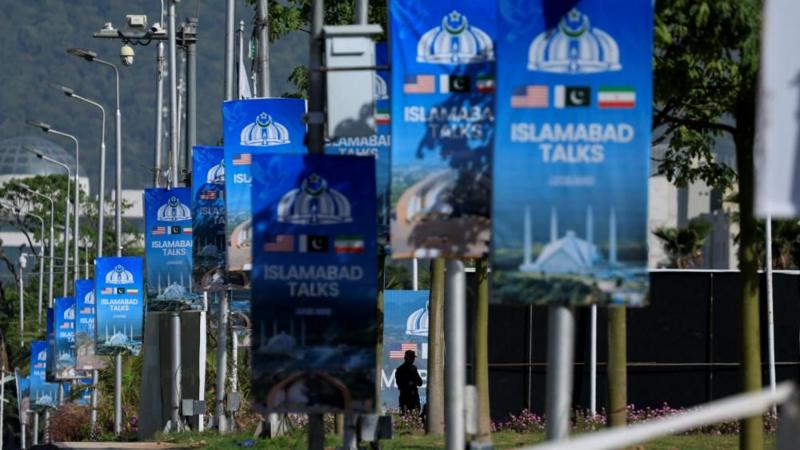
President Donald Trump announced a ceasefire extension with Iran to allow more time for peace talks, but the US will continue its blockade on Iranian ports. Peace talk preparations are ongoing in Islamabad, Pakistan, though no date for the talks has been confirmed.
Key Facts
The US will extend the ceasefire with Iran to enable the creation of a unified proposal to end the conflict.
The US blockade on Iranian ports will remain in place during the ceasefire period.
Iran insists the blockade be lifted before entering peace negotiations.
Peace talks are being prepared in Islamabad, but no date has been set.
Negotiations between the US and Iran have lasted over 21 hours but have not yet resulted in agreement.
The US Vice President stated Iran did not accept US terms after negotiations.
President Trump warned Iran about consequences if no deal is reached on reopening the Strait of Hormuz.
The region remains tense with ongoing military and diplomatic activities involving the US and Iran.
Read the Original
Want the full story? Tap a source to open the original
article.
The United States and Iran are competing to control the Strait of Hormuz, a crucial waterway for global oil trade. Iran is seizing ships to show it can block the strait, while the U.S. blocks Iranian ports to collapse Iran’s oil exports and economy. Both sides claim they have the advantage as talks continue but no agreement has been reached.
Key Facts
President Trump postponed plans for airstrikes on Iran’s bridges and power stations.
Pakistan says talks with Iran and the U.S. are still possible, but tensions have moved to naval actions.
Iran tries to stop ships from passing through the Strait of Hormuz by firing on and seizing vessels.
The U.S. is blocking Iranian ports to stop oil exports and pressure Iran’s economy.
Experts say Iran may soon run out of space to store oil, forcing production cuts.
The Foundation for Defense of Democracies states that Iran’s shutdowns could cause permanent damage to its oil wells.
Cargo tracking shows Iran has bypassed the U.S. blockade using tankers to export oil.
Oil prices remain above $100 a barrel, reflecting ongoing impacts of the conflict on the global market.
Read the Original
Want the full story? Tap a source to open the original
article.
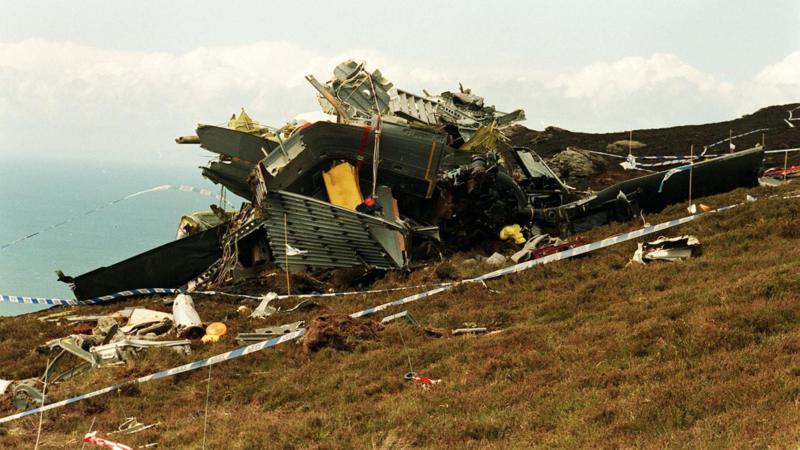
Families of those killed in a 1994 Chinook helicopter crash in Scotland have welcomed Prime Minister Sir Keir Starmer's agreement to meet them. This crash killed 29 people, and families hope the meeting will lead to more truth and transparency about what happened.
Key Facts
The Chinook helicopter crashed in June 1994, killing four crew members and 25 passengers.
The crash involved senior security personnel traveling from Northern Ireland to Scotland.
For years, the pilots were wrongly blamed but were officially cleared in 2011.
Families have campaigned for full release of all documents related to the crash.
They also want a judge-led public inquiry, which the Prime Minister has so far rejected.
Liberal Democrat MP Tessa Munt asked for the Prime Minister to engage with the families.
The Prime Minister's agreement to meet the families is the first direct contact in over 30 years.
Families hope this meeting leads to a schedule for releasing information and considering a full inquiry.
Read the Original
Want the full story? Tap a source to open the original
article.
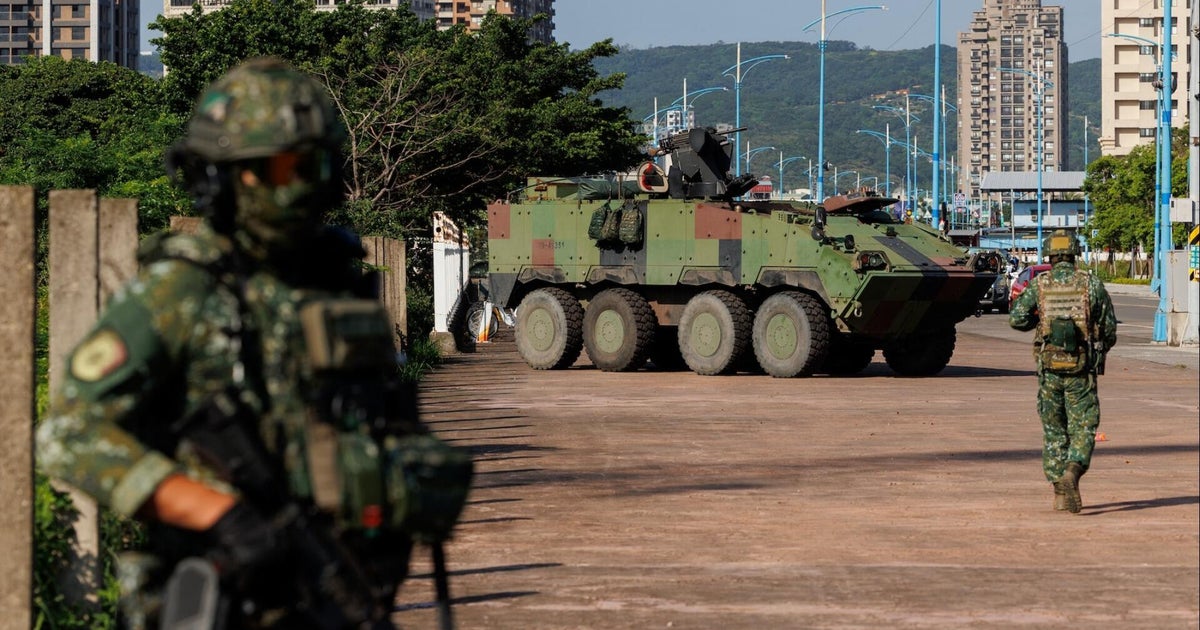
An expert from Stanford University, Eyck Freymann, warned about the possibility of China starting a conflict with Taiwan. He shared his research and concerns about this issue in an article for The Free Press and discussed it on CBS News.
Key Facts
Eyck Freymann is a Hoover Fellow at Stanford University.
He recently wrote about China potentially invading Taiwan.
His research was published by The Free Press, a Paramount Skydance publication.
Freymann appeared on CBS News to explain his warnings.
The situation involves tensions between China and Taiwan.
China is considered a major international power by many experts.
Taiwan is a self-governed island that China claims as part of its territory.
The possibility of conflict could have significant effects on global politics and security.
Read the Original
Want the full story? Tap a source to open the original
article.
Iran’s leaders and military show readiness to resume war with the United States and Israel. Despite a ceasefire extension by President Donald Trump, Iran held military parades and demonstrations expressing opposition to major concessions in peace talks.
Key Facts
Iran’s military and leaders are prepared to restart conflict with the US and Israel.
President Trump extended a two-week ceasefire with Iran for an unspecified time.
Iran organized military parades in Tehran as the ceasefire period ended.
Ballistic missiles like Khorramshahr-4 and Ghadr were showcased during the parades.
Crowds chanted slogans against America and Israel, calling for more missile strikes.
State media showed support from armed groups and women ready to fight.
Iranian TV promotes a strong military stance and rejects major concessions in talks.
A video by an IRGC news agency used artificial intelligence to criticize President Trump for extending the ceasefire alone.
Read the Original
Want the full story? Tap a source to open the original
article.
A former NATO chief, Lord Robertson, said that Britain can no longer rely heavily on the US for military support and must become more independent. He pointed out that relations between the UK and US have worsened, especially during President Donald Trump’s time in office, and urged Britain to increase its own defence spending and cooperation with European allies.
Key Facts
Lord Robertson said Britain's high military dependence on the US is no longer practical.
He cited actions by President Trump, like attacking Iran without broad support and imposing tariffs on allies, as signs of changing US foreign policy.
The UK and US are growing apart in values and diplomatic tone, reaching a historic low during Trump’s presidency.
Robertson warned that the US might not always be willing to help the UK in conflict situations.
He called for the UK to become more independent militarily and work closely with European countries against threats like Russia.
The UK aims to raise defence spending to 3.5% of its GDP by 2035 to meet NATO targets.
An £18 billion funding gap remains in the UK’s 10-year defence investment plan.
A report by the House of Lords said the UK-US special relationship is under more strain than at any time since World War II.
Read the Original
Want the full story? Tap a source to open the original
article.
The US military action in Iran has affected both the United States and its European NATO partners. European countries have increased their support and help, showing a strong partnership within NATO.
Key Facts
The US carried out a military operation in Iran.
This operation impacted Americans and European NATO allies.
European NATO countries have taken on more duties in response.
These allies have given important support to the US during the conflict.
The cooperation highlights the strength of the NATO alliance.
Read the Original
Want the full story? Tap a source to open the original
article.
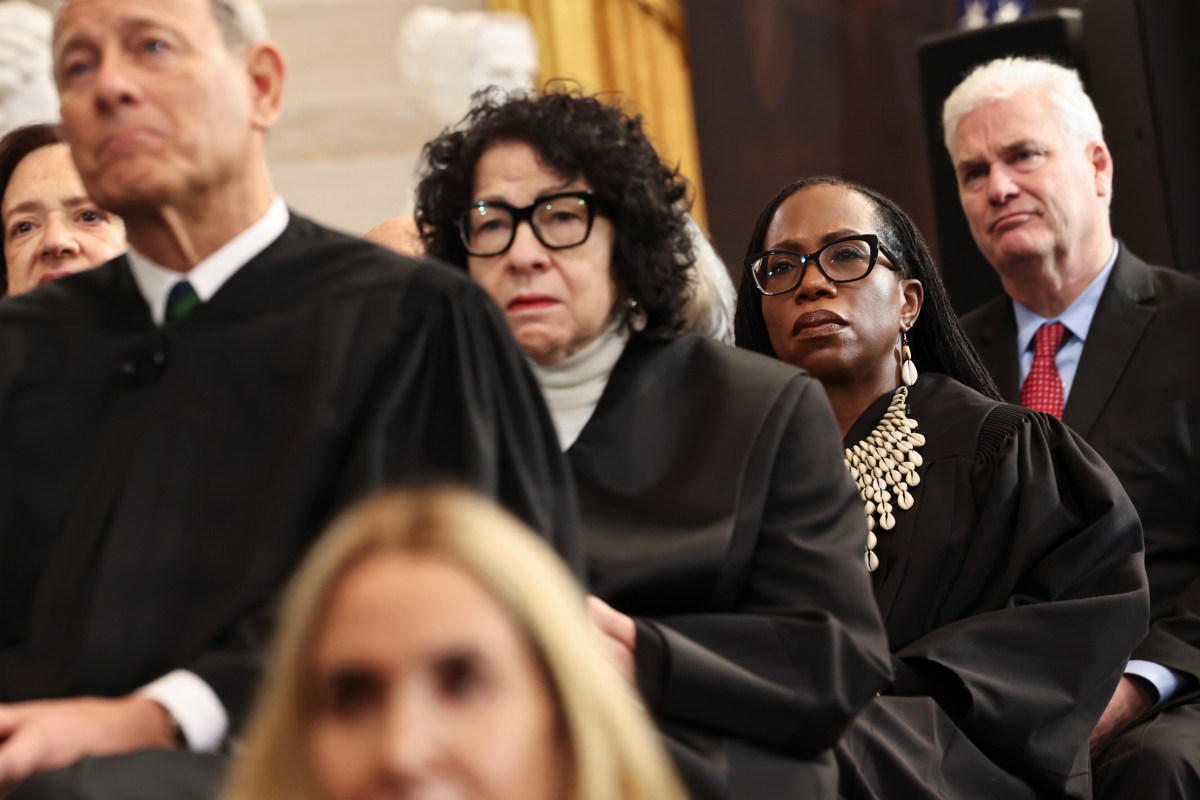
The U.S. Supreme Court ruled that a Michigan lawsuit to shut down part of the Line 5 oil pipeline must stay in state court. The pipeline, owned by Canadian company Enbridge, has faced legal and safety challenges related to its operation under the Great Lakes.
Key Facts
Justice Sonia Sotomayor wrote the unanimous Supreme Court decision supporting Michigan’s position.
Enbridge tried to move the case to federal court but missed the deadline to do so.
The lawsuit aims to stop a 4.5-mile section of Line 5 running beneath the Straits of Mackinac, which connects Lake Michigan and Lake Huron.
Michigan Attorney General Dana Nessel filed the lawsuit in 2019, citing environmental risks from the pipeline.
Enbridge has known about damage to the pipeline’s coating since 2014 and the line was struck by a ship’s anchor in 2018.
Michigan revoked Enbridge’s easement for the pipeline in 2020; Enbridge is challenging this decision in federal court.
Enbridge proposed building a protective tunnel around the underwater section, with state permits approved but federal approvals pending.
Legal issues surrounding Line 5 also continue in Wisconsin, where a federal judge ordered a shutdown for a segment crossing tribal land.
Read the Original
Want the full story? Tap a source to open the original
article.
President Donald Trump described Iran’s leadership as divided while announcing an extension of a ceasefire to allow more negotiation time. Key figures in Iran’s government include the new Supreme Leader Mojtaba Khamenei and Parliamentary Speaker Mohammad Bagher Ghalibaf, who lead Iran’s response and talks with the US.
Key Facts
President Trump called Iran’s leadership "seriously fractured" amid ongoing ceasefire talks.
The US naval blockade on the Strait of Hormuz and Iranian ports remains in place.
Mojtaba Khamenei became Iran’s new Supreme Leader in March after his father was killed in US-Israeli airstrikes.
Mojtaba Khamenei has strong ties to Iran’s powerful military group, the Islamic Revolutionary Guard Corps (IRGC).
Reports say Mojtaba Khamenei was injured in an airstrike but continues to lead via audio meetings.
Mohammad Bagher Ghalibaf is Iran’s parliamentary speaker and head of the Iranian delegation negotiating with the US.
Ghalibaf was suggested as a possible leader preferred by the Trump administration if Iran’s government changed.
Iran’s leadership shows signs of continuing hardline policies and readiness for further conflict if talks fail.
Read the Original
Want the full story? Tap a source to open the original
article.
A Palestine Action activist named Samuel Corner is on trial for hitting a police officer with a sledgehammer during a protest at an arms factory linked to Israel. Corner says he acted out of panic to protect a fellow protester and did not intend to cause serious harm.
Key Facts
Samuel Corner, 23, is charged with causing serious injury to police officer Sgt Kate Evans with a sledgehammer.
The incident happened during a protest at Elbit Systems factory near Bristol on 6 August 2024.
Corner and five others face charges of criminal damage for destroying drones, computers, and other equipment.
Corner says he was sprayed with Pava spray (similar to pepper spray) and panicked after hearing screams.
He claims he struck the officer to protect a co-defendant who he believed was being badly hurt.
Corner said he wanted to stop the factory from making and exporting weapons.
The officer’s spine was fractured in the attack.
The defendants deny all the charges and the trial is ongoing.
Read the Original
Want the full story? Tap a source to open the original
article.
This article highlights three new films featured on the arts24 film show. It covers the biopic "Michael" about Michael Jackson, the Sundance-winning docu-fiction "The New West" about rural American life, and the Cannes contender "Die, My Love" exploring themes of love and mental health.
Key Facts
"Michael" is a biographical film directed by Antoine Fuqua about Michael Jackson.
Jaafar Jackson, Michael Jackson’s nephew, plays the main role.
Colman Domingo acts as Joseph Jackson, Michael’s father.
"The New West" is a docu-fiction that stars real rancher Tabatha Zimiga.
The film captures the challenges faced by rural Americans.
"Die, My Love" is directed by Lynne Ramsay and competed at the Cannes Film Festival.
The film stars Jennifer Lawrence and Robert Pattinson, focusing on love, isolation, and mental health.
All three films tell different human stories with strong performances and notable directors.
Read the Original
Want the full story? Tap a source to open the original
article.
Dave Mason, co-founder of the British band Traffic and writer of classic rock songs like "Feelin’ Alright," died at age 79 in Nevada. He was known for his role in the band and his solo music career, and was inducted into the Rock & Roll Hall of Fame.
Key Facts
Dave Mason was born on May 10, 1946, in Worcester, England.
He co-founded the psychedelic band Traffic in 1967.
Mason wrote hit songs including "Feelin’ Alright" and "Hole in My Shoe."
He had a solo career with multiple gold and platinum albums.
Mason contributed to albums by famous artists like The Rolling Stones, George Harrison, and Jimi Hendrix.
He was inducted into the Rock & Roll Hall of Fame in 2004 for his work with Traffic.
Mason died at his home in Gardnerville, Nevada, with no cause of death announced yet.
He had retired from touring in 2023 due to health issues related to an infection.
Read the Original
Want the full story? Tap a source to open the original
article.
Herbie, a lionhead rabbit living in Surrey, England, has been recognized by the Guinness World Records as the oldest living rabbit at 15 years and 246 days old. This age is nearly twice as long as the usual life expectancy for lionhead rabbits, which is 7 to 10 years.
Key Facts
Herbie is a lionhead rabbit adopted by Melissa and Richard Dunham when he was eight weeks old.
He reached 15 years and 246 days, making him the oldest living rabbit in the world according to Guinness World Records.
Lionhead rabbits typically live between 7 and 10 years.
Herbie lived with other rabbits named Flopsy, Tinks, and Betty during his life.
Herbie was originally living in a pet shop before adoption.
The oldest rabbit ever recorded lived to 18 years and 10 months in Australia.
Herbie shows a strong bond with his owner Richard and is described as having a big personality.
Read the Original
Want the full story? Tap a source to open the original
article.
King Charles III received a Blue Peter Green badge for his work in protecting the environment and promoting sustainability through The King's Foundation. He also placed a Blue Peter badge in a time capsule at Dumfries House, which will be opened after 100 years.
Key Facts
King Charles III was awarded a Blue Peter Green badge at Dumfries House in East Ayrshire.
The badge recognizes his efforts in promoting nature and sustainability.
He placed another Blue Peter badge into a time capsule for The King's Foundation's 35th anniversary.
The time capsule will stay buried for 100 years before being opened by future generations.
The King met schoolchildren involved in gardening and cooking programs promoting sustainability.
Secondary students from Auchenharvie Academy were recognized for their work on sustainability.
King Charles supports reducing food waste through projects like the Coronation Food Project started in 2023.
Earlier, King Charles and Queen Camilla received Gold Blue Peter badges in Liverpool for their work supporting youth and literacy.
Read the Original
Want the full story? Tap a source to open the original
article.
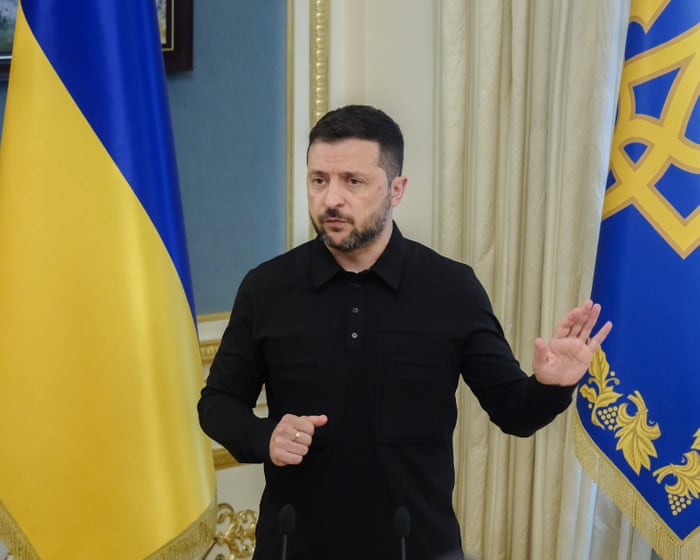
The European Union (EU) has agreed to release a €90 billion loan for Ukraine after Hungary stopped blocking it. This happened because Ukraine restarted sending Russian oil through a key pipeline to Hungary and Slovakia, ending a dispute that had delayed the loan and new sanctions against Russia.
Key Facts
The EU planned a €90 billion loan to support Ukraine’s finances in 2026 and 2027, split into two €45 billion interest-free loans.
Hungary vetoed the loan in March due to a disagreement over damage to the Druzhba oil pipeline, which supplies Hungary and Slovakia with Russian oil.
Ukraine said the pipeline was damaged by Russian drone attacks and was being repaired promptly.
Hungary’s oil company confirmed oil flow through the pipeline resumed from Belarus to Hungary and Slovakia.
The loan includes €28 billion annually for military spending and €17 billion for budget needs.
Ukraine is expected to repay the loan only after Russia pays reparations once the war ends.
The EU’s new sanctions package against Russia involves more bans on ships, maritime and energy restrictions, and trade limits.
The EU delay in loan approval also postponed new sanctions planned for the fourth anniversary of Russia’s invasion of Ukraine.
Read the Original
Want the full story? Tap a source to open the original
article.
Nepal’s Home Minister Sudan Gurung resigned amid questions about his investments and other issues. He is the second minister to leave since the new government was formed last month, and the prime minister will temporarily take over the ministry.
Key Facts
Sudan Gurung resigned as Nepal’s Home Minister on Wednesday.
He mentioned questions about his investments but gave no further details.
Gurung was appointed on March 27 and is 38 years old.
Nepal’s Prime Minister Balendra Shah will manage the Home Ministry until a new minister is named.
Gurung had ordered the arrest of former Prime Minister KP Sharma Oli and his home minister over a protest crackdown investigation.
Prime Minister Shah, a former rapper, leads a party that promises to fight corruption and improve governance.
Earlier this month, the government created a commission to investigate politicians’ assets as part of reforms.
Nepal ranks 109th out of 180 countries on a corruption perception index.
Read the Original
Want the full story? Tap a source to open the original
article.