US Central Command said US forces have helped Gulf countries ship more than 1.5 billion barrels of oil since June and supported the safe passage of more than 3,000 commercial vessels through the Strait of Hormuz. Oil exports from the region recovered to prewar levels in September, while Brent crude prices remained above their February level.
Key Facts
CENTCOM said more than 3,000 commercial vessels transited the Strait of Hormuz with US support over six months.
CENTCOM reported that more than 95 percent of ships using the strait had sailed through safely in recent months.
Admiral Brad Cooper visited the region and said the US remained committed to freedom of navigation through the strait.
Cooper said primary shipping routes through the strait were clear of Iranian mines.
Kpler estimated that 16.5 million barrels of oil per day left the region in September, excluding Iran, matching the prewar average.
Analysts attributed the export recovery to ship-to-ship transfers, US military escorts and greater use of pipelines.
Brent crude futures were about $114.50 a barrel on Sunday, compared with a February 27 settlement of $72.48.
Read the Original
Want the full story? Tap a source to open the original
article.
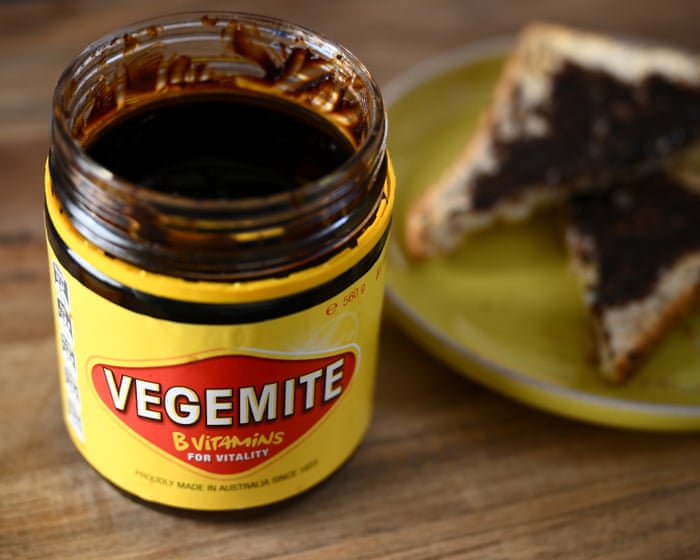
A Victorian Supreme Court judge rejected convicted murderer Andre McKechnie’s appeal against a long-standing ban on Vegemite in Victoria’s prisons. The state says the spread can help hide contraband or brew alcohol, and the court found McKechnie had not shown that the ban violated rules on inmate health and well-being.
Key Facts
McKechnie, 54, argued that the ban denied him the right to enjoy Australian culture.
Victoria has banned prisoners from consuming Vegemite since 2006.
Corrections Victoria said Vegemite’s smell can disguise contraband and distract drug-detection dogs.
Authorities also say prisoners could use the spread to brew alcohol.
The judge said McKechnie’s cultural rights were limited by his prison sentence.
McKechnie is serving a life sentence for stabbing a property developer to death in Queensland in the 1990s.
Vegemite is also banned in prisons in Queensland, South Australia and Tasmania.
Read the Original
Want the full story? Tap a source to open the original
article.
Brazilian President Luiz Inácio Lula da Silva won a fourth, non-consecutive term, defeating Senator Flávio Bolsonaro in a runoff election. Flávio Bolsonaro called for the result to be annulled, citing a two-hour voting extension approved by a Supreme Court justice, while leaders and politicians from several countries congratulated Lula or commented on the vote.
Key Facts
Lula defeated right-wing Senator Flávio Bolsonaro in Brazil’s presidential runoff on October 25, 2026.
Flávio Bolsonaro called for the vote to be annulled over a two-hour voting extension approved by Supreme Court Justice Cristiano Zanin.
Both candidates had requested additional voting time, according to the article.
Mexican President Claudia Sheinbaum and Canadian Prime Minister Mark Carney congratulated Lula.
U.S. Senator Bernie Sanders congratulated Lula, while Donald Trump Jr. criticized the voting extension.
Congressman Ro Khanna said President Donald Trump should respect the election results.
Cuban President Miguel Díaz-Canel, Chilean President José Antonio Kast, Bolivian President Rodrigo Paz, and Panamanian President José Raúl Mulino also congratulated Lula.
Read the Original
Want the full story? Tap a source to open the original
article.
A Sydney court heard a covert recording of accused double murderer Beau Lamarre-Condon speaking with a friend during a prison visit. Lamarre-Condon has pleaded not guilty to charges over the deaths of Jesse Baird and Luke Davies, and his trial continues.
Key Facts
Lamarre-Condon is accused of fatally shooting Jesse Baird and Luke Davies with his police service weapon on 19 February 2024.
He has pleaded not guilty to two murder charges and aggravated break and enter.
The friend, whose identity is suppressed, recorded a prison conversation on behalf of police in December last year.
In the recording, Lamarre-Condon apologised and said he took accountability for involving his friend.
Lamarre-Condon disputed parts of his friend’s police statement, including the claim that Davies was killed to eliminate a witness.
He said Baird had previously had a key cut for him and claimed he entered the home to retrieve belongings.
Lamarre-Condon told his friend that before the killings he had tested his gun in the Royal National Park because he planned to return there to take his own life.
The trial is before Justice Natalie Adams in the New South Wales Supreme Court.
Read the Original
Want the full story? Tap a source to open the original
article.
Brazilian President Luiz Inácio Lula da Silva won a fourth term, receiving more than 51% of the vote and defeating Senator Flávio Bolsonaro. Lula thanked young voters, while Bolsonaro said he would not concede and would seek to annul the result.
Key Facts
Lula won an unprecedented fourth term as Brazil’s president.
Lula received more than 51% of the vote.
Lula defeated right-wing Senator Flávio Bolsonaro.
Lula thanked young voters for helping him win.
Bolsonaro said he would not concede defeat.
Bolsonaro said he would seek to annul the election result.
Read the Original
Want the full story? Tap a source to open the original
article.
Luiz Inácio Lula da Silva won Brazil’s presidential runoff with more than 51 percent of the vote, defeating Senator Flávio Bolsonaro, who received 48 percent. The win gives Lula a fourth, non-consecutive term after he placed second to Bolsonaro in the first round. A late extension of voting hours caused confusion and prompted Bolsonaro to say he would seek to annul the result.
Key Facts
Electoral authorities declared Lula the winner after counting 98.76 percent of ballots.
Lula won more than 51 percent of the runoff vote, while Flávio Bolsonaro received 48 percent.
In the first round on October 4, Bolsonaro received 47.03 percent and Lula received 45.16 percent.
Lula campaigned on cost-of-living concerns and the future of his social programs.
Lula gained support as results came in from Brazil’s northeast, a stronghold for his Workers’ Party.
Supreme Court Justice Cristiano Zanin ordered polling stations that were still open to remain open for two extra hours.
Bolsonaro said he would seek to annul the election, arguing that the extended voting hours confused voters.
At age 80, Lula is set to become the oldest Brazilian president sworn in since the country returned to democracy.
Read the Original
Want the full story? Tap a source to open the original
article.
North Korea told the UN Security Council that South Korea fabricated accusations over a September 21 landmine explosion in the Demilitarized Zone that injured three South Korean soldiers. South Korea and the U.S.-led UN Command have blamed North Korea for the blast, while Pyongyang rejects the charge; Seoul has proposed military talks to clarify the border and reduce the risk of clashes.
Key Facts
North Korea’s permanent representative to the UN sent a letter to the Security Council accusing South Korea of falsely blaming Pyongyang for the explosion.
The September 21 explosion in the Demilitarized Zone injured three South Korean soldiers.
North Korea’s letter warned that violations of its sovereignty could prompt self-defence.
Pyongyang described its border fortification work as an exercise of its sovereignty and criticized South Korea’s warning shots at North Korean soldiers.
South Korea says it fires warning shots when North Korean soldiers cross the Military Demarcation Line.
South Korea’s Foreign Ministry told the Security Council that North Korea was responsible for the blast and called it a violation of the armistice agreement.
The U.S.-led UN Command said placing mines would violate the 1953 Armistice Agreement.
South Korea’s Defence Ministry proposed military talks to confirm the border’s precise location and reduce the risk of accidental clashes.
Read the Original
Want the full story? Tap a source to open the original
article.
Brazilian President Luiz Inácio Lula da Silva was elected to a fourth term after narrowly defeating right-wing candidate Flávio Bolsonaro. BBC correspondent Ione Wells explains the result from Brasília.
Key Facts
Lula won election to a fourth term as Brazil’s president.
Lula narrowly defeated Flávio Bolsonaro.
Flávio Bolsonaro is described as right-wing.
Lula is described as left-wing.
The vote was close.
BBC correspondent Ione Wells is in Brasília.
The video explains Brazil’s election results.
Read the Original
Want the full story? Tap a source to open the original
article.
A Victorian court rejected prisoner Andre McKechnie’s challenge to the ban on Vegemite in Victorian prisons. The judge said the ban was justified by prison security and safety concerns, and did not breach his rights to adequate food or cultural practice.
Key Facts
McKechnie argued that denying him Vegemite prevented him from practising Australian culture and harmed his connection to family and community.
Victoria banned Vegemite in prisons in 2006, citing concerns that it could interfere with narcotic detection dogs and be used to brew alcohol.
Justice Claire Harris ruled that the ban was a proportionate measure tied to prison authorities’ security, management and welfare duties.
McKechnie is serving a life sentence for the stabbing murder of Queensland property developer Otto Kuhne.
Queensland, South Australia and Tasmania also ban Vegemite in prisons, while New South Wales allows it in correctional centres.
Vegemite was developed in Melbourne in 1923 as an alternative to Britain’s Marmite.
Bega bought the Vegemite brand from Kraft in 2013.
Read the Original
Want the full story? Tap a source to open the original
article.
Storms Boelo and Austen hit northern Europe within 24 hours, killing one person, injuring others and disrupting electricity, transport and phone networks. Authorities reported more than 150,000 homes without power in the United Kingdom, France and Germany on Sunday.
Key Facts
More than 82,000 homes in the United Kingdom, nearly 60,000 in France and at least 10,000 in Germany had no electricity on Sunday.
A falling tree killed a 60-year-old man in southwestern Scotland and injured two women in central Scotland.
Winds reached 135 km/h (84 mph) in parts of western Scotland, where fallen trees and power lines blocked roads and rail lines.
French energy company Enedis said 288,000 homes lost power at the peak of storm Austen on Saturday; about 59,000 remained without power on Sunday.
In Germany, the outage around Freiburg-Breisgau disrupted mobile phone service and led the town’s main hospital to limit care to emergencies.
The storms injured people in Belgium, the Netherlands and France, including three crew members aboard a freight ship near the Dutch island of Schiermonnikoog.
Hundreds of flights across northern Europe were cancelled or diverted, including at Amsterdam’s Schiphol airport.
Read the Original
Want the full story? Tap a source to open the original
article.
Social media posts use “ferritin face” to describe signs such as pale skin, dark circles, hair loss and brittle nails, which they link to low iron stores. Doctors say these signs can have many causes and cannot show someone’s ferritin level; a blood test is needed to confirm iron deficiency.
Key Facts
Ferritin is a protein that stores iron, and its level indicates the body’s iron stores.
Iron stores can run low before haemoglobin falls enough to cause anaemia.
UK guidance cited in the article says ferritin below 15 micrograms per litre indicates absent iron stores, while below 30 generally indicates low stores.
Low iron may occur alongside fatigue, hair shedding, pale skin or brittle nails, but these signs are not specific to iron deficiency.
Consultant haematologist Drew Provan said appearance alone cannot determine ferritin levels and described visual signs as subjective and unreliable.
GP Aziza Sesay said changes in skin colour may be less obvious in people with darker skin.
Lucy M, 32, said a test in 2021 found her ferritin was 12 micrograms per litre after she experienced palpitations, fatigue and hair loss.
Read the Original
Want the full story? Tap a source to open the original
article.
Sharon Osbourne told BBC News that she visits Ozzy Osbourne’s grave every day and is learning to live with her grief. The family is preparing to release a film about his final concert with Black Sabbath, held in Birmingham less than three weeks before his death at age 76.
Key Facts
Ozzy Osbourne died at home in Buckinghamshire, 15 months before the interview, after suffering a heart attack.
He had Parkinson’s disease and a fractured vertebra, according to the article.
His final concert took place at Birmingham’s Villa Park less than three weeks before his death.
Thousands of fans lined the streets of Birmingham during his funeral procession and left tributes.
The family collected, sorted and photographed fans’ cards and messages; they composted the flowers for the family garden where Ozzy is buried.
Sharon said she talks to Ozzy regularly and can see his grave from her window.
Sharon and Ozzy met in 1970 and married in 1982.
Read the Original
Want the full story? Tap a source to open the original
article.
Indian cartoonists Satish Acharya and Manjul say Instagram restricted their work in India without giving them clear explanations. Meta says it may temporarily restrict accounts to comply with Indian IT Rules, which let authorities and courts order platforms to block or limit content.
Key Facts
Instagram restricted Acharya’s profile in India from 28 September to 6 October, then blocked it again for three days in October.
During the restrictions, users in India could not find Acharya’s profile through search or open it through a web link.
Manjul said Instagram restricted a post criticizing the Election Commission over changes to voter rolls.
Meta did not provide the BBC with specific reasons for restricting Acharya’s account or Manjul’s post.
India’s IT Rules allow authorities and courts to order social media platforms to remove or restrict content.
The Indian Express reported that government agencies sent nearly 195,000 blocking and content-restriction orders through the Sahyog portal from March to July; the figures do not show how many items platforms restricted or removed.
Several media outlets reported that authorities asked Meta to prevent its recommendation systems from steering users toward a limited set of narratives and to strengthen checks on content that could cause public disorder or incite violence.
Read the Original
Want the full story? Tap a source to open the original
article.
Gadi Eisenkot held his final campaign rally ahead of Israel’s upcoming national election. He called for Benjamin Netanyahu to leave office and presented himself as a moderate alternative in the first national election since the October 7 attacks.
Key Facts
Eisenkot held his final campaign rally on Sunday.
He said, “Netanyahu must go home.”
Eisenkot is a former military chief.
He is running as a rival to Benjamin Netanyahu.
The election is Israel’s first national election since the October 7 attacks.
Eisenkot has positioned himself as a moderate alternative to Netanyahu.
Read the Original
Want the full story? Tap a source to open the original
article.
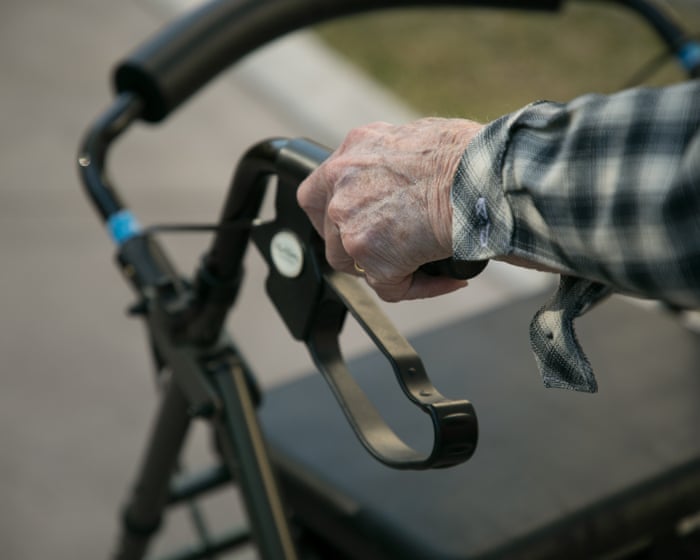
A Commonwealth Ombudsman investigation found that Australia’s aged-care assessment algorithm can produce clinically incorrect decisions that assessors cannot override under current law. The report also criticized the tool’s lack of transparency and oversight, and said public consultation and trials did not meaningfully cover the version that was introduced.
Key Facts
The Integrated Assessment Tool (IAT) helps determine the level of care older Australians can receive.
The Ombudsman found that assessors cannot change an algorithmic funding recommendation, even when it is clinically inappropriate.
The report said the public cannot meaningfully see how the algorithm turns assessment information into outcomes.
The Ombudsman said legislation should be changed to let assessors correct clinically incorrect algorithm decisions.
The investigation found that consultation and trials cited as support for the system related to earlier versions of the tool and legislation.
The department did not enforce contractual quality controls or verify whether assessors had required clinical qualifications, the report found.
Department staff raised concerns before rollout about inadequate ways for people to seek review of incorrect decisions.
Read the Original
Want the full story? Tap a source to open the original
article.
China’s Communist Party is preparing for a fifth plenum focused on party discipline, loyalty and anti-corruption. Xi Jinping’s campaign has continued for more than a decade, with over one million people investigated last year; analysts say the drive also reinforces Xi’s control and has no clear end point.
Key Facts
Xi Jinping launched his anti-corruption campaign after taking power in 2012.
China’s disciplinary authorities investigated more than one million people last year.
More than 100 of those investigated last year held ministerial- or provincial-level posts or higher.
The fifth plenum is scheduled to begin on Monday and will address party self-governance, a term the article says refers to discipline, loyalty and anti-corruption.
More than 300 members of the Communist Party’s Central Committee attend plenums.
The meeting is likely to be the last substantive one before next year’s 21st Party Congress, where a new Central Committee will be chosen.
Analysts say the anti-corruption campaign also strengthens Xi’s control and may continue indefinitely.
In January, Zhang Youxia, China’s top general and second in the military hierarchy to Xi, was placed under investigation.
Read the Original
Want the full story? Tap a source to open the original
article.
Serbia’s student-backed movement claimed a major election victory over the ruling party led by Aleksandar Vučić. The result follows nearly two years of protests after a railway station collapse in Novi Sad killed 16 people in 2024.
Key Facts
The student-backed movement claimed a major election victory.
The movement defeated Vučić’s long-standing ruling party.
Celebrations took place across Belgrade.
Protests began after a railway station collapsed in Novi Sad in 2024.
The collapse killed 16 people.
The protests continued for nearly two years.
Read the Original
Want the full story? Tap a source to open the original
article.
Luiz Inácio Lula da Silva won a fourth term as Brazil’s president with 51.7% of the vote, defeating Flavio Bolsonaro. He faces a divided electorate, a Congress strengthened by right-wing parties, strained public finances, pressure to address violence, and tense relations with the United States under President Donald Trump.
Key Facts
Lula won the October 25 runoff with 51.7% of the vote, compared with 48.2% for Flavio Bolsonaro.
The article says the narrow result reflects Brazil’s political divide and the continued strength of Bolsonarism.
The Liberal Party holds 121 of 513 seats in the lower house and 28 of 81 seats in the Senate, leaving Lula without a congressional majority.
Lula will need support from the center-right Centrao bloc to pass proposals, while lawmakers control a growing share of the federal budget.
Brazil spends more than it collects, public debt exceeds 80% of gross domestic product, and the central bank keeps interest rates high to curb inflation.
Lula faces pressure to tackle criminal groups and militias; he said he would support lowering the age of criminal responsibility from 18 to 16 for heinous crimes.
Trump imposed tariffs on Brazil last year and added a 25% tariff on some products this year, according to the article.
Lula has pledged to protect Brazil’s sovereignty while managing relations with the Trump administration.
Read the Original
Want the full story? Tap a source to open the original
article.
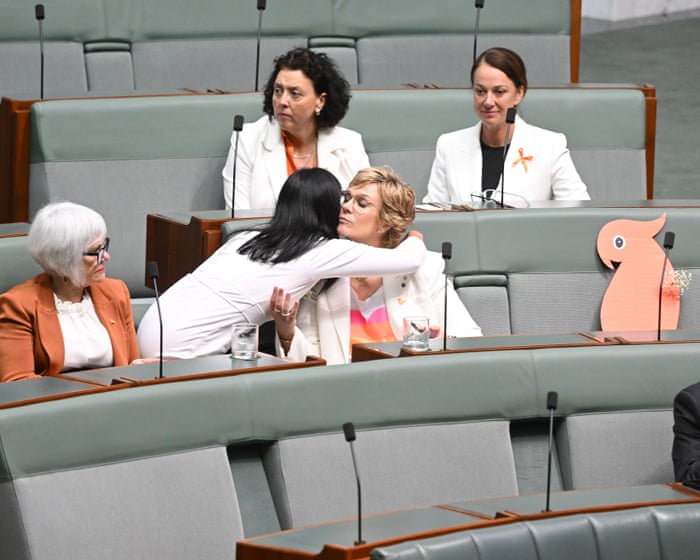
Australian Prime Minister Anthony Albanese led parliamentary tributes to independent MP Helen Haines, who is in serious but stable condition after an alleged attack outside her electorate office. The incident has prompted debate about political violence and public discourse, while opposition figures have rejected claims that parliamentary debate should be changed to address the problem.
Key Facts
Haines represents the electorate of Indi and remains in Melbourne’s Alfred hospital.
Haines has lost both legs following the alleged ramming attack, according to the article.
A 43-year-old man has been charged in connection with the attack; investigators have not established a motive.
Albanese described the shock of the alleged attack as “like a stone in our hearts.”
Opposition Leader Angus Taylor said robust parliamentary debate does not cause political violence and opposed changing parliamentary practice.
Barnaby Joyce said changes to question time were unlikely to solve the broader problem.
Albanese said anger and aggressive language are increasing across public life, including on social media.
MPs are being encouraged to sign a pledge to act with honesty, respect and compassion.
Read the Original
Want the full story? Tap a source to open the original
article.
Luiz Inácio Lula da Silva won Brazil’s presidential run-off against Flávio Bolsonaro, securing his fourth presidential election victory. He will begin a new term in January 2027, facing a divided electorate, a strongly right-leaning Congress and tensions with the U.S. administration.
Key Facts
Lula served as president from 2003 to 2010 and returned to office in January 2023.
Flávio Bolsonaro led Lula in the first round on 4 October, but Lula won the run-off three weeks later.
More than 48% of voters chose Bolsonaro, underscoring Brazil’s political divide.
Bolsonaro’s Liberal Party made the largest gains in the congressional election, leaving Lula to govern with Brazil’s most right-wing Congress of its democratic era.
Lula’s campaign gained momentum through street demonstrations and a major social media effort.
The article says Donald Trump’s administration would have preferred a conservative president in Brazil and seeks to limit China’s influence in the Western Hemisphere.
Environmentalists welcomed Lula’s win, fearing a Bolsonaro victory could weaken protections for the Amazon.
Read the Original
Want the full story? Tap a source to open the original
article.