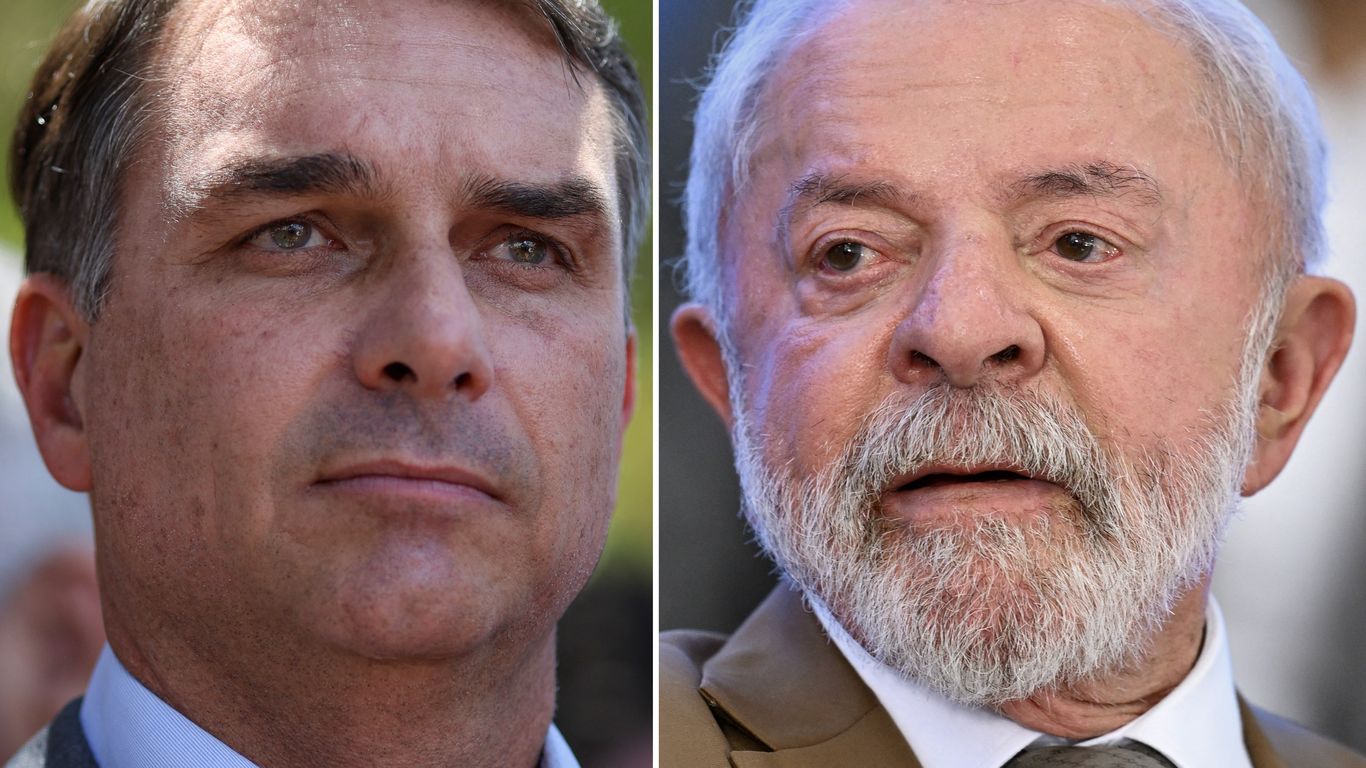
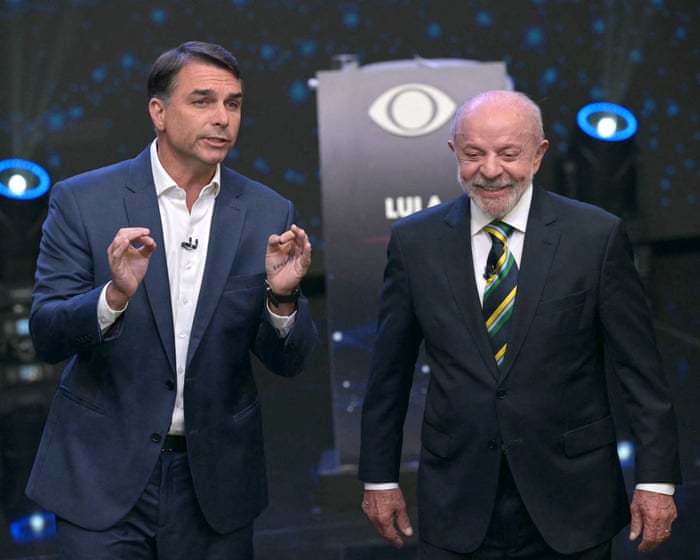
Luiz Inácio Lula da Silva won Brazil’s presidential run-off against Flávio Bolsonaro, securing his fourth presidential election victory. He will begin a new term in January 2027, facing a divided electorate, a strongly right-leaning Congress and tensions with the U.S. administration.
Key Facts
Lula served as president from 2003 to 2010 and returned to office in January 2023.
Flávio Bolsonaro led Lula in the first round on 4 October, but Lula won the run-off three weeks later.
More than 48% of voters chose Bolsonaro, underscoring Brazil’s political divide.
Bolsonaro’s Liberal Party made the largest gains in the congressional election, leaving Lula to govern with Brazil’s most right-wing Congress of its democratic era.
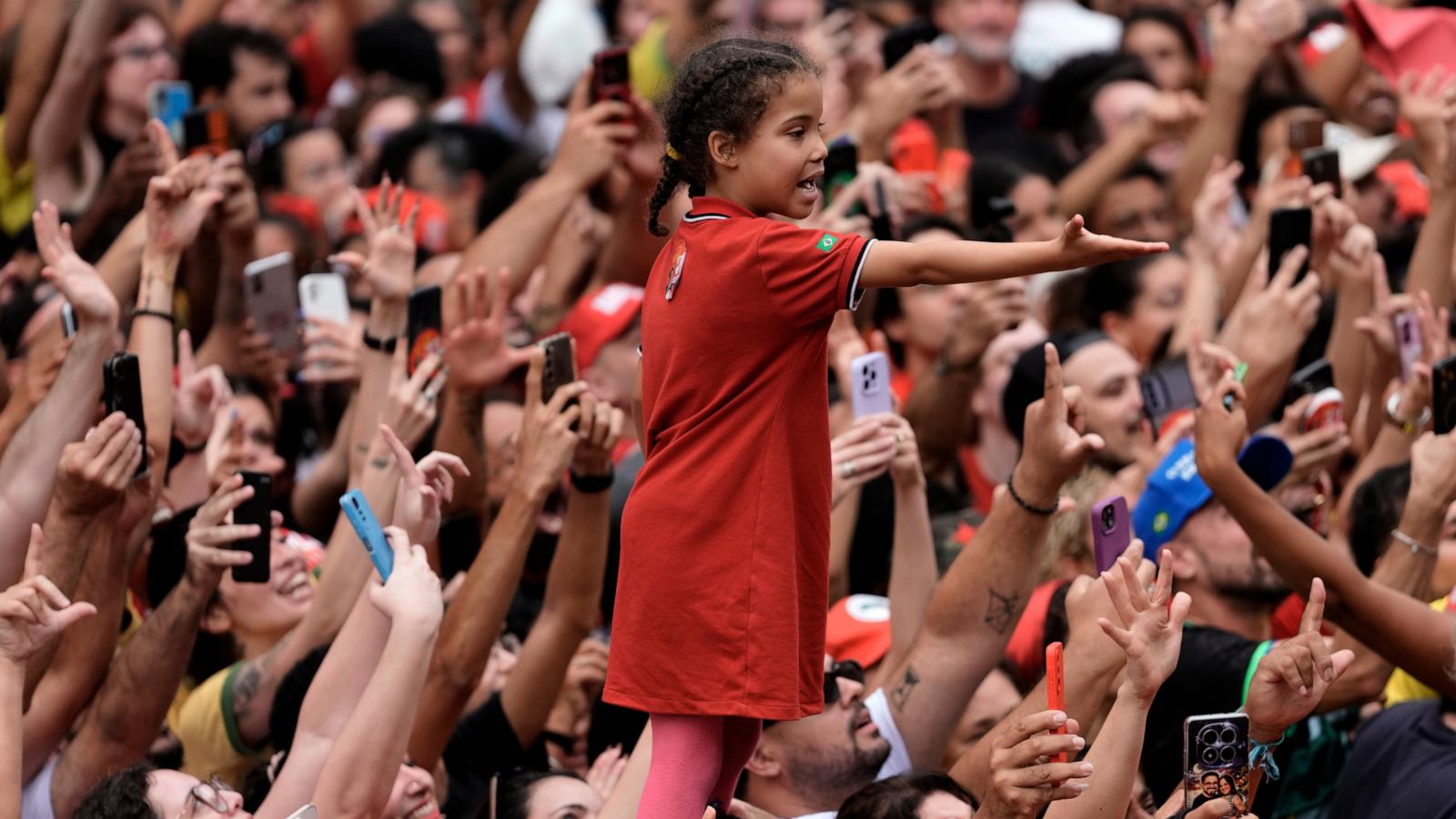
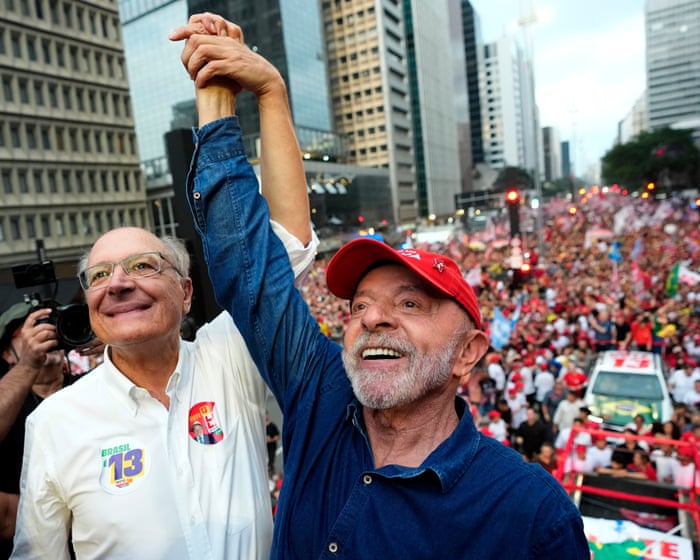
Lula’s campaign gained momentum through street demonstrations and a major social media effort.
The article says Donald Trump’s administration would have preferred a conservative president in Brazil and seeks to limit China’s influence in the Western Hemisphere.
Environmentalists welcomed Lula’s win, fearing a Bolsonaro victory could weaken protections for the Amazon.
Read the Original
Want the full story? Tap a source to open the original
article.
Brazilian President Luiz Inácio Lula da Silva won reelection, according to the electoral court after all votes were counted. His nonconsecutive fourth term is due to begin Jan. 5, 2027, and keeps Brazil under left-of-center leadership as U.S. President Donald Trump presses the country with higher tariffs.
Key Facts
Brazil’s electoral court said Lula held an unassailable lead with 100% of votes counted.
Lula is set to serve a fourth, nonconsecutive presidential term.
His next term is scheduled to begin Jan. 5, 2027.
Lula’s opponent, Flávio Bolsonaro, may pursue legal action over a decision to extend voting by two hours.
In the first round, Bolsonaro received 47% of the vote and Lula received 45%, a gap of 2.2 million votes.
Lula’s victory leaves Brazil and Mexico, the region’s two most populous nations, with left-of-center leaders.
The article reports that Trump imposed increased tariffs on Brazil.
Read the Original
Want the full story? Tap a source to open the original
article.
A student-led movement won Serbia’s election after nearly two years of protests against corruption and government negligence. The campaign began after a train-station canopy collapse killed 16 people in Novi Sad in November 2024 and grew into a broad national challenge to Aleksandar Vučić’s political dominance.
Key Facts
The Novi Sad train-station canopy collapsed on 1 November 2024, killing 16 people.
Critics connected the collapse to corruption and problems with the station’s renovation.
Student protests expanded to include farmers, actors, judges and other members of society.
Students organized through assemblies and prepared people to monitor polling stations.
The movement fielded candidates for all 250 parliamentary seats, but no students were candidates.
The student-backed list won the election, ending 14 years of dominance by Vučić’s Serbian Progressive Party.
Vučić conceded defeat on Sunday night, while saying the movement would fail.
Read the Original
Want the full story? Tap a source to open the original
article.
Brazilian President Luiz Inácio Lula da Silva won a fourth, nonconsecutive term, according to early election results reported Sunday. He defeated Flávio Bolsonaro, who campaigned on public security and corruption, while Lula emphasized Brazilian sovereignty amid tensions with the United States over tariffs.
Key Facts
Lula was the incumbent candidate in the election.
Flávio Bolsonaro is the son of former Brazilian President Jair Bolsonaro and was seen as the heir to his political movement.
The campaign focused on U.S. tariffs, climate change, the Amazon rainforest, and allegations of corruption.
The United States imposed an additional 25% tariff on some Brazilian goods this summer.
The article says Amazon deforestation has fallen 71% since 2022 and reached a record low annual level in 2026.
Lula supports expanded oil development despite his climate policies.
Jair Bolsonaro is serving a 27-year prison sentence for plotting a coup to overturn the 2022 election and remains under house arrest for health reasons.
Read the Original
Want the full story? Tap a source to open the original
article.
Brazilian President Luiz Inácio Lula da Silva won a fourth term after defeating Senator Flávio Bolsonaro in the October 25 runoff, according to official results. Lula received 51.7% of the vote, and Bolsonaro received 48.2%; Lula’s next term will begin amid a conservative-led Congress that may constrain his agenda.
Key Facts
Lula won 51.7% of the vote in the runoff, while Flávio Bolsonaro received 48.2%.
Flávio Bolsonaro is the eldest son of former Brazilian president Jair Bolsonaro.
Lula had finished second in the first round of voting, according to the article.
The article says better-than-expected turnout helped Lula win.
Lula campaigned on reducing poverty and inequality and on his record during his third term.
His campaign pledged a 15% increase to his welfare program and proposed free weekend public transport; the transport proposal requires congressional approval.
The article says Brazil elected its most conservative Congress since its return to democracy, presenting a challenge for Lula’s next term.
Read the Original
Want the full story? Tap a source to open the original
article.
Luiz Inácio Lula da Silva defeated Flávio Bolsonaro in Brazil’s presidential runoff, winning a fourth term after finishing behind Bolsonaro in the first round. With nearly 99% of votes counted, Lula received 51.75% and Bolsonaro 48.25%.
Key Facts
Lula won 51.75% of the vote, while Flávio Bolsonaro received 48.25%, with nearly 99% of votes counted.
Lula had narrowly lost the first round to Bolsonaro in early October.
The article says no first-round runner-up had won a presidential runoff in Brazil since the return of democracy in the 1980s.
Voter abstention fell from 21.08% in the first round to 19.21% in the runoff.
Lula previously served two consecutive presidential terms after winning the 2002 and 2006 elections, then returned to office after winning in 2022.
Flávio Bolsonaro’s father, former president Jair Bolsonaro, is serving a 27-year sentence for plotting a coup, according to the article.
The article identifies U.S. President Donald Trump as an international ally of the Bolsonaro family.
Read the Original
Want the full story? Tap a source to open the original
article.
Brazilian President Luiz Inácio Lula da Silva defeated Senator Flávio Bolsonaro in the presidential runoff, winning 51 percent of the vote with more than 96 percent of ballots counted. The result gives Lula a fourth, non-consecutive term; he is scheduled to take office on January 5, 2027.
Key Facts
Brazil’s Superior Electoral Court called the race for Lula at about 9:13 p.m. Brasília time.
Lula received more than 51.49 million votes, or 51 percent, while Bolsonaro received about 48.8 million votes, or 48.68 percent.
Lula had trailed Bolsonaro in the October 4 first round, receiving 45 percent to Bolsonaro’s 47 percent.
Reports of suspended public transportation prompted allegations of voter suppression during the election.
Heavy rain and transportation concerns led both campaigns to seek a voting extension; polling stations stayed open two hours later than expected.
Lula’s victory marks his fourth non-consecutive presidential term and makes him the oldest Brazilian president to take office since the country returned to democracy.
Former president Jair Bolsonaro, Flávio Bolsonaro’s father, was sentenced to 27 years in prison for his role in a coup plot after losing the 2022 election.
Read the Original
Want the full story? Tap a source to open the original
article.
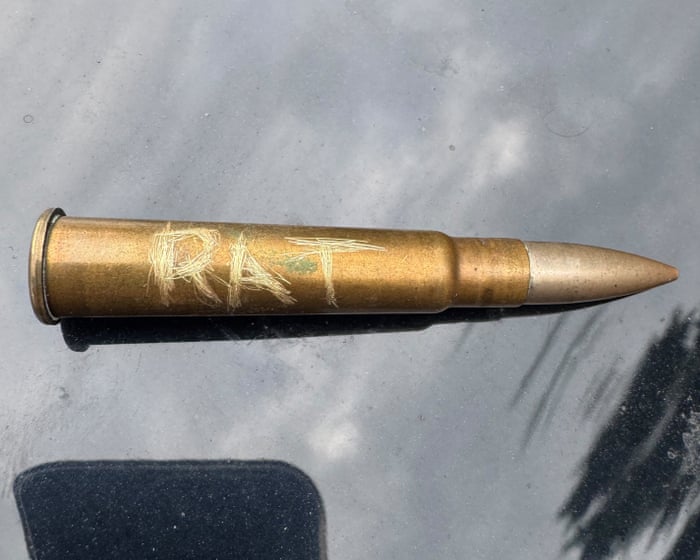
Victoria Emergency Services Minister Paul Edbrooke said he feared for his family after finding a bullet marked “RAT” and bearing his former firefighter identification number on his car on Saturday. He said he believed it was a death threat and would not be intimidated; authorities’ findings are not reported in the article.
Key Facts
Edbrooke found the bullet on the bonnet of his car after speaking with community members.
He said his children also drive the car and that the incident made him worry about his family’s safety.
Edbrooke said his firefighter identification number would not be known to the broader community.
He said people associated with the United Firefighters Union were among those sending him aggressive threats and social media abuse.
The union is in a Fair Work Commission dispute with Fire Rescue Victoria over an enterprise bargaining agreement that has remained unresolved since 2021.
The union has campaigned against Victoria’s Labor government and plans to consider disaffiliating from the Victorian Labor Party.
Edbrooke referred to an alleged attack on federal MP Helen Haines the previous week; the article said there was no suggestion the incidents were linked.
Read the Original
Want the full story? Tap a source to open the original
article.
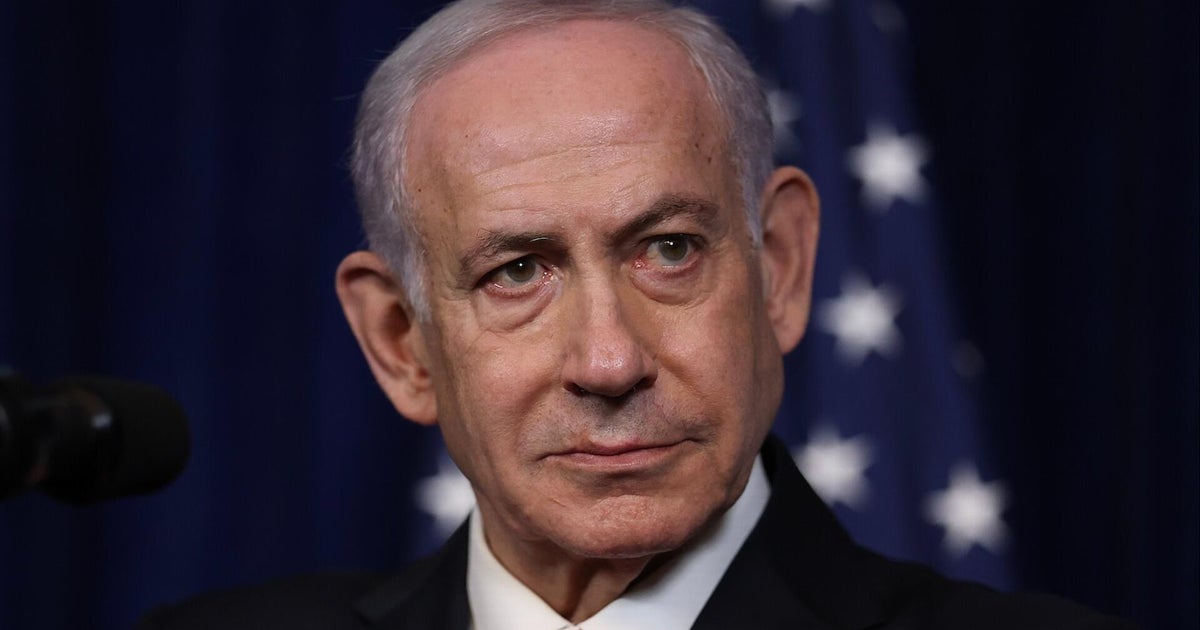
Benjamin Netanyahu’s Likud party is trailing in polls ahead of Israel’s first election since the October 7, 2023 attacks. CBS News reported on the polling ahead of Tuesday, but the article provides no figures or details about the poll.
Key Facts
Likud is the party led by Benjamin Netanyahu.
The party is trailing in polls ahead of the election.
The election will be Israel’s first since the October 7, 2023 attacks.
CBS News reported on the polling ahead of Tuesday.
The article does not identify the polling organization or provide poll numbers.
Read the Original
Want the full story? Tap a source to open the original
article.
Several thousand people protested in Prague on October 25 against a bill that would replace household licence fees for Czech public radio and television with state budget funding. The lower house approved fast-tracking the bill, which critics say could weaken media independence; it still needs approval from the upper house to become law.
Key Facts
The proposed legislation would abolish household licence fees and fund public radio and television through state budget allocations.
The lower house approved fast-tracking the bill in an overnight vote on Saturday.
The governing coalition is led by Prime Minister Andrej Babiš and includes two far-right parties.
The plan could reduce public media funding by about 15 percent, possibly starting next year.
Babiš said the proposal concerns funding transparency, while critics warn it could let the governing coalition control public media.
The opposition has pledged to challenge the legislation in the constitutional court.
Public media staff announced a strike for November 3, with backing from unions and other groups.
Organizers have planned another rally in Prague’s Letná park for November 15.
Read the Original
Want the full story? Tap a source to open the original
article.
Israeli media report that Prime Minister Benjamin Netanyahu and military chief Eyal Zamir disagree over Iran. Zamir reportedly fears government instructions could prompt an immediate military escalation and has sought written authorization; Netanyahu denies a confrontation.
Key Facts
Israeli media reported a disagreement between Netanyahu and Zamir over Iran.
Zamir reportedly requested written authorization for the government instructions.
Zamir reportedly fears the instructions could lead to immediate military escalation.
Netanyahu denied that he is in a confrontation with Zamir.
Netanyahu warned that Iran could attack Israel to disrupt Tuesday’s election.
The report was published two days before the election, according to the article.
Read the Original
Want the full story? Tap a source to open the original
article.
Venezuelan opposition leader and Nobel Peace Prize winner Maria Corina Machado returned to Venezuela after more than 10 months in exile. Cheering crowds waving Venezuelan flags greeted her; the article says the United States seized then-President Nicolas Maduro weeks after she left.
Australia has made social media platforms take reasonable steps to prevent children under 16 from holding accounts, with penalties for companies that fail to comply. The report says it is too early to know whether the law is working, while noting that other countries may consider similar rules.
Key Facts
Australia became the first country to require many social media platforms to keep children under 16 from having accounts.
The law puts responsibility on covered platforms to take reasonable steps to prevent under-16s from opening or holding accounts.
Platforms must check users’ ages and may face penalties for failing to comply.
The report demonstrated that Snapchat and TikTok blocked an account attempt by Oscar Groves, who was just shy of 16.
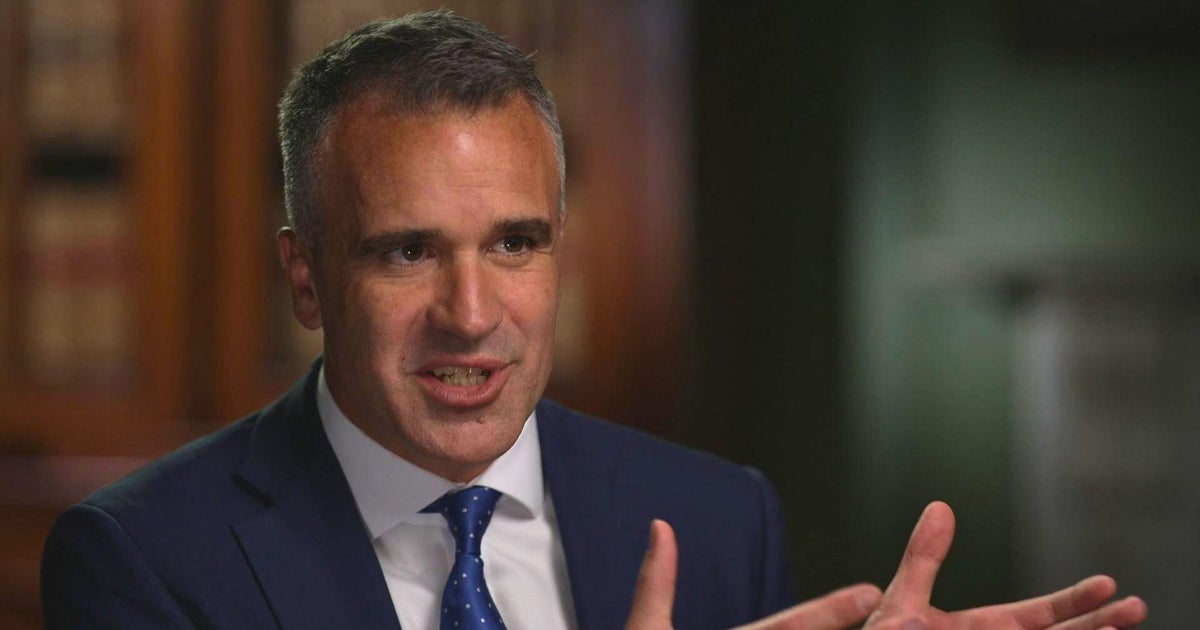
South Australia Premier Peter Malinauskas first proposed a state-level ban after his wife, Annabel West, raised concerns about teenagers’ social media use.
Australia’s national government followed the South Australian proposal, and the measure received bipartisan support.
A U.S. Surgeon General advisory cited in the report said more than three hours of social media use a day can double children’s risk of mental health problems such as depression and anxiety.
Malinauskas said children would find ways around the restrictions and did not describe the law as a complete solution.
Read the Original
Want the full story? Tap a source to open the original
article.
Bulgaria’s presidential election will go to a second round on November 1 after no candidate met the threshold to win outright. Exit polls put incumbent Iliana Iotova ahead of former caretaker Prime Minister Andrey Gyurov, while turnout stood at 22.2 percent by 8 p.m. local time.
Key Facts
Exit polls estimated Iotova’s vote share at 35 to 36.5 percent.
Exit polls estimated Gyurov’s vote share at 31 to 33.5 percent.
The second round is scheduled for November 1.
Turnout was 22.2 percent as of 8 p.m. local time, according to the Measure polling agency.
Twenty-seven candidates ran in the election.
A first-round win required more than 50 percent of votes and turnout above 50 percent of registered voters.
Campaign issues included inflation, rising energy costs, Russia’s war in Ukraine, and drone strikes on ships off Bulgaria’s coast.
Bulgaria’s president leads the armed forces, can veto legislation, and signs treaties, though the role is largely ceremonial.
Read the Original
Want the full story? Tap a source to open the original
article.
Brazilian authorities extended voting in the presidential runoff by two hours after Lula’s campaign alleged that limited public transportation prevented some voters from reaching polling stations. As vote counting began, early results showed a close contest between Luiz Inácio Lula da Silva and Flávio Bolsonaro, with the lead changing as more ballots were counted.
Key Facts
Supreme Court Justice Cristiano Zanin ordered voting extended by two hours, until 7 p.m. local time.
Lula’s campaign said transportation limits in several cities restricted voter access to polling stations.
The article reported allegations of attempted voter suppression in at least 10 states.
Vote counting began at 7 p.m. local time.
With 5% of votes counted, Lula had 51% and Bolsonaro had 48.87%.
With 13.65% counted, Bolsonaro had 50.01% and Lula had 49.99%.
Supporters of both candidates gathered to watch the count in Brasília, Rio de Janeiro and São Paulo.
Read the Original
Want the full story? Tap a source to open the original
article.
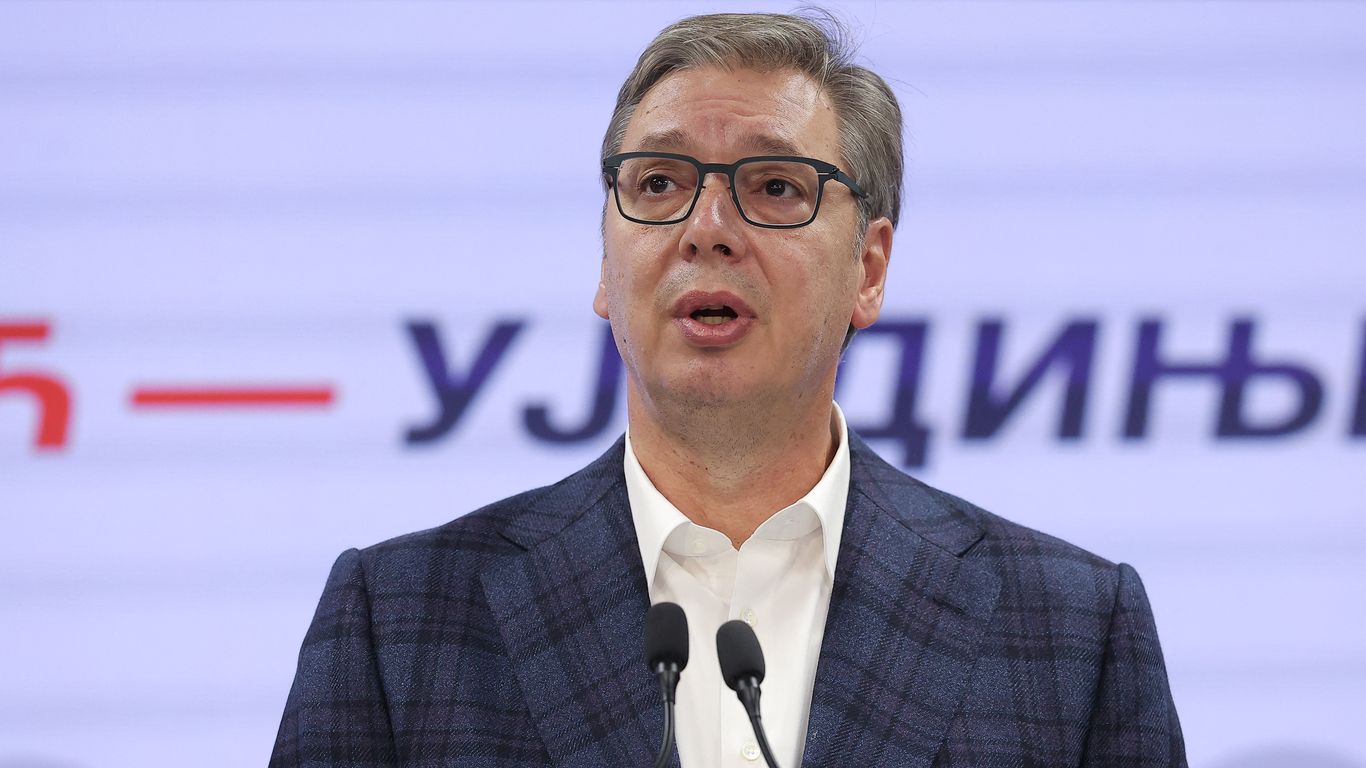
Serbian President Aleksandar Vučić conceded that his Serbian Progressive Party lost to the student-backed Student List in parliamentary elections, though official results had not been announced. The movement grew out of protests over a deadly railway station collapse and campaigned for accountability and institutional reform; it must now form a government.
Key Facts
Vučić said the Student List was projected to win 135 to 140 seats in Serbia’s 250-seat parliament, compared with 105 for his coalition.
Cardiologist Ilija Srdanović heads the Student List, while the grassroots movement has emphasized decentralized leadership.
The movement emerged after a railway station canopy collapsed in Novi Sad in November 2024, killing 16 people.
The collapse fueled public anger over alleged government corruption and prompted mass protests.
The Student List must choose a prime minister and form a government.
Serbia is scheduled to hold a separate presidential election in December to replace Vučić.
Vučić’s outreach to U.S. figures has included Donald Trump Jr., Richard Grenell and a proposed development involving Jared Kushner.
Read the Original
Want the full story? Tap a source to open the original
article.
The UK government plans to add £432 million to a rough-sleeping initiative, bringing its total funding to £874 million. It says every person sleeping rough in England will be able to move into accommodation or receive support by Christmas, with funding extended through the rest of Parliament.
Key Facts
The government initially announced £442 million for emergency accommodation and practical support.
No 10 indicated the additional £432 million would be included in Wednesday’s Budget.
The government says support will continue beyond March 2027 until the end of the current Parliament.
Outreach teams and new beds are operating in Coventry, with further provision planned in Plymouth and Camden.
More than 30 organisations have pledged support for the plan.
The National Housing Federation is working to identify at least 2,000 potential homes and bed spaces, but the number of self-contained units is unclear.
Official figures estimated 4,793 people were sleeping rough in England on a single night in autumn 2025.
Housing groups have called for Local Housing Allowance rates to be restored to levels that reflect local rents.
Read the Original
Want the full story? Tap a source to open the original
article.
Israel is preparing for a closely contested general election on Tuesday, with recent polls placing the governing coalition and opposition bloc nearly even. Centrist challenger Gadi Eisenkot has gained support as he and other opposition leaders campaign against Benjamin Netanyahu’s Likud party, while voters debate security, the economy and Israel’s political identity.
Key Facts
Polls published Friday put the governing coalition and the main opposition bloc almost neck-and-neck.
About half a million first-time voters are expected to cast ballots, and some 70,000 Israelis reportedly flew in from abroad to vote.
Large crowds of opposition supporters gathered in central Tel Aviv on Saturday night to call for a change of government.
Gadi Eisenkot is a former military chief of staff and leads the centrist Yashar party.
Eisenkot and his party have regularly topped Netanyahu and Likud in recent polls, according to the article.
Eisenkot has made security, the economy, education and Israel’s national identity central themes of his campaign.
Opposition leaders accuse Netanyahu’s government of threatening democracy and cite his efforts to curb the judiciary’s powers.
A pro-Netanyahu speaker used a racist slur about Eisenkot’s Moroccan background during a televised debate earlier this month.
Read the Original
Want the full story? Tap a source to open the original
article.
Israel is preparing for its first general election since the Hamas-led attacks of 7 October 2023. The vote could end Benjamin Netanyahu’s long period of right-wing rule, as challenger Gadi Eisenkot frames the campaign around Israel’s democratic identity and Netanyahu emphasizes security.
Key Facts
The election is scheduled for Tuesday.
It is Israel’s first general election since the Hamas-led attacks of 7 October 2023.
Benjamin Netanyahu has led a right-wing government for almost two decades, according to the article.
Gadi Eisenkot, a former military chief of staff, is Netanyahu’s main challenger.
Eisenkot says the election concerns Israel’s identity as a liberal and tolerant democracy.
Netanyahu argues that electing his rivals could make Israel less safe.
Read the Original
Want the full story? Tap a source to open the original
article.
Marine Le Pen launched her presidential campaign at a rally in Orleans, promising to restore authority and security in France. The campaign began amid nationwide protests and public discontent, which her National Rally party has used to criticize President Emmanuel Macron’s handling of public security.
Key Facts
Organizers said about 8,500 supporters attended the rally in Orleans.
Le Pen said she would re-establish the rule of law and lead France’s “renaissance.”
The article said Le Pen was leading in polls, with candidates from the right, left and centre trailing.
Protests that began in mid-September spread nationwide and reflected wider social and economic discontent.
On October 17, more than 2,000 people were arrested after shops were looted during demonstrations attended by hundreds of thousands.
The following weekend saw similar protests on a smaller scale, and further demonstrations were being discussed.
About 3,000 police officers were deployed the day before the rally to prevent unrest.
Read the Original
Want the full story? Tap a source to open the original
article.