Hundreds of thousands of people marched across France on Saturday to protest the rising cost of living and limited government resources for essential services, including schools. Demonstrations in Paris began peacefully but ended with a heavy security response; nearly 1,000 people were arrested nationwide.
Key Facts
Protests took place across France on Saturday.
Hundreds of thousands of people took part, according to the article.
Demonstrators protested the rising cost of living.
Protesters also called attention to limited government resources for essential services such as schools.
Demonstrations in Paris began peacefully.
The Paris demonstrations ended with a heavy security response.
Authorities arrested nearly 1,000 people across the country.
Read the Original
Want the full story? Tap a source to open the original
article.
Israeli forces have imposed a lockdown in Hebron and taken over Palestinian homes for use as barracks and observation posts, according to the Palestinian news agency Wafa. Palestinian groups say hundreds of families have been displaced and dozens detained during raids that followed a deadly attack on an Israeli army reserve base. Wafa also reported new settler outposts near Yatta and continuing road closures near Bethlehem.
Key Facts
Wafa reported that Israeli forces took over homes in Hebron’s Khallat Manna and Dahiyat al-Zaytoun areas for use as barracks and observation posts.
The Israeli military imposed a lockdown and carried out hundreds of raids in Hebron after two armed Palestinian men allegedly attacked an Israeli army reserve base on Friday.
The reported attack killed two Israeli soldiers; the two suspects were also killed.
The Palestinian Prisoner’s Society said Israeli forces detained at least 47 Palestinians in Hebron and displaced 293 families, or about 2,200 people, since Friday.
The group said those displaced included 127 infants, 81 pregnant women, 26 people with disabilities, 134 people with chronic illnesses and 265 people over age 60.
Wafa reported that settlers began establishing two outposts on Palestinian-owned land near Yatta, pitching tents and starting land work and infrastructure installation.
Wafa said Israeli forces continued to close roads and entrances across the Bethlehem governorate for a third day on Sunday.
Wafa reported that Israeli forces closed dirt roads leading to Tuqu on Saturday and fired tear gas and stun grenades toward Palestinian vehicles using alternative routes.
Read the Original
Want the full story? Tap a source to open the original
article.
Thousands of Protestant Orange Order members marched through Portadown, Northern Ireland, ahead of a court ruling on a ban affecting a separate parade. That parade would pass through a mainly Catholic area, where Catholic protesters blocked an earlier march in September.
Key Facts
The march took place in Portadown, Northern Ireland.
The marchers were members of the Protestant Orange Order.
The march took place before a court ruling on a ban affecting a separate parade.
The separate parade would pass through a mainly Catholic area.
Catholic protesters blocked a previous parade in September.
The marches have long contributed to sectarian tensions.
Read the Original
Want the full story? Tap a source to open the original
article.
A lawyer for U.S. citizen James “Fergie” Chambers says Spanish authorities transferred his cellphone to the FBI while Spain considers a U.S. extradition request. Chambers’s defense says the transfer violated Spanish law and a U.S.-Spain treaty, and has asked an appeals court to return the phone and explain its handling.
Key Facts
Spanish police arrested Chambers in July, and he is imprisoned in Madrid while Spanish courts consider his extradition to the United States.
The U.S. extradition request includes allegations that Chambers supported Hamas and charges linked to a protest against Israeli arms maker Elbit Systems.
Chambers’s lawyer, Aitor Martínez, says the court had given written assurances that the phone would remain in its custody during the extradition case.
The defense says it learned that the phone had been turned over to the FBI and has asked an appeals court to order its return and disclose who authorized the transfer and whether the phone was accessed.
Martínez says a 1970 U.S.-Spain treaty allows the requesting country to receive a person’s possessions only if extradition is granted.
Chambers has applied for political asylum in Spain; the article says Spanish law bars extradition until the asylum process is complete.
A judge denied Chambers’s request for provisional release earlier in October, citing his wealth as part of the flight-risk assessment.
Read the Original
Want the full story? Tap a source to open the original
article.
Brazilian voters are set to choose between Senator Flávio Bolsonaro and President Luiz Inácio Lula da Silva in a presidential runoff. Final polls show a close race, while prediction markets give Bolsonaro a stronger chance of winning.
Key Facts
Flávio Bolsonaro is the eldest son of former President Jair Bolsonaro and an ally of U.S. President Donald Trump.
Flávio Bolsonaro received 47.03 percent of valid votes in the October 4 first round, compared with Lula's 45.16 percent.
Datafolha's Thursday poll showed the candidates tied at 50 percent of valid votes.
Other final polls produced mixed results, with most showing the candidates close and within the polls' margins of error.
The Rio Times' poll average put Bolsonaro at 50.9 percent and Lula at 49.1 percent.
Polymarket gave Bolsonaro about a 78 percent chance of winning as of Saturday afternoon; Kalshi showed similar odds.
No candidate who finished second in Brazil's first round has won a presidential runoff since the country returned to democracy in 1985.
Turnout could affect the result; abstention was high in the first round, and Lula has sought to bring more voters to the polls.
Read the Original
Want the full story? Tap a source to open the original
article.
Indigenous communities in Brazil’s Amazon say they are concerned that the election outcome could affect environmental protections. Al Jazeera’s Monica Yanakiew reports on their concerns.
Key Facts
Indigenous communities in Brazil’s Amazon expressed concern about the election’s potential impact on environmental protections.
The article focuses on Brazil’s election and environmental protections.
Monica Yanakiew reported the story for Al Jazeera.
Read the Original
Want the full story? Tap a source to open the original
article.
Brazilian voters are choosing between President Luiz Inácio Lula da Silva and Senator Flávio Bolsonaro in a closely contested presidential runoff. Lula has gained ground since the first round, while the candidates’ supporters remain largely settled and undecided voters may determine the result.
Key Facts
Flávio Bolsonaro won the first-round vote by less than two percentage points.
Lula focused his runoff campaign on voter turnout after abstention reached a record high in the first round.
Flávio Bolsonaro is the eldest son of former president Jair Bolsonaro.
Jair Bolsonaro is under house arrest and serving a 27-year sentence for attempting to overturn his 2022 election defeat, according to the article.
Flávio Bolsonaro has said he would pardon his father if elected.
Flávio Bolsonaro has proposed building five large prisons and has called for constitutional changes.
The article says Flávio Bolsonaro is under investigation in two federal police inquiries over alleged corruption and money laundering.
Both candidates held large closing campaign rallies on Saturday.
Read the Original
Want the full story? Tap a source to open the original
article.
Channel 4 is bringing back One Born Every Minute for a 12th series, filmed at St Mary’s Hospital in Manchester. The new series focuses more on parents’ experiences and includes stories about caesarean births, pregnancy loss, health anxiety and complicated pregnancies.
Key Facts
The first episode airs on Sunday night.
The series is made by Dragonfly for Channel 4.
Executive producer Will Rowson said the show reflects greater willingness among parents to share personal experiences.
The series shifts its focus toward parents and their stories, rather than medical staff.
The programme features caesarean births and other surgical procedures.
Faye discusses multiple miscarriages and the anxiety she experienced during a later pregnancy.
Peace shares her experience of having twins and concerns about their growth.
Read the Original
Want the full story? Tap a source to open the original
article.
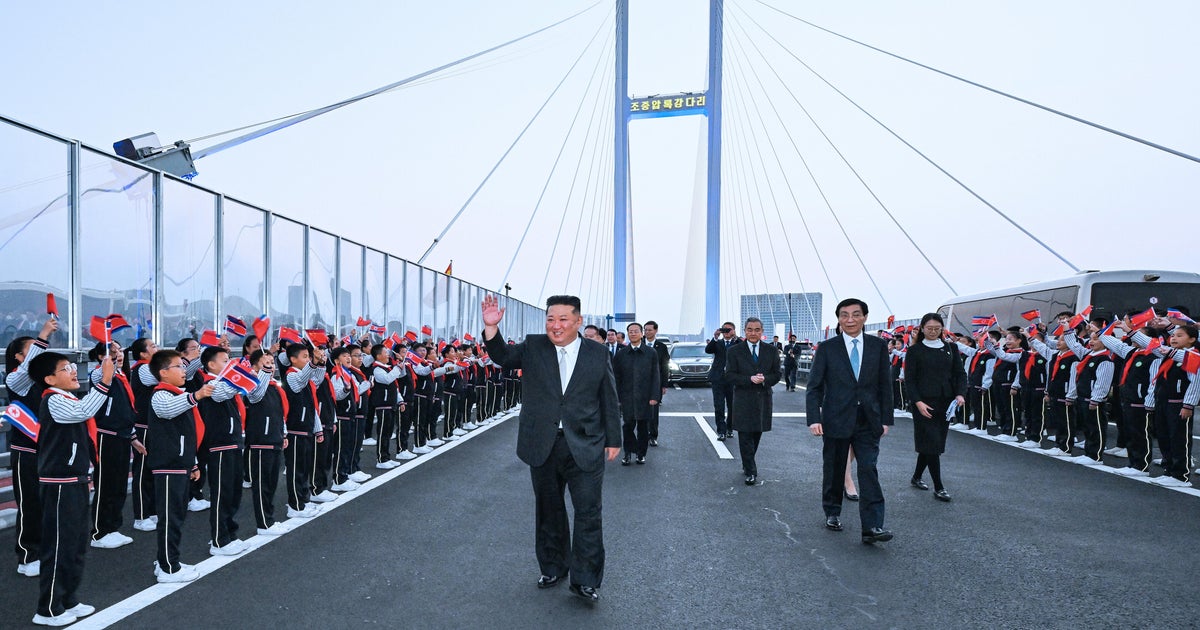
North Korean leader Kim Jong Un visited China on Saturday, Oct. 24, 2026, and inaugurated a new bridge linking the two countries. He met Chinese officials and said North Korea would strengthen cooperation and ties with Beijing.
Key Facts
Kim crossed the new bridge into the Chinese border city of Dandong, according to South Korean and Chinese sources.
Kim visited a memorial to China's support for North Korea during the 1950–53 Korean War.
Kim met Wang Huning, a member of the Chinese Communist Party's Standing Committee.
Wang conveyed Chinese President Xi Jinping's greetings, according to North Korea's state news agency.
Kim and Wang toured a car factory before Wang accompanied Kim to the bridge.
North Korea has sent troops and conventional weapons to support Russia's war in Ukraine, the article says.
Kim last visited Beijing in September 2025, when he met Xi Jinping and attended a military parade.
Read the Original
Want the full story? Tap a source to open the original
article.
Egypt is considering whether to send forces to help defend Saudi Arabia from Houthi attacks, but officials say any role would be defensive and not target the Houthis. Cairo is wary of becoming drawn into Yemen’s conflict, partly because Egypt suffered heavy losses in its 1960s intervention and wants to avoid broader regional entanglements.
Key Facts
Egypt sent thousands of troops to Yemen in 1962 to support republican forces against royalists.
Egyptian forces withdrew after heavy losses and Egypt’s defeat in the 1967 war with Israel.
President Abdel Fattah el-Sisi said a possible deployment would focus on defending Saudi Arabia, not attacking Yemen’s Houthis.
Egypt’s foreign minister called for a political solution to the Yemen conflict.
Saudi Arabia has faced Houthi missile and drone attacks, including a strike on Riyadh’s King Khalid International Airport that killed 13 people, one of them Egyptian.
Egypt’s National Defence Council said on October 18 that Egypt was ready to provide necessary and possible support to Saudi Arabia.
An Egyptian combat deployment abroad requires parliamentary approval, and a vote was scheduled for Monday after a one-week delay.
Read the Original
Want the full story? Tap a source to open the original
article.
Hundreds of thousands of people marched across France to protest rising living costs, and clashes broke out in several cities. Police arrested nearly 1,000 people, while authorities said the response was more controlled than during the previous week’s unrest.
Key Facts
Interior Minister Laurent Nunez said police arrested nearly 1,000 people nationwide on Saturday.
Riot police used tear gas in Paris and cities including Marseille, Lyon, Bordeaux, Lille, Toulouse, Montpellier and Nantes.
Authorities deployed about 70,000 security personnel for the demonstrations.
The previous week’s unrest led to vandalism of public buildings, looting of hundreds of businesses and 2,700 arrests.
Nunez said police made faster interventions, conducted more checks before demonstrations and better protected commercial areas.
At least two people were seriously injured, including a man in Toulouse and another person in Clermont-Ferrand.
Rights advocates and protesters criticized what they viewed as restrictions on freedom and the right to demonstrate.
France is due to elect a successor to President Emmanuel Macron in six months.
Read the Original
Want the full story? Tap a source to open the original
article.
Israel said it will restrict Palestinian workers from entering most areas of the occupied West Bank from Sunday through Monday and close all crossings on Tuesday, the day of its general election. The measures follow a lockdown and raids in Hebron after an attack that killed two Israeli soldiers and two Palestinian gunmen; Israeli officials say about 2,000 people have been displaced, while Hebron’s mayor put the figure at 2,200.
Key Facts
The Israeli army announced the worker restrictions and Tuesday closure of crossings.
Israeli Prime Minister Benjamin Netanyahu ordered a full lockdown of the occupied West Bank after the attack.
Two Israeli soldiers and the two Palestinian gunmen were killed in Friday’s attack on an Israeli army reserve base.
Defence Minister Israel Katz said about 2,000 people had been displaced from Hebron.
Hebron Mayor Yousef al-Ja’bari said 2,200 people had been forced from their homes and described the city and nearby villages as under a complete blockade.
The Palestinian Authority called for international pressure and described Israel’s actions as collective punishment.
The Israeli military said its operation would last several days; Netanyahu said he was planning a large-scale operation.
Israel’s general election is scheduled for Tuesday, and Netanyahu is seeking another term.
Read the Original
Want the full story? Tap a source to open the original
article.
Serbia is holding a parliamentary election on October 25, 2026, in a close contest between the ruling Serbian Progressive Party and the student-backed Students’ List. The vote follows nearly two years of protests after a train-station canopy collapse killed 16 people, and election monitors have raised concerns about campaign fairness and safety.
Key Facts
Serbia’s 6.4 million voters are choosing among 18 parties for seats in the 250-member Parliament.
The Students’ List is challenging the party of populist leader Aleksandar Vucic.
The movement grew out of student-led protests that began after the 2024 canopy collapse in Novi Sad.
Protesters have demanded accountability and justice for the 16 people killed in the collapse.
The article says the main contenders are polling neck-and-neck, making the election unusually uncertain.
Parties need at least 3 percent of the vote to enter Parliament.
International and local election monitors have raised concerns about detentions, media control, surveillance and cyberattacks against activists.
Vucic resigned as president last month to lead his party’s campaign; he could become prime minister if his party wins the most votes.
Read the Original
Want the full story? Tap a source to open the original
article.
Israel is set to vote on October 27 for all 120 seats in the Knesset, in an election that could reshape Prime Minister Benjamin Netanyahu’s government. Polls cited in the article show neither main bloc near a majority, so coalition talks and possible support from Palestinian-led parties could determine who governs.
Key Facts
The election is the first since the Hamas-led attacks of October 7, 2023.
Recent polling cited in the article projects 52 seats for the opposition bloc and 50 for Netanyahu’s religious-nationalist alliance.
A party or coalition needs at least 61 of the Knesset’s 120 seats to hold a majority.
Netanyahu could seek to form another government with traditional allies, including Jewish Power, Religious Zionism, Shas, and United Torah Judaism.
Four opposition parties signed a pact in late September to work together to try to unseat Netanyahu.
The opposition has not named a candidate to lead a government; the article identifies Gadi Eisenkot and Naftali Bennett as possible candidates.
The Joint List and Ra’am, both Palestinian-led parties, are projected to win about 13 seats combined.
Ra’am leader Mansour Abbas has signalled openness to joining an opposition-led coalition, while several opposition leaders have ruled out such an alliance.
Read the Original
Want the full story? Tap a source to open the original
article.
The UK government has introduced a statutory code for private parking operators after cases such as Rosey Greenwood’s, who faced a £1,906 demand despite having paid to park. Many protections in the proposed code already appear in the parking sector’s voluntary code, and the new rules are still subject to parliamentary scrutiny.
Key Facts
Greenwood was told to pay £1,906 after paying more than five minutes after entering a Derby car park, despite having paid for parking and having bank records to show it.
The parking sector later banned the five-minute payment rule in its own code of practice.
The government’s statutory code was laid before Parliament and is subject to a 40-day period for MPs and peers to object.
The proposed code gives drivers at least five minutes to decide whether to park and a 10-minute grace period to leave after their permitted stay; the sector’s code already provides both.
The proposed code sets a maximum parking charge of £100, reduced to £60 if paid within two weeks, matching the sector’s existing code.
Under four specified circumstances, charges should be reduced to £20 on appeal; the sector’s code already includes those reductions.
Operators may still add a £70 debt recovery fee, as well as court fees and legal costs, if drivers do not pay.
Read the Original
Want the full story? Tap a source to open the original
article.
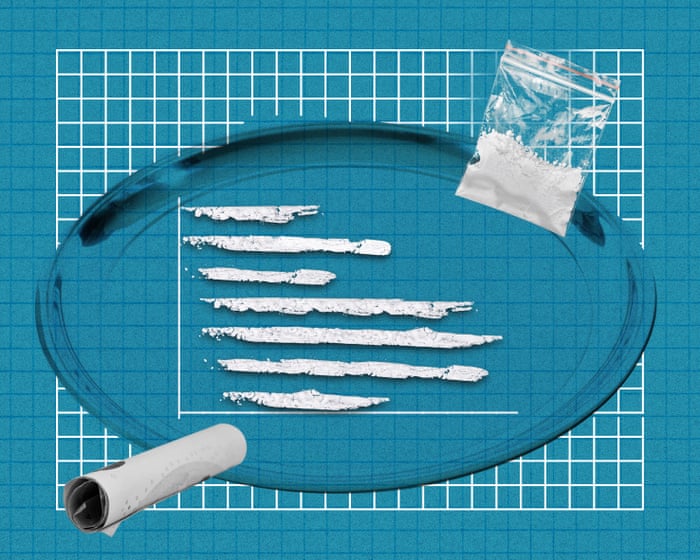
Wastewater estimates indicate that cocaine consumption in England rose 26% from 2021 to 2025, reaching an estimated 123,000kg in 2024-25. Survey data suggests the number of users has not grown in step, while treatment figures point to more people seeking help and a shift toward older age groups.
Key Facts
Home Office scientists estimated that people in England consumed 123,000kg of cocaine in 2024-25, with an estimated street value of £9.8bn.
Wastewater samples indicated a 26% rise in cocaine consumption between 2021 and 2025.
Crime survey data shows reported past-year use has remained flat or fallen slightly since the pandemic, though surveys may miss some users.
The National Crime Agency said wholesale prices reached historically low levels in 2025 and showed signs of rising in 2026.
An expert tracking advertised prices found that an ounce fell from about £1,300 in March 2022 to about £700 in September 2025, then rose to about £1,000 in July 2026.
In England, 33,612 people started treatment for cocaine problems in 2024-25, 57% more than in 2019-20.
People in their 30s were the largest age group seeking treatment; a decade earlier, people in their 20s were the largest group.
Guardian-collected figures from 39 police forces showed a 10% rise in recorded crime rates mentioning cocaine since 2019.
Read the Original
Want the full story? Tap a source to open the original
article.
Novelist Zadie Smith told Dua Lipa that rising inequality and the decline of public services have made cultural differences feel more threatening. At a London literature festival, Smith also reflected on multiculturalism, her novel “White Teeth” and the value of public education, health care and literary criticism.
Key Facts
Smith linked sharper divisions in Britain to inequality, unemployment and problems with housing, schools and hospitals.
She said that when people have secure housing and access to health care, differences can feel interesting rather than existential.
Smith said her state education helped her communicate with people from different backgrounds.
She argued that people could look back to the social democracy of earlier decades while rejecting the era’s racial prejudice and LGBTQ+ discrimination.
Smith began writing “White Teeth” at 21 and published it at 24 in 2000.
She said she finished the novel on Valentine’s Day after a breakup and then went out clubbing.
Smith called literary criticism essential because it helps develop taste.
The Southbank Centre’s London literature festival runs through 1 November.
Read the Original
Want the full story? Tap a source to open the original
article.
The article argues that Israel’s election will change the government’s leadership but not its policies toward Palestinians. It says candidates across the political blocs oppose a Palestinian state and broadly support continued occupation, while the campaign focuses on differences such as military service and the treatment of Palestinians.
Key Facts
The article says Israeli politics is framed as a contest between a bloc led by Benjamin Netanyahu and parties opposing him.
It argues that neither bloc offers a different policy toward Palestinians or supports establishing a Palestinian state.
The article cites campaign slogans and statements by candidates that it says advocate force, expulsion, or settlement expansion.
It says Netanyahu rival Avigdor Liberman has made statements denying that there are innocents in Gaza and has supported taking over Lebanon.
It says opposition politician Yair Golan has criticized international recognition of Palestine and supports Israeli settlements in the occupied West Bank.
The article says the election is expected to focus on issues such as Haredi participation in wars and the treatment of Palestinians, rather than Israel’s broader policies.
It attributes the persistence of these policies to their normalization in Israeli society and the lack of consequences for past actions.
Read the Original
Want the full story? Tap a source to open the original
article.
The article says polls suggest Benjamin Netanyahu’s coalition may fall short of a parliamentary majority, while opposition parties may also struggle to form a government because most have ruled out relying on Arab parties. It argues that a government led by Gadi Eisenkot could differ from Netanyahu’s on Gaza and cooperation with U.S. President Donald Trump’s peace plan, but says major policy change would remain uncertain.
Key Facts
Most polls cited in the article forecast that Netanyahu and his far-right and ultra-Orthodox partners will not win a parliamentary majority.
Most opposition parties have ruled out forming a coalition with parties that mainly represent Israel’s Palestinian citizens.
The article says the opposition could also lack enough support to govern if it excludes those parties.
The article identifies retired Lieutenant General Gadi Eisenkot, a former Israeli military chief of staff, as a possible leader of a new government.
Eisenkot and Benny Gantz joined Netanyahu’s emergency government after the October 7 attacks and later left, according to the article.
Netanyahu faces trial in three corruption cases on charges including fraud, breach of trust and bribery.
The article argues a government without Itamar Ben-Gvir and Bezalel Smotrich could be more likely to cooperate with Donald Trump’s peace plan.
The article says a new government might improve humanitarian conditions in Gaza and allow some Israeli withdrawal, while a complete and immediate withdrawal remains unlikely.
Read the Original
Want the full story? Tap a source to open the original
article.
Brazilian voters are choosing between incumbent Luiz Inácio Lula da Silva and Senator Flávio Bolsonaro in a presidential runoff on October 25, 2026. The result will decide whether Lula wins another term or Bolsonaro, an ally of U.S. President Donald Trump, takes office; polls show a close race after Bolsonaro led the first round without securing a majority.
Key Facts
Flávio Bolsonaro received 47 percent of the first-round vote, compared with Lula’s 45 percent.
Neither candidate won an outright majority in the first round, requiring a runoff.
Lula, 80, has served as president from 2003 to 2010 and again since 2023.
Lula’s approval rating fell as low as 24 percent during his current term, amid concerns about crime and living costs.
Lula increased payments through the Bolsa Família welfare program by 15 percent and cut fuel taxes ahead of the runoff.
Flávio Bolsonaro, 45, has campaigned on hard-line security policies, including building large prisons modeled on those in El Salvador.
Flávio’s father, former president Jair Bolsonaro, is serving a 27-year sentence for attempting a coup to prevent the end of his presidency.
Read the Original
Want the full story? Tap a source to open the original
article.