Iran’s navy said it attacked seven oil tankers in the Strait of Hormuz, a key route for global oil supplies. The Iranian Revolutionary Guard Corps said four of the tankers were transferring oil and that the other three were also hit, raising concerns about regional tensions and effects on global energy prices.
Key Facts
Iran announced it attacked seven oil tankers in the Strait of Hormuz.
Four tankers were reportedly transferring oil when they were hit.
Three additional ships were also targeted by Iran’s navy.
The Strait of Hormuz is a major shipping route for global oil.
This event may increase tensions in the Middle East region.
The attacks could worsen the global energy crisis by disrupting oil supplies.
Inflation worldwide is partly driven by rising energy costs.
Read the Original
Want the full story? Tap a source to open the original
article.
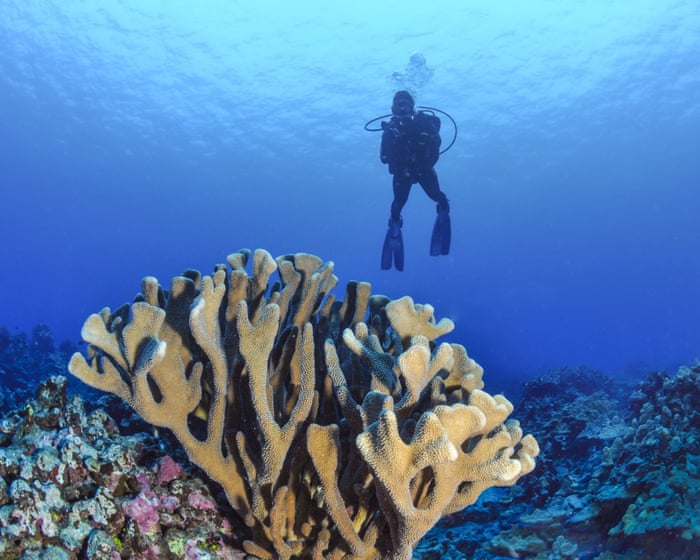
Almost all shallow-water coral reefs worldwide face a high risk of ecosystem collapse by 2075 due to global warming, according to a United Nations scientific assessment. The report warns that warming, pollution, overfishing, and coastal development have already harmed reefs, but rapid climate action and local conservation could help save them.
Key Facts
About 24% of coral reefs across more than 80 countries are already critically endangered.
When incorporating future global warming effects, 96% of reefs are at high risk by 2075.
Coral reefs support about a quarter of all marine species and provide food and coastline protection for hundreds of millions of people.
The assessment studied 127 coral reef regions and was led by the International Union for Conservation of Nature (IUCN).
It assumes global temperature will rise about 2.7°C by 2100 if current emission trends continue.
Coral reef ecosystem collapse means reefs lose most living corals and cannot sustain themselves.
The report did not fully include the latest mass coral bleaching events from 2023 to 2025, which were the worst ever recorded.
Scientists say the findings are serious but still provide a chance to prevent total collapse with strong climate and conservation efforts.
Read the Original
Want the full story? Tap a source to open the original
article.
A new study shows that marine life in the Gulf of Mexico dropped by about 60% after BP’s 2010 Deepwater Horizon oil spill and has not yet fully recovered. The spill released 134 million gallons of oil, causing long-lasting damage to important sea animals and ecosystems. Researchers found that the oil and chemical cleanup agents harmed many species, lowering their numbers and genetic diversity.
Key Facts
The Deepwater Horizon spill in April 2010 released 134 million gallons of oil into the Gulf of Mexico.
Marine life populations dropped sharply between 2011 and 2015: fish by 63.5%, shrimp and krill by 62%, and squid and octopus by nearly 60%.
Some key species like krill and lanternfish fell by over 60%, affecting the ocean food chain.
The population decline was faster and more severe than any recorded in 60 years.
Chemical dispersants used to break up the oil spread toxic substances deeper into the water, harming deep-sea creatures.
Residual oil remained in fish eggs and tissues years later, reducing reproduction and affecting behaviors like mate-finding.
The study highlights the fragility of deep ocean ecosystems and warns about long-term impacts of oil spills and cleanup methods.
Scientists call for careful protection of deep ocean life during future spill responses.
Read the Original
Want the full story? Tap a source to open the original
article.
An Irish ad campaign about consent, created by the Dublin Rape Crisis Centre, showed grandparents hugging children to highlight that not everyone wants a hug. The ad was criticized by government officials for being inappropriate and disrespectful to grandparents and was removed from social media.
Key Facts
The ad showed grandparents hugging a young boy happily but a granddaughter who looked unhappy with the hug.
It included the message: "not everyone wants a hug. Even from the people who love them."
The Irish minister for justice called the ad inappropriate and demeaning to grandparents.
The ad was part of the "We-Consent" campaign about respecting personal boundaries and consent.
The campaign is supported by multiple government departments, including justice, children, and equality.
The Dublin Rape Crisis Centre decided to remove the ad videos to review their impact.
Some politicians criticized the ad as wasting public money and potentially harmful to older people.
The Department of Justice said the videos were low-cost and made by volunteers, not part of an official government campaign.
Read the Original
Want the full story? Tap a source to open the original
article.
Libya’s eastern parliament approved a 2019 maritime deal with Turkiye that defines sea boundaries in the Mediterranean. The deal is controversial because Egypt, the European Union, Greece, and Israel oppose it, saying it violates their rights and international law.
Key Facts
The 2019 deal was signed by Turkiye and Libya’s UN-recognized government in Tripoli to set maritime borders.
Turkiye helped Libya’s Tripoli government fight the eastern-based military commander Khalifa Haftar’s forces in 2020.
The eastern Libyan parliament, based in Tobruk, voted unanimously to approve this maritime deal in 2024, reversing its 2020 rejection.
Egypt says the deal infringes on its exclusive economic zone and continental shelf rights in the Mediterranean Sea.
The European Union and Greece claim the deal violates international rules, specifically the UN Convention on the Law of the Sea (UNCLOS).
Israel condemned the deal, and Greece informed the United Nations Security Council about the issue.
Turkish officials say the agreement is legal and dismissed the criticism.
Egypt and Turkiye have recently improved security cooperation despite disagreements over the maritime borders.
Read the Original
Want the full story? Tap a source to open the original
article.
US and Israeli officials are reportedly planning new strikes on Iran after the US midterm elections, aiming to pressure Iran’s economy and force diplomatic talks. Joint military training between the US and Israel has increased, and President Donald Trump made comments suggesting a significant action could happen soon.
Key Facts
The New York Times reported plans for fresh US-Israeli attacks on Iran after the elections.
US and Israeli forces have increased joint training exercises recently.
Pentagon chief Pete Hegseth met with Israeli Prime Minister Benjamin Netanyahu this week.
President Donald Trump said the US is "not negotiating" with Iran and hinted something could happen soon.
US officials believe a major strike might cause Iran’s economy to collapse and lead to diplomacy.
The report came with a reminder that President Trump has canceled plans to engage in major combat before.
Separately, France’s Senate proposed new security measures after recent riots.
Software engineers discovered and fixed major bugs affecting 70% of websites worldwide.
Read the Original
Want the full story? Tap a source to open the original
article.
French officials confirmed the first known human infection with the Shamonda virus after a patient died in a Lyon hospital. The virus mainly affects cattle and is spread by insects, but authorities say there is no risk to the general public at this time.
Key Facts
A patient in Lyon, France, died in October after being infected with the Shamonda virus.
This is the first reported case of the Shamonda virus infecting a human.
Shamonda virus is usually spread by biting insects called midges and mainly infects cattle.
The virus was first found in Nigeria in the 1960s and has appeared in parts of Africa and Japan.
It was believed that Shamonda could not infect humans until this case.
The patient likely caught the virus in eastern France, where it has been present in animals recently.
The virus has been detected in many European countries including Germany, Switzerland, Austria, and others.
Health officials are continuing investigations involving human, animal, and environmental health experts.
Read the Original
Want the full story? Tap a source to open the original
article.
At least four people died and one was injured in southern France due to flooding caused by Storm Adam. The storm also caused damage and disruptions in Spain, where three people died from flooding.
Key Facts
Four people died in southern France because of flooding from Storm Adam.
Two women, aged 86 and 26, drowned in a cellar in Bouches-du-Rhône, France.
A man died after a 4x4 vehicle was swept away by floodwaters in Corsica.
Dozens of people were moved to emergency shelters in towns near Montpellier and Marseille.
Roads and train services were disrupted in the flooded areas.
Another storm, Storm Austen, is expected to bring strong winds to north-west France.
In Spain, three people died due to flooding caused by the same storm system.
The Spanish government approved €23.5 million to help with reconstruction in affected areas.
Read the Original
Want the full story? Tap a source to open the original
article.
Google illegally cut down about 250,000 trees near Muhos, Finland, to build a datacentre without completing required environmental reviews. Finnish authorities ordered Google to stop work temporarily, causing public concern about environmental damage and the impact of tech investments in Finland.
Key Facts
Google cleared 330 hectares (815 acres) of forest near Muhos, Finland, cutting around 250,000 trees.
The clearcutting happened before completing mandatory environmental impact assessments.
Finnish Licensing and Supervision Authority (LVV) ordered Google to pause work at Muhos and another site, Otanmäki.
Around 150,000 trees were also cut illegally at the Otanmäki site.
Local environmental groups and residents are worried about pollution and harm to waterways.
Finland attracts datacentre projects because of its stable geology, political climate, and cool weather that reduces energy costs.
Google’s AI infrastructure project in Finland is worth €13 billion and is the largest in the Nordic region.
Finnish Prime Minister supports attracting these investments, but the issue is becoming a national political topic ahead of elections.
More than 93,000 people signed a petition calling for tighter datacentre regulations and compensation fees to affected communities.
Read the Original
Want the full story? Tap a source to open the original
article.
Middleton, a town near Manchester, is facing economic and social decline after losing shops, banks, and local services. Local leaders and residents are starting a project to revive the town by restoring old buildings, building new homes, and involving the community in planning.
Key Facts
Middleton was once a busy town with shops, banks, and a cotton mill that drove its economy.
The old Warwick Mill, now abandoned, was recently taken over by the local council from an absentee owner.
The town has lost most of its banks and local services due to competition from big stores and online shopping.
Middleton’s local tram network does not connect to the town center.
Andy Burnham, now prime minister, started a development group to help revive Middleton before leaving office.
This group can lower business rates, buy land, and build 1,500 new homes to support the town’s growth.
Actor Steve Coogan and the head of Co-operatives UK, Rose Marley, are involved in leading the recovery efforts.
Residents’ opinions are being gathered to guide the plans, focusing on renovating key buildings like Warwick Mill.
Read the Original
Want the full story? Tap a source to open the original
article.
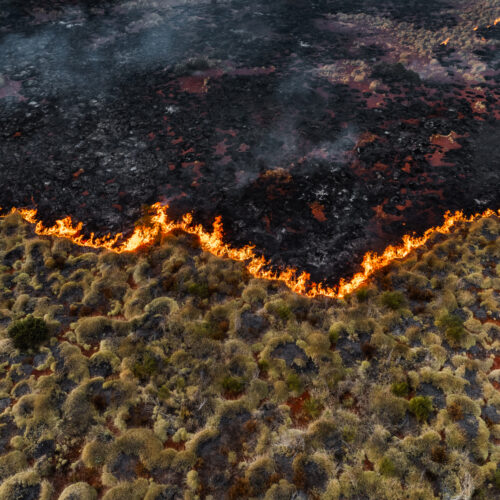
Southeast Asia is facing toxic haze from wildfires in Indonesia, causing health and air quality problems in Malaysia and Singapore. While there are existing agreements for regional cooperation to stop the haze, legal actions against polluters are difficult due to political, legal, and practical challenges.
Key Facts
The haze is mainly caused by fires linked to land clearing for palm oil plantations in Indonesia.
Southeast Asian countries signed the ASEAN Agreement on Transboundary Haze Pollution in 2002 to work together against haze.
The treaty does not have strong enforcement mechanisms or a judicial body to settle disputes legally.
The treaty’s coordinating office in Jakarta only opened in April 2026, 24 years after the agreement.
Malaysia and Singapore have chosen diplomatic talks and fire-fighting support rather than direct criticism of Indonesia.
Indonesia has given mixed responses to foreign help for fighting fires.
National sovereignty and economic interests slow down stronger actions against haze pollution.
Singapore has used domestic laws with international reach to try to hold polluters accountable.
Read the Original
Want the full story? Tap a source to open the original
article.
The United Nations Environment Programme (UNEP) has said the world will very likely pass the 1.5° Celsius global warming limit agreed in 2015 to avoid dangerous climate change. Since keeping warming below 1.5° is now seen as nearly unavoidable, UNEP is focusing on limiting how much and how long temperatures rise above this level by cutting emissions sharply and removing carbon dioxide from the air.
Key Facts
In 2015, nearly all countries agreed to try to keep global warming below 1.5° Celsius compared to pre-industrial times.
The world is now very close to or has already exceeded this 1.5° warming limit, partly due to a strong El Niño weather event.
UNEP says it is unavoidable that warming will pass 1.5°, but how long and how much warming continues depends on actions taken now.
The United States withdrew from the Paris Agreement under the Trump administration, affecting global efforts to reduce emissions.
Current policies are predicted to lead to about 2.8° Celsius warming by 2100, above targets from the Paris Agreement.
Even with more ambitious goals, global warming could still reach around 2.1° Celsius by the end of the century.
Global greenhouse gas emissions were mostly unchanged from 2024 to 2025, with fossil fuel emissions rising but balanced somewhat by better land management.
Achieving climate goals will require both sharp cuts in emissions soon and removing large amounts of carbon dioxide from the atmosphere.
Read the Original
Want the full story? Tap a source to open the original
article.
French courts are quickly processing more than 900 people arrested during recent rioting and looting across the country. Many defendants, mostly young and often unfamiliar with the legal system, face immediate trials under a fast-track law while lawyers say they lack time to prepare.
Key Facts
Around 2,500 people were arrested during rioting and looting in France over one weekend.
Over 900 of these arrests are being handled through a fast court process called comparution immédiate (immediate appearance).
The fast-track process sends defendants to trial immediately or within a few days after arrest.
Many arrested were young men without previous convictions and appeared to be opportunistic criminals, not political protesters.
Riots included looting luxury stores, burning public property, and attacking police.
Defendants often seemed confused and unprepared for court, with lawyers complaining they lack time to meet clients.
The violence occurred following student protests and union demonstrations that remained mostly peaceful.
Government officials reported most defendants were adults, with a mix of unemployed, workers, and students.
Read the Original
Want the full story? Tap a source to open the original
article.
A man drove his SUV into deep flood water in Morayfield, Queensland, Australia. TV reporter Will Murray and another bystander quickly helped rescue him before the car sank.
Key Facts
The incident happened in Morayfield, Queensland, Australia.
The man’s SUV went into deep flood water and started sinking.
Will Murray, a reporter for the Australian Broadcasting Corporation, was at the scene.
Murray saw the car enter the water and quickly acted to help.
A bystander joined Murray in rescuing the driver.
The car was sinking fast, creating an urgent need for rescue.
Murray said he acted immediately to try to save the man’s life.
Read the Original
Want the full story? Tap a source to open the original
article.
French authorities confirmed the first known case of the Shamonda virus infecting a human. The patient, who had a weak immune system, likely caught the virus from a midge bite and later died. Officials say there is no current risk to the general public.
Key Facts
Shamonda virus usually infects animals like cattle, sheep, goats, alpacas, and horses.
This is the first time the virus has been found in a human.
The infected person was severely immunocompromised, meaning their immune system was very weak.
The patient showed neurological problems likely caused by the virus.
The virus spreads through bites from infected midges, small flying insects.
Cases in animals appeared first in eastern France in spring 2024.
The virus has been found in farm animals in several European countries, including Ireland, Germany, Italy, Spain, and Jersey.
The European Centre for Disease Prevention and Control (ECDC) and the World Health Organization are monitoring and investigating the situation.
Read the Original
Want the full story? Tap a source to open the original
article.
President Donald Trump is negotiating with Russia in ways that some see as betraying Ukraine during its conflict with Russia. Recent actions by Trump include easing sanctions on Russia and limiting support to Ukraine, which could hurt Ukraine’s ability to defend itself.
Key Facts
Trump is involved in talks with Russia about ending the war in Ukraine under terms some call a "sell-out" of Ukraine.
He has reduced tougher sanctions on Russia and allowed the purchase of Russian diesel, which may help fund Russia’s war.
Trump has also limited U.S. sharing of intelligence with Ukraine and pushed to remove Ukraine’s President Volodymyr Zelenskyy.
Ukraine has been defending itself and even striking parts of Russia, weakening Russia’s war efforts.
European countries have increased their support for Ukraine as U.S. support has shifted.
Trump’s motivations include dislike of Zelenskyy, desires for business deals with Russia, and admiration for authoritarian leaders.
Russia is facing battlefield losses, economic damage, and international isolation, making its position weak in the war.
Experts warn that forcing Ukraine to surrender could have long-term negative effects on Europe and global stability.
Read the Original
Want the full story? Tap a source to open the original
article.
A woman accusing Russell Brand of rape told a court that the alleged attack caused her significant pain. Witnesses described the complainant’s distress and said she told them Brand was aggressive and that she repeatedly said no during the incident. Brand denies all charges, which cover sexual offenses over a ten-year period.
Key Facts
Russell Brand faces seven charges including rape, sexual assault, and indecent assault.
The accusations involve six women and events from 1999 to 2009.
One witness said the complainant described the alleged attack as "really, really hurt."
The complainant told a friend Brand was "quite aggressive" and that she said no many times.
Another friend said Brand called the complainant "dirty" after the alleged incident.
The complainant experienced physical pain preventing her from sitting down.
Friends encouraged her to seek medical help and consider going to the police.
Brand has pleaded not guilty to all charges and the trial is ongoing.
Read the Original
Want the full story? Tap a source to open the original
article.
The article says Russian leader Vladimir Putin is currently facing setbacks. It argues that this is not the right moment to give him any advantages or favor.
Key Facts
Vladimir Putin is the leader of Russia.
Putin is experiencing losses or difficulties.
The article advises against actions that would help or benefit Putin.
It suggests that supporting Putin now would be a mistake.
The context likely involves ongoing international or geopolitical issues.
Read the Original
Want the full story? Tap a source to open the original
article.
A new episode of the TV show "48 Hours" will air on CBS about a man who was murdered and his wife found dead in a house connected to a local legend about a curse. The reporter Peter Van Sant will tell the story on October 24.
Key Facts
The story involves a man who was murdered.
The man's wife was found dead at the same location.
The house has a local legend about being “cursed.”
The report is part of the TV program "48 Hours."
The episode airs on CBS on Saturday, October 24 at 10 p.m. Eastern time.
The show is also available for streaming on Paramount+.
Peter Van Sant is the correspondent reporting the story.
"48 Hours" covers true crime cases and investigations.
Read the Original
Want the full story? Tap a source to open the original
article.
The news article previews an upcoming episode of the TV show "48 Hours," which will feature surveillance footage capturing the last moments before a woman is killed by a mysterious person. The episode will air on CBS and Paramount+ on Saturday, October 24.
Key Facts
The show "48 Hours" covers real crime stories and investigations.
The episode highlights multiple surveillance cameras recording key events.
It focuses on the moments before a woman's death caused by an unknown figure.
The report is by Anne-Marie Green, a correspondent for "48 Hours."
The episode is scheduled to air on October 24 at 9 PM Eastern Time on CBS.
It will also be available for streaming on the Paramount+ platform.
The article lists many other true crime stories previously covered by "48 Hours."
Read the Original
Want the full story? Tap a source to open the original
article.