Pope Leo XIV called Russian President Vladimir Putin from the hospital to ask for a humanitarian ceasefire in the Ukrainian city of Oleshky. The pope urged a pause in the fighting so that food, medicine, and safe passage could reach the civilians trapped there.
Key Facts
Pope Leo XIV made a phone call to President Putin from hospital to discuss humanitarian aid.
The pope highlighted the severe situation in Oleshky, a city occupied by Russian forces since February 2022.
About 2,000 civilians in Oleshky need safe ways to leave and access to food and medical supplies.
Roads from Oleshky are dangerous due to mines and ongoing conflict.
Russia, as the occupying power, is legally responsible for protecting civilians but has not promised aid.
Pope Leo is currently recovering in hospital after lung surgery for lung cancer.
Despite being in the hospital, Pope Leo remains active, celebrating Mass and distributing Communion.
The Vatican hopes President Putin’s acceptance of the call signals cooperation with the pope’s request.
Read the Original
Want the full story? Tap a source to open the original
article.
Pope Leo XIV will leave the hospital on Saturday after lung surgery and lung cancer diagnosis. The Vatican said he is getting better and will return to the Vatican, where he will continue some of his duties.
Key Facts
Pope Leo XIV had part of his right lung removed due to lung cancer.
He will be discharged from Gemelli Hospital in Rome four days after surgery.
Doctors confirmed his condition is improving through tests and clinical checks.
The pope returned to minor work activities while still in the hospital.
On Friday, he spoke by phone with Russian President Vladimir Putin about the situation in Ukraine.
He met with senior Church leaders during his hospital stay.
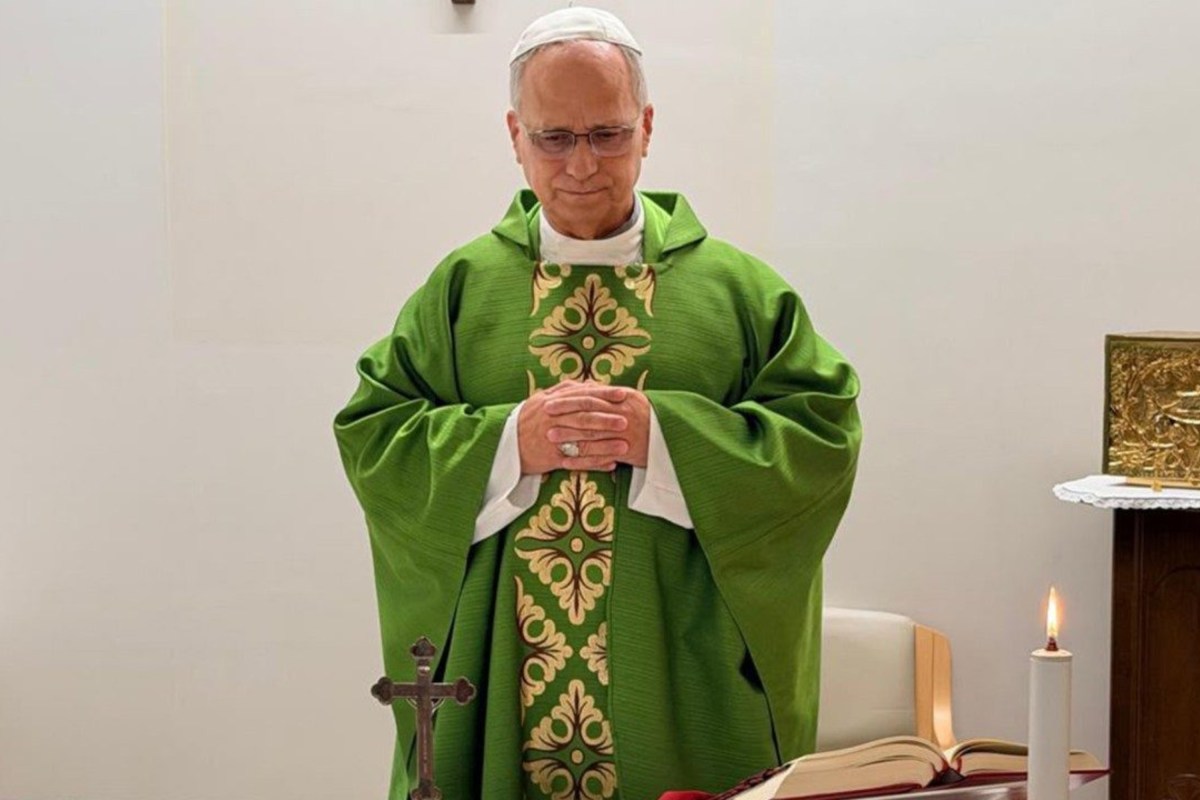
Photos showed him celebrating Mass in the hospital chapel.
The Vatican announced plans for him to travel to South America next month, with journalists accredited for the trip.
Read the Original
Want the full story? Tap a source to open the original
article.
The article discusses growing uncertainty about the United States' role in the ongoing conflict in Ukraine, which began with Russia’s invasion over four years ago. Recent events have caused concern among leaders in Washington, Kyiv, and Europe about how President Donald Trump will handle the situation.
Key Facts
The war in Ukraine started more than four years ago when Russia invaded.
The United States is a key player in supporting Ukraine during the conflict.
Recent developments have caused uncertainty about U.S. policies and actions.
Leaders in Washington, Kyiv (Ukraine’s capital), and Europe are watching closely.
President Donald Trump decides the official U.S. stance on the war.
Questions are rising about how President Trump will approach the crisis moving forward.
Read the Original
Want the full story? Tap a source to open the original
article.
Ukraine is facing a difficult situation as it questions whether it can continue to fight Russia without strong support from the United States under President Donald Trump. Ukrainian President Volodymyr Zelensky has increased diplomatic efforts, accusing the U.S. government of limiting aid to Ukraine.
Key Facts
Ukraine depends on U.S. support to continue its conflict with Russia.
President Donald Trump’s administration has reduced assistance to Ukraine.
Ukrainian President Volodymyr Zelensky has escalated diplomatic actions.
Zelensky has publicly criticized the U.S. government’s reductions in aid.
The situation raises concerns about Ukraine’s ability to sustain its defense.
U.S. support includes military aid that is vital for Ukraine’s operations.
The changes in U.S. support create uncertainty for Ukraine’s future in the conflict.
Read the Original
Want the full story? Tap a source to open the original
article.
The healthcare system in the West Bank is collapsing as the Palestinian Authority (PA) faces financial troubles due to reduced international aid and Israel blocking tax transfers. Hospitals like Beit Jala Government Hospital struggle with shortages of staff, medicine, and supplies, forcing them to treat mainly emergency cases.
Key Facts
Beit Jala Government Hospital is the only government hospital in the Bethlehem area, serving about 320,000 people.
The head of oncology at the hospital must face daily difficulties due to road closures, checkpoints, and damage from settler violence.
Palestinian Authority finances have collapsed in the last three years because of less international aid and Israel stopping tax payments to the PA.
Healthcare staff often receive only half their salaries and work fewer days, reducing hospital capacity.
Many patients miss important treatments because of lack of drugs and costly doctor visits.
Clinics operate part-time and see over 100 patients a day when open, but care is rushed and limited to emergencies.
The Israeli government, led by Finance Minister Bezalel Smotrich, has withheld tax revenues that fund the PA’s health ministry.
Medical suppliers are refusing to provide services because the health ministry cannot pay them on time.
Read the Original
Want the full story? Tap a source to open the original
article.
The Sudanese army says it killed many fighters from the Rapid Support Forces (RSF) in air attacks in the city of Nyala, South Darfur. The RSF says the army attacked a market, killing 30 civilians including women and children, and both sides report heavy fighting continuing in different parts of Sudan.
Key Facts
The Sudanese army targeted RSF positions and command centers in Nyala with air attacks.
The RSF claims the army’s drone strike hit a busy livestock market, killing 30 civilians.
The RSF did not confirm if some of its fighters were killed or if its centers were destroyed.
A human rights group said a market in Nyala was hit by a drone linked to the Sudanese army.
Fighting between the army and RSF is increasing across several regions in Sudan.
The RSF has control over most of the Darfur region, which the army is trying to retake.
Sudan’s civil war started in 2023 and has caused tens of thousands of deaths.
The United Nations calls the situation in Sudan the world’s worst humanitarian crisis.
Read the Original
Want the full story? Tap a source to open the original
article.
The International Monetary Fund (IMF) is focusing on helping poorer countries facing rising debt, inflation, and problems caused by wars in the Middle East. The IMF plans to support these countries with loans and debt relief to improve economic stability and protect vulnerable people.
Key Facts
The IMF’s Managing Director Kristalina Georgieva spoke after the IMF annual meetings in Bangkok.
Poor countries face higher borrowing costs and spend a bigger part of their income repaying debt.
Inflation is especially hard on poor people, acting like a tax on them.
Recent conflicts, including a war started by the U.S. and Israel against Iran, have increased global energy prices and caused supply issues.
The IMF aims to help countries restructure debt and attract investment to support economic growth.
Saudi Arabia’s Finance Minister Mohammed Al-Jadaan highlighted risks from conflicts disrupting trade and energy supplies.
The IMF plans strong support for Iraq with loans and policy aid.
Talks are progressing with Lebanon to create a support program to help stabilize its economy.
Read the Original
Want the full story? Tap a source to open the original
article.
Ukrainian President Volodymyr Zelensky asked European Union leaders to provide about $80 billion in aid next year to support Ukraine’s fight. He also criticized President Donald Trump for easing sanctions on Russia, which Zelensky sees as harmful to Ukraine’s position.
Key Facts
President Zelensky is requesting nearly $80 billion from EU countries for 2027.
The money is meant to help Ukraine continue its conflict efforts.
Zelensky praised some European leaders for their support.
He criticized President Trump for waiving new sanctions against Russia.
The easing of sanctions is seen as a setback for Ukraine’s international support.
This request and criticism come amid ongoing tensions related to the Russia-Ukraine conflict.
The article mentions other current global and European issues but focuses on Ukraine and its relationships with the EU and the U.S.
Read the Original
Want the full story? Tap a source to open the original
article.
The Iran-backed Houthis fired missiles on Yemen’s southern city of Aden, hitting the presidential palace and airport, causing deaths and injuries. These attacks mark a restart of fighting in Yemen’s ongoing war, which involves regional powers like Saudi Arabia and Iran.
Key Facts
The Houthis launched five missiles at Aden’s presidential palace, killing five people and injuring 16.
Two missiles hit near Aden International Airport while a plane was preparing to take off to Cairo, but no one was hurt.
Aden is the temporary capital of Yemen’s internationally recognized government after the Houthis took control of the capital, Sanaa, in 2014.
The Houthis claim their targets include military sites linked to Saudi forces supporting Yemen’s government.
Fighting in Yemen had mostly paused under a 2022 ceasefire but recently resumed with new battles along the Red Sea coast.
Saudi Arabia accuses Iran of encouraging the Houthi attacks, while Iran denies involvement and offers to mediate peace talks.
Previous missile attacks on Aden, including a deadly 2020 airport strike, have increased tensions in the region.
International reactions include calls for reducing violence and finding peaceful solutions.
Read the Original
Want the full story? Tap a source to open the original
article.
Tens of thousands of people in France, including students, trade union members, and Yellow Vest protesters, are set to demonstrate against rising prices and problems in the country’s social system. The protests are planned across the country for Saturday.
Key Facts
Large protests are expected throughout France on Saturday.
Participants include students, trade unions, and members of the Yellow Vest movement.
The protests focus on opposing high costs and social challenges in France.
The Yellow Vest movement is known for past protests on economic conditions.
The social model refers to the way the country supports welfare and public services.
These groups have joined forces, indicating broad dissatisfaction.
The protests highlight ongoing social and economic tensions in France.
The event is part of a series of demonstrations in recent times.
Read the Original
Want the full story? Tap a source to open the original
article.
Elizabeth Holmes founded Theranos, a company that claimed to run many medical tests from just a few drops of blood. She gained support from important investors and became a billionaire, but it was later revealed that the technology did not work, leading to her prison sentence for fraud. A new documentary shows Holmes before she began her 11-year prison term.
Key Facts
Elizabeth Holmes started Theranos at age 19, promising a new way to do blood tests.
She copied Steve Jobs’s style with a black turtleneck, deep voice, and focused look.
Important people like Rupert Murdoch and Henry Kissinger invested in Theranos.
Her company raised $945 million but did not share scientific proof that the technology worked.
Holmes and her business partner kept their romantic relationship secret.
She was sentenced to 11 years in prison for fraud and conspiracy involving Theranos.
A new documentary called You Can See Everything features Holmes before she went to prison.
Experts say Holmes had strong influence on people despite lack of real medical data.
Read the Original
Want the full story? Tap a source to open the original
article.
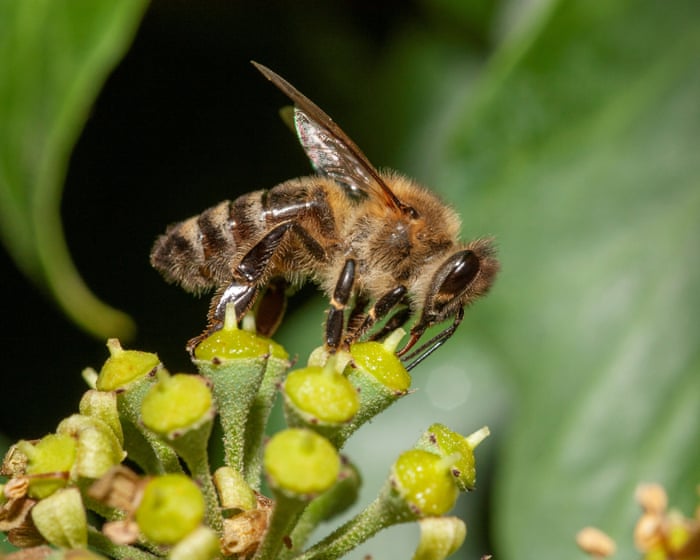
A study found that honeybees in the UK are pushing away wild pollinators like bumblebees and hoverflies while collecting pollen and nectar. Honeybees act aggressively, often chasing other pollinators from flowers, which may increase competition for food as their numbers grow.
Key Facts
Honeybees outnumber wild pollinators in some areas, reducing the number of bumblebees, solitary bees, and hoverflies.
Honeybees win most fights over flowers by bumping or chasing away other pollinators.
The number of registered beekeepers in the UK rose from 19,000 in 2010 to 47,000 in 2025.
Honeybees’ direct competition with wild pollinators is called “interference competition,” where they physically remove rivals.
Bumblebees sometimes displace others but usually by accident, not aggression.
Ivy bees are the only pollinators seen competing successfully against honeybees.
More heat leads to more competition because flowers produce less nectar when stressed by higher temperatures.
UK summer temperatures could rise by up to 4°C by 2080, increasing competition among pollinators.
Read the Original
Want the full story? Tap a source to open the original
article.
This year, pumpkins in England are smaller than usual due to a long drought that has dried out the soil. Farmers struggled to water their crops, leading to a poor pumpkin harvest just before Halloween. Experts suggest using smaller squashes or carving other vegetables instead.
Key Facts
England has experienced a severe drought for most of the year, affecting many crops, including pumpkins.
Pumpkins are about 90% water and need a lot of water to grow big.
This year’s pumpkin harvest may be the worst on record in England.
Smaller "mini" pumpkins are expected to be the main options for Halloween carving.
Traditionally, before pumpkins were common, people in Britain carved turnips and other root vegetables for Halloween.
Some experts say growing large pumpkins just to throw them away after Halloween wastes resources.
New growing methods, like using compost cakes, have helped improve pumpkin growth in tough conditions.
Pumpkins grown during this drought ripened earlier and have harder skins, which means they should keep well after harvest.
Read the Original
Want the full story? Tap a source to open the original
article.
A bike shop in Herne Hill, south London, has been suffering from a strong bad smell caused by untreated sewage in the local sewer system. Thames Water has admitted the sewer under the shop is to blame but has not yet fixed the problem, which started during a dry summer.
Key Facts
The bike shop, Bicycle Nation, is located in the Herne Hill area of south London.
A bad smell from untreated sewage has been coming from Thames Water drains under the shop since June.
The smell happens several times a day and is described with terms like “cabbage,” “onions,” and “rotten eggs.”
The smell is so strong that staff have to work outside and some customers are turned away.
Thames Water initially denied responsibility but recently admitted the sewer beneath the shop is the cause.
The problem is linked to a long dry summer, which reduces rainwater that normally flushes the sewers.
An old ventilation pipe that used to carry away smells was not replaced when last repaired.
Experts say the foul smell comes from gases made by sewage microbes and could be unsafe for workers.
Read the Original
Want the full story? Tap a source to open the original
article.
Canada’s Prime Minister Mark Carney said the country may soon increase immigration numbers again after lowering them in recent years. The government plans to announce new immigration targets by November 1, but any rise in immigration levels would likely not be seen before 2029 due to planning timelines.
Key Facts
Canada reduced immigration numbers after a surge caused by many international student visas post-pandemic.
Prime Minister Carney says the immigration system is now "under control."
The government must reveal new immigration targets by November 1 as part of the Immigration Levels Plan.
Previous plans focused on lowering newcomers, especially temporary residents like students and foreign workers.
Experts say increasing immigration won’t show effects before 2029 because the plans cover three-year periods.
Canada’s population growth slowed to its lowest rate since World War II, about 0.5% in one year.
Non-permanent residents make up about 6.7% of Canada’s population, mostly international students.
Some foreign students were mainly paying for the promise of immigration, creating pressure on the system.
Read the Original
Want the full story? Tap a source to open the original
article.
The article discusses the return of Aaron Sorkin’s play "A Few Good Men" to Broadway, focusing on the character Colonel Nathan Jessep. Jessep is a powerful military figure whose belief in duty and sacrifice leads him to justify harsh actions, raising questions about authority and responsibility.
Key Facts
"A Few Good Men" is a military courtroom drama by Aaron Sorkin, originally from 1989.
The play returns to Broadway at Lincoln Center on October 29, 2026, starring Bradley Whitford as Colonel Nathan Jessep.
Jessep is portrayed as a man who believes protecting the country requires extreme sacrifices, even if it means breaking rules.
His attitude shows a tension between strict obedience and personal conscience, leading to serious consequences.
The play explores themes of authority, responsibility, and the dangers of unquestioned power.
Director Michael Arden found the play’s questions about following illegal orders remain relevant today.
The article notes a current nostalgia for leaders who showed seriousness and commitment, even if they misused their power.
Jessep's character is compared to Shakespearean villains who are compelling but morally flawed.
Read the Original
Want the full story? Tap a source to open the original
article.
Twenty years ago, a Mongolian woman named Altantuya Shaariibuu was killed and her body destroyed with explosives by two Malaysian special forces policemen. The reasons behind her murder are still unclear, and there are claims that it involved political motives and corruption connected to a submarine deal.
Key Facts
Altantuya Shaariibuu was murdered 20 years ago by two Malaysian special forces officers.
Her body was destroyed using C4 military explosives.
The motive for her killing remains uncertain.
There are suspicions of a political conspiracy to silence her.
The investigation includes looking into a possible connection to a corrupt submarine deal.
The policemen said they acted on orders from former Prime Minister Najib Razak.
Najib Razak denies any involvement in the murder.
The investigation covers multiple countries: Mongolia, Malaysia, France, and Australia.
Read the Original
Want the full story? Tap a source to open the original
article.
U.S. Secretary of State Marco Rubio is visiting Uzbekistan to meet Central Asian leaders at the C5+1 summit. This meeting highlights the U.S. focus on practical cooperation with Central Asia, moving away from pushing for democracy and human rights reforms as in the past. Meanwhile, Russia continues to influence the region through culture, economy, and political pressure.
Key Facts
Marco Rubio, U.S. Secretary of State, arrived in Samarkand, Uzbekistan, for talks with Central Asian ministers.
The C5+1 summit is a new U.S. approach focusing on practical, transactional relations with Central Asia.
Earlier U.S. efforts pushed for democratic reforms and human rights after the Soviet Union’s collapse in 1991.
Western countries previously offered investments and technology if Central Asian leaders reformed their governments.
Central Asia, especially Uzbekistan, distanced itself from Western pressure and moved closer to China and Russia.
Russia maintains strong influence through media, culture, and political strategies promoting the "Russian World" idea.
Moscow denies the statehood of some Central Asian countries and uses economic ties and propaganda in the region.
Central Asian migrants have been recruited by Russia to fight in Ukraine, and regional companies supply parts for Russian military drones and missiles.
Read the Original
Want the full story? Tap a source to open the original
article.
John Swinney, Scotland's First Minister, said the political situation is favorable for Scottish independence. He spoke at an SNP party event, highlighting support from leaders in Wales and Northern Ireland, and pushed for a second referendum despite opposition from the UK government.
Key Facts
John Swinney is the First Minister of Scotland and a leader in the Scottish National Party (SNP).
The SNP won a fifth term in the Scottish Parliament but did not get an overall majority.
Swinney says the "stars are aligning" in favor of Scottish independence.
Leaders from Scotland, Wales, and Northern Ireland have agreed that democracy should not be blocked by the UK government.
The UK government and Westminster have opposed a second independence referendum since Scotland voted to stay in the UK in 2014.
In 2022, the UK Supreme Court ruled that any second Scottish referendum needs approval from the UK government.
Andy Burnham, the UK Prime Minister, offered to work with Scotland on giving more power to local communities but said a new referendum is "off limits."
Swinney believes the unionist parties in the UK Parliament are weaker than before, creating an opportunity for independence.
Read the Original
Want the full story? Tap a source to open the original
article.
A 16-year-old boy and an 80-year-old man died in a small plane crash near Loch Lomond, Scotland. The plane took off from Glasgow Airport before it stopped sending signals and crashed; authorities are investigating the cause.
Key Facts
The crash happened around 16:45 on Friday near Loch Lomond.
Both the boy and the man died at the scene.
The plane was a Piper Tomahawk II with registration G-LFSU.
The plane had taken off from Glasgow Airport at 16:17 before the crash.
It stopped transmitting signals at 16:37 near Drymen, Stirling.
Earlier that day, the plane flew from Cumbernauld Airport to Glasgow and then to Newport on Tay before returning.
Temporary airspace restrictions are in place while investigators work.
The Air Accidents Investigation Branch is leading the investigation.
Read the Original
Want the full story? Tap a source to open the original
article.