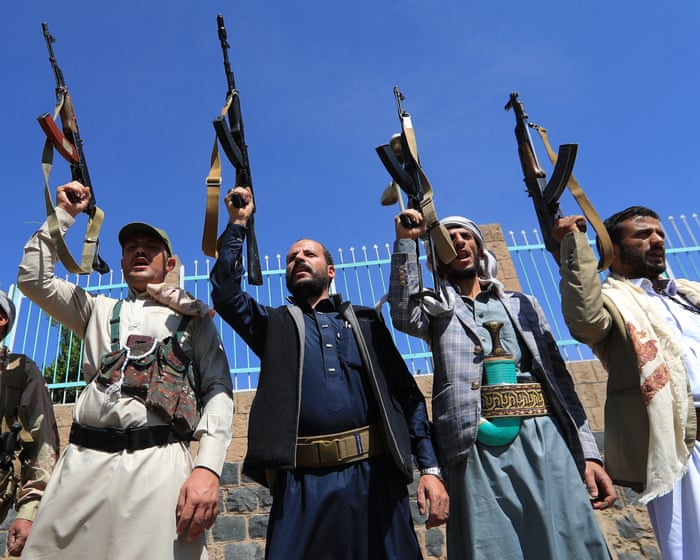
The United Arab Emirates (UAE) has agreed to help fight in Yemen again by funding some government forces, while Saudi Arabia will provide air support against the Iran-aligned Houthi fighters. This new cooperation comes as the Houthis have made advances, causing concern in the Gulf region.
Key Facts
The UAE will resume payments to some Yemeni government forces fighting the Houthis.
Saudi Arabia will offer air cover to support these forces.
The Houthis have increased attacks, including drone and missile strikes on Saudi Arabia.
The UAE stopped its operations in Yemen and funding in January but is now re-engaging.
The Southern Transition Council (STC), a separatist group in southern Yemen, has asked for a referendum on independence, but Saudi Arabia and the UAE have not agreed.
Yemeni government forces have launched a counterattack against the Houthis, but with limited success.
Houthi missile attacks recently struck near the Aden airport, but no casualties were reported.
Egypt’s president is preparing for possible defense actions to support Saudi Arabia if needed.
Read the Original
Want the full story? Tap a source to open the original
article.
In France, large protests began against the rising cost of living, with many people demonstrating in cities. Authorities detained dozens of protesters, and the events are seen as important for the mood in the country before upcoming elections to choose a new president after Emmanuel Macron.
Key Facts
Protests started on a Saturday across France about the high cost of living.
Dozens of people were arrested by French authorities during the demonstrations.
The protests are seen as a sign of public feelings before France’s next presidential election.
Emmanuel Macron is the current president, and his term will end soon.
The cost of living has been a major concern for many people in France.
The protests occurred nationwide, showing widespread discontent.
This social unrest could influence political decisions and future leadership in France.
The article included related news on global topics but focused mainly on France’s protests.
Read the Original
Want the full story? Tap a source to open the original
article.
Senior Labour Party members in the UK are increasingly worried about the risks of artificial intelligence (AI). They are concerned about dangerous uses of AI by bad actors and fear the government is behind the public in handling AI safety. Key officials, including the UK’s AI minister and MI5 chief, have highlighted threats like hacking and the use of AI for bioweapons.
Key Facts
Senior Labour figures see AI risks as a major concern alongside economic and living cost issues.
One minister fears concentrated AI power could be misused by harmful people.
Ed Miliband warned politicians must prevent tech profits from harming future generations.
The UK AI minister said hacking of government systems by rogue agents is likely or inevitable.
MI5’s chief stated AI is increasing the battle between cyber attackers and defenders.
Extremist groups using AI to create bioweapons is seen as a significant threat.
The Labour government under Andy Burnham is taking AI safety more seriously than the previous leadership.
A parliamentary committee is working to improve AI regulation, including cooperation with the US despite earlier reported tensions.
Read the Original
Want the full story? Tap a source to open the original
article.
Russian attacks in Ukraine have killed at least eight people and injured nearly 60. Ukraine’s Air Force said that Russia launched 332 drones and missiles overnight, and most were stopped before hitting their targets.
Key Facts
At least eight civilians have died in recent Russian strikes in Ukraine.
Nearly 60 people were injured in these attacks.
Russia launched 332 drones and missiles in one night.
Ukraine intercepted or neutralized 293 of these drones and missiles.
The strikes affected multiple areas across Ukraine.
Ukraine’s Air Force reported the details of the attacks.
The attacks represent an ongoing conflict between Russia and Ukraine.
Read the Original
Want the full story? Tap a source to open the original
article.
Protests have spread across France, involving high school students, teachers, trade unions, university students, and “yellow vest” activists. These protests began over school conditions but now include concerns about the economy and social inequality, leading to clashes with police and injuries to both officers and young demonstrators.
Key Facts
The protests started in mid-September in a Paris suburb over poor school conditions.
Thousands of secondary schools across France have joined the protests.
The movement now includes workers, retirees, students, teachers, and “yellow vest” activists.
Over 900 police officers have been injured since the protests began.
More than 6,700 minors have been detained by police related to the protests.
Several teenage students suffered serious injuries, including loss of a hand and eyesight.
The government suspended stun grenades in protests involving students but allowed their use in other violent situations.
Over 1,750 protest sites are planned across France, showing the protests’ wide reach.
Read the Original
Want the full story? Tap a source to open the original
article.
Cameroonian journalist Ambe Macmillan was shot in the legs by unknown gunmen in Bamenda, a city in north-west Cameroon. A young woman was also killed when attackers fired at people attending a wake, highlighting ongoing violence in the region.
Key Facts
Ambe Macmillan, a journalist, is recovering in the hospital after being shot in Bamenda.
The shooting happened in Bamenda, a city in Cameroon's English-speaking northwest region.
Gunmen opened fire on mourners attending a wake, killing a young woman.
The attack increases worries about the safety of journalists in this part of Cameroon.
The region has experienced conflict for years between government forces and separatist groups.
The incident illustrates the continuing dangers linked to the ongoing armed conflict.
Read the Original
Want the full story? Tap a source to open the original
article.
President Donald Trump has signed an executive order to lift several planned sanctions on Russian oil and gas, postponing measures meant to punish countries that buy Russian energy. This decision follows a recent deal to bring Russian diesel fuel into global markets to help lower energy prices amid conflicts in the Middle East. The move has drawn criticism from Ukraine and European countries while President Trump highlights continued Russian energy imports by Europe.
Key Facts
President Trump waived multiple Russia-related sanctions, including tariffs on goods and penalties for buying Russian oil and gas.
The waived sanctions were part of a bipartisan law passed last month aimed at punishing countries importing Russian energy.
The sanctions waiver will last until the administration decides further action is needed.
Russia is expected to benefit the most, as eased sanctions mean it can sell oil at higher prices without heavy discounts.
China and India remain the largest buyers of Russian crude oil, importing billions of dollars' worth each month.
Ukraine’s President Zelenskyy called the U.S. diesel deal with Russia a gift to President Putin that supports the war against Ukraine.
European Union officials have criticized the U.S. for embracing Russian energy while still importing Russian gas themselves.
The diesel deal announced by Trump involves shipping hundreds of thousands of tonnes of Russian diesel fuel to the U.S. and global markets in the coming months.
Read the Original
Want the full story? Tap a source to open the original
article.
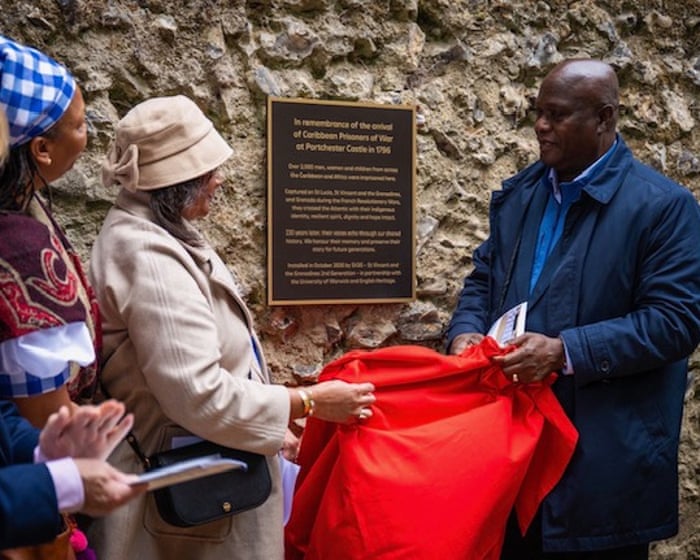
A plaque that honored African-Caribbean prisoners held in 18th-century Britain was stolen from Portchester Castle just days after it was unveiled. The plaque recognized over 2,000 prisoners brought to Britain in 1796, highlighting a largely forgotten part of Black British history.
Key Facts
The plaque commemorated African-Caribbean prisoners of war held at Portchester Castle in 1796.
More than 2,000 men, women, and children were transported to Britain from the Caribbean as prisoners.
The plaque was stolen shortly after being unveiled during a ceremony with Caribbean communities and heritage groups.
English Heritage reported the theft and noted that a castle gate padlock was removed.
The prisoners included formerly enslaved Africans, Caribbean-born people, Indigenous people, and French soldiers who fought British control.
The plaque’s unveiling marked 230 years since a ship carrying prisoners was wrecked off the coast of Devon.
The theft was seen by community leaders as a sign of ongoing racism and an attempt to erase history.
The event occurred during Black History Month, amid wider discussions on slavery and reparations.
Read the Original
Want the full story? Tap a source to open the original
article.
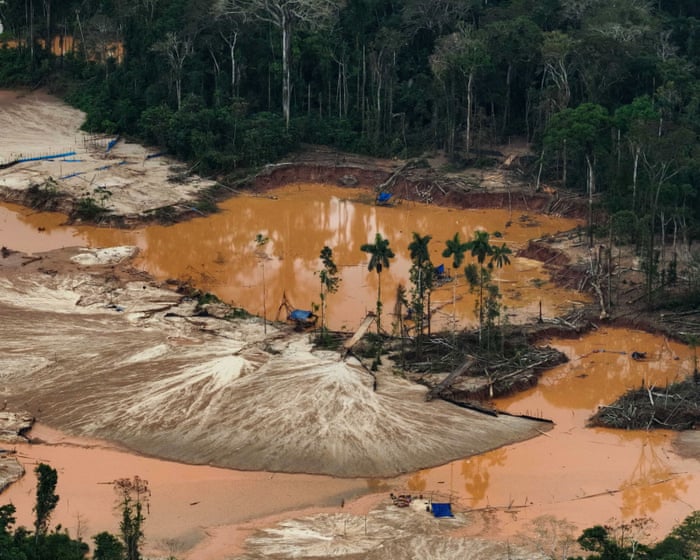
US companies and trade groups held many meetings with EU officials over two years to influence a new EU law aimed at stopping imports linked to deforestation. The law, set to start in December, has been delayed and changed, partly due to lobbying by US interests, and a recent statement suggested the US might get special treatment under this law.
Key Facts
The EU Deforestation Regulation (EUDR) bans imports like cattle, cocoa, coffee, oil palm, rubber, soy, and wood if linked to deforestation.
US companies and trade groups, including Cargill, Bunge, and Mondelēz, took part in over 350 meetings with EU Parliament and European Commission officials from 2024 to 2026.
Lobbying efforts aimed to delay and weaken the law, which was originally seen as the most ambitious global effort to prevent deforestation.
The EUDR’s implementation has been postponed twice and its rules were changed, leading some supporters to say the law has been weakened.
After a 2025 meeting between President Trump and the European Commission president, a joint statement offered the US special consideration regarding the law.
The European Commission said the US poses low risk of global deforestation, despite US companies being linked to forest destruction in places like the Amazon.
Mighty Earth, the environmental group that investigated, calls for more transparency in EU lobbying and better access for public interest groups.
US lobbying also involved the US Congress, Department of Agriculture, Trade Representative, and the White House.
Read the Original
Want the full story? Tap a source to open the original
article.
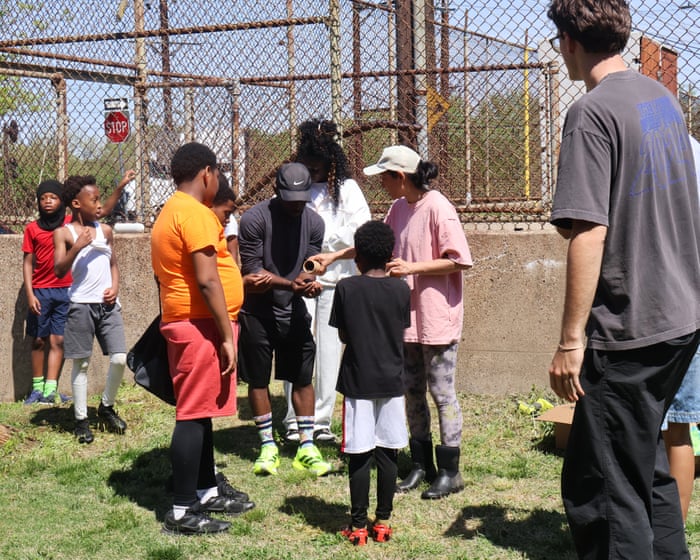
In Philadelphia, an Indigenous-led group called We Are the Seeds is turning empty city lots into native gardens to restore local plants and support the environment. The city is also starting a program to help community groups legally transform some of its 8,000 vacant lots into green spaces like gardens and gathering areas.
Key Facts
We Are the Seeds converts vacant Philadelphia lots into gardens with native plants that need less water and support local wildlife.
The gardens use heirloom seeds from groups that preserve old plant varieties to keep farming diverse.
We Are the Seeds focuses on Indigenous plants and culture, managed by members of the Narragansett tribe.
Philadelphia has about 40,000 vacant lots needing transformation to reduce blight and improve neighborhoods.
The city launched a pilot program called Lotscapes to turn 10 vacant lots into green spaces with community help.
Lotscapes helps residents get legal permission to use vacant land, making it easier for neighborhoods to improve their environment.
Native gardens can improve mental health and reduce crime in the area.
Community members are involved in deciding how to use these spaces, including gardens, seating, and interactive features.
Read the Original
Want the full story? Tap a source to open the original
article.
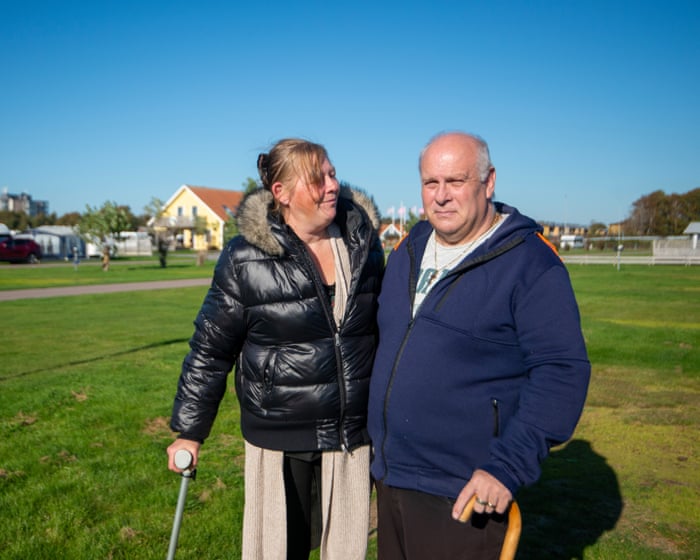
A British man with serious health problems living in Sweden fears deportation due to a government error linked to Brexit residency rules. Despite living in Sweden since 2017 and following advice from authorities, he was recently told to leave because he had not formally applied to stay after Brexit.
Key Facts
Mark Smith, 60, has had heart attacks, strokes, and serious health issues and has lived in Sweden since 2017.
He was told by the Swedish tax authority that he did not need to apply to stay after Brexit in 2020.
Sweden is one of 13 EU countries that required British residents to apply formally for post-Brexit residency, unlike others that only needed a declaration.
Swedish authorities later said Smith was an “alien” without legal residency and ordered him to leave by 17 October.
Smith and his wife moved into a caravan park and are hiding, fearing police deportation.
A court did not stop the deportation order but gave him until 20 October to ask for a retrial.
Other Britons in Sweden face similar problems due to unclear or incorrect information from authorities.
Smith's health is fragile, and his family worries he may not survive deportation.
Read the Original
Want the full story? Tap a source to open the original
article.
Uganda has started testing a vaccine in humans for a specific type of Ebola virus called the Bundibugyo strain. This strain is active in the area, and so far, no vaccine or treatment has been approved for it.
Key Facts
The vaccine trial is in Phase 1, which means the first stage of testing in people.
The trial is happening in the town of Masaka, in southern Uganda.
The vaccine targets the Bundibugyo strain of the Ebola virus.
This strain currently has no approved vaccines or treatments.
The Bundibugyo Ebola virus is spreading in the region.
Phase 1 trials primarily check safety and the body's immune response.
The effort aims to help control future outbreaks of this Ebola strain.
Read the Original
Want the full story? Tap a source to open the original
article.
A toddler named Rhodes in the U.K. was developing normally until he suddenly stopped speaking and lost social skills like eye contact and waving. After concerns from his mother, Rhodes was diagnosed with autism at 2 years and 4 months, showing a pattern called developmental regression where children lose previously gained skills.
Key Facts
Rhodes was a happy and developing toddler, hitting early milestones like speaking simple words and sentences.
At about age 1, Rhodes stopped talking altogether and lost social behaviors such as waving, clapping, and eye contact.
Rhodes’ mother noticed these changes and pushed for a pediatrician referral despite initial hesitation from health workers.
He was diagnosed with autism at 2 years and 4 months old, with developmental regression, a condition where some autistic children lose skills they had already learned.
Regression in autism usually happens between 15 and 30 months and includes loss of language and social communication skills.
Scientists are still researching why some autistic children regress while others do not; causes may include genetics and brain development differences.
Early diagnosis helped Rhodes’ family start planning for his future education and care support.
Rhodes currently gets one-on-one help at nursery but struggles with speech therapy sessions.
Read the Original
Want the full story? Tap a source to open the original
article.
Kenya has confirmed a third case of Ebola from a family connected to a man who died after traveling from the Democratic Republic of the Congo. The new patient, a 65-year-old woman, tested positive while already in quarantine, and officials say there is no evidence Ebola has spread to the wider community yet.
Key Facts
Kenya reported its third Ebola case on October 17, 2026.
The new case is a 65-year-old woman from the same family as a man who died after travel from the DRC.
The woman tested positive while in quarantine since October 5.
A second patient, a 39-year-old man from the same family, is stable.
Health officials say no community transmission has been found so far.
Three contacts related to these cases have not yet been located.
Quarantine has been used to isolate suspected and confirmed cases to prevent the spread.
Read the Original
Want the full story? Tap a source to open the original
article.
Two people, a 16-year-old boy and an 80-year-old man, died when a small plane crashed near Loch Lomond, Scotland. The police and the Air Accidents Investigation Branch are investigating the crash, and airspace restrictions remain in place around the area.
Key Facts
The crash happened near Drymen, north-east of Loch Lomond, Scotland.
The aircraft was a Piper Tomahawk II light plane.
The plane took off from Glasgow airport at 4:17 pm on Friday and crashed shortly after.
The two victims were pronounced dead at the scene.
Airspace restrictions, including a ban on drones, are in effect around the crash site to support the investigation.
Police have informed the victims' next of kin.
The AAIB has sent a team to investigate the accident and collect evidence.
Flying in the restricted airspace during the investigation is a criminal offense.
Read the Original
Want the full story? Tap a source to open the original
article.
A rare pink diamond called the "Grand Condé" is on display in France for the first time in nearly 100 years since it was stolen. The diamond was taken in a 1926 theft but recovered shortly after when a maid bit into an apple hiding the gem.
Key Facts
The Grand Condé is a nine-carat, pear-shaped pink diamond.
It was stolen during an overnight raid at the Château de Chantilly in October 1926.
Thieves hid the diamond inside a hollowed-out apple.
A maid discovered the diamond when she bit into the apple at the hotel where the thieves stayed.
The diamond survived the French Revolution and is one of the few royal jewels still existing.
It is now displayed at the Condé Museum in the Château de Chantilly until January 3.
Pink diamonds are very rare and can sell for tens of millions of dollars.
The diamond's history dates back to 1740, linked to French nobility and later given to the Institut de France.
Read the Original
Want the full story? Tap a source to open the original
article.
President Donald Trump chose not to apply new sanctions on Russia. Russia called this decision "historic." Ukraine is concerned that President Trump's action may favor Russia in the conflict in Europe.
Key Facts
President Trump decided to waive (not enforce) new sanctions against Russia.
Russia described this decision as "historic."
Ukraine is worried that this move supports Russia in the ongoing conflict.
The conflict is considered Europe's worst since World War II.
The news was reported on October 17, 2026.
Sanctions are penalties, often economic, used to pressure a country to change behavior.
The article mentions related news about Trump and international reactions, showing broader tensions around this issue.
Read the Original
Want the full story? Tap a source to open the original
article.
A fast-moving wildfire in Southern California burned at least six coastal homes and forced thousands of people to leave their homes. The fire was driven by strong winds and mainly affected expensive properties near the coast.
Key Facts
The wildfire occurred in Southern California.
At least six homes were destroyed by the fire.
The fire spread quickly due to strong, hot winds.
Many people were forced to evacuate the area.
The homes burned were mostly expensive coastal properties.
The event happened on Friday, October 17, 2026.
Wildfires are common in California and can be worsened by dry and windy weather.
Read the Original
Want the full story? Tap a source to open the original
article.
Pope Leo XIV, age 71, returned to the Vatican four days after surgery to remove a cancerous tumor from part of his right lung. Doctors said he is recovering well, and the pope plans to continue some duties, including reciting the Angelus prayer from the Vatican window.
Key Facts
Pope Leo XIV had surgery last week to remove a cancerous tumor from his right lung.
He spent several days recovering at the Gemelli University Hospital in Rome.
Doctors declared him fit to leave the hospital and return to the Vatican.
The pope will recite the Angelus prayer from his apartment window instead of St. Peter’s Square.
While hospitalized, Pope Leo celebrated Mass in his hospital room.
He has resumed some work, including calling Russian President Vladimir Putin to urge a ceasefire in Ukraine.
A planned trip to South America in November is uncertain and depends on his health and doctors’ advice.
Pope Leo canceled public audiences until October 20 to focus on recovery.
Read the Original
Want the full story? Tap a source to open the original
article.
The article highlights a CBS News segment called "The Uplift: The Hundred Acre Wood," which celebrates the 100th anniversary of Winnie the Pooh and friends. It also mentions other recent news topics covered by CBS News, such as sports, technology, and global events.
Key Facts
"The Uplift: The Hundred Acre Wood" marks 100 years of Winnie the Pooh and friends.
David Begnaud features a group of friends planning a girls night out.
CBS News covers a range of stories including sports, energy crises, and political updates.
Recent topics include the Brewers baseball team, Tesla’s flying car prototype, and Cuba’s energy situation.
News about school shootings, White House staff changes, and international conflicts are also mentioned.
Various CBS News local channels and shows are listed as sources for different news reports.
The segment is 27 minutes long and includes uplifting and informative stories.
Read the Original
Want the full story? Tap a source to open the original
article.