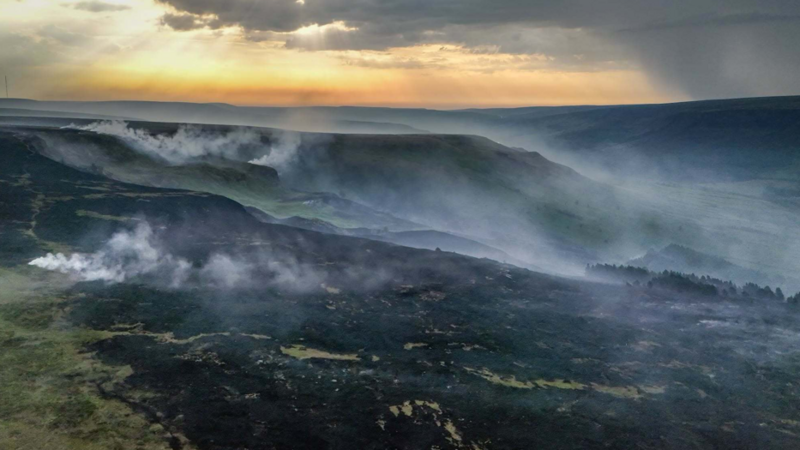
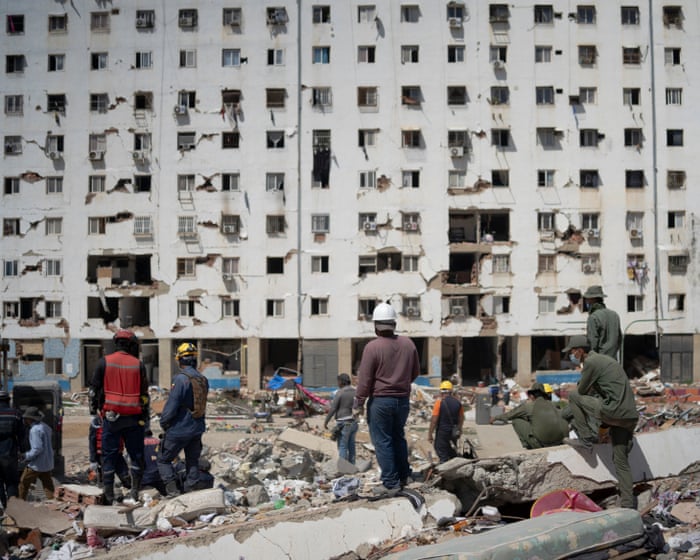
Firefighters in southern Spain have begun to control a wildfire that killed 12 people. The worst-hit village remains empty, with damaged homes and burnt plants showing the fire’s impact.
Key Facts
A wildfire in southern Spain has caused 12 deaths.
Firefighters have started to contain the fire as of Saturday.
The hardest-hit village is still deserted due to damage.
Houses and vegetation in the village were severely burned.
The fire caused people to evacuate their homes.
The event took place in early July 2026.
Read the Original
Want the full story? Tap a source to open the original
article.
A Russian missile strike hit near a coffee shop in the Ukrainian city of Sumy, causing people to take cover inside the shop. The attack killed five people, including a 13-year-old girl, and injured at least 30 others.
Key Facts
The strike occurred in Sumy, a city in northeastern Ukraine.
The missile attack used glide bombs.
Five people died as a result of the strike.
Among the dead was a 13-year-old girl.
At least 30 people were injured in the attack.
CCTV footage showed people crouching on the floor during the explosions.
People ran inside the coffee shop for safety after the blast.
The mayor of Sumy, Artem Kobzar, shared the information on Telegram.
Read the Original
Want the full story? Tap a source to open the original
article.
Jamie Mantzouridis started taking steroids in his early 20s to build muscle but experienced serious side effects, including infections and danger to his health. After a scary episode of dizziness, he stopped using steroids and now works as a nutritionist and trainer, warning others about the risks.
Key Facts
Jamie began using steroids at 21 to gain muscle faster.
His first steroid was trenbolone, a strong drug originally made for cattle.
He suffered from acne and a serious muscle infection that required hospital treatment.
He used other substances like growth hormones and insulin, which can be dangerous.
Four years ago, he had a frightening episode of dizziness related to drug use and decided to stop.
Jamie now helps people with nutrition and fitness and talks about the pressure men feel to have certain body types.
Social media contributes to unrealistic expectations of how people should look.
He advises people to appreciate their own achievements instead of chasing potentially harmful ideals.
Read the Original
Want the full story? Tap a source to open the original
article.
Iran launched missile and drone attacks on several Gulf countries after the US conducted strikes on Iran in response to attacks on commercial ships near the strait of Hormuz. Iran then closed the strait, a key passage for global oil shipments, warning of further responses to what it called US aggression.
Key Facts
Iran attacked Jordan, Bahrain, Qatar, Oman, and the UAE using missiles and drones.
The US struck over 140 targets in Iran, including missile sites and military locations.
The US said it acted after Iran’s Islamic Revolutionary Guard Corps (IRGC) fired on a Cyprus-registered ship.
The IRGC claimed to have hit two ships that it said violated shipping rules near Hormuz.
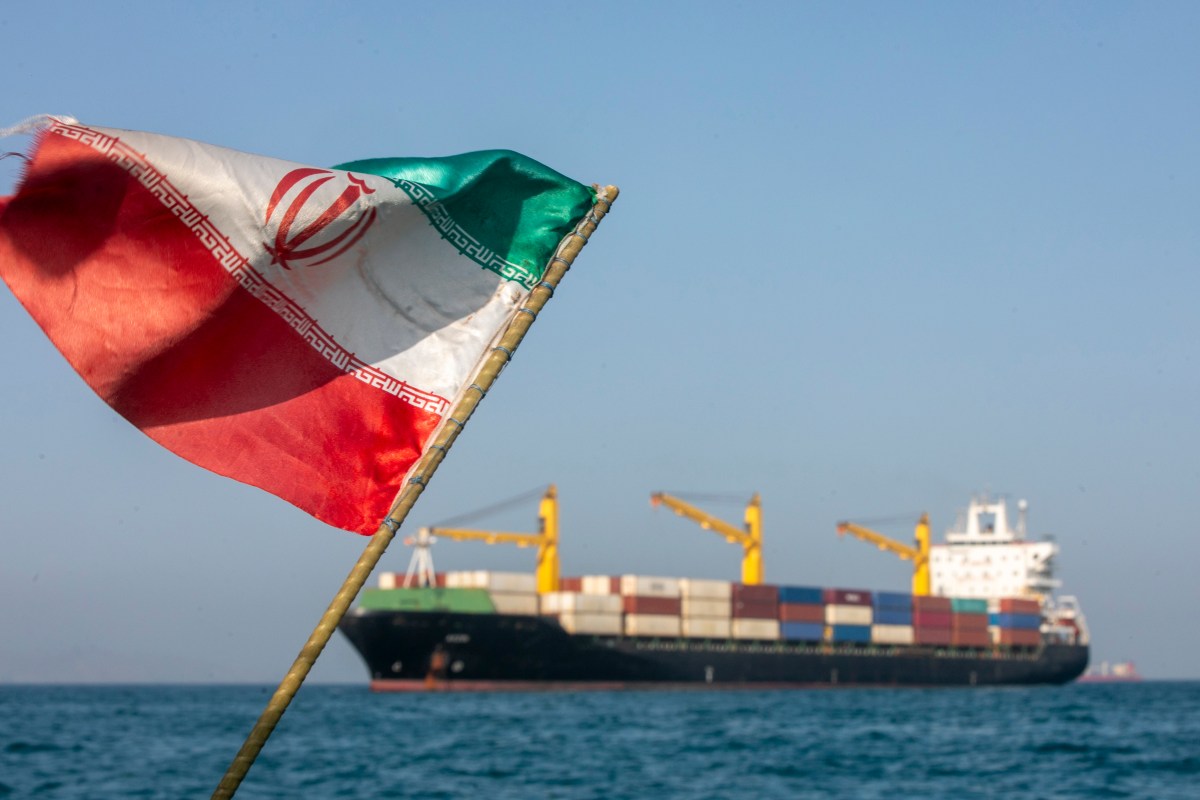
Iran closed the strait of Hormuz, through which about 20% of the world’s oil passes.
India reported 10 out of 11 Indian crew members were rescued after an attack on a commercial vessel near Oman.
US Senator Lindsey Graham, a supporter of President Trump and strong on military issues, died suddenly during the crisis.
Indian and international leaders called for calm and diplomatic solutions to avoid further violence.
Read the Original
Want the full story? Tap a source to open the original
article.
A new trial has started in the Democratic Republic of the Congo (DRC) to test two experimental drugs for treating the current Ebola outbreak. The outbreak has caused nearly 1,800 confirmed cases and over 600 deaths, and there is no approved treatment or vaccine for this strain of the virus.
Key Facts
The Ebola outbreak in the DRC involves the Bundibugyo strain, which currently has no approved vaccine or treatment.
As of July 9, there were 1,792 confirmed Ebola cases and 625 deaths.
The World Health Organization declared the outbreak a public health emergency on May 17.
Two experimental drugs, remdesivir and MBP134, are being tested in a new treatment trial.
Remdesivir is an antiviral, and MBP134 is a monoclonal antibody therapy; both showed promising results in animals.
The trial will randomly assign patients to receive one of the drugs, both combined, or standard care.
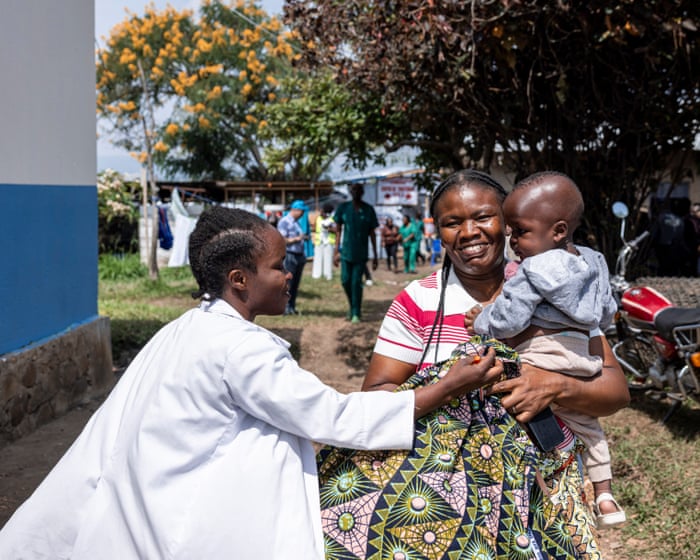
Health workers face challenges like lack of pay, shortages of protective equipment, and community mistrust.
Efforts to control the outbreak include isolating patients, tracking contacts, and safely burying victims.
Read the Original
Want the full story? Tap a source to open the original
article.
The US Central Command has completed a third round of military strikes on Iran this week. These strikes targeted around 140 military sites, including places where missiles and drones are kept, following an attack by Iran's Islamic Revolutionary Guard Corps (IRGC) on a cargo ship in the Strait of Hormuz.
Key Facts
US Central Command conducted their third series of strikes against Iran this week.
About 140 Iranian military locations were targeted in these strikes.
The targets included missile and drone facilities.
The strikes were in response to an IRGC attack on a cargo ship named M/V GFS Galaxy.
The ship was flying the flag of Cyprus.
The attack caused a fire on the ship and left one crew member missing.
The incident took place in the Strait of Hormuz, a key waterway for global shipping.
The strikes aim to respond to and deter further attacks by Iranian forces.
Read the Original
Want the full story? Tap a source to open the original
article.
After US air strikes on Iran, Gulf states and Jordan defended themselves against missiles and drones launched by Iran. The attacks caused some injuries and damage, but no deaths were reported. Iran targeted US military sites in the region and closed the Strait of Hormuz again, a key shipping lane.
Key Facts
Gulf states (UAE, Qatar, Kuwait, Bahrain) and Jordan used air defenses to stop Iranian missiles and drones.
Kuwait’s military responded to attacks early Sunday; three people were injured in Qatar by falling shrapnel.
Iran’s Islamic Revolutionary Guard Corps said it hit US radar, command centers, drone hangars, and other military facilities in Kuwait, Jordan, and Qatar.
Iran also targeted a US support platform in Oman’s port of Duqm and drones struck the Musandam area.
The US military hit about 140 Iranian military targets in response after Iran attacked a ship in the Strait of Hormuz.
An Iranian attack caused fire and engine damage on the container ship M/V GFS Galaxy near Oman; most crew, including 11 Indian citizens, were rescued.
Iran closed the Strait of Hormuz again, citing unapproved shipping routes and ongoing tensions with the US and Israel.
The conflict started after US and Israel launched a war on Iran in February, with brief attempts at peace agreements in June.
Read the Original
Want the full story? Tap a source to open the original
article.
The Islamic Revolutionary Guard Corps (IRGC) said it will respond strongly if the United States attacks Iran again. This statement came after the U.S. carried out a third round of strikes on Iran in one week, and Iran retaliated by targeting U.S. military sites in the region.
Key Facts
The IRGC warned of a "crushing response" to any new U.S. attacks on Iranian territory.
The U.S. conducted three rounds of strikes against Iran within one week.
Iran carried out counterattacks on U.S. military locations in the region following the strikes.
The news report was shared by Al Jazeera correspondent Tohid Asadi from Doha.
The situation reflects ongoing military tensions between Iran and the United States.
Both sides have carried out actions that increase conflict risks in the area.
The IRGC is a branch of Iran’s military responsible for protecting the country’s Islamic system.
Read the Original
Want the full story? Tap a source to open the original
article.
The U.S. launched strikes on about 140 military sites in Iran after Iran attacked a commercial ship in the Strait of Hormuz. Iran then fired missiles and drones toward nearby Gulf countries, raising tensions in this important shipping area.
Key Facts
The U.S. targeted missile and drone launch sites, ammo depots, and communications equipment in Iran.
The strikes aimed to reduce Iran’s ability to threaten commercial shipping in the Strait of Hormuz.
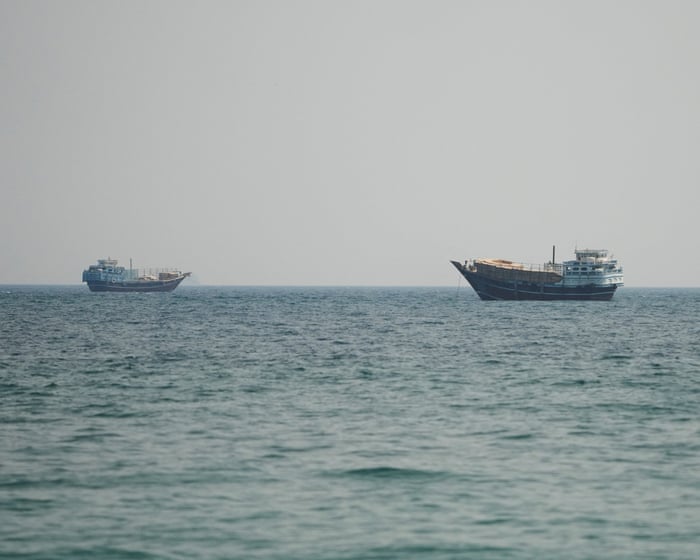
Iran attacked a Cyprus-flagged container ship, causing a fire and engine damage, forcing the crew to abandon it.
One civilian crew member went missing after the attack on the ship.
Iran responded by launching missiles and drones toward Bahrain, Kuwait, Qatar, and the UAE.
Qatar intercepted some incoming attacks, and missile alerts were issued in Gulf states that host U.S. forces.
Iran warned it would keep the Strait of Hormuz closed until further notice and threatened more attacks if the U.S. or its allies acted against it again.
The Strait of Hormuz is a vital waterway where about 20% of the world’s oil and gas trade passes through.
Read the Original
Want the full story? Tap a source to open the original
article.
Typhoon Bavi made landfall in eastern China, leading to the evacuation of nearly two million people and the suspension of transport and outdoor activities. The storm caused heavy rain, strong winds, and flooding warnings but no immediate reports of damage or casualties in China. Before reaching China, Bavi affected northern Taiwan, Japan's southwestern islands, and the Philippines, where it caused deaths and power outages.
Key Facts
Typhoon Bavi hit Zhejiang province in eastern China with winds of 144 km/h (90 mph).
About 1.72 million people were evacuated from the storm’s expected path in eastern China.
Authorities suspended classes, work, transport, and outdoor activities in affected areas.
Over 400 flights and many train services were canceled in Zhejiang province.
The storm brought heavy rain, uprooted trees, and caused rapid runoff and flooding concerns.
More than 130,000 people fled homes in Fujian and about 34,000 evacuated coastal areas in Shanghai.
Bavi previously passed over northern Taiwan and Japan’s southwestern islands, causing power outages.
In the Philippines, Bavi’s related heavy rains caused landslides that killed at least 18 people.
Read the Original
Want the full story? Tap a source to open the original
article.
Many descendants of enslaved Africans say that a formal apology for the transatlantic slave trade is not enough without real action like reparations and support. A recent conference in Ghana brought together leaders and experts to discuss steps including apologies, reparations, and education to address the legacy of slavery.
Key Facts
The "Next Steps" conference on slavery and reparatory justice was held in Accra, Ghana, from June 17 to 19.
The United Nations General Assembly recently passed a resolution recognizing the transatlantic slave trade as a grave crime against humanity, supported by 123 countries.
Participants of the conference agreed on a 19-point plan calling for formal apologies, reparations, debt relief, return of cultural items, education programs, and international cooperation.
Descendants of enslaved Africans feel that apologies alone are symbolic and do not repair the damage or compensate for losses.
The slave trade caused long-term harm by tearing families apart, destabilizing communities, and disrupting Africa’s growth and knowledge.
The trauma from slavery has been passed down through generations of African families.
Colonial programs like the Bantu Educational Kinema Experiment contributed to lasting damage by promoting harmful colonial messages.
Some advocates stress the need for educational content that helps Africans understand and heal from this history.
Read the Original
Want the full story? Tap a source to open the original
article.
Parts of the UK face an "exceptional" wildfire risk and heat health alerts due to a record-breaking heatwave. Temperatures remain high, drying out vegetation and increasing fire danger, while health services prepare for impacts from the heat.
Key Facts
Southern England and some of the south Midlands have an "exceptional" wildfire risk this week.
Many other areas in England and Wales are at "very high" wildfire risk.
Heat health alerts (amber and yellow) are active from 12 to 15 July due to high temperatures.
Temperatures are expected to be between 26-33°C (79-91°F) in much of England and Wales.
Wildfire risk is high because of very dry conditions, hot weather, and stronger winds.
Winds help fires spread faster and make them harder to control.
The wildfire risk may reduce midweek as winds lessen and showers possibly arrive.
Thunderstorms and cooler weather might begin late in the week, but temperatures will stay warm.
Read the Original
Want the full story? Tap a source to open the original
article.
Sheikh Hamad bin Khalifa Al Thani, who led Qatar from 1995 to 2013, passed away at age 74. He helped turn Qatar into a wealthy and influential country through natural gas production and major reforms in politics, economy, and society.
Key Facts
Sheikh Hamad ruled Qatar from 1995 until he stepped down in 2013.
Under his leadership, Qatar’s economy grew over 24 times larger.
Qatar became the world’s biggest exporter of liquefied natural gas by 2006.
He started important institutions like the Qatar Foundation and Al Jazeera news channel.
In 2004, Qatar adopted its first permanent constitution and allowed women to vote and run for office in local elections.
Qatar won the bid to host the 2022 FIFA World Cup during his time as emir.
He peacefully passed power to his son, Sheikh Tamim bin Hamad Al Thani, marking a rare voluntary leadership change in the region.
Sheikh Hamad was born in 1952 and trained at Britain’s Royal Military Academy Sandhurst.
Read the Original
Want the full story? Tap a source to open the original
article.
Sheikh Hamad bin Khalifa Al Thani, the former ruler of Qatar, has died at the age of 74. Qatar’s official government office announced his death and expressed mourning for the loss.
Key Facts
Sheikh Hamad bin Khalifa Al Thani was the former Emir (ruler) of Qatar.
He died at the age of 74.
The news was announced by Qatar’s Amiri Diwan, the official royal office.
The announcement expressed faith and respect for the Sheikh.
The message asked for God’s mercy on him.
The death occurred on a Sunday morning.
Read the Original
Want the full story? Tap a source to open the original
article.
US forces conducted a third set of strikes on Iran within one week. These actions followed Iran’s Islamic Revolutionary Guard Corps (IRGC) announcing the closure of the Strait of Hormuz.
Key Facts
US forces have carried out three rounds of strikes on Iran in one week.
Iran’s IRGC declared the Strait of Hormuz closed.
The Strait of Hormuz is a key waterway for global oil shipping.
The strikes and the closure declaration happened within a short time of each other.
Washington DC sources reported these recent developments.
Read the Original
Want the full story? Tap a source to open the original
article.
The United States launched new military strikes against Iran after Iran set a container ship on fire and closed the Strait of Hormuz. Iran responded by attacking US bases and Gulf countries with drones and missiles, while Kuwait and other nations activated air defenses to intercept attacks.
Key Facts
The US military hit about 140 Iranian military targets this week, including missile sites and communication networks.
Iran closed the Strait of Hormuz, an important shipping route, after attacking vessels there.
The Iranian Revolutionary Guards said they struck a second ship in the Strait and attacked a US base in Qatar.
Kuwait's military reported ongoing air defense efforts against missile and drone attacks on its territory.
Countries in the Gulf region, including Bahrain, Kuwait, Qatar, and the UAE, were targeted by Iranian attacks.
President Donald Trump warned Iran it would be "completely decimated" if it tried to assassinate him.
Iran’s Supreme Leader Mojtaba Khamenei called for avenging the killing of his predecessor.
The escalating conflict is causing a sharp drop in vessel traffic through the Strait of Hormuz.
Read the Original
Want the full story? Tap a source to open the original
article.
Indian Prime Minister Narendra Modi has not held unscripted press conferences recently. The government defended this decision after questions from a New Zealand reporter during Modi’s official visit. This was the third time in less than two months that Modi avoided open media questions.
Key Facts
Prime Minister Modi has not held any unscripted press conferences lately.
The Indian government explained Modi’s avoidance of direct media questioning.
A New Zealand reporter asked about Modi’s media avoidance during an official visit.
This was the third similar incident in under two months.
Modi's approach contrasts with many world leaders who regularly answer unscripted questions.
The issue received attention internationally due to the repeated nature of Modi’s media strategy.
Press conferences usually allow reporters to ask leaders unscripted questions for transparency.
Read the Original
Want the full story? Tap a source to open the original
article.
Two strong earthquakes hit Venezuela’s north coast, severely damaging the OPPE 25 government housing project and causing many injuries and missing people. Residents said government leaders were slow to respond, and some feel disappointment with the current leadership following years of economic problems and political changes after President Trump’s abduction of Nicolás Maduro.
Key Facts
Two earthquakes measuring 7.2 and 7.5 struck northern Venezuela less than a minute apart on June 24.
The OPPE 25 housing project in Caraballeda was destroyed, leaving many homeless and injured.
Gabriel González, a construction worker and former Chávez supporter, lost his home and has family members still missing.
Chávez’s “Bolivarian revolution” initially built housing projects and helped poor people but has since lost support due to poverty, migration, inflation, and authoritarian rule.
Nicolás Maduro was abducted by President Donald Trump, and Delcy Rodríguez was installed as acting leader in January.
Residents and local pastors said government response to the disaster was slow or absent.
Experts said the quakes released energy far greater than the 2010 Haiti earthquake, making it an extraordinary natural disaster.
Read the Original
Want the full story? Tap a source to open the original
article.
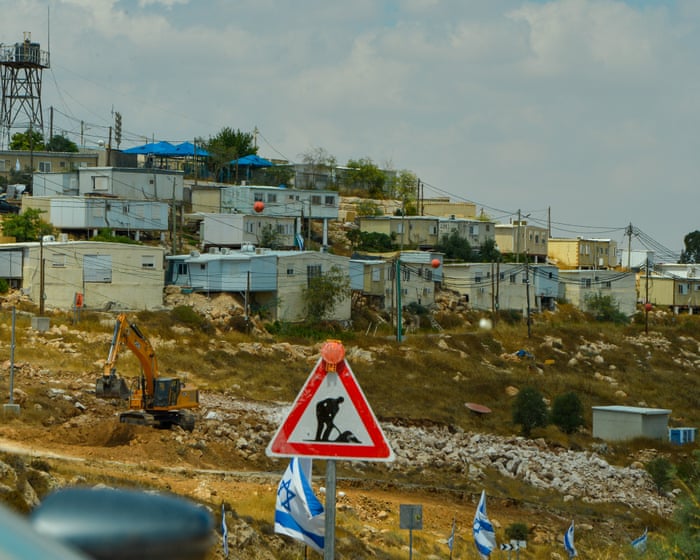
The European Union is debating whether to ban trade with Israeli settlements in occupied Palestinian territories but has not made a decision due to disagreements among member states. The debate comes amid a UN report accusing Israel of genocide in Gaza and violence in the West Bank, and after an international court ruling calling for an end to such trade.
Key Facts
The EU foreign ministers met in Brussels to discuss banning imports from Israeli settlements.
Israel’s settlements are considered illegal under international law, including a 2024 International Court of Justice ruling.
The ruling said states must prevent trade and investment that supports the settlements.
Options on the table include a full or partial trade ban, high tariffs, or import licensing.
At least 10 EU countries support ending trade with the settlements.
More than 100 legal scholars have urged the EU to fulfill its legal obligations by banning trade.
An NGO investigation found some goods from settlements mislabeled as Israeli products.
EU ministers have not agreed on the voting method needed to implement a ban and are unlikely to make a decision until October.
Read the Original
Want the full story? Tap a source to open the original
article.
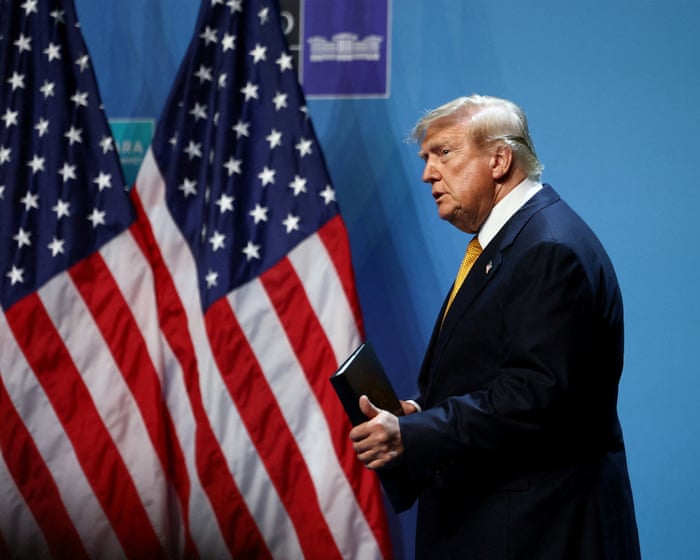
President Donald Trump showed mixed feelings at the NATO summit in Ankara, switching from criticism to praise within hours. He criticized some NATO allies but also expressed unity and admiration for leaders like Turkey’s President Erdoğan and Ukraine’s President Zelenskyy.
Key Facts
President Trump arrived at the NATO summit angry about a failed ceasefire deal with Iran.
He called Iran's leadership “scum” and criticized NATO members for not helping in an Iran conflict.
Trump demanded ending trade with Spain due to its government not meeting defense spending goals.
Later, he spoke positively about unity at the summit and praised President Zelenskyy of Ukraine.
Trump expressed a strong personal relationship with Turkey’s President Erdoğan.
Analysts said Trump’s behavior seemed impulsive and unpredictable.
Erdoğan was described by some as an autocrat who limits political opposition and press freedom.
The summit showed contrasting moods, influenced partly by Trump’s chemistry with Erdoğan.
Read the Original
Want the full story? Tap a source to open the original
article.